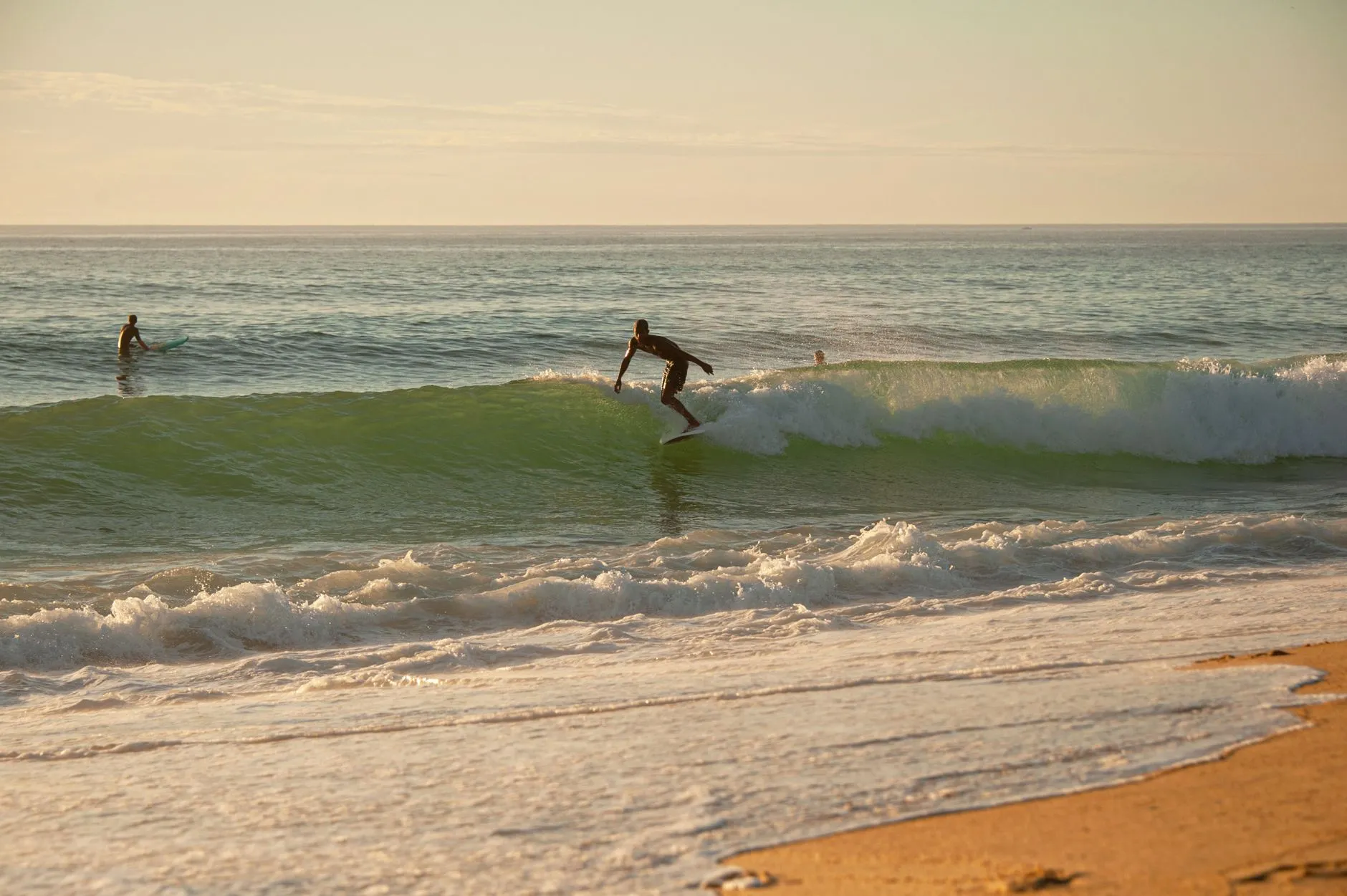
La Gravière is the most famous beach break in France and the reason surf media knows Hossegor at all. The secret is offshore and invisible: the Gouf de Capbreton, a submarine canyon that drops toward true ocean depth almost from the harbor mouth, lets Atlantic groundswell run to the sand nearly unweakened instead of dragging across a long continental shelf. A shallow bank close to shore does the rest, folding all that energy into thick, spitting barrels a few meters from dry sand.
That formula made a beach break a world stage. For close to two decades the world tour arrived every autumn for the Quiksilver Pro, and when the contest ran at La Gravière on a good bank, the best surfers alive traded barrels in front of a town you can cross on a bike. The other half of the reputation is paid in equipment. October here is board-breaking season: the lip is thick, the water under it is shallow, and the surf shops of Hossegor replace snapped boards all autumn long.
Advanced
Wave
Shifting sand-bottom beach break, hollow lefts and rights meters from shore
Best swell
W to NW groundswell, chest-high to double overhead
Best wind
E offshore, autumn mornings
Best tide
Depends on the bank. Most days mid to high on the push, low often closes out
Season
September and October are the prize, late August can already pump
Level
Advanced, experts only when it is solid
How the wave breaks
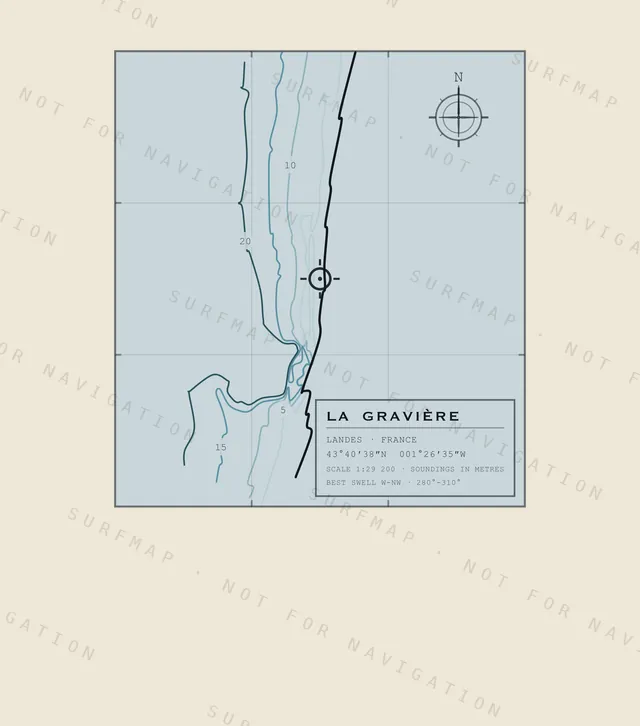
Everything starts with the canyon. Most beach breaks take swell that has spent kilometers dragging over a shallow continental shelf, losing power the whole way; at Hossegor the shelf is cut by the Gouf de Capbreton, which reaches ocean depth within a short distance of the coast, so groundswell arrives at the sand with most of its energy still on board. It then hits a bank that sits close to shore under very little water. The wave has almost no distance to slow down and shoal gradually: it stands up in one motion and throws a lip that has more in common with a slab than with a normal beach break.
The ride is short and intense. Lefts and rights spin off shifting peaks within meters of the shore; the drop puts you either in the barrel or behind it, and a complete wave is often a matter of seconds, a takeoff, a pumped line through the tube and an exit before the shutdown. What surprises people most is the depth, or the lack of it. The best banks hold barely enough water to hide your fins, the lip lands on close to dry sand, and that is why the wave breaks boards and why the wipeouts here are taken seriously by everyone, including the professionals.
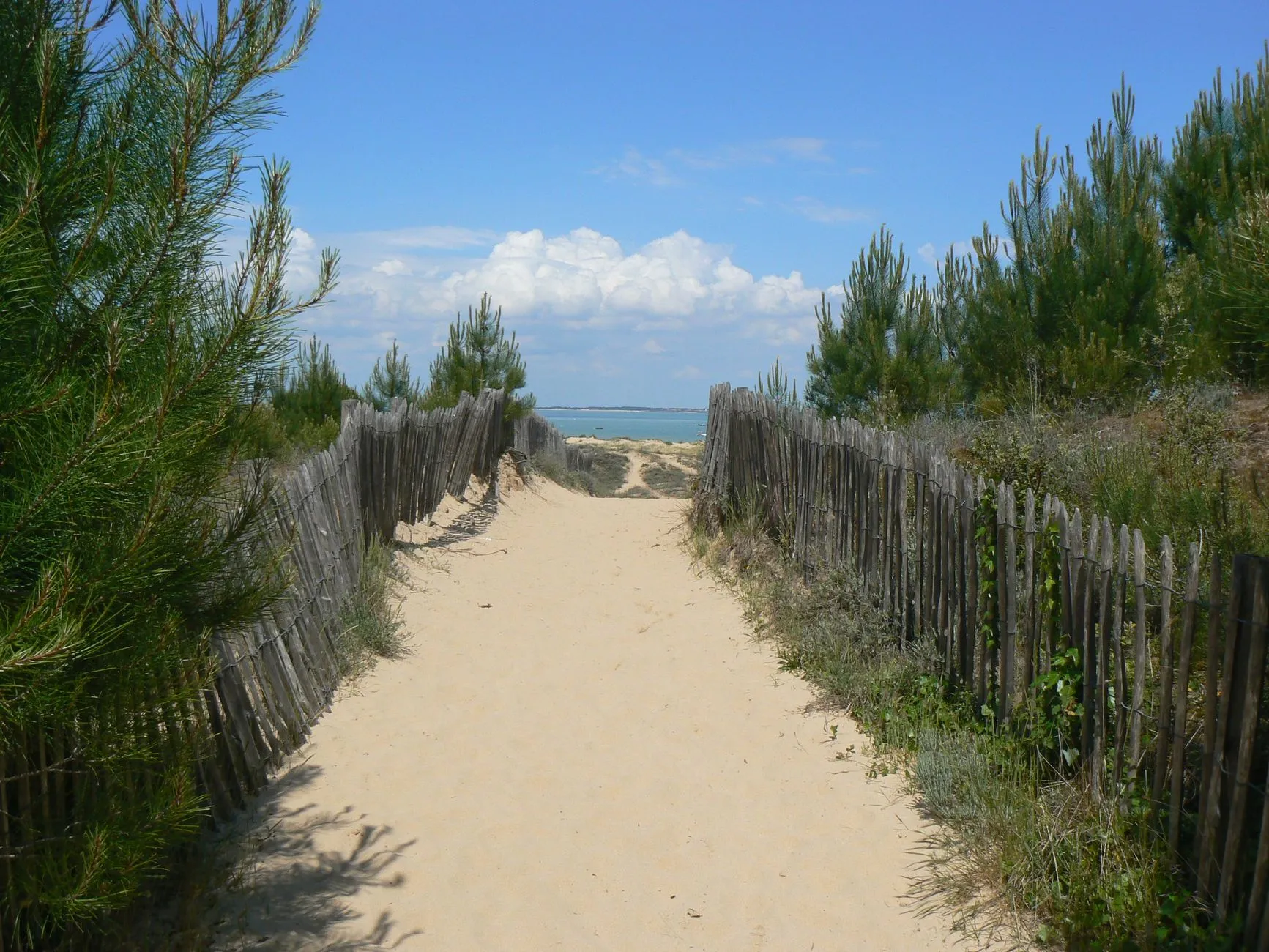
The walk over the dune, first read of the banks before a session
When it works
The engine is autumn. From September the North Atlantic starts lining up groundswell trains toward the Bay of Biscay, the first settled high-pressure mornings bring light east wind off the pines, and the banks, built through the summer, are still in place before winter storms redraw them. September and October are the prize, and a strong late August can already pump. Summer has waves but the swell is mostly small and the town is full; winter has all the power you could want, but the storms that send it also wreck the wind and move the sand weekly. When a long-period October swell meets the right bank under an offshore morning, La Gravière is as good as beach break surfing gets.
The lineup and the take-off
Read it from the dune before you touch the water. The peak lives wherever the bank is this season, sometimes a hundred meters from where it was last year, and on any given day the sets still shift along it, so take marks on land, watch two full sets, and note where riders actually come out of their waves. The paddle is the entry fee: there is no channel, swell arrives in trains of whitewater, and getting out is a matter of duck-dive fitness and sprinting in the pause between sets. Many locals wait on the sand and time their paddle off the back of the last wave of a set.
The takeoff is late by nature. The wave only stands up in the final meters of water, so you drop as the lip starts to throw, and hesitation is how people get hurt here. Commit early, get to your feet fast, and treat the exit as part of the wave: plenty of the best rides end with the barrel clamping down and an ejection over the bank rather than a clean kickout. In autumn the lineup is full of very good surfers, with sponsored riders and lenses on every solid bank, so patience and wave choice count double.
Getting there
La Gravière sits on the beachfront at the north end of Hossegor, a few minutes from the center of town. Park along the front de mer, the beach road behind the dune, and take any of the marked paths over the top: the peak breaks more or less straight out front, and on a good day the crowd on the dune will point the way. There is no rock, no reef and no walk to speak of, which is part of why the wave is so heavily photographed. Flying in, Biarritz airport is about 40 minutes south and Bordeaux about 1h45 north; a car is the practical choice, since chasing the best bank often means driving a few beach accesses up or down the coast.
Hazards
The barrel breaks onto a barely covered bank: snapped boards are routine, broken noses happen, keep your arms over your head when you go down
Powerful baïne rip currents run on either side of the bank, know where they pull before you paddle and come home over the bank, not through the rip
Closeout sets shut down the whole bank and sweep the lineup clean, count the waves and keep some paddle in reserve
Serious crowds in peak season with professionals in town, expect a high level in the water and wait for the waves the pack leaves
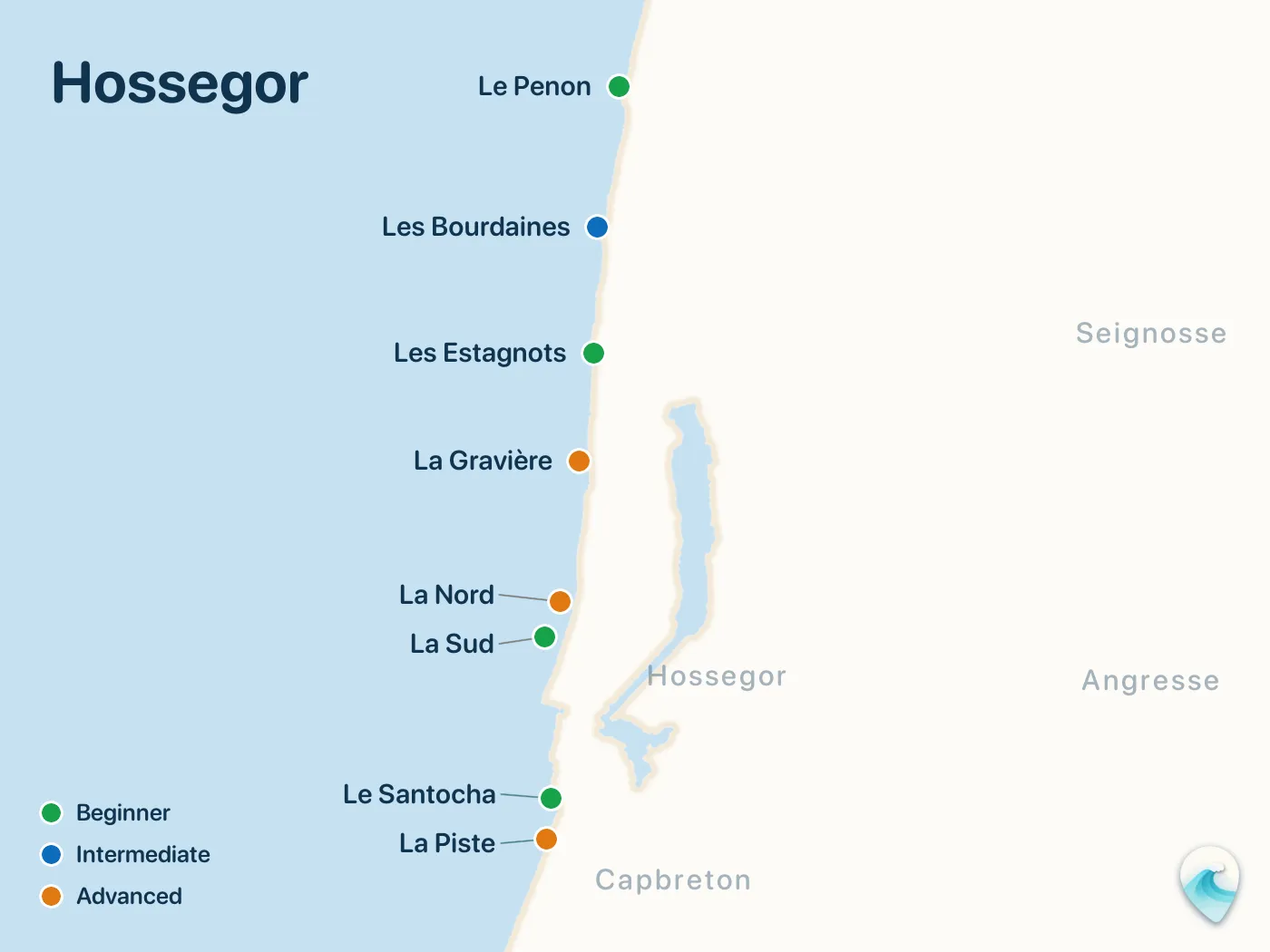
An honest guide to surfing Hossegor: a surf map and the 8 spots that matter from Le Penon to La Piste, which sandbank suits you, and when to go month by month.
Most days, honestly, no. The wave breaks hard in very shallow water, the paddle out is punishing, and the autumn crowd is full of professionals. Hossegor is generous with alternatives: La Sud stays gentle behind the Capbreton jetty, Le Penon has wide, soft banks, and both will give you ten times the wave count. Save La Gravière for a small, clean day, chest-high at most, watch it from the sand for twenty minutes first, and be honest with yourself about what you see.
What tide is best at La Gravière?
The honest answer is that the bank decides, and the bank changes every year. Most seasons the wave is best from mid tide to high on the push: the incoming water gives the barrel just enough depth to spin instead of slamming shut, and locals plan sessions around that window. Dead low is usually the wrong call, the wave tends to close out on the bare bank, and a big high tide can drown it or turn it into pure shorebreak. Watch it through a full tide before you trust any rule, including this one.
Why is the wave so heavy at La Gravière?
Because of what sits under the water offshore. The Gouf de Capbreton, one of the deepest submarine canyons in the Bay of Biscay, begins almost at the harbor mouth, so swell crosses deep water nearly all the way to the beach instead of spending its energy on a long continental shelf. All that unspent power then unloads onto a sandbank lying close to shore under very little water. Deep water meeting a shallow ledge is the same formula that drives the world's famous reef waves; La Gravière runs it on sand, which is why a beach break here hits like a slab.