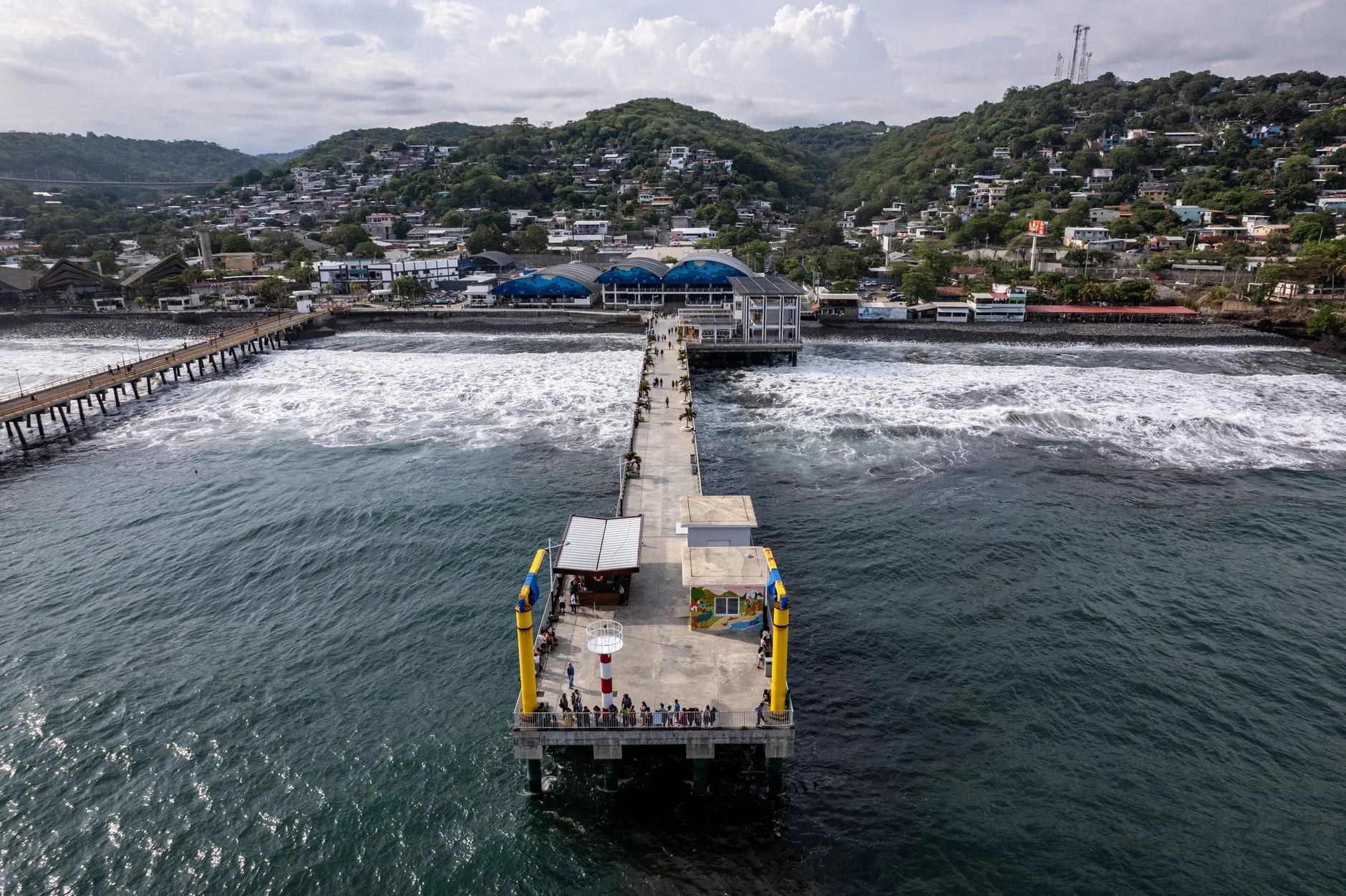
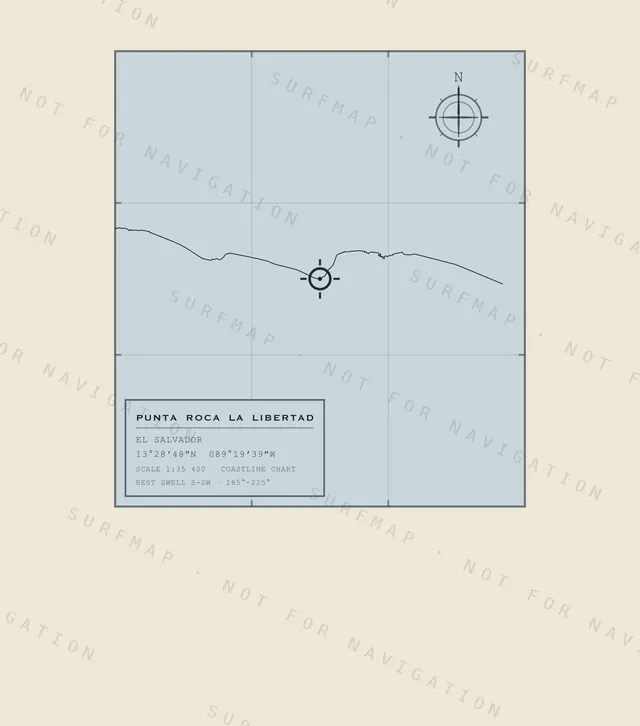
Waves and coastline at Punta Roca

Guides · El Salvador

Punta Roca

El Salvador's world-class right

Punta Roca is a right-hand point break wrapping under the headland at the west end of La Libertad, and the one wave in El Salvador that nobody ranks second. Long-period south swell bends around the point and runs down a bank of cobblestones, linking section after section for close to three hundred meters when a solid swell lines up. The wave carries the country's surfing history on its back: the Championship Tour has stopped here, two ISA world title events were decided on this wave, and the locals who grew up on it are among the best surfers in Central America.

The setting is nothing like a surf-trip postcard, and that is part of the appeal. La Libertad is a working port with a fish market on its pier, a seafront rebuilt by the Surf City investment, and a malecón where the whole town strolls in the evening. From the takeoff you look back at cranes and market stalls rather than palm trees, and on a clean March morning, with the offshore pouring down from the hills and lines stacked to the horizon, you understand why the town is prouder of this wave than of anything else it owns.

Advanced

Wave
Right-hand point break over cobblestone
Best swell
S to SSW groundswell, comes alive at head-high, holds well overhead
Best wind
N to NE, early mornings before the sea breeze
Best tide
Locals surf it on most tides. Many visitors prefer mid, low uncovers more cobblestone
Season
March to October
Level
Advanced. Intermediates only on small days, down the inside

How the wave breaks

The takeoff sits at the top of the point, over a shallow bank of cobblestones with the rocks close on your inside. There is not much water under you when a set stands up, and the first stretch is the fastest part of the wave: a steep wall that asks for a late drop and an immediate line down the point. On a solid south it can throw out over the bank, and hesitating here is how boards meet rock.

From there the wave wraps under the headland and peels toward the pier in long, fast walls. Some sections slow into shoulders made for full carves, others jack up again over the inner banks, and when a solid south lines up they link into a single ride close to three hundred meters long. It is a performance wave rather than a lazy point: fast enough to keep you racing the curl the whole way down, long enough that three good turns feel like the beginning.
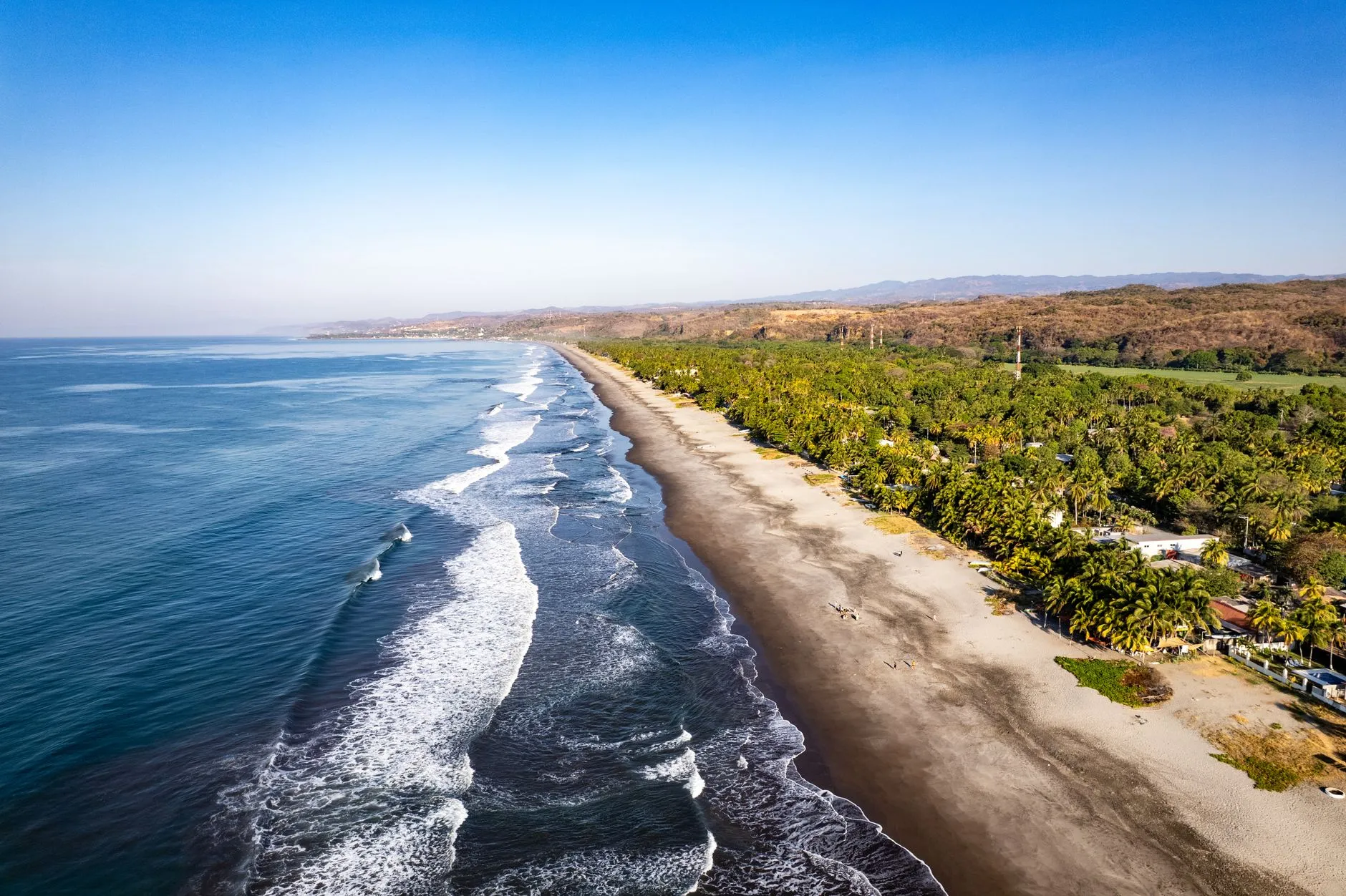
La Libertad from above: the beach and the seafront, a short walk from the point

When it works

Punta Roca runs on the Southern Hemisphere. From March to October, storms in the far South Pacific send long-period S to SSW groundswell up the coast, and the point needs that push to look like itself: it comes alive around head-high and holds its shape well overhead. The season doubles as the local rainy season, which matters less than it sounds, because the rain mostly falls in the afternoon and evening while mornings stay clean, with the offshore blowing N to NE off the hills until the sea breeze swings onshore late in the morning. From November to February the coast turns small and groomed, offshore for most of the day, fun on the inside but rarely the point at full size.

The lineup and the take-off

The pecking order at Punta Roca is as real as the wave. The locals grew up on this point, they are among the best surfers in Central America, and they sit deepest and take most of the set waves. This is a lineup that has hosted the Championship Tour and seen two ISA world titles decided, so on a pumping day the level in the water is closer to a contest heat than to a holiday session.

The way in is the same as at any serious point. Sit down the line from the main peak at first, take what comes through, make your waves cleanly, and let your surfing do the introductions. Hassling the top of the point on day one drops your wave count to zero; patience and a few well-ridden walls slowly buy you room in the rotation. Down the inside there are shorter, softer sections that nobody fights over, and plenty of visitors have their best sessions of the trip there.

Getting there

The point sits at the western edge of La Libertad, walkable along the seafront from the malecón and the pier, and you enter over the cobblestones near the top of the point: move between sets, and booties spare your feet. The Surf City program rebuilt the seafront, so the walk to the wave now passes new promenades, restaurants and the famous fish market on the pier. Getting here is the easy part of the whole equation: San Salvador and its international airport are under an hour away, and many visitors base themselves in El Tunco or El Zonte, a short drive up the coast, and come in when the swell is right.

Hazards

  • Cobblestones and urchins on entry and exit: move between sets and consider booties
  • A strong current runs down the point on bigger days, plan on a long paddle or the walk back around
  • A committed crowd and a real local hierarchy: wait your turn and earn your set waves
  • The takeoff is shallow over rock, more so at low tide: treat the first section with respect
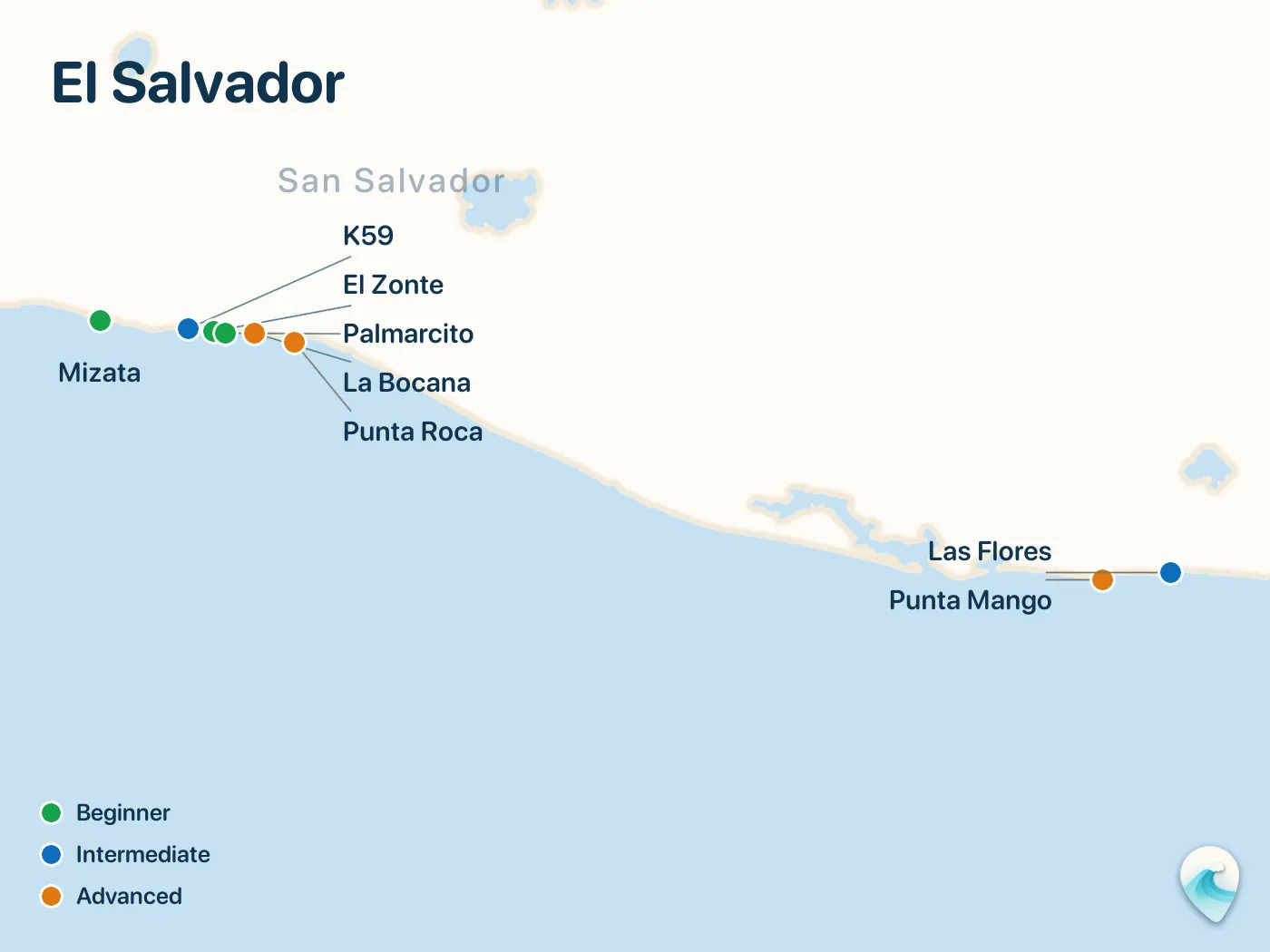
Map of the El Salvador surf spots described in this guide, with numbered markers

Part of the El Salvador surf guide

An honest guide to surfing El Salvador: Punta Roca, El Zonte and the warm right points of the Balsamo Coast, boat trips to Las Flores, and the season month by month.

Read the full guide →

Good to know

When is the best season at Punta Roca?

March to October, when Southern Hemisphere storms send long-period S to SSW groundswell up the coast. The point comes alive around head-high and holds well overhead, and the biggest, longest days usually land between April and September. That window is also the rainy season, but the rain concentrates in the afternoons and evenings, and mornings are usually clean with the offshore off the hills. From November to February the coast stays small and tidy: pleasant surf, just rarely the point at its real size.

Can intermediates surf Punta Roca?

On the right day, yes. Pick a small, clean swell, chest high or less, stay down the inside away from the main peak, and you get shorter, softer walls over deeper water with far less pressure. The top of the point is another story: shallow, fast and contested, and once it is overhead the wave is honestly an advanced surfer's ride. If you are still learning, El Tunco and El Zonte a short drive up the coast are built for it, with surf schools, easier peaks and no hierarchy to negotiate.

Is La Libertad safe to stay in?

Much safer than its old reputation, which dates from years when the whole country was struggling. Security in El Salvador has improved dramatically, the Surf City investment rebuilt the seafront, and tourist police now patrol the malecón and the beach. It is still a working port town rather than a resort, so the usual travel habits apply: keep valuables out of sight, take care late at night away from the seafront, ask locally about anything you are unsure of. Plenty of visiting surfers now stay in town for the early paddle-out; plenty of others sleep in El Tunco or El Zonte and drive in, and both are reasonable choices.