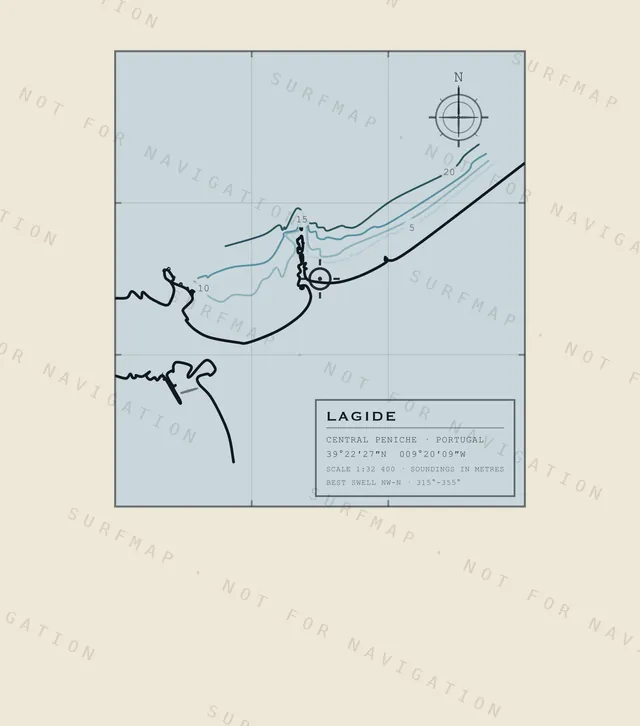
Lagide is the reef on the north side of Baleal, the small rocky island tied to the mainland by a sand causeway a few minutes north of Peniche. In front of the car park and the campsite, a flat slab of rock peels a long, patient left toward the beach, with a shorter right off the same peak on some swells. At chest-high it is mellow, slow and longboard-friendly, the classic first reef wave in Portugal, and the place where half of Peniche learned to go backside.
The patience is the point. The beach breaks around the peninsula move with every storm; the slab stays where it is and the wave does the same thing every time, so a week at Lagide actually teaches you something. Then a winter northwest swell arrives, the same wall stands up with real speed and a much longer ride, and the locals who supposedly graduated years ago are back on the peak. Nobody quite retires from Lagide.
Intermediate
Wave
Long left over a flat reef slab, with a shorter right on some swells
Best swell
NW swell, waist-high to overhead. It needs less than the beaches to break
Best wind
S to SE. The summer nortada is onshore here, so surf at dawn
Best tide
Mid to high, the reef needs water. The slab shows its bones at low
Season
Nearly year-round at some size. September to November and March to April are best
Level
Intermediate. A first reef wave at chest-high, a proper wall for good surfers once it is overhead
How the wave breaks
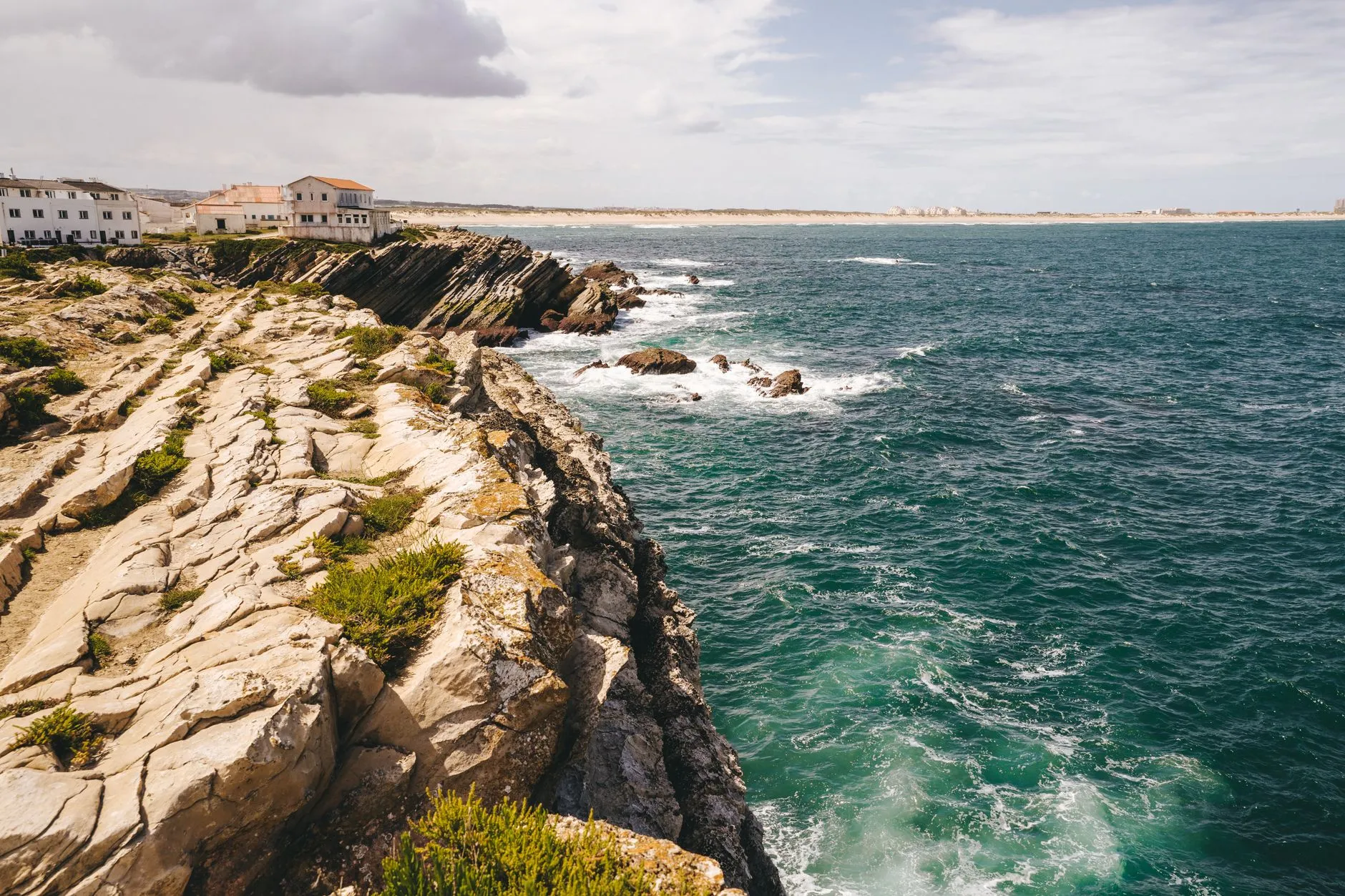
The slab is a flat shelf of rock running out from the north side of the island, and the wave breaks along its outer edge. The peak sits in front of the rocks: a left that stands up, feathers, and then peels down the shelf toward the beach at a speed a longboard can keep up with. On smaller days the wall is soft and slow, more shoulder than face, and the ride is about trim and timing rather than turns. A shorter right runs off the same peak on some swells, worth a look when the pack on the left gets thick.
Give it a winter northwest swell at head-high or more and the same slab does something else. The wave stands up taller, the wall gets proper speed and a real face to turn on, and the ride runs a long way toward the campsite before it fades over the inside rocks. Lagide will never be Supertubos, it does not barrel and it rarely closes out, but on its day it is a long, fast, high-quality left, and the locals who learned here treat those days as their own.
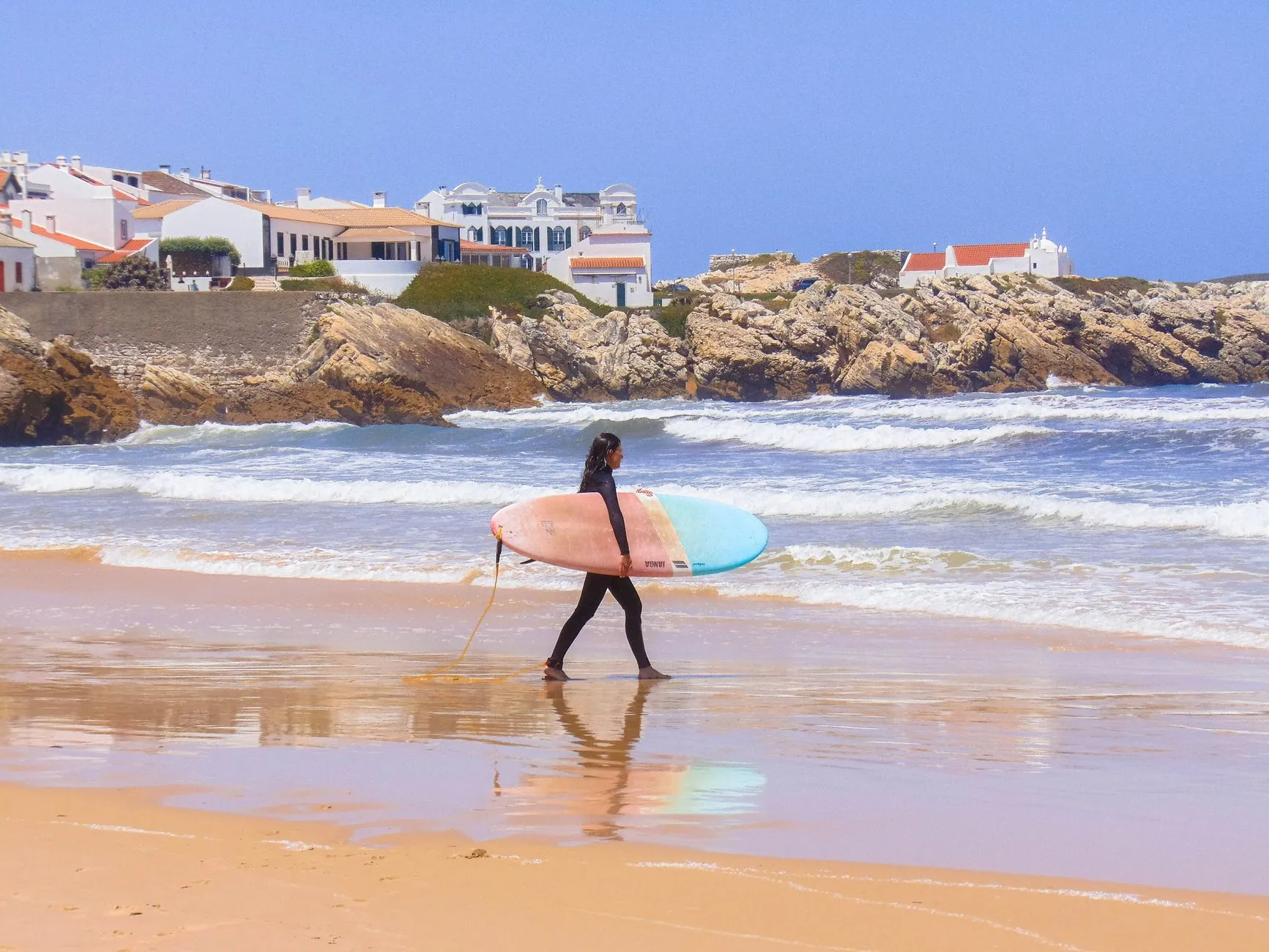
A surfer walking along the sand at Peniche
When it works
Lagide breaks at some size nearly all year, which is rare on this coast, and the reef is the reason: it needs less swell than the beaches to shape a wave and it keeps its shape when they lose theirs. The best windows are September to November, when the first autumn swells arrive while the water still holds 16 to 19°C and a 3/2 does most of it, and March to April, when the winter storms space out and long-period swells find the slab in a good mood. From December to March the water drops to 14 to 15°C, boots and a 4/3, and the swell can be too big and messy for days at a time. Summer is small, clean at dawn, and crowded.
Wind decides the day more than swell does. South to southeast is offshore here. The nortada, the north wind that blows most afternoons from May to September, is onshore on this side of the island and tears the wave up by late morning, so summer at Lagide means the dawn patrol. When it is blowing, cross the peninsula: Supertubos and Molhe Leste face the other way and the same wind grooms them. That is Peniche's logic, one side of the peninsula is always offshore, and Lagide is the morning half of it.
The lineup and the take-off
There are two ways in. On smaller days most people paddle out from the sand at the north beach and work along the rocks toward the peak, a longer paddle but a safe one. When it is bigger, the locals step off the shelf at the corner between sets, which saves the paddle but asks you to read the ocean first: watch a full set from the rocks, count the waves, and go in the lull. Booties on either way, because the walk is over flat rock and urchins.
The peak sits tight in front of the rocks and so does the pack: the locals, the camp coaches and the longboarders who know the wave to the meter take the set waves there, and arguing with that is pointless. Sit a little down the line instead and take the walls the peak lets through. Lagide is long enough that a shoulder halfway down is still a good ride. Keep the inside rocks in view, remember the wave ends in front of the campsite, and on bigger days expect a pull along the rocks that keeps you working to hold your spot.
Getting there and where to stay
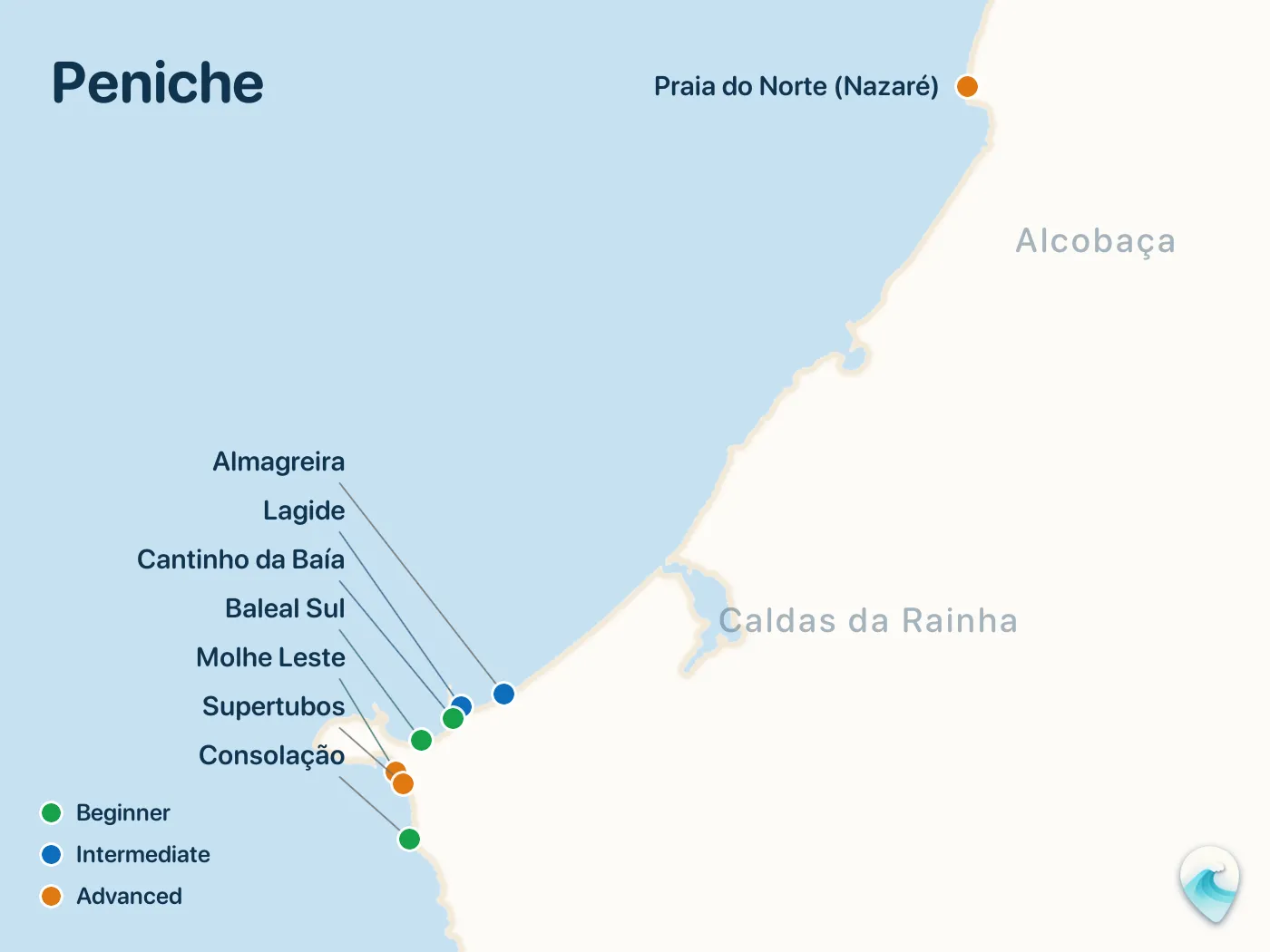
Lagide is about five minutes from Peniche by the road across the causeway, and the closest parking is on the island itself, by the campsite above the reef. It fills early on summer mornings, so in July and August park on the isthmus and walk. Lisbon is a little over an hour south on the A8, close enough that people drive up for a day. Most people stay in Baleal itself, in Ferrel, the village behind the isthmus, or in Peniche, with surf camps and guesthouses in all three. For small days or a first wave, the sand of Cantinho da Baía begins where the reef ends, and Baleal Sul is on the other side of the causeway for nortada afternoons: a week here rarely needs the car.
Hazards
Urchins all over the flat rock: booties for the walk in and out are the local uniform, not a fashion choice
A shallow, sharp takeoff at lower tides: wait for the mid tide to put water on the slab
Rocks close on the inside where the wave ends: kick out before the shelf, especially on a longboard
A tight pack of camp groups and longboarders on the peak: read the rotation before you paddle into it
A pull along the rocks on bigger days: pick a marker on land and check it between waves
An honest guide to surfing Peniche: Supertubos, the Baleal learning bays, the 8 spots that matter and the day trip to Nazaré's giants, with the season month by month and what to expect in the water.
For most surfers, yes, probably the best in Portugal to start on. At chest-high the wave is slow and forgiving, the bottom is a flat shelf rather than a jagged ledge, and the ride is long enough to learn what a reef feels like underfoot. Pick a small day at mid to high tide, wear booties for the walk, and sit a little down from the peak. Once it is overhead the wave changes character, and so should your plans.
What tide is best at Lagide?
Mid to high tide. The reef needs water: from mid tide up the takeoff has depth, the wall is smooth and the left peels with its usual patience. At low tide the slab shows its bones, the takeoff turns shallow and sharp, the wave sections and the inside gets ugly, so the locals wait. On the smallest days some surfers find full high tide a little fat, so if in doubt aim for the push through mid tide.
Where do you park and paddle out at Lagide?
Drive across the causeway onto the island and park by the campsite above the reef; it fills early in summer, and the isthmus is the fallback. Booties on, then either paddle out from the sand at the north beach and work along the rocks, the safe option, or step off the shelf at the corner between sets when it is bigger, after watching a full set. The ride ends toward the beach, so the walk back is short.