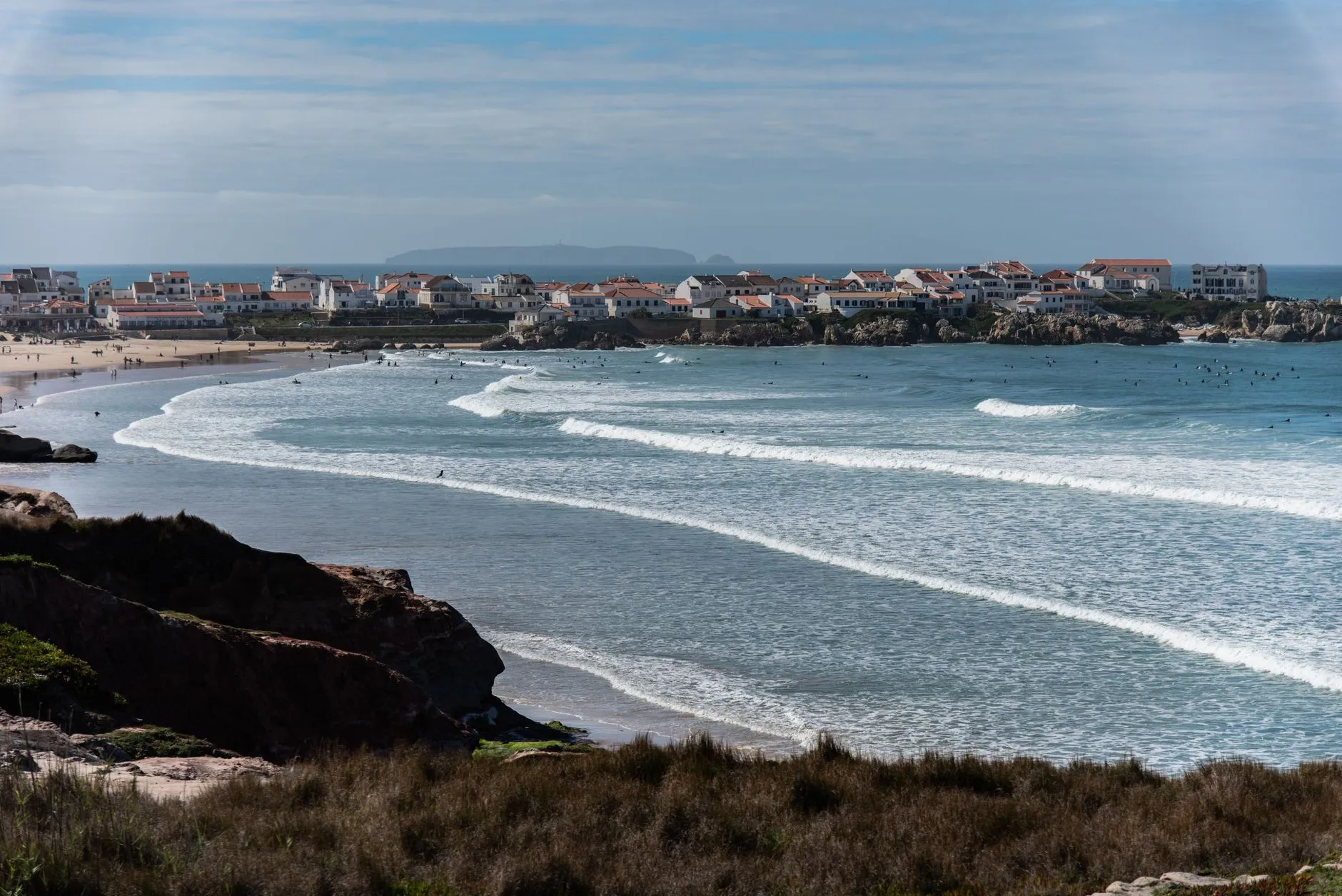
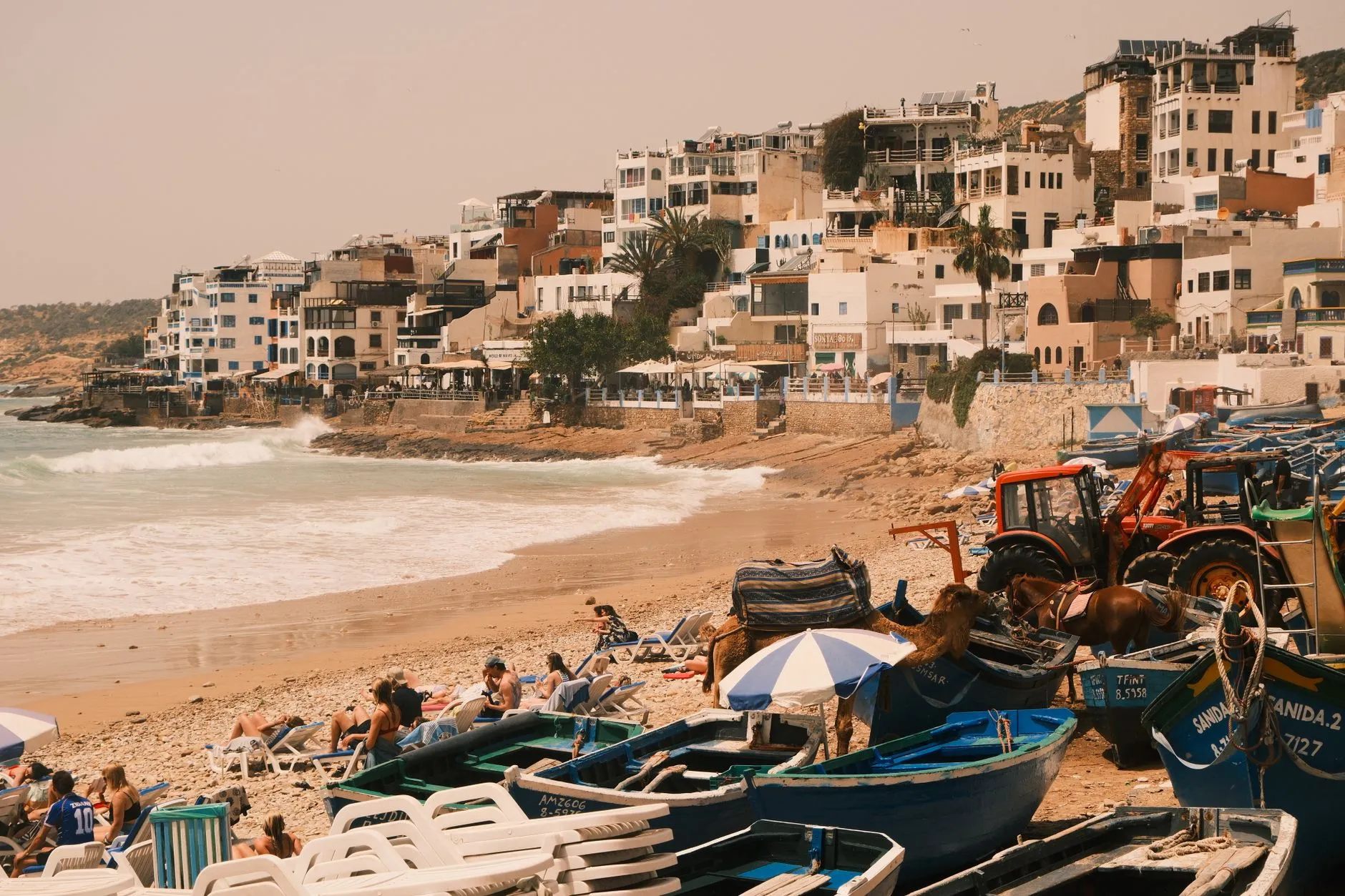
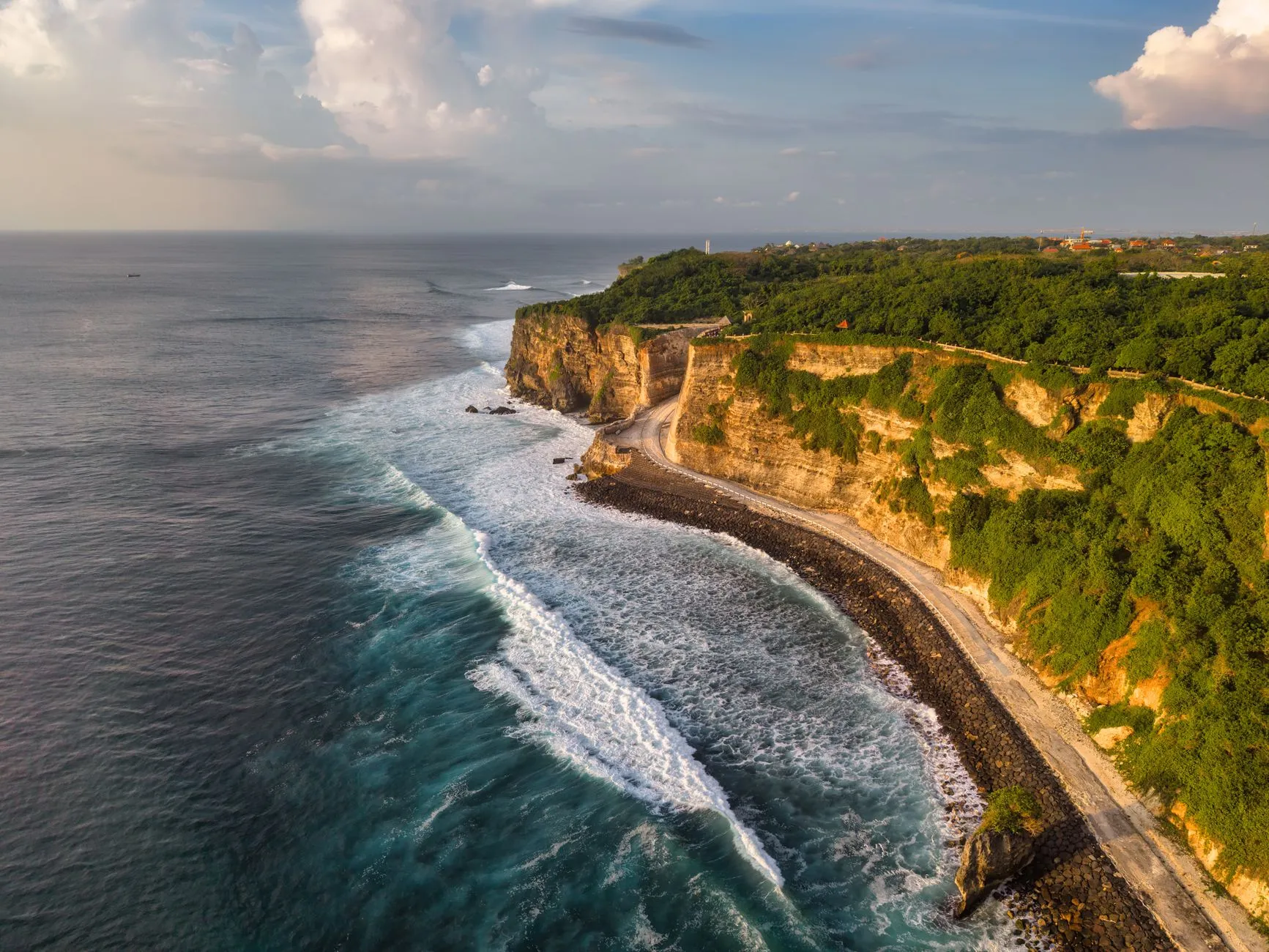
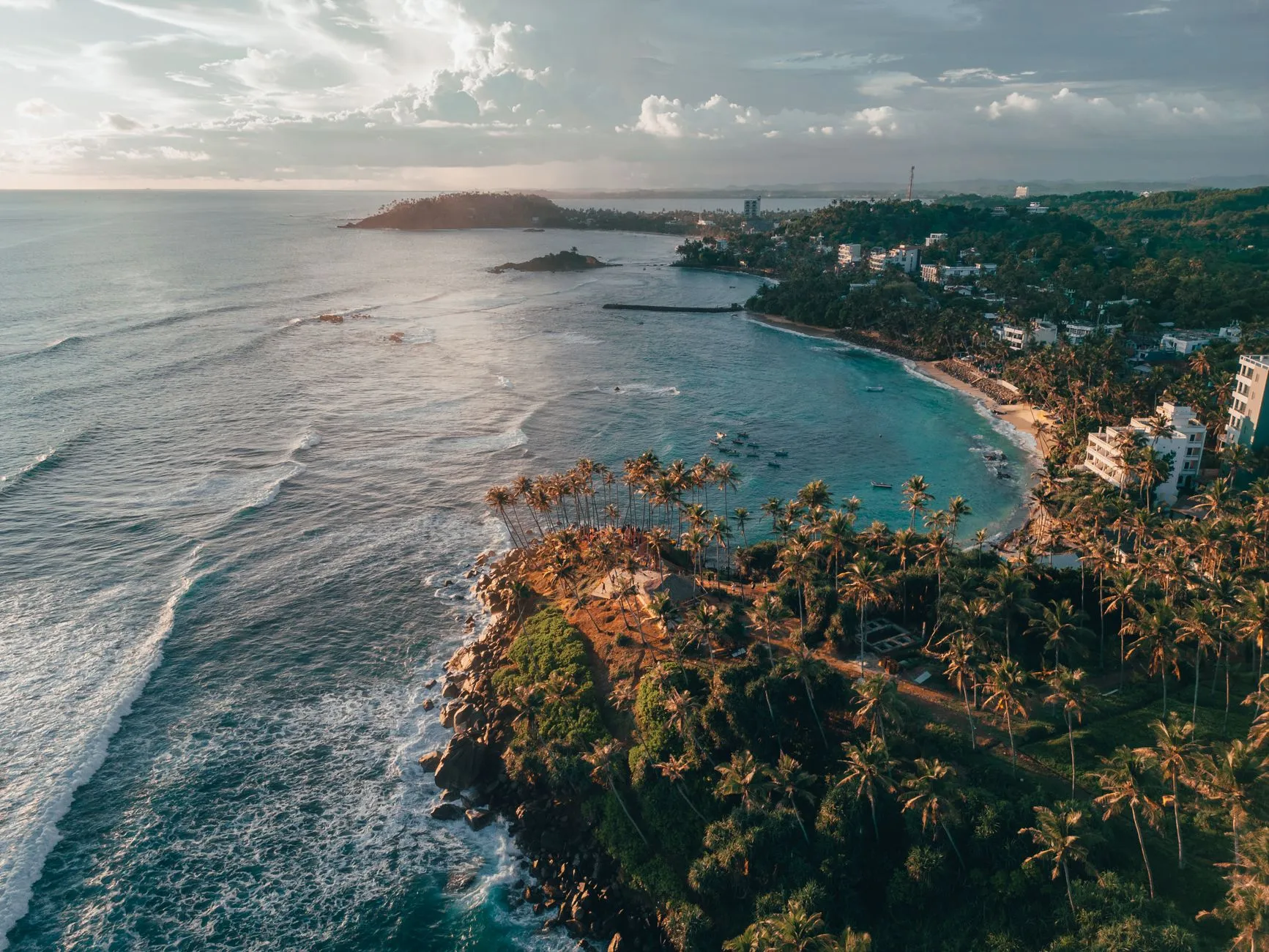
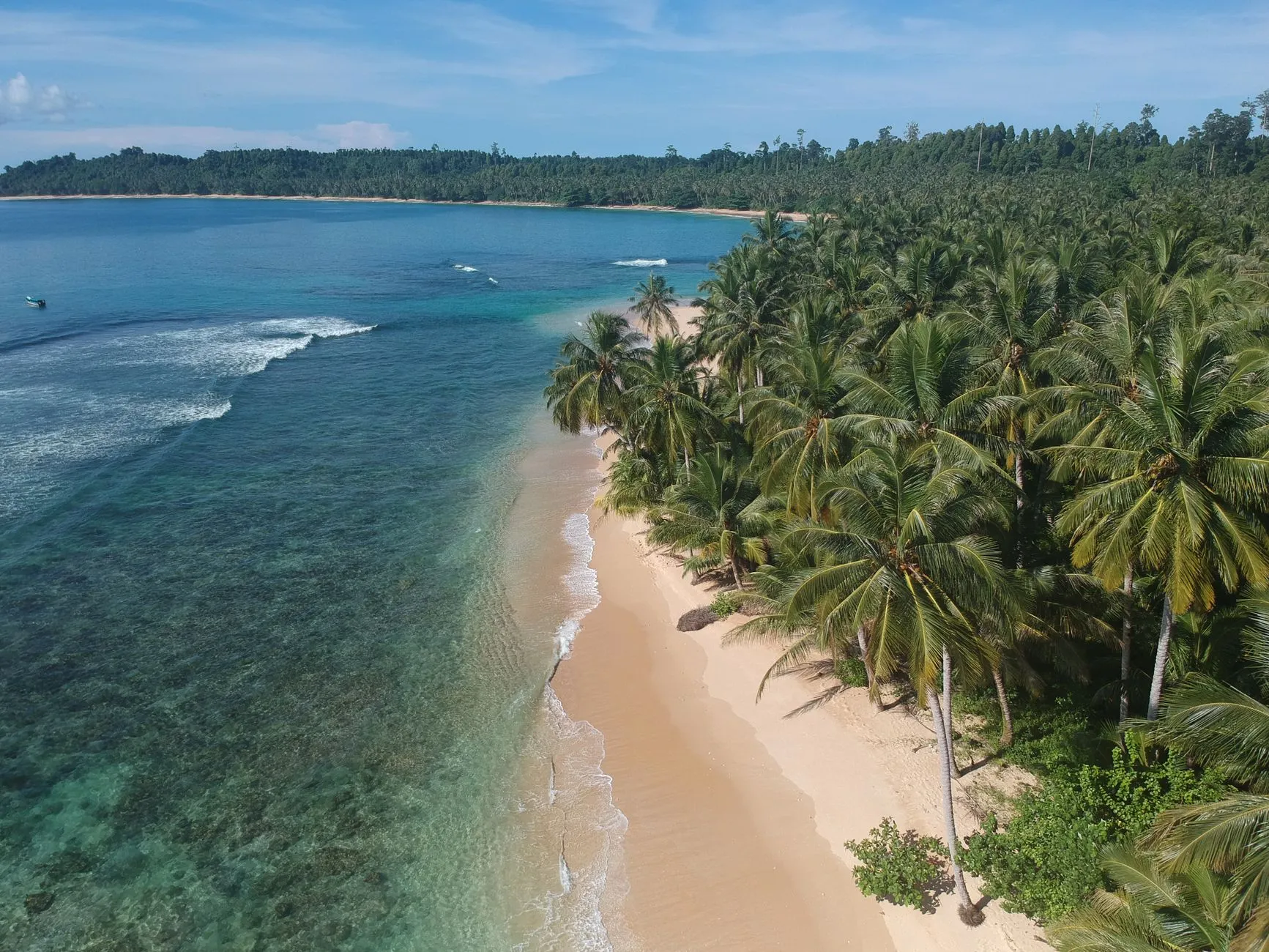
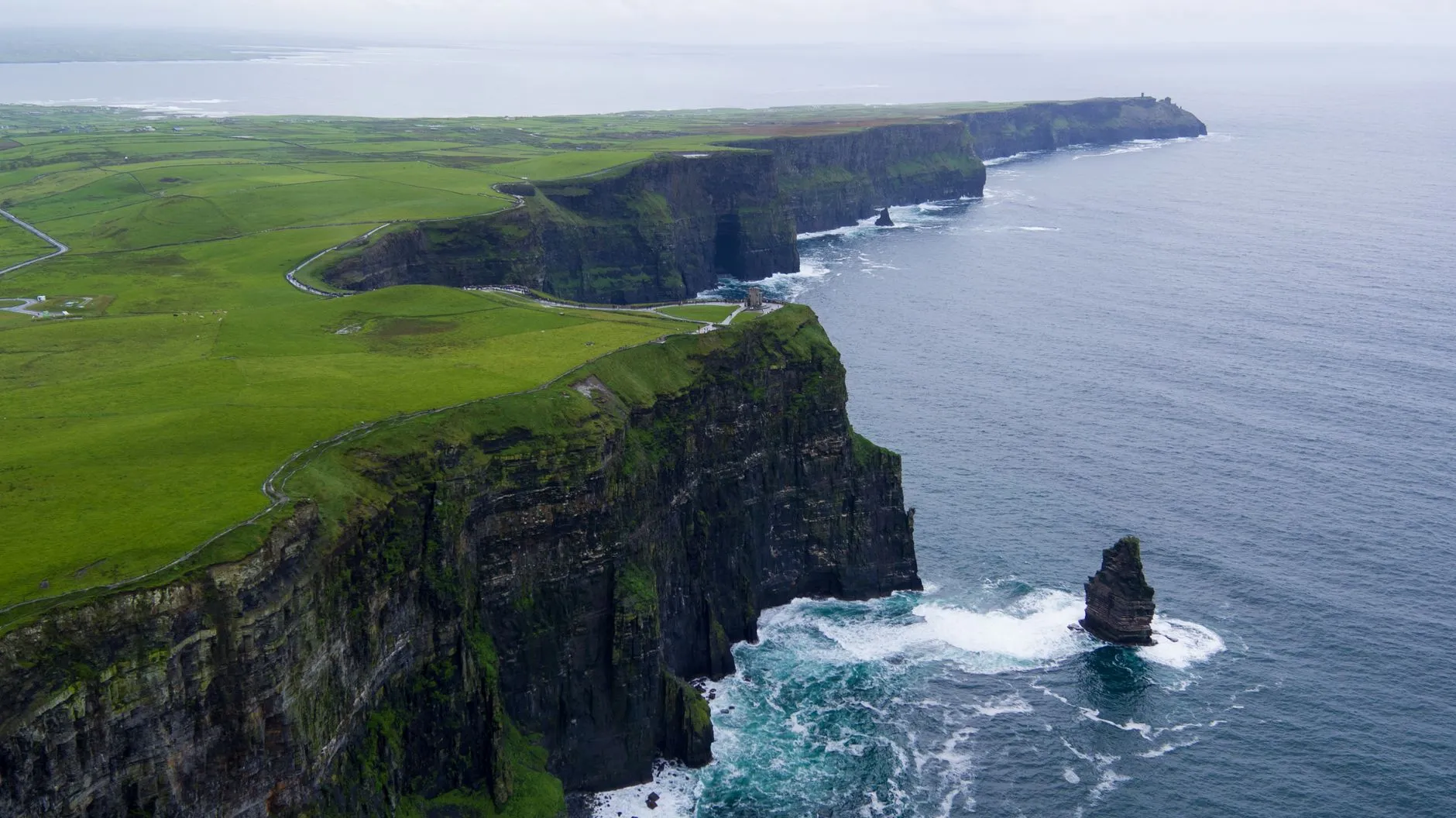
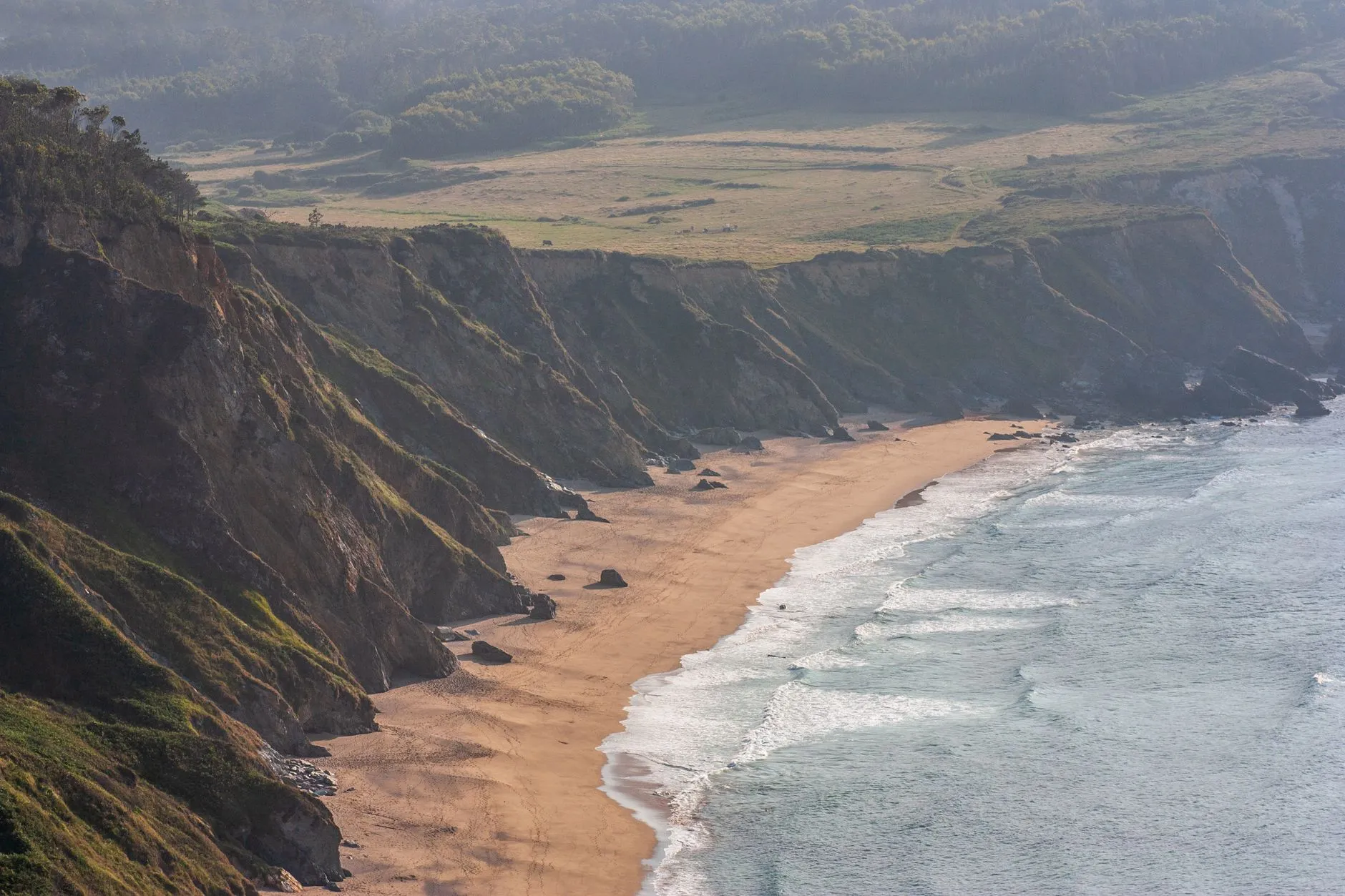
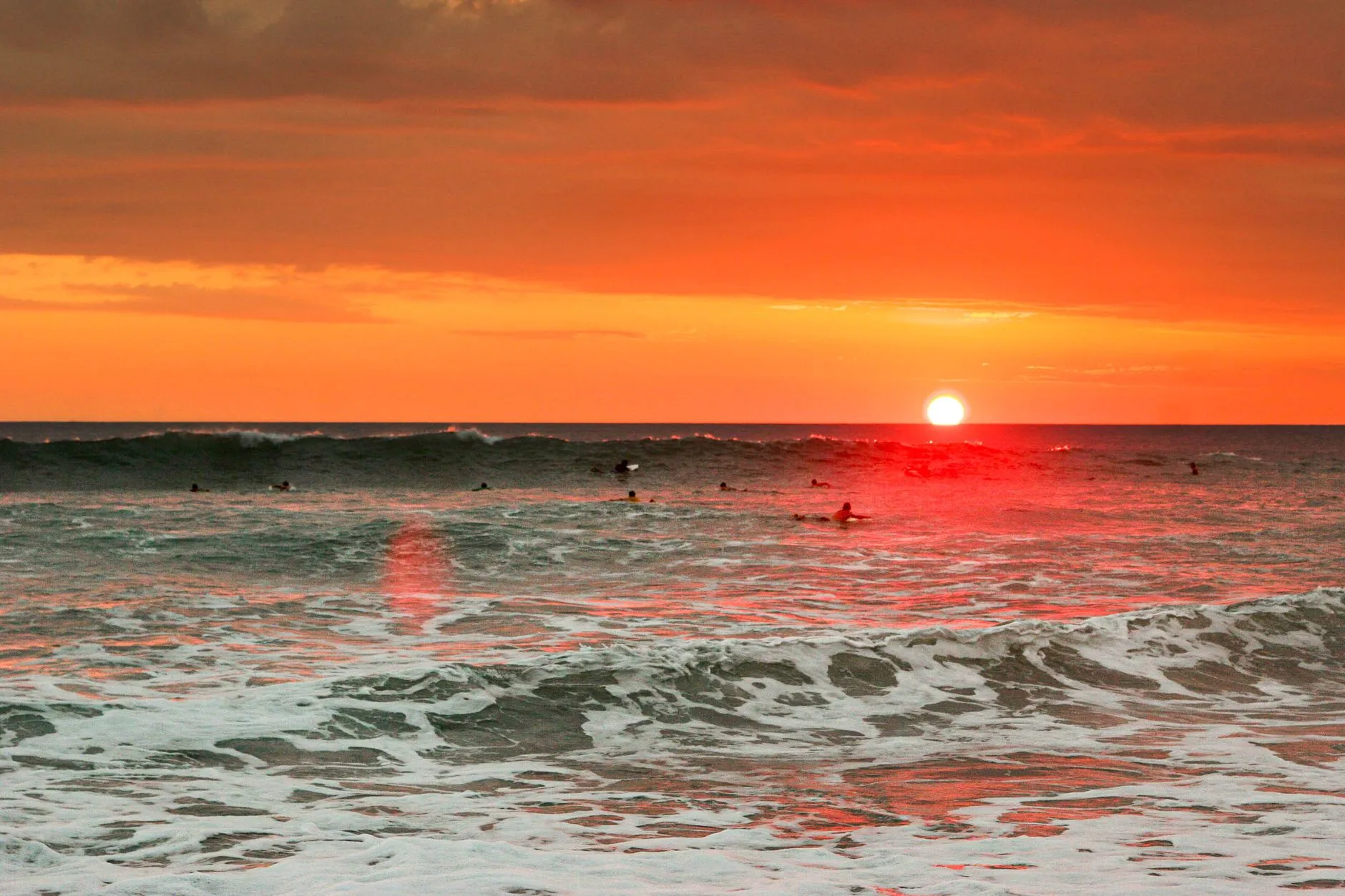
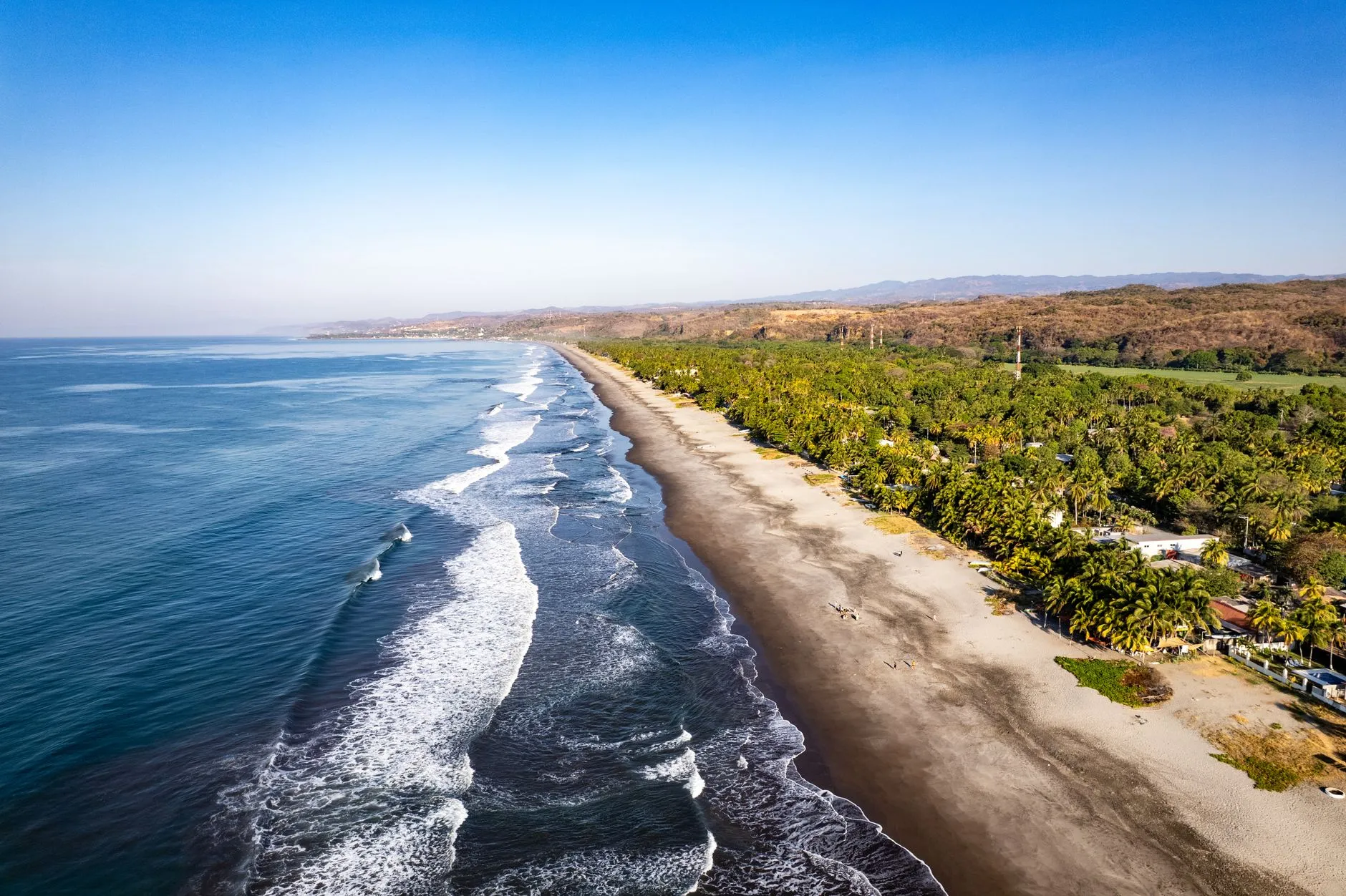
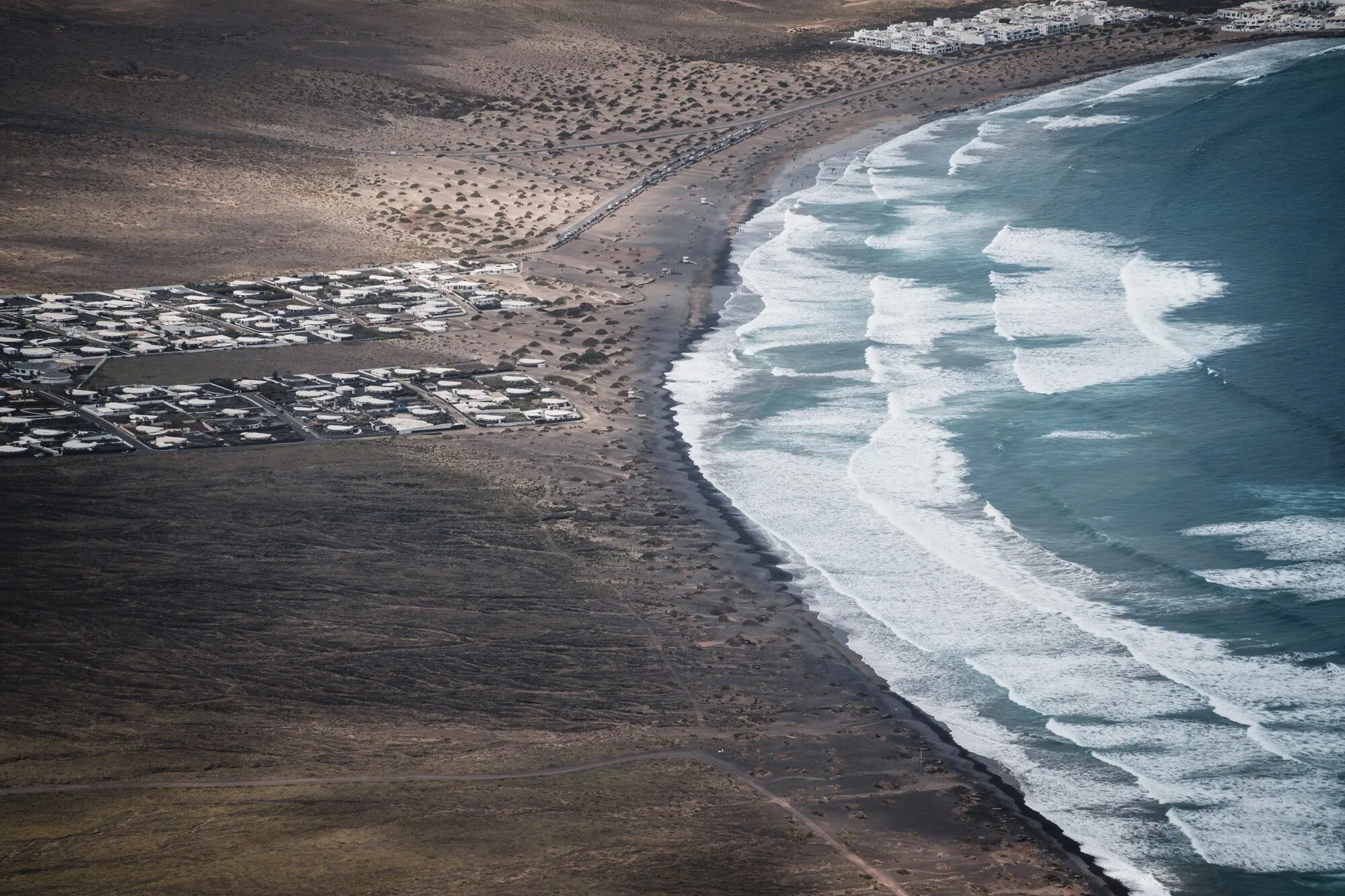
A fist of rock punched into the Atlantic an hour north of Lisbon, Peniche was a sardine-canning port long before it was a surf town, and the harbor still smells faithfully of both eras. What changed everything is geometry: the peninsula bends the coastline through a full right angle, so somewhere within ten minutes' drive a beach is always catching swell and always finding an offshore wind. Portuguese surfers coined the obvious nickname, the city of waves, and the camper vans of every European winter agree.
The south side holds the famous one: Supertubos, a sand-bottomed barrel machine that has hosted the world tour since 2009 and breaks harder than any beach break in Europe. The north side, around the walkable island-village of Baleal, does the opposite job with gentle bays where half the continent learns to stand up. And forty minutes north, past the lagoon, the submarine canyon at Nazaré turns winter storms into the biggest waves ever ridden, the mandatory day trip of any Peniche stay.
Best months
September to November; Nazaré's giants October to March
Water
14°C in winter, up to 19°C in late summer, rubber all year
Levels
Baleal's first waves to Supertubos and the Nazaré arena
Getting there
One hour north of Lisbon by the A8, a car unlocks both sides of the peninsula
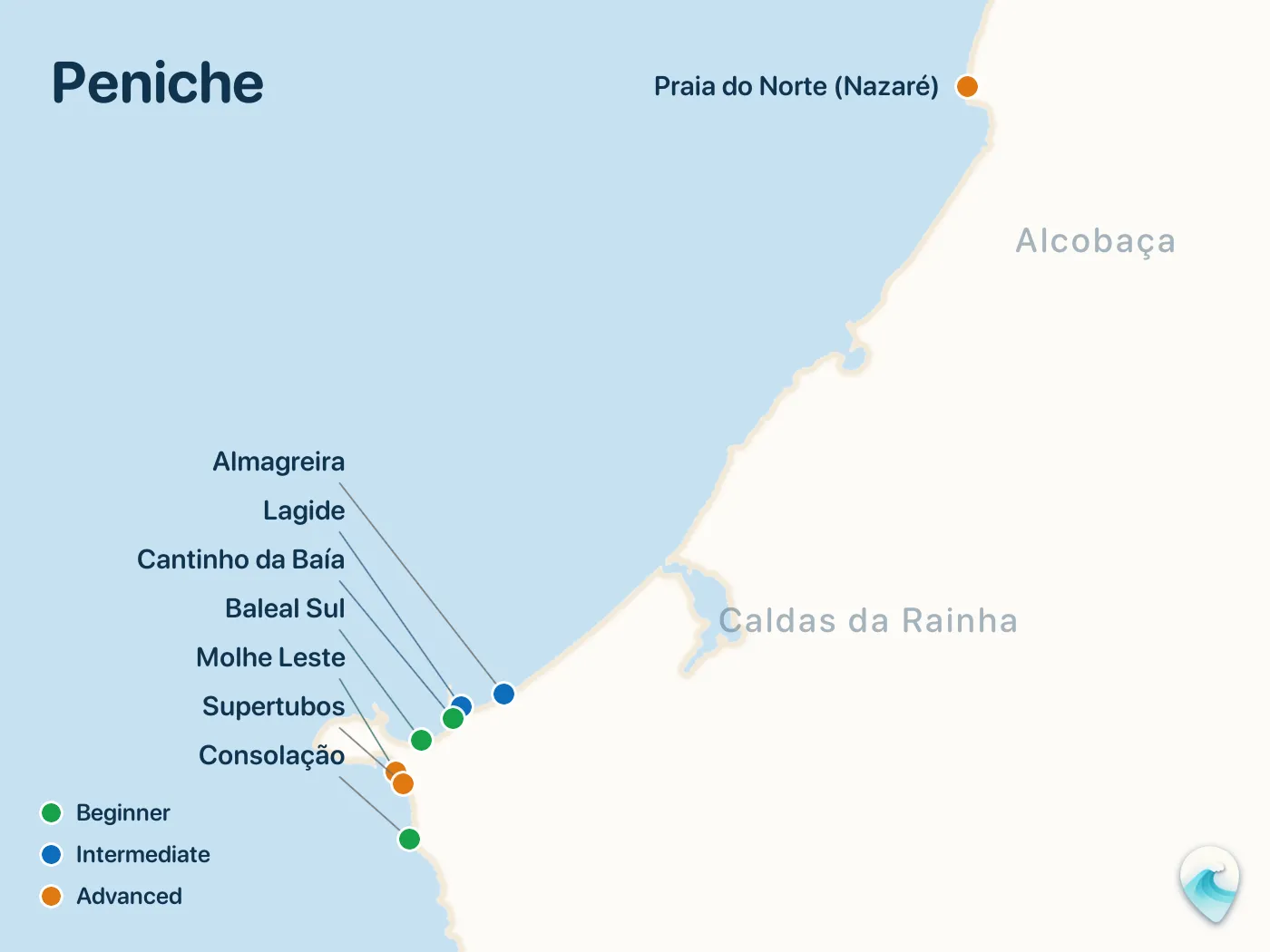
Three sheltered corners where the peninsula's wind trick works for you instead of against you. Sandy bottoms, patient waves, and a surf school within shouting distance whenever you want one.
Cantinho da Baía
Baleal · Beach break
Beginner
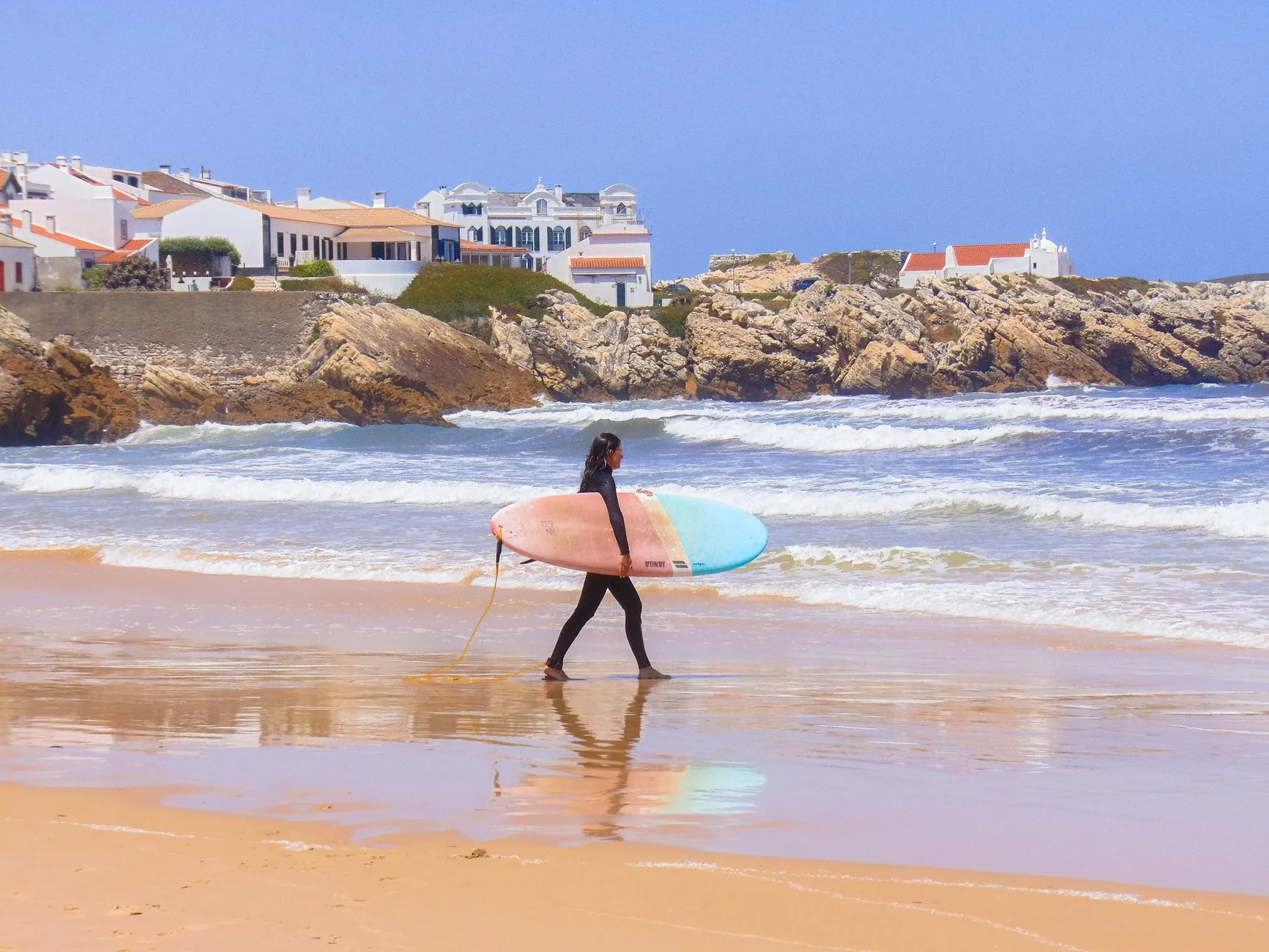
The gentle inside corner of Baleal bay, and possibly the busiest surf classroom in Europe. Soft peaks roll over sand toward a wide, walkable beach, surf camps line the dune, and the island village behind makes the after-session as good as the session. Learn here, then graduate fifty meters north to Lagide.
The south-facing side of the Baleal causeway, and the peninsula's wind trick in miniature: when the nortada ruins the north bay, Sul is combed clean by the same wind. Smaller and lazier than its neighbor on most days, it keeps beginners surfing through summer afternoons that blow out everything else.
Consolação
Consolação · Reef + beach break
Beginner
A hooked headland south of Supertubos with two personalities: a slow, fat reef peeling off the point that longboarders treat as home water, and a sheltered beach on the north side where lessons run when the rest of the coast is too big. Unfashionable, dependable, and exactly what half of surf trips actually need.
Homeward after a Baleal session
The everyday classics
A patient reef left and a shifting dune beach: where Peniche surfers actually spend their sessions between the famous days. Learn to read this coast here.
Lagide
Baleal · Reef left
Intermediate
Baleal's flat slab of reef peels a long, patient left that has taught half of Peniche to go backside. Mellow and longboard-friendly at chest-high, it grows a serious wall when winter swell arrives, which is why locals never quite retire from it. Your first reef wave in Portugal should probably be here.
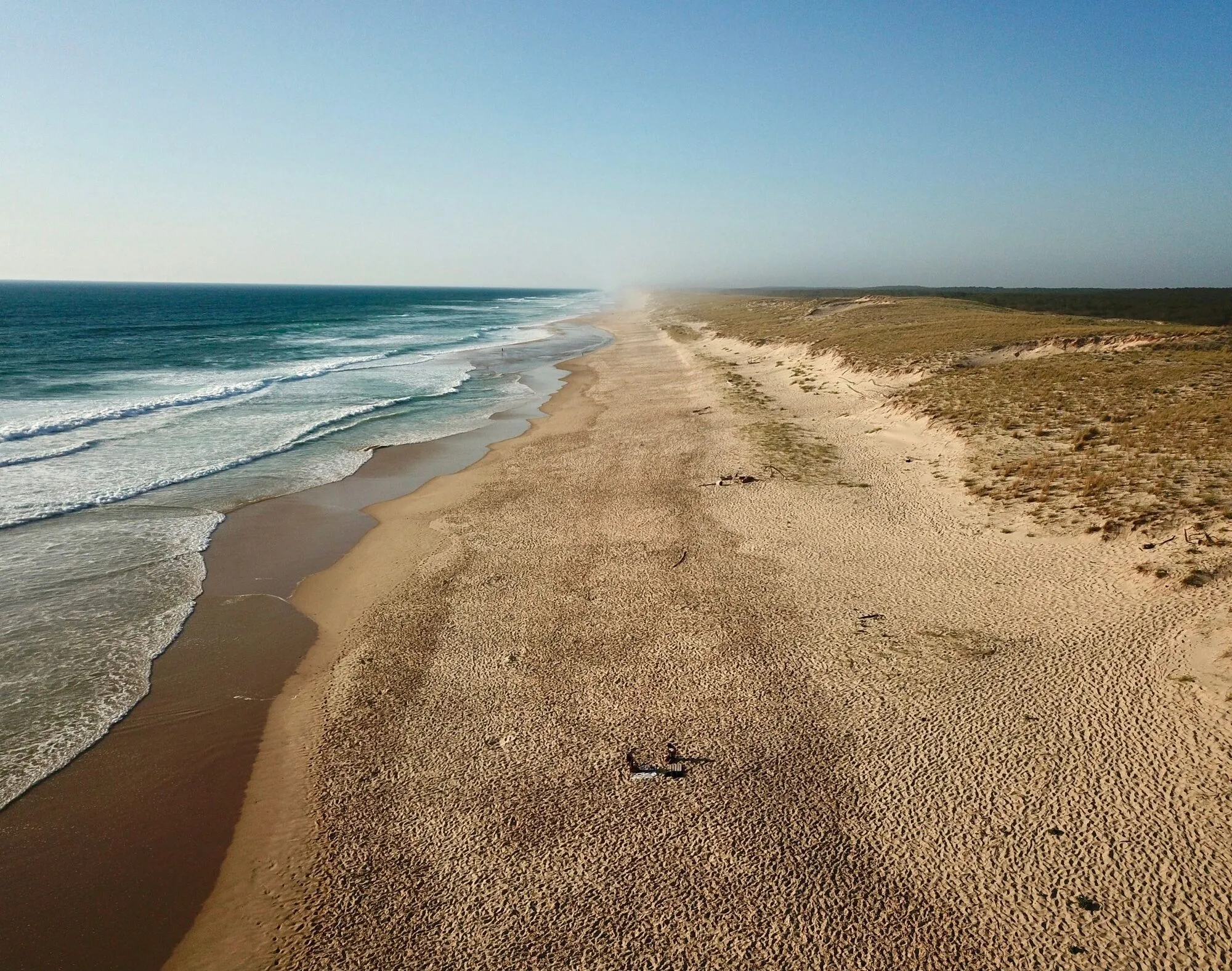
A long ribbon of dunes north of Baleal where the crowd dissolves and the sandbars do honest work. Almagreira picks up all the swell going, shifts its peaks with every storm, and rewards the surfer willing to walk a few hundred meters past the parking. The antidote to peak-season Peniche.
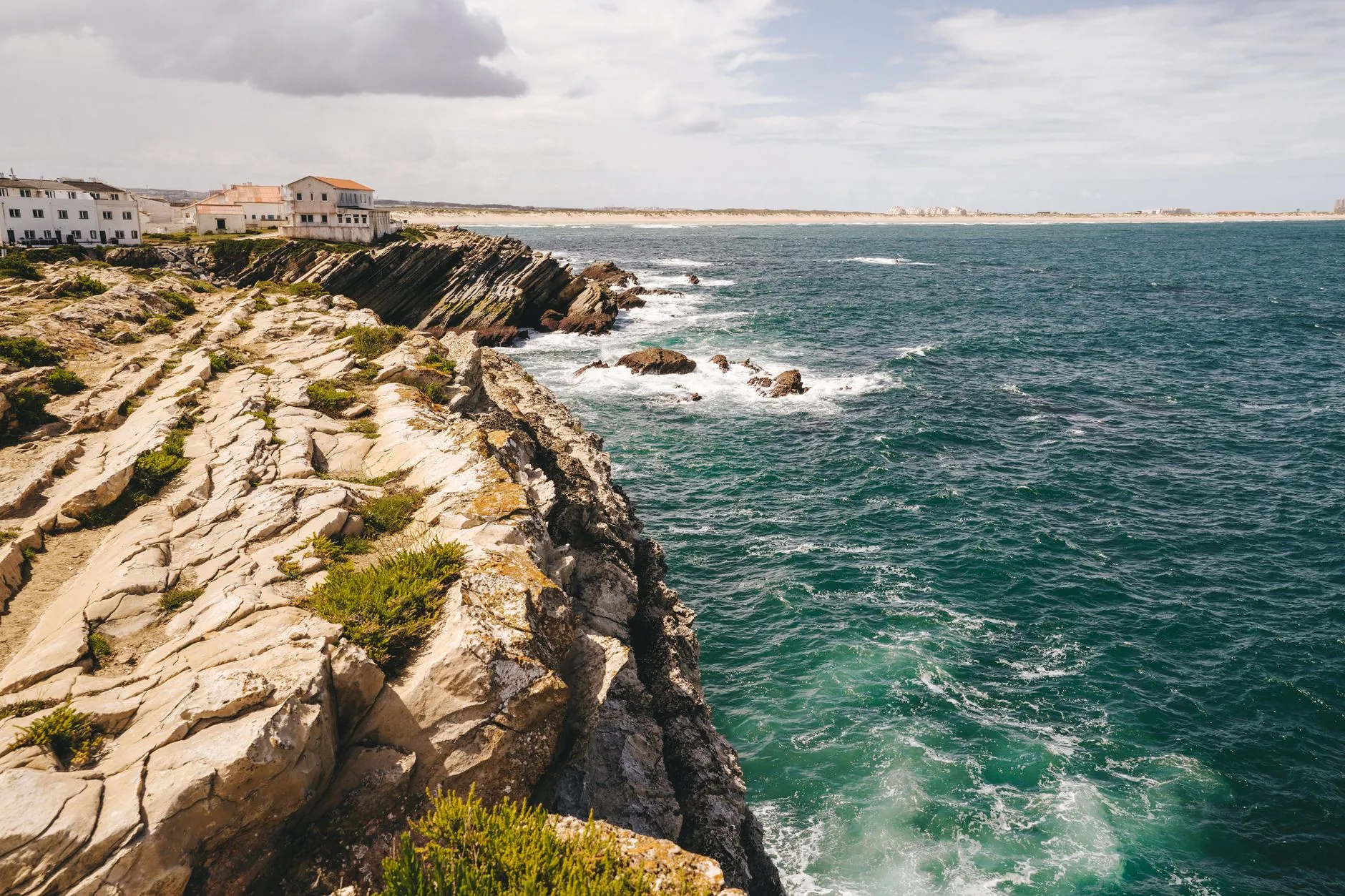
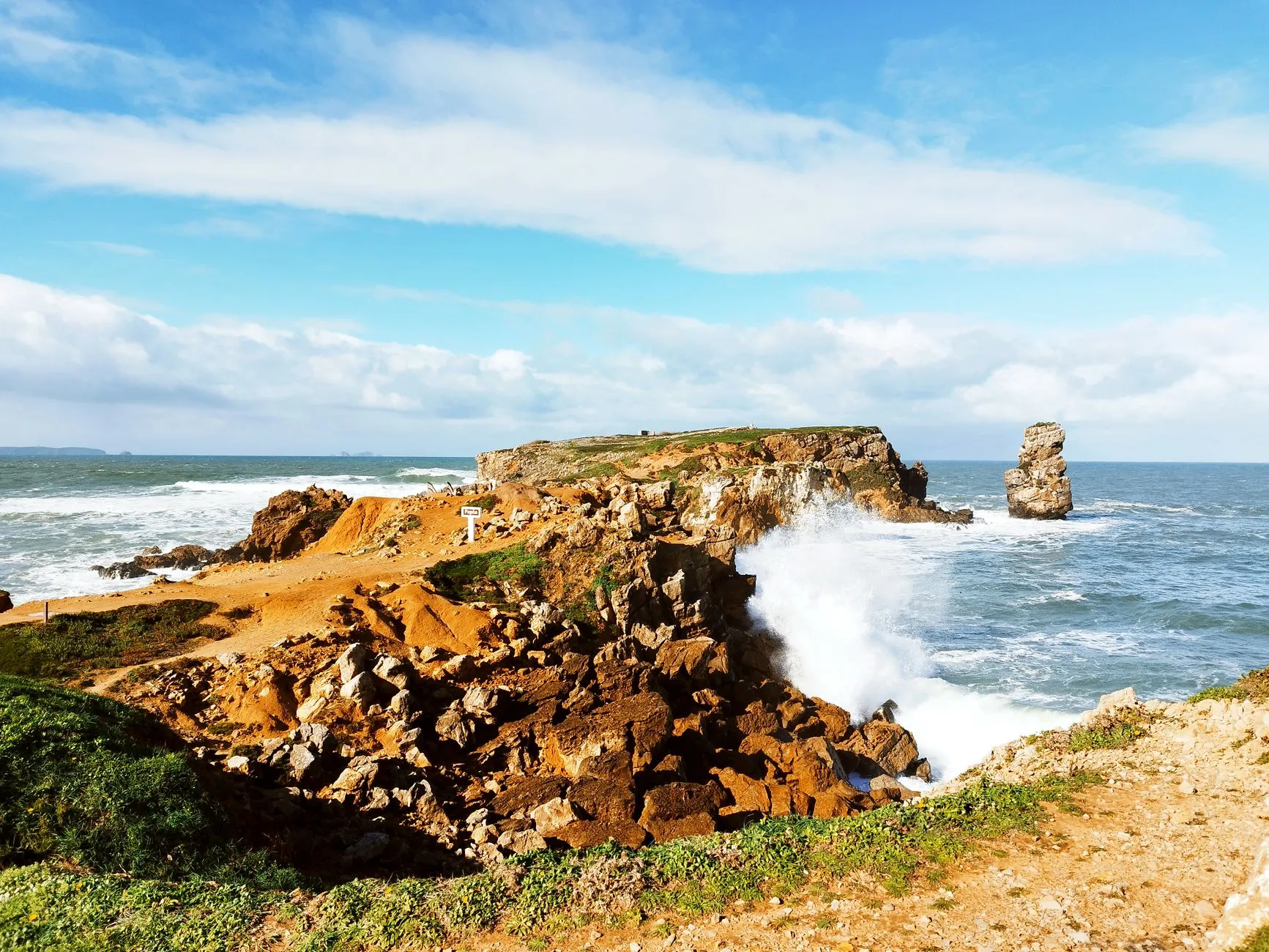
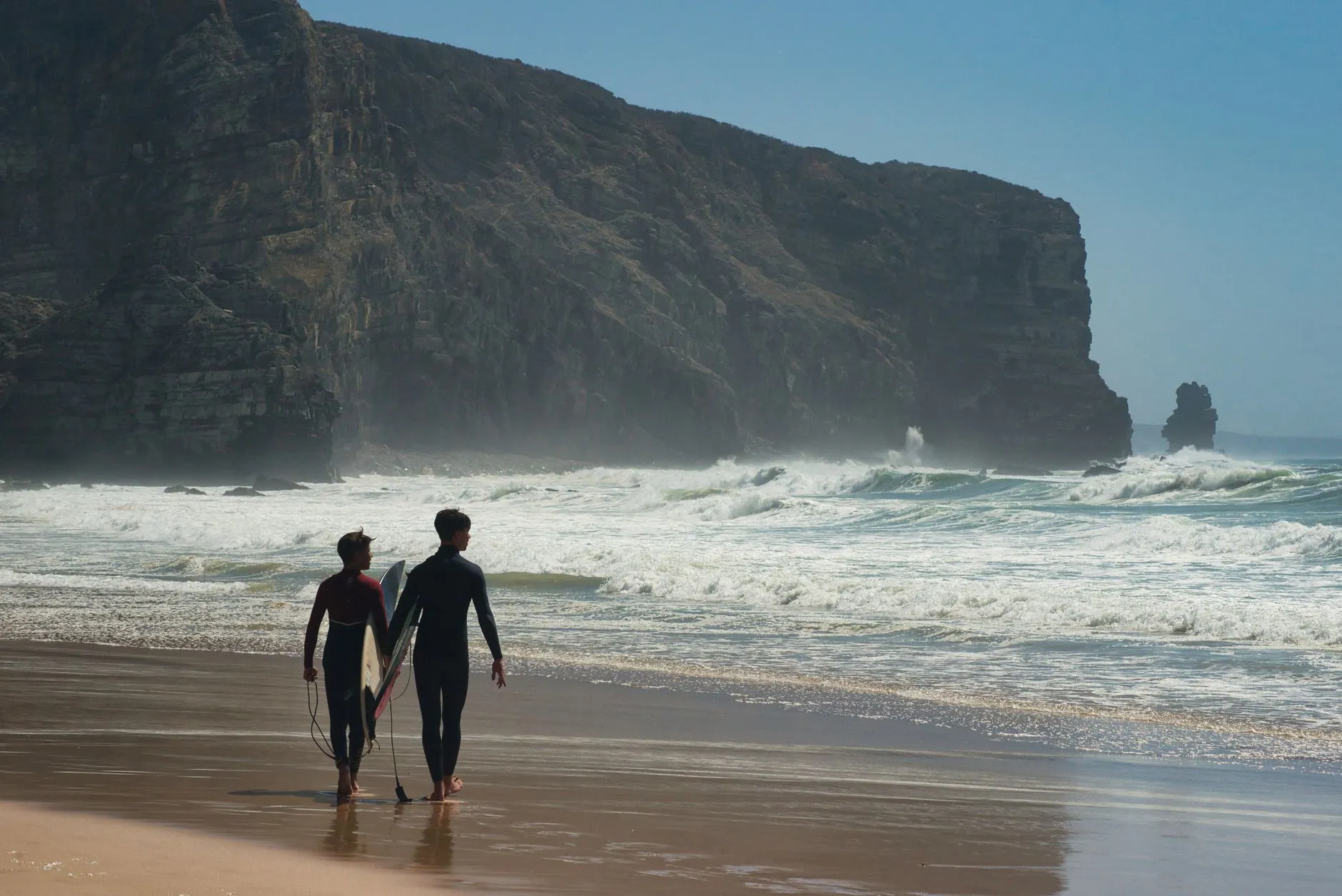
The cliffs of Baleal, Peniche on the horizon
The main events
Europe's heaviest beach break, its scrappy wedge of a neighbor, and the big-wave arena up the coast. The reasons this stretch of Portugal is on every serious surfer's map.
Supertubos
Peniche · Beach break (barrels)
Advanced
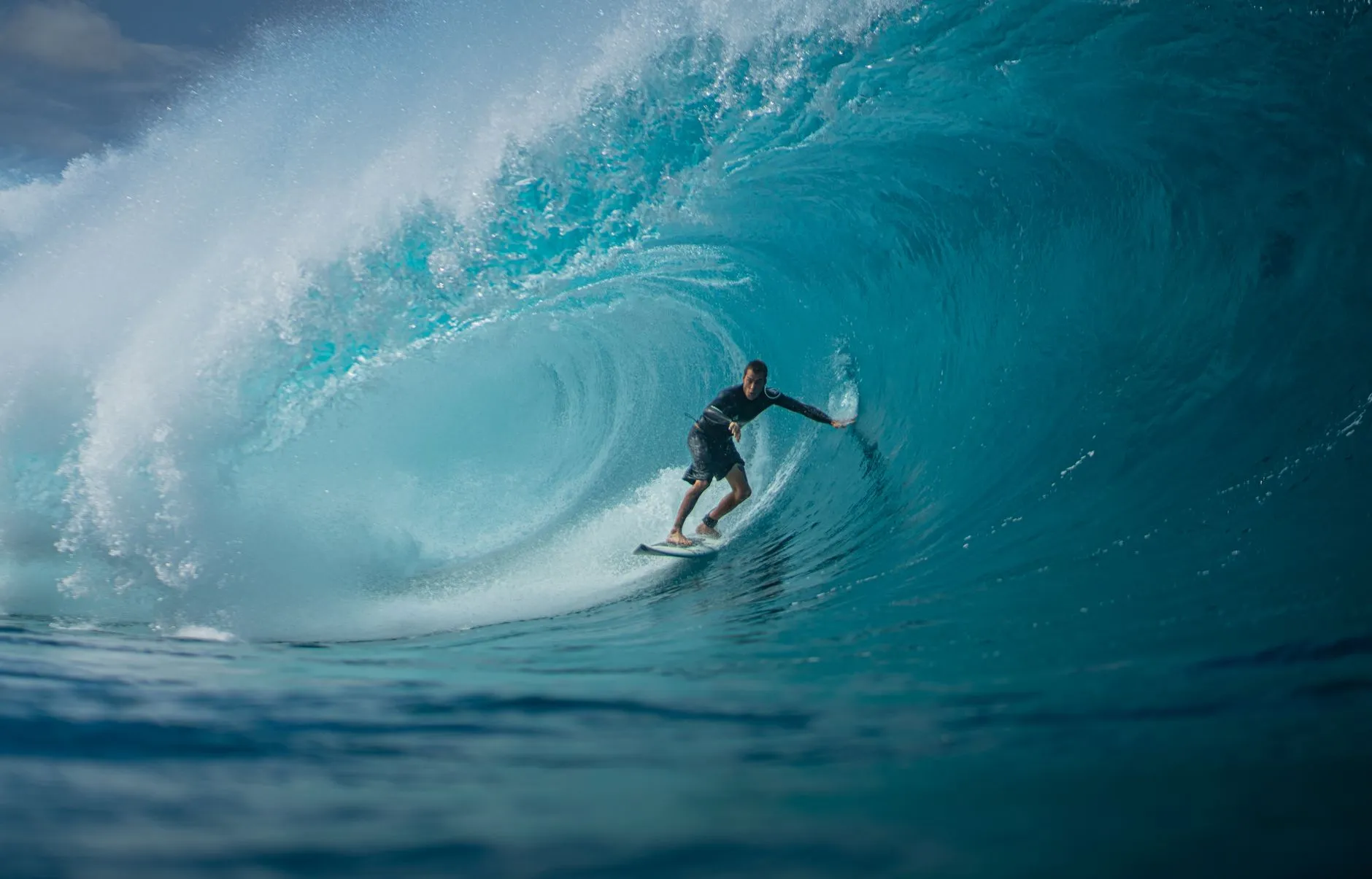
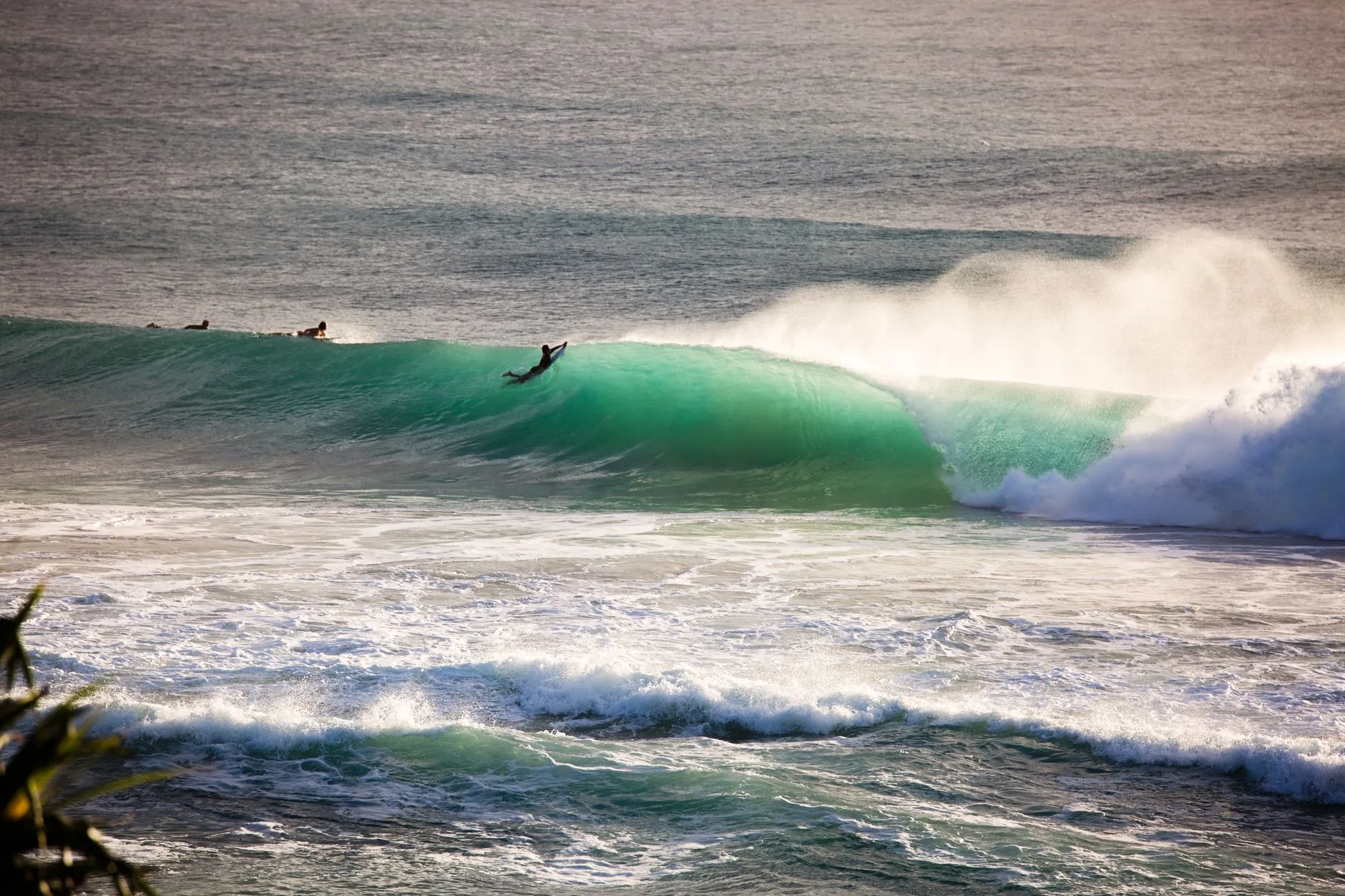
The European Pipeline, and for once the nickname undersells it. A deep-water trench funnels swell onto a shallow sandbar and the result is a square, spitting barrel that has decided world titles since 2009. It looks makeable from the beach; the shore-pound and the lip say otherwise. Watch a local pick one first.
The harbor's eastern jetty folds incoming swell back onto itself, and the collision throws a wedging left-and-right peak that hits harder than its size. Supertubos' scrappy neighbor gets hollow, breaks close to the rocks, and hosts the bodyboarders who own the steepest takeoffs. Worth a long look before paddling.
Praia do Norte (Nazaré)
Nazaré · Big-wave beach break
Advanced
The submarine canyon offshore focuses Atlantic storms into the biggest waves ever ridden, and the red lighthouse on the headland has become surfing's most famous grandstand. On ordinary days it is a heavy, shifty beach break for experienced surfers; on the giant days, leave it to the tow teams and watch history from the fort.
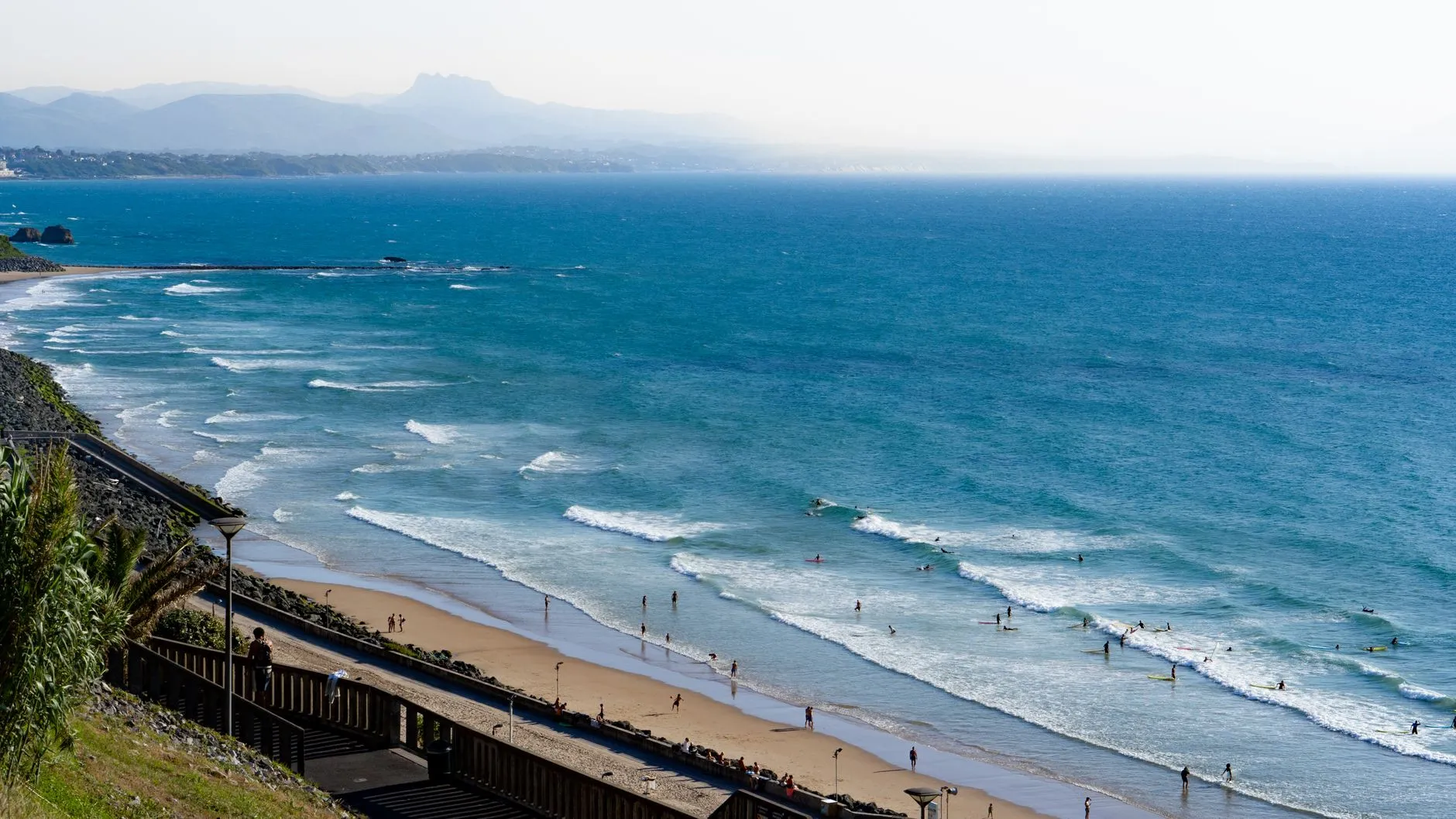
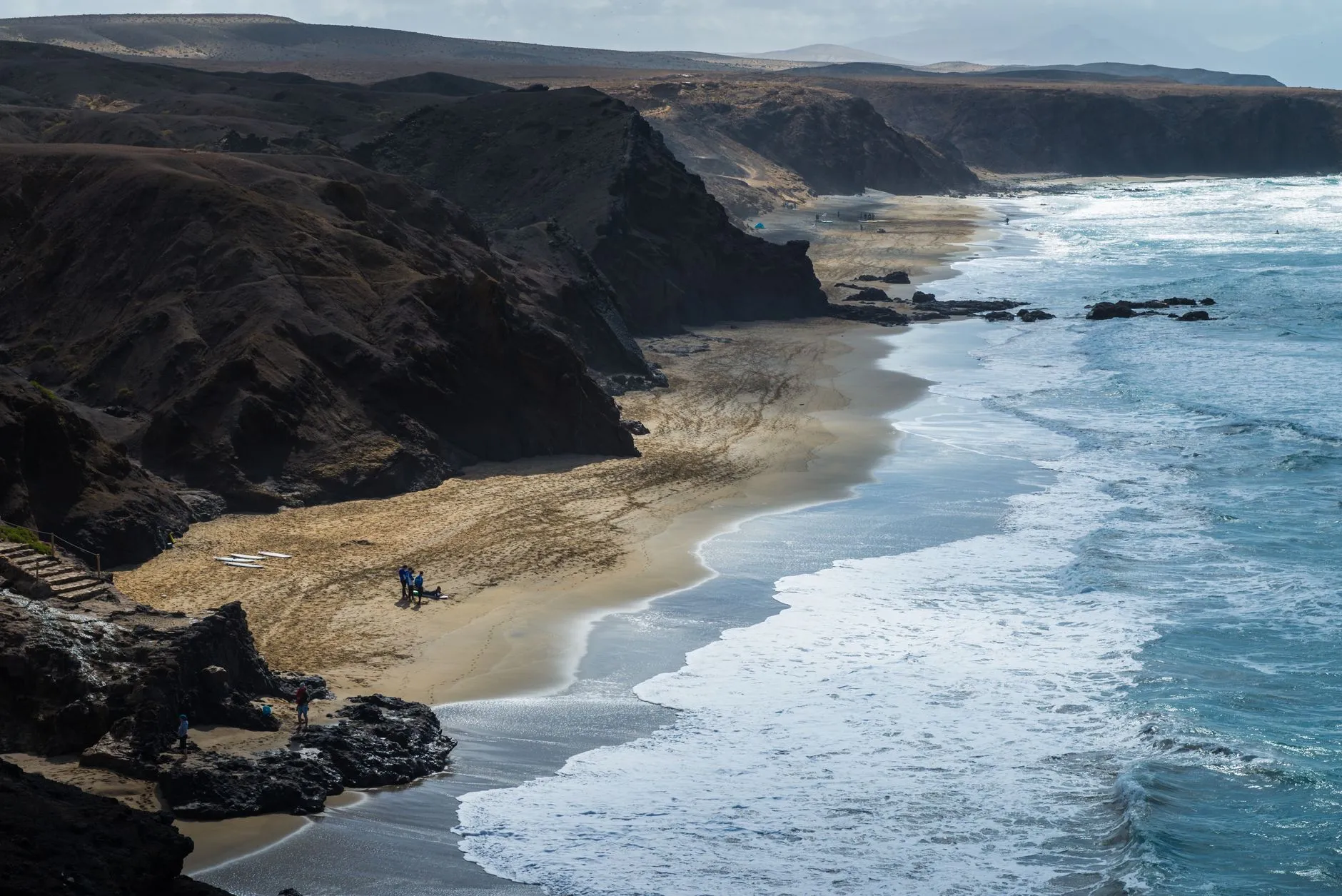
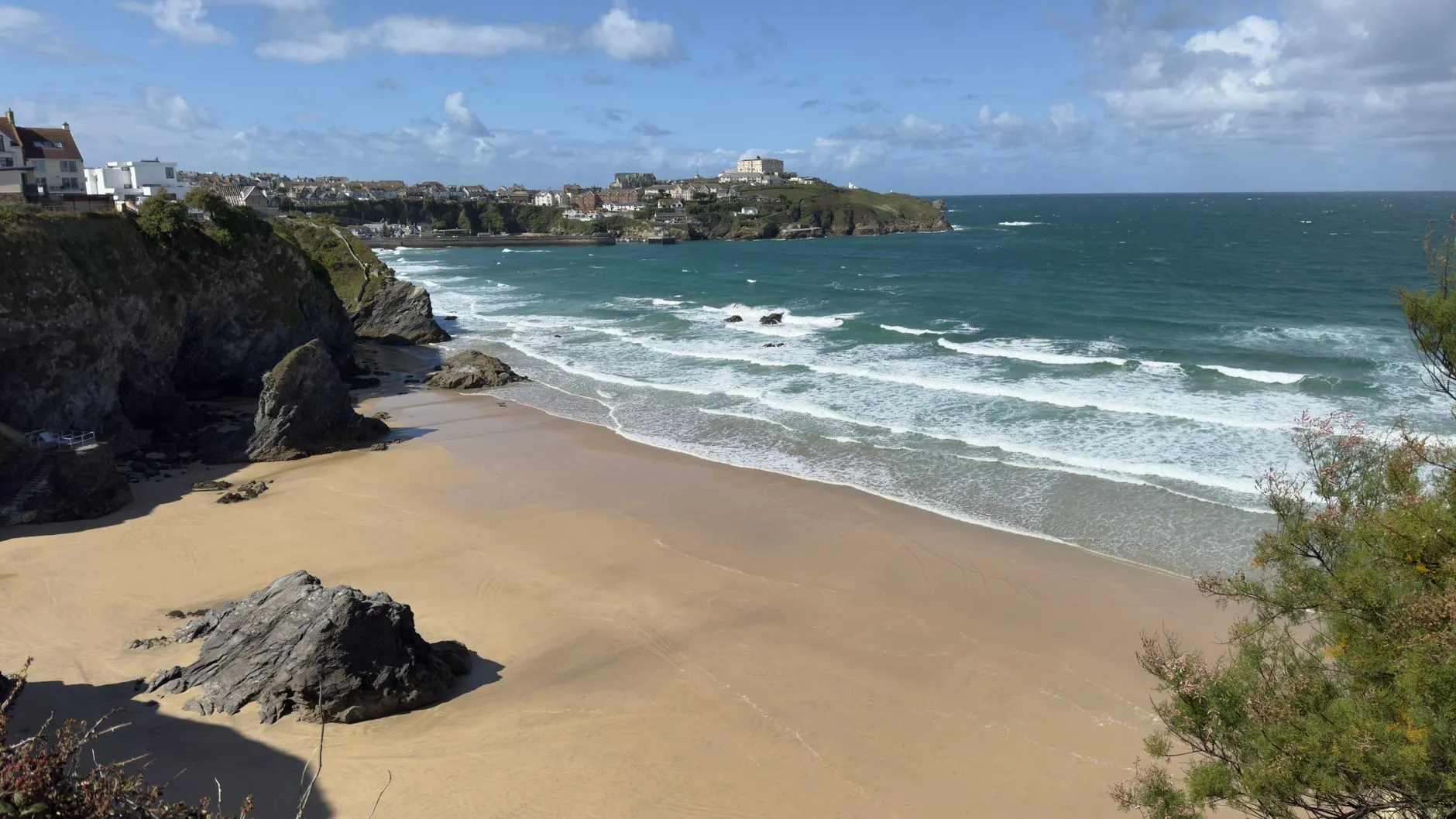
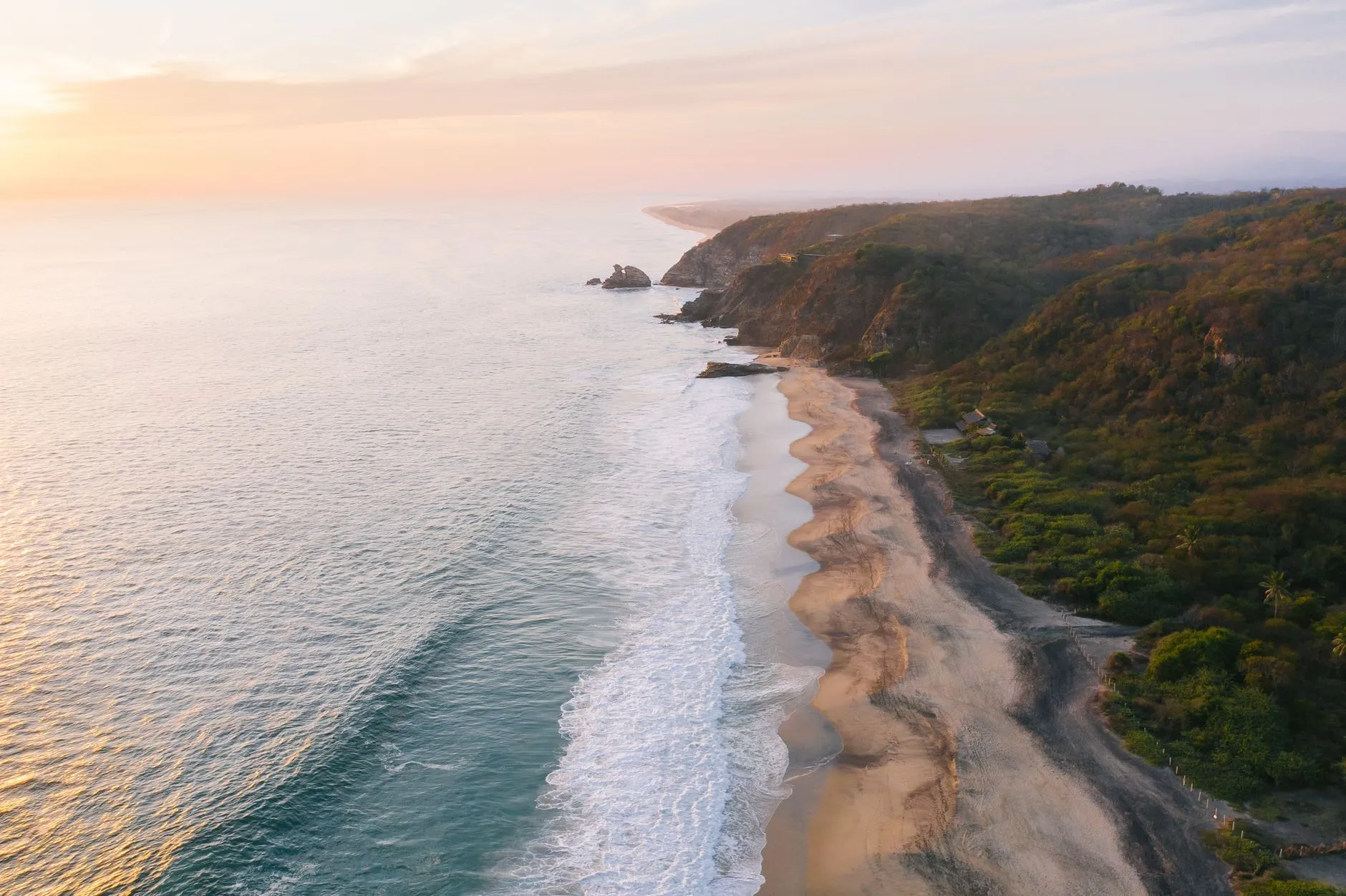
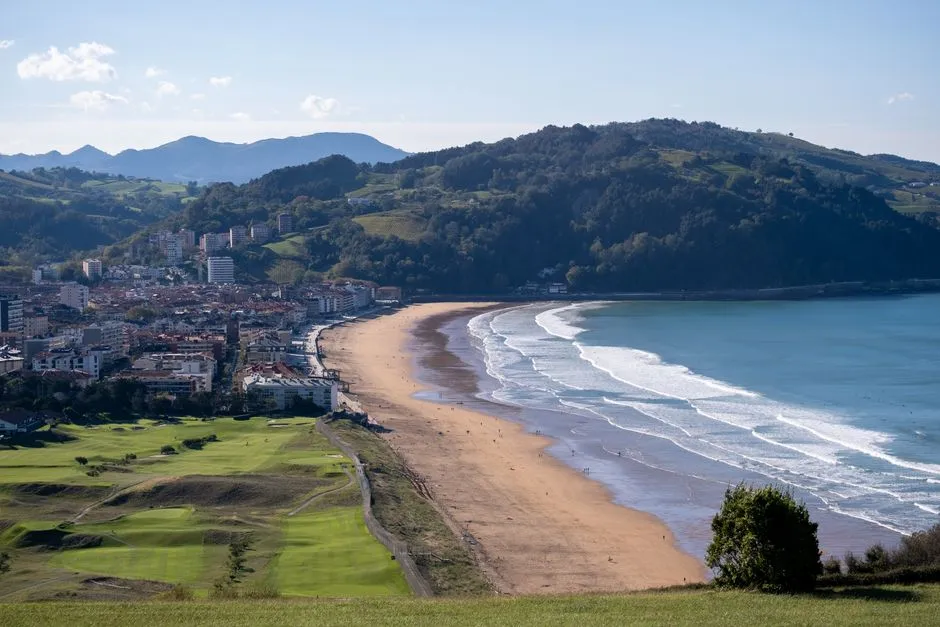
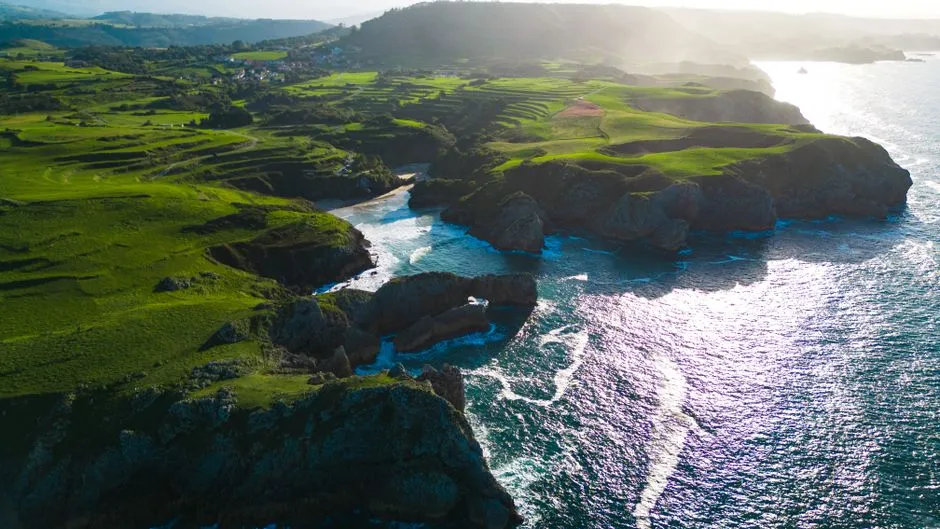
Peniche's trick works for towels as well as surfboards: the peninsula faces every direction at once, so whichever way the wind blows, one side is always sheltered. The scenery shifts fast too, from the black rock of the headland to the long dune-backed sands running north toward Baleal. Check the wind in the morning, pick your side, and you rarely lose a beach day. Just know that the water stays Atlantic-cold even in August: the brave swim, the sensible wade.
Praia do Baleal
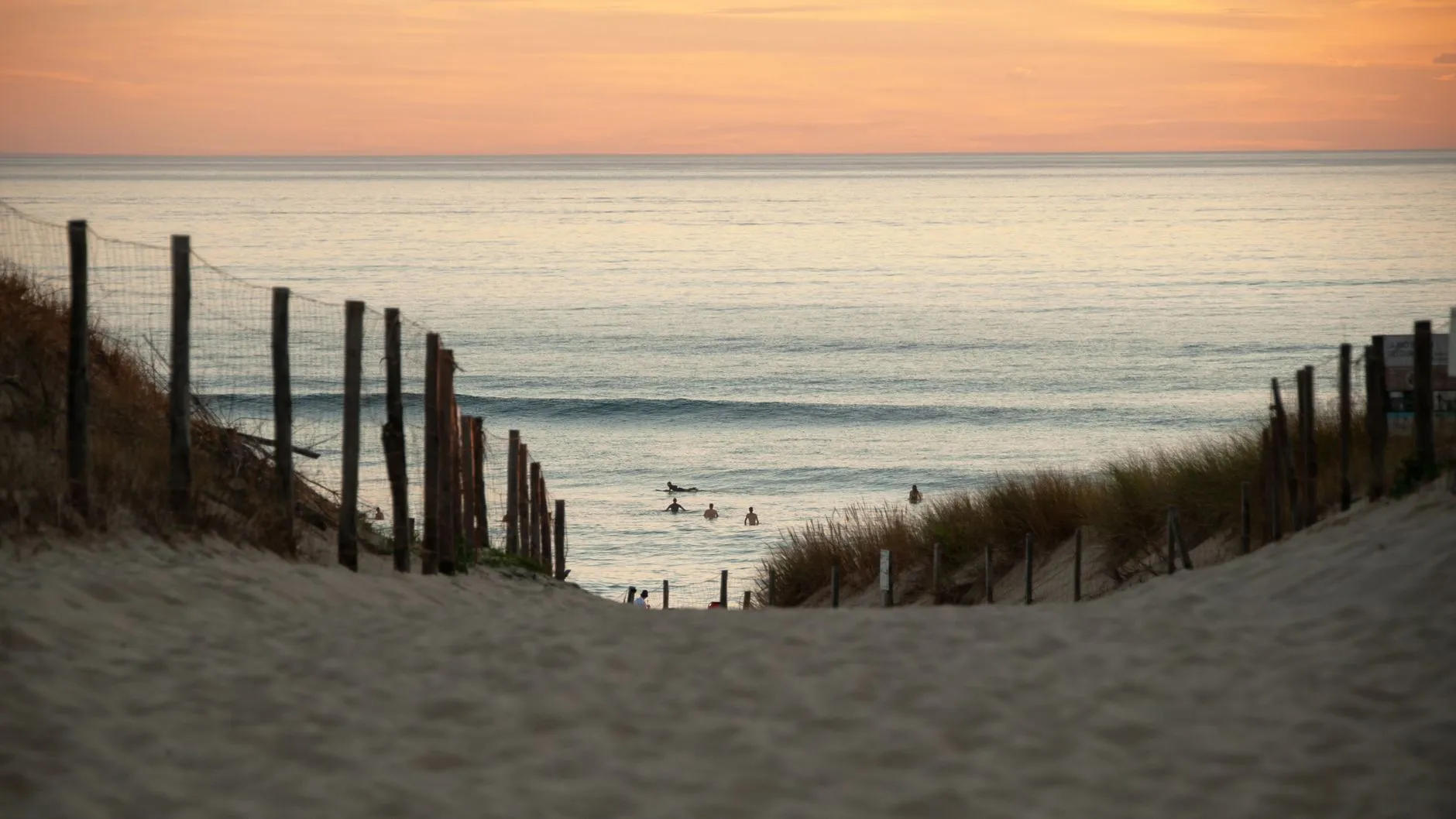
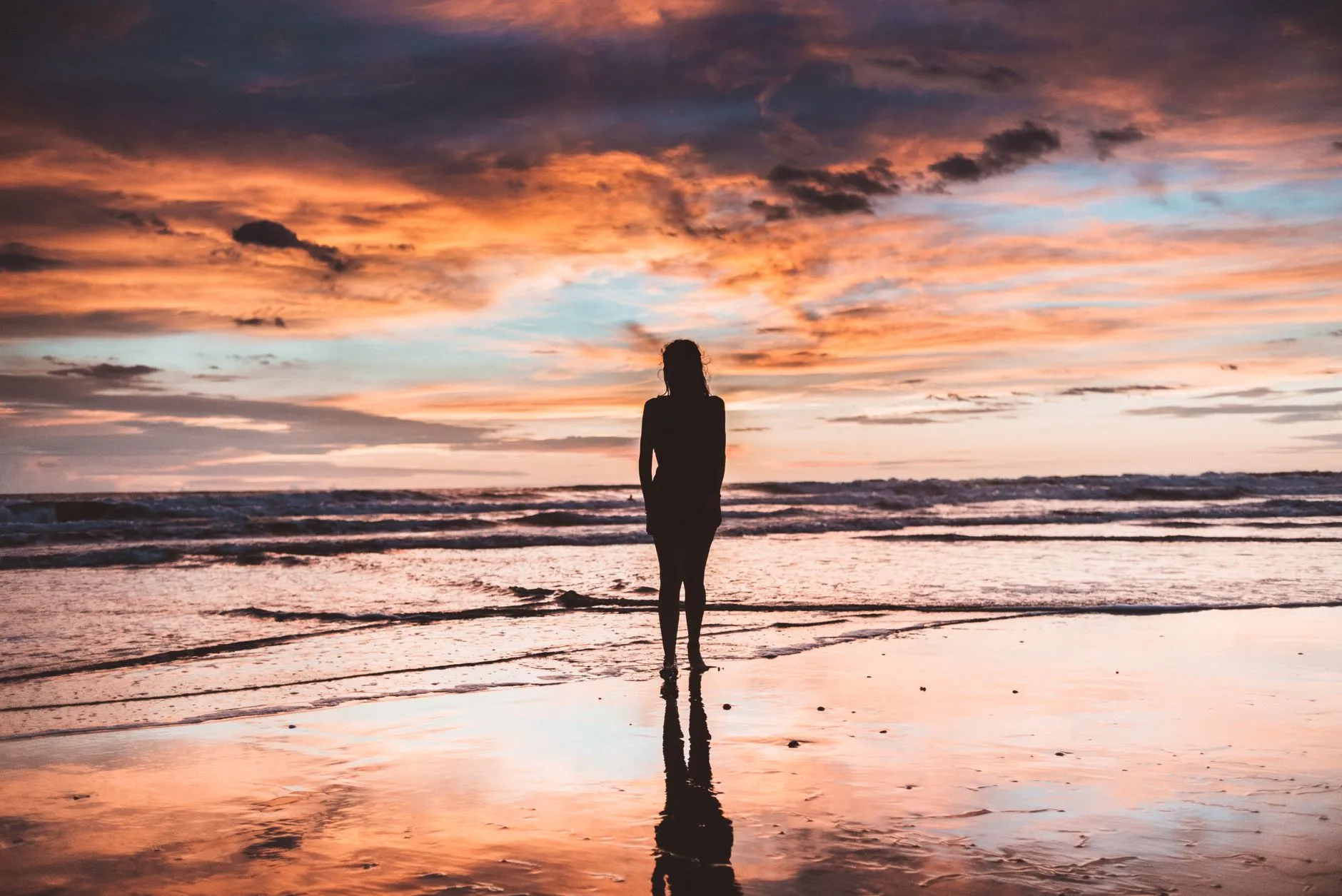
The wide northern sand of the Baleal isthmus, with the walkable village at its tip and most of the surf camps a short stroll away. It faces the sunset, so this is where the day ends. Swimming is fine on calm days, but this side catches more swell than the bay behind it.
Cantinho da Baía
The big sheltered bay south of Baleal is Peniche's classroom: surf schools by the dozen, gentle rollers, and the longest mellow rides on the peninsula. When the north side is blown out, it is also the best swimming compromise: calmer water with just enough push to play in.
Praia da Gamboa
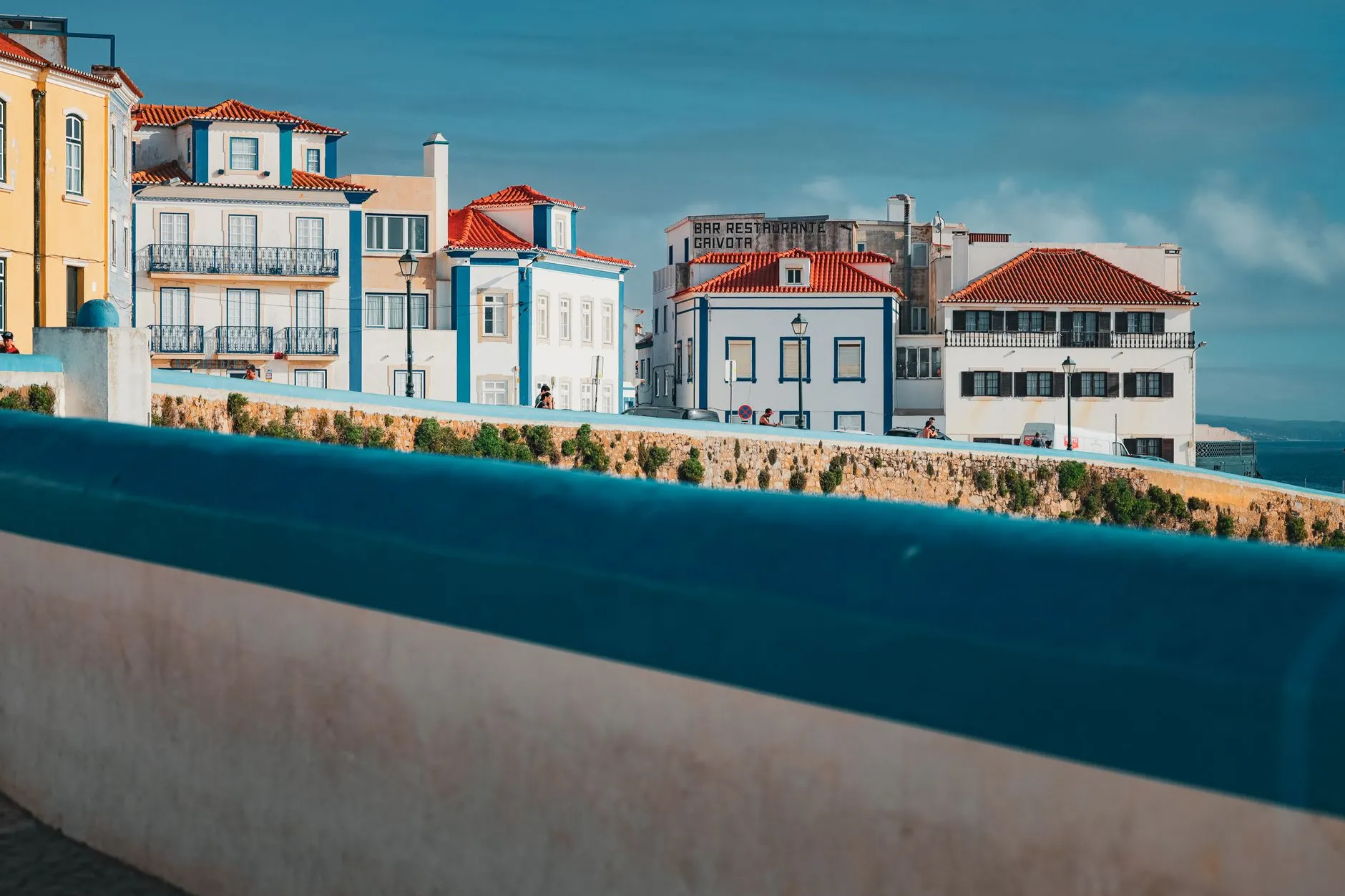
Peniche's town beach starts just north of the old wall and runs long and open toward Baleal, with room to put a towel down alone even in August. On bigger days watch the shorebreak: it can slap hard right at the sand.
Molhe Leste
A small wedge of sand tucked against the harbour's east jetty, where Peniche locals go for a quick dip after work. Its real job is the view: walk out on the jetty when a swell is running and you get the grandstand seat for Supertubos' barrels, close enough to hear them.
Supertubos · Medão Grande
The famous one. When there is swell, this is a wave to watch, not water to swim in: the barrels that host the world tour break hard on shallow sand. On flat summer days the drama disappears and it turns back into a long, beautiful, perfectly normal beach backed by dunes.
Consolação
The headland to the south has two personalities: a rocky reef on its north face and a sheltered, gentle beach on the south. When every other beach around Peniche is too big, this is the fallback. At low tide, walk the cliffs: their layered rock is known for its fossils.
When to go
A year in Peniche
Typical conditions, month by month. The ocean did not sign this table: for live waves, wind and tide, check the app.
January
6-10 ft
57°F · 4/3 + boots · Expert
Atlantic storms. Supertubos on the clean days, Nazaré history on the giant ones.
February
6-10 ft
57°F · 4/3 + boots · Advanced
Still winter, still serious. The sheltered corners keep everyone else wet.
March
5-8 ft
57°F · 4/3 · Advanced
The storms space out. Long-period swells find the reefs in good moods.
April
4-6 ft
59°F · 4/3 · All levels
Spring rhythm: swell most days, a corner for every level, room for everyone.
May
3-5 ft
61°F · 3/2 · All levels
The nortada begins its afternoon shifts. Mornings north side, afternoons south.
June
2-4 ft
63°F · 3/2 · Beginner
Small, friendly, busy. Baleal's bays do their best teaching now.
July
2-4 ft
64°F · 3/2 or spring · Beginner
Peak summer. Dawn patrol or the south side, the nortada owns the afternoons.
August
2-4 ft
66°F · 3/2 or spring · Beginner
Warmest water of the year and the summer crowds to match. Book beds early.
September
3-6 ft
66°F · 3/2 · All levels
The turn. First autumn swells, water still warm, crowds thinning. Go now.
October
5-8 ft
64°F · 3/2 · Advanced
Supertubos in contest shape and the world tour in town to prove it.
November
6-10 ft
61°F · 4/3 · Advanced
Serious swell season opens. First giant watches at Nazaré most years.
December
6-10 ft
59°F · 4/3 + boots · Expert
Deep winter rhythm: watch the charts, strike the windows, respect the ocean.
Good to know
When is the best time to surf Peniche?
September to November: the first real Atlantic swells meet water still warm from summer, the nortada eases, and Supertubos comes into contest shape. Summer is the beginner season in Baleal's bays. Winter brings serious size for experienced surfers, and the giant-wave spectacle at Nazaré.
Is Peniche good for beginners?
One of the best bases in Europe for it. Baleal's bays are sandy, gradual and packed with schools, Baleal Sul stays clean when the wind wrecks everything else, and Consolação catches the small days. The famous heavy waves are on the other side of the peninsula, you will not wander into them by accident.
When can I see the giant waves at Nazaré?
October to March, on the handful of days when a long-period NW swell of six meters or more lines up with clean conditions. Watch the forecast, then join the crowd at the lighthouse and fort above Praia do Norte, forty minutes' drive from Peniche. On ordinary winter days it is still an impressive, very heavy beach break.
Do I need a wetsuit in Peniche?
Yes, all year. The Atlantic here never gets tropical: a 3/2 covers late summer and early autumn, a 4/3 handles spring and late autumn, and deep winter asks for a 4/3 with boots. The upside of the cool water is the empty warm-up: a crisp morning at Almagreira beats a crowded warm one almost anywhere.