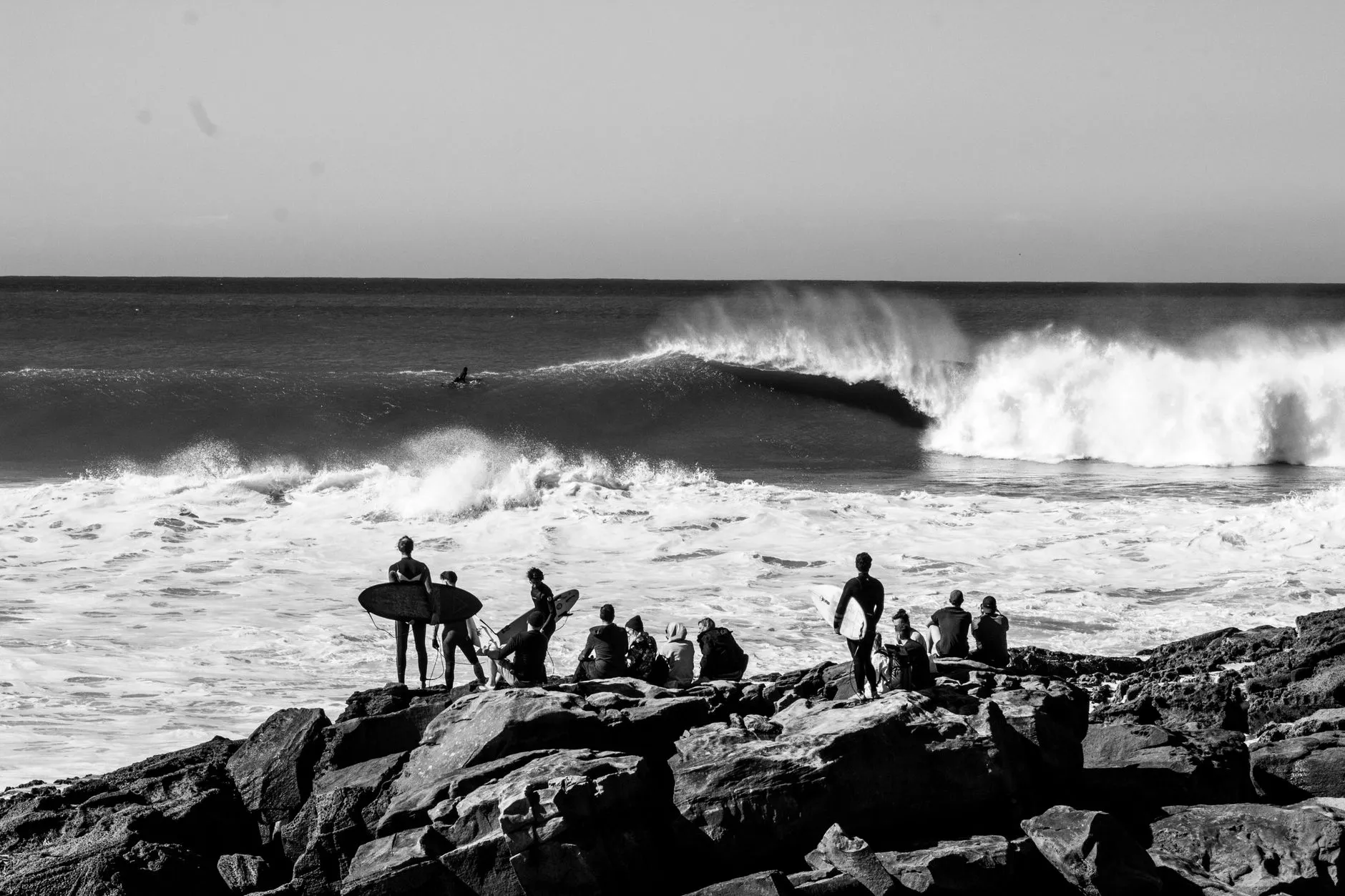
Waves and coastline at Anchor Point

Guides · Taghazout

Anchor Point

Morocco's most famous right

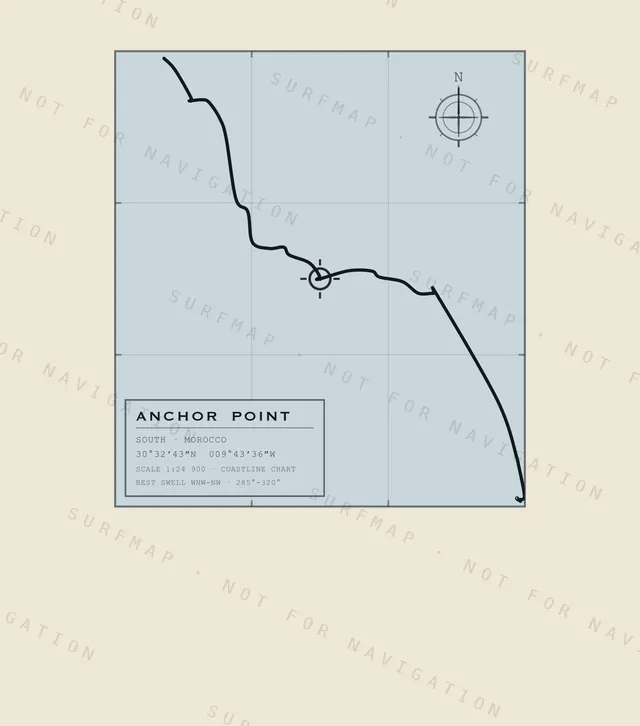
Anchor Point is a right-hand point break at the north end of Taghazout, and the reason the village is on the world's surf map at all. The name comes from the old fishing days, when anchors for the sardine fleet were forged and left on this finger of rock, and surfers have been riding the wave since the late 1960s, when the first vans of the hippie era rolled down the Moroccan coast. What they found is what still draws people today: North Atlantic groundswell folding around a rock point and turning into long, fast right-hand walls.

A good day here is unmistakable. A clean west to northwest swell lines up to the horizon, the morning offshore grooms every wall, and sets link section after section from the takeoff boil toward the village, close to half a kilometer away on the biggest, cleanest days. The terraces above the point fill with mint tea and commentary, every ride is watched from start to finish, and the walk back up the rocks with a good wave behind you feels like a small graduation.

Advanced

Wave
Right-hand point break over rock
Best swell
W to NW groundswell, head-high to well overhead, holds double overhead and more
Best wind
E to NE, mornings before the sea breeze
Best tide
Mid tide on the push. Low runs faster and more sectiony, high can fatten it
Season
October to March
Level
Confident intermediates on smaller days, advanced once it's overhead

How the wave breaks

The takeoff sits just off the rocks at the tip of the point, over the boil that marks the shallowest slab. The first wall is the fastest part of the wave: a steep, feathering section that asks for a committed bottom turn before it bends into open face. Miss the line here and the wave runs off without you.

From there Anchor breaks in sections down the point toward the village. Some walls slow into shoulders made for carving, others stand up again over the inside rock, and on the right combination of swell and tide a section will throw a short barrel. On an ordinary day you ride two or three sections and kick out. On the best days they link, and a single wave can run close to half a kilometer, ending over sand in front of the village.
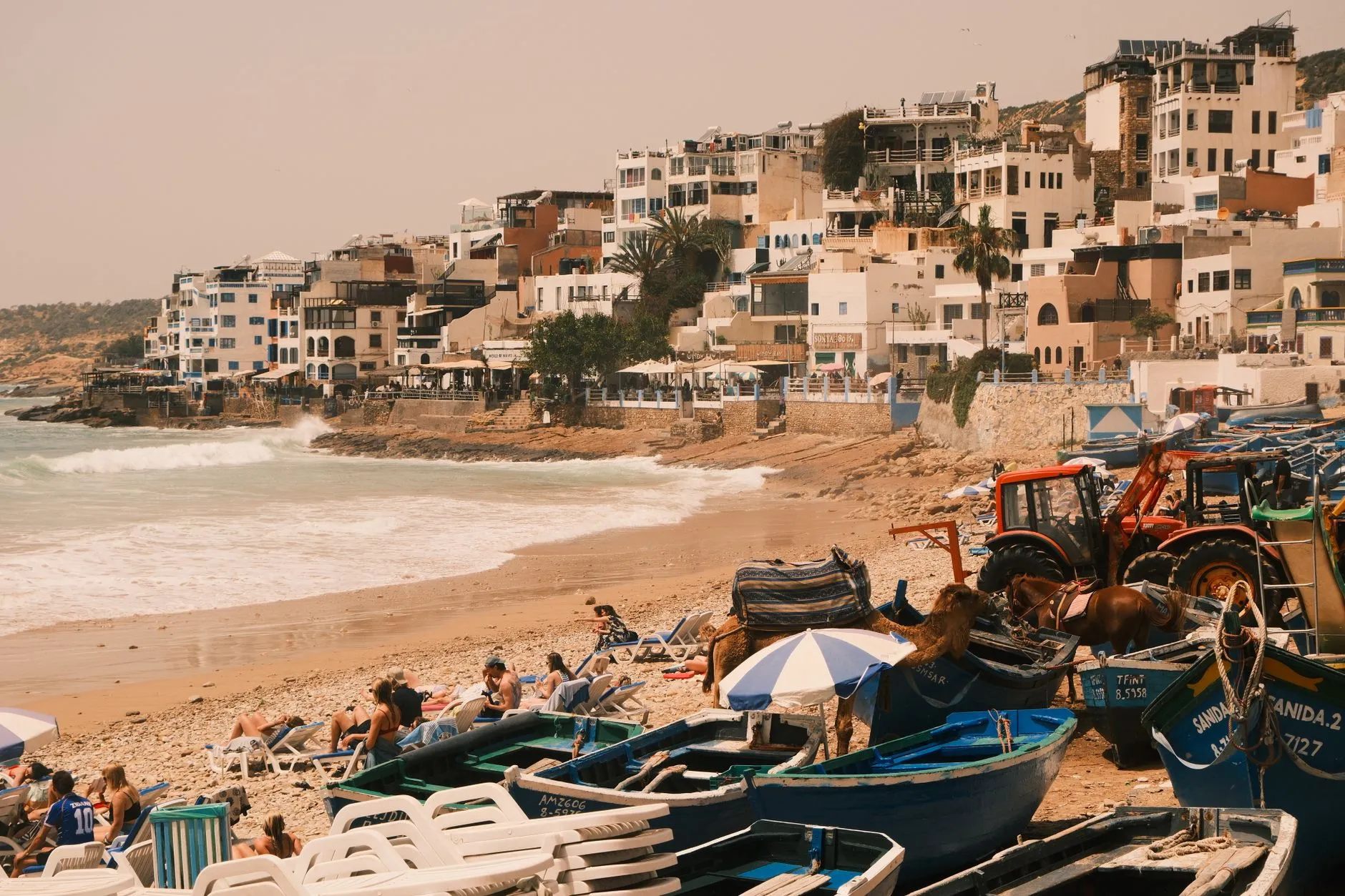
A winter set winding down the point toward Taghazout

When it works

Anchor Point runs on the same engine as the rest of the Taghazout coast: North Atlantic lows tracking toward Europe between October and March, sending long-period west to northwest groundswell down to Morocco. The point needs more size than the village waves to wake up, around head-high before it starts looking like itself, and it holds its shape well past double overhead when most of the coast is closing out. Mornings are the window: the land breeze blows east to northeast and grooms the walls until late morning, when the sea breeze usually swings onshore and puts texture on the face. From June to September the point is mostly flat or too weak to break properly, and surf life moves to the beaches and to Imsouane.

The lineup and the take-off

You paddle out from the rock shelf north of the takeoff, and timing is most of the job: watch a full set from the rocks, count the waves, then go on the lull. The peak itself runs on a strict pecking order. Locals and travelling pros sit deepest, right on the boil, and they take most of the set waves. That is how the wave works, and arguing with it ruins your session faster than the current does.

The honest play is patience. Sit slightly inside and down the line from the main pack and you pick up the waves the peak lets through: shoulders that reform, set waves someone falls on, the ones that swing wide. On a good day that is still more point-break surf than most people get in a season. Wait your turn, make the ones you go on, and the pack gives you more room each time.

Getting there

The point sits at the north end of Taghazout village, ten minutes on foot from the center. Most people park along the coast road above the point, where a row of vans marks the spot whenever there is swell, and walk down the path to the rock shelf. Entry is over the rocks: easier from mid to high tide when water covers most of the shelf, slower at low when you pick your way between boulders and urchins. Flying in, Agadir airport is about 45 minutes down the coast, and taxis and surf-camp shuttles make the run daily.

Hazards

  • Rocks and boulders on entry and exit: time your jump between sets and pick your exit before your last wave
  • Urchins in the shallows at low tide, booties save the trip
  • Strong current running down the point on bigger days, be ready for the long paddle back
  • Serious crowds in peak season, respect the rotation and the wave stays fun
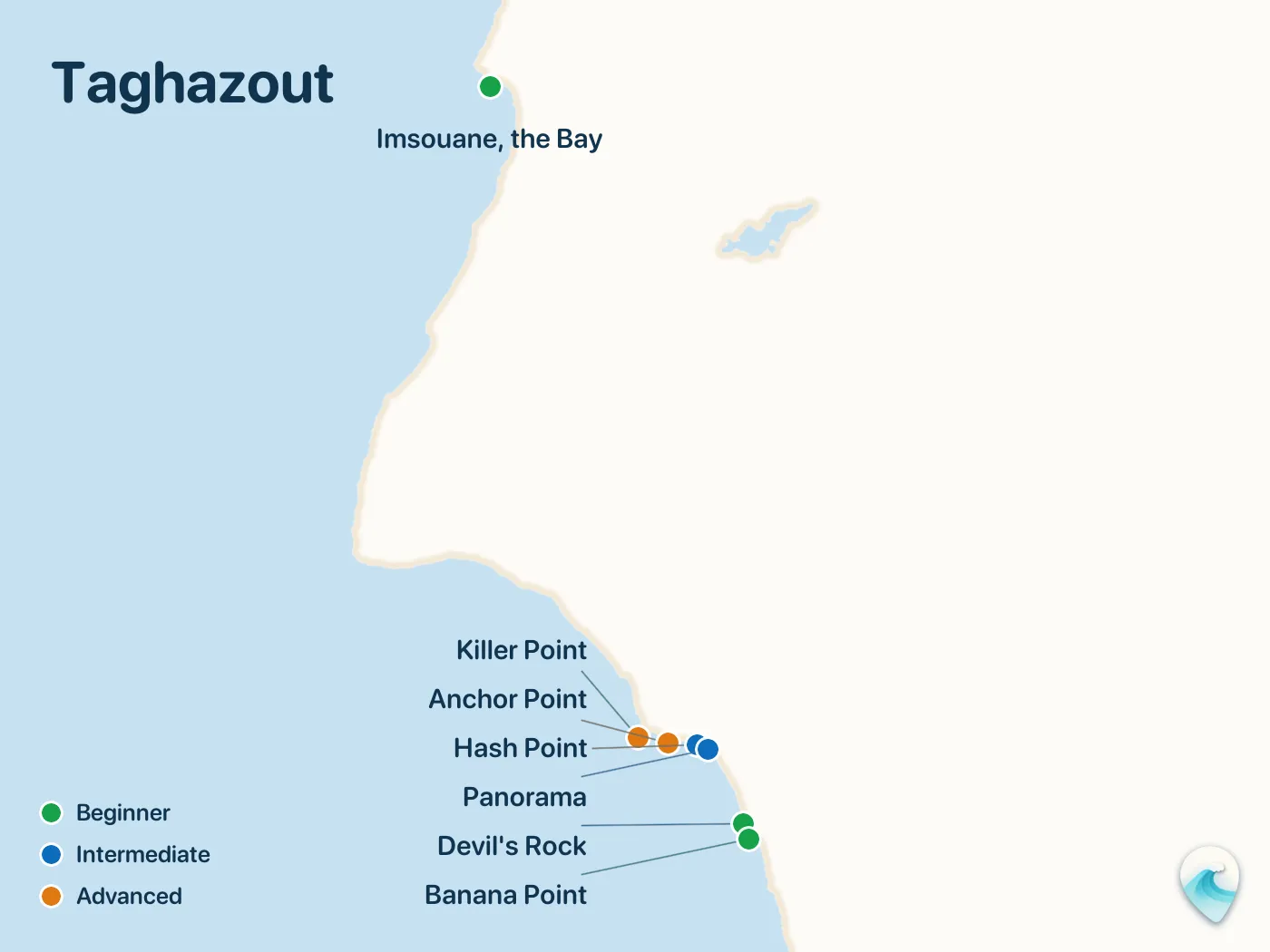
Map of the Taghazout surf spots described in this guide, with numbered markers

Part of the Taghazout surf guide

An honest guide to surfing Taghazout, Morocco: a surf map and the 7 spots that matter from Devil's Rock to Anchor Point, when the points fire, and what to expect.

Read the full guide →

Good to know

Can intermediates surf Anchor Point?

On the right day, yes. Pick a clean chest-high swell, go at mid tide on the push, and sit down the point away from the main peak. You will get walls, just fewer of them, and the crowd will be there whatever the size. Once it is solidly overhead the wave gets faster, the current stronger and the takeoff more contested: that is a day to watch from the terrace or surf Panorama instead.

What tide is best at Anchor Point?

Mid tide on the push is the standard answer: enough water over the rock for the takeoff to be clean, enough pull for the sections to stay connected, and different sections light up as the tide moves. Low tide splits opinion. The wave runs faster and hollower but more sectiony, and the entry gets rocky, so some surfers love it and others wait it out. At high tide the point can fatten and slow, especially on smaller swells.

Is Anchor Point worth it in summer?

Usually not for the wave itself. From June to September the North Atlantic goes quiet and the point is mostly flat, or too small and weak to break the way it should; the odd south pulse can wake it briefly, but you cannot plan a trip around that. Summer in Taghazout is longboard time on the village waves and beach peaks, or the drive to Imsouane, where the Bay still peels on small swell. If Anchor Point is the reason you are coming, book between October and March.