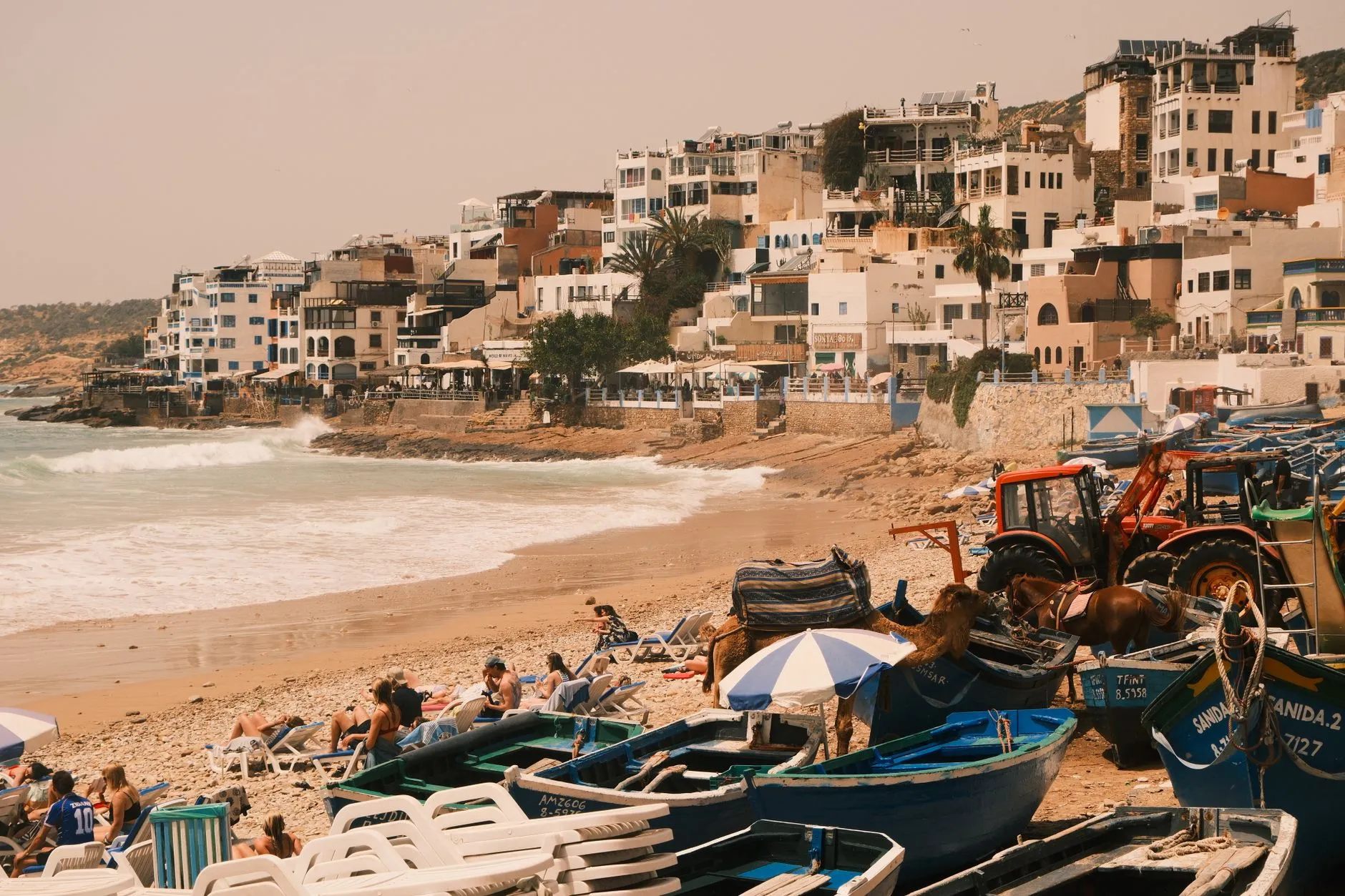
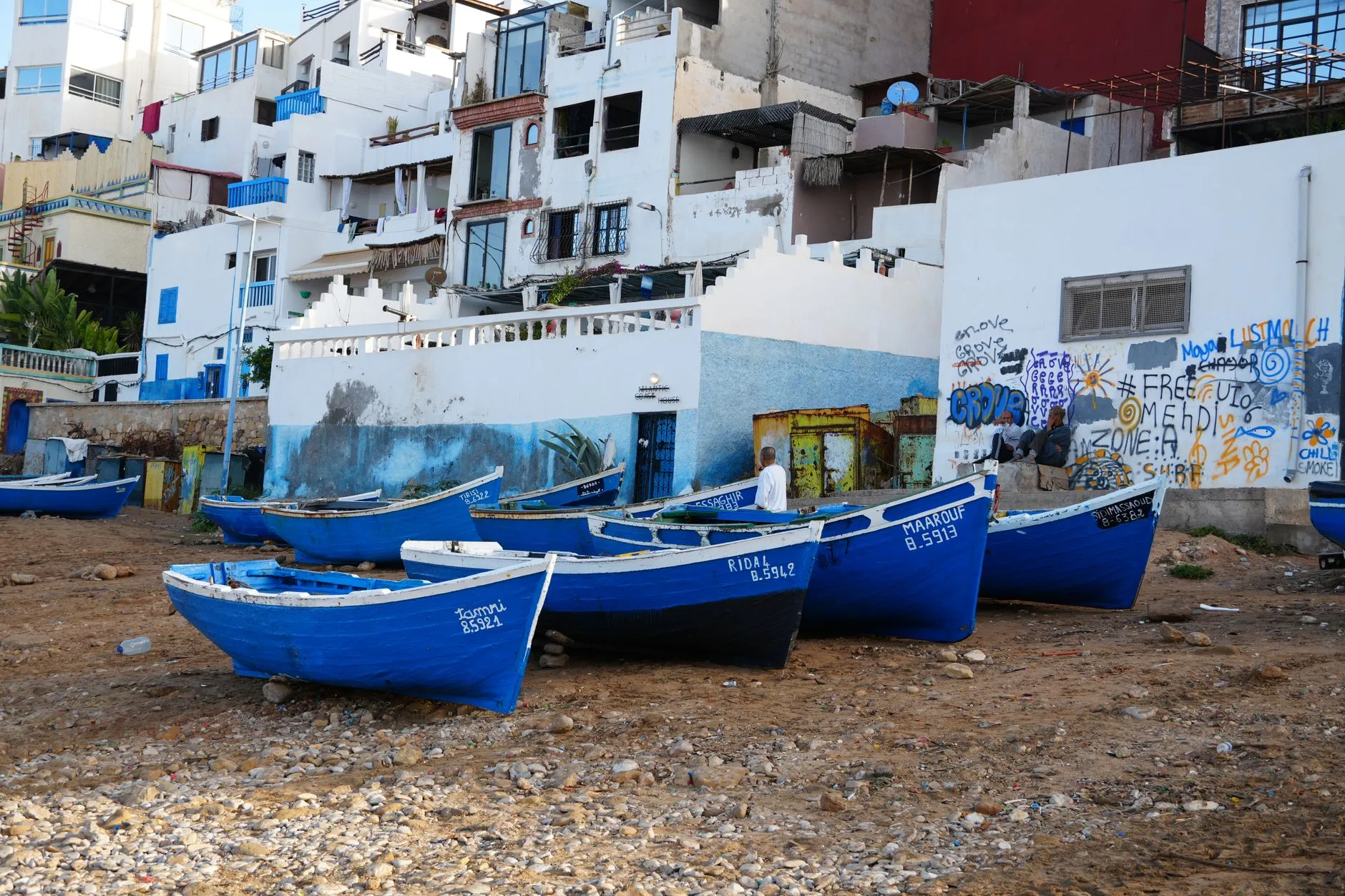
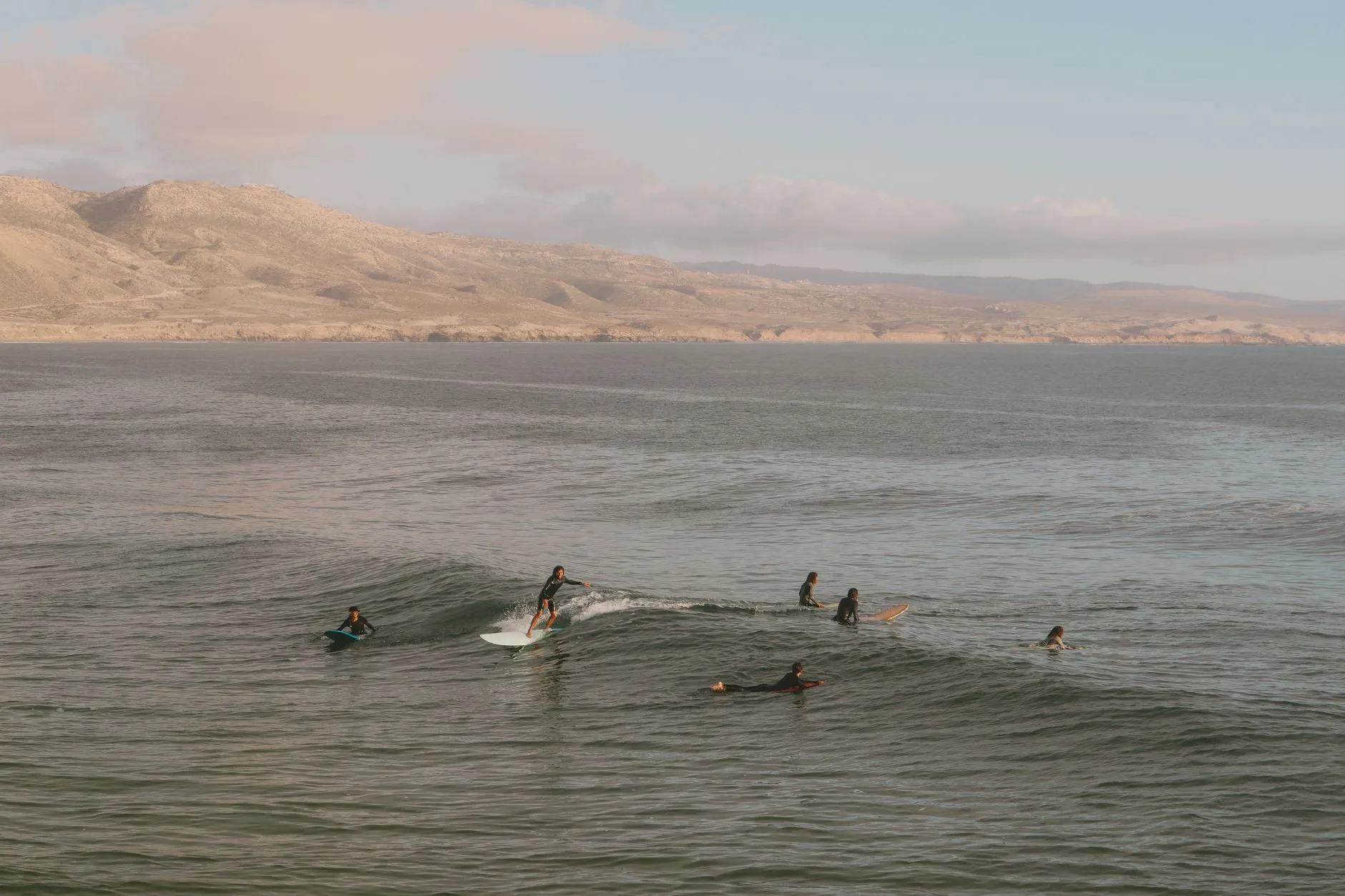
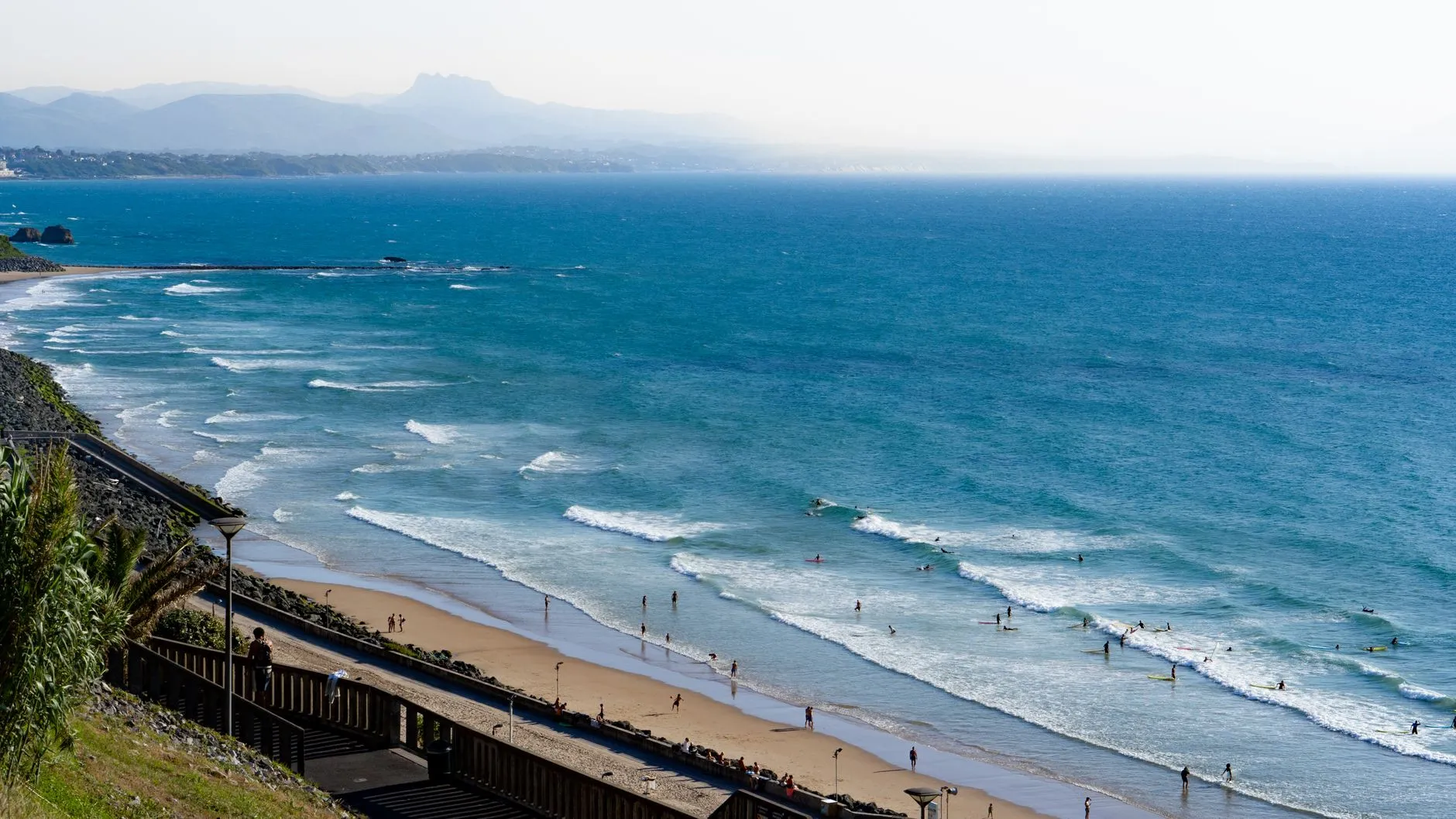
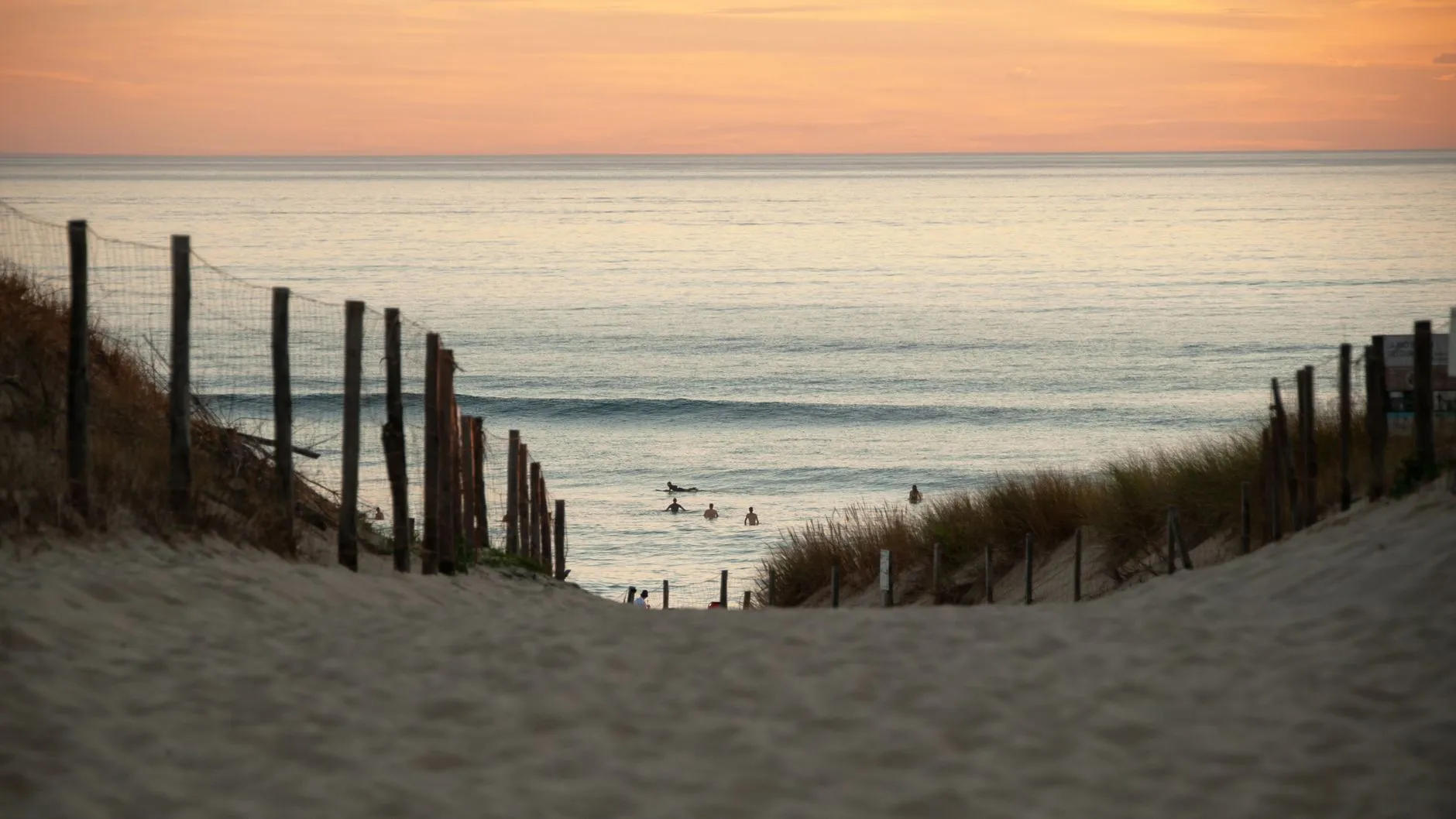
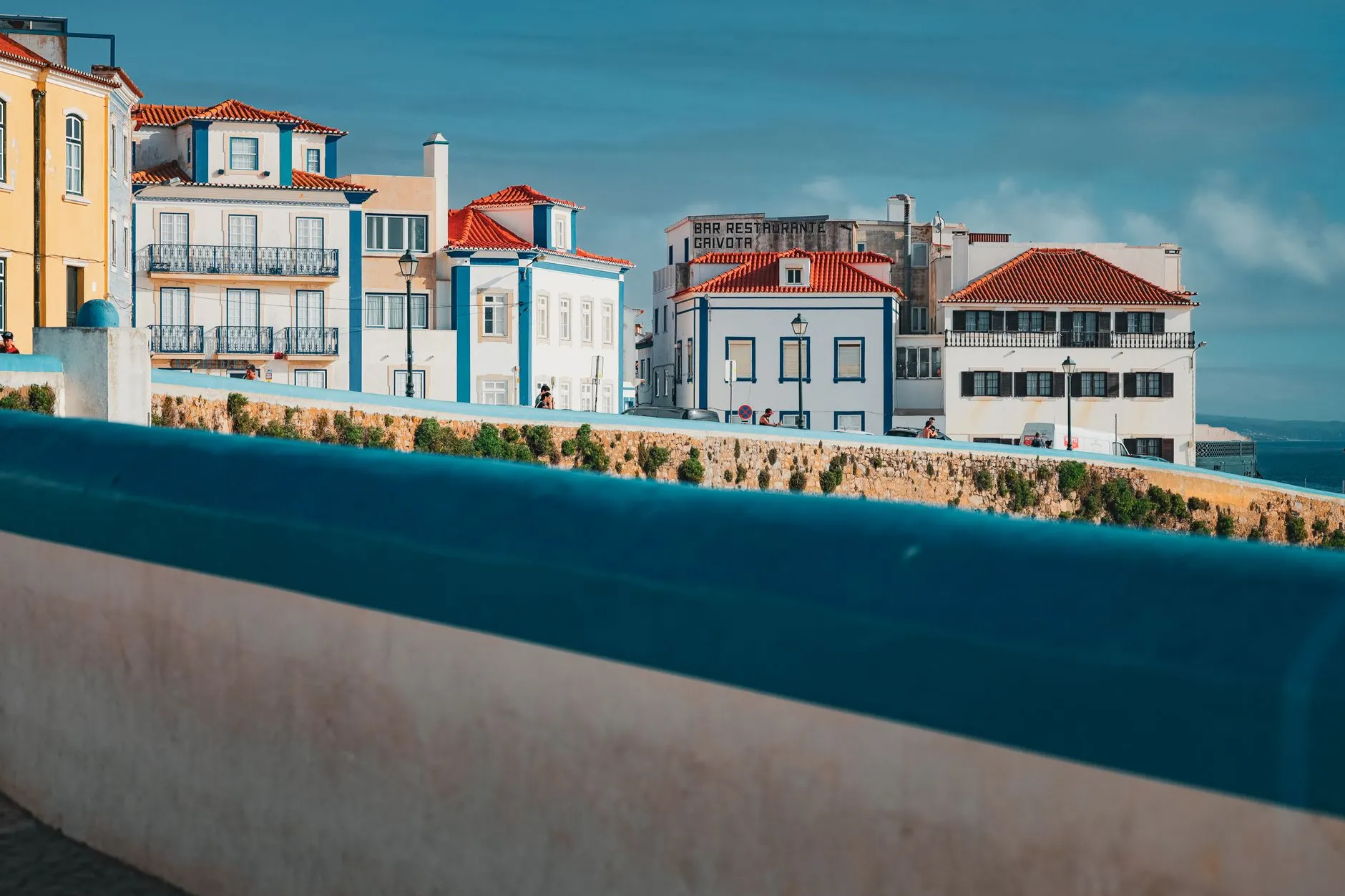
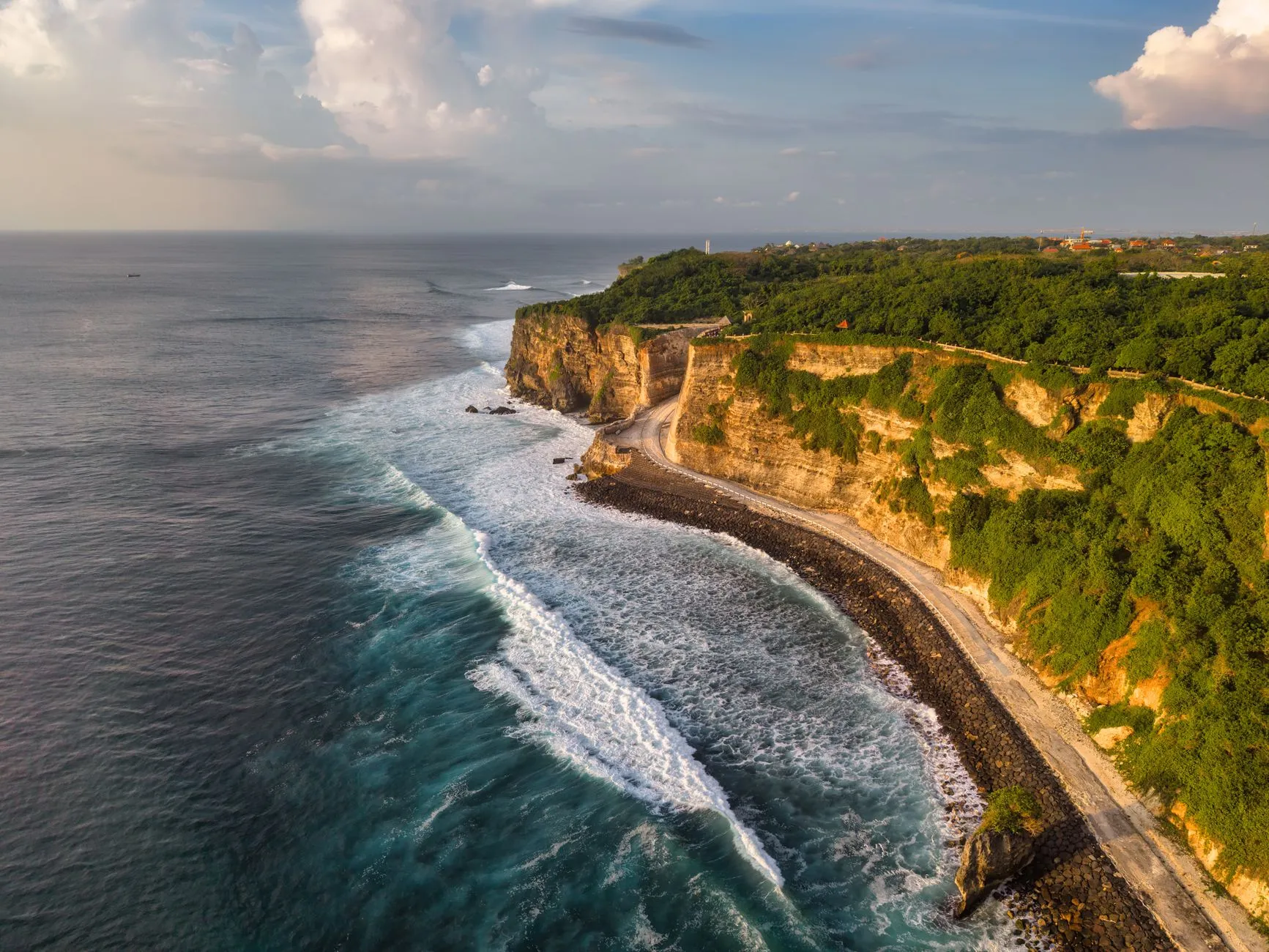
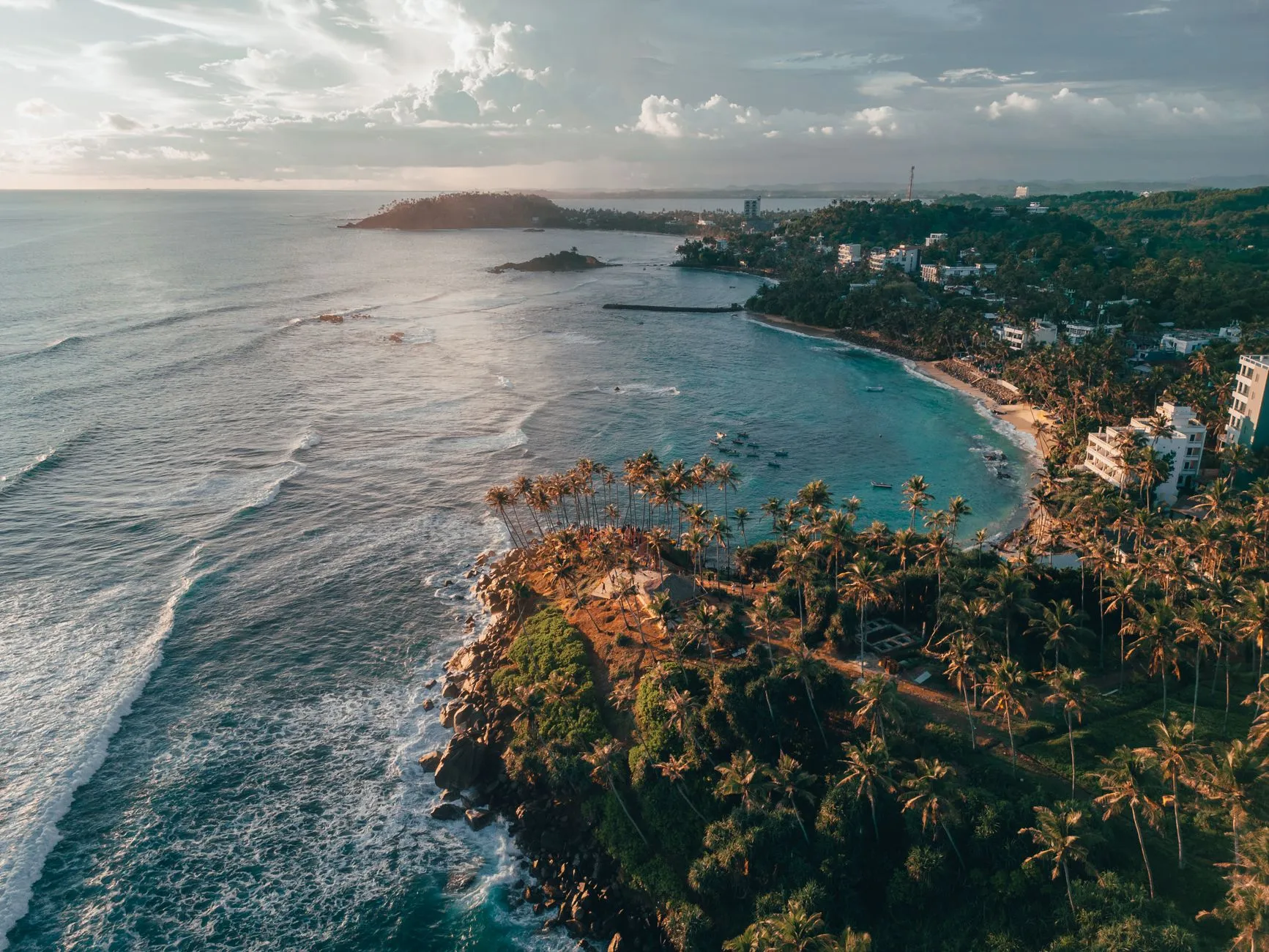
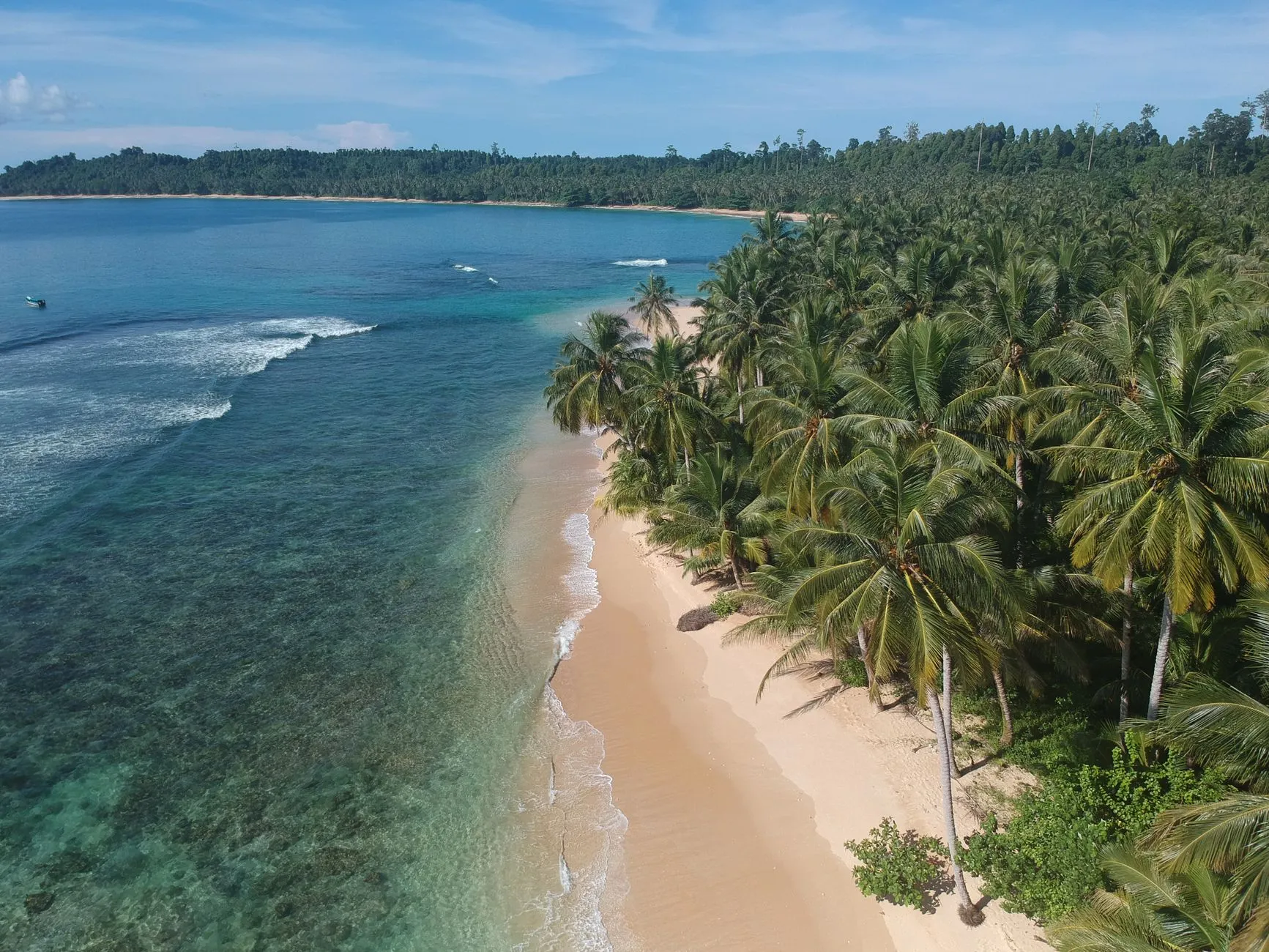
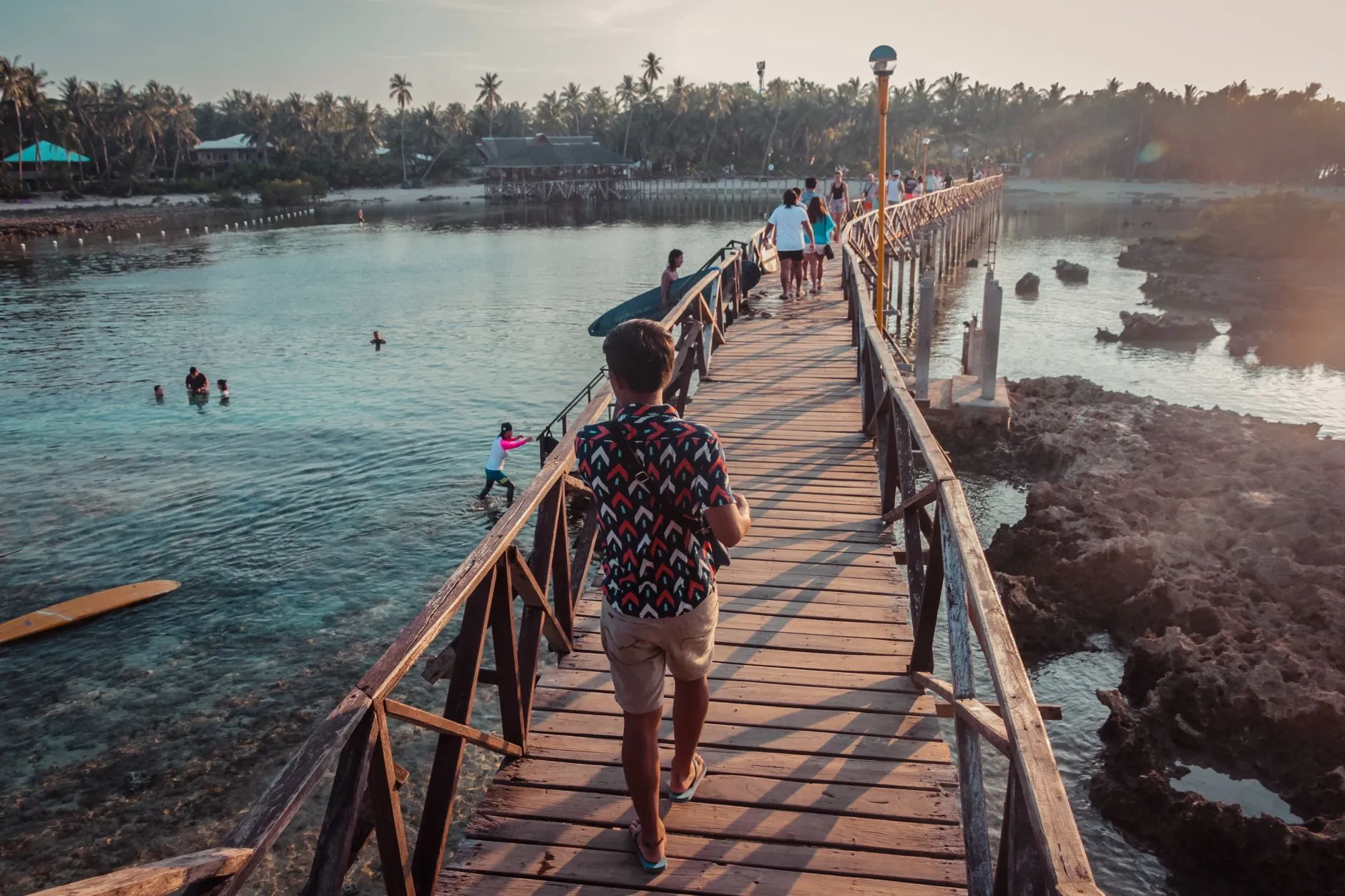
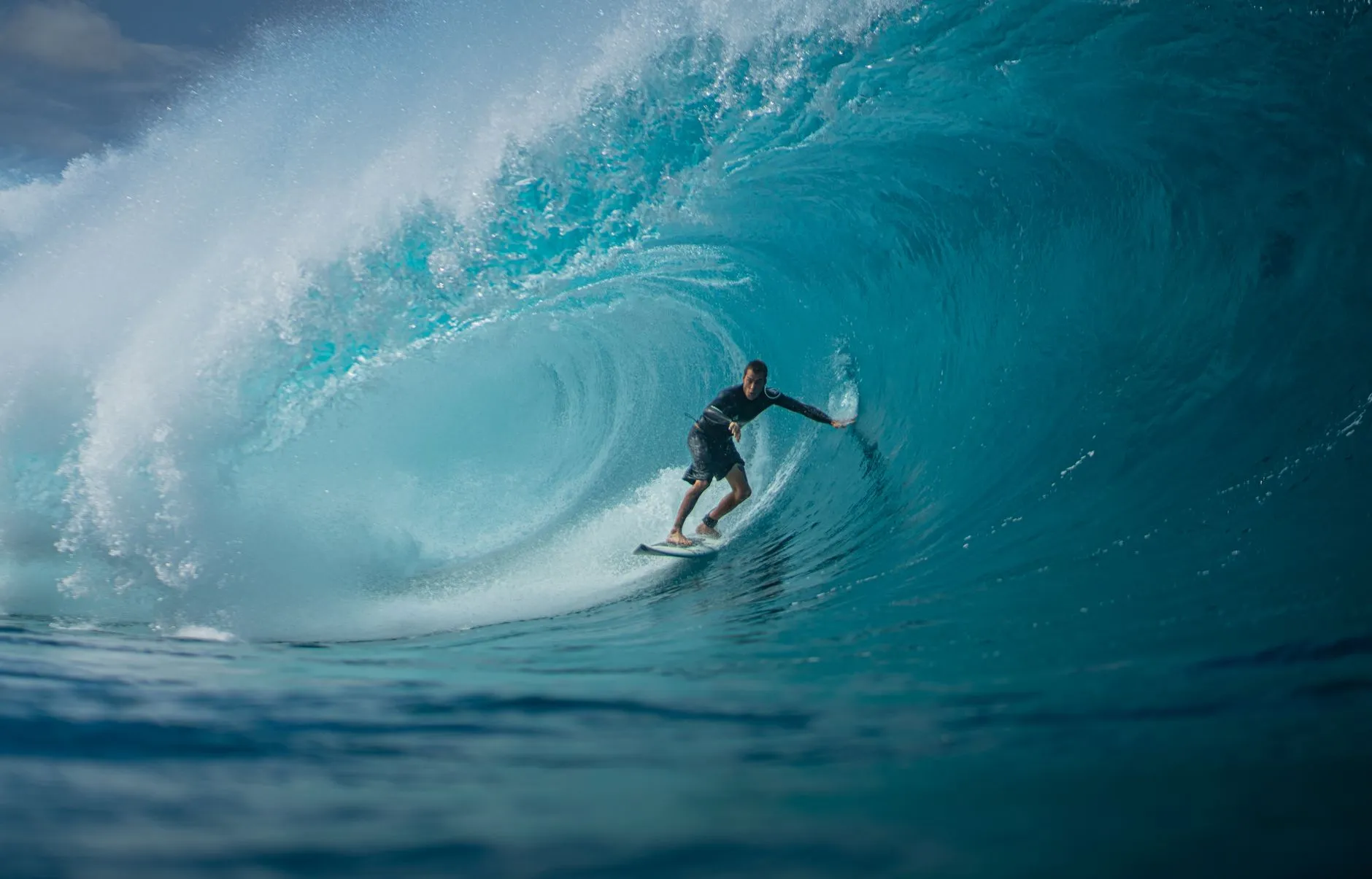
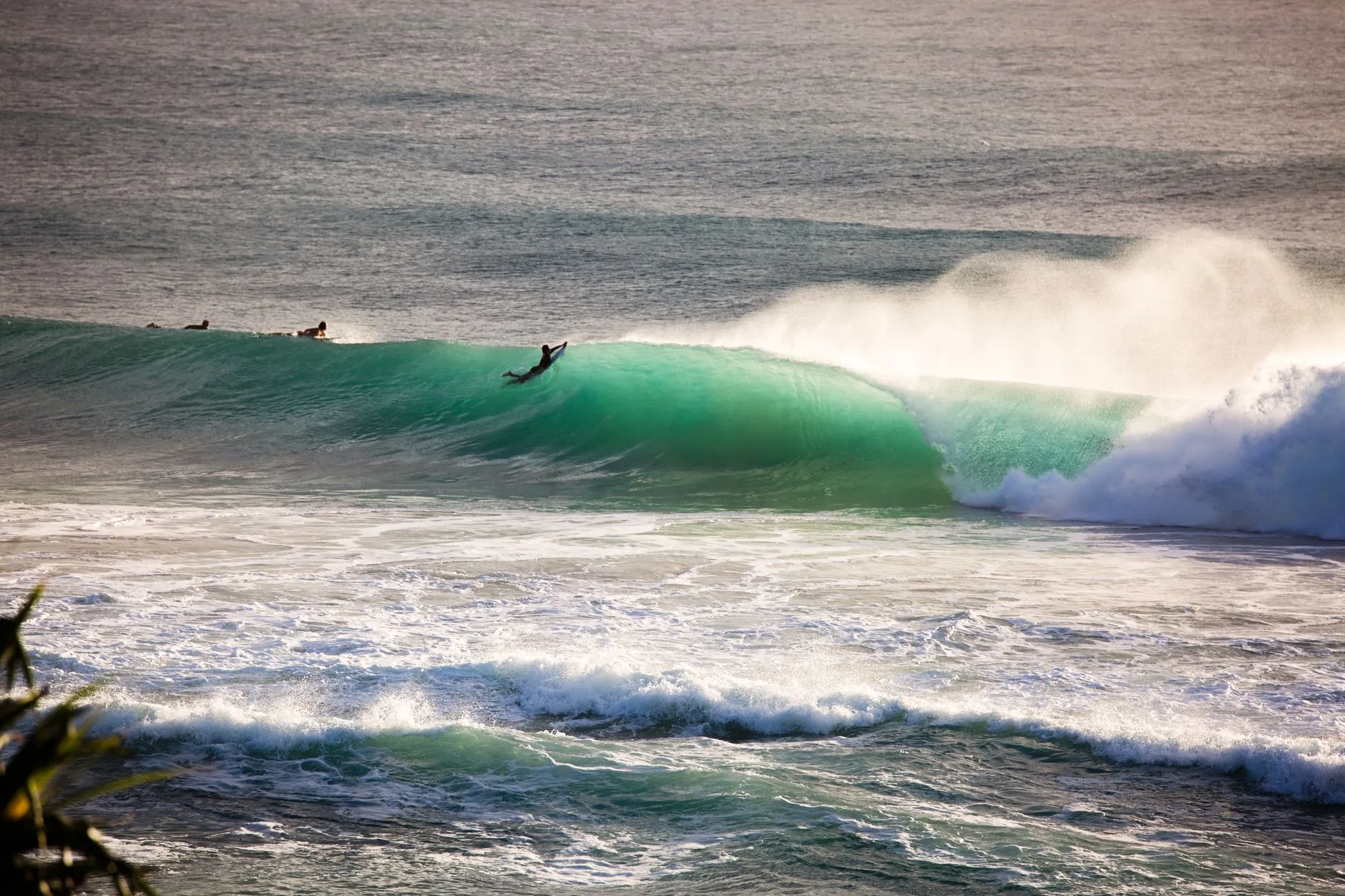
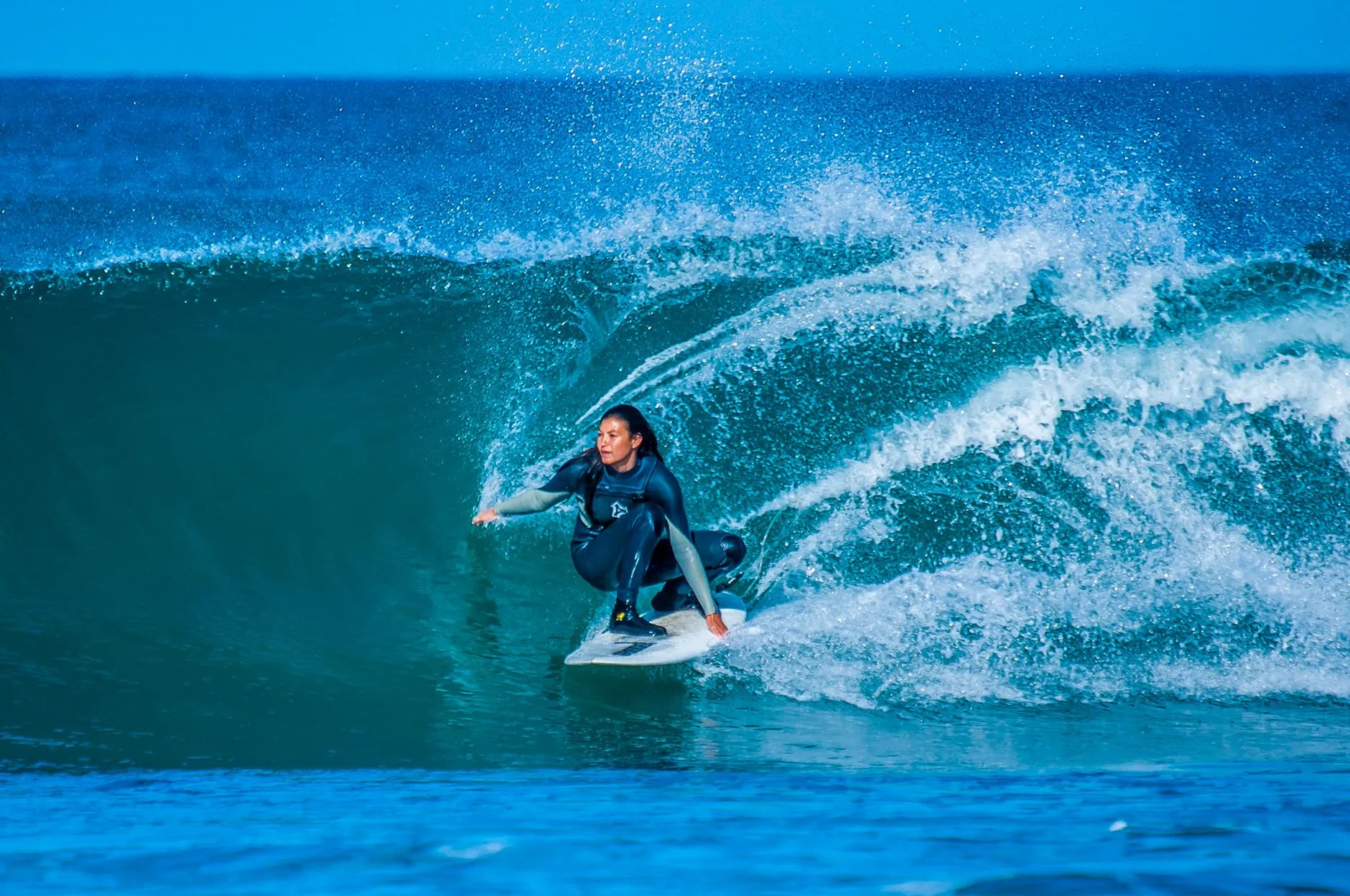
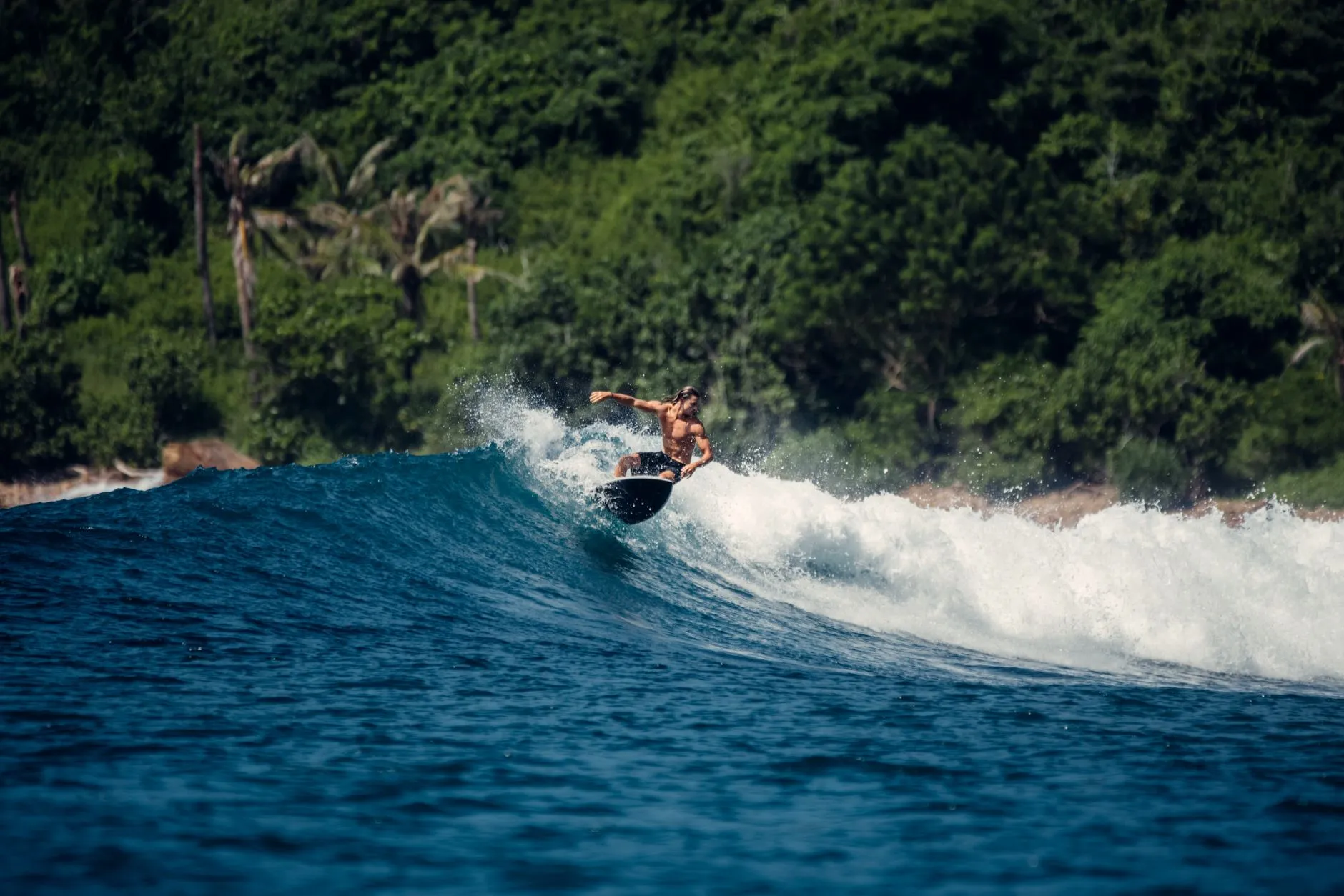
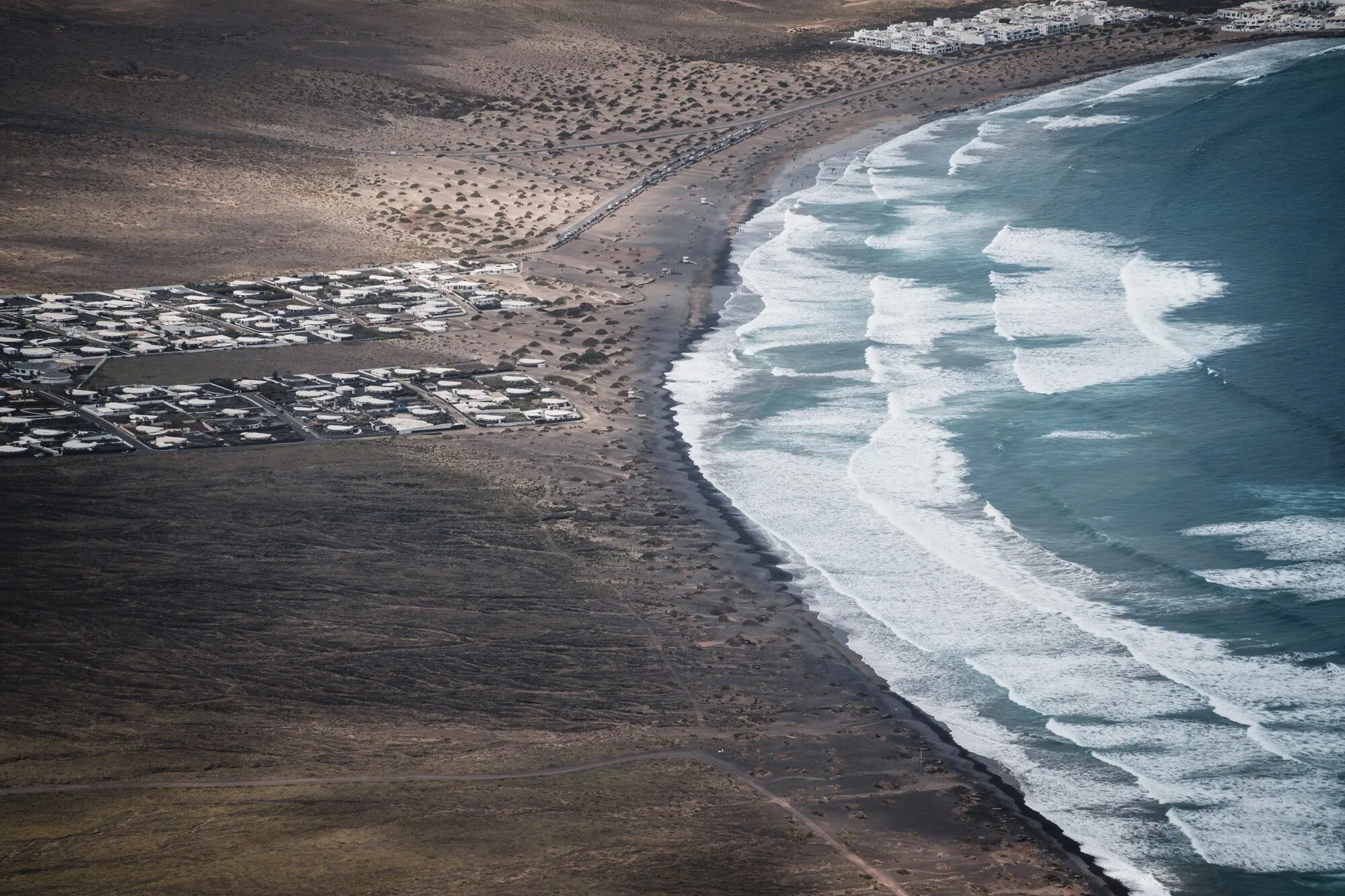
Half an hour north of Agadir, a fishing village of blue boats and flat roofs leans into a hillside of argan trees, and below it the Atlantic wraps around point after point of red rock. Taghazout has been on the surf map since vans first drove south in the sixties, and the reason has not changed: when North Atlantic swell arrives between October and March, some of the longest, most perfect right-handers in the world peel within sight of a mint tea.
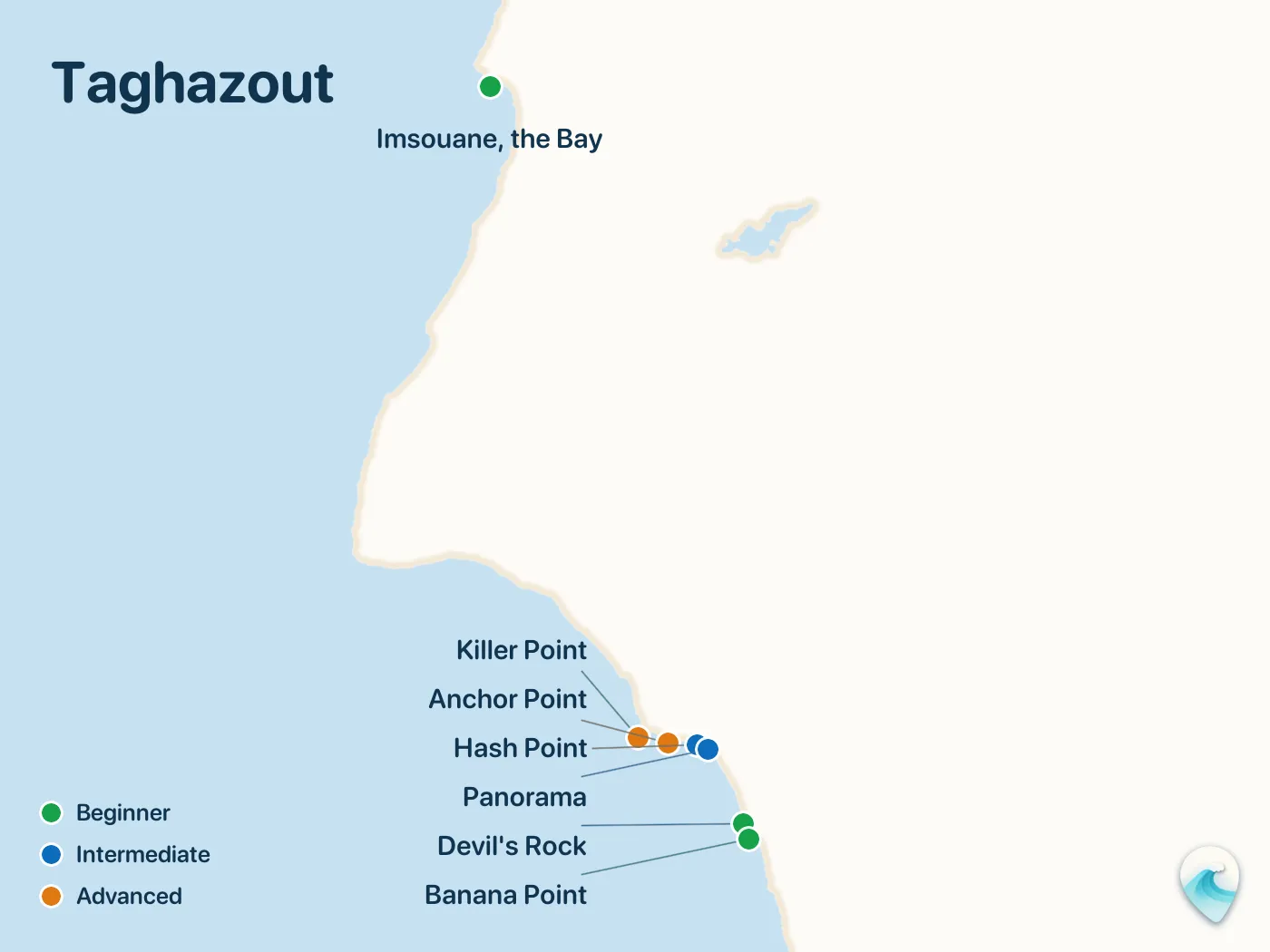
The beauty of the place is the ladder. Sandy learner beaches at Tamraght and Aourir, a soft point in front of the village café, and then the serious stuff to the north, Anchor Point and Killer Point, waves that hold triple overhead and still invite you to try. An hour further up the coast, Imsouane bends swell into a bay so long that a single ride can cure a year of bad sessions.
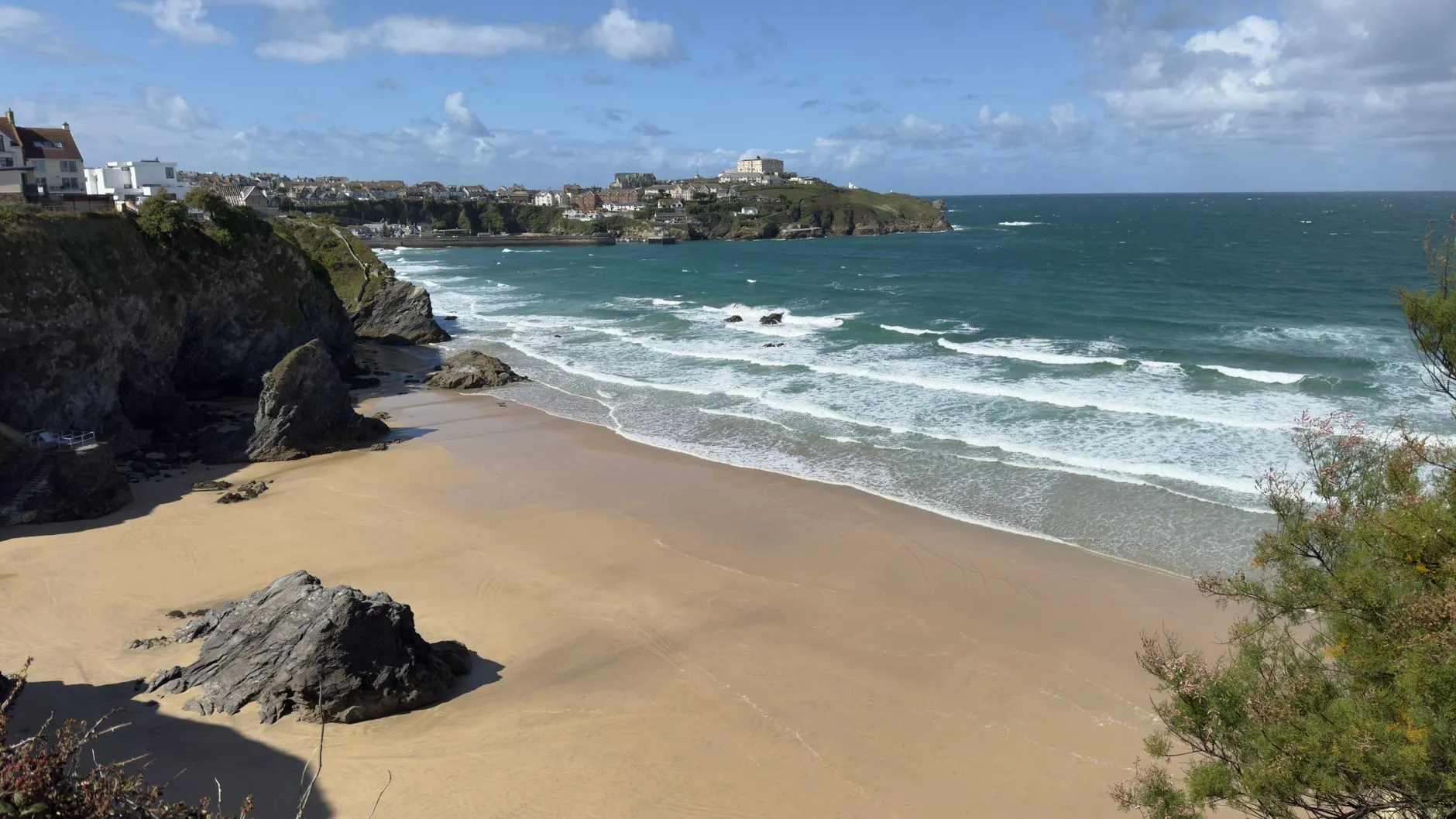
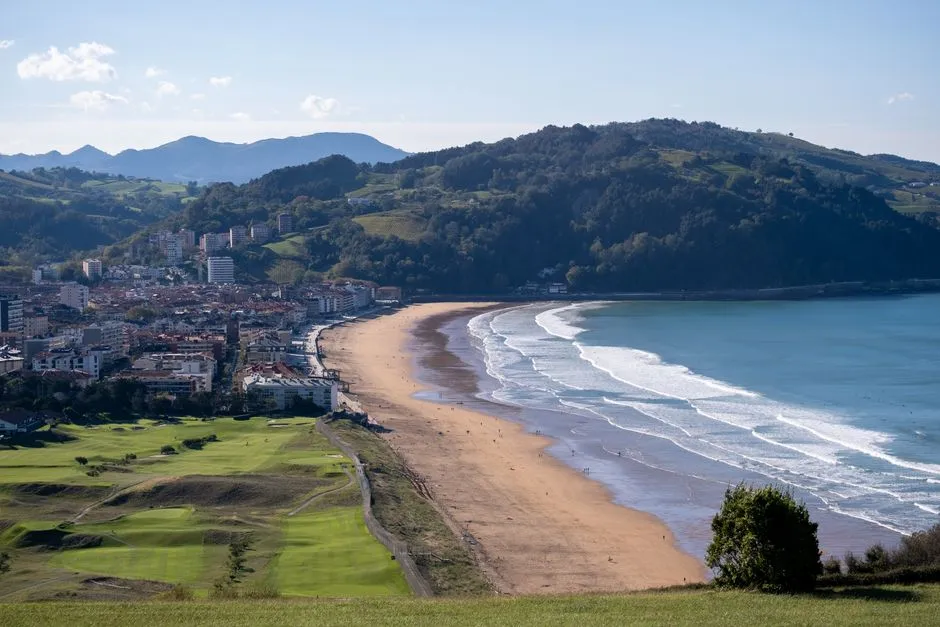
Warm sand, gentle peaks and camps that will lend you everything but courage.
Devil's Rock
Tamraght · Sandy beginner peak
Beginner
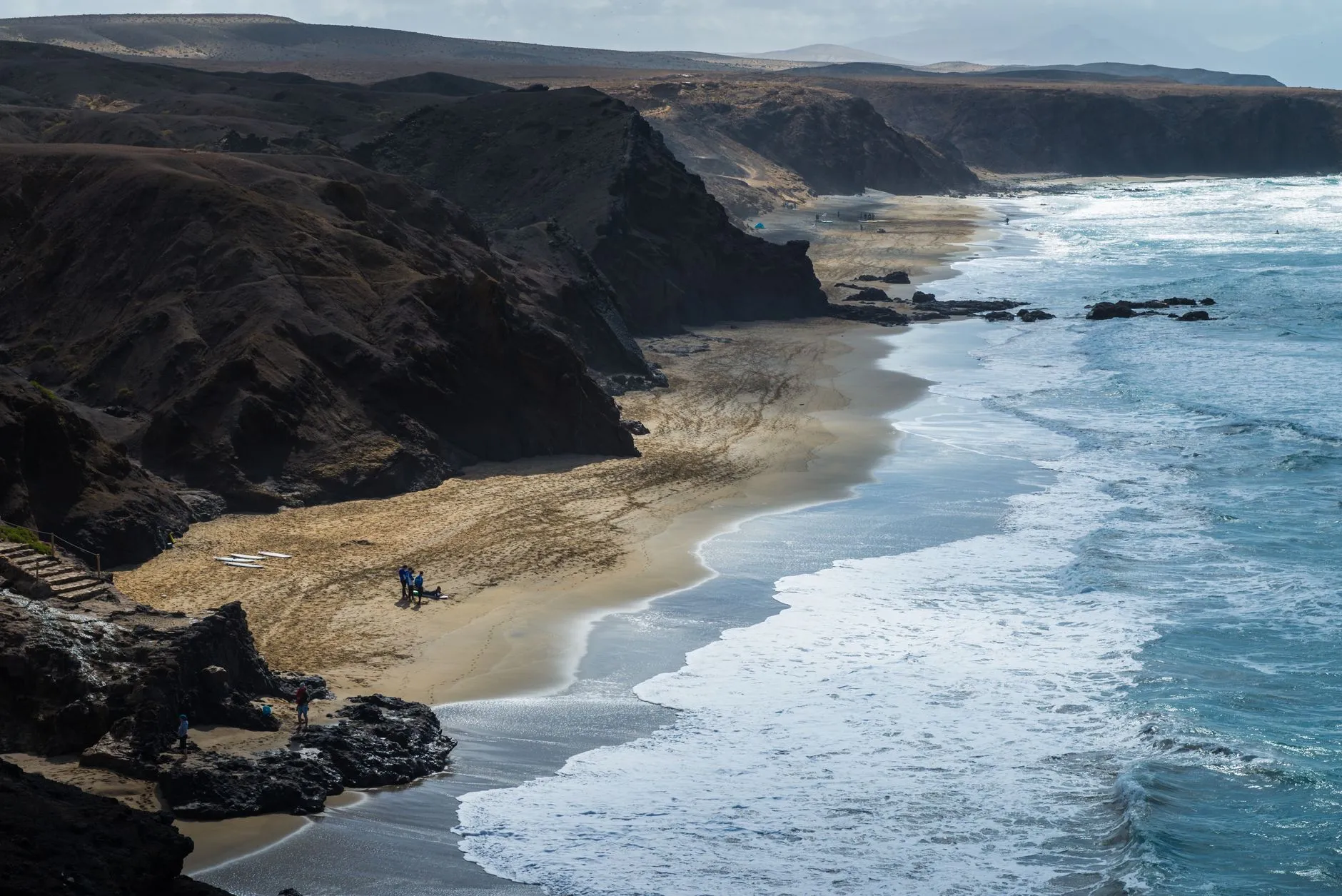
Tamraght's learning beach, wrapped around a dark rock that gave it its name. Sand bottom, peaks for every stance and half the surf camps of the coast on the same stretch. Camels walk past your first wave; nobody believes you back home.
Banana Point
Aourir · Soft peeling right point
Beginner
At the river mouth in Aourir, better known as Banana Village for its plantations, a gentle right peels off the point at a pace longboarders dream about. The kindest point wave on this coast: your first taste of what the famous ones feel like, without the punishment.
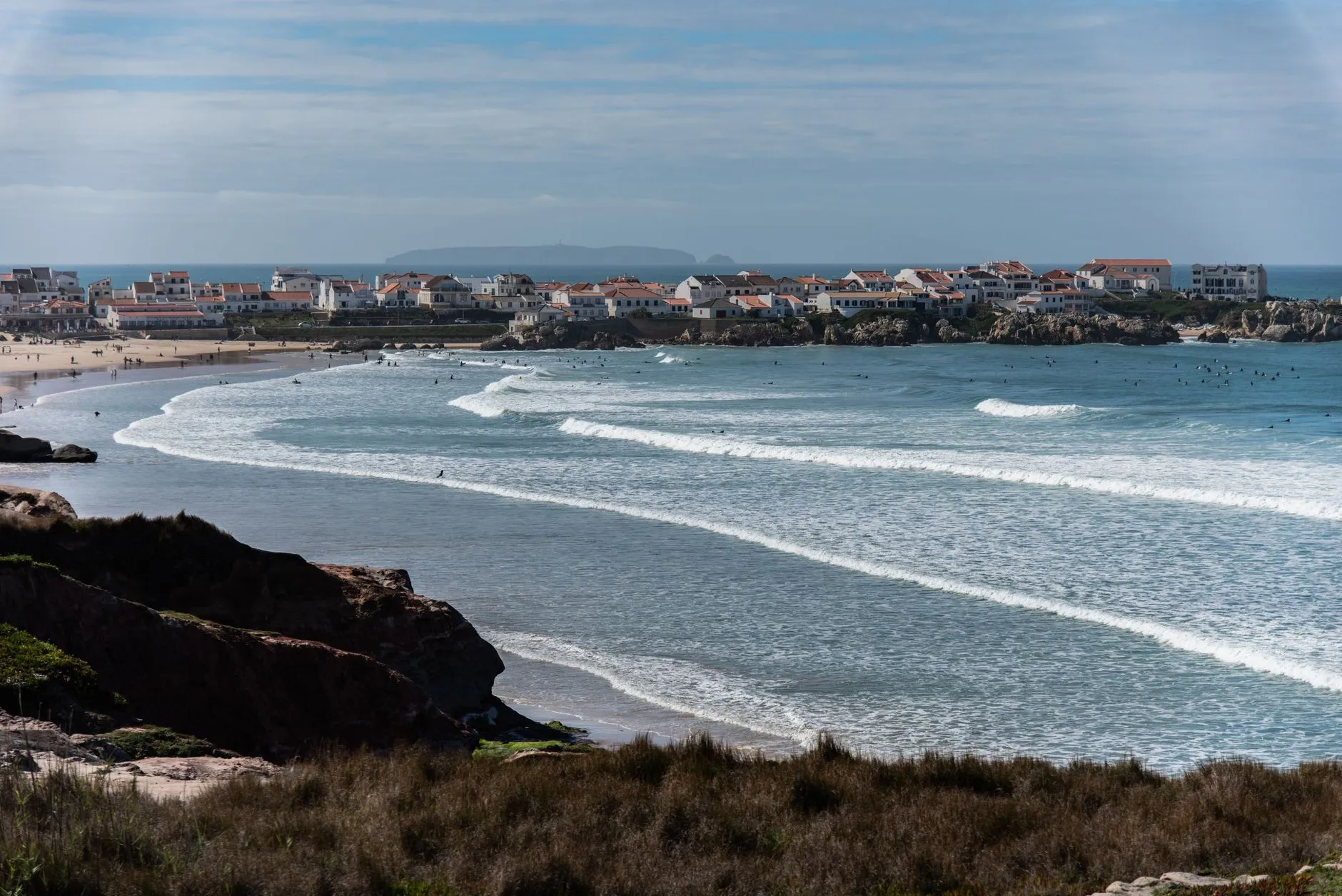
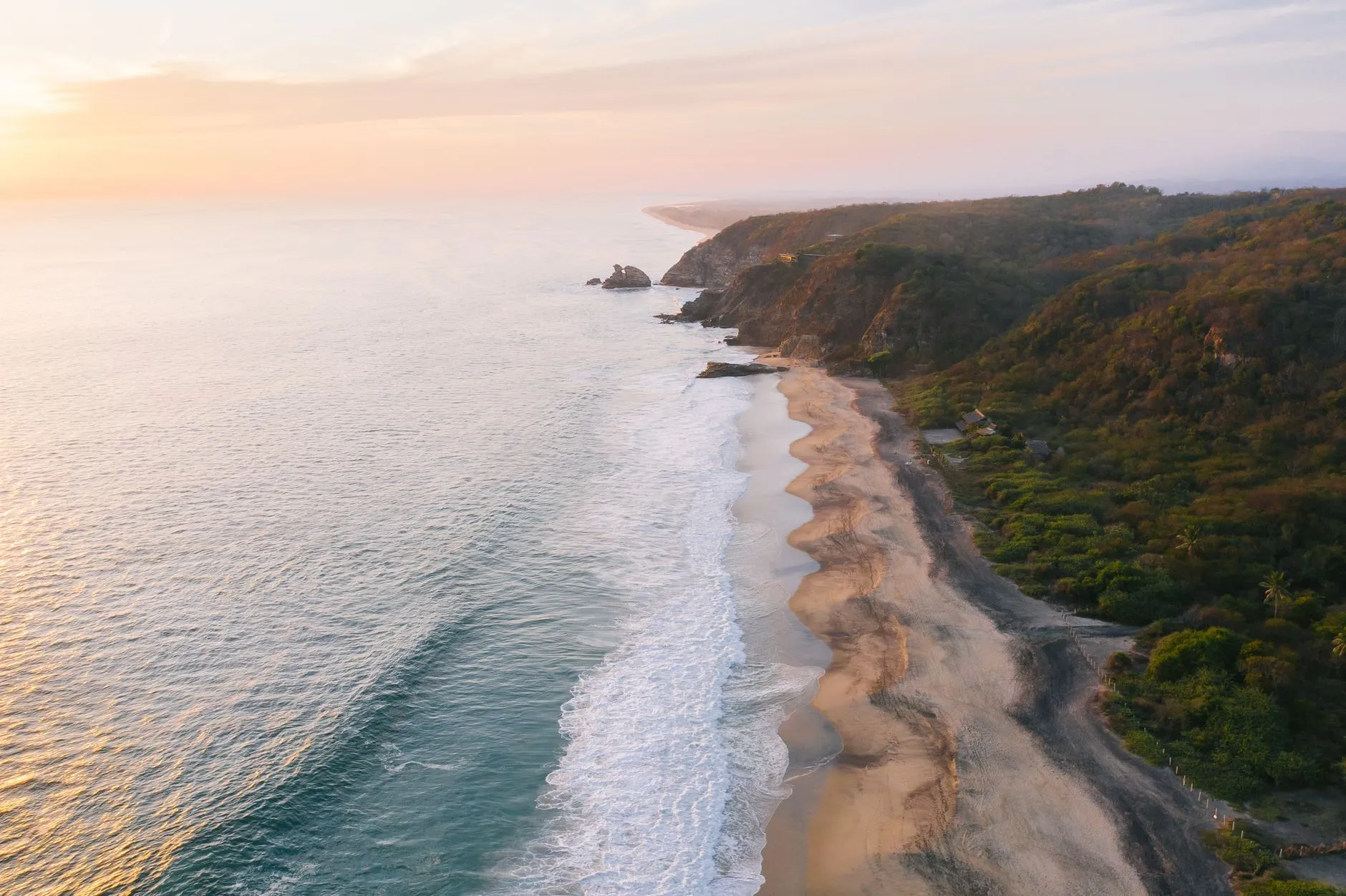
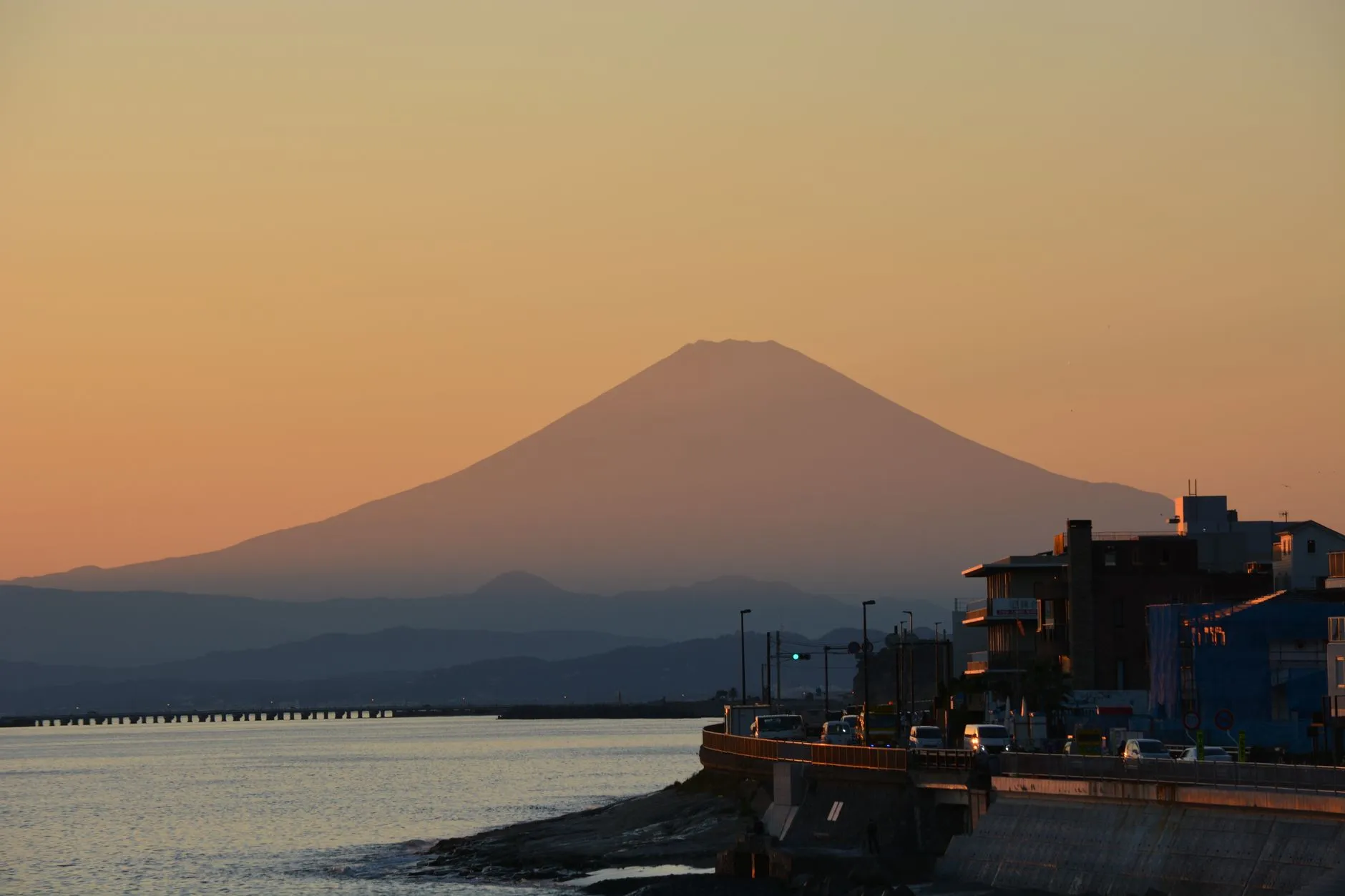
Taghazout, blue boats and flat roofs above the points
The points ladder
Four right-handers, each a step up: longer, faster, further from the café.
Panorama
Taghazout · Friendly point at the south end of town
Intermediate
The southern end of the village, where the rocks give way to sand and the wave gives way to mercy. Panorama catches plenty of swell, breaks softer than the points above and forgives the mistakes the famous waves punish. A favorite for the first week of a surf trip.
Hash Point
Taghazout · Mellow right off the village
Intermediate
The wave in front of the village, named in the seventies and never renamed. Slower and friendlier than its famous neighbors, it is where you graduate from the sandy beaches to your first real point break, with a café audience grading your rides.
Anchor Point
Taghazout · Morocco's most famous right
Advanced
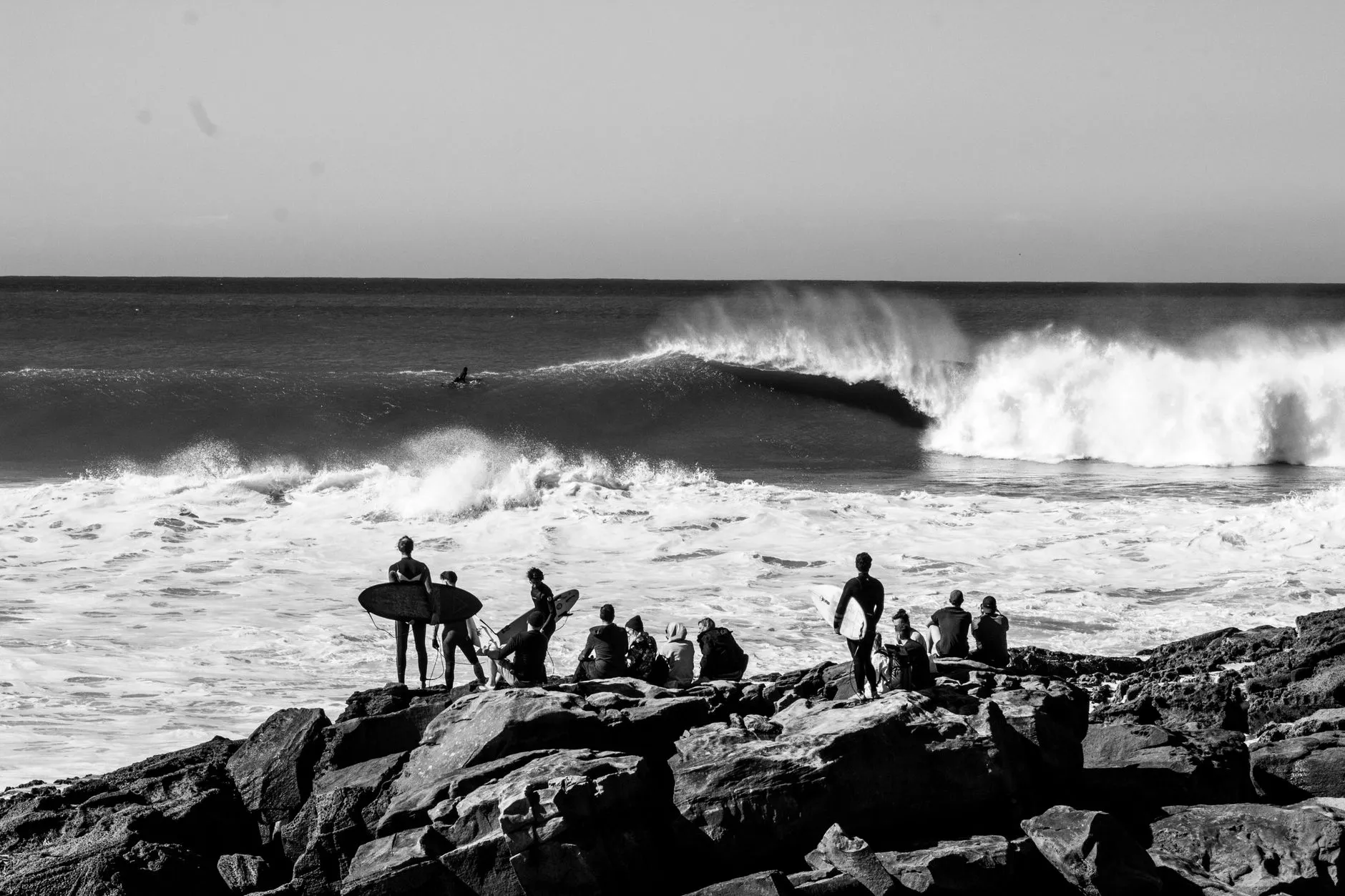
The wave that put Taghazout on the map. On a good winter day, walls wrap around the point and run toward the village for half a kilometer, fast, carveable and occasionally hollow. Expect a crowd from every continent; the wave has room for the patient.
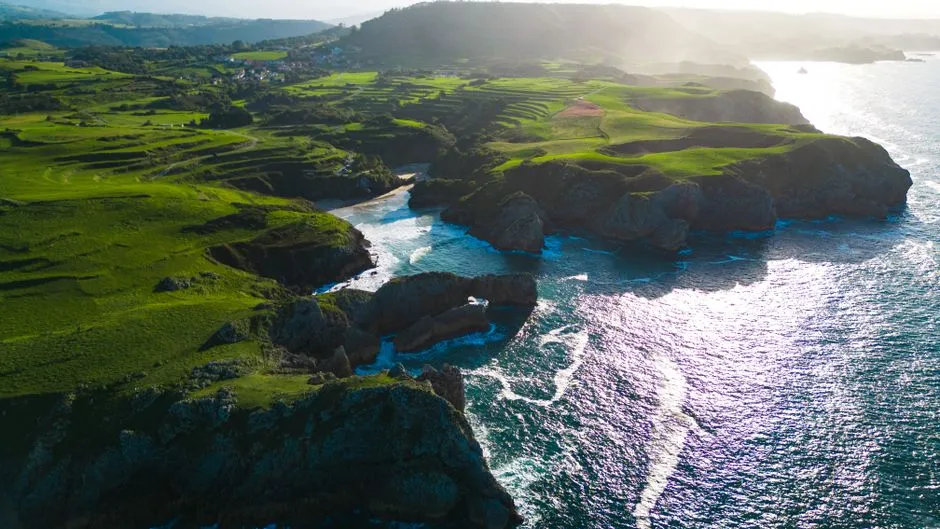
Named for the killer whales once spotted offshore, and it fits. The most consistent of the town's points, it holds the biggest winter swells on walls that run for hundreds of meters below tall cliffs. The paddle out is long; the paddle back after losing your board is longer.
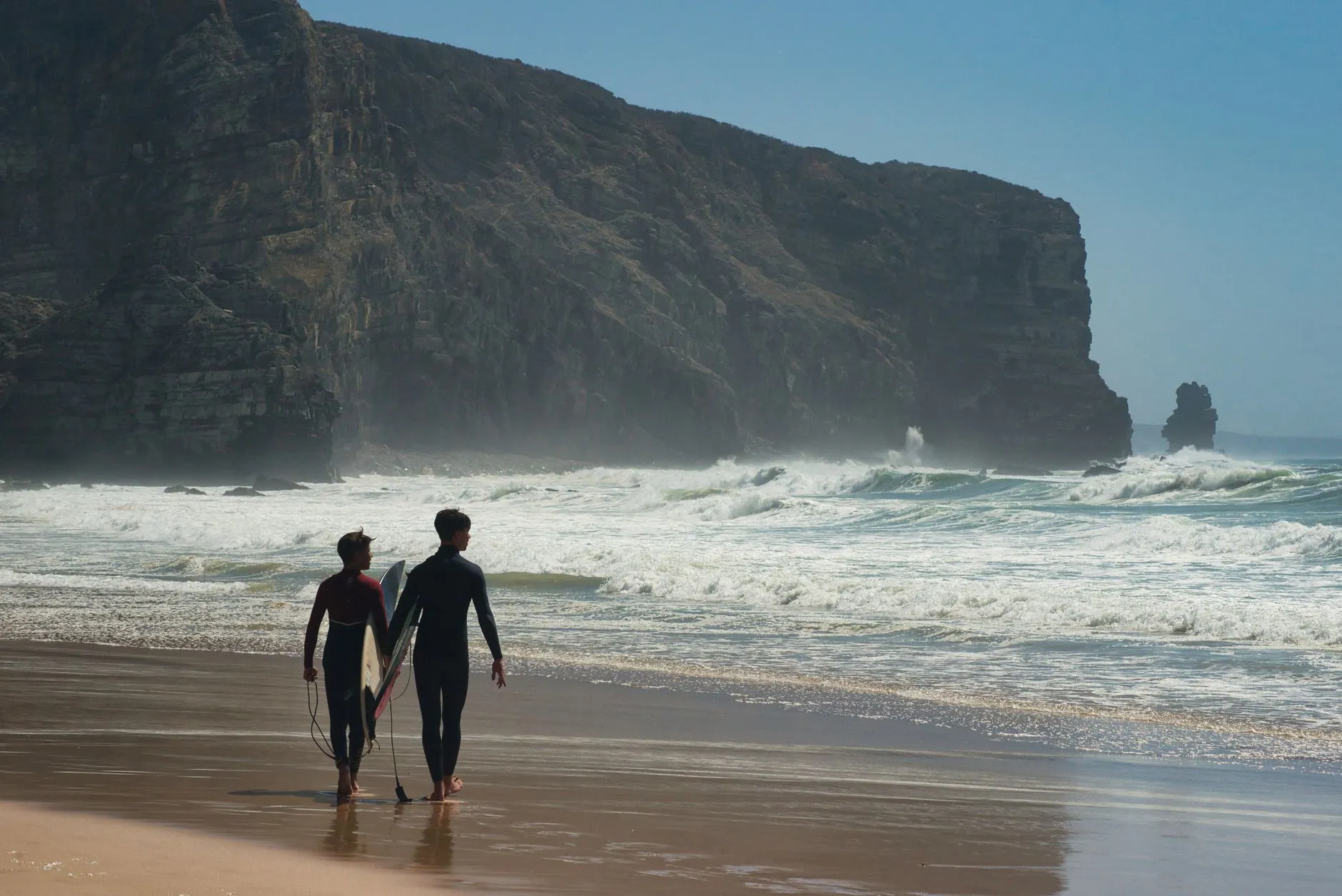
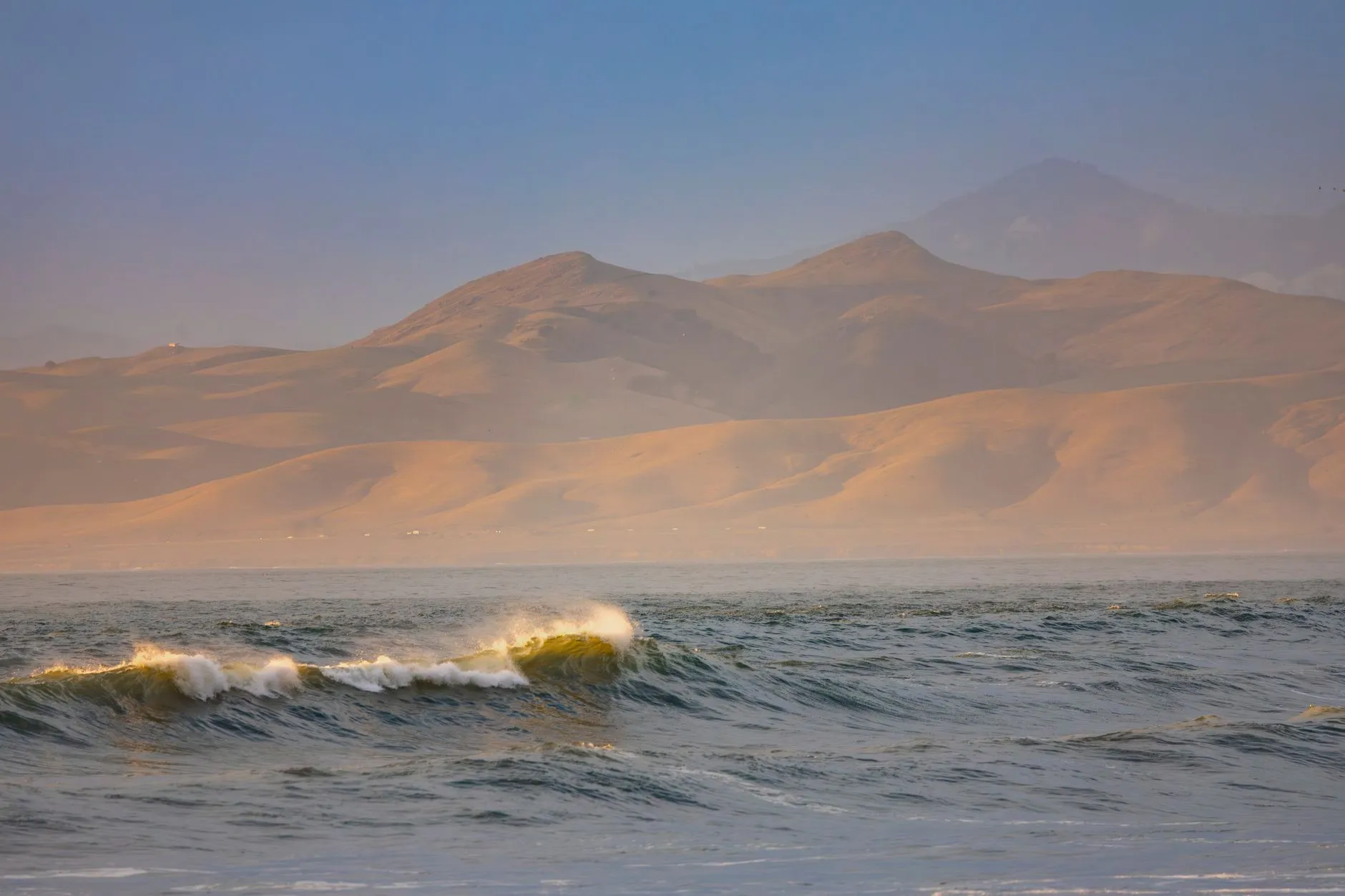
Watching the sets arrive from the rocks
The pilgrimage
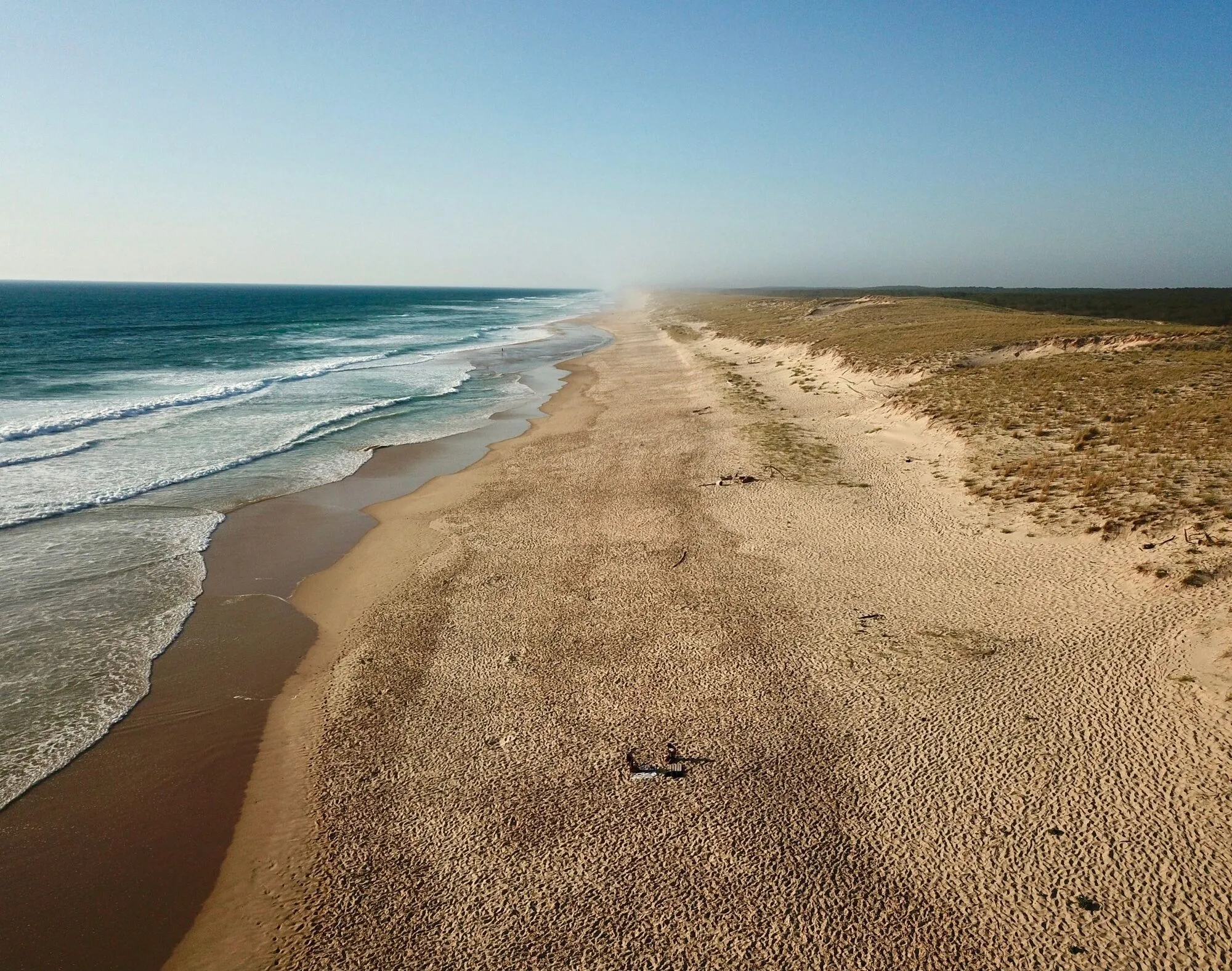
An hour north for the longest ride of your life. Worth it every single time.
Imsouane, the Bay
Imsouane · One of the longest waves in Africa
Beginner
An hour north of Taghazout, swell bends around a fishing harbor and peels down a bay for several hundred meters. Soft enough for second-week surfers, long enough to make a longboarder weep. Your legs give up before the wave does.
Typical conditions, month by month. The ocean did not sign this table: for live waves, wind and tide, check the app.
January
5-9 ft
64°F · 3/2 · Advanced
Peak season. The points line up and every camp van heads for the cliffs.
February
4-8 ft
63°F · 3/2 · All levels
Consistent swell, warm sun, cool mornings. Anchor at its best.
March
4-7 ft
63°F · 3/2 · All levels
The season winds down gently: long-period leftovers, fewer people.
April
3-5 ft
64°F · 3/2 or spring · All levels
Clean small windows. The learner beaches do the heavy lifting.
May
2-4 ft
66°F · spring suit · Beginner
Little swell, mellow town. Longboard at Banana or drive to the Bay.
June
1-3 ft
68°F · spring suit · Beginner
Summer small. Morning peaks at Devil's Rock before the breeze.
July
1-3 ft
70°F · boardshorts · Beginner
Tiny but warm. Imsouane still peels while everything else naps.
August
2-3 ft
72°F · boardshorts · Beginner
Warmest water of the year and the odd southern pulse.
September
2-5 ft
72°F · spring suit · All levels
The ocean stirs. First north pulses brush the points.
October
3-6 ft
70°F · 3/2 or spring · All levels
The season opens. The points start firing and the camps fill up.
November
4-8 ft
68°F · 3/2 · All levels
Prime time begins: swell after swell, offshore mornings.
December
5-9 ft
66°F · 3/2 · Advanced
Big, lined up, glassy at dawn. Killer Point earns its name.
Good to know
When is the best time to surf Taghazout?
October to March, when North Atlantic groundswells wrap down the point breaks. December and January are the most consistent months for Anchor Point and Killer Point, with sunny days and offshore mornings. Summer is small and warm: fine for learning on the beaches, quiet on the points.
Is Taghazout good for beginner surfers?
One of the best winter destinations in the world for it. Devil's Rock and Banana Point stay gentle and sandy while the famous points do their thing, surf camps handle boards, lessons and rooftop dinners, and the water never gets truly cold. Just do not paddle out at Anchor Point in your first week.
Do I need a wetsuit in Morocco?
In winter, yes: the water sits around 17-18°C from December to March, so a 3/2 is the standard, and locals add a hooded top on windy dawn patrols. From June to September the water reaches 21-22°C and a spring suit or boardshorts is enough. Booties help on the urchin-covered rock at the points.
Is Imsouane worth the trip from Taghazout?
Yes, at least once. The drive is about an hour along cliffs and argan groves, and the reward is a wave that peels for several hundred meters into a fishing harbor, gentle enough for improvers and long enough that people time their rides. Go on a small-to-medium swell; on big days the Bay closes down and the crowd concentrates.