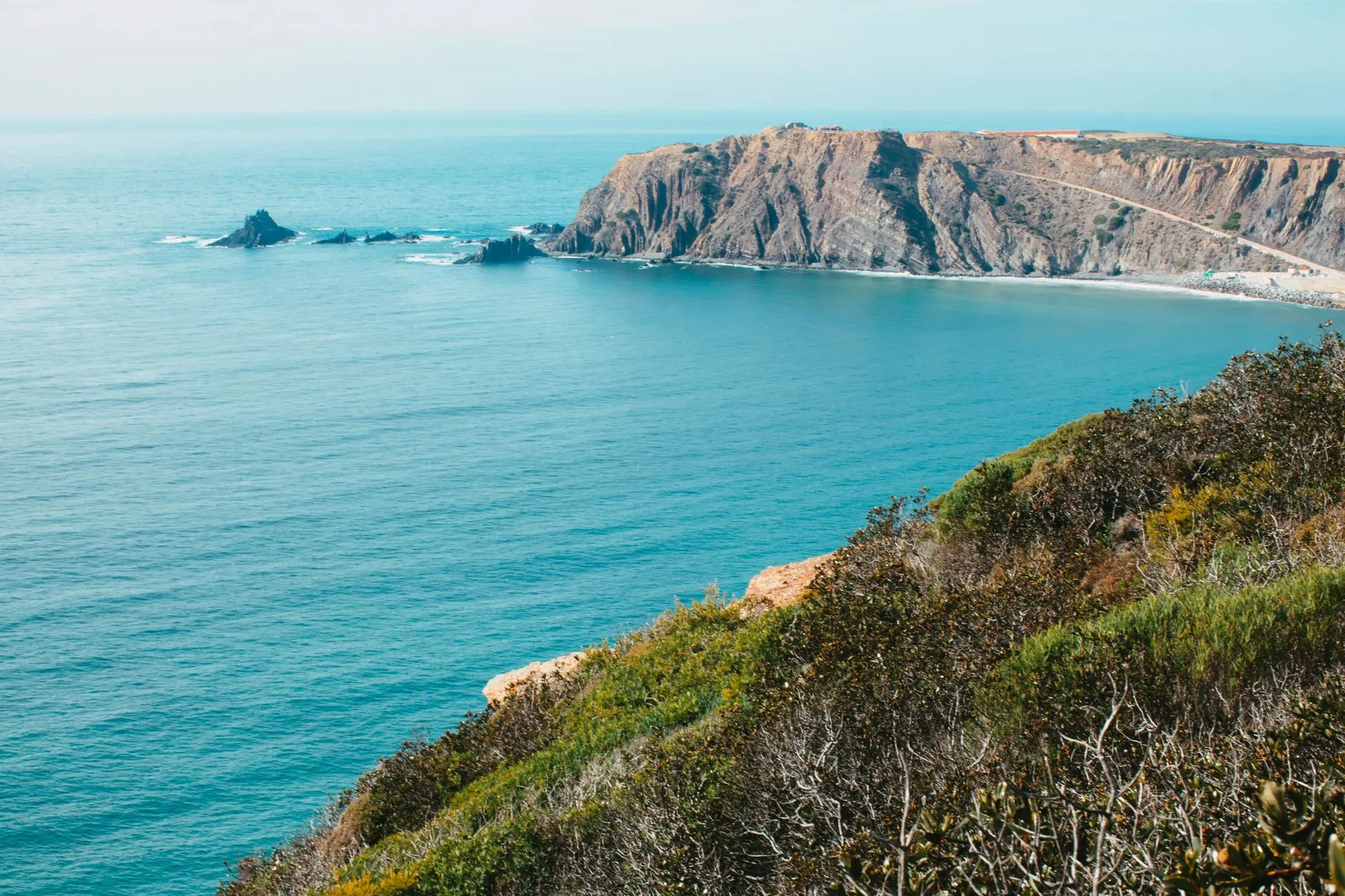
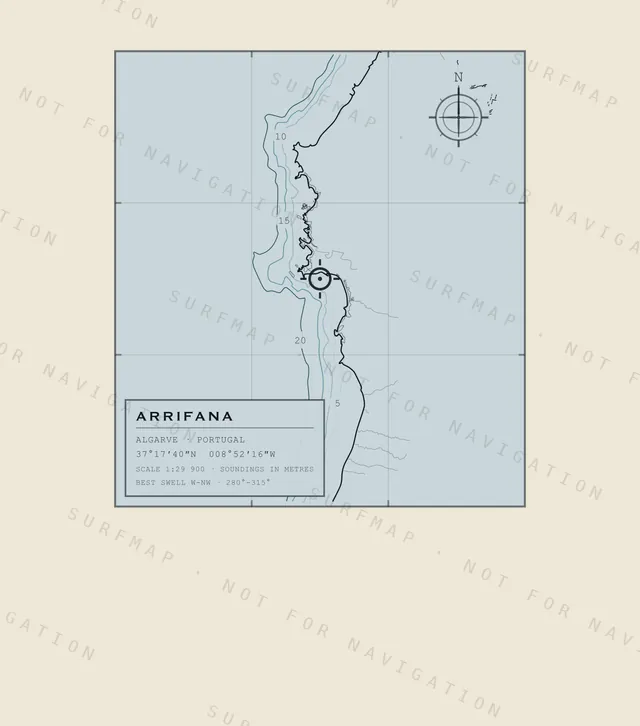
Arrifana is a crescent of dark schist cliff a few minutes south of Aljezur, inside the Costa Vicentina natural park, with a village perched on the rim, a handful of restaurants looking down on the water, and a steep road that drops to the sand. At the southern end a small fishing harbour, the Portinho, tucks under the cliff, and a needle of rock stands off the beach like a marker. It is the prettiest cove on this stretch of coast, and on a summer afternoon it is also the busiest, for a reason that has nothing to do with the view.
The reason is the shape. The cove folds its arms around the swell, so the beach takes the edge off both the wind and the size. When Amado, Bordeira and Monte Clérigo are a mess in the summer north wind, the cliff behind Arrifana keeps it clean, which is why half the coast ends up in its car park. Learners and longboarders get friendly peaks in the middle of the bay, and on a proper winter swell a long right-hand point wakes up off the rocks by the harbour, fast and hollow, for the coast's best surfers only.
Beginner
Wave
Sheltered beach break over sand, with a right-hand point over rock at the harbour end
Best swell
W to NW swell, waist to head-high. The cove trims what the open beaches take at full size
Best wind
NE offshore. The cliff blocks the summer north wind far better than the open beaches
Best tide
All tides. Mid tide is the honest answer for the beach; low exposes the rocks, high narrows the sand
Season
October to March for real waves; September and April for fewer people
Level
Beginners and longboarders on the beach peaks; the point is for experienced surfers only
How the wave breaks
Most days, Arrifana is a beach break, and a kind one. Peaks stand up in the middle of the cove over sand, roll rather than pitch, and hand out long, forgiving rides at waist to chest-high, which is why the schools set up here and why longboarders treat the bay as their own. The cliffs do the grooming: the swell has to bend into the cove, losing some size and most of its edge on the way, so a day that is head-high and ragged on the open beaches arrives here a size smaller and organised. Mid tide gives the beach its best shape.
Then there is the other Arrifana. On a proper winter swell from the west or northwest, a right-hand point wakes up off the rocks at the southern end, beside the harbour. It stands up fast, throws a hollow section along the rock ledge and runs into the bay, and on its best days it is one of the longest waves in the Algarve. It is also shallow, with rocks on the inside and along the whole takeoff, and it draws the coast's best surfers the moment it starts working. Watch it from the harbour wall. Paddling out is a decision for people who already know what they are doing.
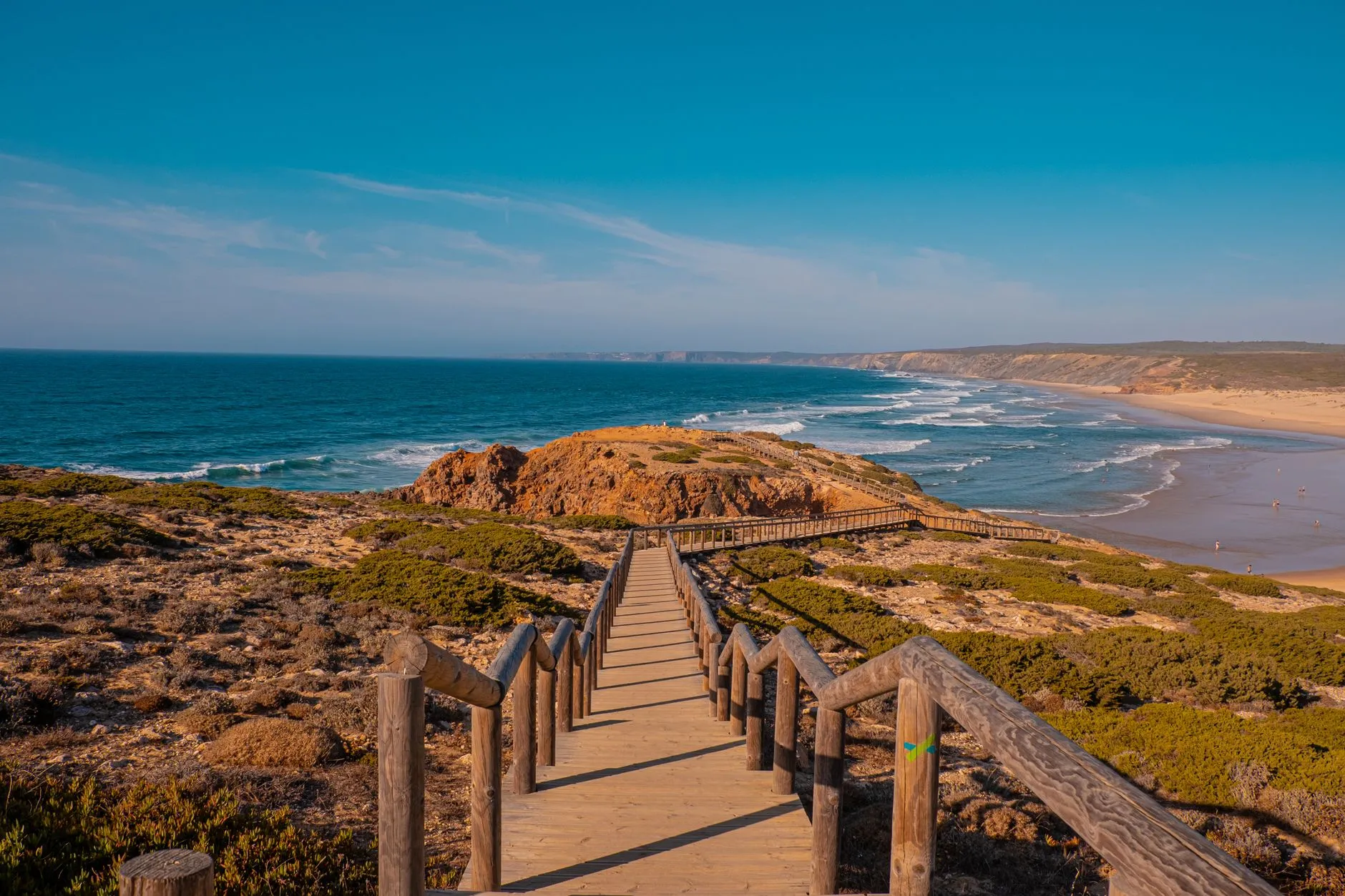
Praia da Bordeira, the wide open beach a short drive south of Arrifana
When it works
The real season runs from October to March, when North Atlantic lows send west and northwest swell down the Costa Vicentina. That is when the beach peaks have push, when the point gets its handful of days, and when the water sits at 15 to 16°C, a 4/3 with the sun out. September and April are the quiet version of the same thing: swell arriving, water still mild, the summer crowd gone.
Summer is a different beach. From June to August the swell drops to knee- to waist-high, the water warms to around 20 to 21°C, and the cove fills with surf schools and holiday traffic. But the nortada, the north wind that blows most summer afternoons, is exactly what the cliff behind Arrifana is good at blocking, so while Amado and Bordeira are capped white by two o'clock, this is often the only clean wave on the coast. That is the whole trade: a small wave, a lot of company, and a good chance it is rideable when nowhere else is. West and southwest winds are the ones that spoil it.
The lineup and where to sit
The cove sorts itself into three zones, and reading them from the top of the road before you carry a board down saves a lot of paddling. The middle of the beach belongs to the schools and to first waves: the sand is most even there, the peaks are softest, and the whitewater runs longest. Toward the harbour rocks at the southern end the bank steepens, the point comes into play on bigger days, and the more experienced surfers gather. The northern end is quieter, with a little more current pulling along the cliff, which is where you go for space when the middle is full.
On the beach peaks the etiquette is the ordinary kind, made harder by numbers: learners, longboards and shortboards share the same small stretch of sand, so keep your spacing, look before you go, and hold your board in the whitewater. The point runs on the strict pecking order of every good point wave. The locals and the surfers who drive here for it sit deepest, take most of the set waves, and paddle back through a rock garden. If you have to ask whether you belong out there, the answer is the harbour wall, with a coffee and a good view.
Getting there and where to stay
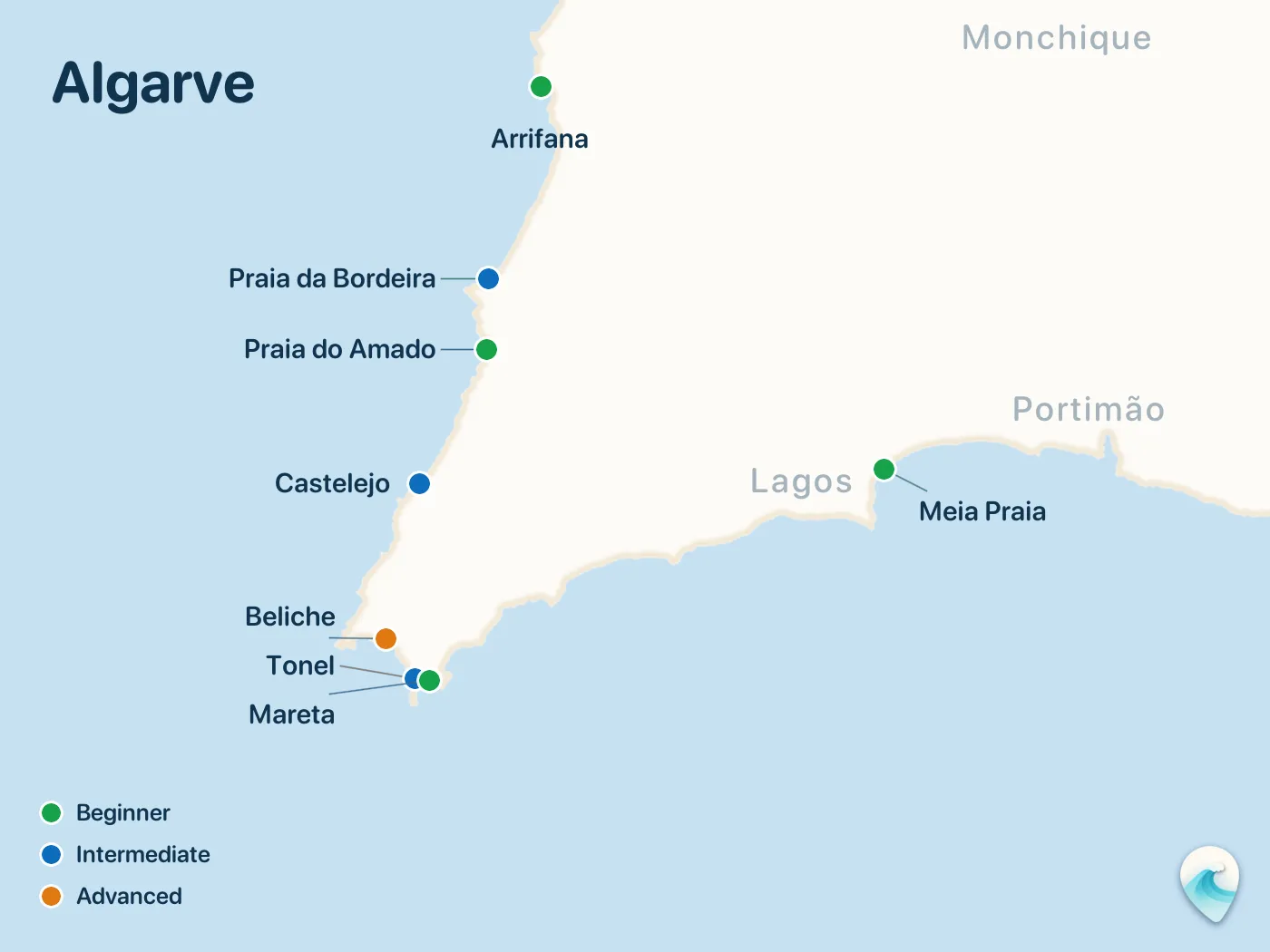
Arrifana is about ten minutes by car from Aljezur, forty from Lagos, and around an hour and a half from Faro airport to Aljezur, plus the last stretch down to the cove. The road ends on the cliff top by the village, where the car park fills by nine on a summer morning: park up there and walk down the steep road with your board, or arrive early and drive to the small car park by the harbour at the bottom. Either way, the walk back up after a session is part of the deal.
For a base, the village on the cliff has rooms and restaurants within sight of the water, Aljezur has more choice ten minutes inland, and the surf houses along the Costa Vicentina all run here when the wind is up. Monte Clérigo is the next beach north, worth a look on a small day; Amado and Bordeira are the open beaches down the coast to the south, the ones you leave behind when the nortada blows.
Hazards
Rocks at both ends of the beach and all along the inside of the point: know where they are before the tide drops
A busy lineup of learners, longboards and loose boards: give everyone room and hold on to yours
The cliff road and the car park fill by nine on summer mornings, and the walk back up is steep
The point is for experienced surfers only on its day: fast, hollow, shallow and crowded with the coast's best
An honest guide to surfing the Algarve: the west coast versus south coast wind logic, Arrifana to Beliche, where beginners should start, and winter surf in a 4/3 under blue skies.
Yes, on most days. The middle of the cove breaks over sand at waist to chest-high, the cliffs take the edge off the wind and the size, and the schools are there for a reason. The two honest caveats are the crowd, which is real from June to September, and the rocks at both ends, which you stay away from by staying in the middle. Leave the point alone: it is a different wave for different surfers.
When does the Arrifana point break?
Only on a solid winter swell, usually between November and March. It needs west to northwest groundswell, well overhead on the open beaches, before the right starts running along the rocks by the harbour, and it wants a light offshore or no wind. Tide matters too: most locals say mid tide, when there is enough water over the ledge. Count on a handful of days a season, and expect the coast's best surfers to have counted them first.
Why is Arrifana so crowded, and how do you avoid the crowd?
Because it is the sheltered beach on a windy coast. When the nortada tears up Amado, Bordeira and Monte Clérigo on a summer afternoon, everyone with a board drives here, and the schools were already in the water. To avoid it: surf at first light, before the car park fills at nine; walk to the northern end of the cove; or come in September, April or the winter months, when the same wave has a fraction of the company.