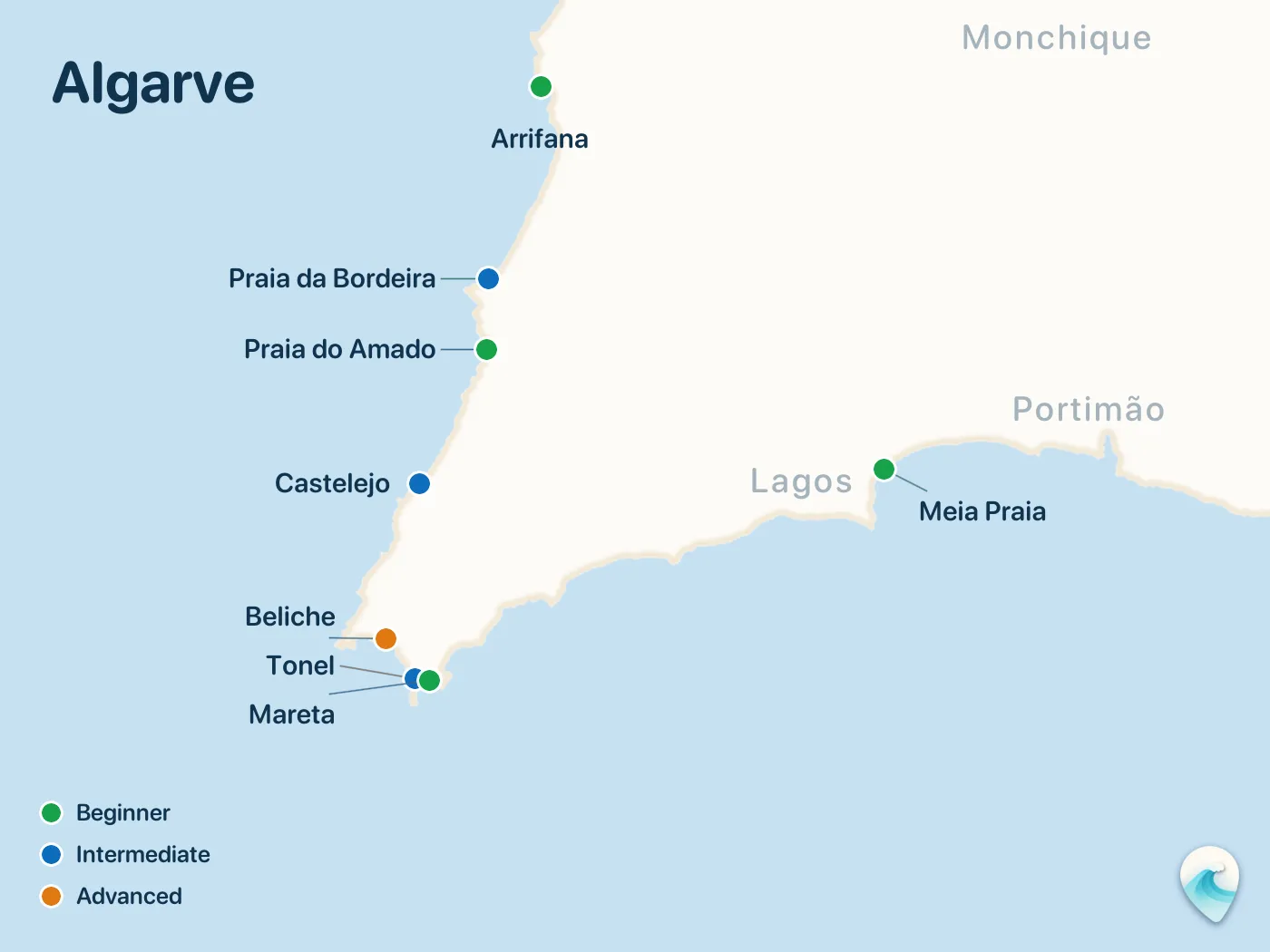
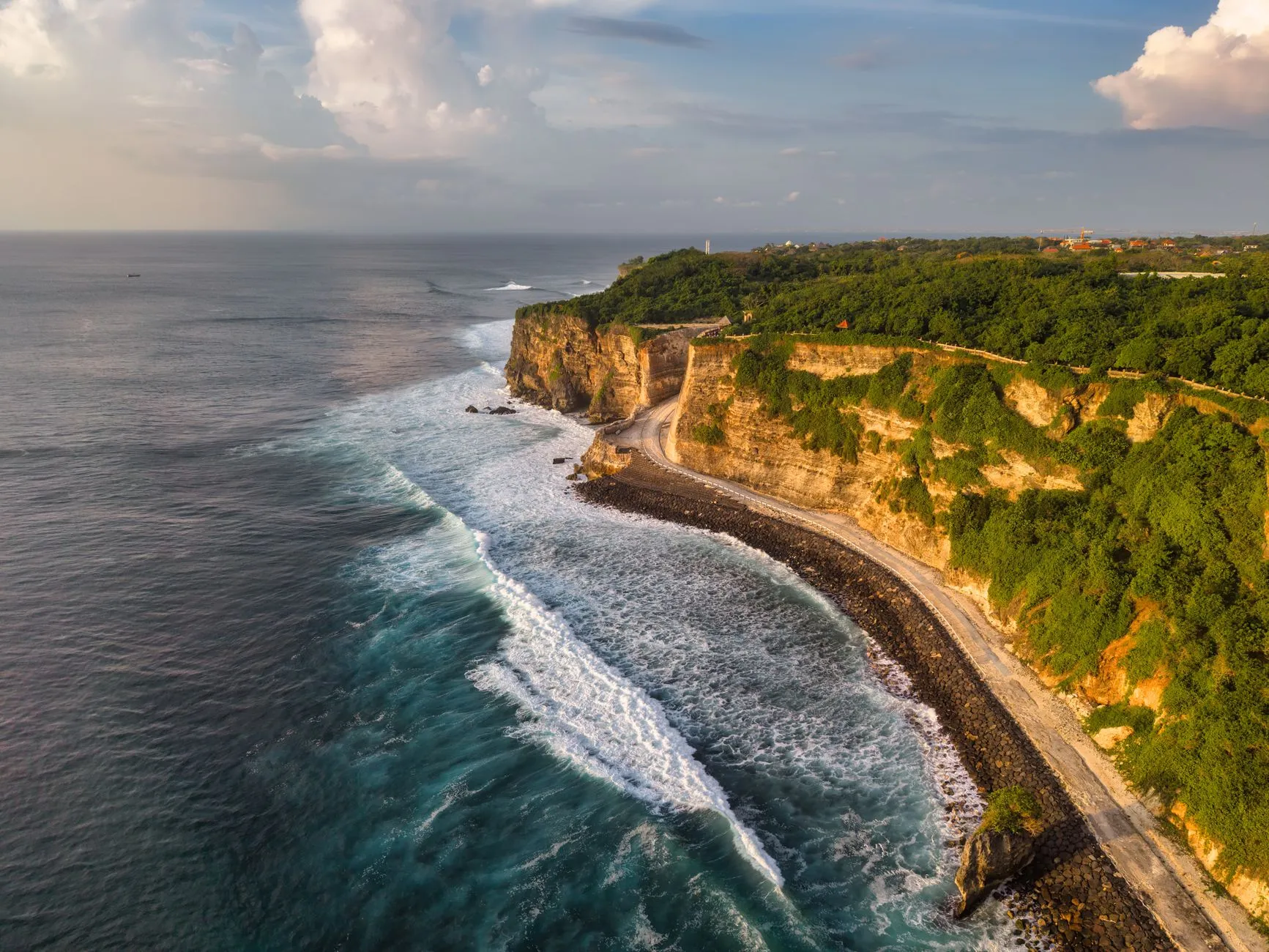
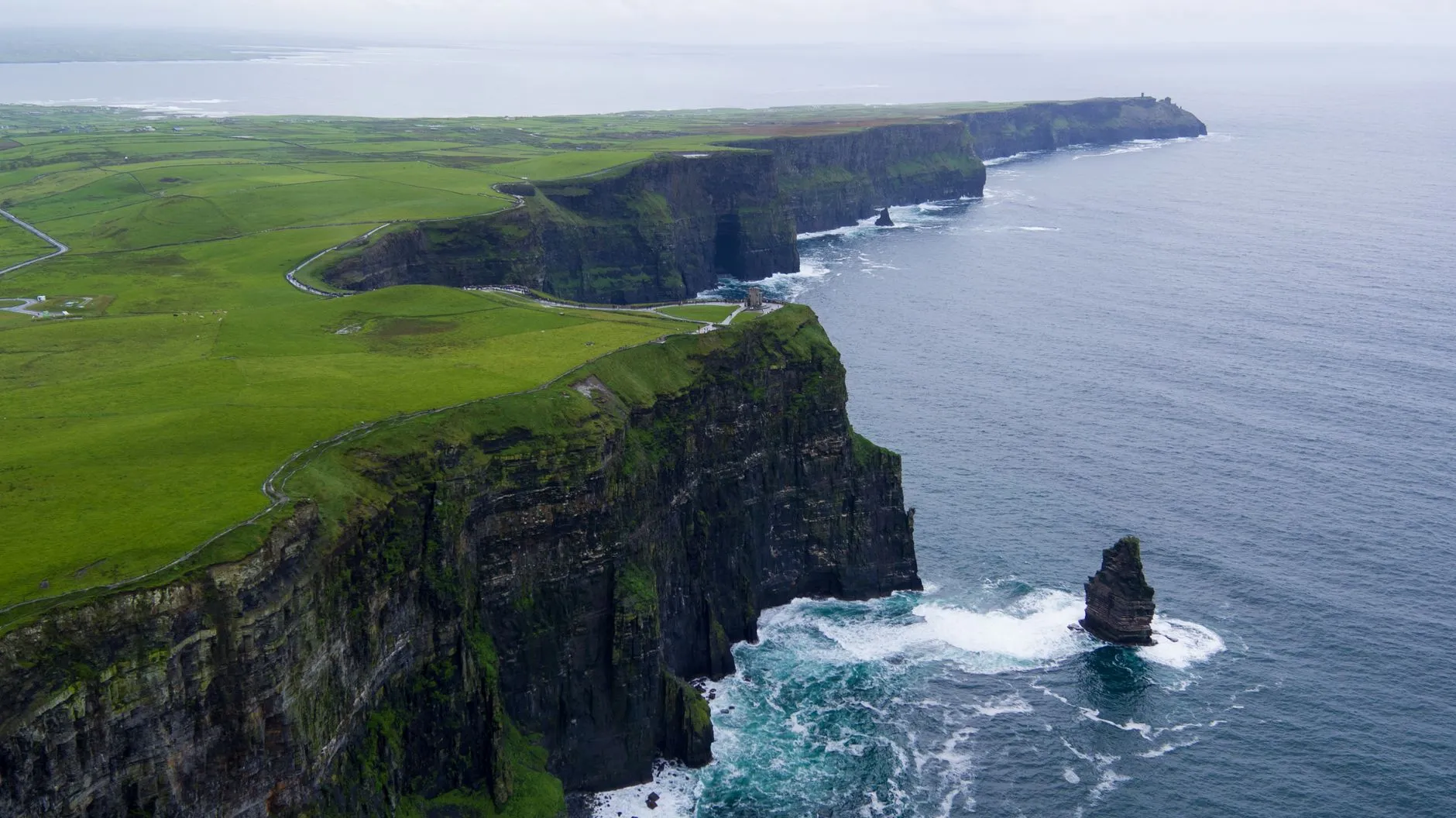
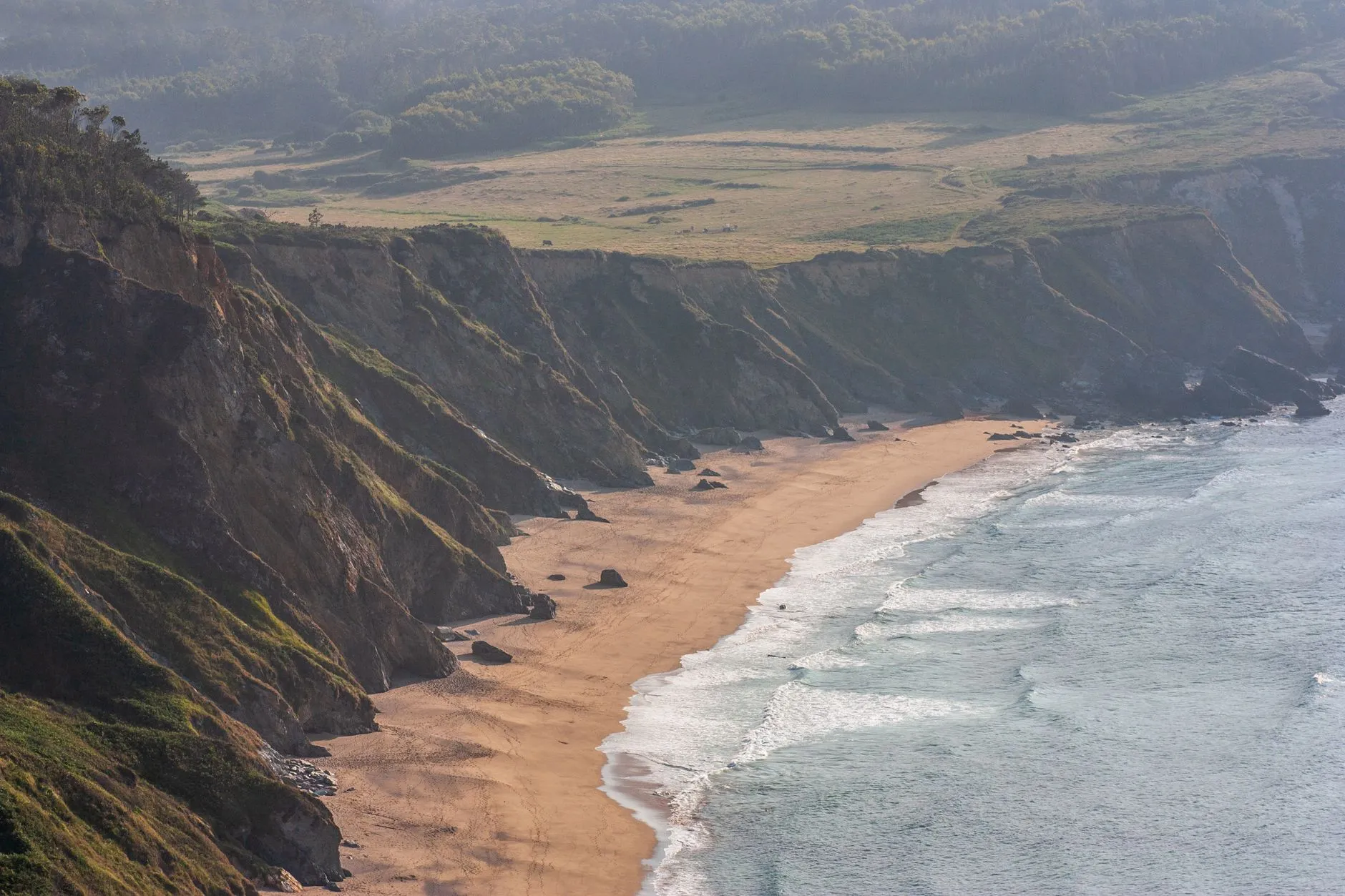
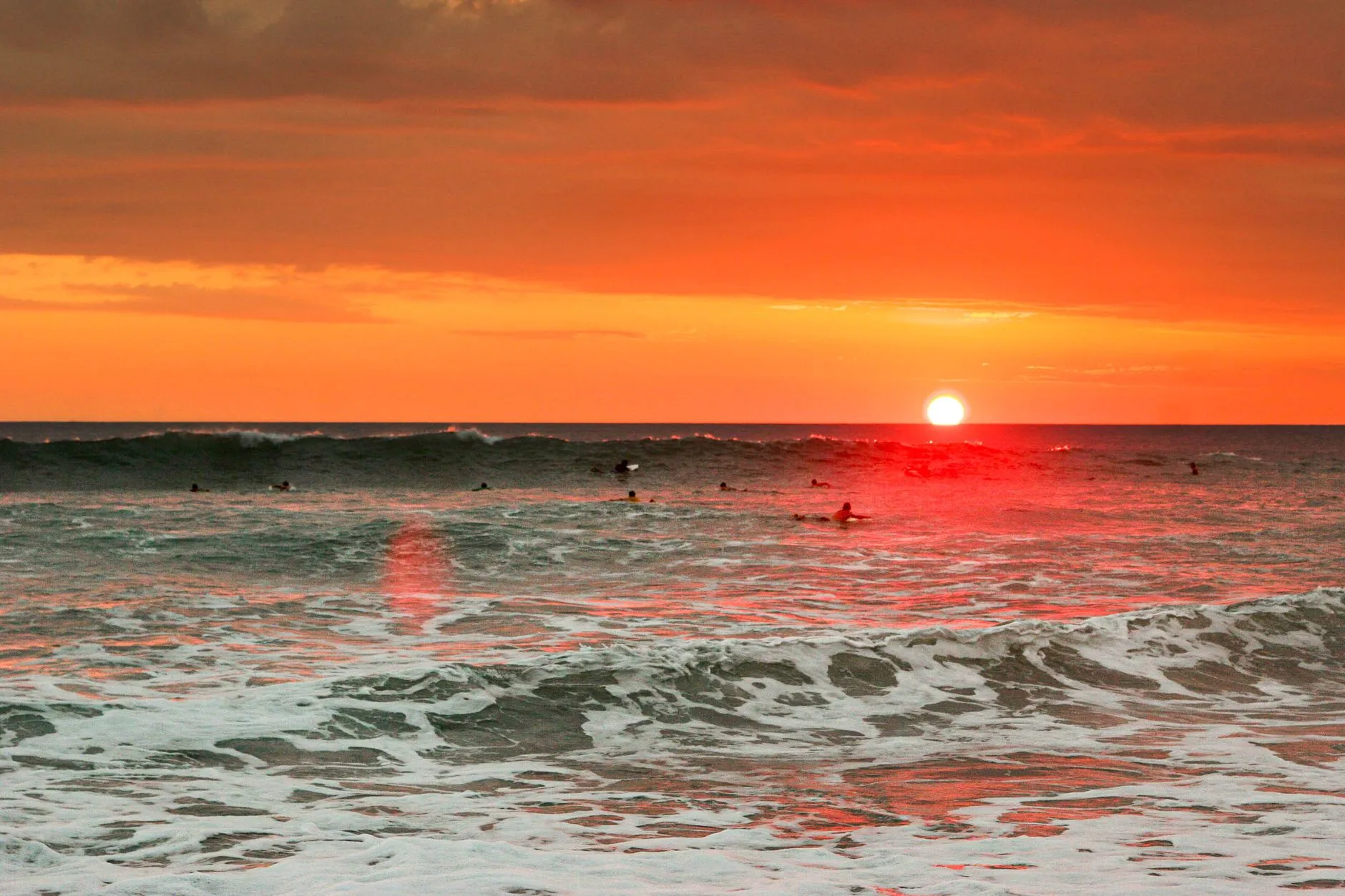
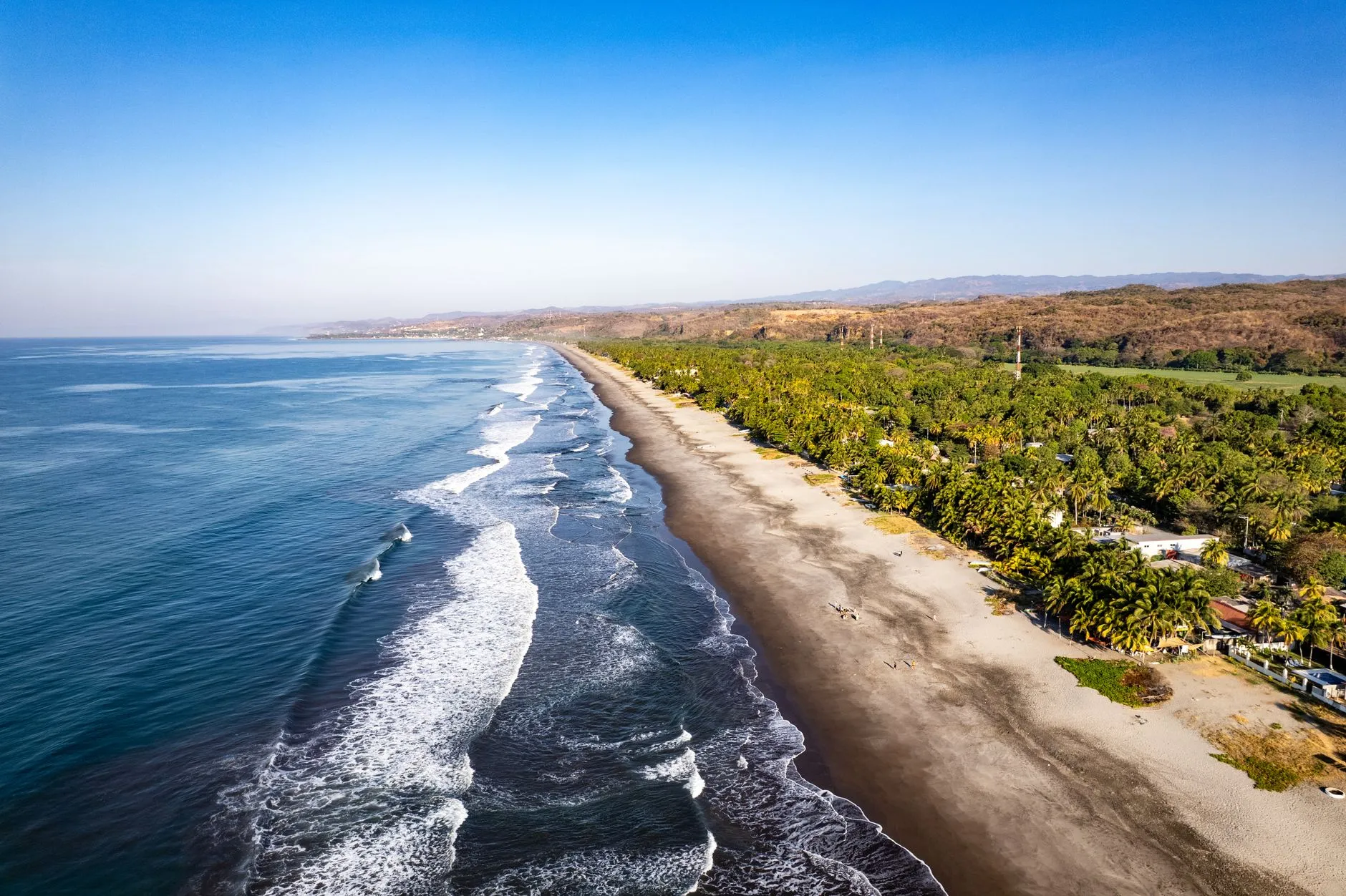
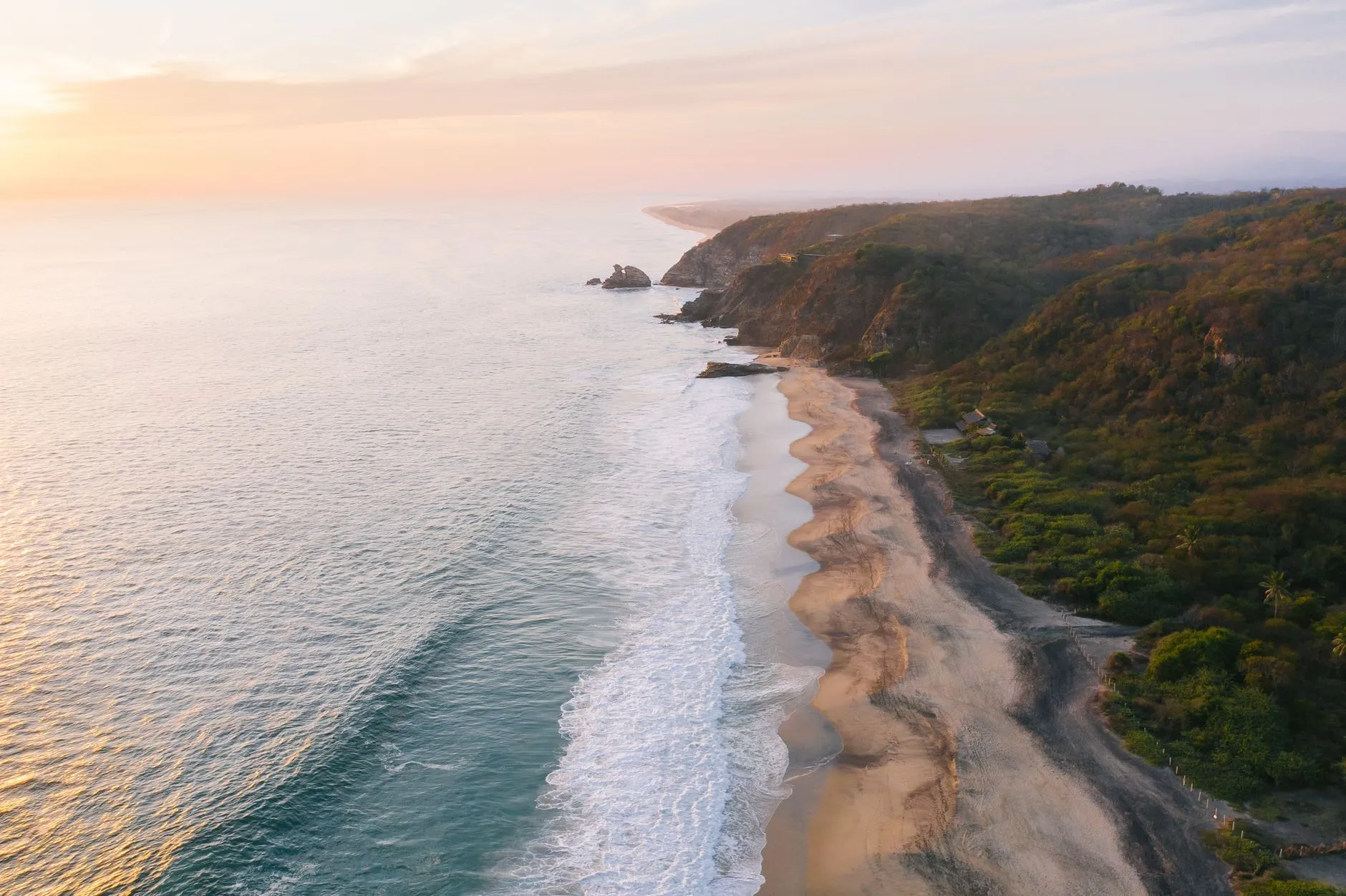
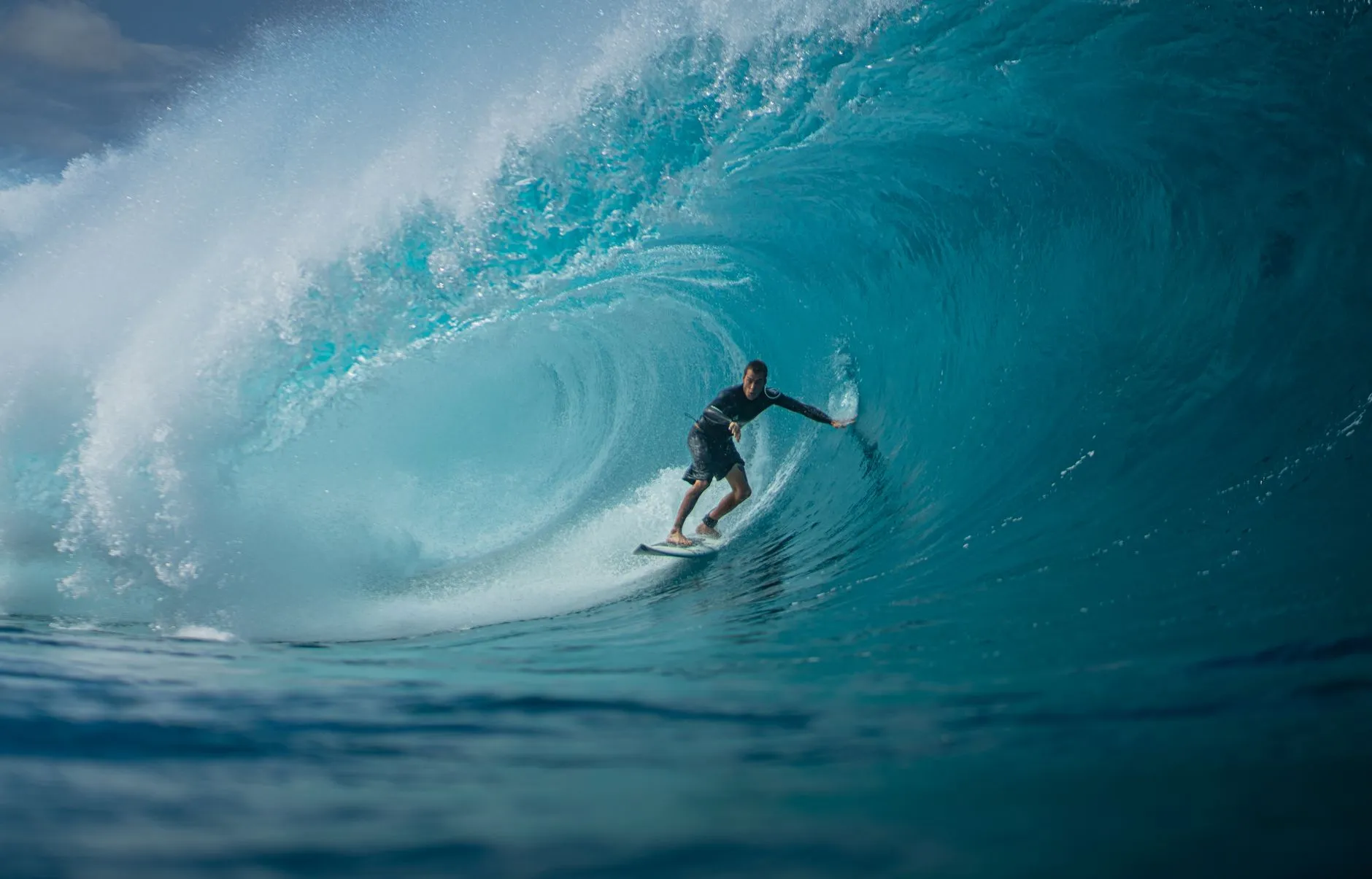
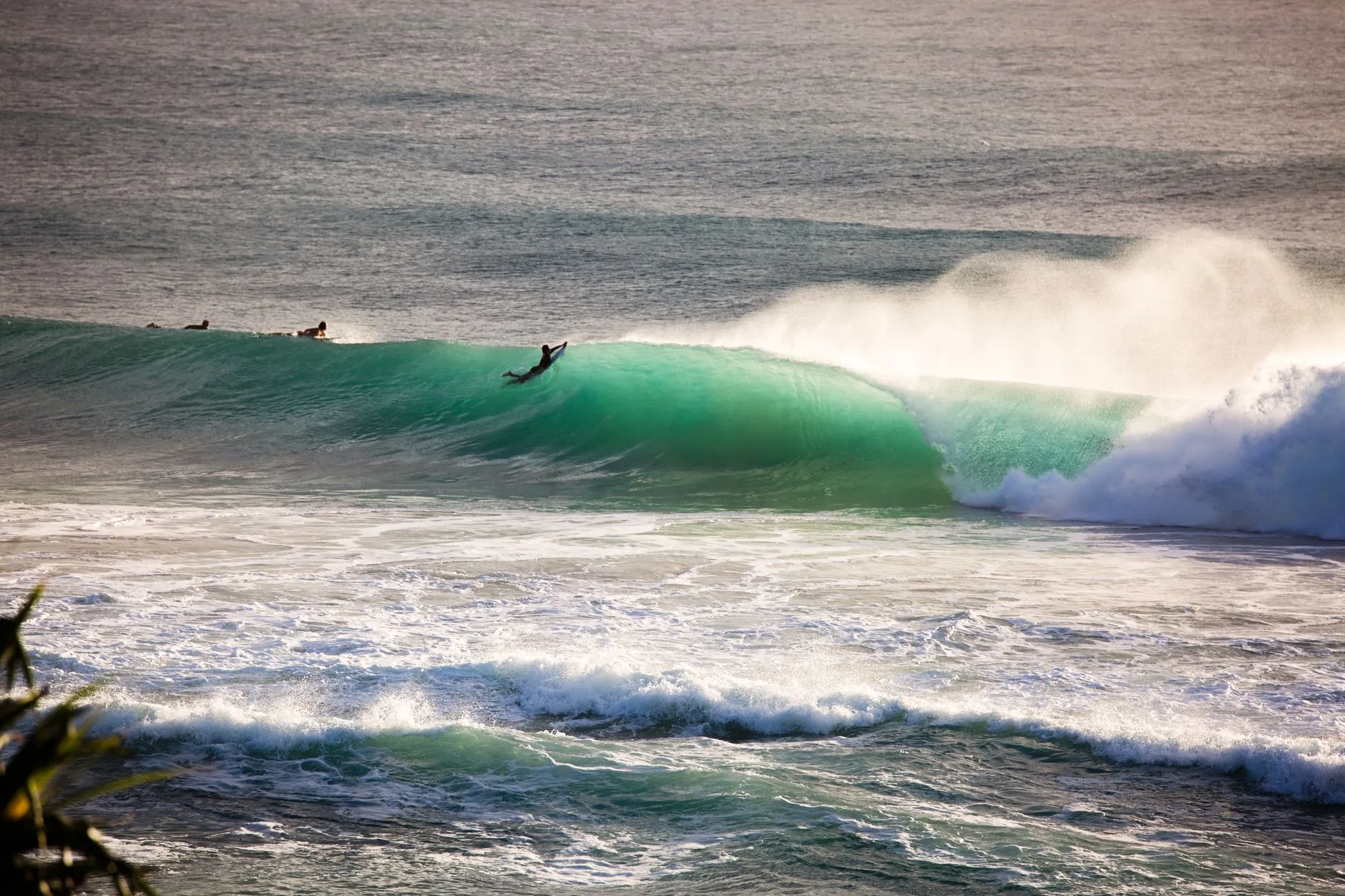
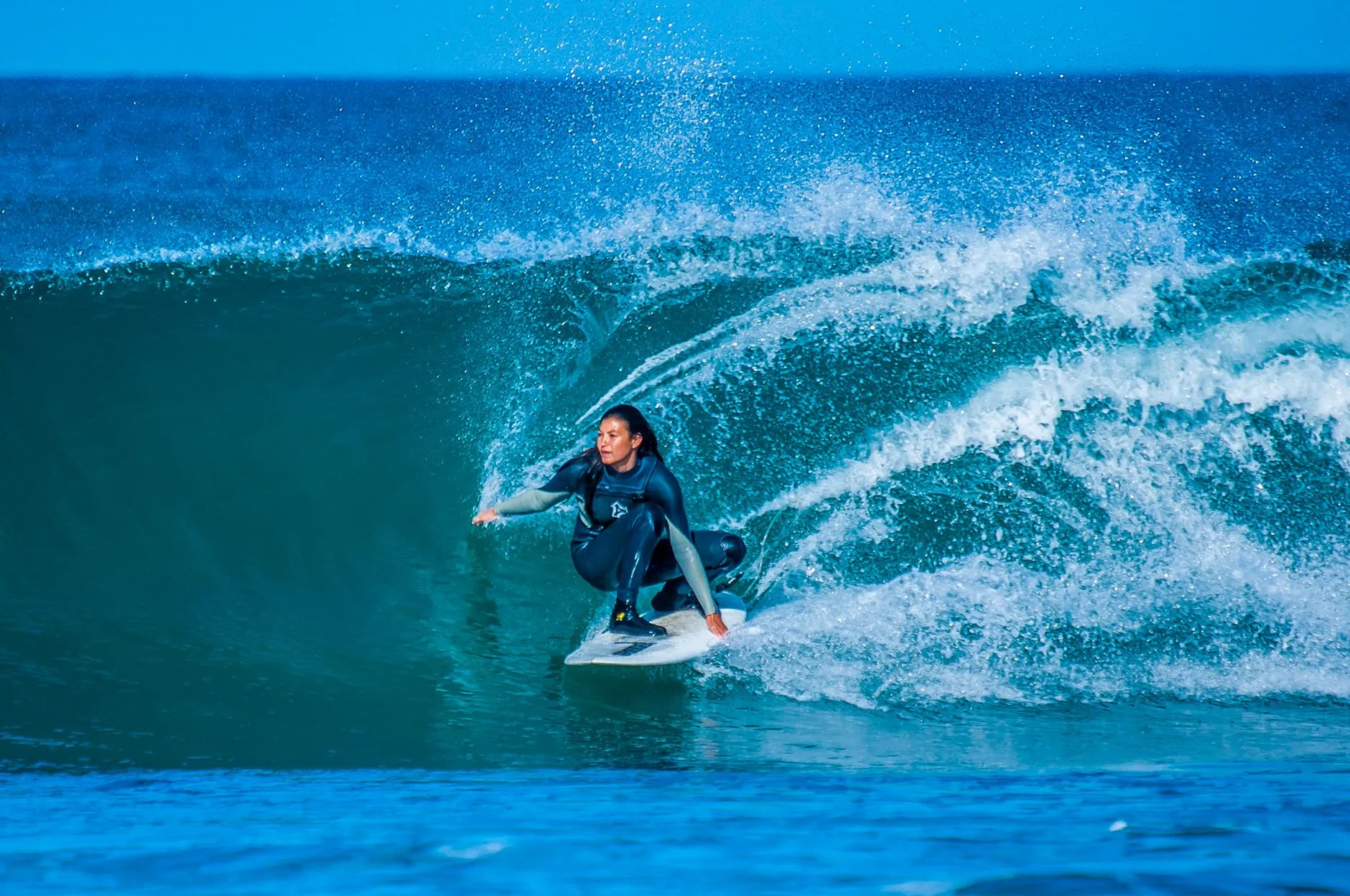
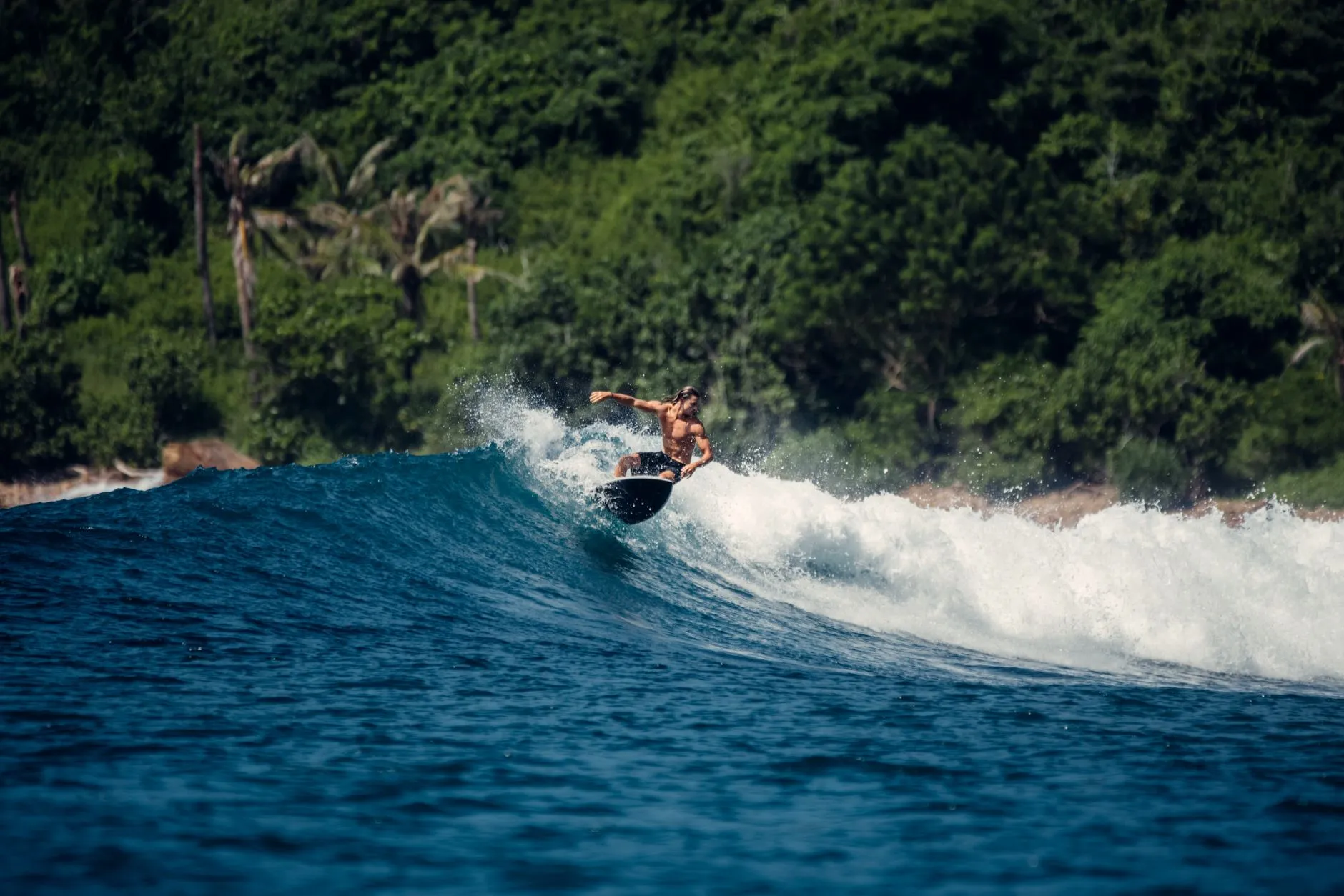
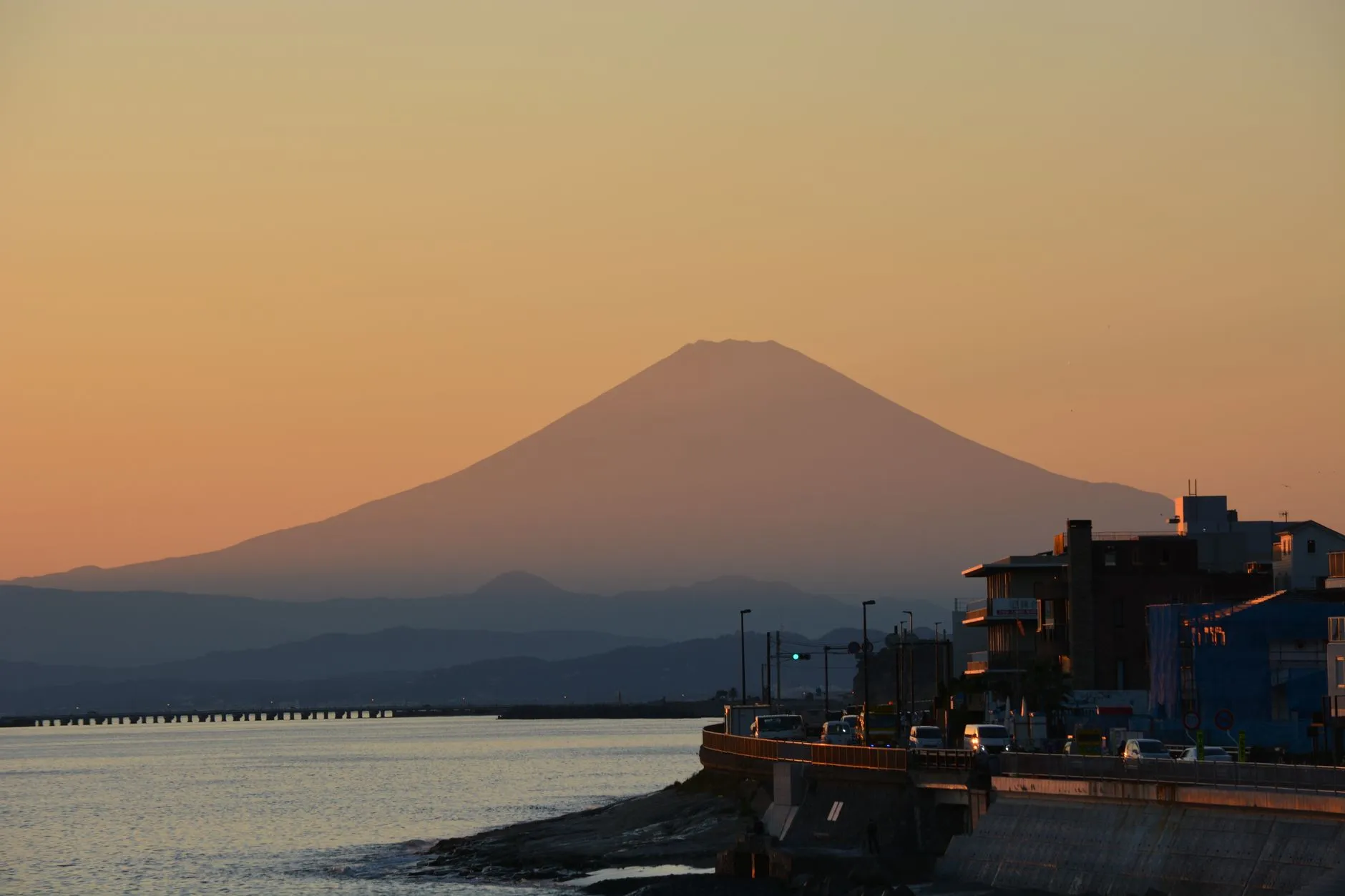
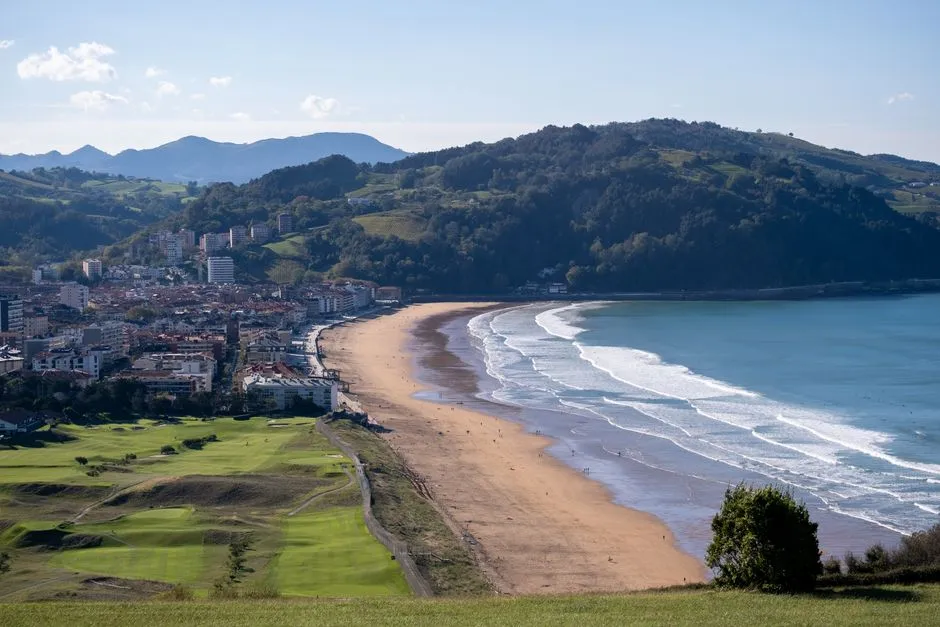
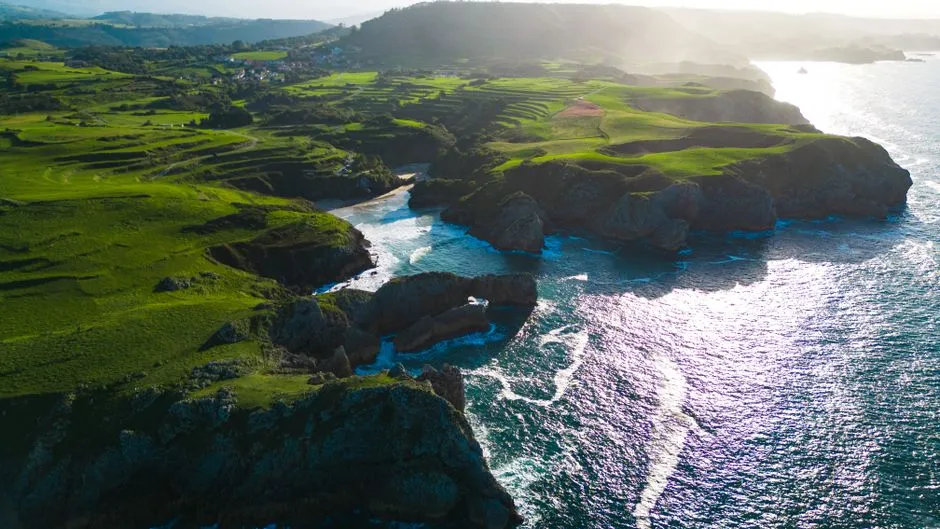
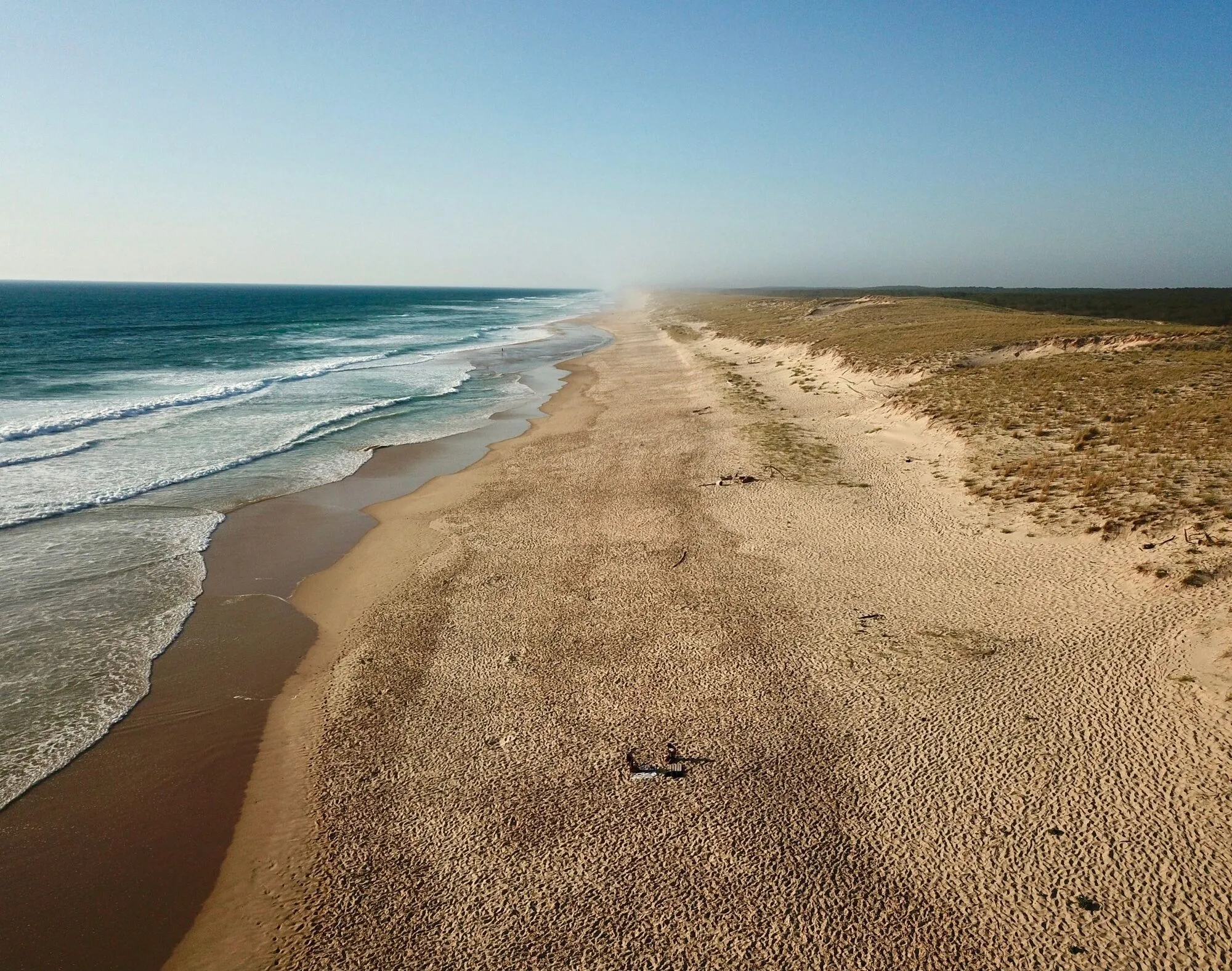
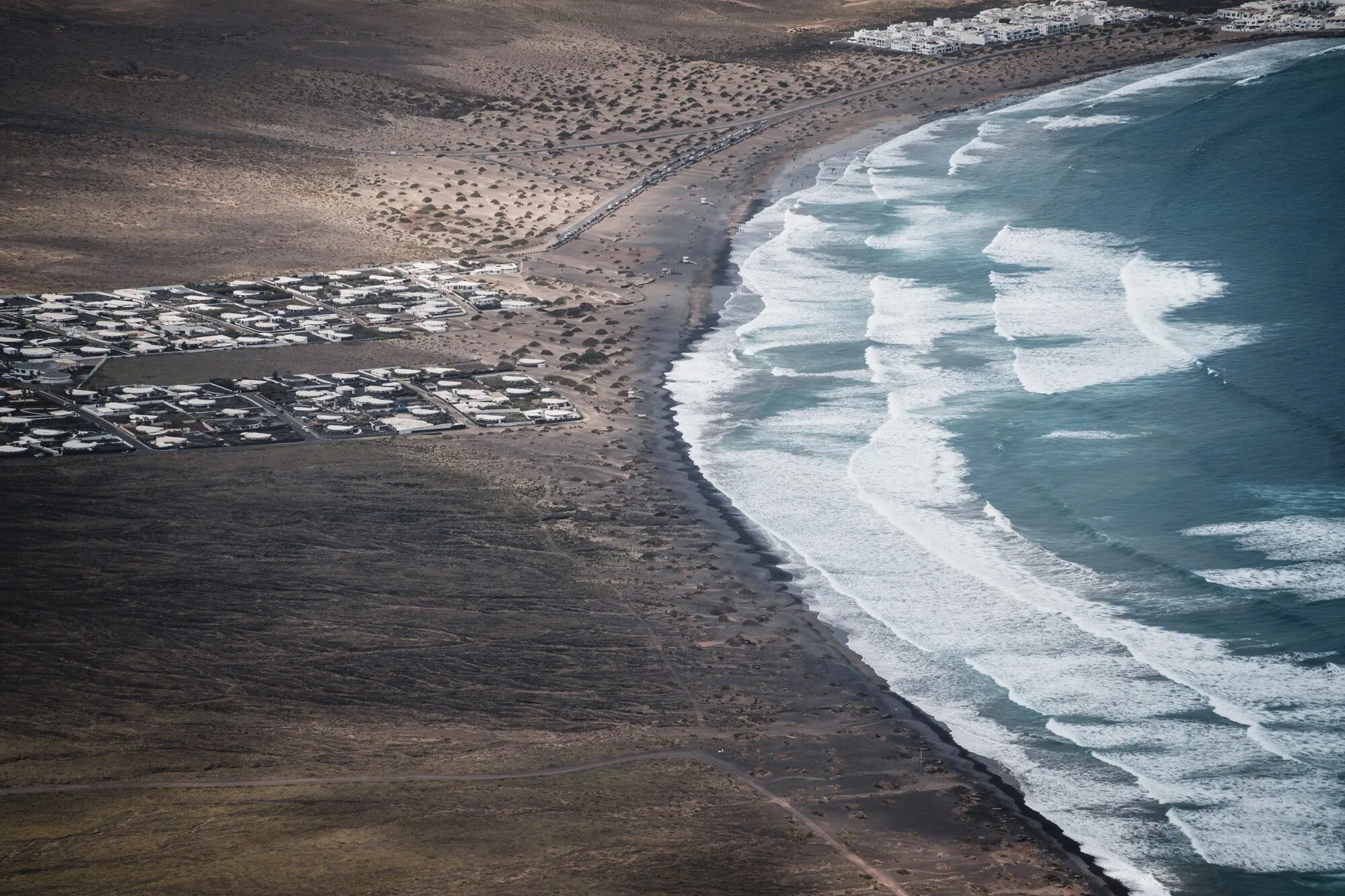
Portugal keeps its southern edge wild. Past Lagos the golf courses stop, the ochre cliffs rise, and the road runs out at Cabo de São Vicente, the lighthouse-topped corner that medieval sailors called the end of the world. Here the coast bends through a right angle, and that bend is the whole trick of Algarve surfing: a west coast that drinks every Atlantic swell, and a south coast tucked behind the cape that only wakes when the ocean gets serious. One forecast, two coastlines, and a thirty-minute drive between them.
The logic runs all winter. When the west coast at Arrifana, Amado or Castelejo is clean, you surf it and count yourself lucky. When the nortada blows it to pieces or a storm makes it huge, you slide around the corner to Sagres, where Tonel, Mareta and Beliche turn the same chaos into organized lines. This is why Europe drives south from October to March: real swell, water that never gets truly cold, and a 4/3 worn under skies the rest of the continent forgot about in November.
Best months
October to March; September and April for fewer people
Water
15 to 21°C: a 4/3 in winter, a spring suit in late summer
Levels
Surf-school sandbars to heavy west-coast beach breaks
Getting there
Fly to Faro (FAO), rent a car, 90 minutes to Sagres or Aljezur
A school beach for every mood of the ocean: Amado when the west coast is friendly, Mareta when it is not, and Meia Praia on the days the Atlantic overdoes it. Between the three you will get wet every single day of your trip.
Praia do Amado
Carrapateira · Beach break
Beginner
The west coast's classroom. Amado catches as much swell as Bordeira next door but organizes it better, peak after peak down a wide red-cliffed beach, with room for the surf schools at one end and proper banks at the other. It works on more tides and more winds than almost anywhere on this coast, which is exactly why the camper vans never leave. National contests run here for a reason.
Mareta
Sagres · Beach break
Beginner
The bay Sagres village actually lives on, facing due south with its back to the wind that ruins everyone else's day. Mareta needs a solid west or southwest swell to wrap in, and when it does you get soft, orderly peelers over sand and scattered rock, glassy while Tonel is capped white. This is where the schools go when the rest of the map is angry, and where you take your first green waves in February sunshine.
Meia Praia
Lagos · Gentle beach break
Beginner
Four kilometers of town beach curving away from Lagos marina, and the south coast's storm gauge. Meia Praia is flat most of the year; it needs a big west swell or a proper southwest storm to break at all, and what arrives is slow, waist-high and kind, the sort of wave you can surf with a coffee waiting on the sand. When the whole west coast is closed out and even Sagres is heavy, this is where the longboards win.
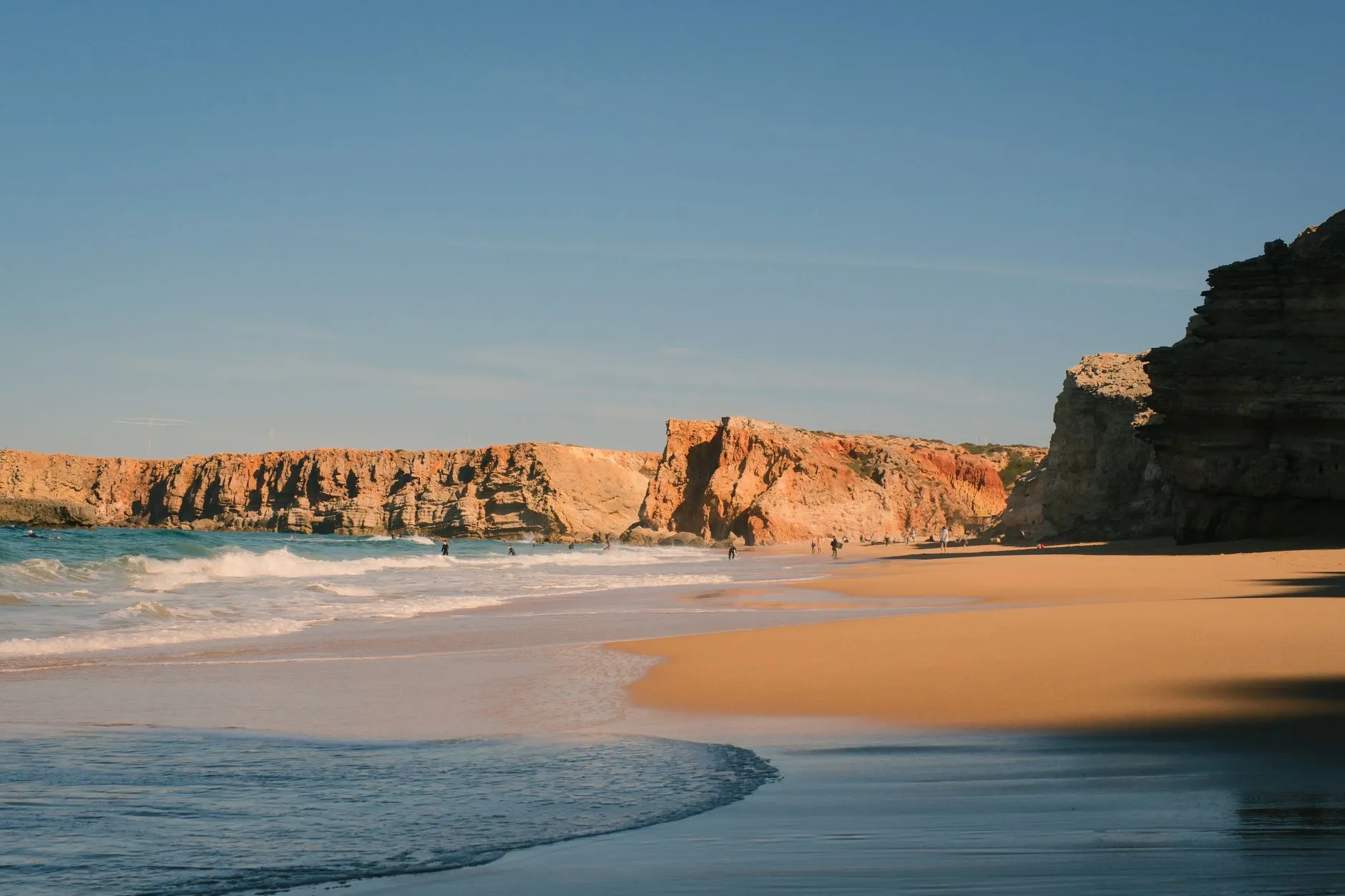
First light on the cliffs at Tonel, Sagres
The wide open west
The raw side of the corner: dunes, black cliffs and beach breaks that take the Atlantic at full strength. When the wind sleeps and the swell is honest, these two are the reason you came. Read the currents, pick a peak, and earn it.
Praia da Bordeira
Carrapateira · Open beach break
Intermediate
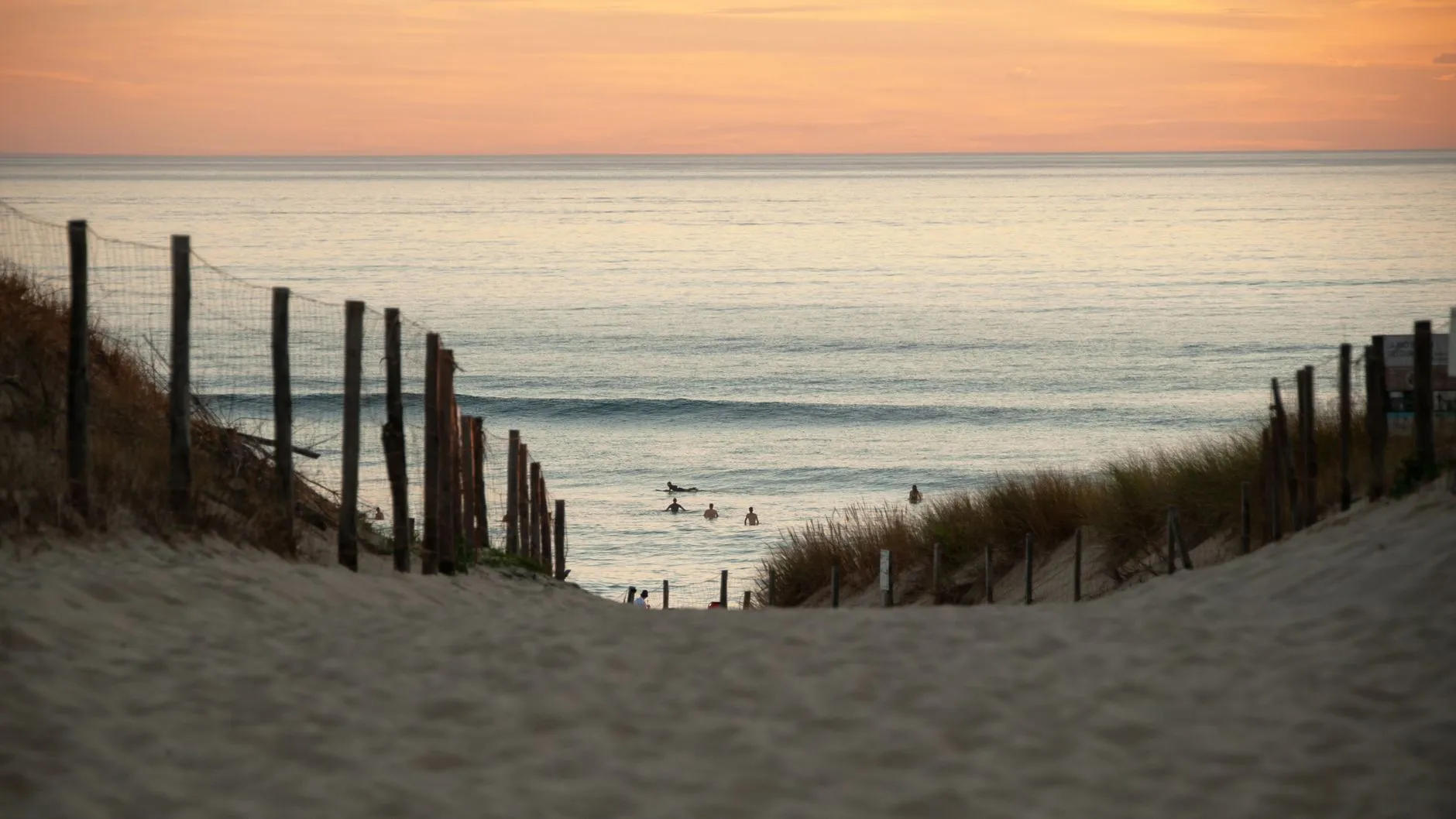
A kilometer of empty sand where the Carrapateira river cuts through the dunes, and the wildest-feeling wave in this guide. Bordeira swallows every grain of west swell, the banks shift with the river every winter, and the walk across the dunes keeps the crowd to a handful. Currents are real and there is nobody to wave at, so treat it like the open Atlantic beach it is.
Castelejo
Vila do Bispo · Powerful beach break
Intermediate
Down a winding road from Vila do Bispo, between cliffs of near-black schist that make the sand look borrowed from another planet. Castelejo is the swell magnet of the southwest corner: when Sagres is flat, the peaks here are usually still head-high and shoving. It punishes soft legs and empties fast when the north wind gets in. Cordoama, one cove north along the same wall of rock, is the pressure valve when the peak gets busy.
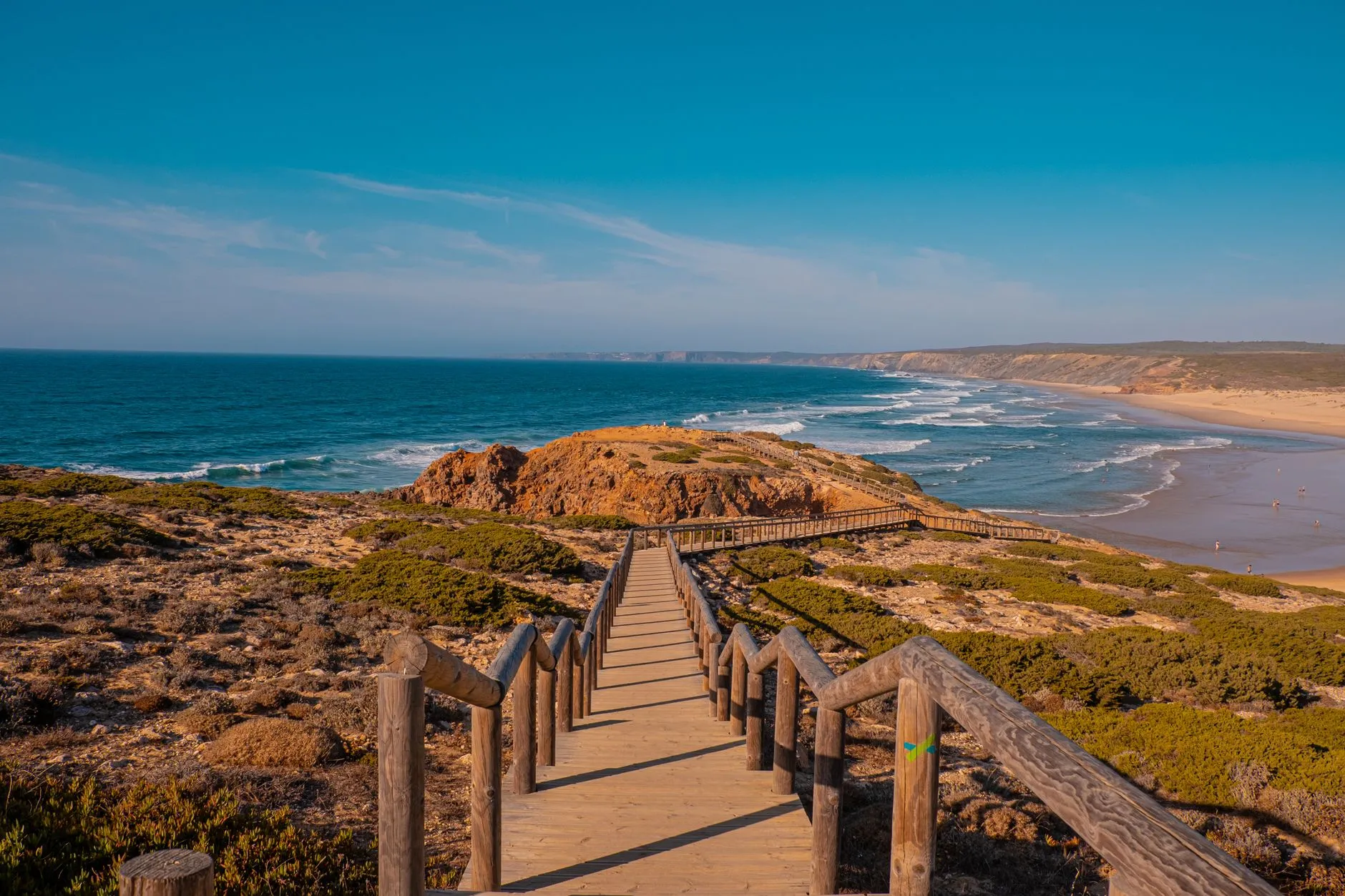
The boardwalk through the dunes to Praia da Bordeira
When the west blows out
The escape hatches. Arrifana hides from the wind inside its bay, and around the cape Tonel keeps breaking while Beliche turns storm surf into the best barrels in the region. The days that ruin most surf trips are the days these three are for.
Arrifana
Aljezur · Sheltered beach break
Beginner
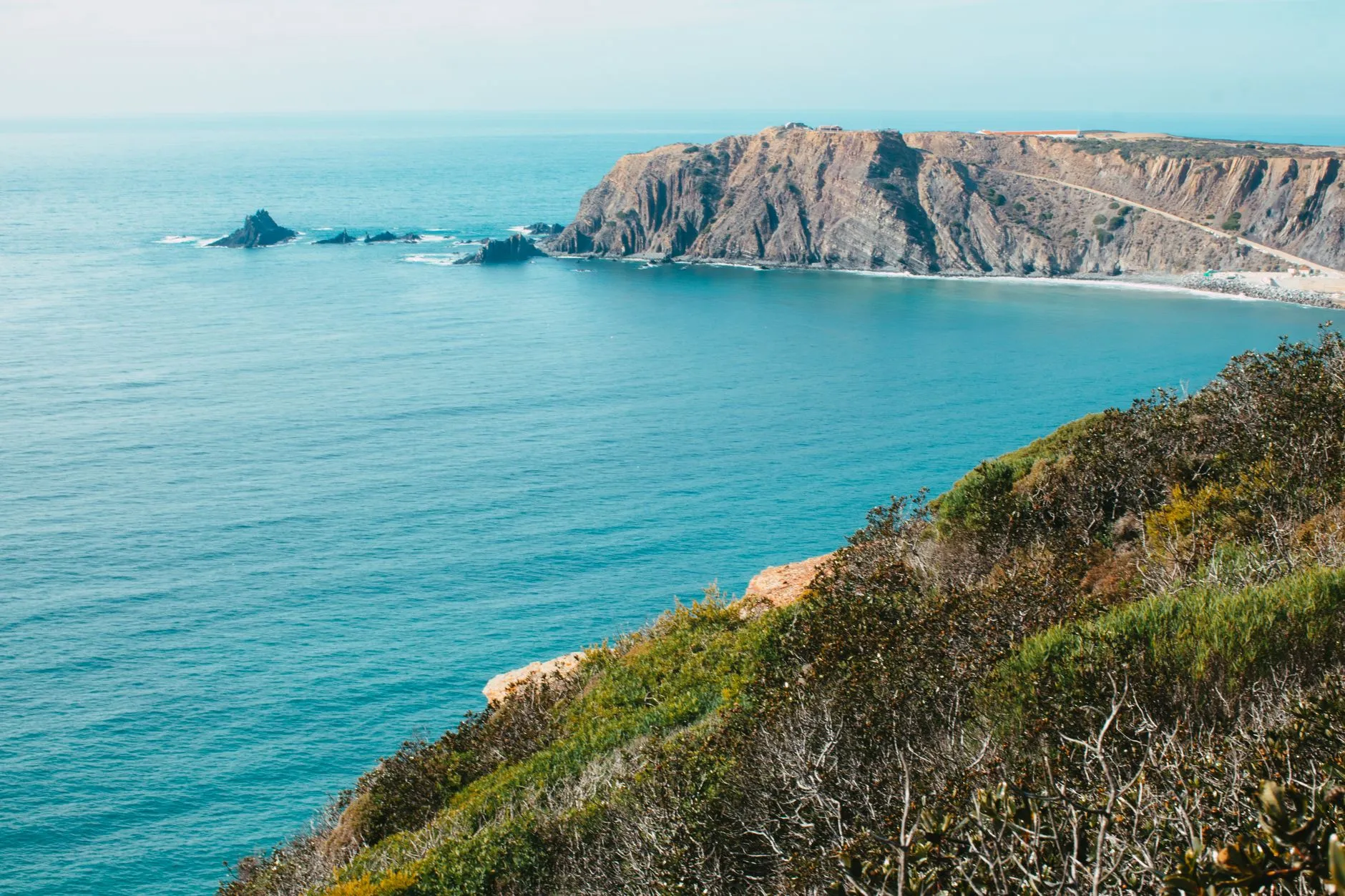
A crescent of dark cliff south of Aljezur that folds its arms around the swell. Arrifana takes the edge off both the wind and the size, which is why half the coast ends up in its car park when the open beaches are a mess. Friendly peaks in the middle for learners, and on a proper winter swell a long right point unloads off the rocks by the fishing harbor. Come early: the cliff road fills by nine.
The Sagres jewel, hidden at the bottom of a long staircase between the town and Cabo de São Vicente. Beliche takes a big west swell, bends it around the cape and folds it into wedging, sand-bottomed barrels while the cliff overhead kills the north wind dead. On the days it works it is the best wave in the Algarve, everyone within an hour knows it, and the takeoff zone fits about twelve people. Do the math before you paddle.
Tonel
Sagres · Beach break
Intermediate
Sagres' workhorse, right under the walls of the fortress. Tonel faces just enough west to catch swell the south coast misses, so it breaks more days than anything else in town: shifty peaks, the odd hollow one against the rocks, and a lineup of surf camps mixed with locals who have surfed it barefoot in January. When it gets overhead the current drags hard toward the cape end. Check it first, always.
The headland and needle rock at Arrifana
When to go
A year in Algarve
Typical conditions, month by month. The ocean did not sign this table: for live waves, wind and tide, check the app.
January
5-8 ft
61°F · 4/3 · Intermediate
Big Atlantic pulses and sunshine between fronts. The Sagres corner does its best work.
February
5-8 ft
59°F · 4/3 · Intermediate
The coldest water of the year, still warmer than Hossegor in May. Swell keeps coming.
March
4-7 ft
61°F · 4/3 · Intermediate
Storm season winds down, days stretch. The west coast gets rideable more often.
April
3-6 ft
61°F · 3/2 · All levels
Clean mid-size swells, wildflowers on the clifftops, crowds not yet arrived.
May
3-5 ft
63°F · 3/2 · All levels
The nortada starts its summer shift. Mornings on the west, afternoons around the corner.
June
2-4 ft
66°F · 3/2 or spring · Beginner
Small, sunny, windy by noon. Surf at dawn or book a lesson at Amado.
July
2-3 ft
68°F · spring suit · Beginner
The flattest month. Whitewash for learners, sunset beers for everyone else.
August
2-4 ft
70°F · spring suit · Beginner
Warmest water and the busiest sand. Take the dawn patrol seriously or skip it.
September
3-5 ft
70°F · 3/2 or spring · All levels
First autumn pulses, water still summer-warm, crowds thinning. Quietly excellent.
October
4-6 ft
68°F · 3/2 · All levels
The season proper begins: real swell, mellow winds, warm evenings. Book now for next year.
November
5-8 ft
64°F · 4/3 · Intermediate
Solid west swells stack up. The two-coast game becomes a daily decision.
December
5-8 ft
63°F · 4/3 · Intermediate
Short days, empty lineups, blue skies between storms. Winter here is the point.
Good to know
When is the best time to surf the Algarve?
October to March. Autumn and winter bring consistent Atlantic swell to the west coast, and when storms make it too big or too windy, the south coast around Sagres picks up the slack. September and April are excellent shoulder months with warmer water and fewer people. July and August are mostly small: fine for learning, frustrating for everyone else.
Is the Algarve good for beginners?
One of the best regions in Europe for it, largely because of the two coasts. Surf schools at Amado, Arrifana and Mareta can almost always find a beach matched to your level: gentle peaks on the west coast in summer, the sheltered south side when winter swells arrive. Sand bottoms everywhere, lessons in every language, and a season that never really closes.
What wetsuit do I need in the Algarve?
A 4/3 covers the whole winter: the water bottoms out around 15°C in February, and boots are a comfort choice rather than a necessity. From June to October a 3/2 is plenty, and in late summer a spring suit works on the south coast, where the water runs a degree or two warmer than the west. Nobody needs a hood here.
Where should I surf when the west coast is blown out?
Drive to the south side. In a north or northwest blow, Arrifana is the first stop because its cliffs flatten the wind inside the bay. If it is big as well as windy, round the cape to Sagres: Tonel handles most days, Beliche turns heavy west swell into clean barrels, and Mareta stays gentle when everything else is wild. On a true southwest storm, check Meia Praia at Lagos.