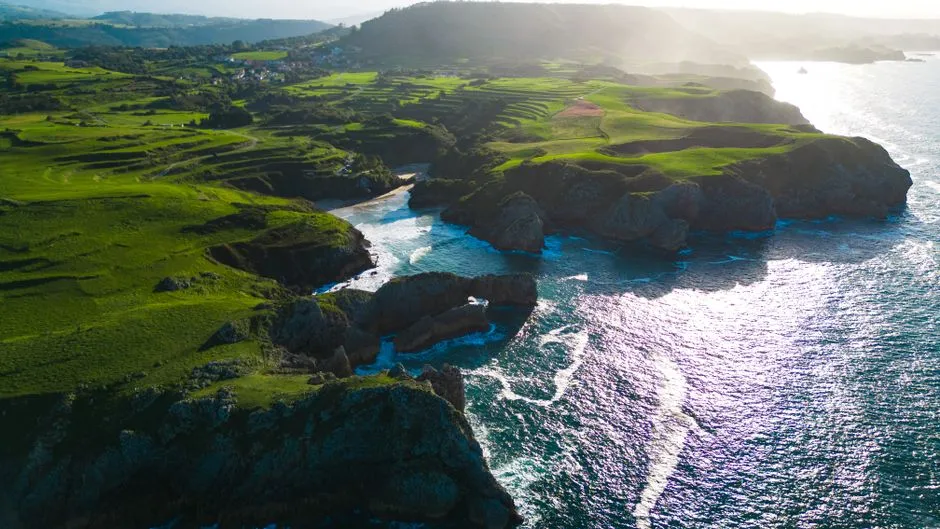
Rodiles is a long sandy beach on the eastern side of the mouth of the Ría de Villaviciosa, a tidal estuary and nature reserve about ten minutes from the cider capital of Asturias. A wood of eucalyptus and pines runs right down to the sand, with a picnic area and the car park in the trees behind it, and on most days it is a quiet family beach with ordinary peaks. Then a solid northwest swell arrives, the tide drops into its lower half and starts to push, and the bar at the mouth of the estuary turns into one of the best lefts in Spain.
That is the wave people mean when they say Rodiles: a hollow, sand-bottomed left peeling off the training wall on the river side of the mouth, fast and tubing over shallow sand, running toward the beach for a couple of hundred meters on its best days. It gets mentioned in the same breath as Mundaka as Spain's other great rivermouth left, and it deserves the comparison, with one honest caveat. Mundaka breaks far more often. Rodiles gives you a handful of real days a season, and when they come, everyone in the north knows.
Advanced
Wave
Hollow rivermouth left over sand
Best swell
NW groundswell, head-high to well overhead, the bigger the better
Best wind
S offshore, blowing down the estuary
Best tide
The lower half of the tide on the push. High tide fattens it, the dropping tide brings the current
Season
October to February
Level
Advanced when the left is on, the open beach suits intermediates
How the wave breaks
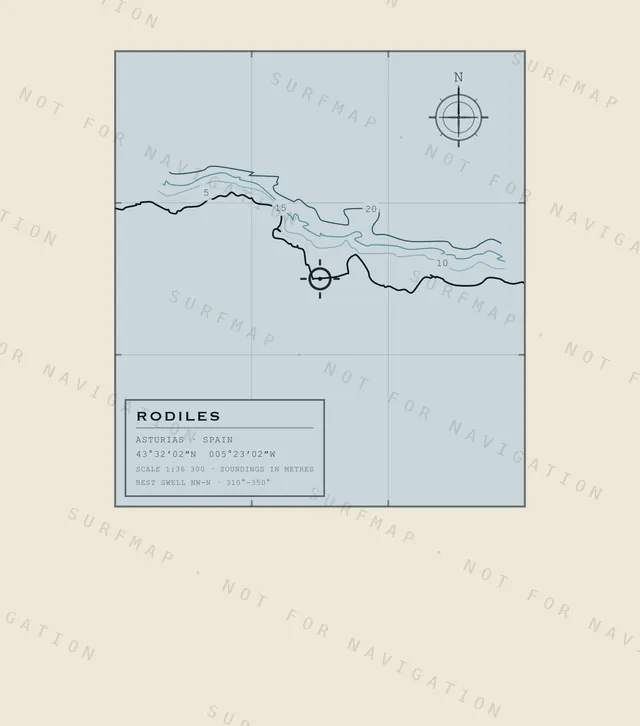
The whole thing starts with the sand. The Ría de Villaviciosa drains a long tidal estuary through a narrow mouth, and every ebb carries sand out and lays it down as a bar just off the beach, along the training wall that keeps the channel open on the river side. When a long-period northwest swell hits that bar, it stands up and peels left along the wall, away from the estuary and toward the beach. The takeoff is close to the rocks of the wall, steep and quick, and the first section is the one that tells you whether you are going to make the wave.
From there it runs in fast, hollow sections over sand that gets shallower the lower the tide sits. On a good day the wall throws and lets you in, closes for a moment, then opens again down the line; on a great day the sections link and the wave runs toward the beach for something like two hundred meters, most people say, though the sandbar decides the exact length every winter. Size is what brings out the real shape. Head-high is a fun version; well overhead, with a south wind, is the wave in the photographs.
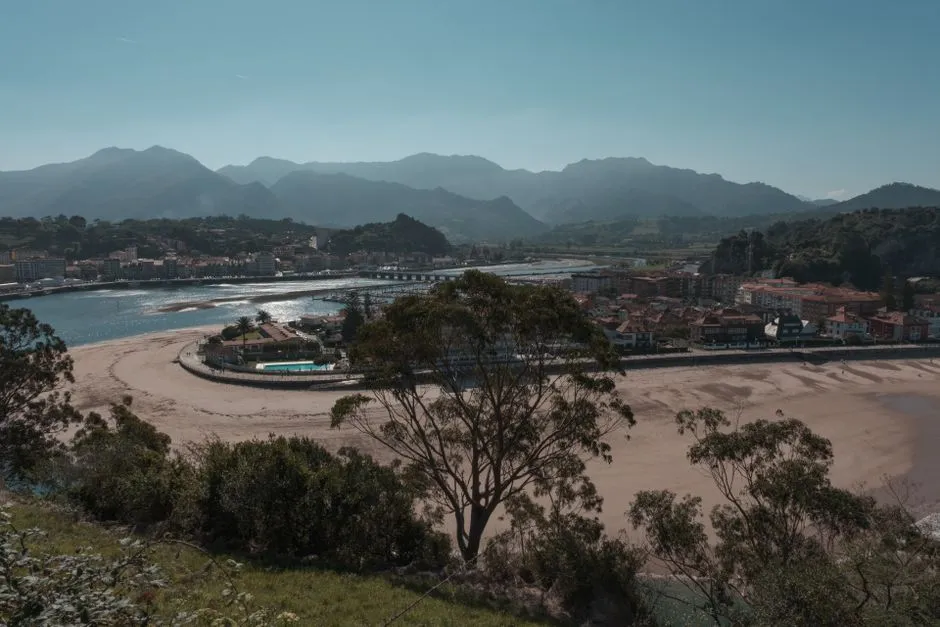
The beach and rivermouth at Ribadesella, with the mountains behind, about 25 kilometers east of Rodiles
When it works
Rodiles asks for three things at once, and that is why it breaks so rarely. It needs a solid, long-period northwest groundswell, bigger than anything the open beaches around it want, and the real shape only appears once it is well overhead. It needs a south wind, offshore here and usually on offer behind an autumn or winter front. And it needs the lower half of the tide on the push: at high tide the bar sinks under too much water and the wave fattens and dies, on the dropping tide the whole estuary pours out through the lineup and the current makes the paddle a fight. Most locals will tell you the window is a few hours, sometimes less.
Put together, that means a handful of real days a season, mostly between October and February, with the odd week of them after a big autumn storm when the swell keeps coming and the wind holds. October and November are the most likely months, December to February bring the size and the cold. Outside those months the left mostly sleeps, and the open beach east of the mouth takes over as an ordinary beach break, with peaks for intermediates and, in summer, for learners.
The lineup and the take-off
You paddle out from the beach beside the mouth, not from the wall, and you let the push of the rising tide help you rather than fight the channel. The takeoff sits close to the rocks of the training wall, and there is only ever room for a few people on it; Rodiles is a wave short of takeoff spots and long on paddling. The pecking order is real and it is enforced quietly. The region's best surfers have been waiting all season for this exact morning, they know where the sandbar is by heart, and they sit deepest. Arriving with the attitude that this is your day too gets you nothing.
The honest play is to sit slightly down the wall from the main pack and take what comes through: the set waves someone falls on, the ones that swing wide of the peak. Make those cleanly, do not drop in on anyone, and the room appears session by session. After a good wave do not try to paddle back to the takeoff against the water pouring out of the estuary; ride it toward the beach, walk back up the sand, and paddle out again where you started. That walk is part of the wave. Everyone does it, and it saves your arms for the next one.
Getting there and where to stay
The A-8 motorway runs the whole Asturian coast. Leave it at the exit for Villaviciosa, cross the town, and follow the road out along the eastern shore of the estuary until it ends in the car park among the eucalyptus and pines behind the beach. From the trees it is a few minutes on foot to the sand, and you can read the mouth from there before you get changed. Asturias airport is about 50 minutes away, Gijón about half an hour.
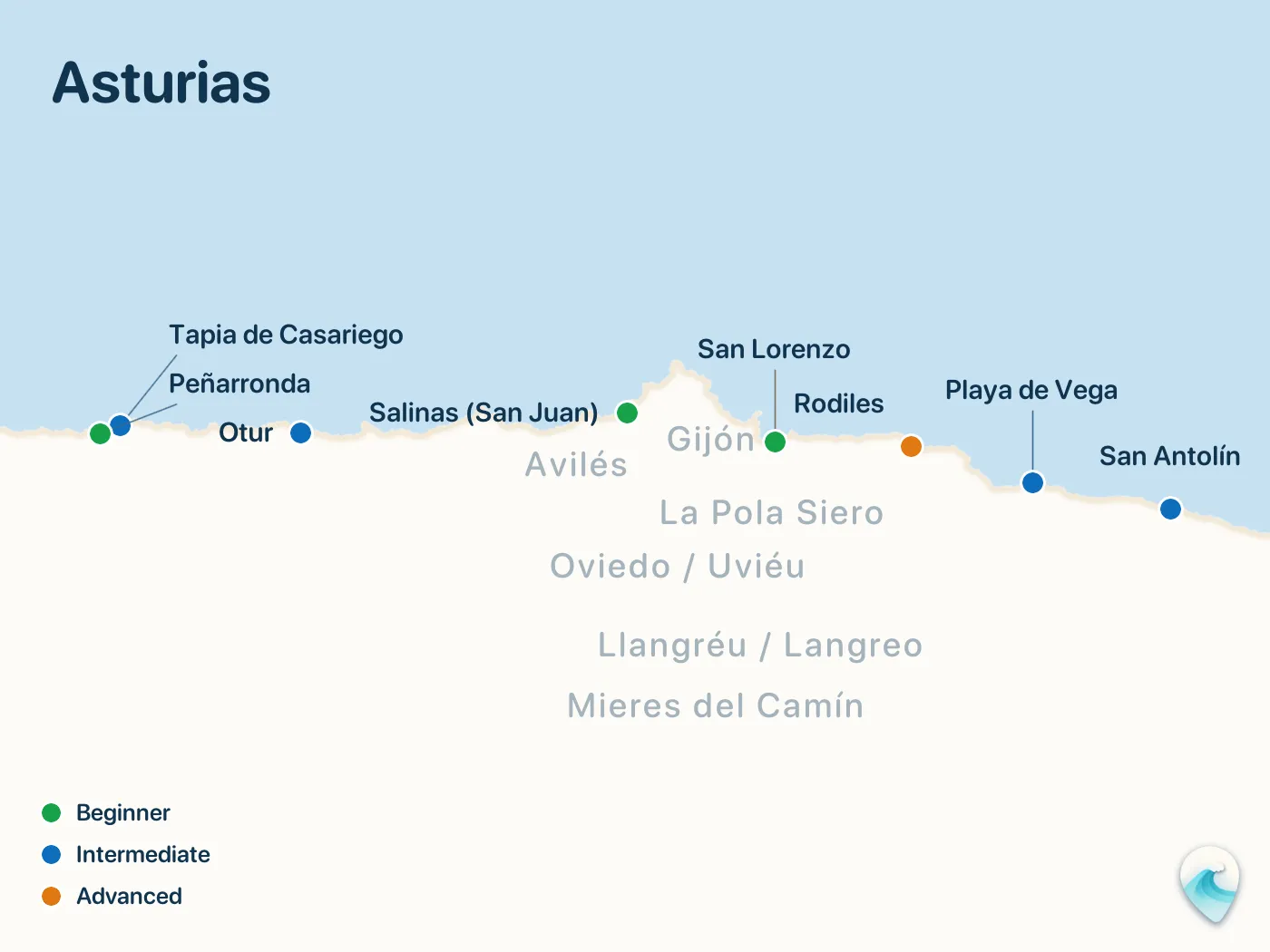
For a base, Villaviciosa is the obvious one: ten minutes from the beach, with its sidrerías, cider pressed in the town itself and enough bars to make a flat evening pass quickly. Gijón is the bigger option, with San Lorenzo, its city beach, for the days the left is asleep, and there are surf houses along this stretch of coast if you would rather sleep closer to the sand. When Rodiles is not working, Playa de Vega, east toward Ribadesella, is the most consistent beach break nearby, and San Lorenzo in Gijón is the easy session to the west.
Hazards
The estuary current pulls hard on the dropping tide and pours straight through the lineup: surf the push, and get out before the ebb takes over
The inside sections are hollow over shallow sand at lower tide, a bad fall meets the bottom
The rocks of the training wall sit right beside the takeoff, keep your line away from them on the drop
On the days it is really on, the whole north is in the lineup and the pecking order is strict, wait your turn
Winter water sits at 13 to 14°C with fog and rain on the way: a 4/3 and often a hood, and a dry car to change in
An honest guide to surfing Asturias: Rodiles, the beach breaks of green Spain from Llanes to Tapia, where beginners should start, and the season month by month.
Not often, and it is worth being honest about it. The left needs a solid northwest groundswell, a south wind and the lower half of a rising tide together, which lines up a handful of times a season, mostly between October and February; after a big autumn storm you can get a week of it. The rest of the year the beach east of the mouth still breaks as an ordinary beach break, so the drive is never wasted.
What swell and tide does Rodiles need?
A long-period northwest groundswell, head-high at the very least and much better once it is well overhead, because size is what makes the bar break properly. Wind from the south, offshore here. And the tide in its lower half as it pushes in: at high tide the wave fattens and dies under too much water, and on the dropping tide the estuary empties through the lineup and the current takes over. Aim for the first hours after low.
Can an intermediate surf at Rodiles?
At the beach, yes: on ordinary days the open sand east of the rivermouth is a normal beach break with peaks for intermediates and, in summer, for learners. On the left itself, on a real day, no. The takeoff is beside the rocks, the sections are hollow over shallow sand, the current is serious and the lineup is the best of the north. Watch it from the sand, then surf the beach or drive to Playa de Vega.