Santa Teresa is where the Nicoya Peninsula runs out of road. One dusty main street of surf shops, smoothie bars, yoga studios and quads runs parallel to the beach, with the beach doing the real work fifty meters behind it: a long stretch of sand facing the open Pacific, taking south to southwest swell nearly every day of the year and folding it into fast, punchy peaks. Playa Carmen sits at the south end where the road from Cóbano meets the coast, Santa Teresa proper stretches along the town, Playa Hermosa lies quieter to the north, and Mal País, a fishing village on a rocky shore, closes the south.
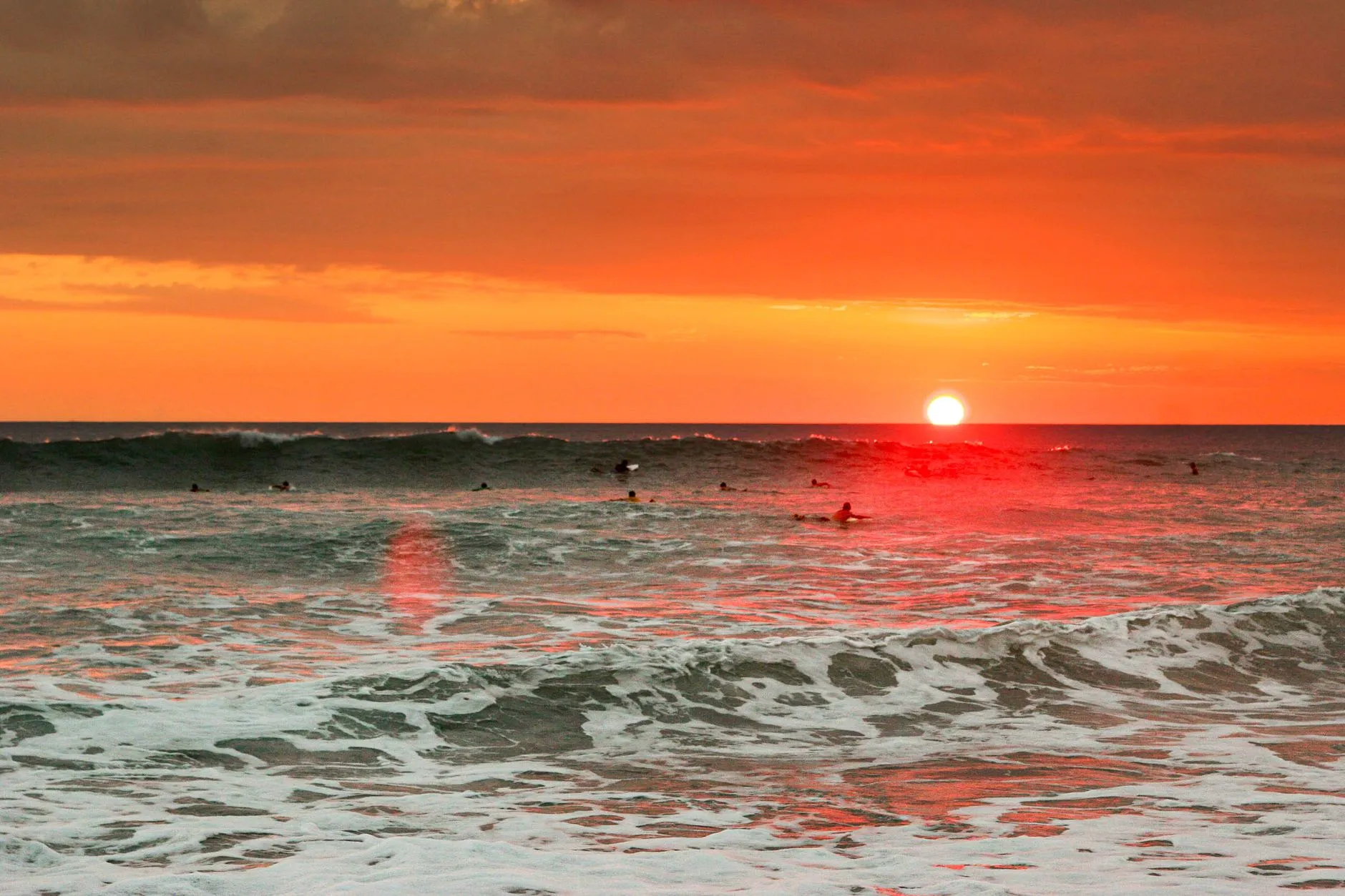
What you get for the ferry and the dirt road is a beach break with more power than most on this coast. The peaks shift with the banks, the takeoffs are quick, and when the sand lines up the wave hollows out into proper barrels. Dawn is the window: glassy, offshore, the street still asleep. By mid-morning the sea breeze puts texture on the face and everyone who overslept paddles out beside you, and late in the day it can clean up again for the sunset session that stops the whole town.
Intermediate
Wave
Fast, punchy beach-break peaks over sand, rock in places
Best swell
S to SW Pacific swell, chest-high to well overhead, biggest May to November
Best wind
NE to E offshore in the mornings, onshore sea breeze by mid-morning most days
Best tide
Mid tide for most locals. Low is faster and hollower with rocks showing, high fattens it and pushes a shore dump
Season
All year: December to April for clean mornings, May to November for the biggest swell
Level
Intermediate. Beginners go to Playa Carmen or Playa Hermosa
How the wave breaks
Santa Teresa is a long beach with shifting sandbar peaks, and the best of them sit a notch above the other beach breaks on this coast. The wave stands up fast, the takeoff is steep and short on warning, and the first section wants a quick line before the wall opens. When the banks are right the lip throws and you get a real barrel over sand, not just a cover-up. Rock sits in places along the beach, and at low tide some sections break over it, which is where the hollowest and least forgiving waves live.
Tide moves everything. Most locals aim for mid tide: enough water for the banks to shape the wave, enough pull to keep it punchy. Low tide runs faster and hollower, with rocks showing in sections and more closeouts. High tide fattens the peaks and pushes the break toward the sand, where a heavy shore dump waits on the inside. Size-wise it comes alive at chest-high and holds well overhead; on the biggest green-season swells it turns into closeouts and current, and only the confident paddle out.
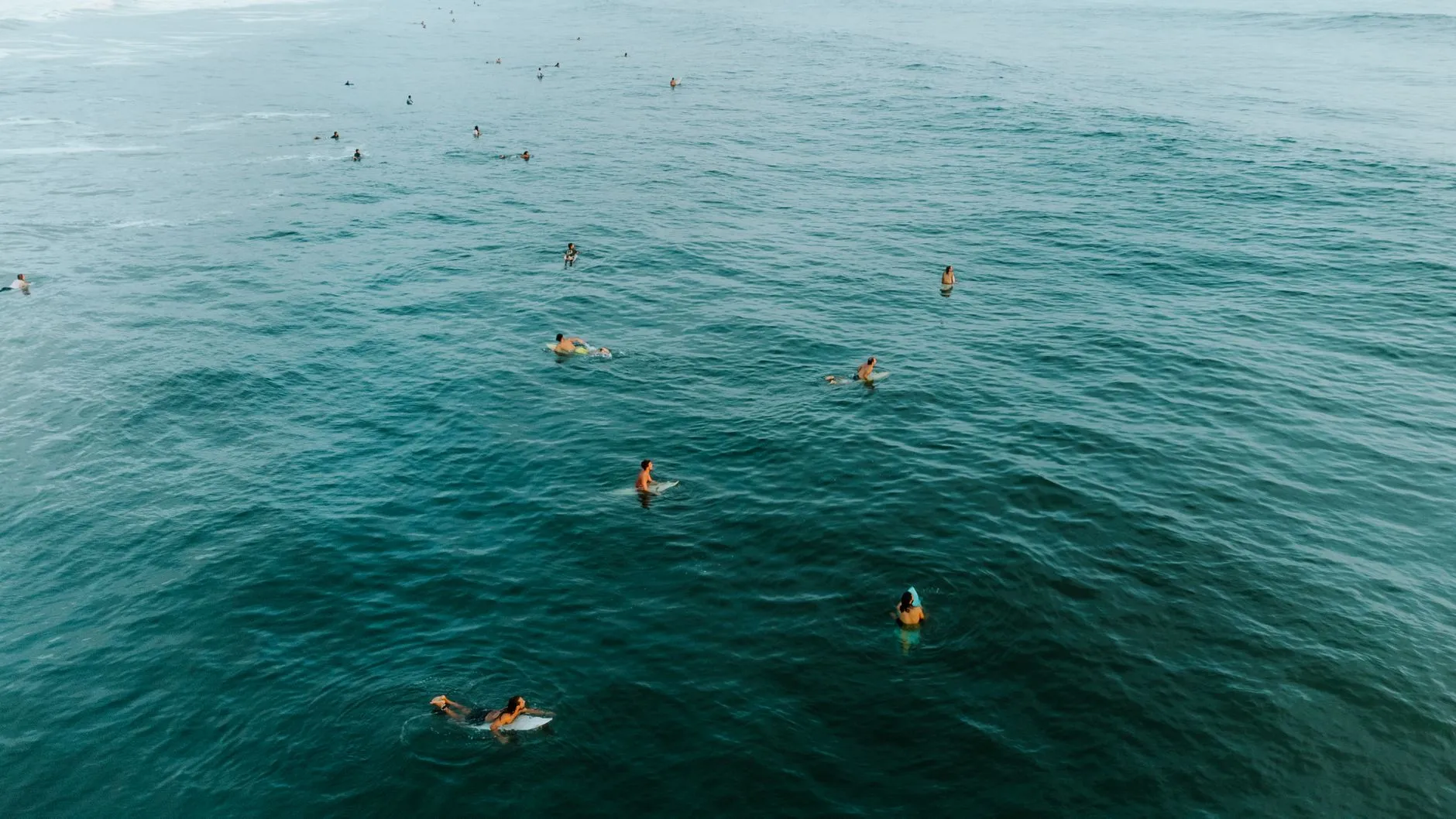
Seen from above, a lineup waits for the next set on the Nicoya coast
When it works
There are two seasons and both work. From December to April the dry season brings smaller, cleaner waves, offshore mornings, dust on the street and the high-season crowd; the swell is more often chest to head-high than overhead, and the mornings are as good as this coast gets. From May to November the green season brings the biggest south swells of the year, rain most afternoons, mornings that stay glassy, and far fewer people. September and October are the largest and wettest months, and the road in becomes part of the trip: high clearance and a look at the river before you cross. The water sits between 26 and 29°C all year, so it is boardshorts and a rash vest for the sun in every month.
Whatever the month, the day has the same shape. The wind is northeast to east offshore at first light and holds until mid-morning, then the sea breeze swings onshore and puts texture on everything. Surf at dawn, again late afternoon if it cleans up, and leave the middle of the day to the hammock.
The lineup and the take-off
Nobody sits in one place at Santa Teresa. The peaks move with the banks and the crowd moves with the peaks, so the first job is to stand on the sand for ten minutes and watch where the sets are actually breaking, which is rarely where the most people are. The paddle-out is easy in the rips between the sandbars, and those same rips are the reason to keep a landmark on the beach: they pull hard on bigger days and you drift down the beach faster than you notice.
The beach splits itself by ability. Playa Carmen at the south end is where the schools work and where first waves happen. The peaks in front of town are the punchiest and hold the most talent, locals and a rotating cast of visitors who have been coming for years; take your turn and the atmosphere stays relaxed. Playa Hermosa to the north is softer and emptier, the place to go when the town peaks are crowded or too fast. Wherever you are, dawn belongs to the surfers who set an alarm.
Getting there and where to stay
Santa Teresa sits at the southern tip of the Nicoya Peninsula, and getting there is half the story. From San José, count four to five hours: drive to Puntarenas, take the ferry across the gulf to Paquera (about an hour), then about an hour and a half by road through Cóbano, the last part of it dirt. Small planes also fly from San José to the Tambor airstrip, about 30 minutes from town. Liberia airport, the gateway to the northern beaches, is the long way round.
In town everything is on one road. Stay along the main street in Santa Teresa, at Playa Carmen near the junction, in Mal País for the fishing-village end, or up at Playa Hermosa for quiet. Rent a quad or a bike, since the dust and the distances make walking with a board a chore, and in the green season ask about river crossings before any drive out of town.
Hazards
Strong rips between the sandbars, especially on bigger days: pick a landmark and check your drift
Rocks in sections at low tide, look before you commit to the hollowest peaks
The shore dump at high tide, heavy on the inside for anyone paddling in tired
High-season crowds on the town peaks and the sun all year: cover up and spread out
Afternoon onshore wind and, in the green season, river crossings and a dirt road that turns to mud
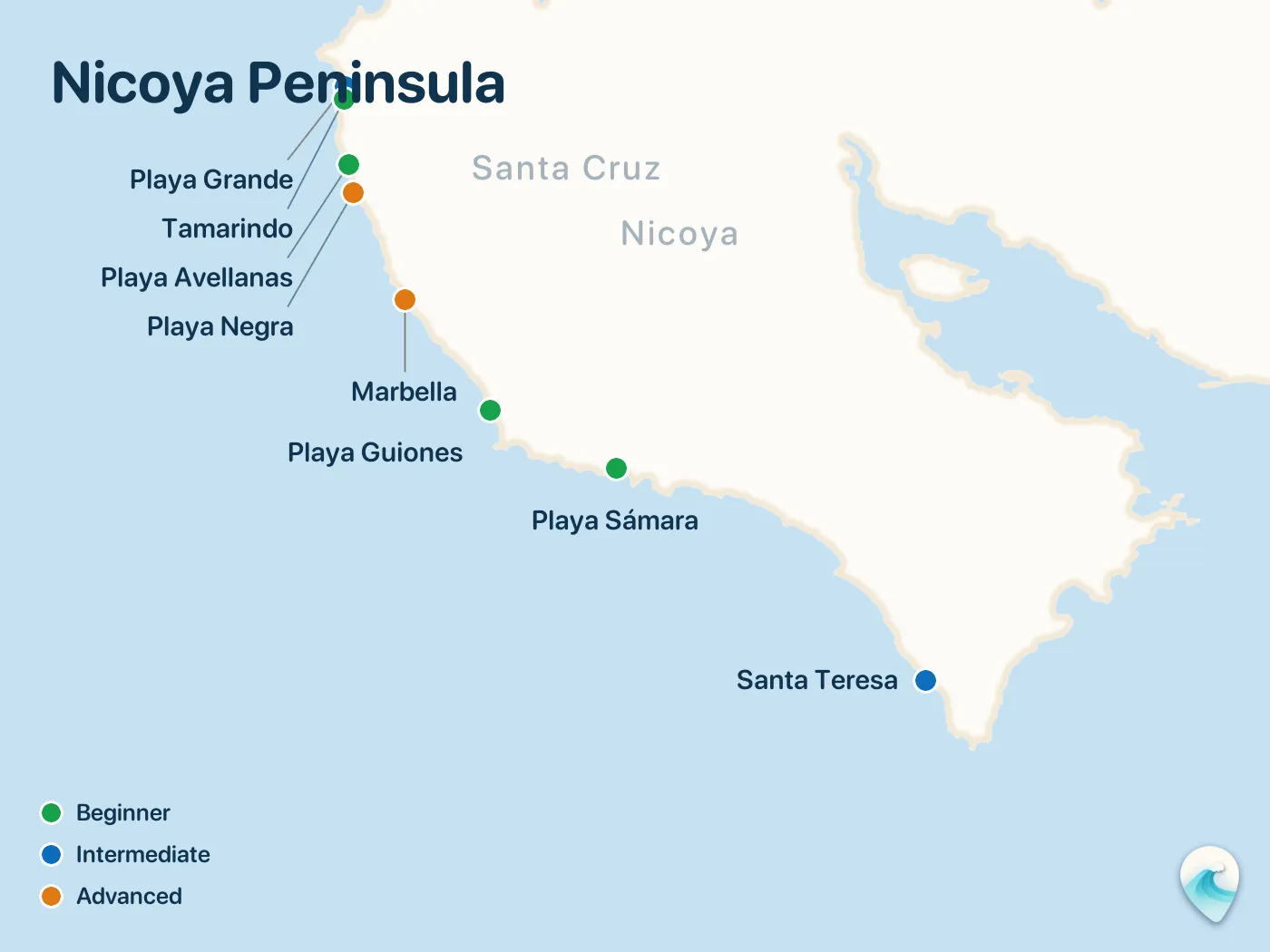
Part of the Nicoya Peninsula surf guide
An honest guide to surfing the Nicoya Peninsula: Tamarindo, Playa Guiones, Playa Negra and Santa Teresa, where to learn, and the season month by month.
Not the main peaks. The wave in front of town is fast and punchy, the banks shift, the rips pull, and a beginner will spend the session in the shore dump. The good news is that the same beach has softer corners: Playa Carmen at the south end is where the schools work, and Playa Hermosa to the north is gentler and emptier. Learn there, then move up the beach as the takeoffs start to feel easy.
When is the best time to surf Santa Teresa?
It works all year, so pick your flavor. December to April is the dry season: smaller, cleaner swell, offshore mornings, dust and the biggest crowds. May to November is the green season: the largest south swells, rain in the afternoons, glassy mornings and far fewer people, with September and October the biggest and wettest. Whatever the month, be in the water at dawn, because the sea breeze arrives by mid-morning.
How do you get to Santa Teresa from San José?
Allow four to five hours. Drive from San José to Puntarenas, take the car ferry across the Gulf of Nicoya to Paquera, about an hour on the water, then follow the road through Cóbano to the coast, about an hour and a half more with dirt at the end. Small planes also fly to the Tambor airstrip, about 30 minutes from town. In the green season rent something with high clearance and ask about river crossings.