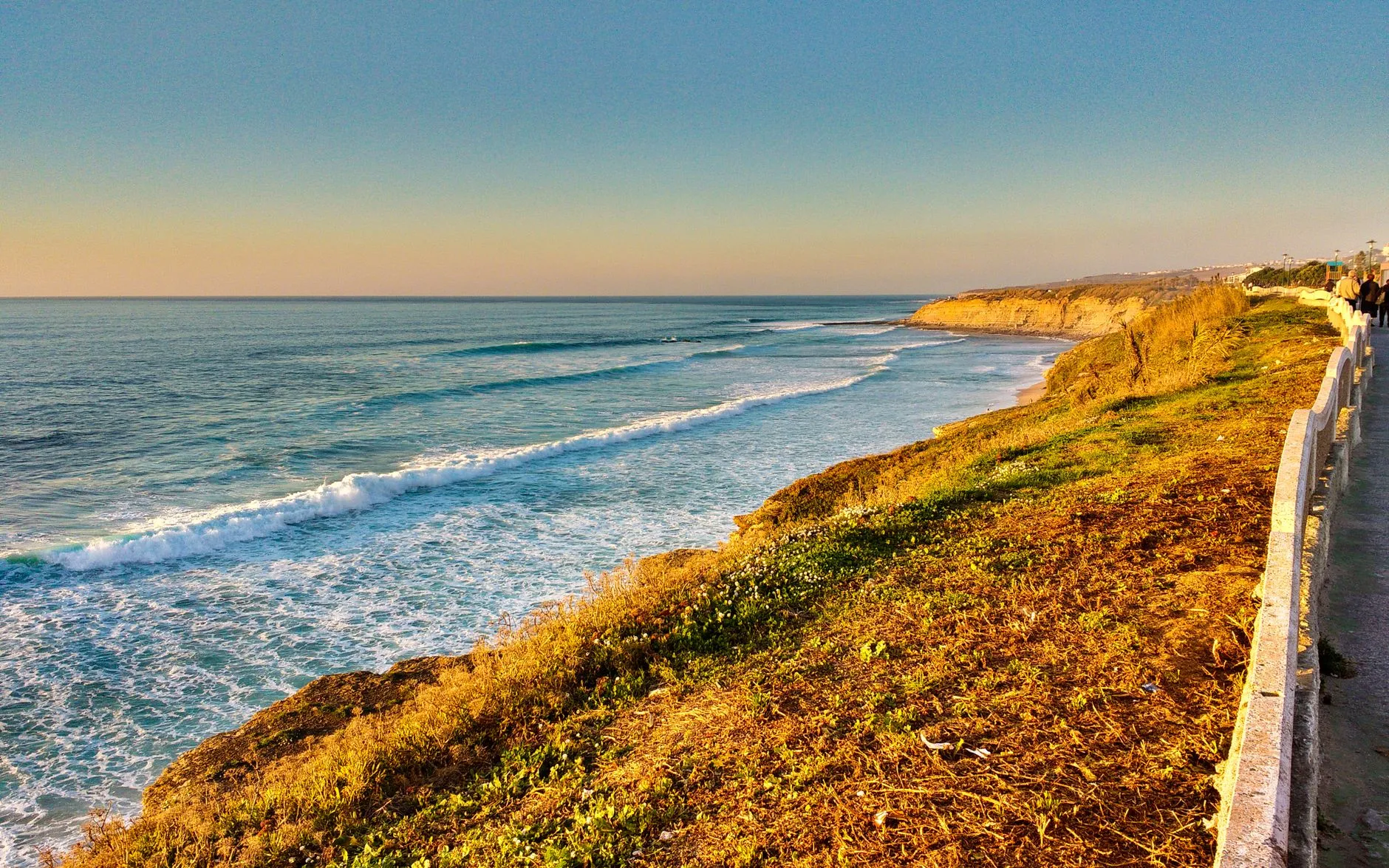
Waves and coastline at Coxos

Guides · Ericeira

Coxos

Portugal's best right-hand point

Coxos is a right-hand point break in a rocky cove below Ribamar, a few minutes north of Ericeira, and most Portuguese surfers will tell you it is the best right in the country. When this stretch of coast became Europe's only World Surfing Reserve in 2011, Coxos was the wave the case was really built around: the proof that four kilometers of fishing-town coastline held surf worth protecting for good. Northwest groundswell wraps around the point, bends into the cove and stands up over a rock ledge with a power that belongs to the open Atlantic, not to any gentle point-break postcard.

First-timers are almost always surprised by how much water moves here. From the cliff the wave looks approachable, long walls peeling into the cove, and then the first set on the head explains the reputation. Coxos is a wave of consequence: shallow in places, strong everywhere, guarded by rocks at the entry and by a lineup that has seen everything. It is also, on its day, as good as point-break surfing gets in Europe, and it rewards the patient far more reliably than the brave.

Advanced

Wave
Right-hand point break over rock ledge and reef
Best swell
NW groundswell, head-high to double overhead and beyond
Best wind
E to NE offshore
Best tide
Low to mid tide; it fattens past mid, and dead low asks care with the rocks and urchins
Season
September to November, plus clean winter days between storms
Level
Advanced to expert when it is on

How the wave breaks

The wave starts where the northwest swell wraps around the point and bends into the cove. The takeoff stands up quickly over the ledge, and the first wall is the fastest part: a steep drop and a bottom turn that have to happen on time, because the section is already running. Make it and the wave bends down the point in long walls, some stretching out for turns, some throwing over the ledge into real barrels when the swell direction and the tide agree.

What separates Coxos from the point-break cliché is the way it breaks. This is not a soft, tapering wall you chip into and cruise: it detonates over a rock ledge with the punch of a reef, and on bigger days whole sections fold at once. The end bowl over the inside ledge is the wave's exclamation mark and its trap, hollow and short of water on the wrong tide. Locals argue about which section is the best part of the wave. Nobody argues about the power.

Last light over the reserve, the climb back up from the cove

When it works

Coxos runs on the reserve's autumn logic. From September the North Atlantic starts sending long-period northwest groundswell down the Portuguese coast, while the land still warms enough to hold the east to northeast offshore in place through the morning. September to November is when swell, wind and daylight line up most often, and when the point does its cleanest work. Winter brings size without asking: the wave holds double overhead and more, but the biggest storms swamp the cove and blow it apart, so winter Coxos is about picking the clean days between systems, and locals watch the charts for exactly those windows. Summer is mostly too small; the swell that gets through rarely has the power to make the ledge break properly, and the reserve's surfing moves to the beach breaks until September resets it.

The lineup and the take-off

There is no easy way in. Entry is a jump off the rocks inside the cove, and the timing is the skill: watch a full set from above, count the waves, pick your moment in the lull and commit, because a hesitant jump is how boards and ankles get broken. Once outside, the current becomes the soundtrack of the session. On any real swell it drags steadily down the point, so you paddle back up constantly, climbing a ladder that never stops moving; sit still for five minutes and you are surfing a different spot.

The peak runs on a pecking order that was here long before you, and it is enforced the quiet way: hesitate, burn someone, or paddle straight to the top of the point on day one, and the set waves simply stop coming your way. The play that works is the honest one. Sit a little down the line, take what the peak lets through, make those waves cleanly and wait. Coxos is the proudest wave of the reserve and it is surfed accordingly; show that you understand what it is, and the lineup makes room, one session at a time.

Getting there

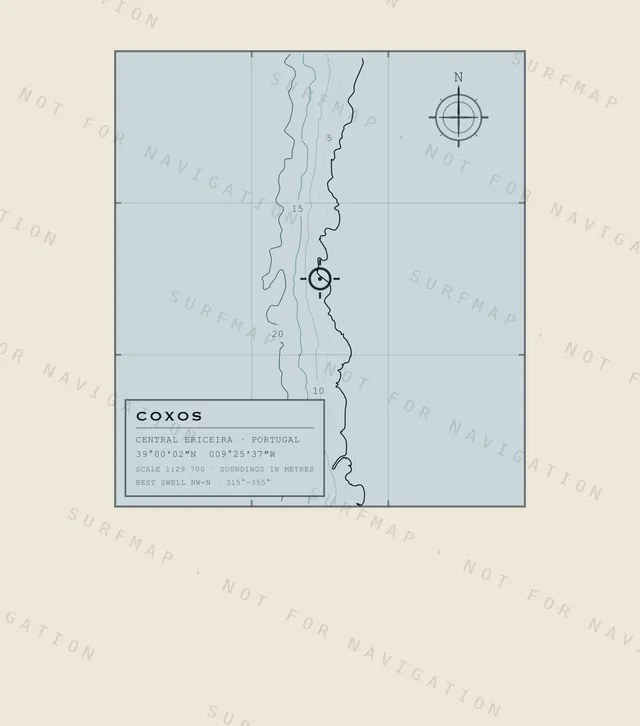
Coxos breaks below Ribamar, a village on the coast road a few minutes north of Ericeira. Turn off toward the sea and the road ends at a dirt parking area on top of the cliff, where the view sorts the day out before you have untied a board: you can read the size, the crowd and the current from up there. A steep path drops to the rocks of the cove, easy enough going down, more of a statement coming back up after two hours of paddling against the point. Lisbon airport is about 40 minutes away, which is the quiet absurdity of the place: one of Europe's best waves, less than an hour from an international hub, at the end of a dirt track.

Hazards

  • Rocks and sea urchins on entry and exit, worst at low tide: booties and unhurried timing pay for themselves
  • The current drags you down the point on any real swell, budget energy for the constant paddle back up
  • The end section breaks over a shallow inside ledge, kick out early rather than trying one turn too many
  • The lineup expects respect: this is the reserve's proudest wave, wait your turn and earn it
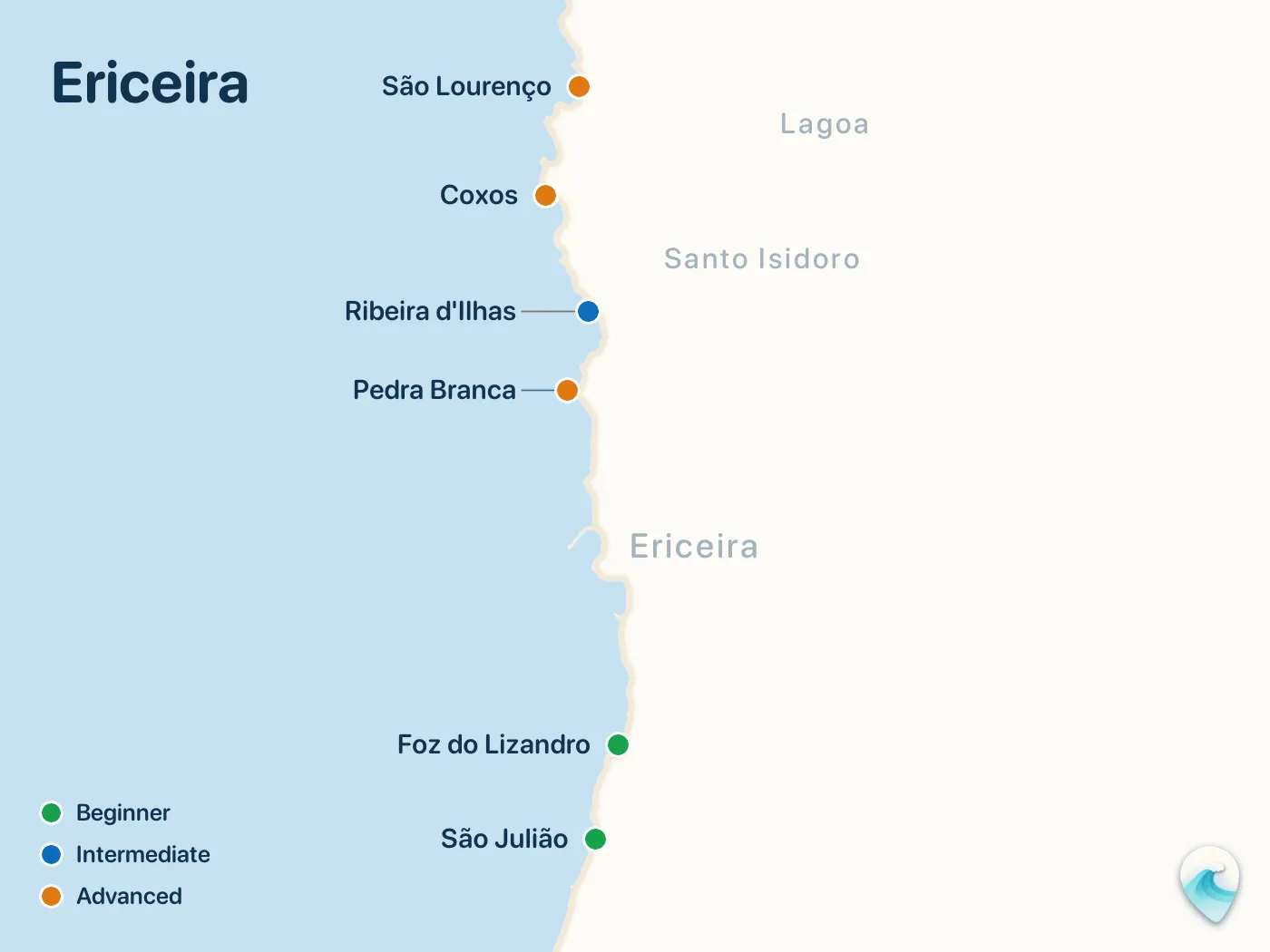
Map of the Ericeira surf spots described in this guide, with numbered markers

Part of the Ericeira surf guide

An honest guide to surfing Ericeira, Portugal: the 6 spots that matter from Foz do Lizandro to Coxos, who each wave suits, when to go month by month, and what to expect in the water.

Read the full guide →

Good to know

Can intermediates surf Coxos?

On a real Coxos day, no, and it is worth being honest about it. The takeoff is fast, the ledge is shallow, the current is strong and the lineup has no patience for hesitation; a surfer who is still working on late drops will spend the session in the wrong place at the wrong time. On a small, clean morning at mid tide an experienced intermediate can sit wide, watch and learn a lot. But the reserve already has an intermediate wave, and it is a good one: Ribeira d'Ilhas, a few minutes south, gives you long, orderly rights and the one thing Coxos never hands out, time.

What tide is best at Coxos?

Mid tide, ideally on the push, is the closest thing to a consensus: enough water over the ledge to soften the takeoff, enough pull for the wall to stay fast and connected. Low tide bares the rocks and the urchins and makes getting in and out slow and sharp; some locals like the extra bite low water puts in the wave, but the margin for error shrinks with it, so opinions split there. At full high tide the wave can get swamped and the wall loses its line, especially on smaller swells. If you have one session, aim for the middle of a rising tide and let it build under you.

Why is Coxos famous?

Because it is the benchmark. When the coastline around Ericeira was named Europe's only World Surfing Reserve in 2011, Coxos was the anchor of the case: the wave that proved this stretch of rock deserved permanent protection. Portuguese surfing measures its right-handers against it, generations of the country's best surfers cut their teeth on the ledge, and visiting professionals have been putting it on lists of Europe's finest waves for decades. Fame has not made it easier. The wave still breaks over the same shallow rock, the cove still filters who paddles out, and a proper day at Coxos remains one of the continent's great sights, from the water or from the cliff.