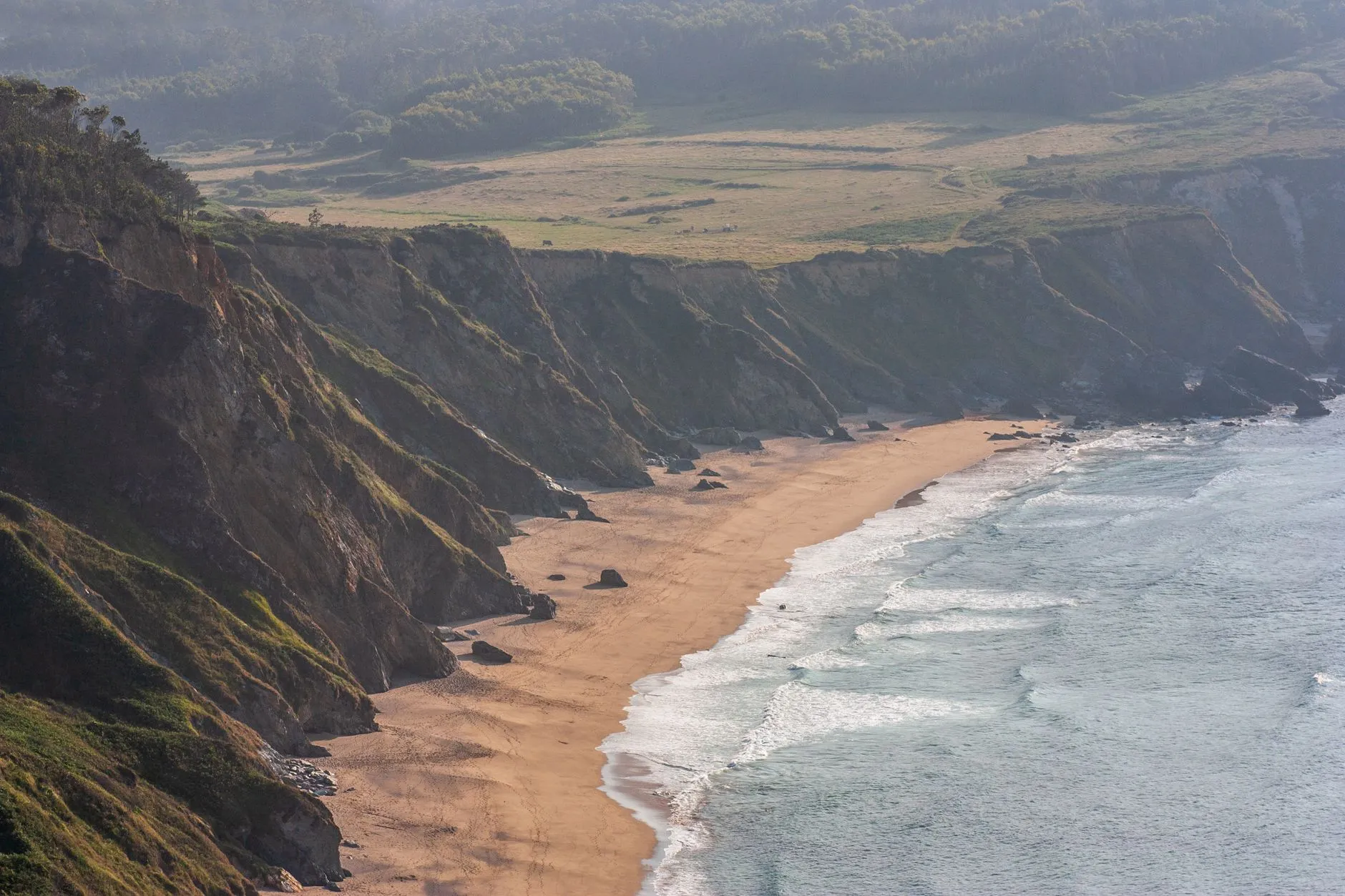
Waves and coastline at Pantín

Guides · Galicia

Pantín

Galicia's contest beach since 1988

Pantín is a beach of about a kilometer in the municipality of Valdoviño, on the Rías Altas coast north of Ferrol, facing north-west into the open Atlantic between two rocky headlands. Behind the sand there are green fields, a few cows and a small village, and a stream crosses the beach on its way to the sea and keeps rebuilding the sandbars as it goes. It is the wave that put Galicia on the contest map: the Pantín Classic has run here every year since 1988, and for most surfers outside Spain it is the first Galician name they ever heard.

The wave itself is a beach break with shifting peaks, lefts and rights, that swallows almost any swell and works on any tide, which on this coast is worth more than any trophy. At waist to head-high it is playful, with hollow sections where the banks line up in front of the stream mouth; with size it turns powerful and the rips take over. Busy here means a dozen surfers, mostly local and mostly friendly, more during contest week. Come in September or October, when the first autumn swells meet the last of the sun, and you will understand why the contest never left.

Intermediate

Wave
Beach break with shifting peaks, lefts and rights over sand
Best swell
NW swell, waist to head-high; it picks up almost anything, and gets rippy with size
Best wind
S to SE, mornings before the sea breeze; NW is onshore
Best tide
Any tide. Mid is the usual answer, low runs faster and hollower on the banks, high pushes toward the rocks and the shorebreak
Season
September to November, September and October the sweet spot
Level
Intermediates most of the year; beginners on small summer days with the schools, experienced surfers once it's overhead

How the wave breaks

Pantín faces the open ocean, so it takes swell when the beaches tucked into the rías are flat, and it spreads that swell across a kilometer of sand with several peaks working at once. The banks move with every storm, but the stream mouth is where the best ones usually form: the fresh water cuts channels through the sand and leaves wedges on either side that stand up steeper than the rest of the beach. Lefts and rights both break, sometimes off the same peak, and the take-off is friendly for a beach break of this reputation, more of a drop than a ledge.

At waist to head-high it is a playful wave with hollow sections, the kind that rewards a quick bottom turn and a look for the pocket rather than a long line. Push it toward overhead and the character changes: the peaks join up, the walls get heavier, the rips between the banks start to run, and the paddle back out becomes the real workout. West and north-west wind mess it up quickly, because the headlands are not tall enough to hide behind; a light southerly on a clean north-west swell is the combination the contest waits for.
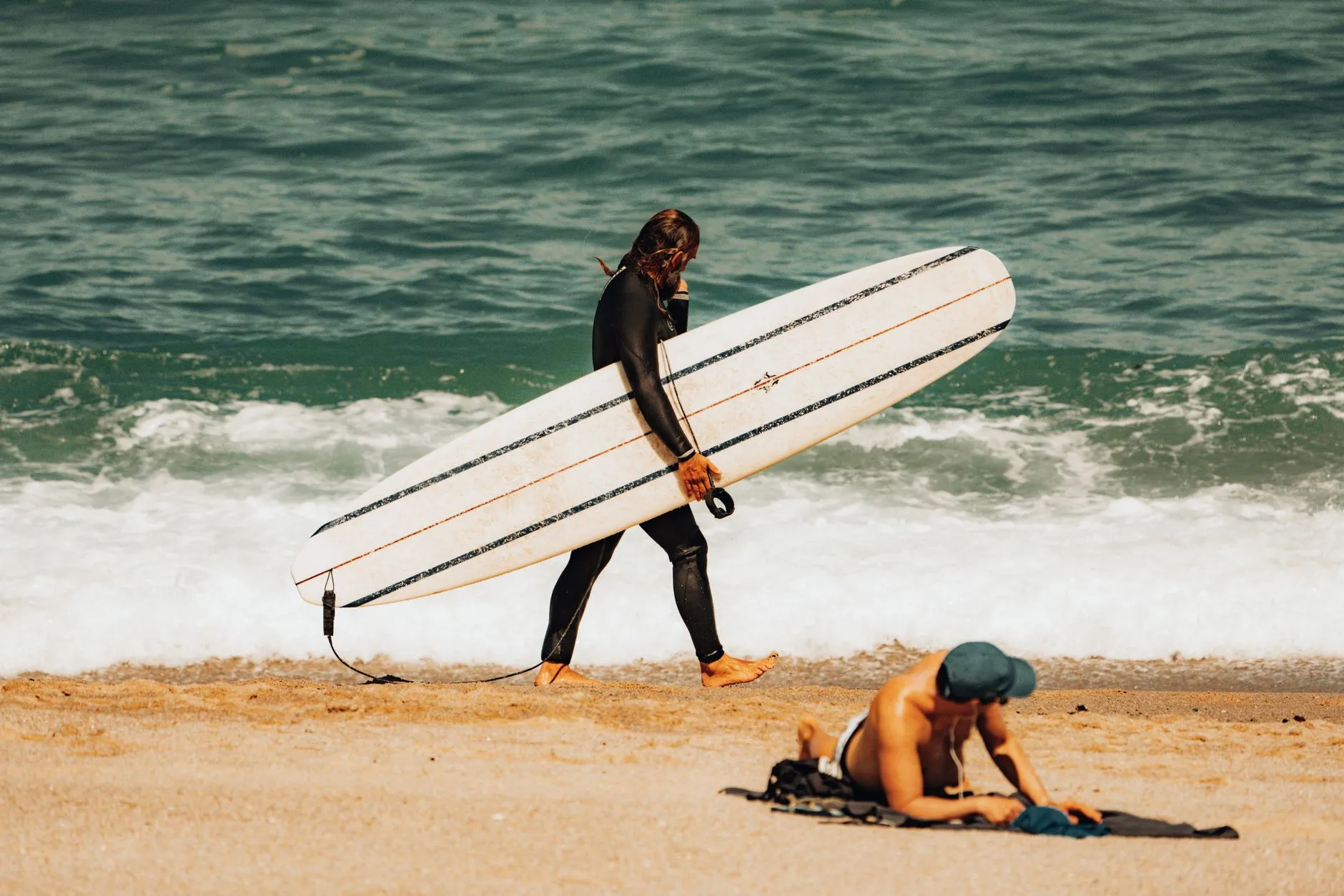
A surfer carries a board along the sand on the Galician coast

When it works

Pantín works most of the year, which is unusual on this coast, but the sweet spot is September and October, when the first north-west swells arrive on water still around 16 to 17°C and the sea breeze has lost its summer punch. November brings size and the cold with it, and from December to March the beach is often too big and too raw for its own good; the mornings between fronts are the days worth planning around. Summer is small. July and August rarely offer more than a waist-high wall, warm-ish at 17 to 18°C, which is exactly what the schools want. Mornings are the window in every season: south to south-east wind off the fields before the north-westerly sea breeze fills in around midday.

The lineup and the take-off

The lineup at Pantín is about as relaxed as a famous wave gets. Busy here means a dozen surfers spread over three or four peaks, most of them from Valdoviño, Ferrol or the surf houses along this coast, and the mood stays friendly as long as you paddle around a peak rather than into it. Contest week is the exception: for a few days in late summer the beach fills with competitors, coaches and vans, the contest peak is off limits while heats run, and the free-surf peaks take the overflow.

Reading the beach from the car park is most of the job. Watch where the stream meets the sea and which side is holding the better bank, then walk to it rather than paddling out in front of the car park and drifting. The rips run along the channels the stream cuts and close to both headlands; use them to get out on a bigger day, but keep a landmark on the fields and check it between waves, because they carry you sideways faster than you notice. On the peak, the usual beach break rules hold: closest to the peak goes, and nobody needs to fight over a set when the next bank is a hundred meters away.

Getting there and where to stay

Pantín is about 30 minutes from Ferrol and about an hour from A Coruña by car; from Santiago airport count an hour and a half. A car is the way, both to get here and to move along the coast when the banks are not delivering. There is a car park above the beach with a view over the whole lineup, and a campsite nearby that fills with vans in summer and during contest week. Most surfers stay in Valdoviño, a few minutes away, in Ferrol, or in one of the surf houses along this coast. The neighbours the Galicia guide covers are close: A Frouxeira at Valdoviño just south, longer and more open when Pantín feels small, and Doniños near Ferrol for the heavy winter days.

Hazards

  • Strong rip currents, especially at the stream mouth and near both headlands on bigger days: pick a landmark on the fields and check it often
  • Rocks at both ends of the beach, and high tide pushes the peaks toward them
  • Shorebreak at high tide, time your way in and out
  • Cold water all year, 12 to 13°C in winter: hood, boots and gloves from December to March
  • Contest week in late summer: the contest peak is closed while heats run and the rest of the beach gets busy
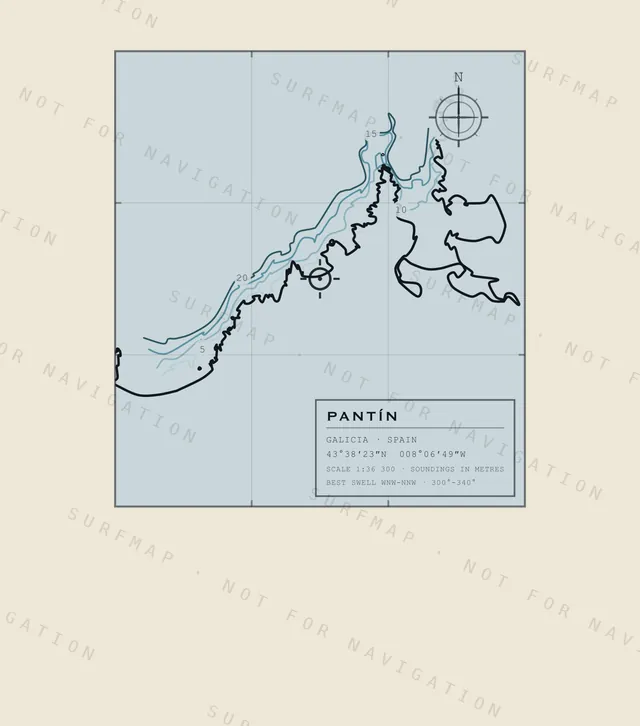
The chart of PantínThe real coastline and the depths off the spot, printed on a tee.See the tee · $39.00 →
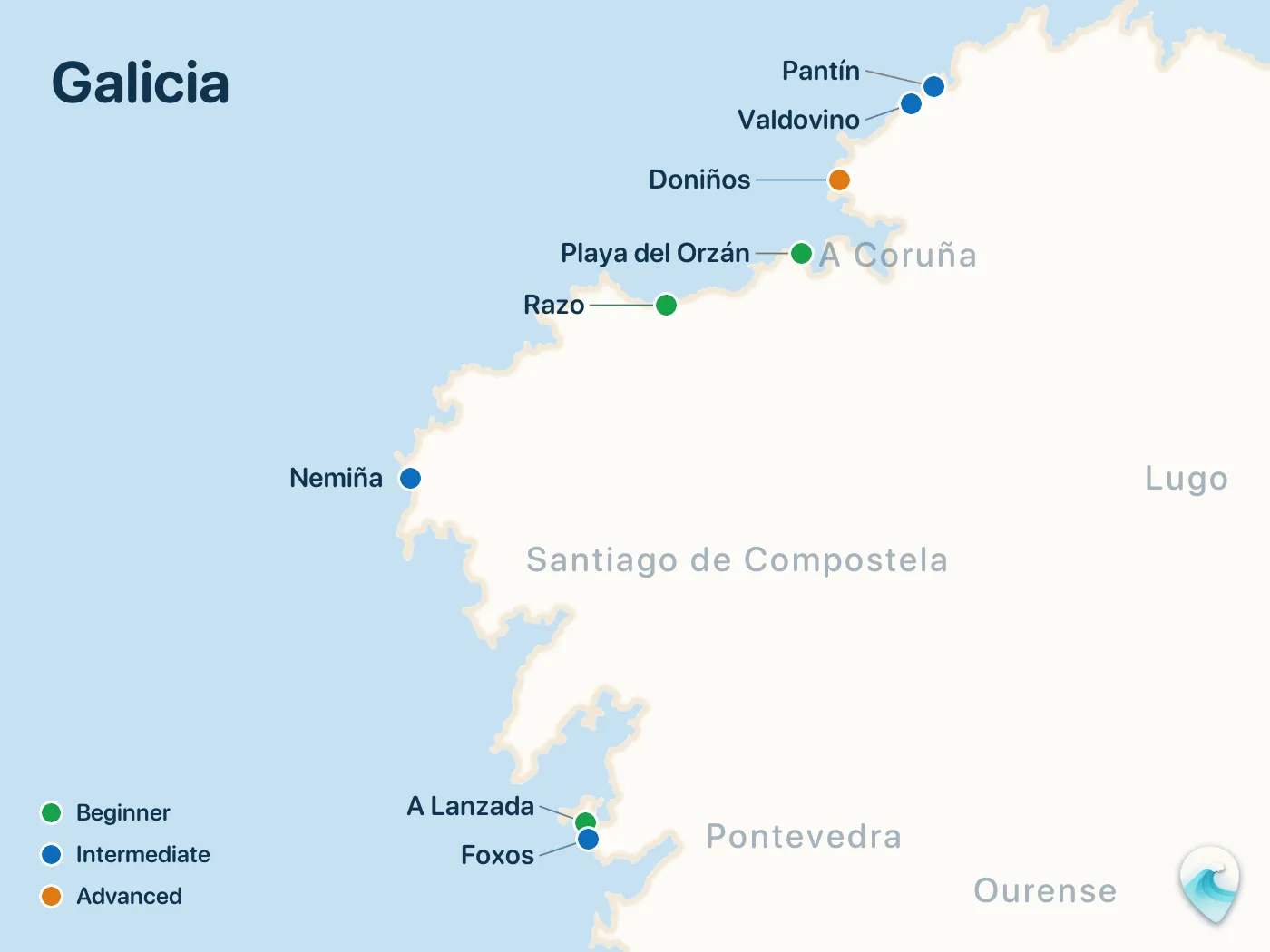
Map of the Galicia surf spots described in this guide, with numbered markers

Part of the Galicia surf guide

An honest guide to surfing Galicia: Pantín, Doniños and the empty beach breaks of Spain's north-west, where beginners should start, and the season month by month.

Read the full guide →

Good to know

Is Pantín good for beginners?

On a small summer day, yes. In July and August the beach is often waist-high or less, the water is at its warmest and the schools work the inside. Stay away from the stream mouth and the headlands, where the rips run even on small days. Once the swell reaches head-high, Pantín becomes an intermediate wave and the currents take over; on those days Razo, further west, is the beginner beach in this guide.

When is the Pantín Classic and can you surf the beach during the contest?

The Pantín Classic has run every year since 1988, most years in late August or early September, as a world qualifying event; exact dates move from year to year, so check the organisers' announcements. During the event the contest peak is closed to free surfing while heats run, but the beach is long enough that other peaks stay open, and A Frouxeira is five minutes away. Contest week is the one time Pantín feels crowded.

How cold is the water at Pantín and what wetsuit do you need?

Cold all year, in different degrees. In August the water peaks at 17 to 18°C, so a 3/2 does the job and a spring suit is for the brave afternoons. September and October sit around 16 to 17°C, still 3/2 weather for most. From November it drops fast, and from December to March it sits at 12 to 13°C: a 4/3 with hood, boots and gloves, or a 5/4 if you feel the cold.