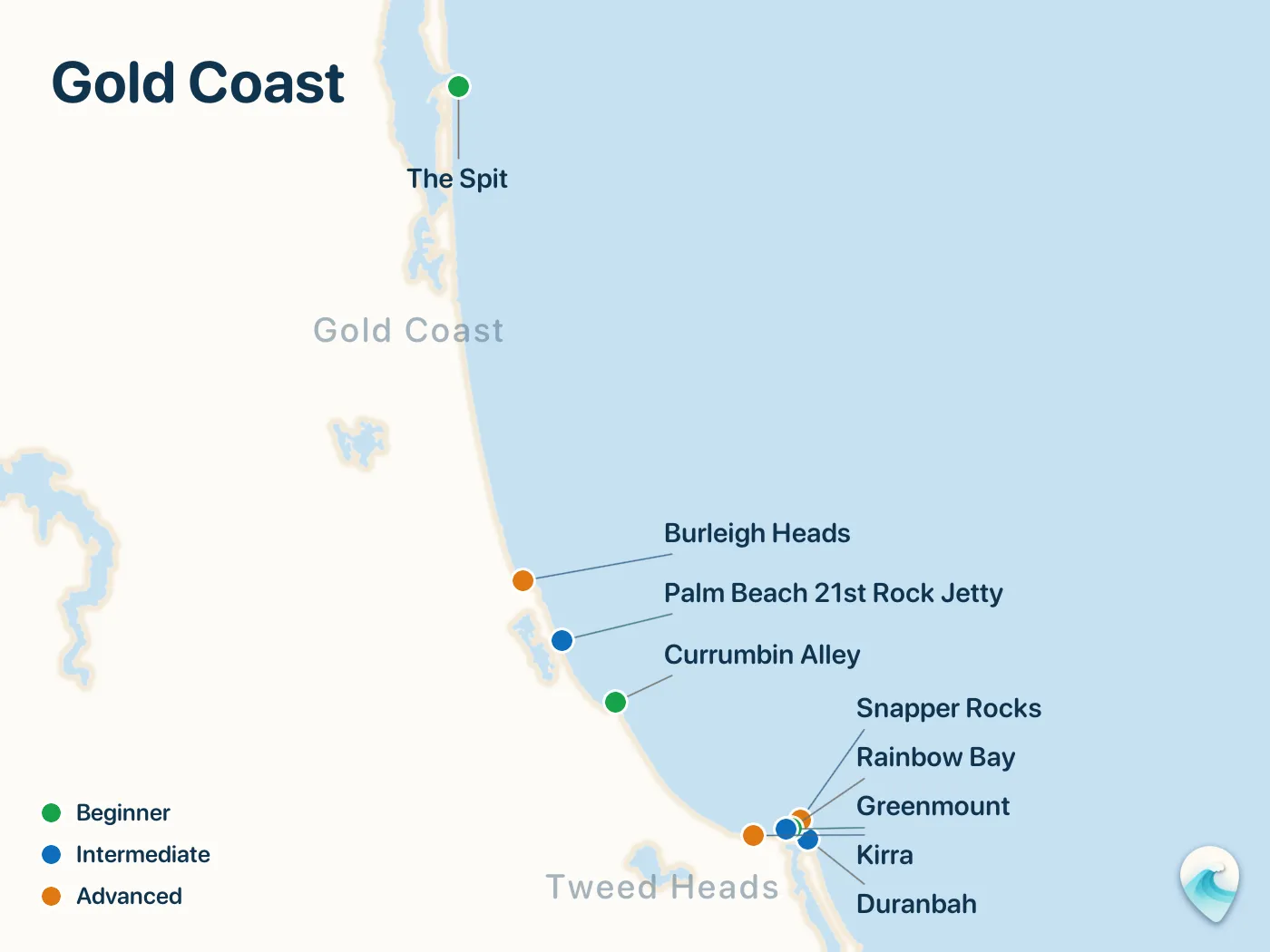
Snapper Rocks is a right-hand point at the southern end of the Gold Coast, in Coolangatta, and the takeoff of the Superbank. The bank itself is an accident of engineering. In 2001 a pumping station began moving sand across the mouth of the Tweed River to keep it open, and the surplus settled into a single sand bar that on its day carries a wave from behind Snapper Rocks through Rainbow Bay and Greenmount toward Kirra, close to two kilometers away. Nothing else in surfing links this long over sand.
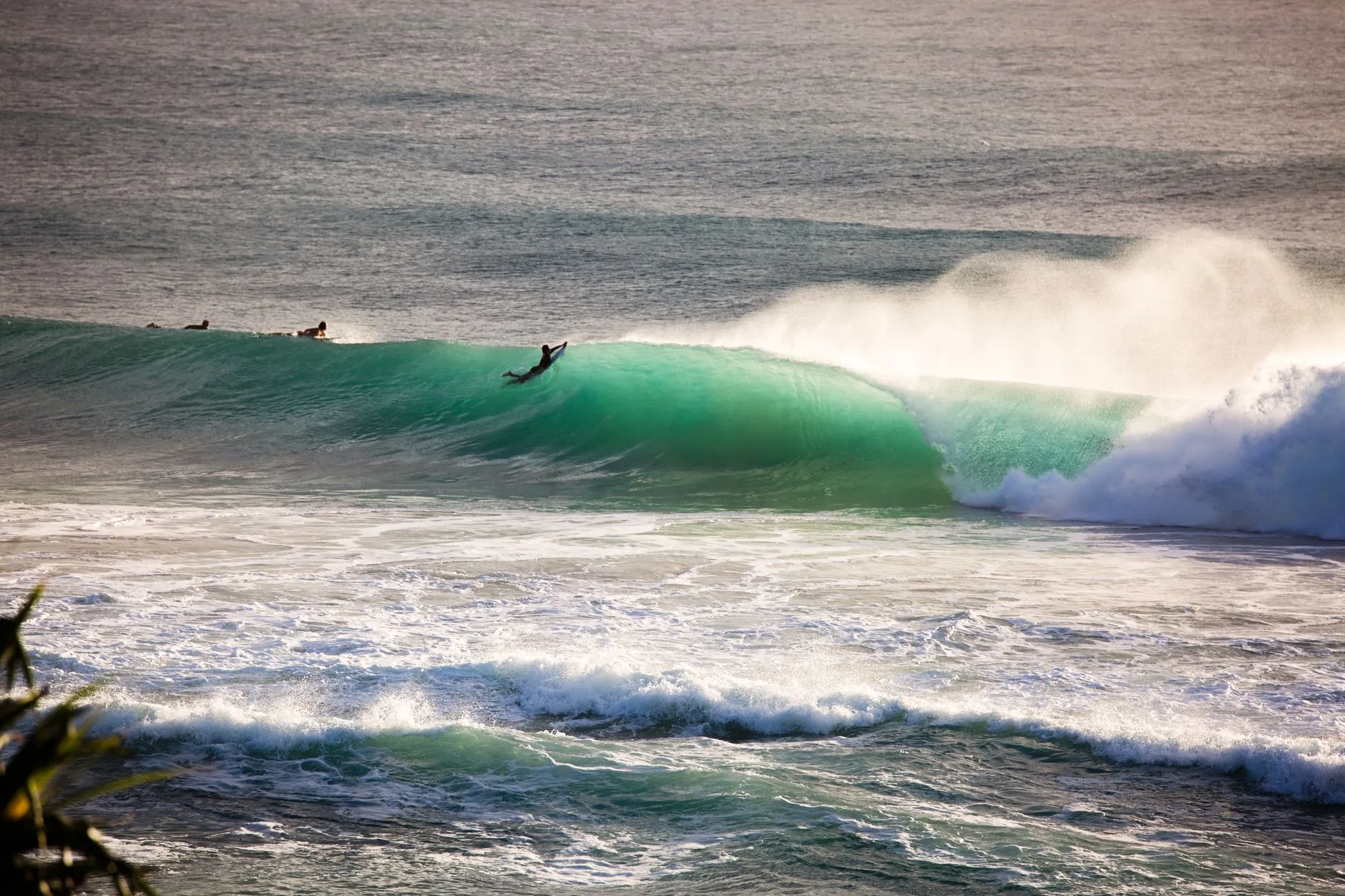
The wave at the top is fast, pocketed and shockingly perfect, the kind of perfection people cross the planet expecting to find exaggerated, and don't. Mick Fanning, Joel Parkinson and Stephanie Gilmore all grew up within walking distance, and the world tour has opened seasons here. That pedigree has a price, and you can see it from the boardwalk before you have waxed up: everyone in surfing knows about this wave, and on a good swell it looks like everyone came.
Advanced
Wave
Right-hand sand-bottom point, the takeoff of the Superbank
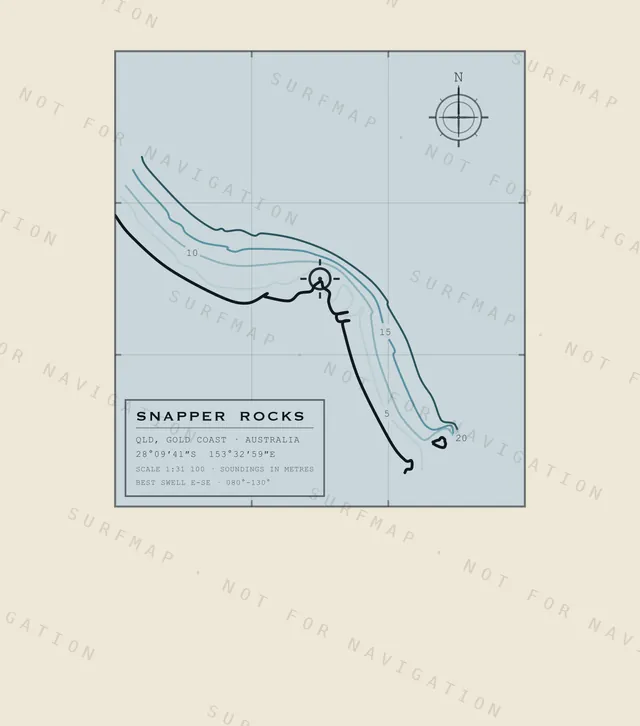
Best swell
S to E swell, best from chest-high to a couple of feet overhead
Best wind
SW to W offshore, typical on autumn and winter mornings
Best tide
Many favor lower tides for speed and shape, mid on the push is friendlier; the bank matters more than the tide
Season
Close to year-round; cyclone swells December to May, southern groundswell through winter
Level
Advanced behind the rock; intermediates further down toward Rainbow Bay
How the wave breaks
The takeoff sits behind the rock itself, over the first stretch of the bank. The wave stands up in an instant, drops you into a pocket that stays a stroke ahead of your rail, and demands speed from the first pump. This top stretch, from behind Snapper through the Rainbow Bay corner, is the fastest and most perfect part of the Superbank: pocketed, mechanical, the kind of wave the world tour built its season openers around.
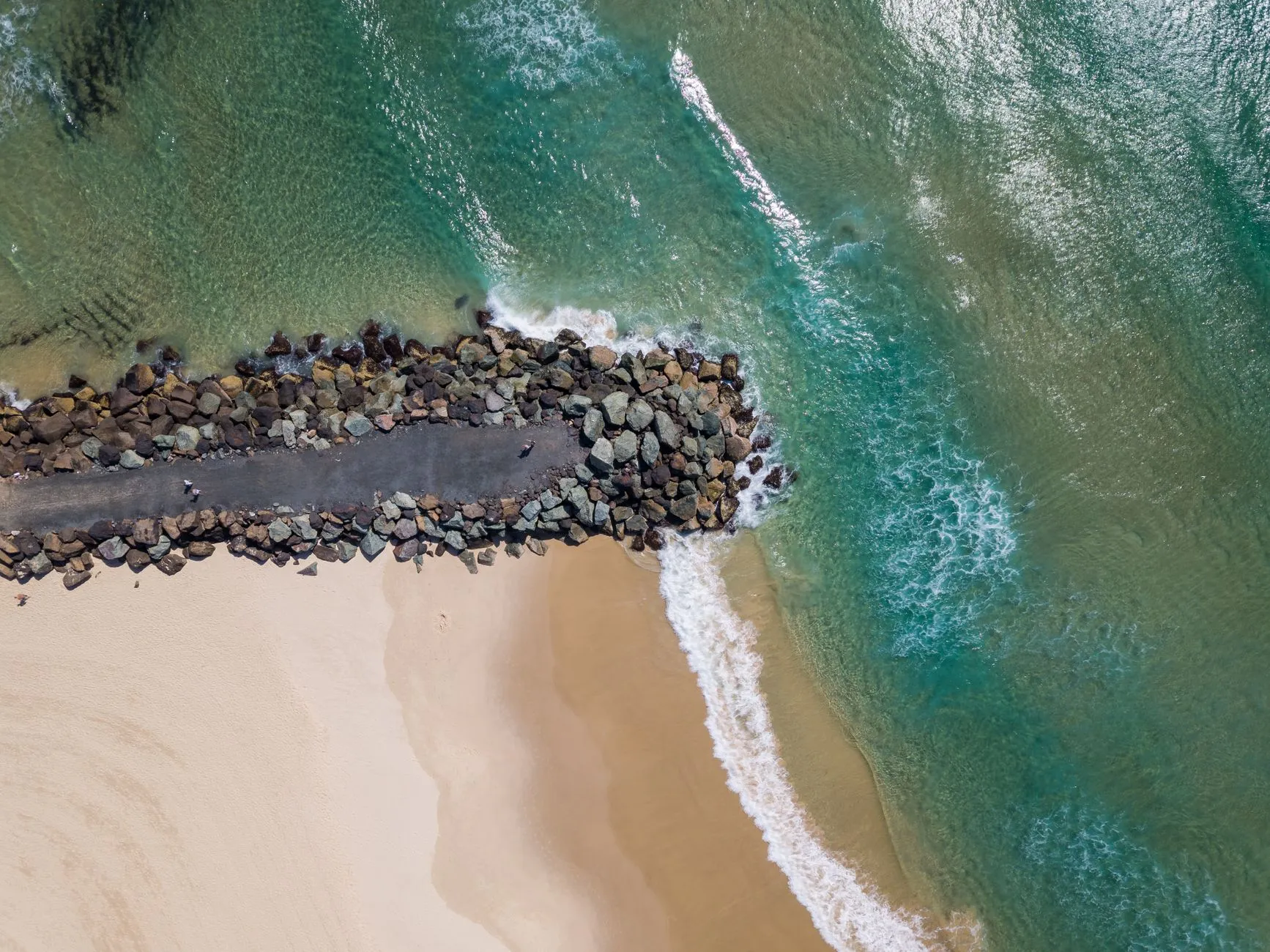
How far you ride depends on the sand. On an ordinary day the wave breaks down into sections and you kick out somewhere in Rainbow Bay or at Greenmount, already a long ride by any normal standard. When the bank has been laid right, the sections link, and a single wave can carry from behind the rock through Rainbow Bay and Greenmount toward Kirra, close to two kilometers. Those runs are rare, and the bank shifts with every swell and every month of pumping, but they are why the word Superbank exists.
Sand, swell lines and the shape of a bank, seen from above
When it works
Snapper faces northeast and takes anything from south to east. The famous swells are the cyclone ones: from roughly December to May, tropical lows in the Coral Sea send long-period east swell straight down the bank, and those are the days the long runs happen. The rest of the year is far from dead, because solid southern groundswell wraps onto the point all winter, so the wave breaks close to year-round. It is best from chest-high to a couple of feet overhead, and the southwest to west offshore that grooms it blows most reliably on autumn and winter mornings. As for tide, opinions split: many chase the lower tides for speed and shape down the bank, mid tide on the push is friendlier, and in truth the state of the sand decides more than the tide ever does.
The lineup and the take-off
There is no way to soften it: this is the most crowded lineup on Earth, several hundred surfers strung down the bank on a good swell. The pack behind the rock sits deepest and hungriest, stacked with current and former world tour surfers and locals who grew up on this exact wave, and the standard there is world-tour level. Do not paddle to the top expecting charity; a set wave behind the rock is earned over years, not sessions. Even getting in has technique: most surfers jump off the rocks at the point, and watching a few surges before you step off saves you an ugly start.
The honest play is to sit halfway down, toward Rainbow Bay and Greenmount. Waves ridden from the top break down and reform, riders fall or flick off, and what swings through to you is still a long, fast, flawless sand-bottom wall, for most surfers the best wave of that kind they will ever ride. You will catch more in an hour there than in a morning of waiting at the peak, and nobody who matters is judging where on the bank you sat.
Getting there
Snapper Rocks sits at the southern end of the Gold Coast, in Coolangatta, hard against the New South Wales border. The car parks off Marine Parade at Rainbow Bay put you a two-minute walk from the rocks, though they fill before first light whenever a swell is running. Gold Coast Airport is about ten minutes away, close enough to land in the morning and be in the water before the sea breeze, and most Coolangatta accommodation is within walking distance of the point, so many visitors never touch a car at all.
Hazards
The crowd itself is the first hazard: boards everywhere, so keep your eyes up on the takeoff and down the line
On a solid swell a strong sweep runs down the point; do not fight it, ride to the beach and be ready for the walk back around
The rock jump-off entry takes timing; watch a few surges before you step off
The bank is shallow on the pocketed sections and hits harder than sand sounds; cover your head when you go down
Yes, if you pick your spot on the bank. The peak behind the rock is world-tour territory and no place to learn, but halfway down, at Rainbow Bay and Greenmount, the wave reforms into softer, slower walls that are still longer and better shaped than most beach breaks at their best. Go on a chest-high day rather than a cyclone swell, keep your eyes up in the crowd, and you will get the ride of your season without bothering anyone at the top.
What made the Superbank?
A sand-pumping project, by accident. In 2001 a pumping station began moving sand across the mouth of the Tweed River to keep the entrance open for boats, releasing it on the beaches just north. The surplus welded what had been separate banks at Snapper, Rainbow Bay, Greenmount and Kirra into one continuous bar, and surfers named the result the Superbank. The pumping continues today, so the bank is endlessly rebuilt, and its shape from one season to the next decides how far the wave links.
When is the best time of year for Snapper Rocks?
Cyclone season, roughly December to May, brings the famous swells: long-period east energy from tropical lows that lights up the full length of the bank, and those are the days the two-kilometer stories come from. Winter runs on southern groundswell instead, usually cleaner in the mornings with southwest offshores and a crowd that is slightly less frantic, though never small. There is no quiet season here; there are only days when the wave justifies any crowd, and most of them arrive between December and May.