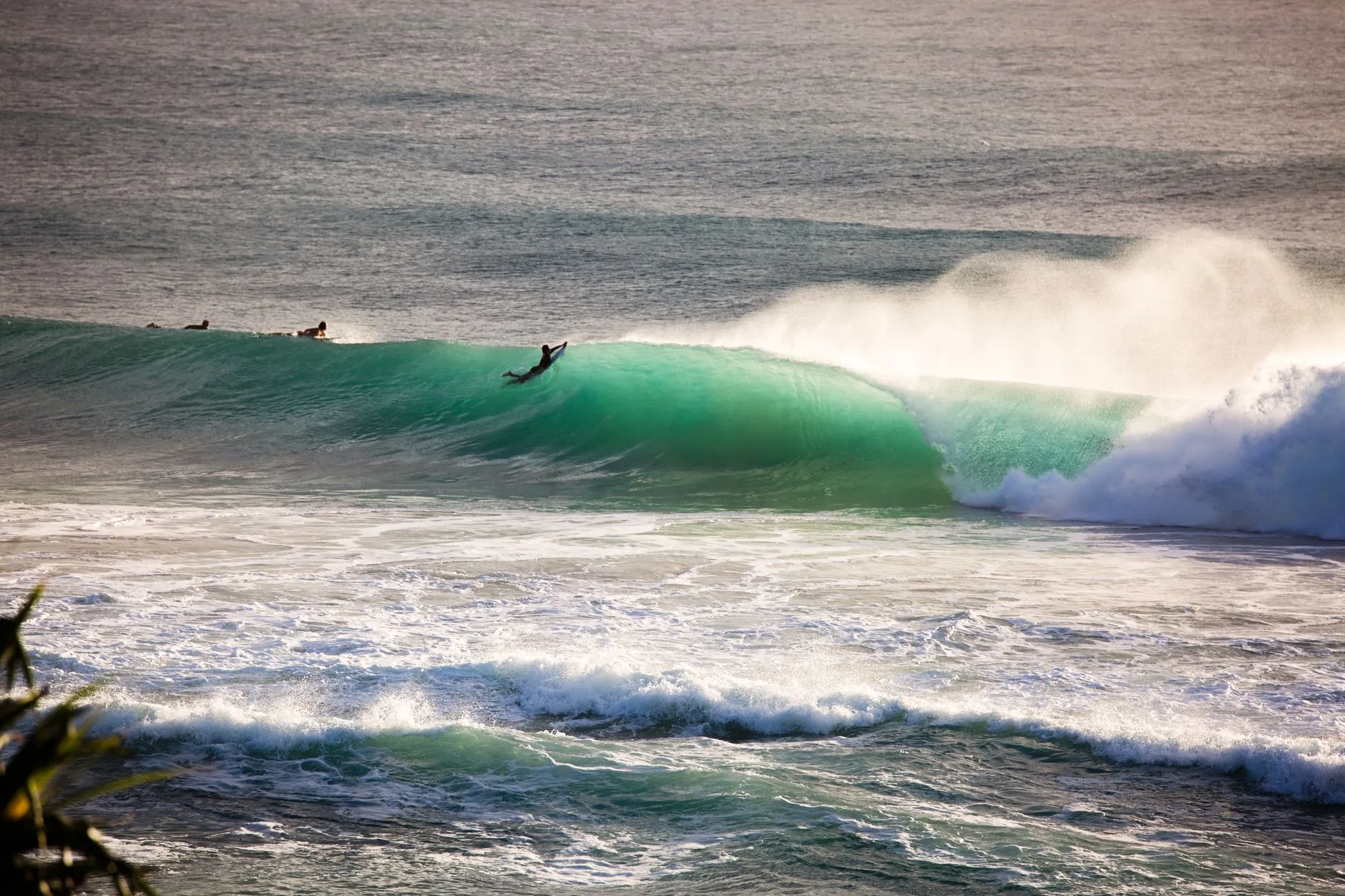
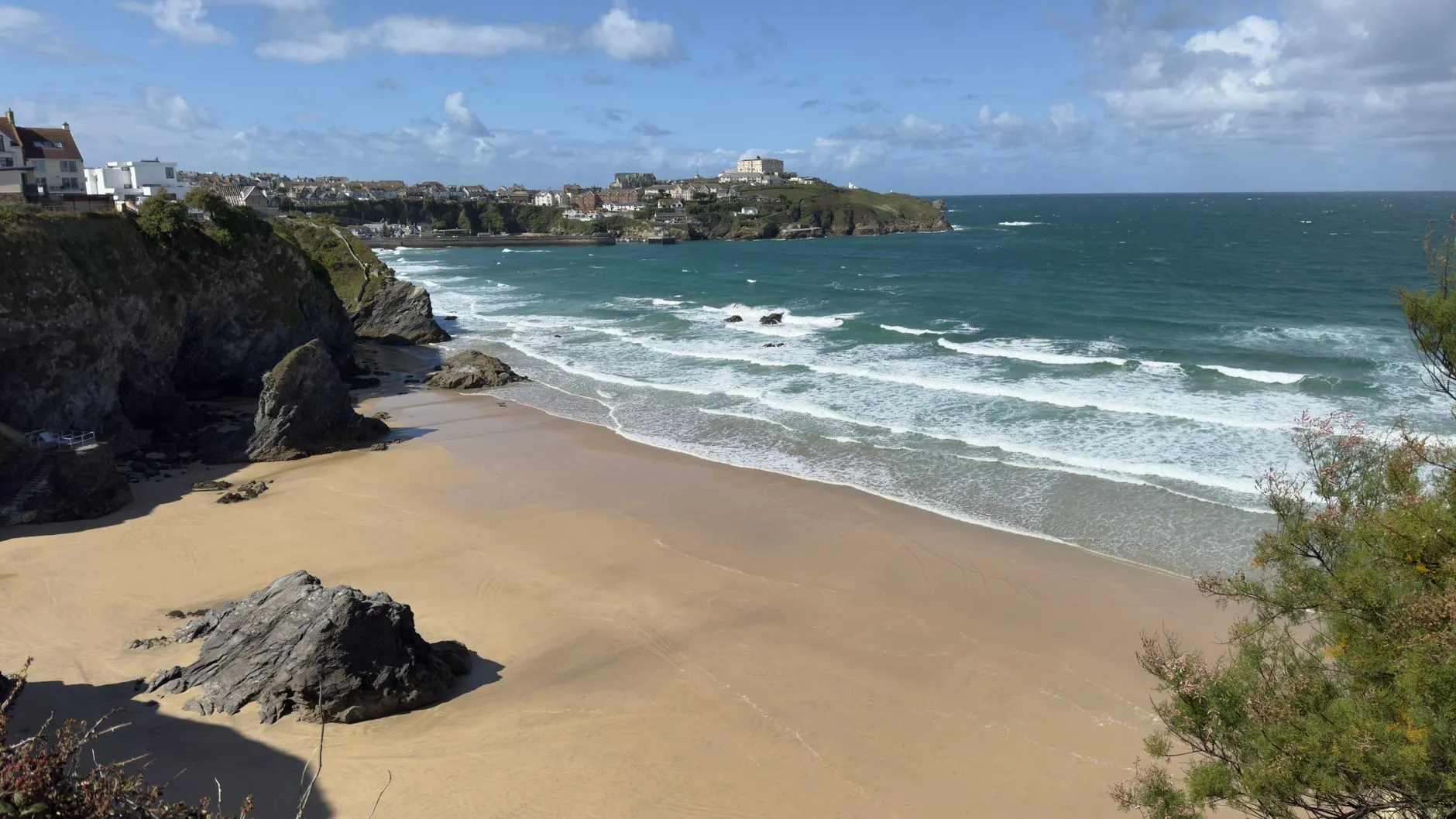
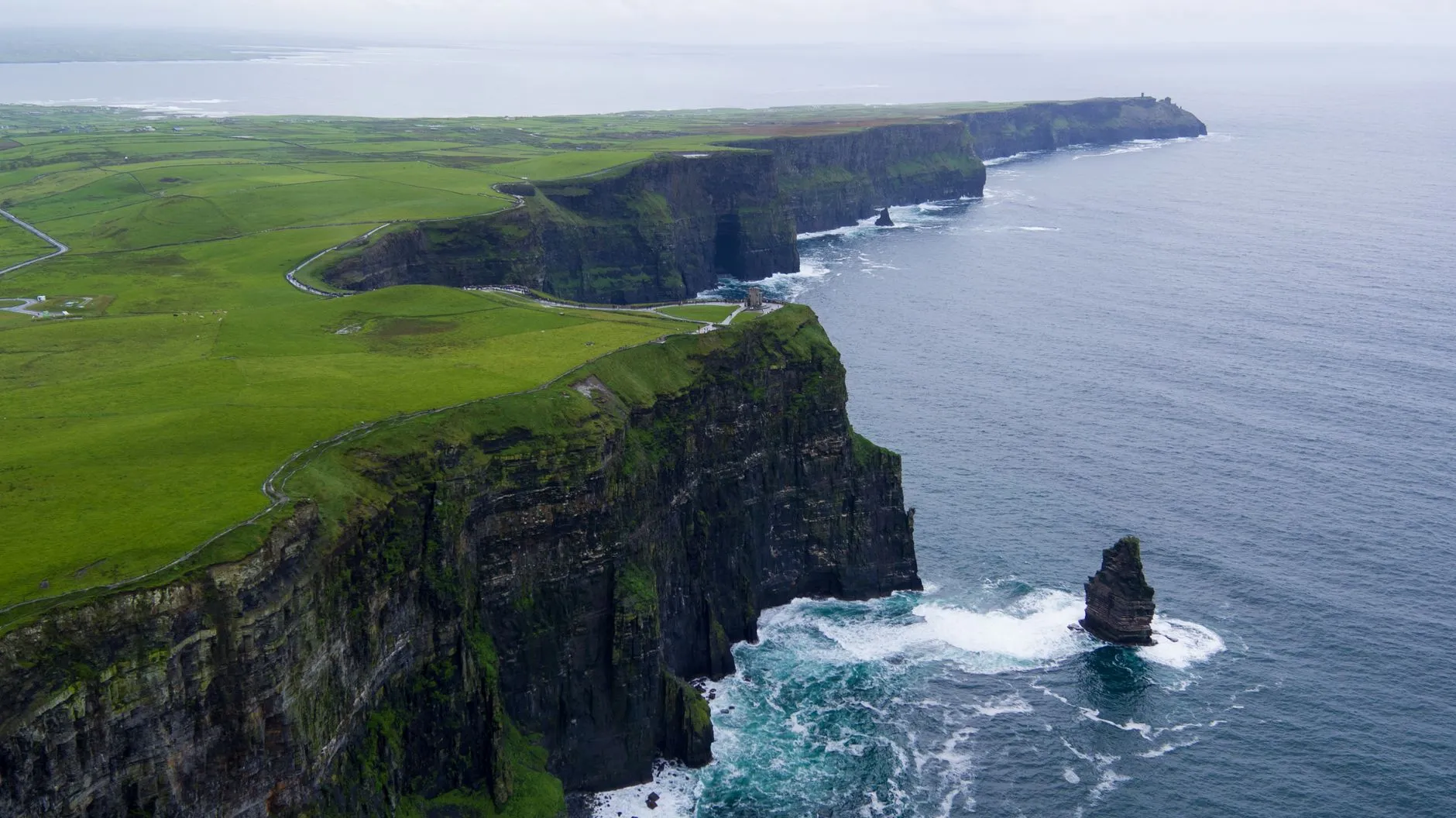
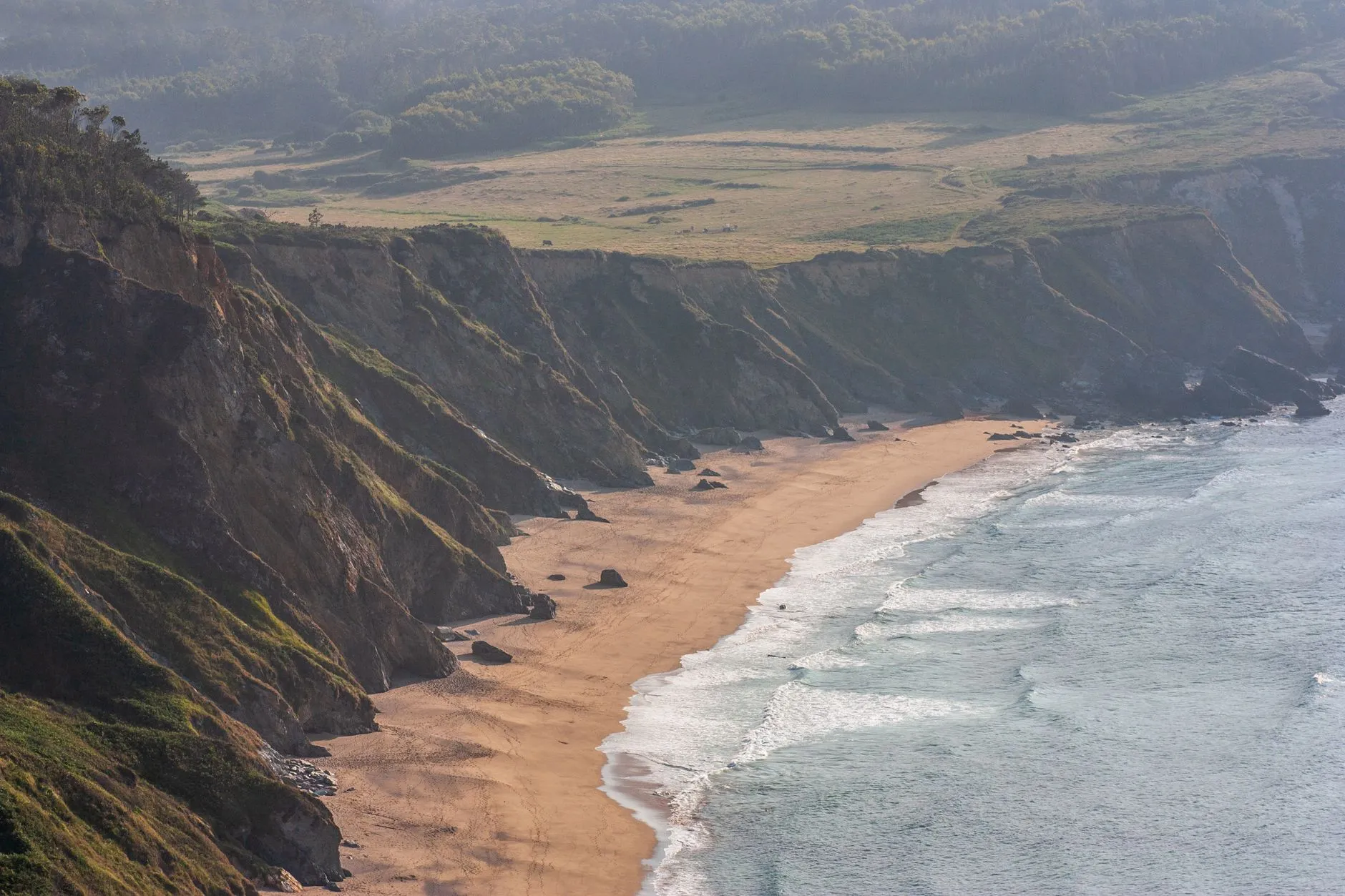
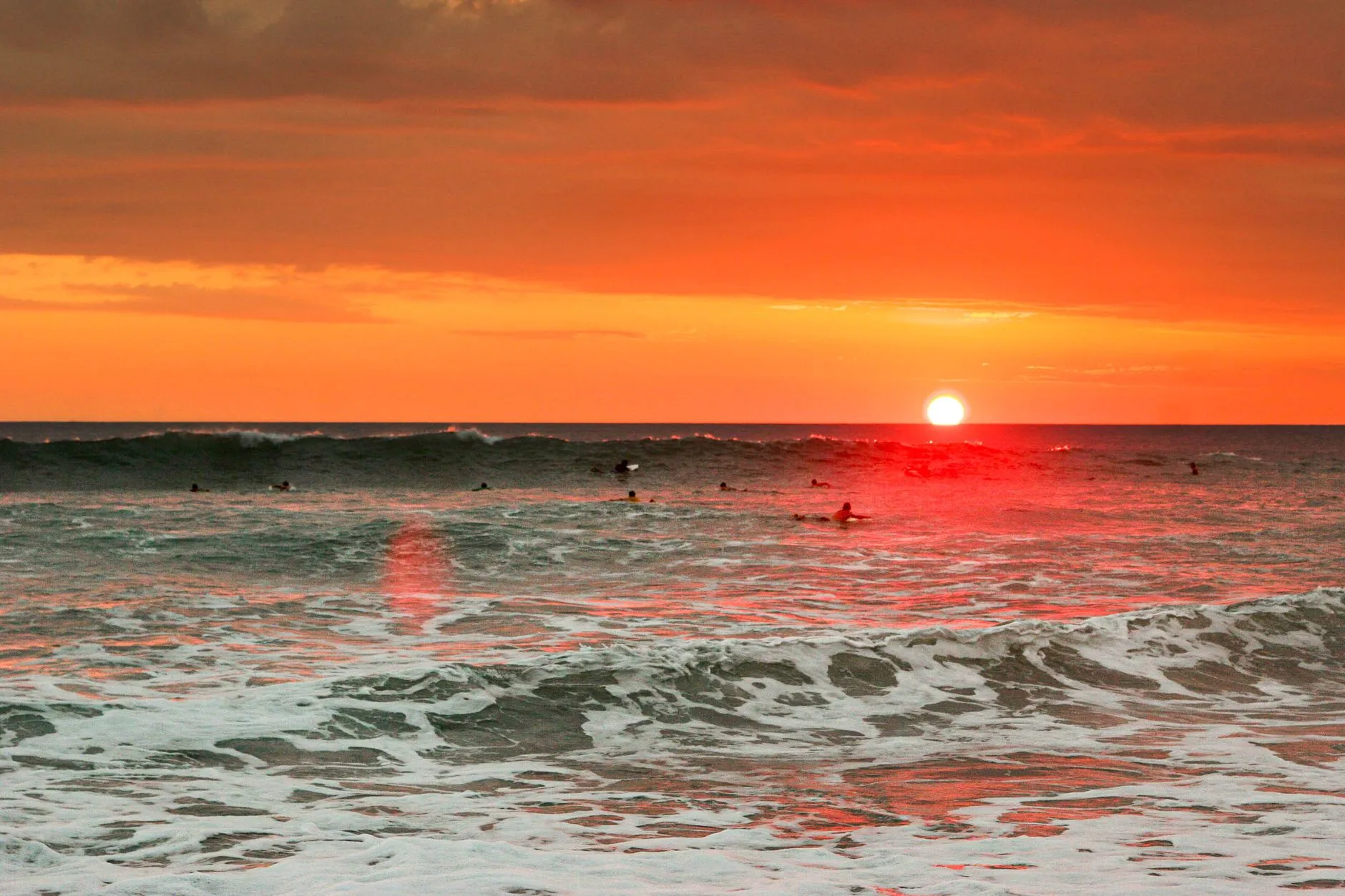
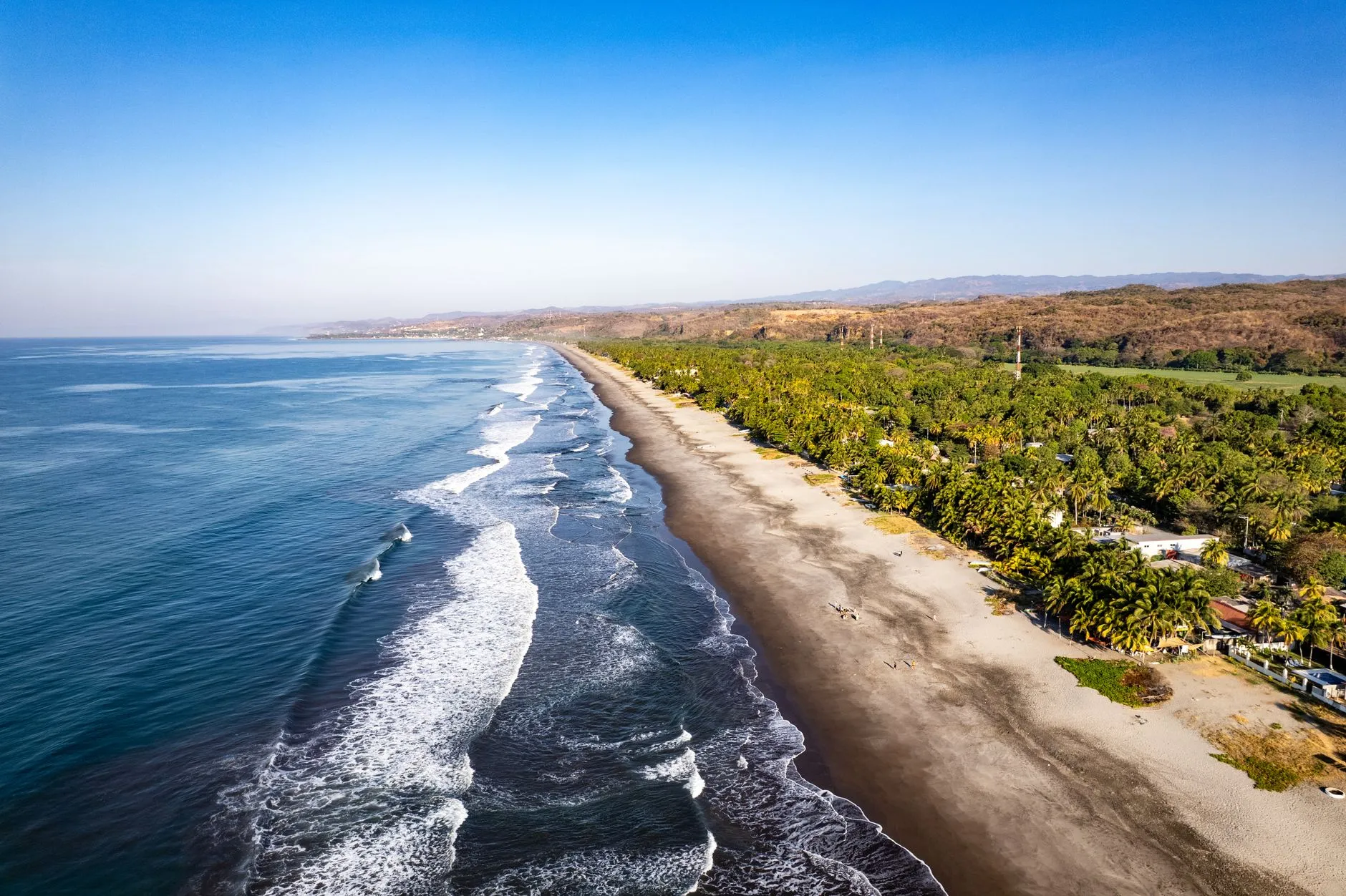
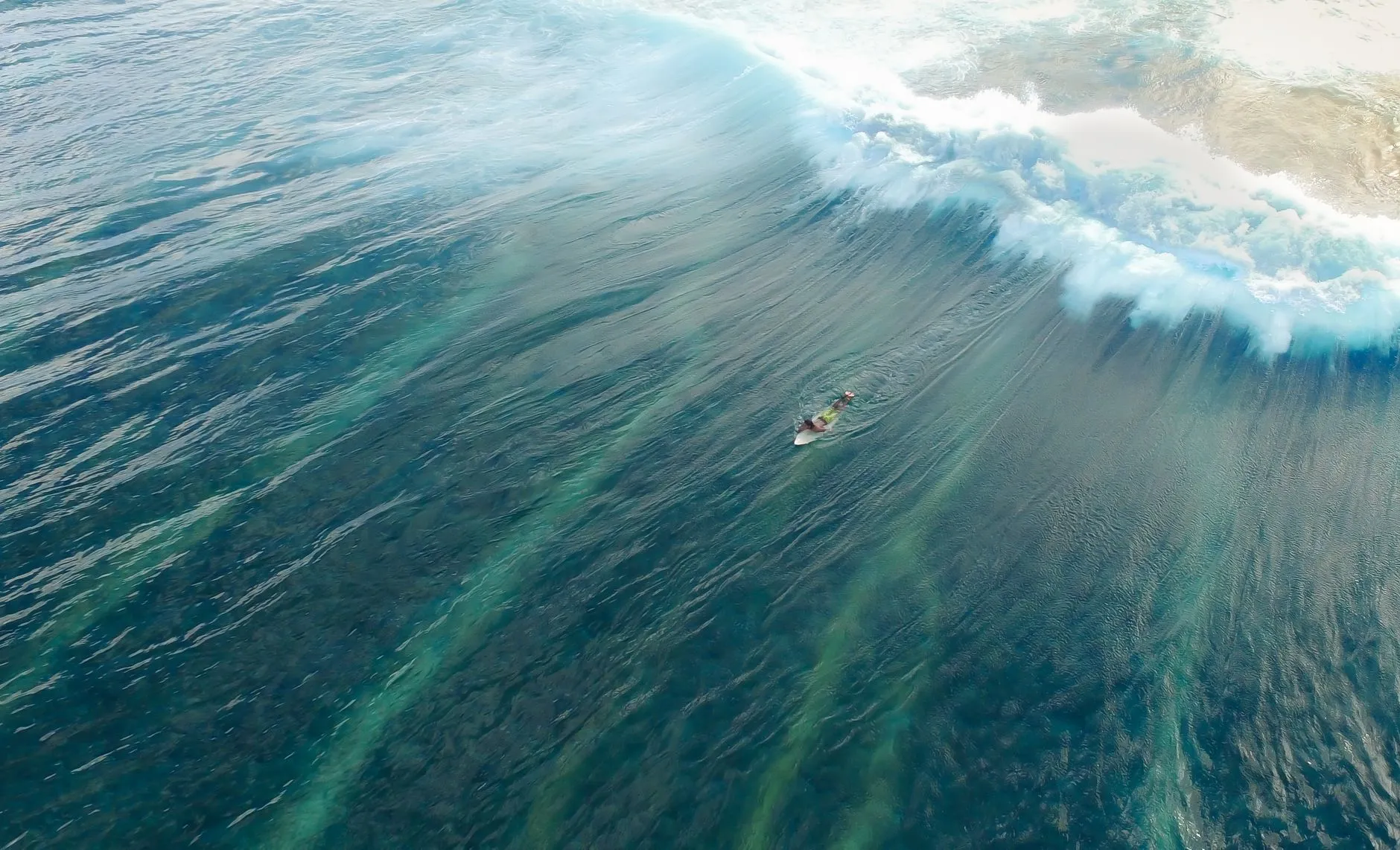
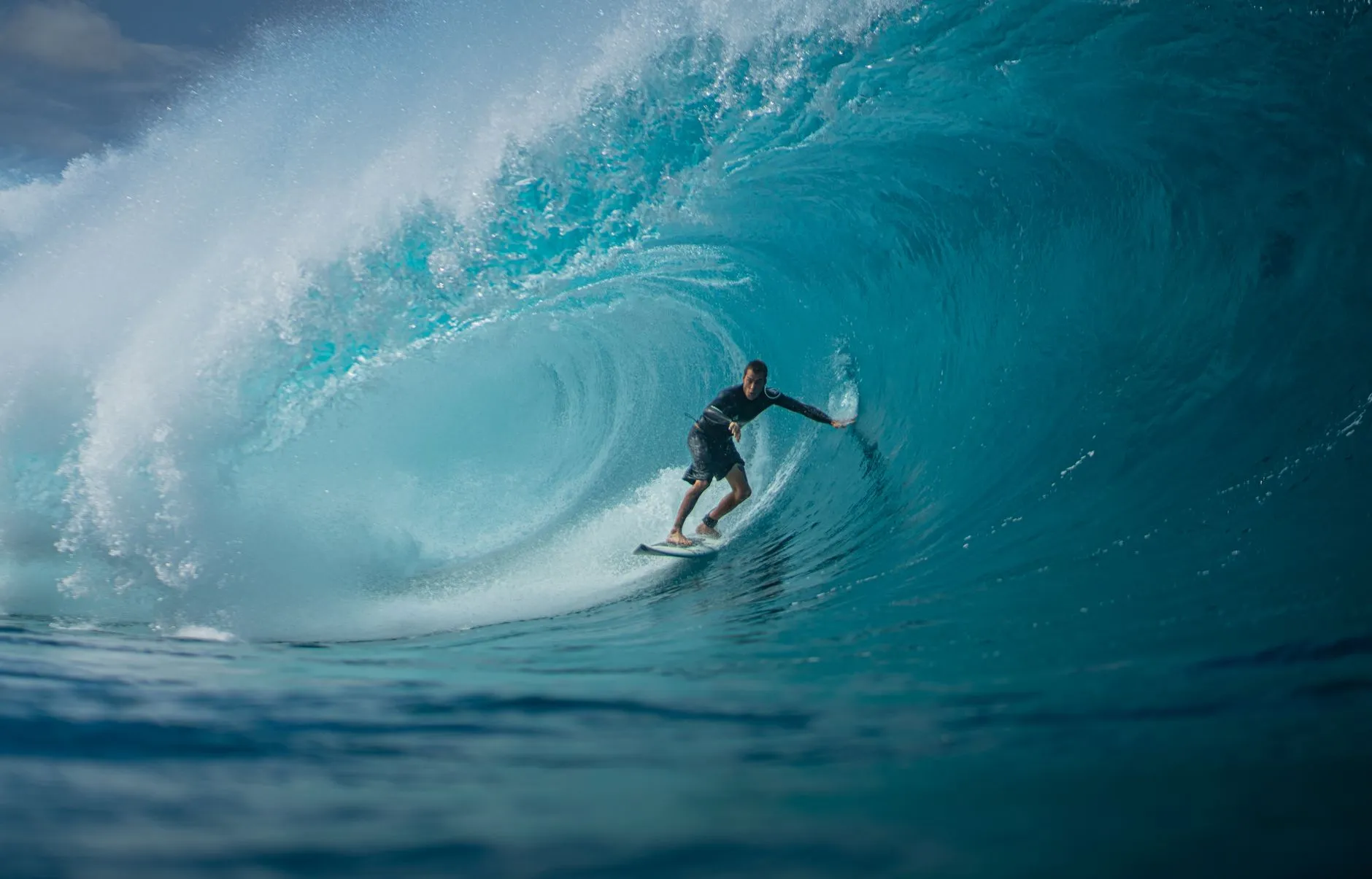
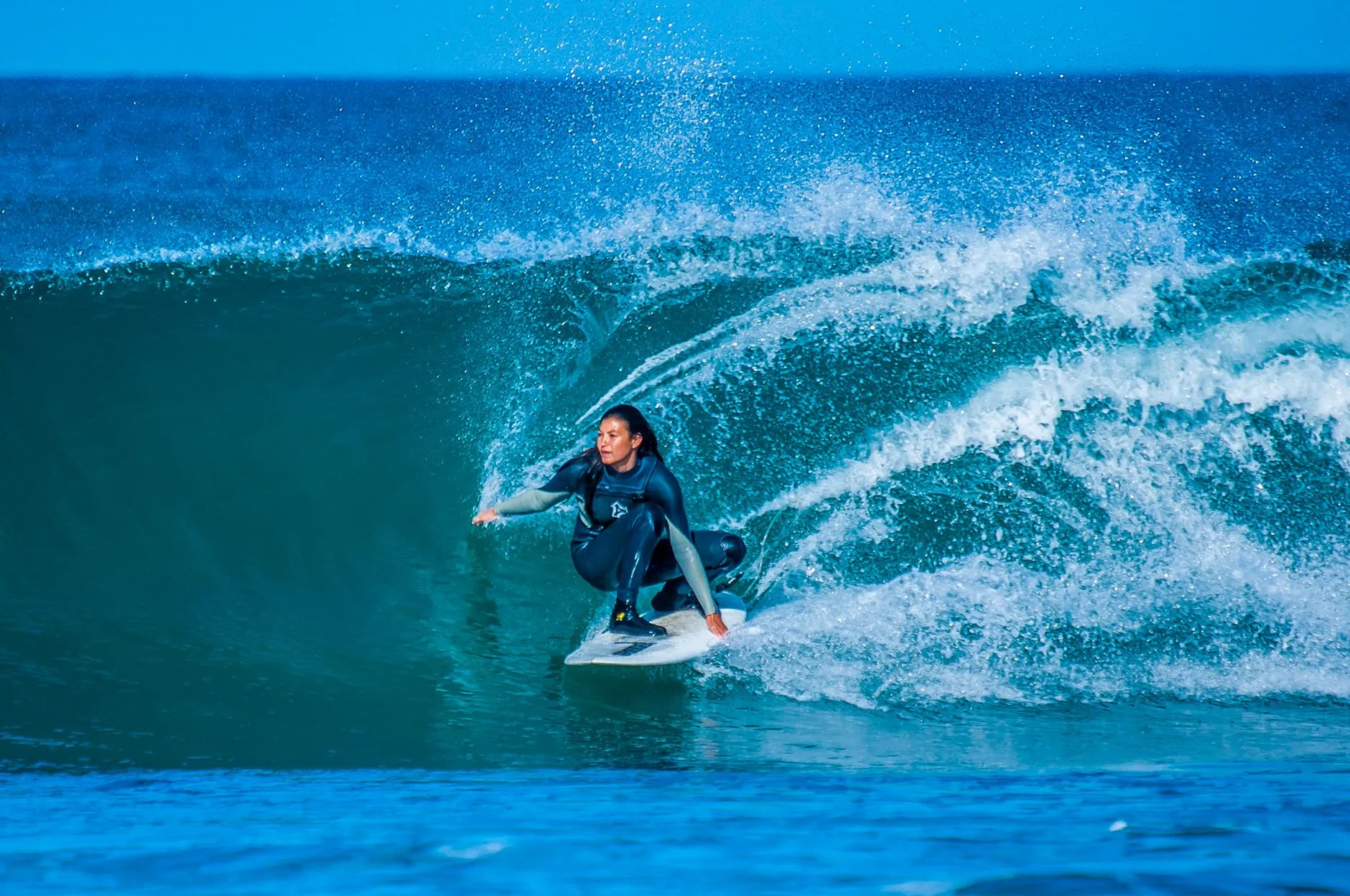
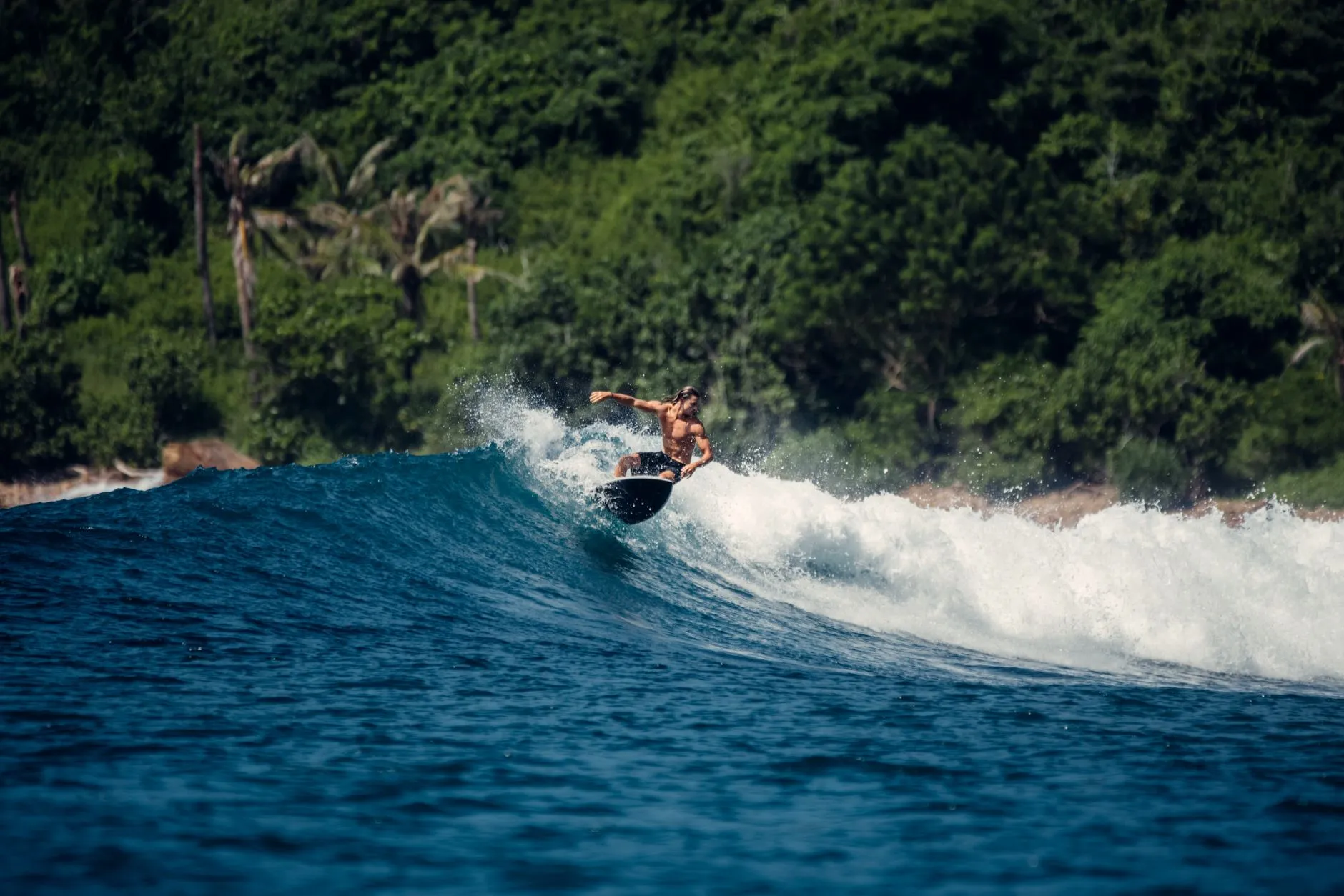
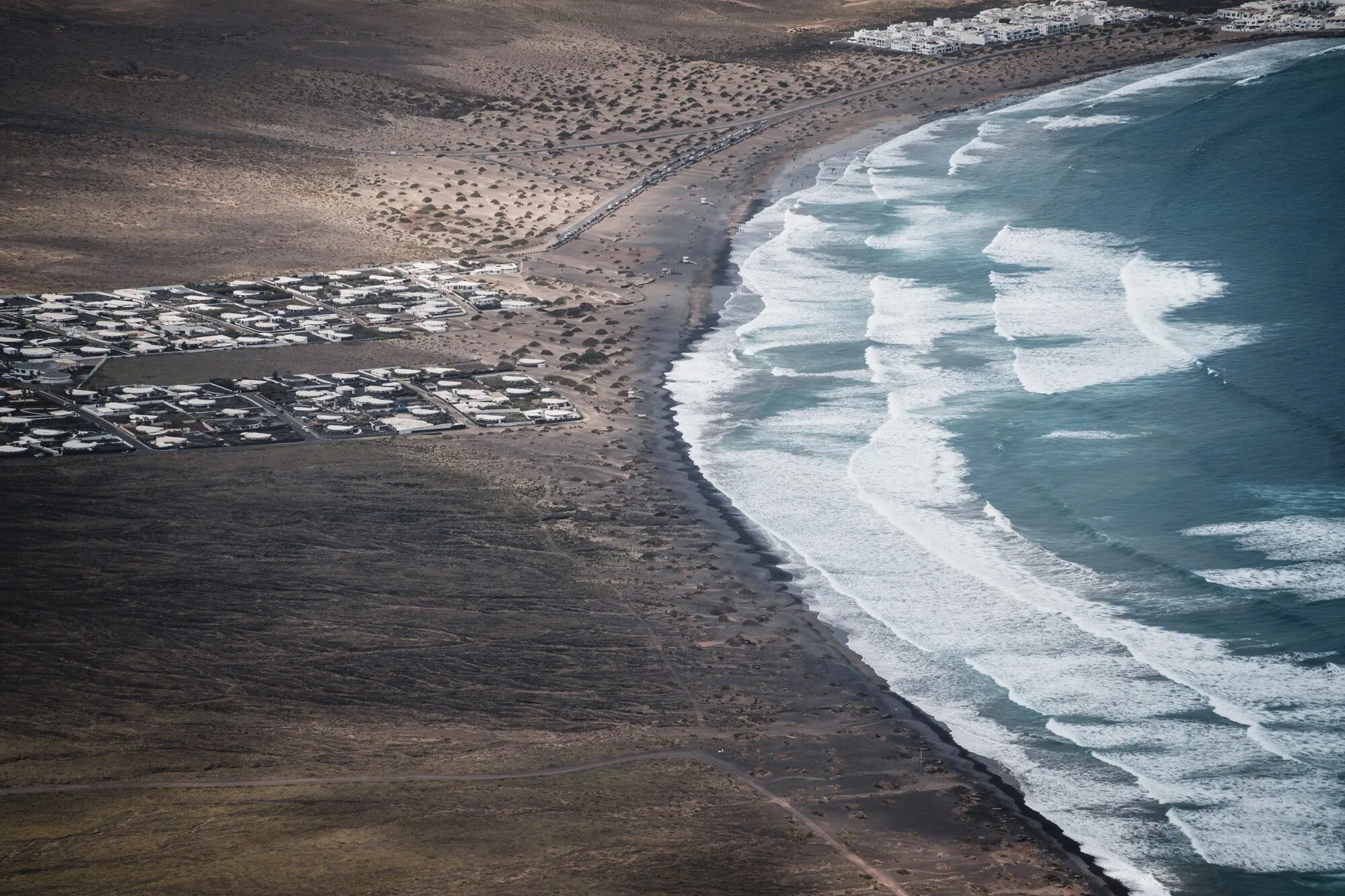
No other surf city looks like this: a wall of glass towers running the length of the horizon, and in front of it, thirty five kilometers of sand arranged into some of the best waves on the planet. The Gold Coast's secret is at its southern end, where an engineering project became a legend. In 2001, pumps began pushing sand across the Tweed River mouth to keep it open, and the overflow settled into the Superbank: a single bar that, on the right swell, lets a wave peel from Snapper Rocks through Rainbow Bay and Greenmount all the way to Kirra, nearly two kilometers of sand-bottom perfection. Add Burleigh's pine-covered headland, Currumbin's lazy creek-mouth rollers and D-Bah's wedges on the border, and you have more good waves per kilometer than anywhere else in Australia, all of it walkable from a flat white.
Time it by the hemisphere. From December to April, cyclones wander the Coral Sea and the points do their famous thing: this is when Kirra wakes up. South swells run underneath all year, February to June is the prime window, and midwinter brings small, immaculate walls groomed by westerly offshores, the coast at its cleanest exactly when Europe's summer goes flat. Now the honest part: the Superbank is the most crowded lineup on Earth, and the average surfer in it is very, very good. Nobody will hand you a set wave at Snapper. Start at Currumbin Alley or Rainbow Bay, take your beatings at D-Bah, and treat a single long one from behind the rock as a trophy rather than an expectation.
Best months
February to June is prime: cyclone swells first, then long south lines groomed by winter offshores
Water
20 to 26°C: boardshorts most of the year, a spring suit or 3/2 for midwinter mornings
Levels
From Currumbin Alley's rolling longboard wave to the Superbank, the most competitive lineup on Earth
Getting there
Fly to Gold Coast Airport: Snapper Rocks is ten minutes away; Brisbane is an hour up the motorway
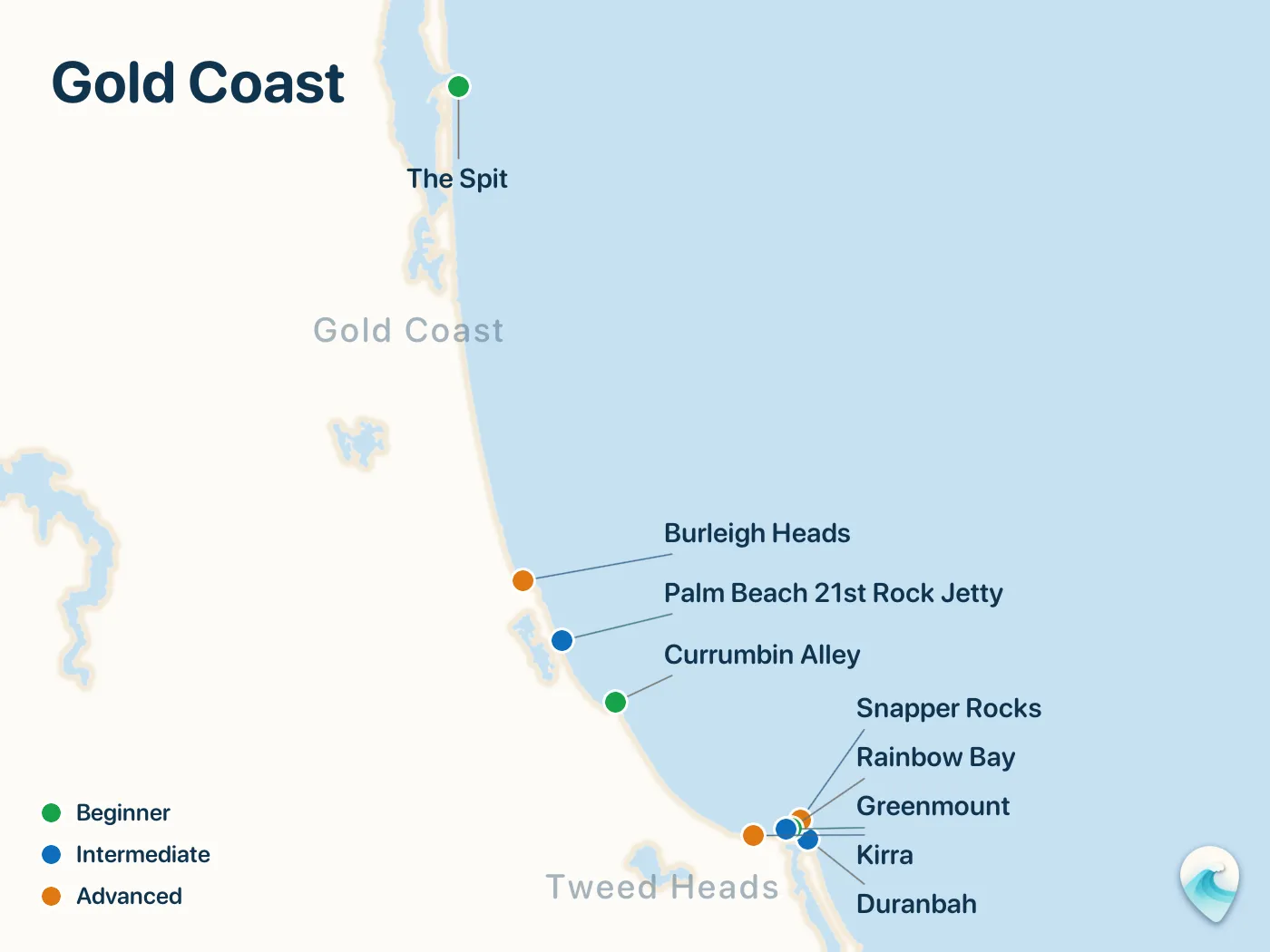
Five waves inside one twenty-minute walk around Point Danger: D-Bah's wedges on the New South Wales side, then Snapper, Rainbow, Greenmount and Kirra strung along the Queensland sand. On the days the bank links, four of them become one wave. There is no denser concentration of quality in surfing, and no busier one either: dawn patrol is not a tip here, it is the entry fee.
Duranbah
Tweed Heads · Punchy beachbreak wedges
Intermediate
Technically this is New South Wales: the border runs across Point Danger, and the Queensland pros walk past the monument to warm up here. D-Bah is the pressure valve of the whole coast, a compact beachbreak squeezed between the Tweed River training walls and the point that swallows every swell going and serves it back as punchy A-frame wedges. Rights bounce off the river wall, lefts run toward the rocks, and the banks reshuffle after every river flood. The standard is high for a beachbreak, because everyone who cannot get a wave at Snapper paddles out here. It shuts down on the wrong bank and flogs the unfit, but you will catch more waves in an hour at D-Bah than in a day on the Superbank.
Snapper Rocks
Coolangatta · The Superbank takeoff
Advanced
Start with the story: in 2001 a pumping station began moving sand across the Tweed River mouth to keep it open, and the surplus accidentally built the Superbank, a single bar that on its day carries a wave from behind Snapper Rocks through Rainbow Bay and Greenmount all the way to Kirra, close to two kilometers of it. Nothing else in surfing links this long over sand. The wave at the top is fast, pocketed and shockingly perfect, which is why the world tour has opened seasons here and why Mick Fanning, Joel Parkinson and Stephanie Gilmore all grew up within walking distance. Now the honesty: this is the most crowded lineup on Earth, several hundred surfers on a good swell, and the standard behind the rock is world tour level. Do not paddle to the top expecting charity. Sit halfway down the point, take the reforms and leftovers, and you will still ride the best sand-bottom wave of your life.
One headland in from Snapper, the same sand wearing its Sunday manners. Rainbow Bay is the sheltered corner of the Superbank where the wave slows down, stands up politely and rolls through in long, forgiving walls. This is where Coolangatta learns to surf: kids on foamies, grandparents on logs, surf schools working the inside, and a grass bank at Pat Fagan Park where half the suburb watches the other half. On small swells it is the friendliest point wave imaginable; when the Superbank lights up, the pros come flying through mid-face and the beginners wisely give way. Warm water, an easy paddle from the beach, coffee thirty steps from the sand. If the Gold Coast has a front porch, this is it.
Greenmount
Coolangatta · Rolling mid-point walls
Intermediate
The middle act of the Superbank, and the wave with the best manners of the three. Whatever comes screaming past Snapper has calmed down by the time it wraps around Greenmount hill: still long, still peeling, but with room to breathe and time to set up your line. At two to three feet this is longboard and midlength heaven, a wave you can walk on. On the handful of days each year when the whole bank connects, you can take off here and, with luck and lungs, ride through to Kirra. The headland path above gives you the best free grandstand in Australian surfing, Norfolk pines and all. Crowded, of course, but gentler in spirit than the top of the point.
Kirra
Coolangatta · Grinding sand-bottom barrel
Advanced
For most of the year Kirra dozes, a pretty little runner beside its groyne while the Superbank hoards the sand. Then a cyclone parks in the Coral Sea and the most famous barrel in Australia wakes up. Kirra at its best is a conveyor of round, spitting tubes over sand, so fast and so hollow that the old guard still measures every other wave against it: this is where Michael Peterson ruled the seventies and where the town's surf clubs raised generations of world champions. When it breaks properly, everyone within five hundred kilometers knows by lunchtime, and the takeoff is a commitment you make with your whole body. There is no easy version: you are either riding the barrel or you are inside it wrong. Come to watch on the big days, surf the leftovers after, and you will understand why grown surfers go quiet when someone says the word Kirra.
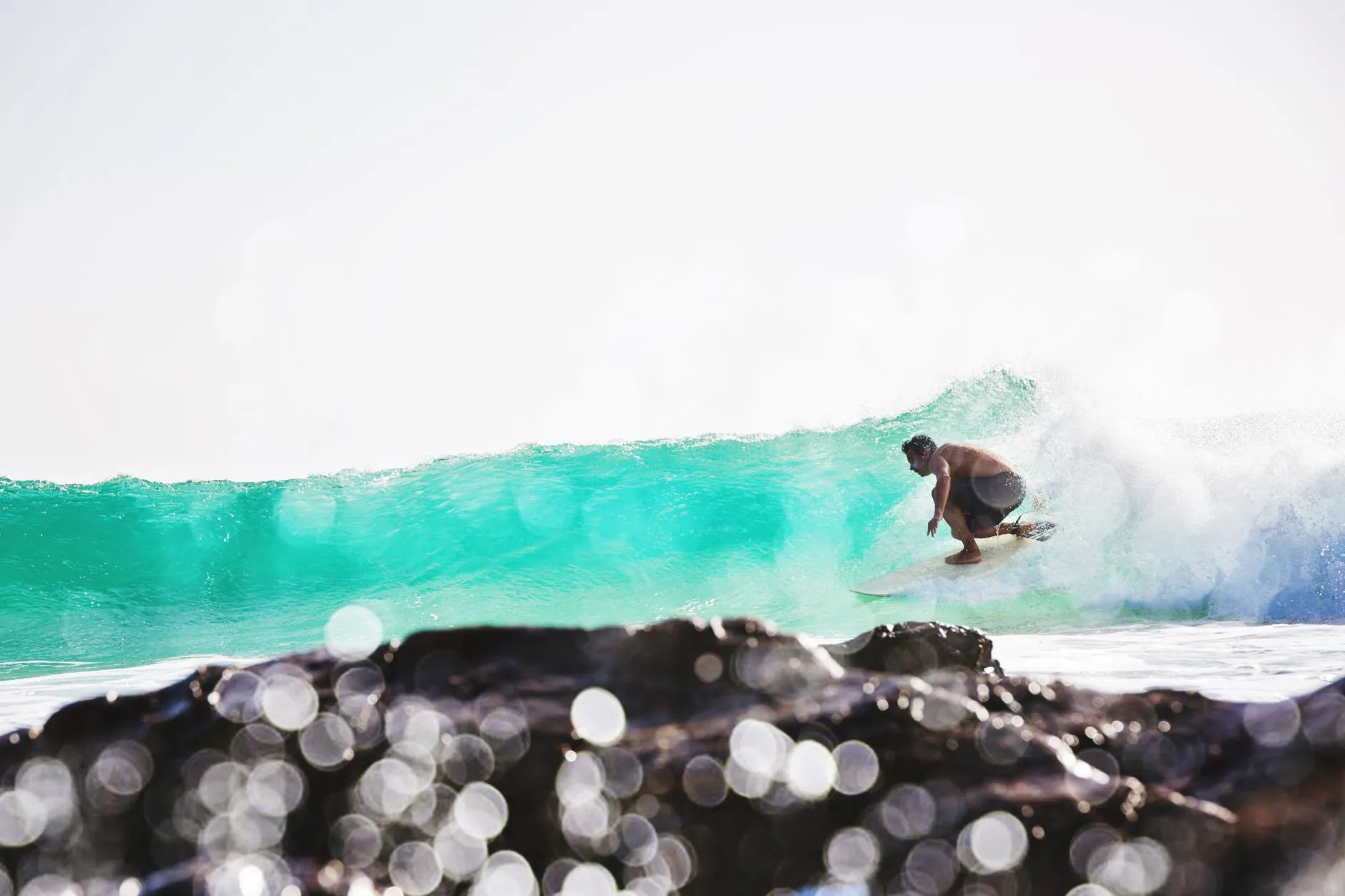
Boardshorts and a clean wall at Coolangatta
The suburbs in between
Between the famous points, the Gold Coast lives like a beach town: Currumbin's creek mouth rolls out the gentlest wave on the coast under Elephant Rock, and Palm Beach stacks wedges against its jetties for a crew that has surfed together since childhood. Come here for the mornings that feel like belonging to the place rather than visiting it.
Currumbin Alley
Currumbin · Slow creek-mouth right
Beginner
The Alley is where the Gold Coast sends you for your first wave, and where half the coast retires to when it wants an easy one. A long, slow right rolls off the mouth of Currumbin Creek past Elephant Rock, at a pace built for logs, midlengths and first bottom turns. Mornings are a parade: schools, grandmothers, groms, SUPs, everyone sharing warm rolling walls that forgive nearly everything. The one thing to respect is the creek itself: on a draining tide the current through the channel is a river, so paddle at the point, not the mouth. On a serious cyclone swell the Alley grows up fast and becomes a real point wave with lines to the horizon; the longboards watch that one from the carpark.
Palm Beach 21st Rock Jetty
Palm Beach · Wedgy jetty peaks
Intermediate
Everyone calls it Palmy, and nobody puts it on a postcard, which is exactly why the locals love it. Palm Beach is the working suburb between Currumbin and Burleigh, and its string of rock jetties, Nineteenth Avenue, Twenty First, stacks sand into wedgy peaks that punch far above their size. On a northeast windswell the bounce off the Twenty First jetty is the best bank on this stretch, a ramp section shortboarders drive across town for. The crew is tight and has been surfing together since primary school, so wait your turn and earn your smile. No headland, no viewing hill, no drama: just a surf club, a pie shop and peaks that keep producing. It is the most honest surf on the Gold Coast.
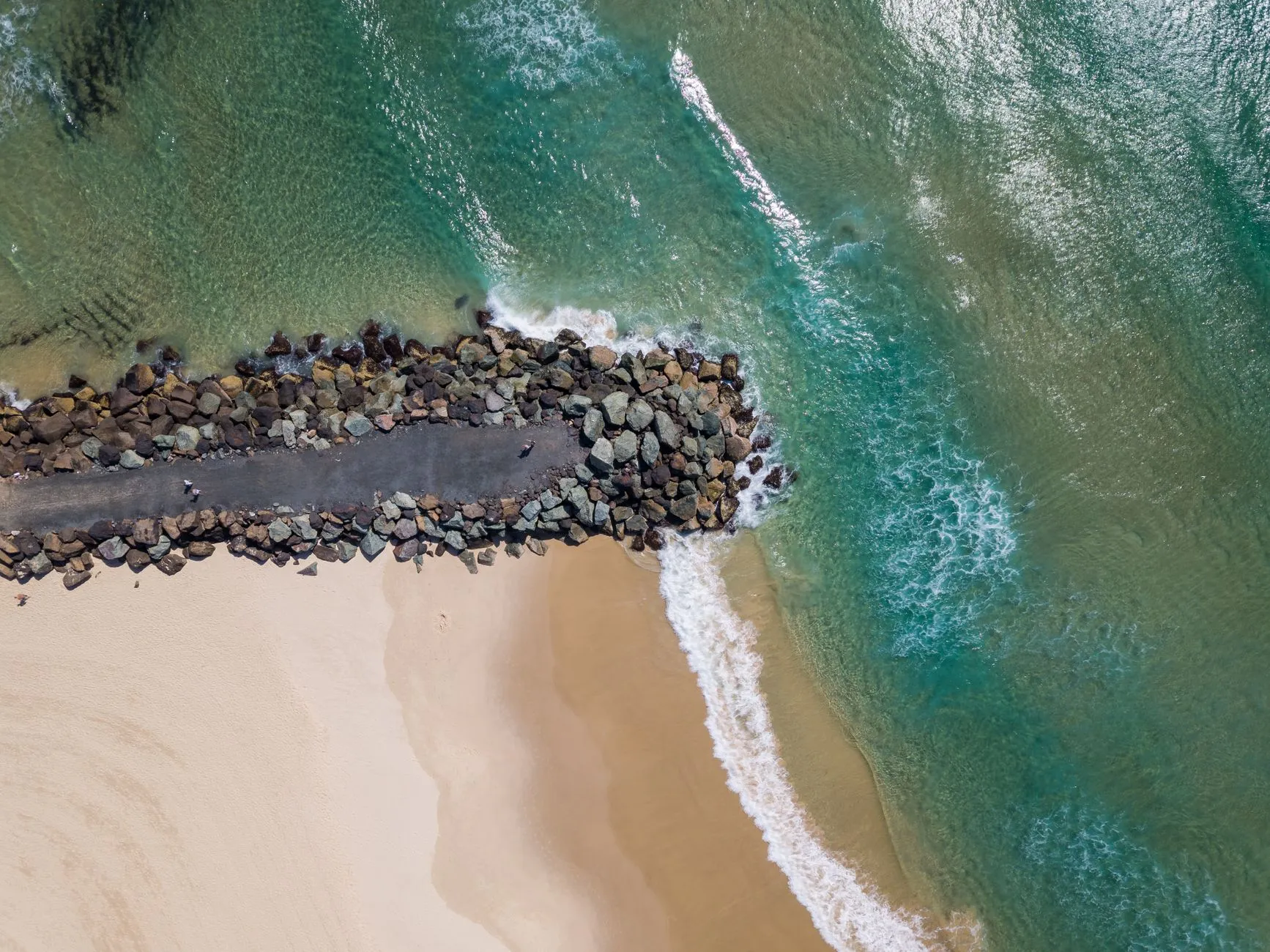
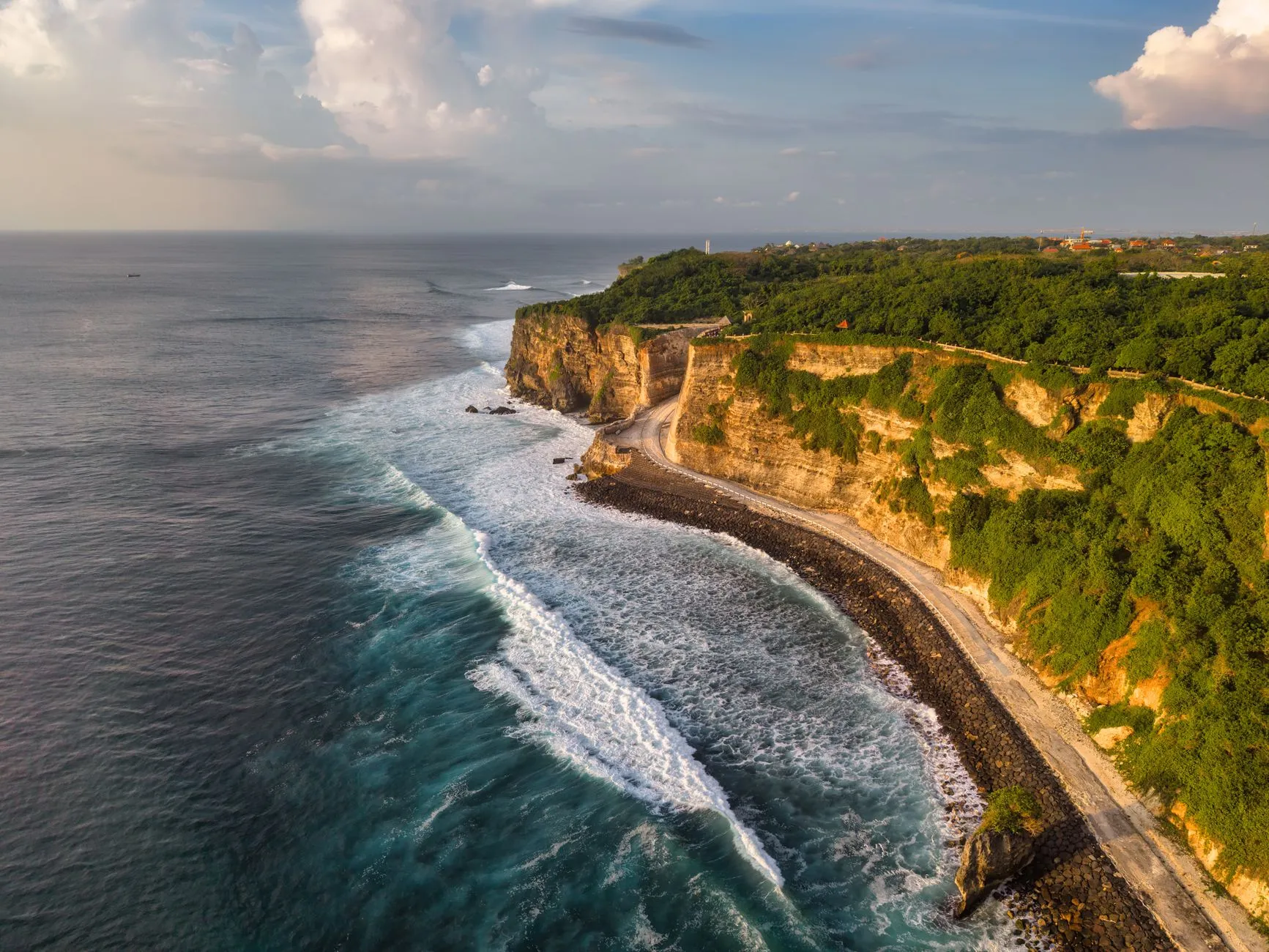
The sand engine from above: a groyne holds the bank together at Coolangatta
Burleigh and the road north
Burleigh's headland is the coast's great theater, a point wave with a hillside of spectators and fifty years of contest history. Keep driving north through the towers of Surfers Paradise and the show ends at The Spit: dunes, dog walkers and empty peaks by the Seaway. One morning at each and you will have seen both faces of the city.
Burleigh Heads
Burleigh Heads · Barreling point over sand
Advanced
The prettiest act of theater in Australian surfing: a national park headland, a hill of Norfolk pines full of spectators, and a right that bends around the rocks and barrels down the Cove over hard-packed sand. Burleigh is where professional surfing grew up: the 1977 Stubbies contest, held right here, invented the man-on-man format the sport still uses. At head high it is a fast, makeable dream; at six foot and beyond it becomes a genuinely serious wave, with a boiling takeoff behind the rocks and a crew that includes every good surfer in the region. If the point is beyond you, the beachbreak peaks toward North Burleigh run mellower. Watching from the hill with fish and chips counts as culture here, and on the big days it is the best seat in the country.
The Spit
Main Beach · Uncrowded beachbreak peaks
Beginner
Drive north until the towers stop: The Spit is the last unbuilt kilometer of the strip, a ribbon of dunes between the Pacific and the Broadwater where the Gold Coast finally exhales. The banks along the sand pumping jetty and the Seaway wall are the draw, shifty peaks with actual space between surfers, a sentence you cannot write about anywhere else on this coast. Dawn here is dog walkers, fishermen and glassy A-frames with the skyline of Surfers Paradise glowing pink behind you. Across the Seaway lies South Stradbroke Island, the wedging left the boat-and-jetski crew guards like a secret. Nothing at The Spit is world class and nothing is crowded, which some mornings is exactly the trade you want.
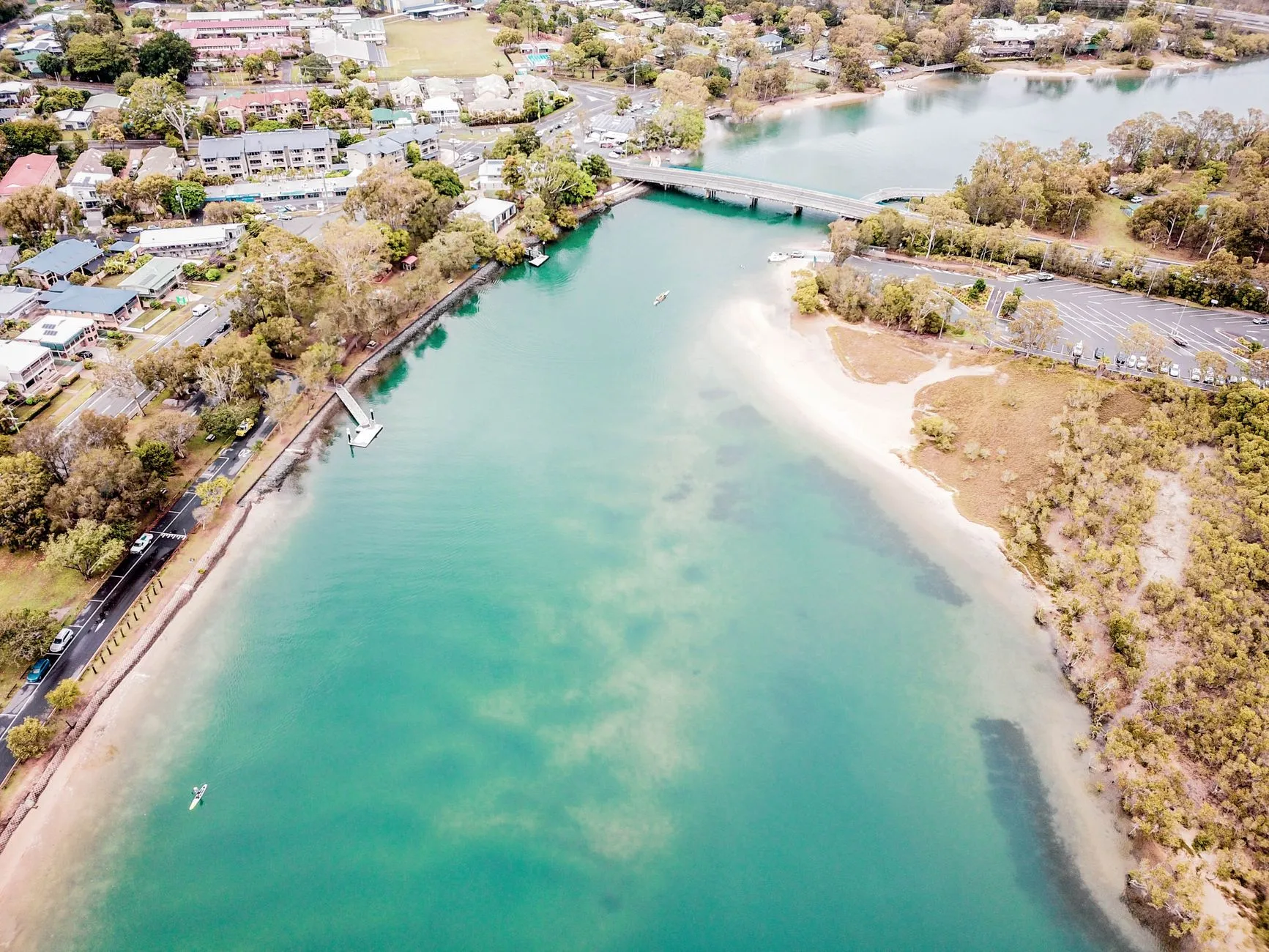
Currumbin Creek behind the Alley: flat water, sand spits and SUP traffic
When to go
A year in Gold Coast
Typical conditions, month by month. The ocean did not sign this table: for live waves, wind and tide, check the app.
January
2-4 ft
77°F · boardshorts · All levels
High summer: packed sand, afternoon northeasterlies and short-fused windswell peaks. Surf at first light, D-Bah handles it best, and keep one eye on the cyclone maps.
February
3-6 ft
79°F · boardshorts · Advanced
Cyclone season proper. When a system parks in the Coral Sea, the Superbank turns into the wave from the videos; between systems it is hot, humid and lazy northeast slop. Water at its warmest.
March
3-6 ft
79°F · boardshorts · Advanced
Historically the money month: cyclone swell still live, the first south lines arriving, and the world tour's contest window at Snapper. If Kirra is going to break this year, it usually starts now.
April
3-5 ft
77°F · boardshorts · Intermediate
The cyclones bow out and the southern storms take over the job. Mornings turn offshore with the first southwesters, Easter fills the beaches for a fortnight, and the points start their long groomed season.
May
3-5 ft
73°F · spring suit · Intermediate
Many locals' favorite: solid south swell, light offshore mornings that last until lunch, water still warm enough for a spring suit, and the tourist crowds gone. The points are machines.
June
3-5 ft
70°F · 3/2 or spring · Intermediate
Winter opens with westerly offshores that can blow all day, grooming every point on the coast. South swells wrap in around the headlands, the crowds thin midweek, and a 3/2 in the morning buys you glass until dark.
July
2-5 ft
68°F · 3/2 or spring · All levels
Midwinter and the locals' secret: the coldest water of the year, but the cleanest coast. Small, perfect walls run down every point under all-day offshore. Bring rubber and enjoy the least crowded Superbank you will ever see.
August
2-4 ft
68°F · 3/2 or spring · All levels
Late winter runs small and immaculate: two-foot Superbank drills for longboarders, whales breaching beyond the lineup, and short queues by local standards. The light at dawn through offshore spray is the coast's best photograph.
September
2-3 ft
70°F · spring suit · Beginner
The smallest month on average, and the kindest: spring sunshine, learner waves at the Alley and Rainbow Bay, and the afternoon seabreeze returning. If you are here to learn, this is your month.
October
2-4 ft
72°F · spring suit · All levels
Northeast windswell returns and the wedges wake up: D-Bah, Palmy's jetties and The Spit all prefer this angle. Warmer water, longer days, and storm cells building over the hinterland by evening.
November
2-4 ft
73°F · boardshorts · All levels
Warm, pulsing northeast swell and the first serious humidity. Late in the month, schoolies week floods Surfers Paradise with graduates, another reason the far ends of the coast surf better.
December
2-4 ft
77°F · boardshorts · All levels
Summer holidays: small waves, hot sand, crowds everywhere by nine. Surf at first light before the northerly, then hide from the sun. The cyclone map is worth checking daily from Boxing Day on.
Good to know
When is the best time to surf the Gold Coast?
February to June is the prime window. Cyclone season runs December to April and delivers the famous days, the ones that turn the Superbank and Kirra into the waves from the films; from April the southern storms take over with cleaner, more consistent lines. Winter, June to August, is small but immaculate: westerly offshores all day, points like machines and the thinnest crowds of the year. Remember the seasons are inverted: the coast does its best work while Europe's summer goes flat, and there is genuinely no month without rideable waves.
How bad is the crowd at the Superbank, really?
As bad as you have heard, and then some: on a good swell several hundred people surf the stretch from Snapper to Kirra, world champions among them, and the wave rewards exactly their level of surfing. Treat it as a spectacle first and a session second. Realistic options exist: surf it at dawn, sit halfway down the point for the reforms, come midweek in winter, or simply cross Point Danger to D-Bah, where the same swell serves five times more waves per surfer. What does not work is paddling to the top of the point and hoping: the pecking order there is decades old and enforced with total politeness and total firmness.
Do I need a wetsuit on the Gold Coast?
For most of the year, no: from November to May the water sits between 23 and 26°C and boardshorts or a swimsuit with a rash vest is the whole kit. Winter is milder than the postcards admit but real: June to September the ocean drops to 20 or 21°C and the offshore wind bites at dawn, so most surfers wear a spring suit or a light 3/2 for morning sessions and are back in boardshorts by lunchtime. No boots, no hood, no gloves, ever. If you pack one piece of rubber, make it a 2 mm spring suit.
Is the Gold Coast good for beginners?
Excellent, as long as you respect the sorting. Currumbin Alley is one of the best learner waves in Australia, a slow rolling right with schools working it every morning; Rainbow Bay and Greenmount offer the same kindness with a point-wave shape, and The Spit gives you empty peaks to practice on. Lifeguards patrol the flagged beaches year round and the water is warm enough that falling is half the fun. The sorting: the Superbank on a swell, Kirra when it breaks and Burleigh's point are not beginner waves in any language, and paddling out there too early is the fastest way to meet the crowd at its least charming. Learn at the soft waves, watch the famous ones, and the coast works perfectly.