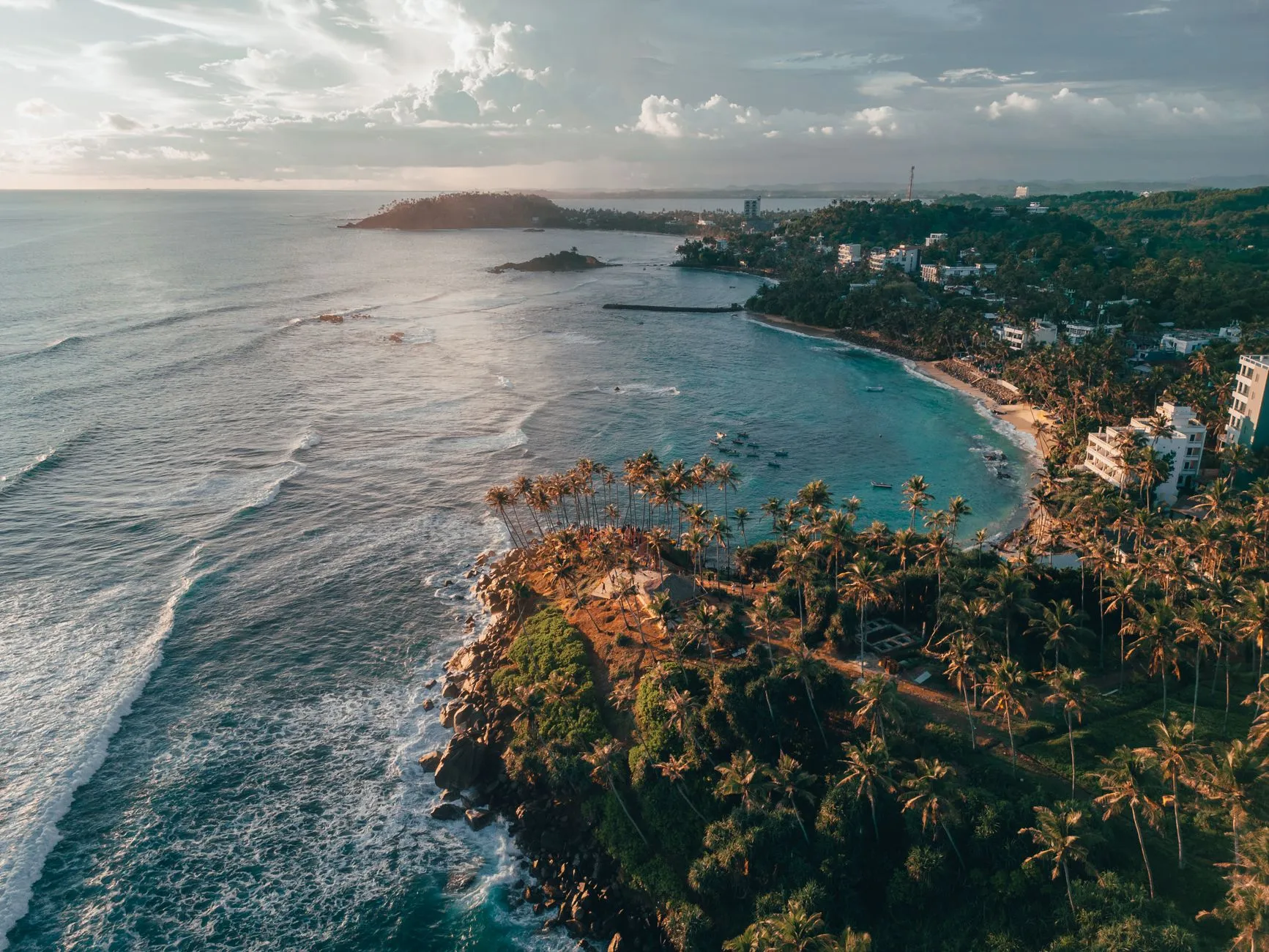
Waves and coastline at Arugam Bay

Guides · Sri Lanka

Arugam Bay

The wave that put Sri Lanka on the map

Arugam Bay is a right-hand point break on Sri Lanka's east coast, just south of the town of Pottuvil, and the wave that put the island on the world's surf map. Surfers have been riding Main Point since the overland-trail days of the 1960s and 70s, and the setup has not changed: swell from the southern Indian Ocean wraps around a sandy boulder headland and peels down it for two hundred meters and more, sectioning into walls with the occasional cover-up on the right day.

What keeps people coming back is the pace of the place as much as the wave. The water sits around 28 degrees all year, Main Point walls up rather than throws, and a long ride ends on sand instead of reef. Behind the beach, the village runs entirely on surf season: one sandy street of guesthouses, board racks and rice and curry that fills from May to September and goes quiet the rest of the year.

Intermediate

Wave
Right-hand point break over sand and boulders, long walling rides
Best swell
S to SE Indian Ocean groundswell, waist-high to overhead
Best wind
W to NW, offshore most mornings in season
Best tide
Mid tide. Low bares the boulders at the top of the point
Season
May to September, peaking June to August. The rest of the year the east coast sleeps
Level
Intermediate. Beginners stay on the inside and at the neighboring points

How the wave breaks

The takeoff sits at the top of the point, by the rocks off the headland, where the sets stand up over the boulders and offer a steep but honest drop. The first section is the fastest part of the wave: a walling stretch that asks for two or three quick pumps before the face opens up and slows to carving speed. On smaller days this is where most of the ride happens; on better swells it is only the beginning.

From there the wave bends down the point into the long middle section, the part that made Arugam Bay famous: a wall that peels for a hundred meters and more, quick enough to keep you working, soft enough to let you pick your line. On good days it connects all the way through, two hundred meters and more of riding, with the occasional cover-up when a section runs ahead over a shallower bank. The inside reforms over sand into a slower, friendlier wall where longboarders and improvers get the best of it.
When it works

Arugam Bay runs on the southwest monsoon, which sounds backwards until you look at the map. From May to September the monsoon wind blows across the island from the southwest: it blows out the south and west coasts, but it arrives at Arugam Bay offshore, grooming the point morning after morning while long-period groundswell from the southern Indian Ocean wraps in from the south to southeast. June to August is the peak, with the most consistent swell and the cleanest mornings; the wind often turns cross or onshore around midday, then the surface can glass off again toward evening. From October the swell fades and the northeast monsoon takes over, the south-west coast wakes up, and by November the village has half closed, the point mostly a slow, empty reform until the cycle turns again in spring.

The lineup and the take-off

Getting out is as simple as point breaks come: walk up the sand to the top of the point, jump off the beach beside the rocks, and a short paddle puts you in the lineup. What surprises people is the sweep. A steady current runs down the point, and each wave carries you further along it, so the routine is to ride, come in over the sand, and walk back up rather than grind out a paddle against the drift. Watch the locals: nobody paddles up the point when there is a beach to walk on.

In July and August the takeoff gets seriously crowded, with everyone from traveling pros to surfers on their first point break sitting in the same fifty meters, and sets that arrive after long lulls. That combination rewards patience over hustle: pick a spot slightly down the line from the main pack, wait out the lull, and take the walls that come through to you. There is enough wave down the point for everyone once it stands up, and one long ride here is worth five scrambled takeoffs at the peak.

Getting there

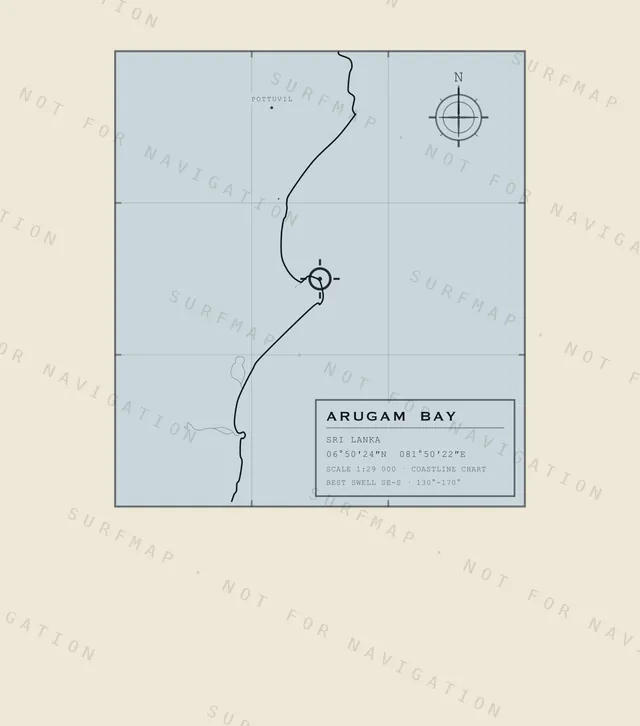
Arugam Bay village strings along the bay just south of Pottuvil, on Sri Lanka's east coast, and the point sits at the southern end of the beach. From most guesthouses it is a short walk or a few minutes by tuk-tuk to the top of the point, which is how nearly everyone travels here: boards sideways across the rack and a driver who knows the surf report better than you do. Getting to the coast is the long part. Colombo is roughly seven hours away by road, through the hill country or around the south; a small east-coast airstrip cuts that to a short domestic hop when flights are running, and many surfers simply break the trip with a few days on the south coast on the way.

Hazards

  • Boulders under the takeoff, shallowest at low tide: fall flat and cover your head early in the ride
  • Sea urchins live between the rocks, watch where you put your feet at the top of the point
  • The sweep down the point moves you 200 meters before you notice, come in and walk back instead of fighting it
  • Peak-season crowds of every ability: look down the line before you go and give the wave to whoever is deepest
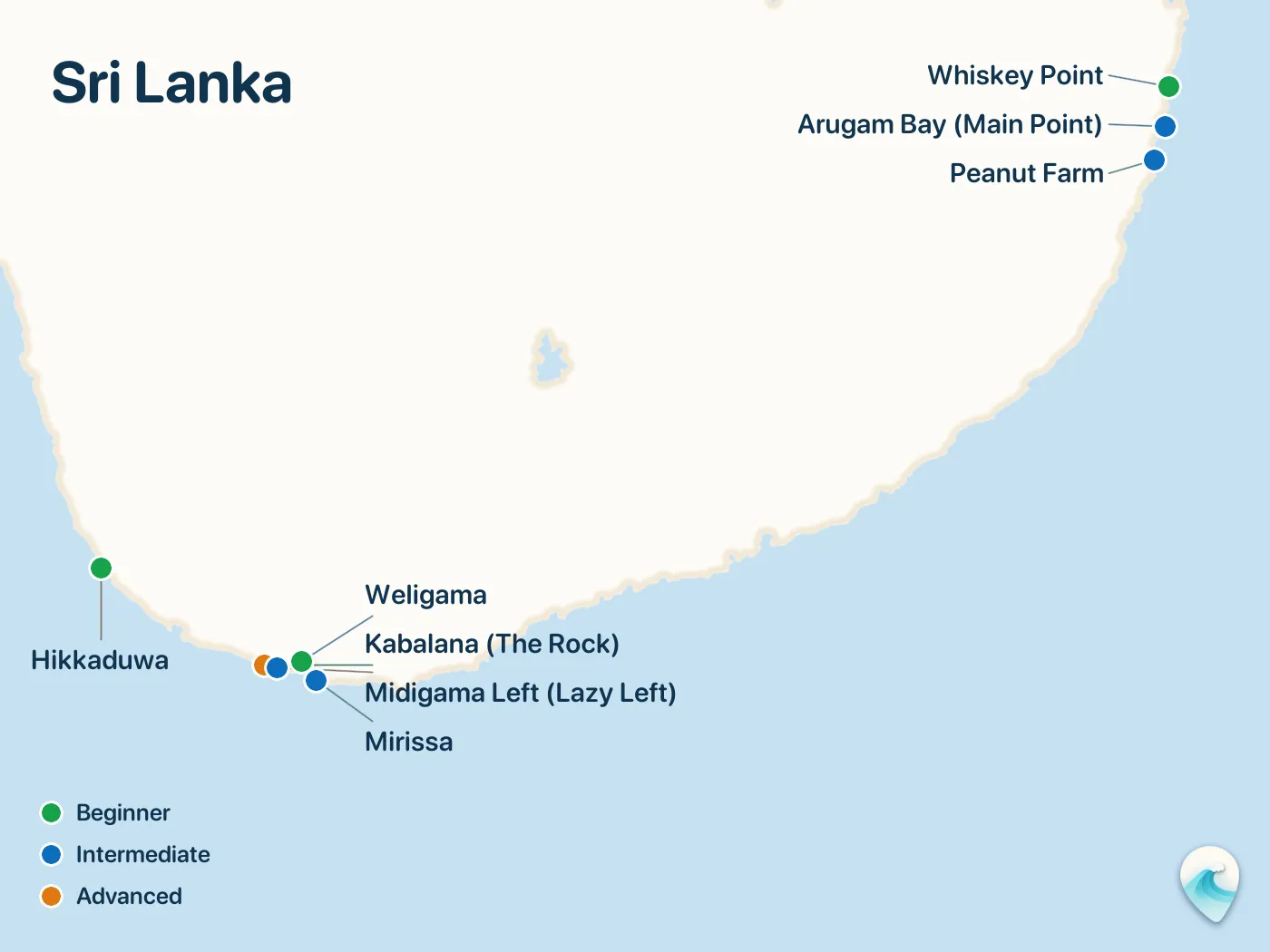
Map of the Sri Lanka surf spots described in this guide, with numbered markers

Part of the Sri Lanka surf guide

An honest guide to surfing Sri Lanka: the 8 spots that matter across two coasts, from Weligama's learning bay to Arugam Bay's long right point, month-by-month seasons, and what to expect in the water.

Read the full guide →

Good to know

Can beginners surf Arugam Bay?

Not on Main Point proper when there is real swell: the takeoff is over boulders, the first section moves fast, and the lineup expects you to make your waves. The honest path is the inside reform on small days, and above all the neighboring points: Whiskey Point and Peanut Farm are the learning waves, softer, over friendlier bottoms, with surf schools working every morning in season. Build confident turns there first, then paddle out at Main Point when it is small and the crowd is thin.

When is the surf season at Arugam Bay?

May to September, with June to August as the peak: the south to southeast groundswell arrives most consistently then, and the southwest monsoon blows offshore through the mornings. April and October can still produce on their best days, but they are a gamble. From November to April the east coast goes quiet and the island's surf moves to the south-west coast, from Hikkaduwa down through Weligama and Mirissa, so no single season covers all of Sri Lanka. If you want both coasts on one trip, aim for the changeover months and keep plans loose.

What board should I bring to Arugam Bay?

A standard shortboard covers most of the season, and a step-down or a fish earns its place on the smaller days, when the point walls gently instead of throwing. A step-up can stay home: the wave is rarely heavy even at overhead, and trim speed through the long walls matters more than paddle power. Longboarders love the inside, where the reform peels slow and even. Rentals and ding repair are easy to find in the village in season, so traveling light works too.