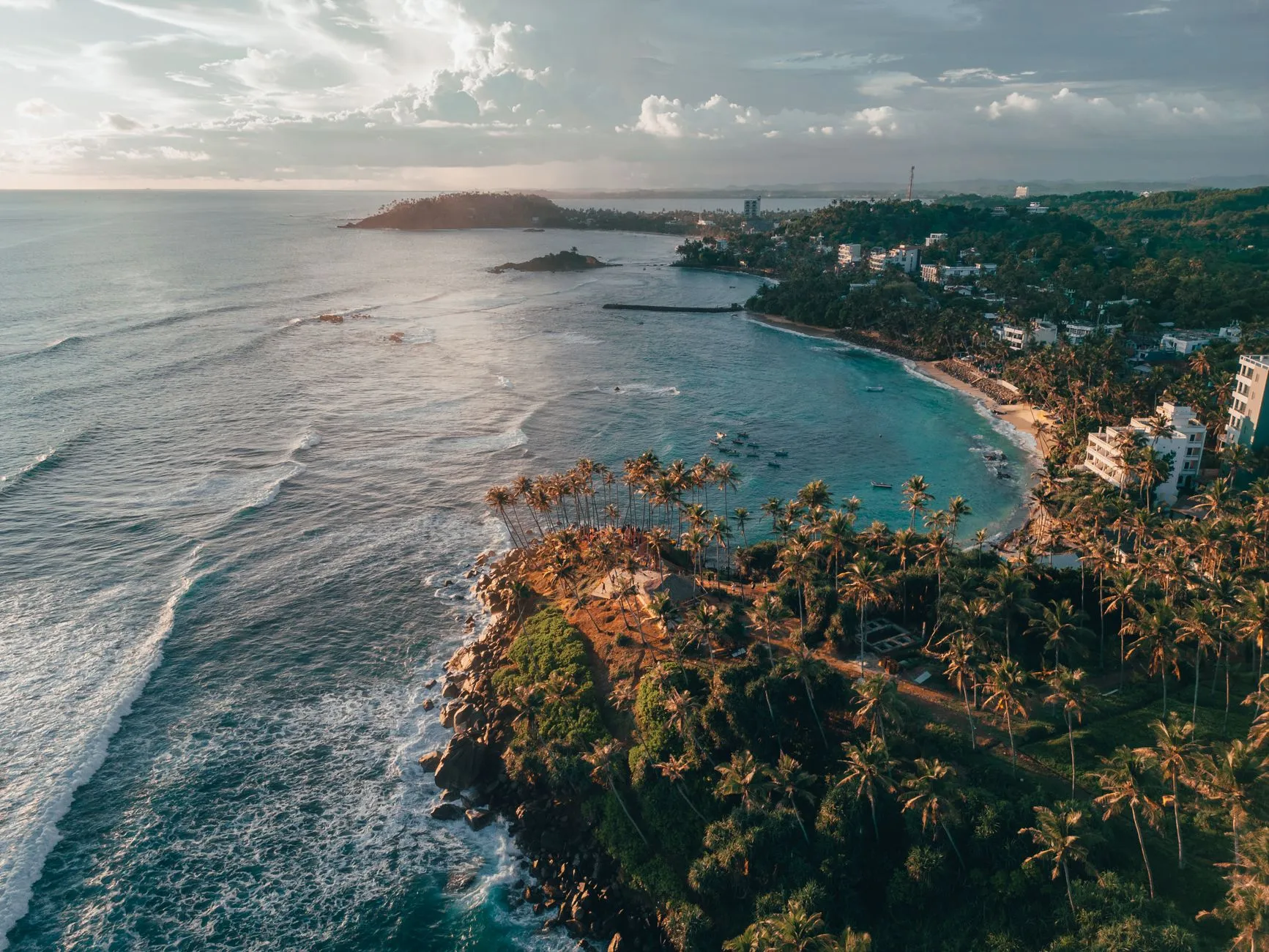
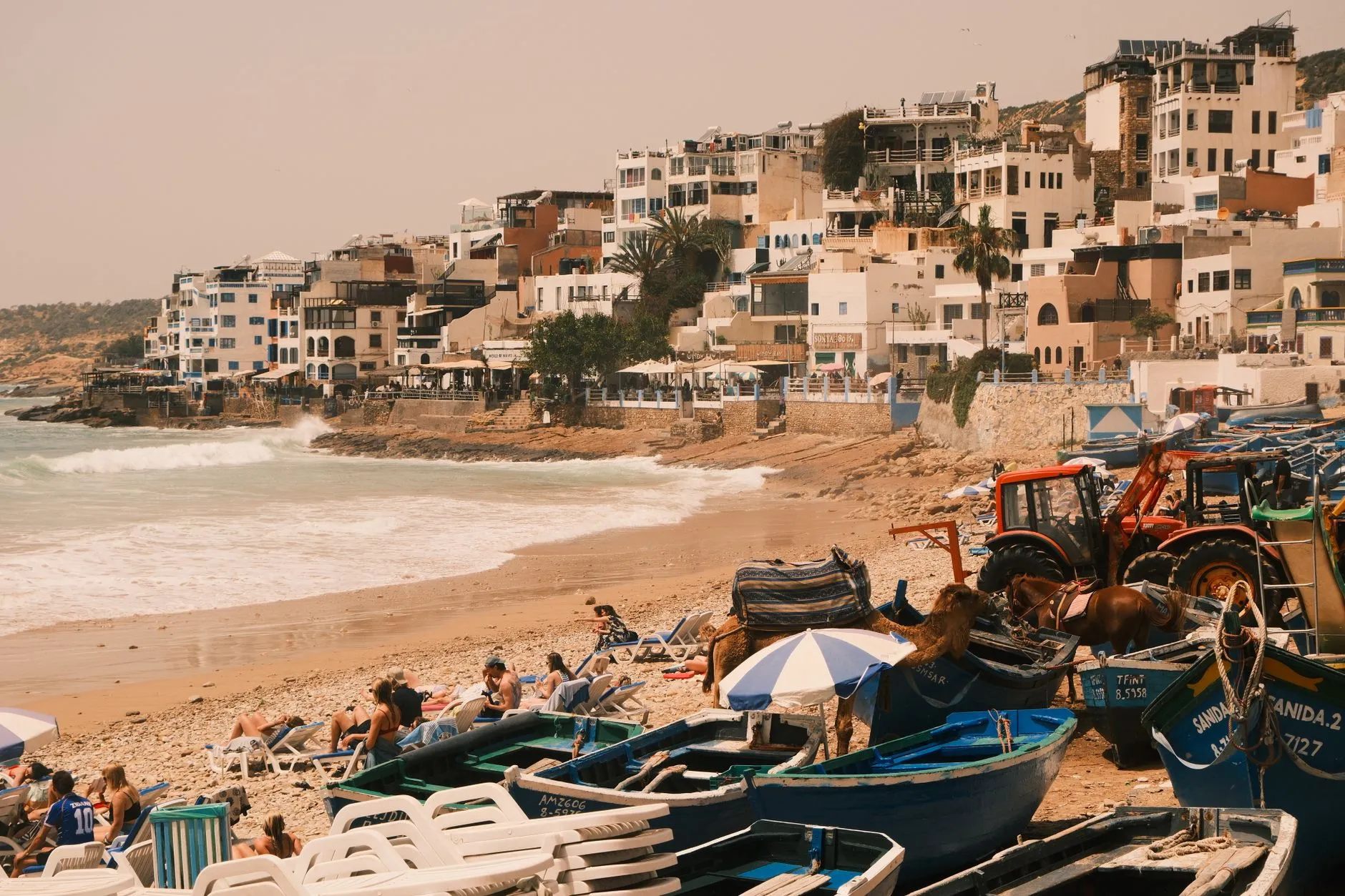
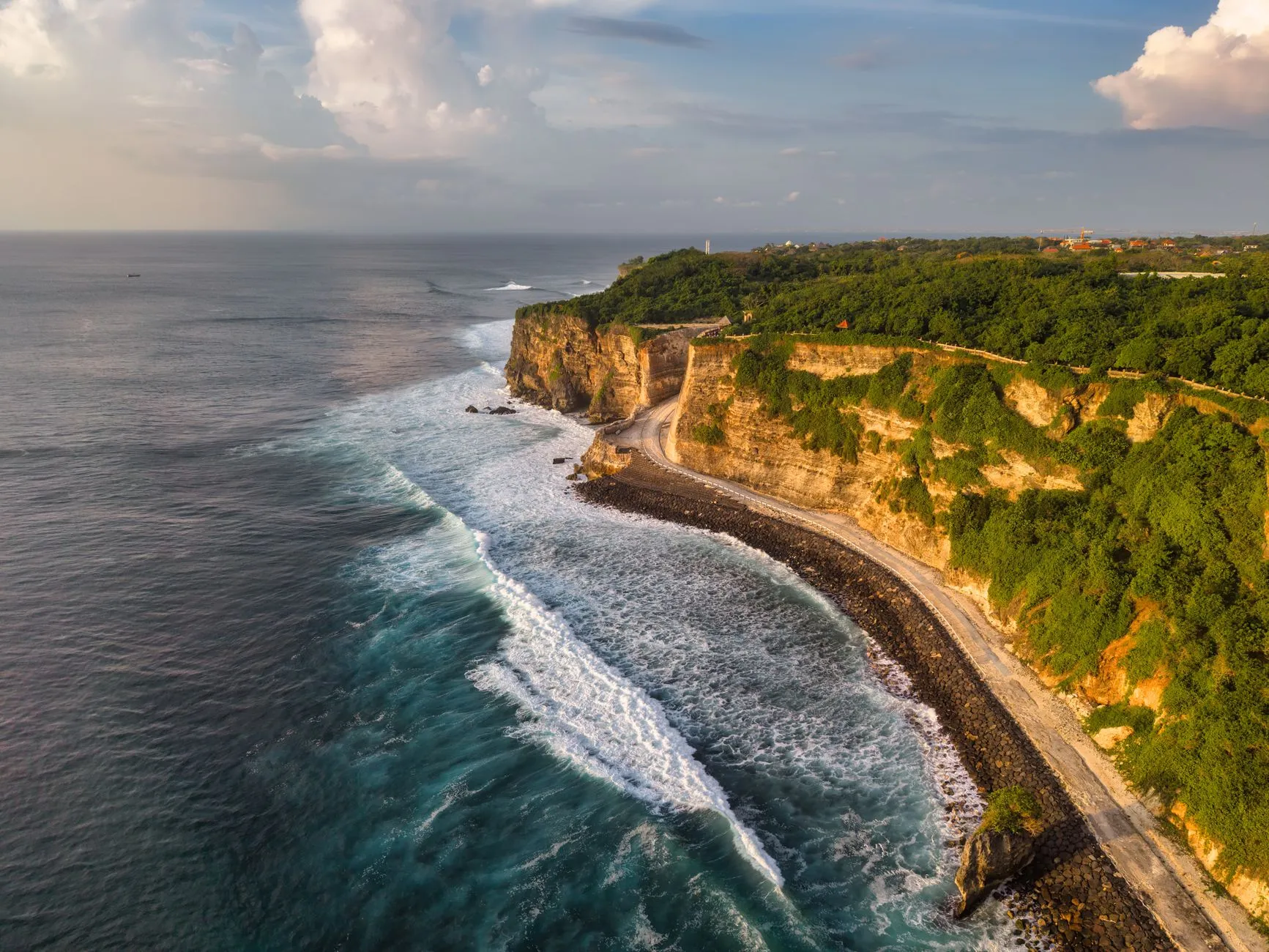
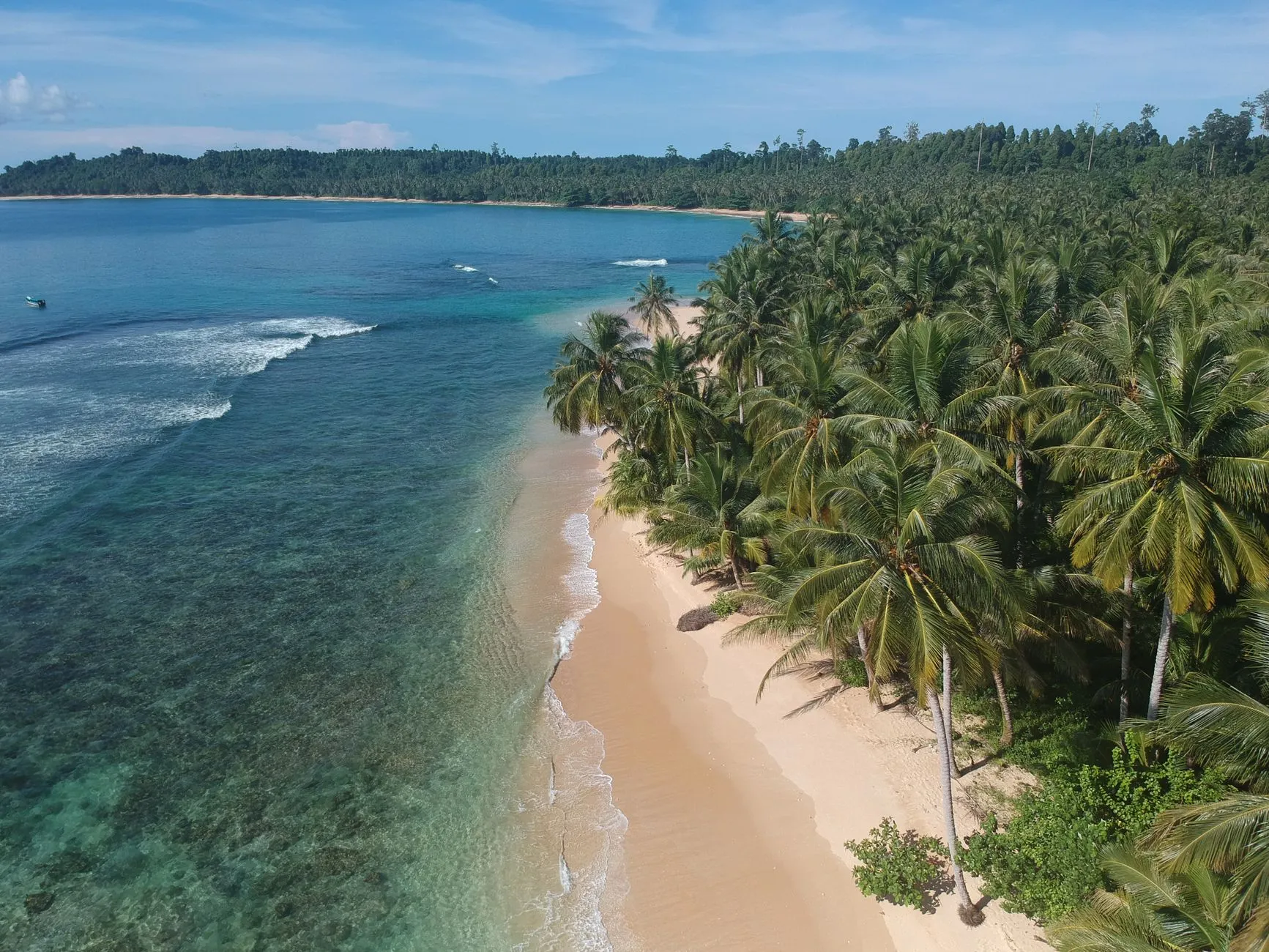
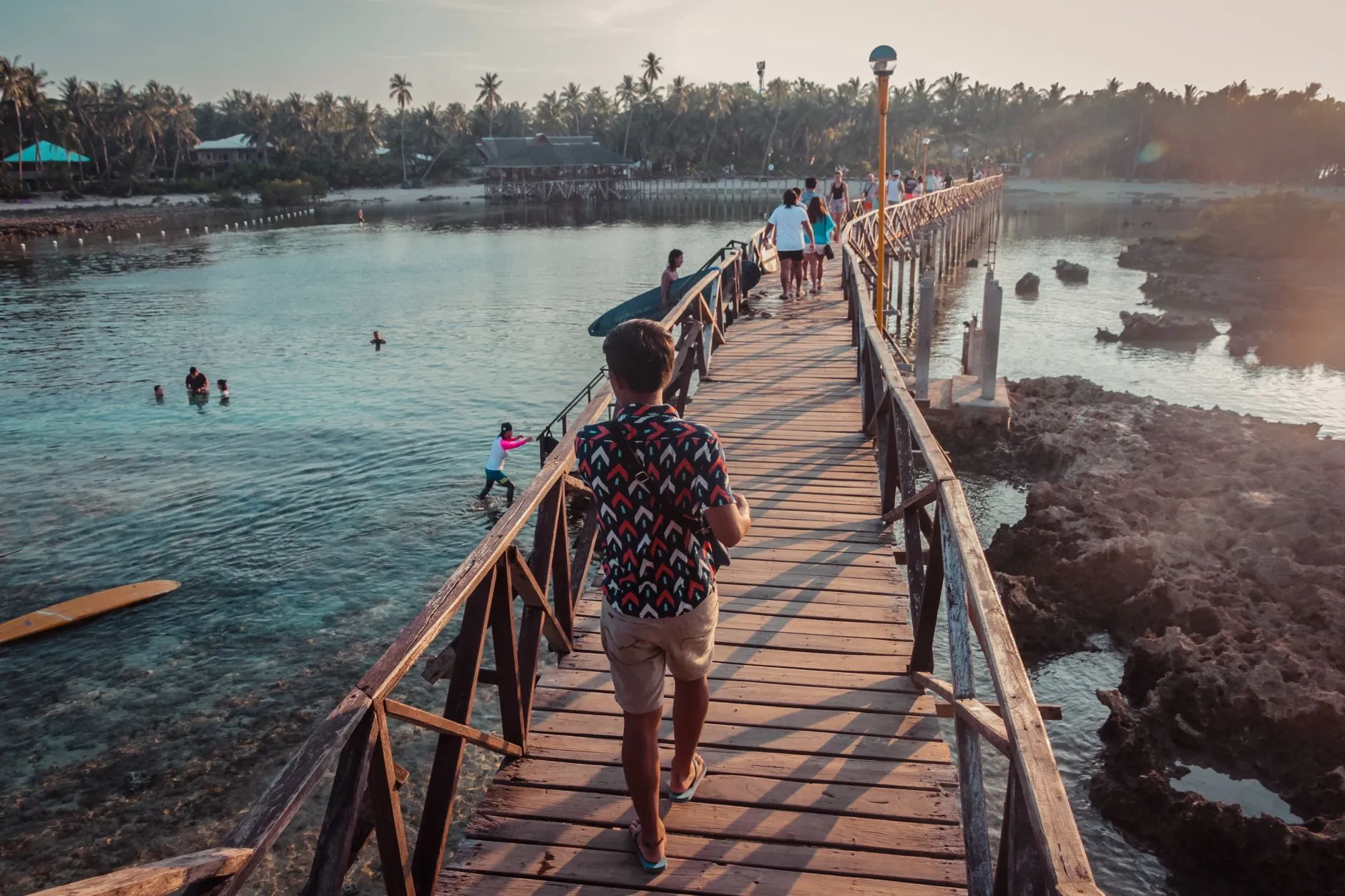
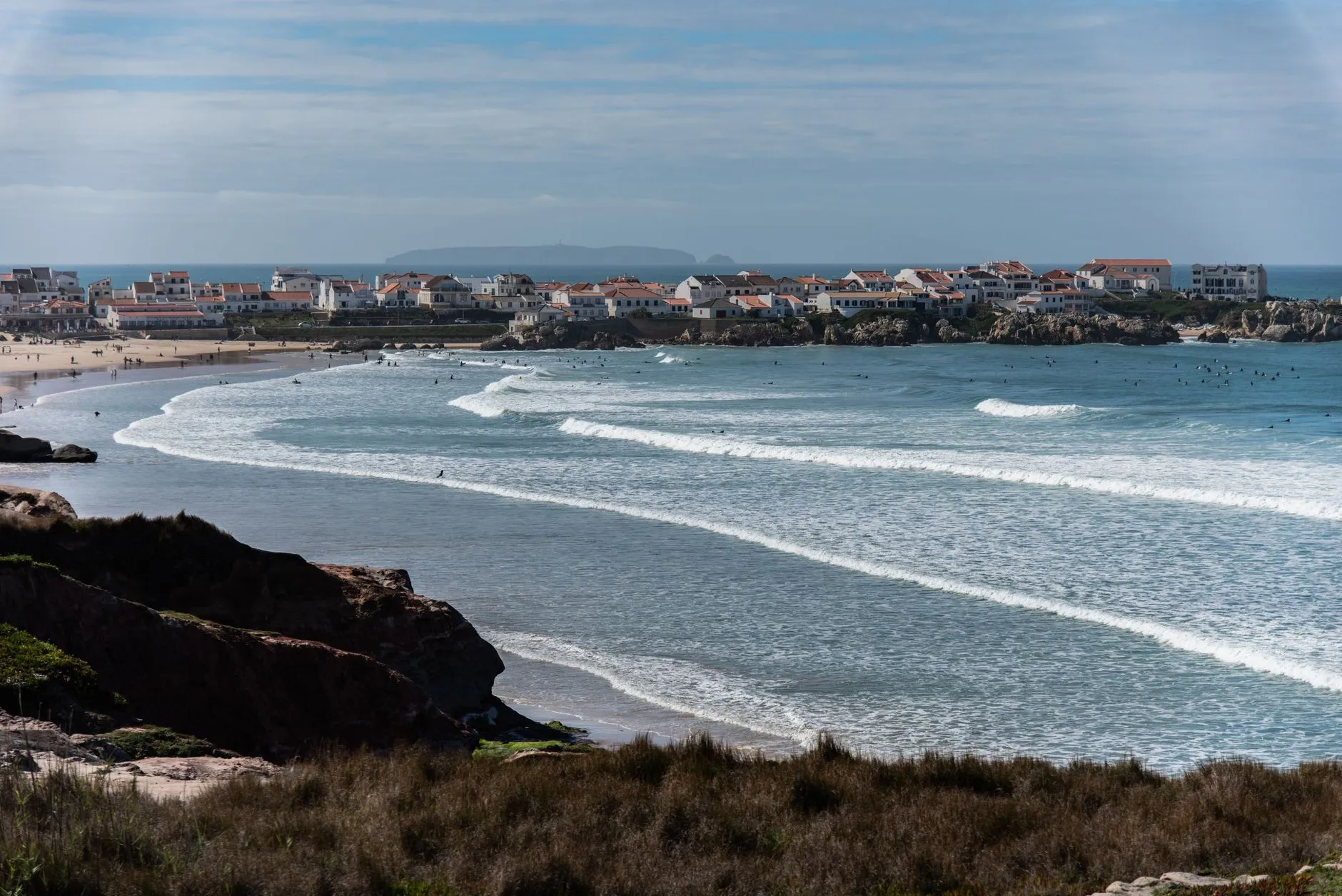
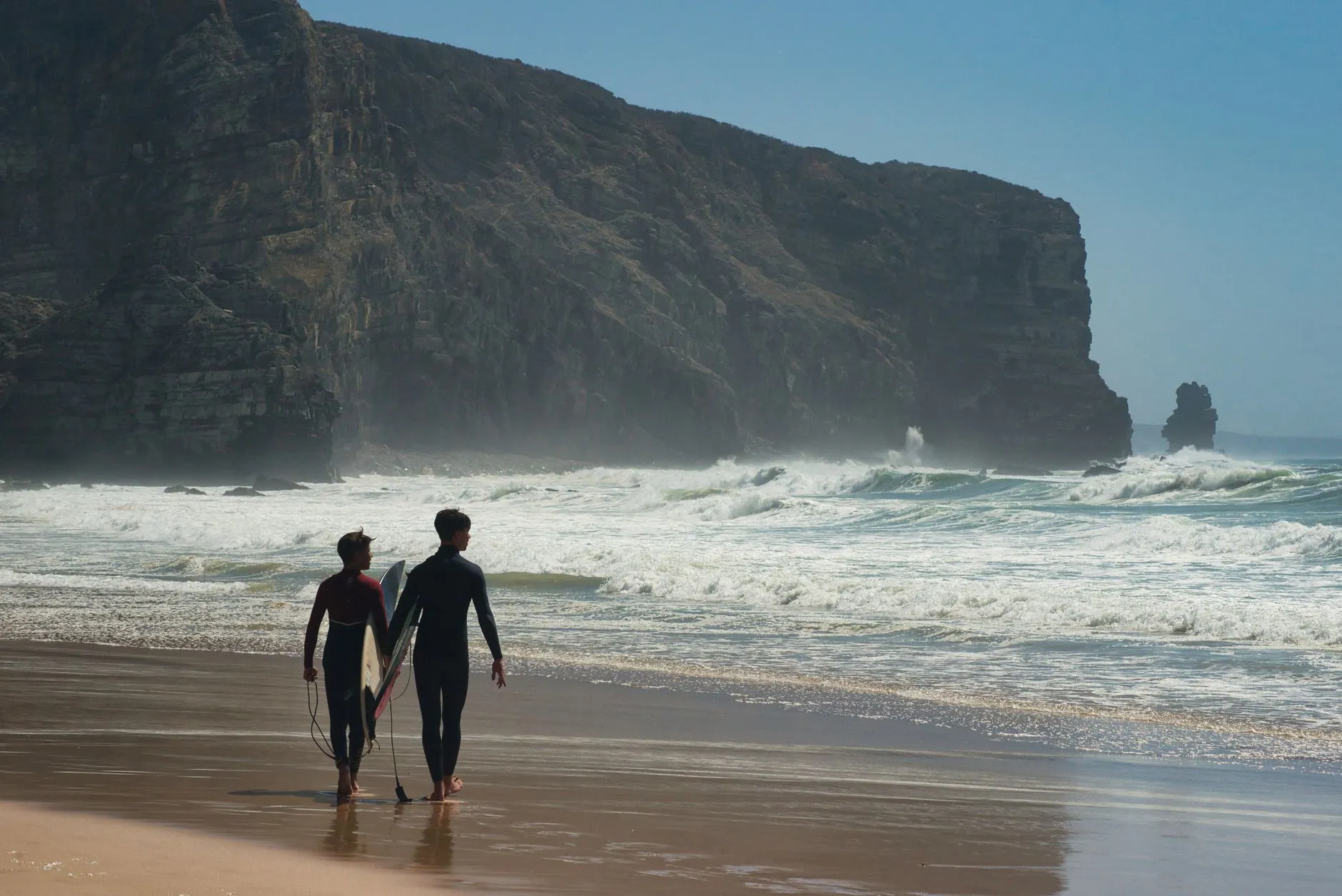
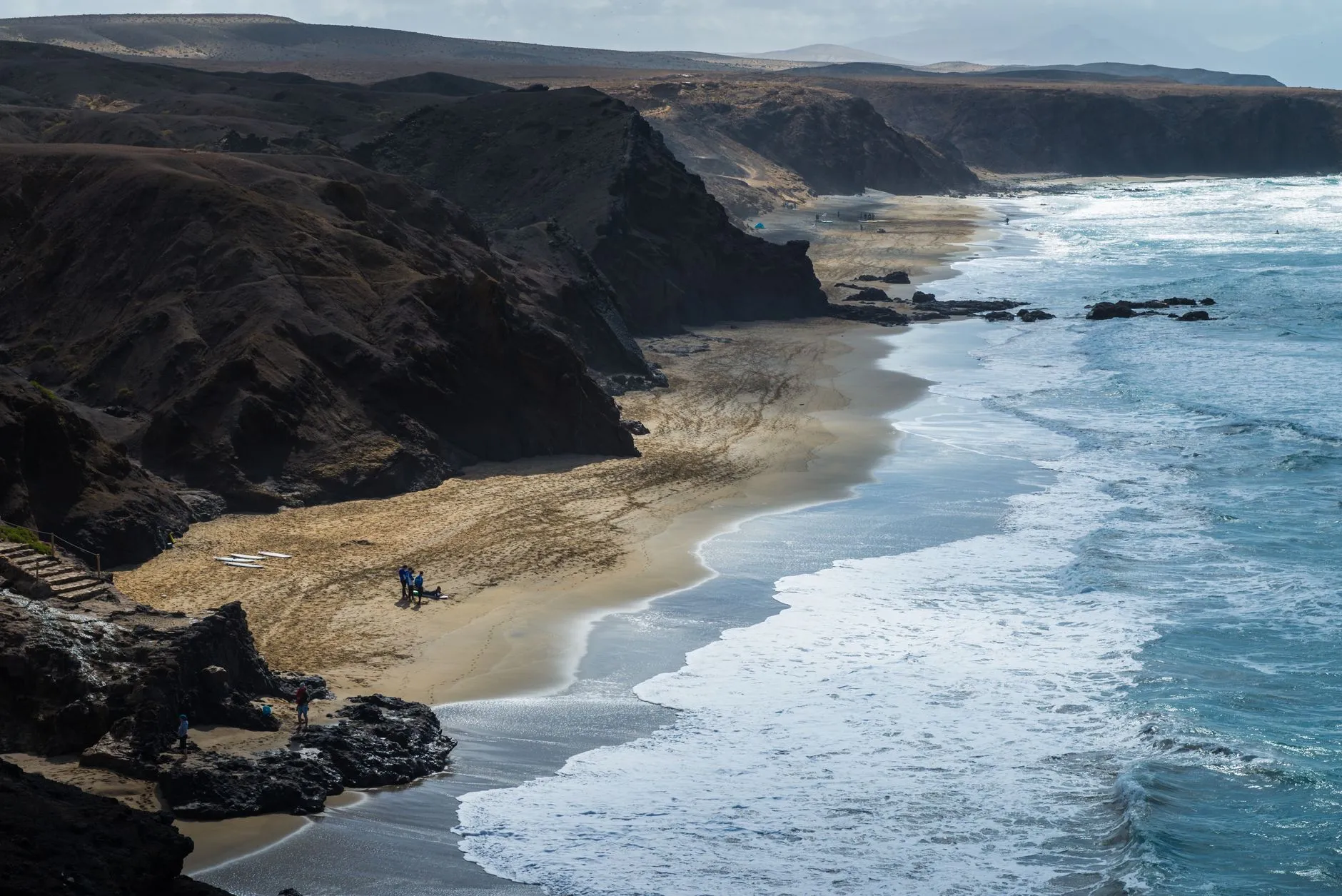
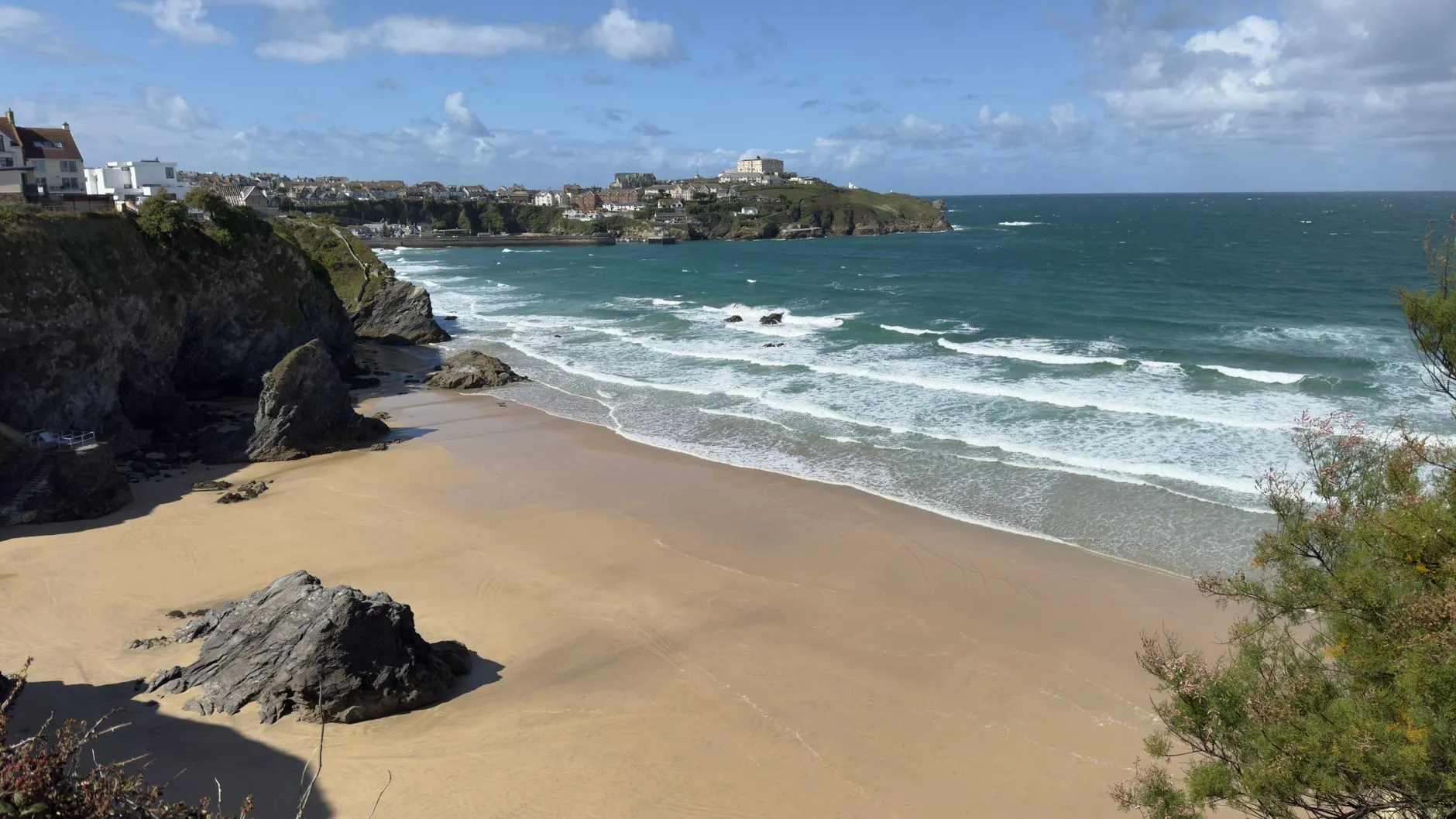
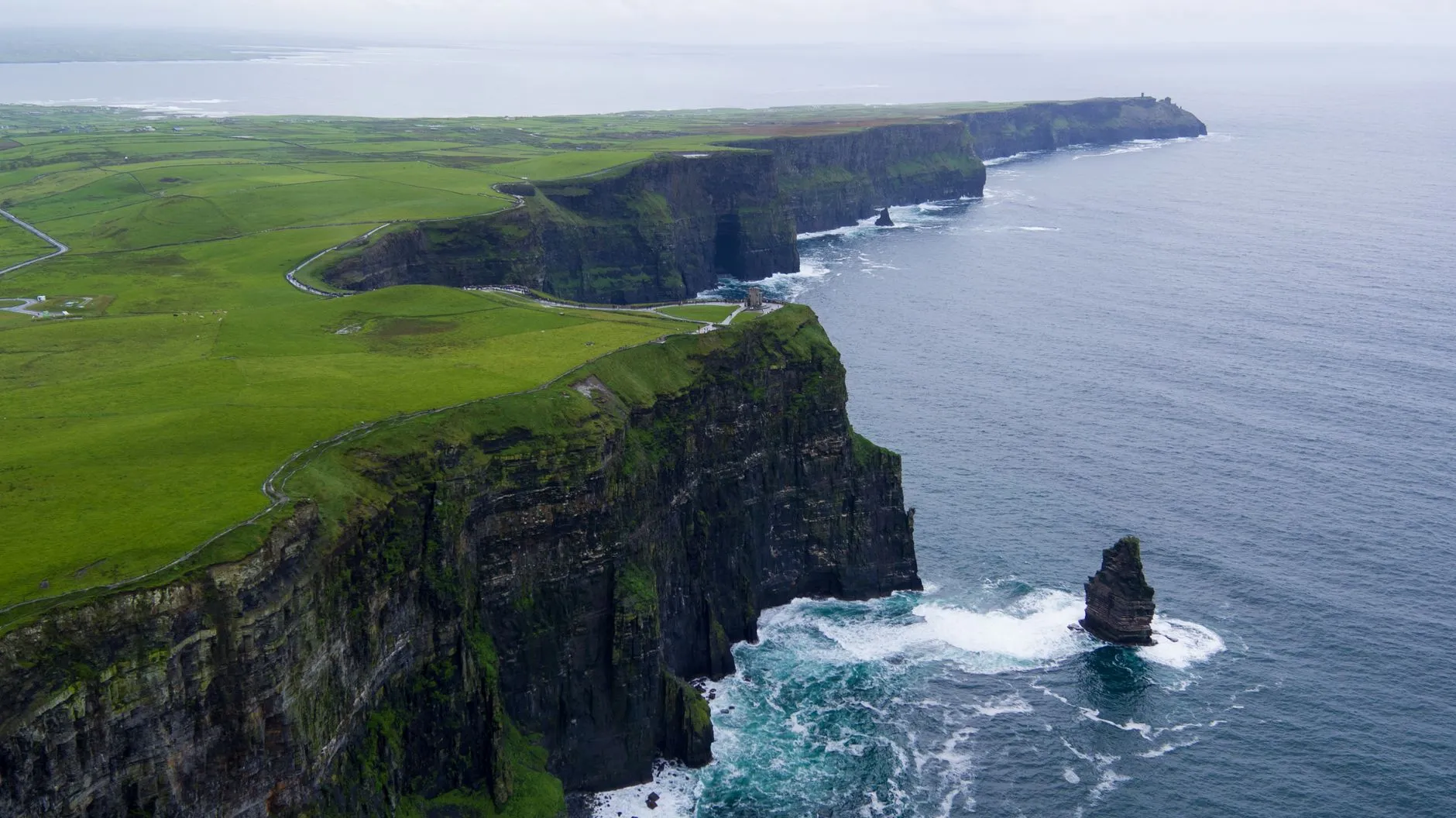
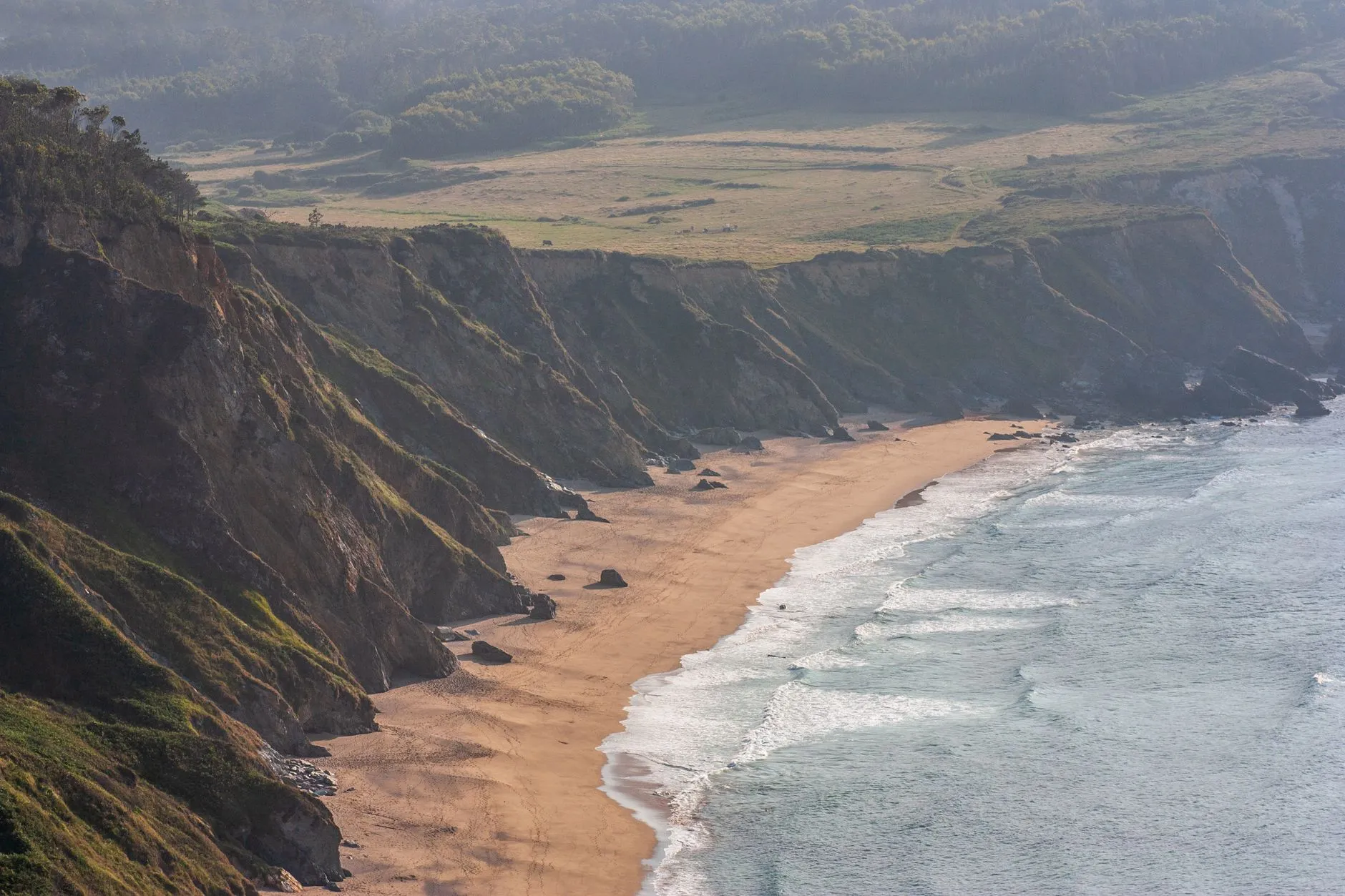
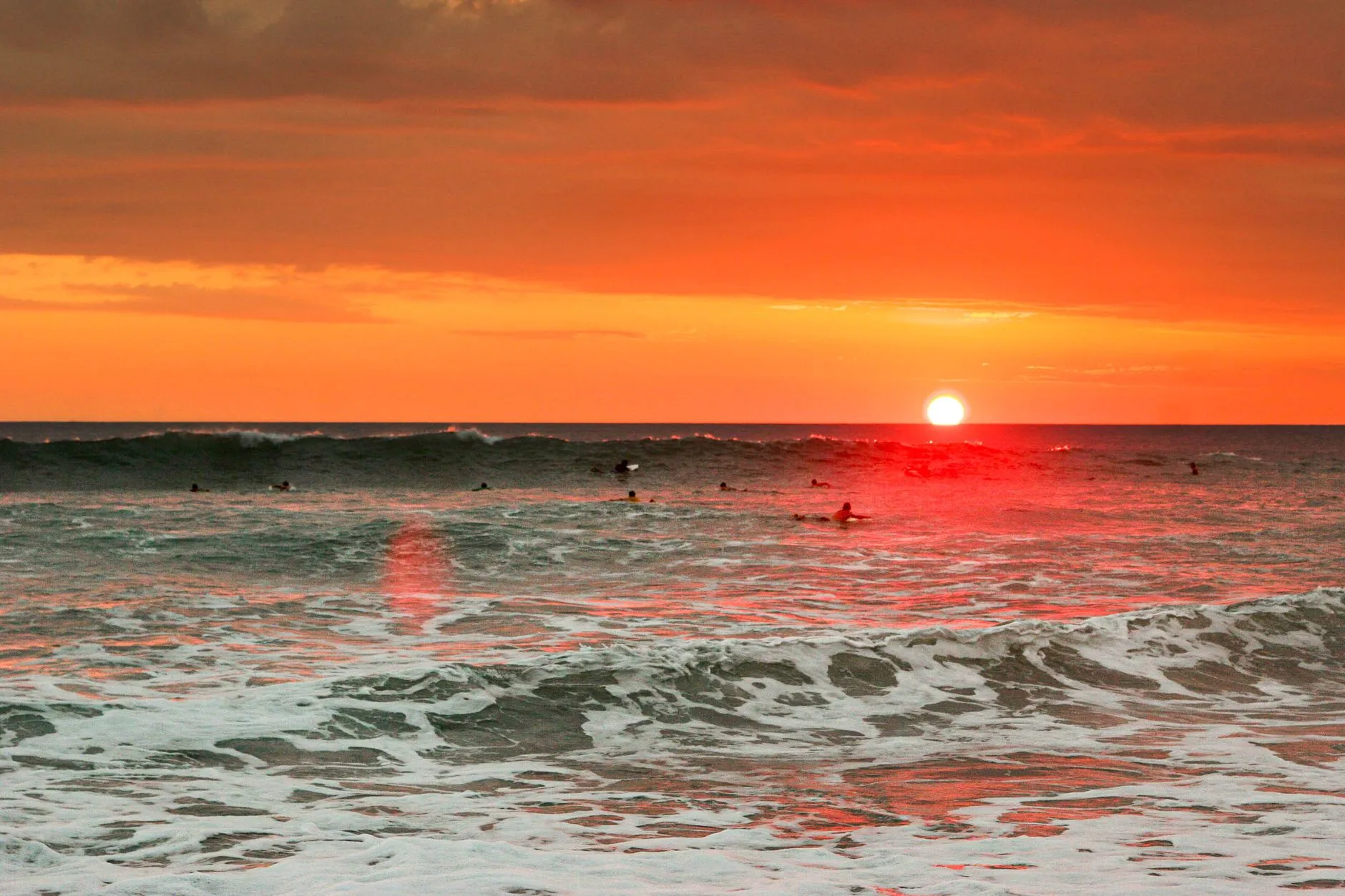
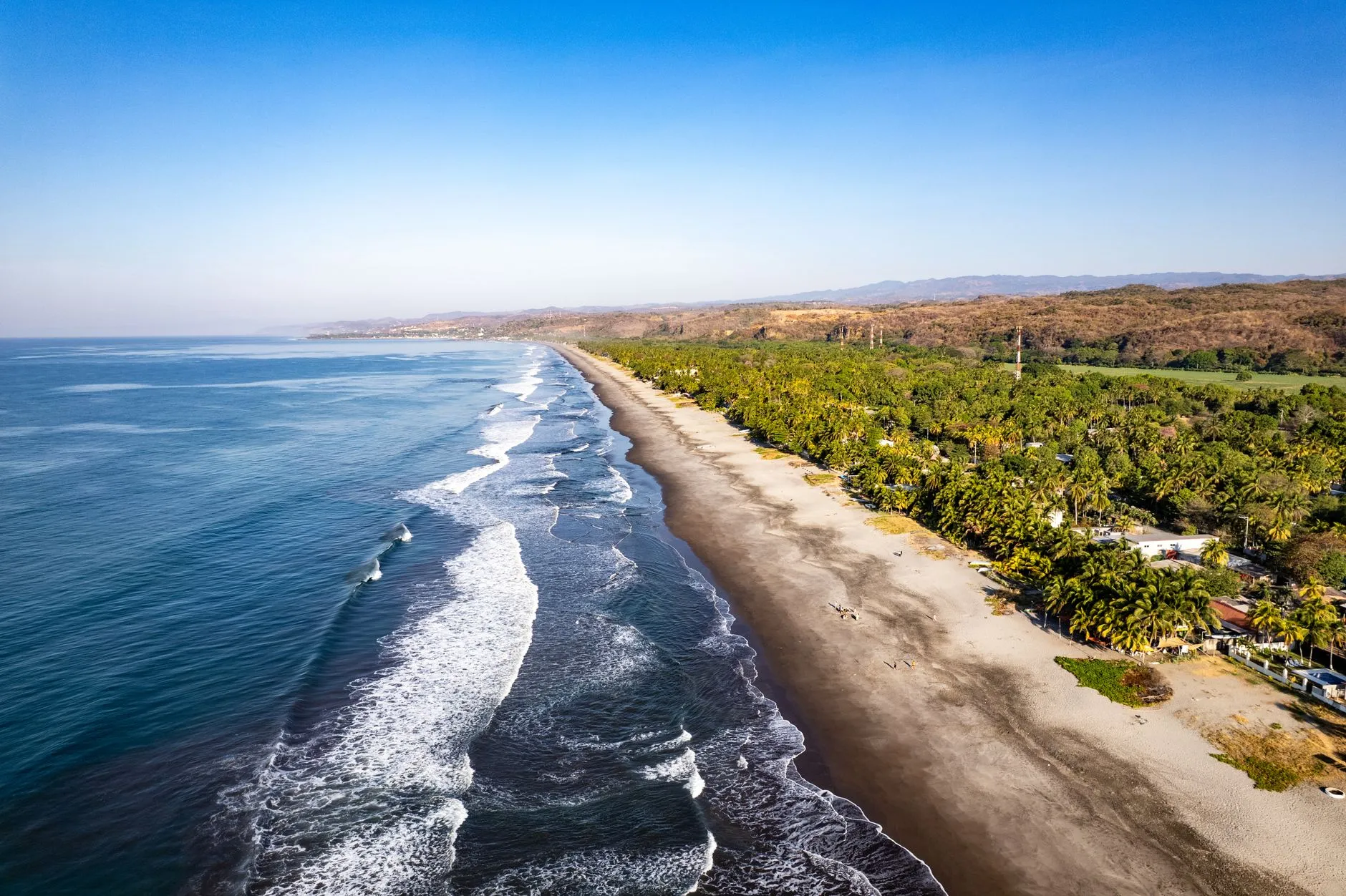
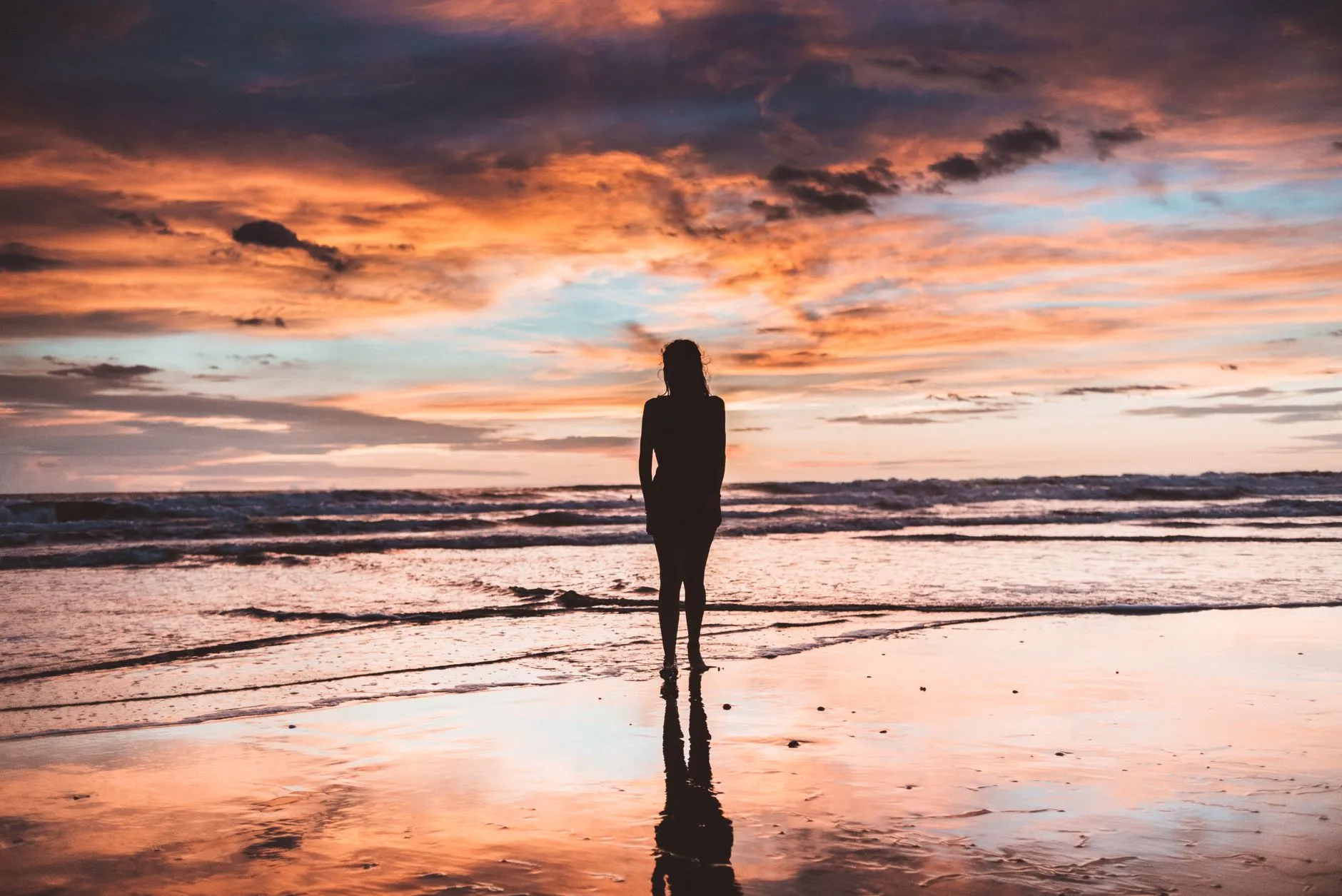
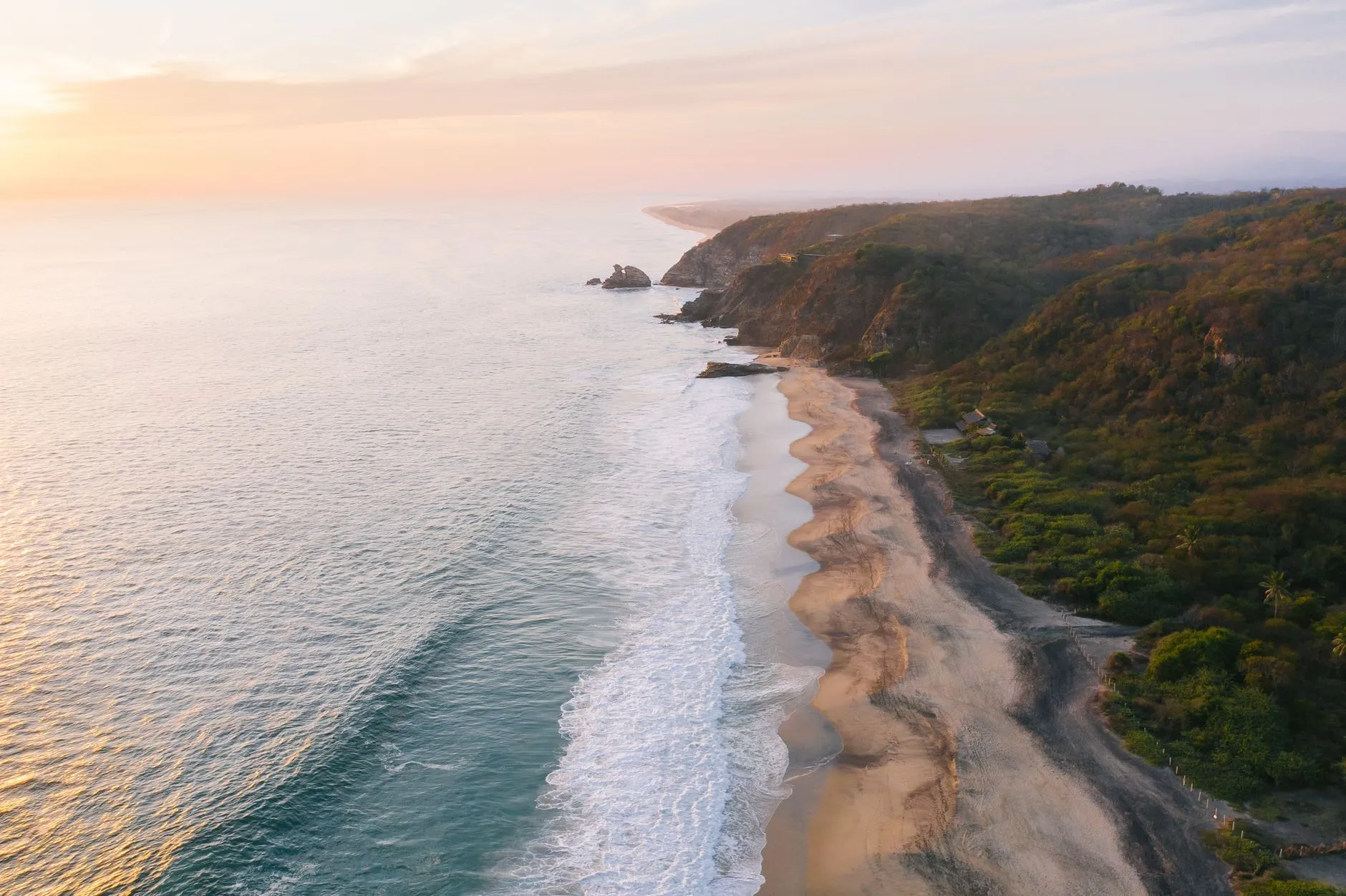
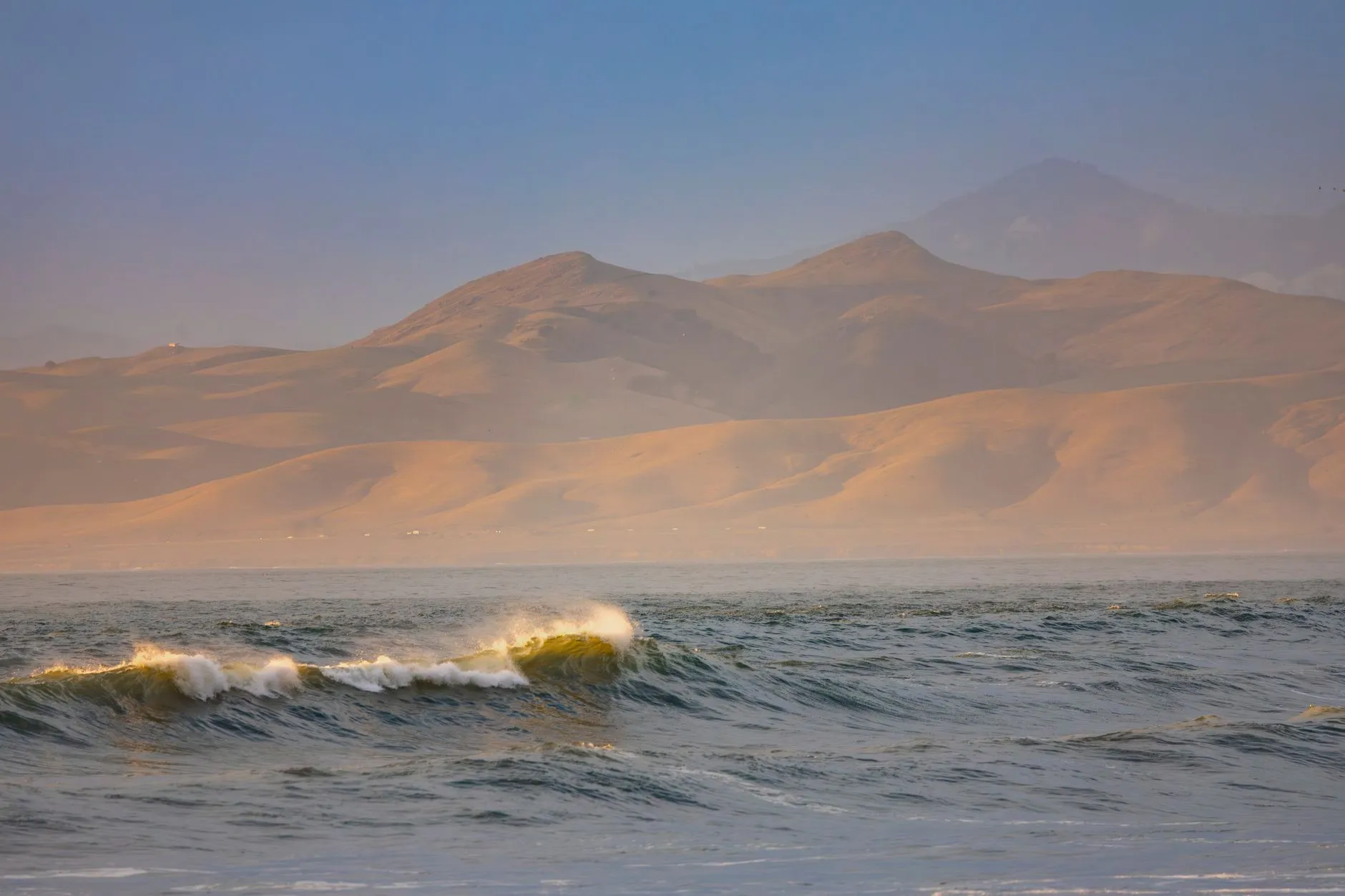
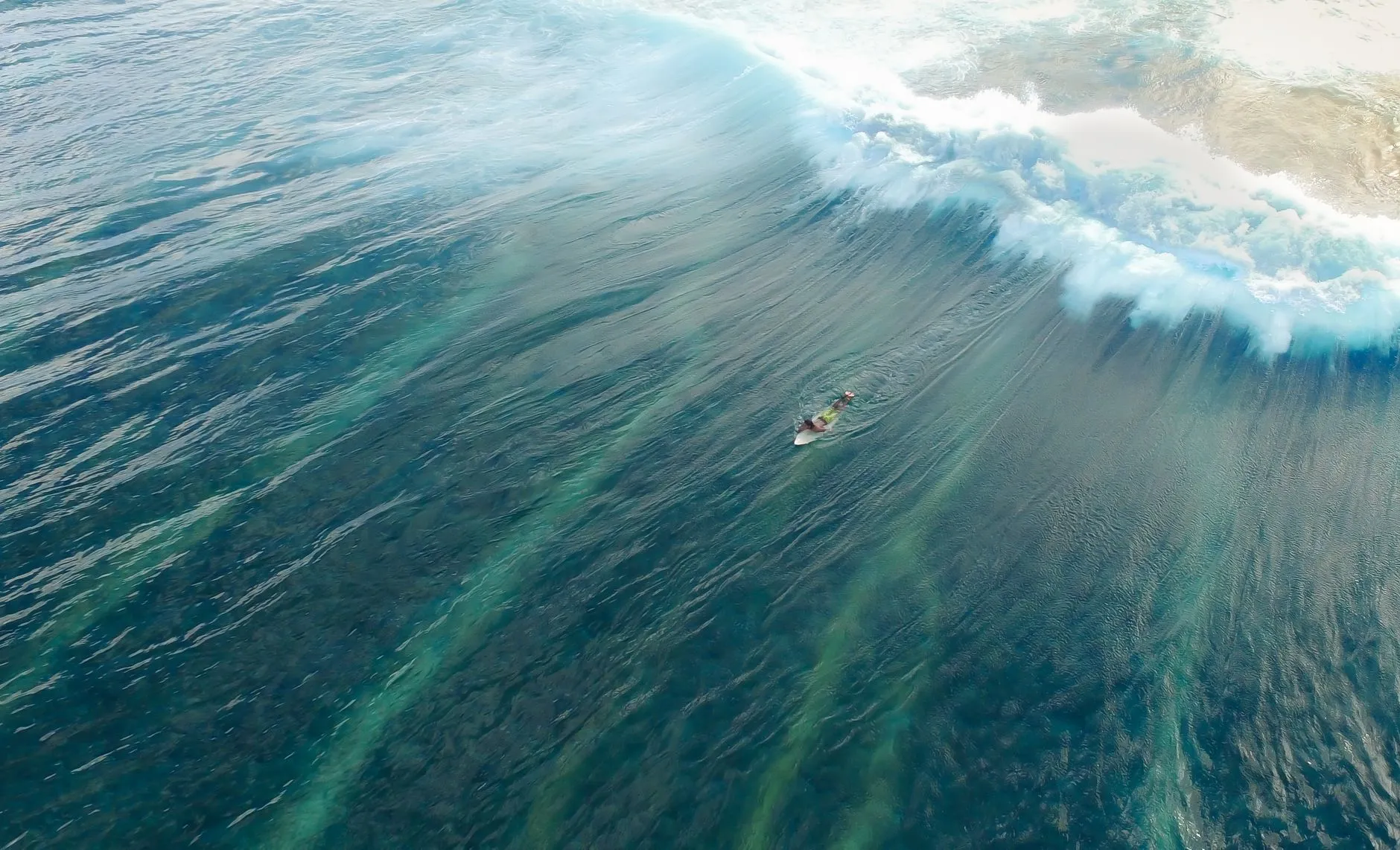
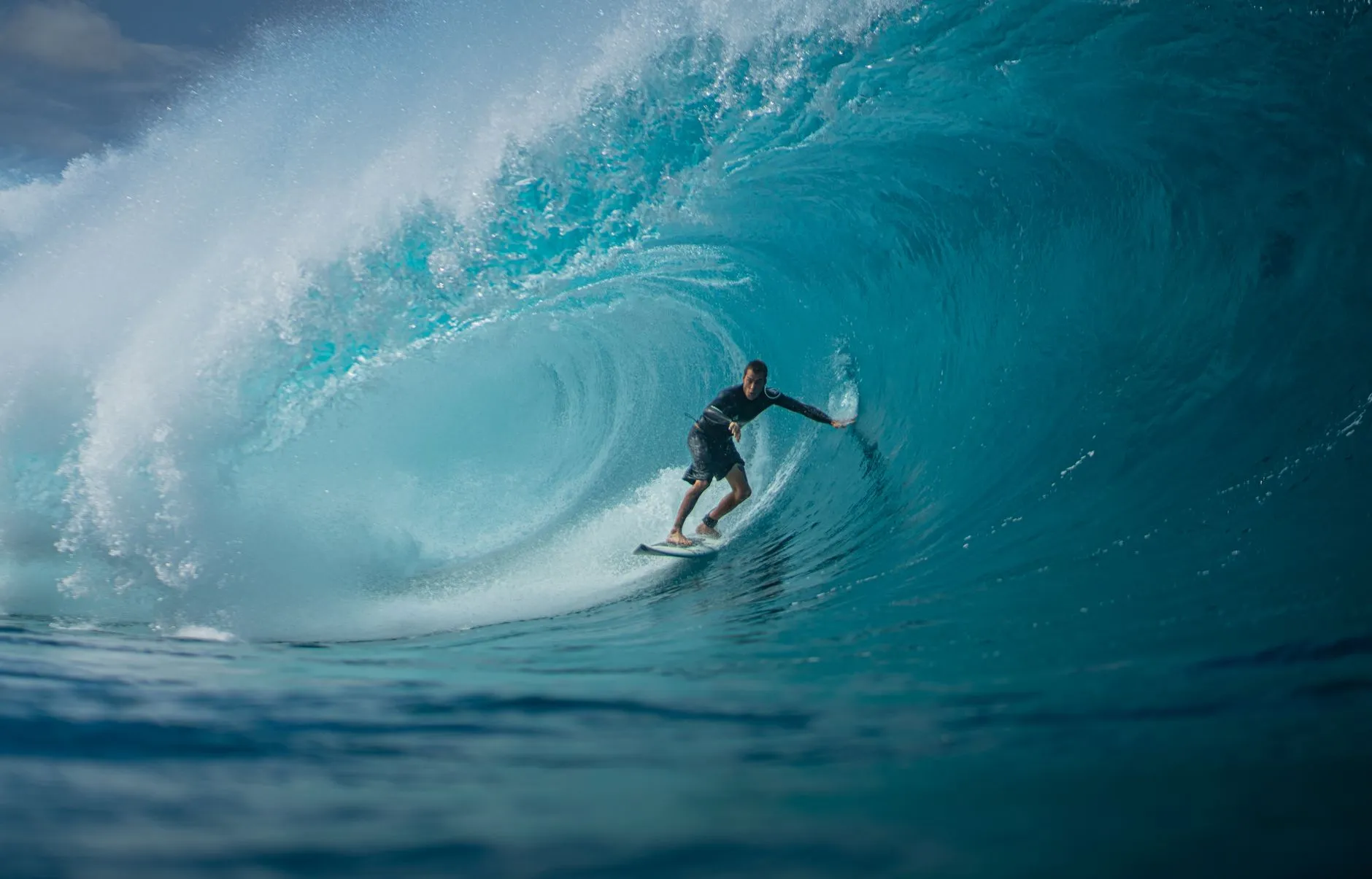
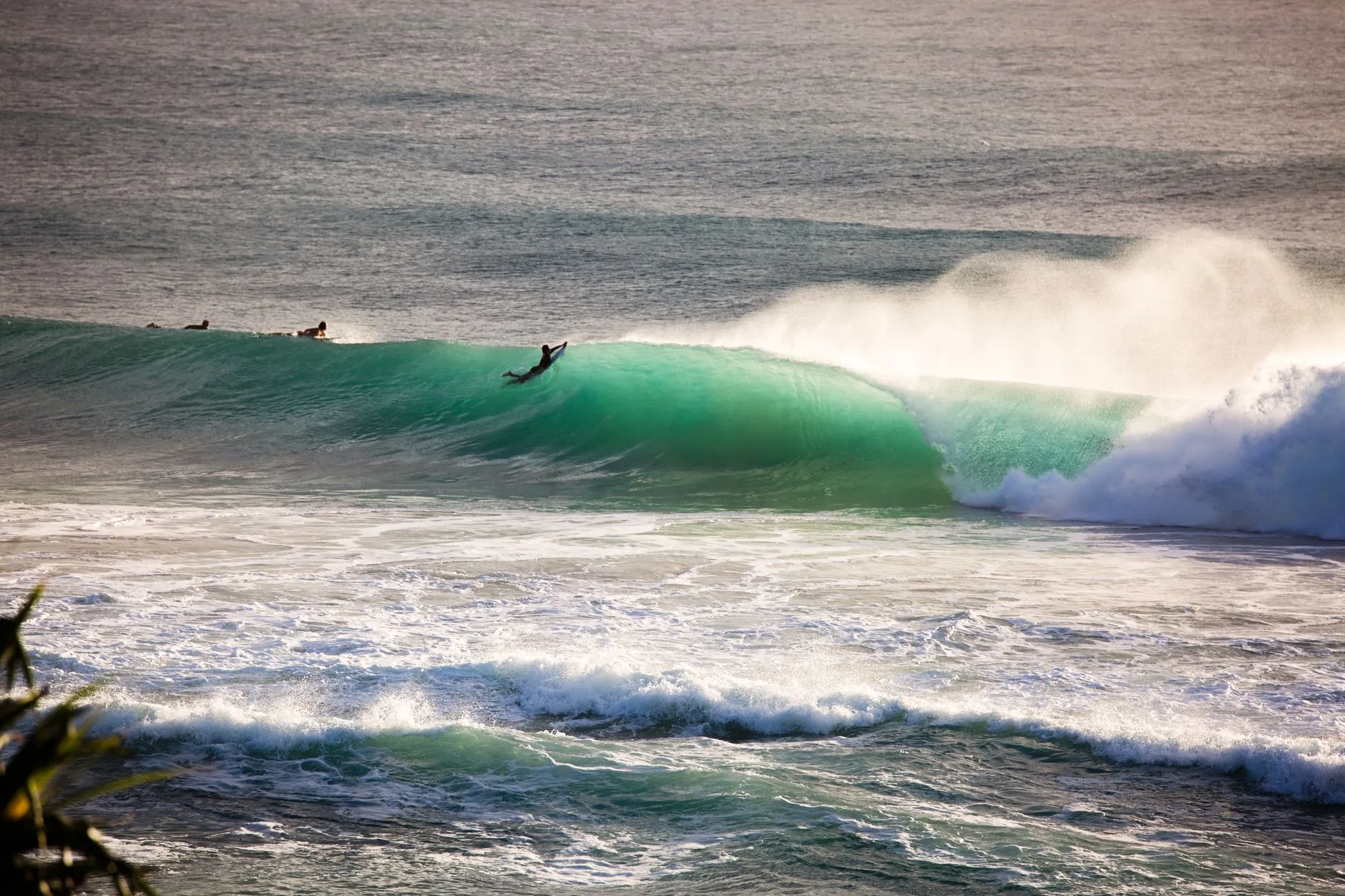
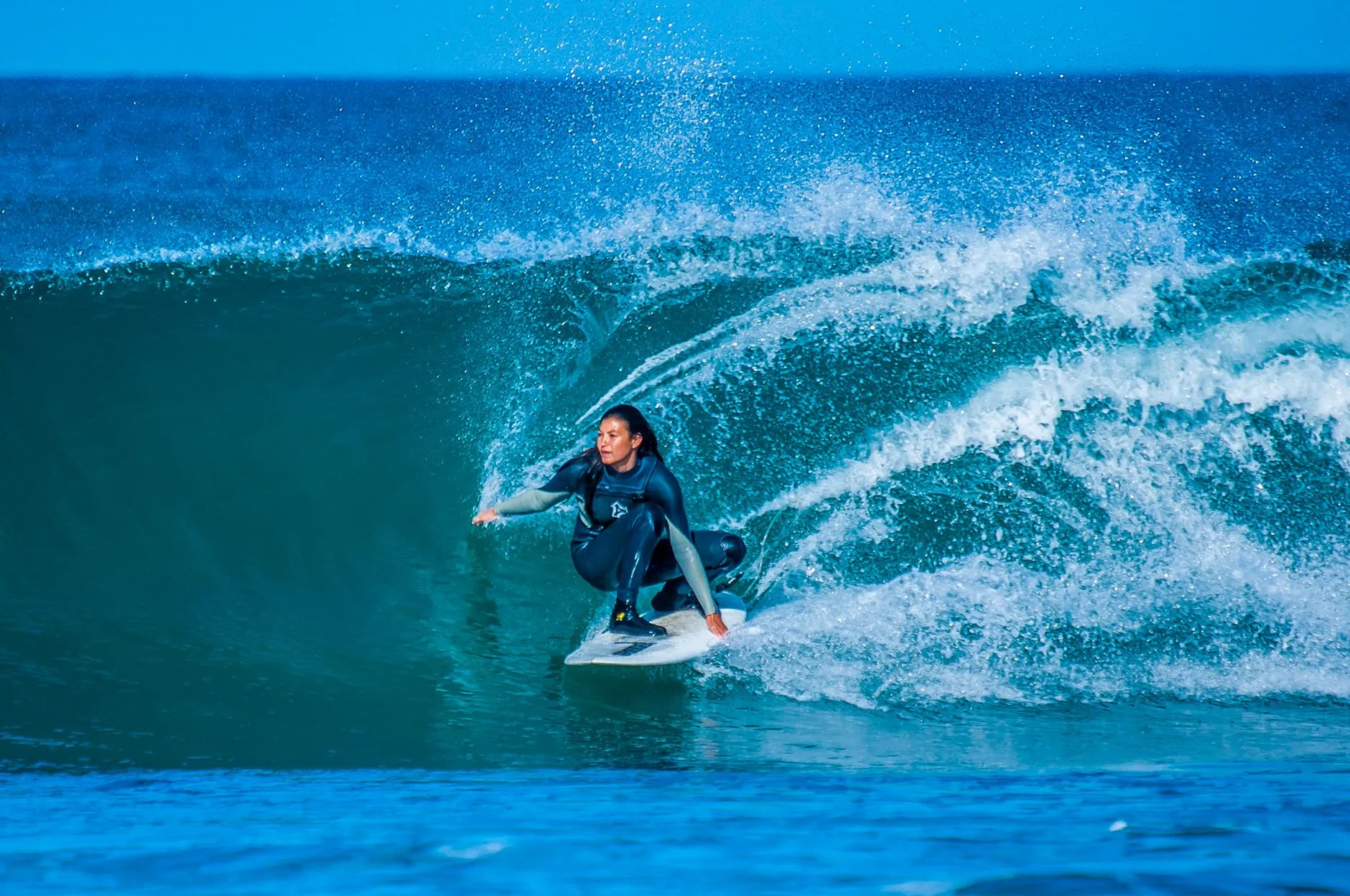
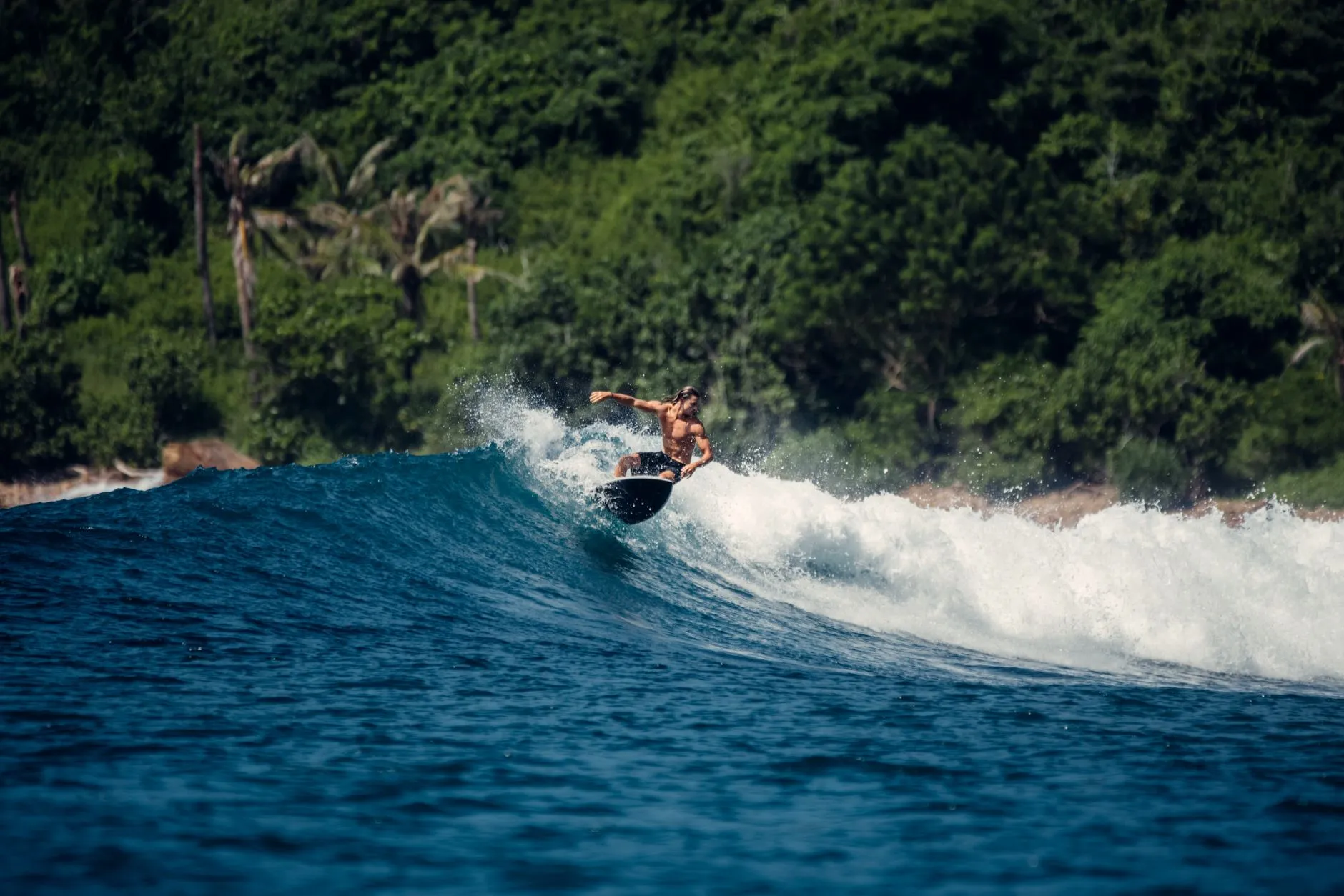
Just off the southern tip of India, a teardrop-shaped island grows waves the way it grows tea: reliably, in quantity, on a schedule set by the monsoon. Along the palm-lined south coast a railway line rattles between the ocean and the paddy fields, tuk-tuks carry surfboards on welded side-racks, and the water never drops below 27 degrees. Sri Lanka has quietly become one of the world's great affordable surf trips, and it deserves it.
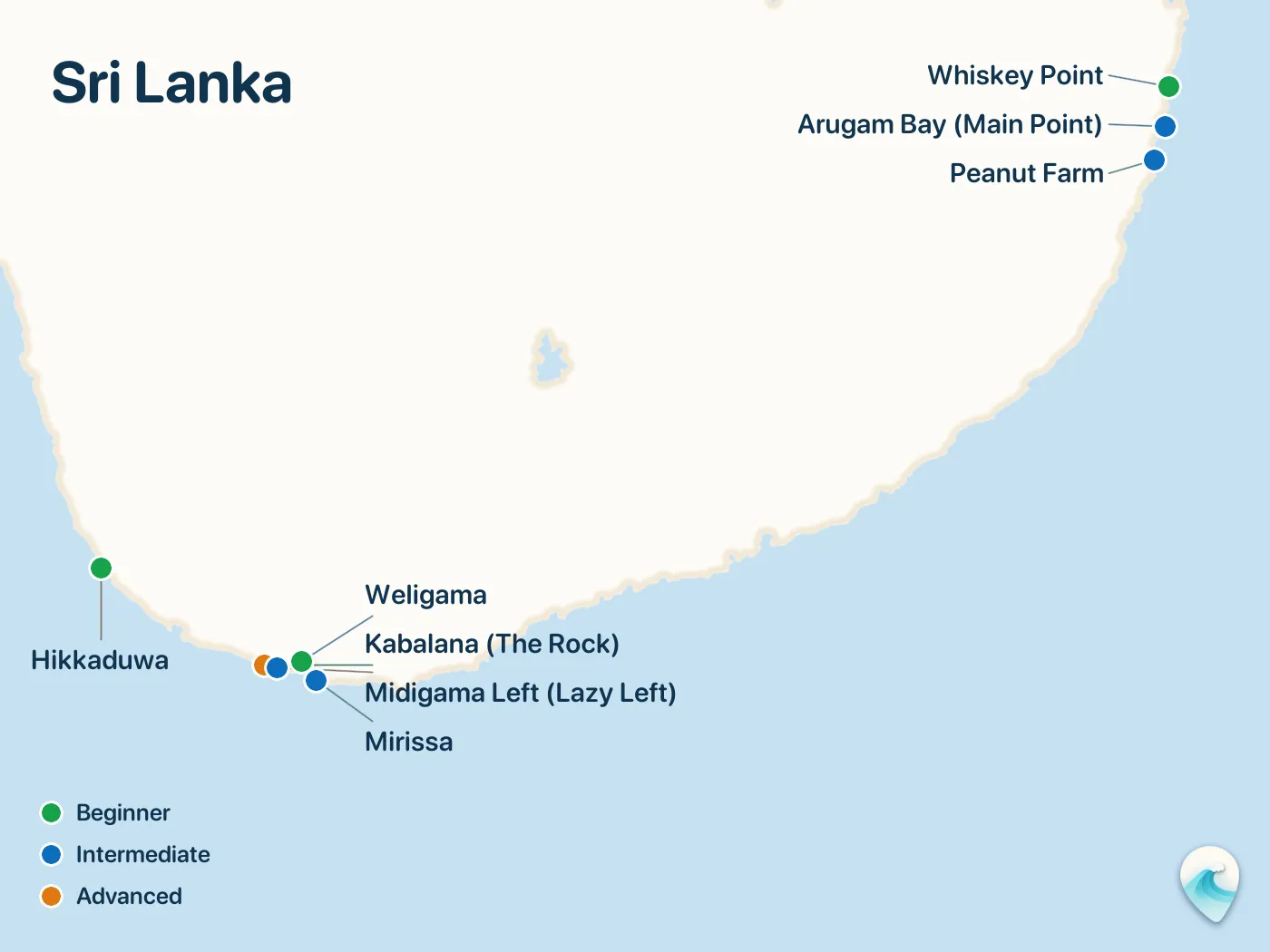
The trick to understanding the island is the monsoon flip. From November to April the southwest coast is dry and offshore, and everything from Hikkaduwa's reefs to Weligama's learning bay lights up. Come May the winds reverse, the south turns rainy, and the season migrates to the other side of the island, to Arugam Bay, a sandy right-hand point that unwinds some of the longest rides in Asia. There is no off-season here. There is only the question of which coast.
Best months
South coast November to April, Arugam Bay May to September
Water
27 to 29°C all year, no wetsuit needed
Levels
First whitewash to shallow reef barrels
Getting there
Fly to Colombo, then 2 to 3 hours south by highway, or 7 hours east to Arugam Bay
Warm water, soft sand-bottomed waves and someone happy to push you into your first one. These two bays are a big part of why half the world seems to learn to surf in Sri Lanka.
Weligama
Weligama Bay · Beach break
Beginner
A two-kilometer sandy horseshoe where a remarkable share of the world learns to surf. Board rentals and surf schools every fifty meters, warm waist-high rollers that forgive everything, and enough peaks that you can always find your own. If you have never stood up, stand up here.
Arugam Bay's mellow little sister, fifteen minutes up the coast. Soft rolling rights break over sand and flat rock with all the shape of a point and none of the punishment, while a couple of beach cafés watch the lineup. The place to turn whitewash confidence into your first real green walls.
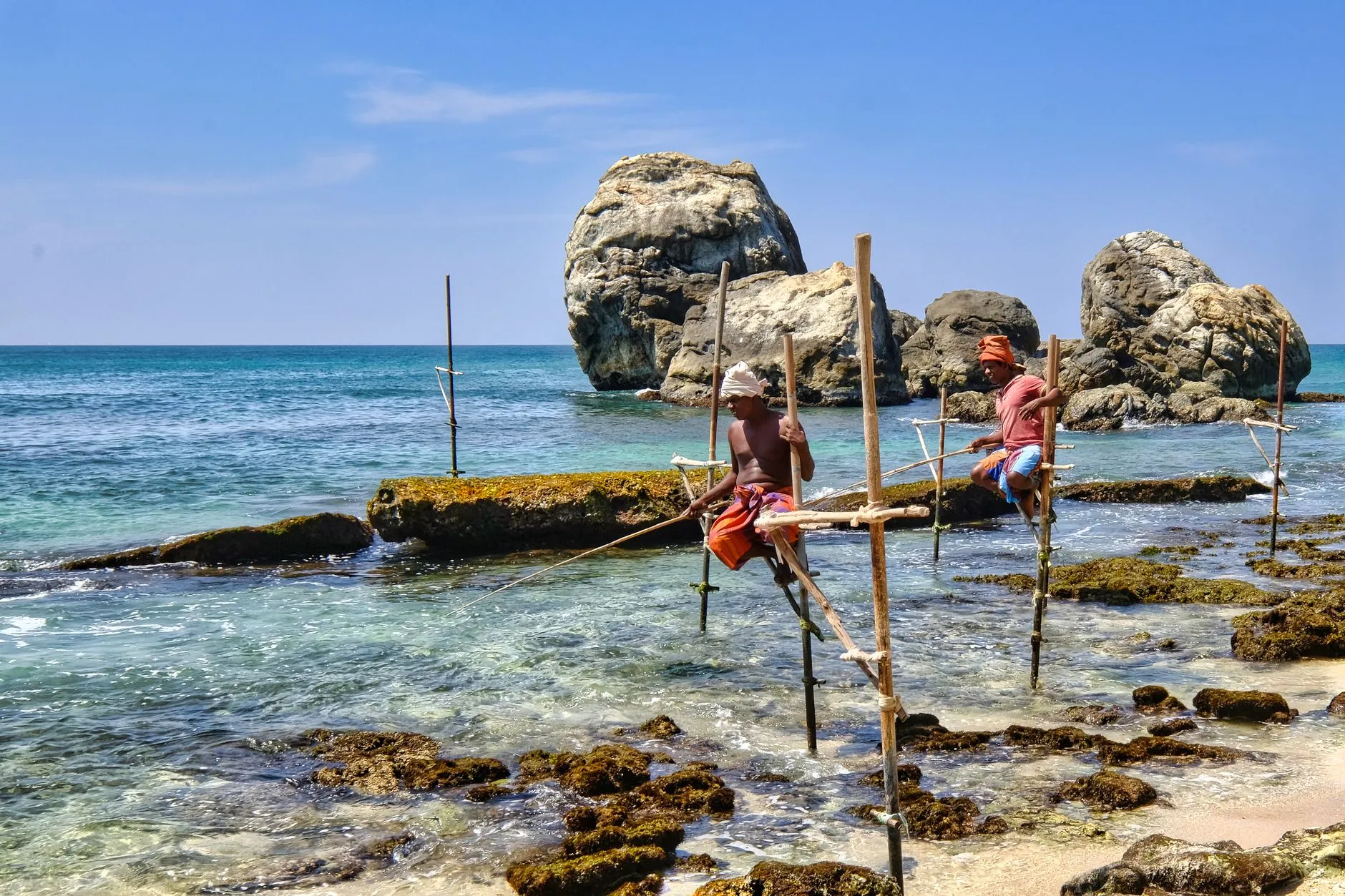
Stilt fishermen on the Weligama coast
The everyday classics
Friendly reefs with real shape. This is where you graduate from whitewash to green walls, learn to read a lineup, and settle into the rhythm of a season.
Hikkaduwa
Galle · Reef + beach break
Beginner
Where Sri Lankan surfing started, back on the 1970s overland trail. The main A-frame peels over friendly reef in front of a town that grew up around it, and there is a sandy learner's corner right next door. Not the island's best wave anymore, but maybe still its easiest surf life.
Midigama Left (Lazy Left)
Midigama · Reef left
Intermediate
The name is the description. A slopey, slow-motion left wall that gives you time to think mid-turn, which is exactly what you want for your first reef wave. Longboarders trim it forever; shortboarders use it to learn what a real rail turn feels like.
Mirissa
Mirissa · Reef break
Intermediate
The prettiest lineup on the south coast: a crescent bay with a palm-topped headland, whale boats leaving the harbor at dawn, and playful rights peeling off the rocks at the west end. It rarely gets truly good and rarely gets truly bad, which makes it a perfect everyday wave.
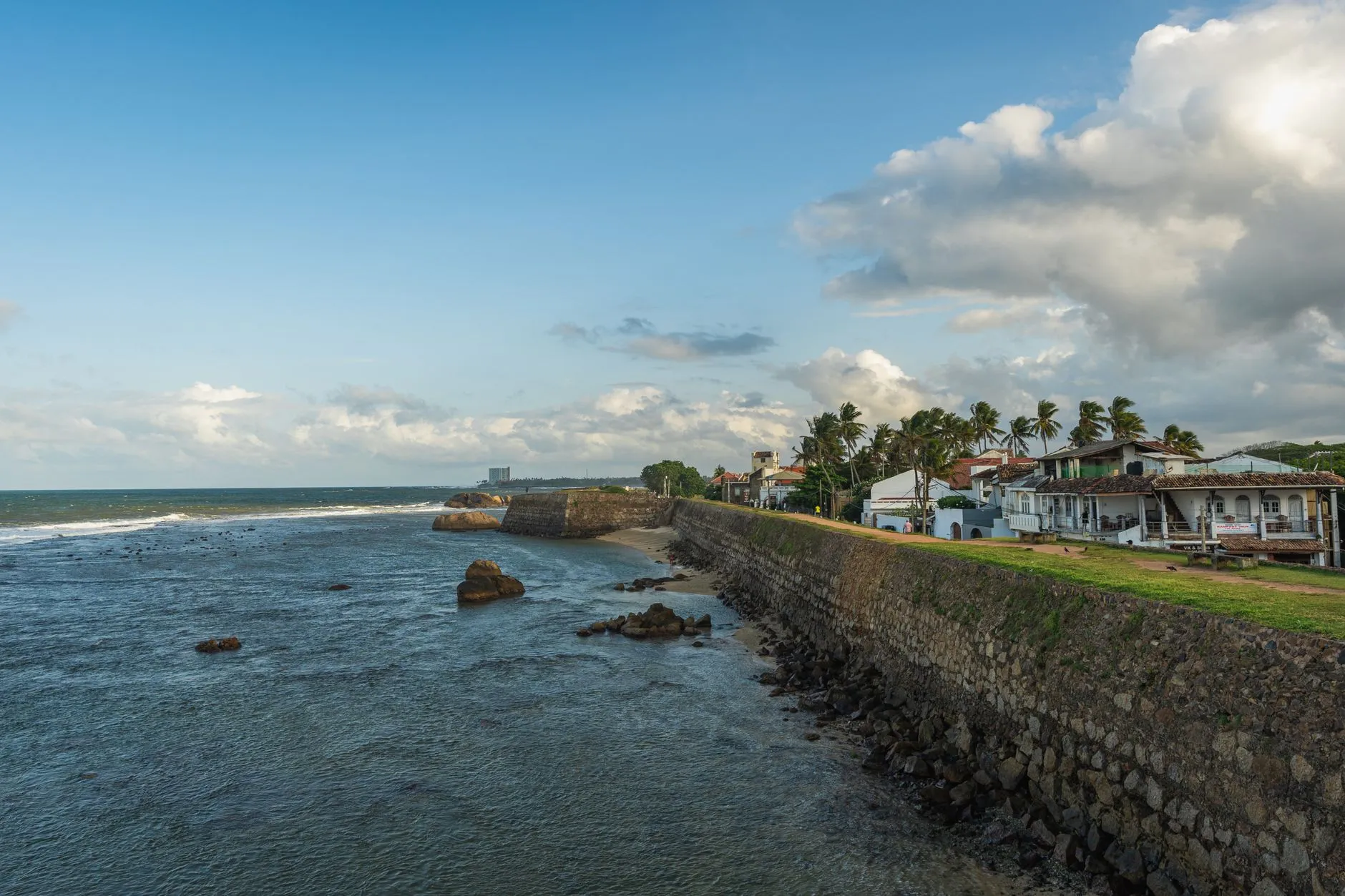
The seaward ramparts of Galle Fort
The main events
The waves people cross oceans for: the south's hollow A-frame and the east's long, lined-up sand points. Pick your season, book the tuk-tuk, earn your place in the rotation.
Kabalana (The Rock)
Ahangama · Reef break (A-frame)
Advanced
The south's wave of consequence. A few hundred meters off a postcard beach, an A-frame stands up over reef and throws the closest thing the south coast has to a real barrel. When a long-period SW pulse arrives, every good surfer between Galle and Matara knows where to be.
Arugam Bay (Main Point)
Pottuvil · Right-hand point
Intermediate
The wave that put Sri Lanka on the world surf map. Main Point wraps down a sandy boulder headland for two hundred meters and more, sectioning into walls and the occasional cover-up, while the village behind it runs on one sandy street of guesthouses and rice and curry. From May to September, this is the island's center of gravity.
A jungle track south of Arugam Bay ends at an empty golden beach with two waves: a mellow outside peak for cruising, and an inside ledge that stands up over shallow rock and throws a genuine little barrel. Monkeys in the trees, peacocks on the dunes, nothing to buy, bring water and stay all day.
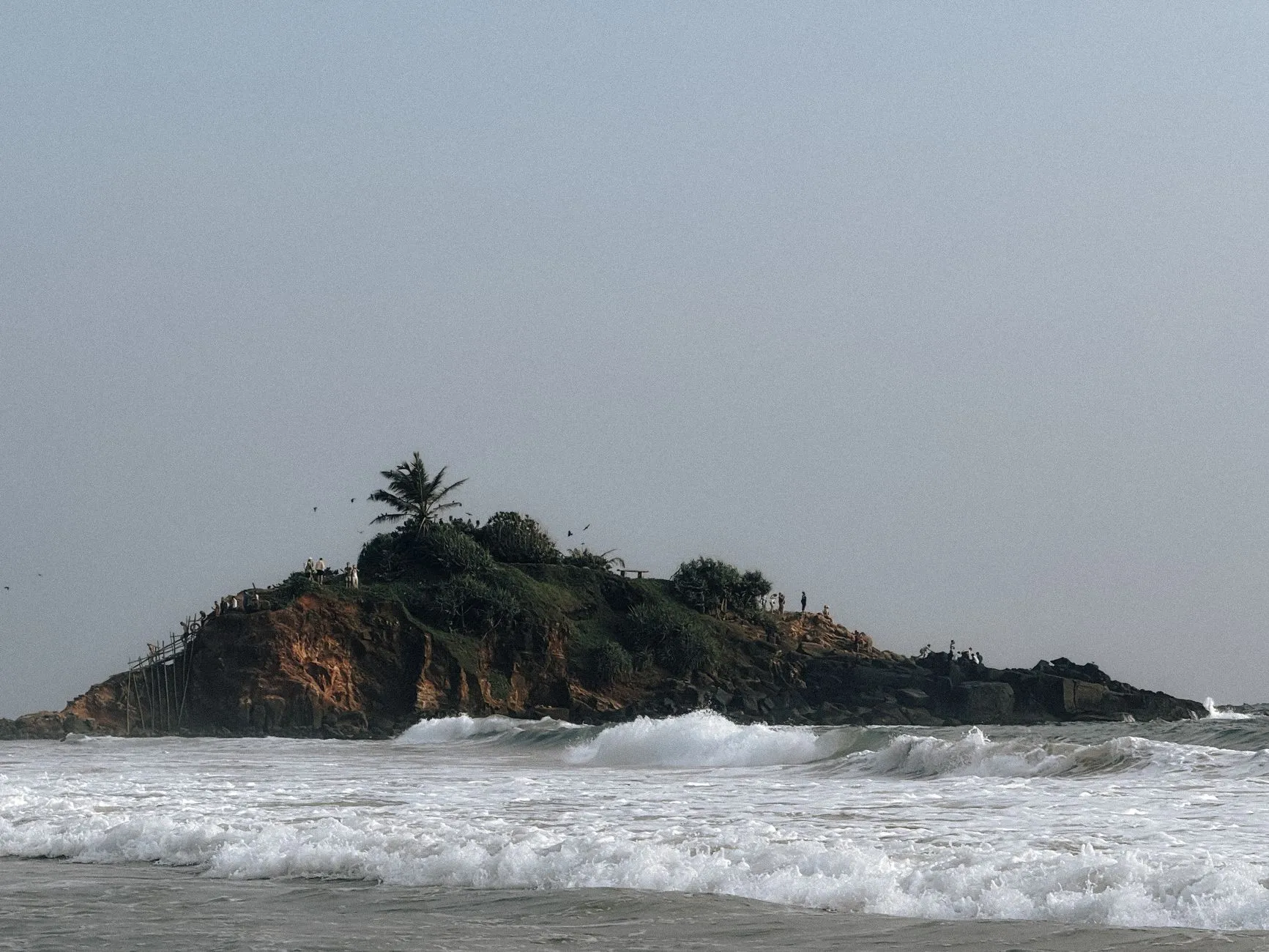
The island in Weligama Bay
When to go
A year in Sri Lanka
Typical conditions, month by month. The ocean did not sign this table: for live waves, wind and tide, check the app.
January
3-5 ft
82°F · boardshorts · All levels
South coast at its best. Clean mornings from Hikkaduwa to Mirissa.
February
3-5 ft
82°F · boardshorts · All levels
The most reliable month of the southern season. Offshore dawns, glassy dusk.
March
3-5 ft
84°F · boardshorts · All levels
Still the south. The heat builds and the crowds thin a little.
April
2-4 ft
84°F · boardshorts · Beginner
The handover month: the south softens while the east starts to stir.
May
3-5 ft
84°F · boardshorts · All levels
Season flips. The first real pulses reach Arugam Bay; the south turns rainy.
June
3-6 ft
82°F · boardshorts · All levels
East coast proper. Main Point starts lining up wave after wave.
July
4-6 ft
82°F · boardshorts · Intermediate
Peak Arugam Bay. The point at its longest, and at its busiest.
August
4-6 ft
82°F · boardshorts · Intermediate
Still peak east. Dawn patrol beats both the wind and the crowd.
September
3-5 ft
82°F · boardshorts · All levels
The east winds down gently. Emptier lineups, still consistent.
October
2-4 ft
82°F · boardshorts · Beginner
Between seasons. Showers about, small waves on both coasts, Weligama still delivers.
November
3-5 ft
82°F · boardshorts · All levels
The south wakes up. The first clean SW swells reach the reefs.
December
3-5 ft
82°F · boardshorts · All levels
Southern season proper, holiday crowds included. Early sessions pay.
Good to know
When is the best time to surf in Sri Lanka?
There are two seasons, one per coast. The south and southwest coast works from November to April, with January and February the most reliable. Arugam Bay and the east coast work from May to September, peaking June to August. Whenever you can travel, one side of the island is in season.
Is Sri Lanka good for beginners?
It is one of the best places on earth to learn. Weligama's sandy bay and Whiskey Point's soft rollers are patient, warm classrooms, lessons and rentals cost a fraction of what they do in Europe, and you can surf in boardshorts every single day. The friendly reefs of Midigama are the natural next step.
Do I need a wetsuit in Sri Lanka?
No. The water sits between 27 and 29°C all year, so boardshorts or a swimsuit is all you need. Bring a rash vest or a light lycra for the sun, the UV is fierce, and consider reef booties if you plan to spend the season on Midigama's urchin-studded reefs.
South coast or Arugam Bay, which should I choose?
Let the calendar decide. From November to April go south: more variety, more towns, easy logistics from the airport. From May to September go east to Arugam Bay for the points. The south suits shorter trips and mixed groups; Arugam Bay rewards surf-focused trips, since almost everything there revolves around the waves.