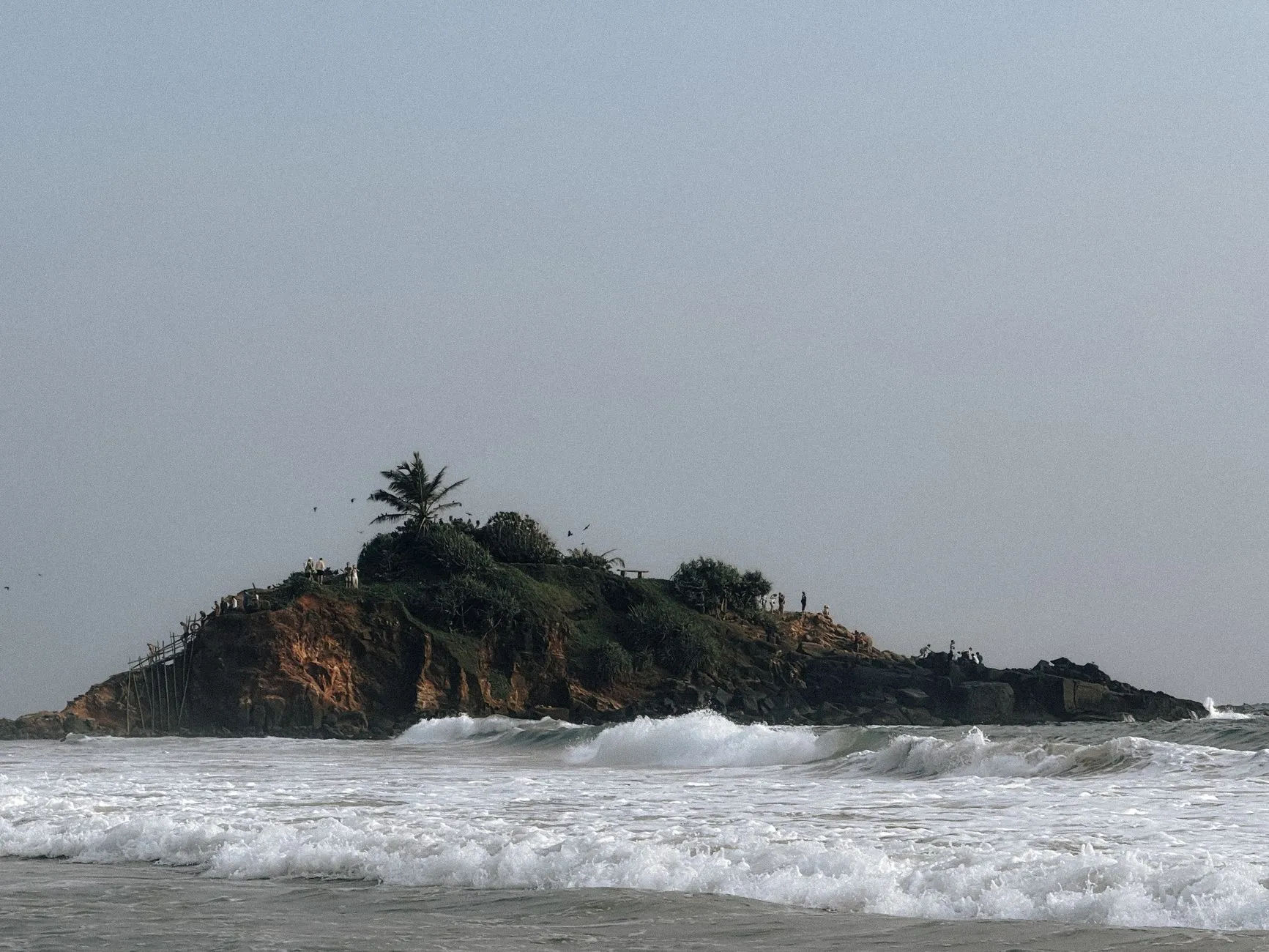
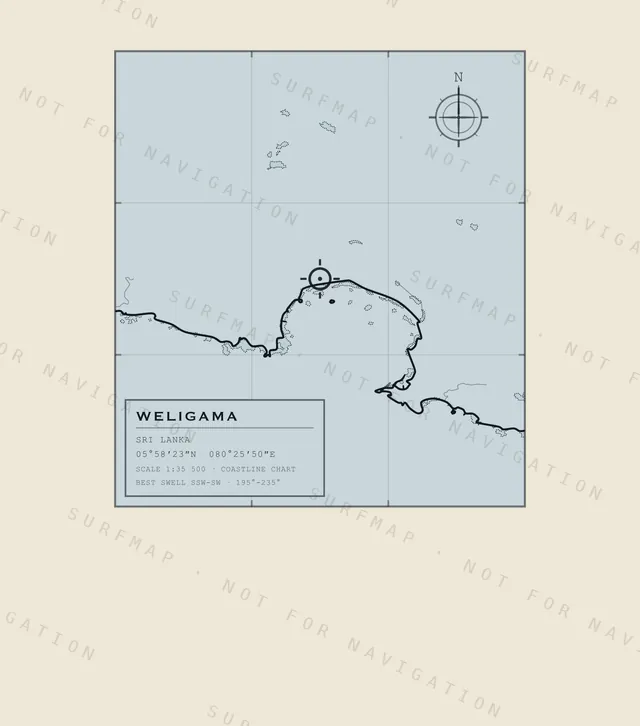
Weligama is a two-kilometer sandy horseshoe on Sri Lanka's south coast, between Mirissa to the east and Midigama and Ahangama to the west, with the wooded islet of Taprobane sitting a stone's throw off the sand and the fishing harbour tucked into the western end. The town, the coast road and the railway run right behind the beach, so the surf is never more than a short walk from your bed. It is also, by any honest count, one of the places where a remarkable share of the world stands up on a surfboard for the first time.
The reason is simple. The bay bends and softens the south swell into slow, forgiving rollers, knee to chest-high most days, over sand, in water that never drops below 27 degrees. Surf schools, camps and rental racks line the beach every fifty meters, instructors are pushing learners into whitewater from first light, and there are enough peaks along two kilometers that you can always walk to one of your own. If you have never stood up, stand up here. If you have, it is still the easiest surf day of your trip.
Beginner
Wave
Sand-bottom beach break, slow forgiving rollers
Best swell
S swell, knee to chest-high, the bay tames most swells
Best wind
N to NE offshore, the bay is sheltered and rarely blown out
Best tide
All tides. Mid is easiest for first waves, high fattens it with a small shore dump, low runs faster
Season
November to April, and rideable nearly every day of the year
Level
Beginner. First waves to first green faces, longboards welcome
How the wave breaks
Weligama is a beach break over sand, and the bay is the whole story. South swell that arrives with real push at the reefs of Midigama and Ahangama has to bend around the western headland before it reaches the beach, and it loses most of its weight on the way in. What is left are slow, well-spaced rollers that stand up gently, break with a soft lip and then crumble into a long stretch of whitewater. Knee to chest-high is the everyday size, and on most days a first-timer is being pushed into the foam while an improver catches small green faces fifty meters further out.
The beach is long enough to have moods. The middle of the bay, in front of the schools, is the softest and by far the busiest, a wide field of foam and soft-tops. Toward the ends, near the rocks under the eastern point and around the harbour to the west, the sandbars hold a little more shape and the waves get a touch punchier and a lot emptier. On the rare days when a bigger swell gets through, the shore break dumps at high tide and the inside turns messy: leave the bay to the schools and go and look at the reefs next door.
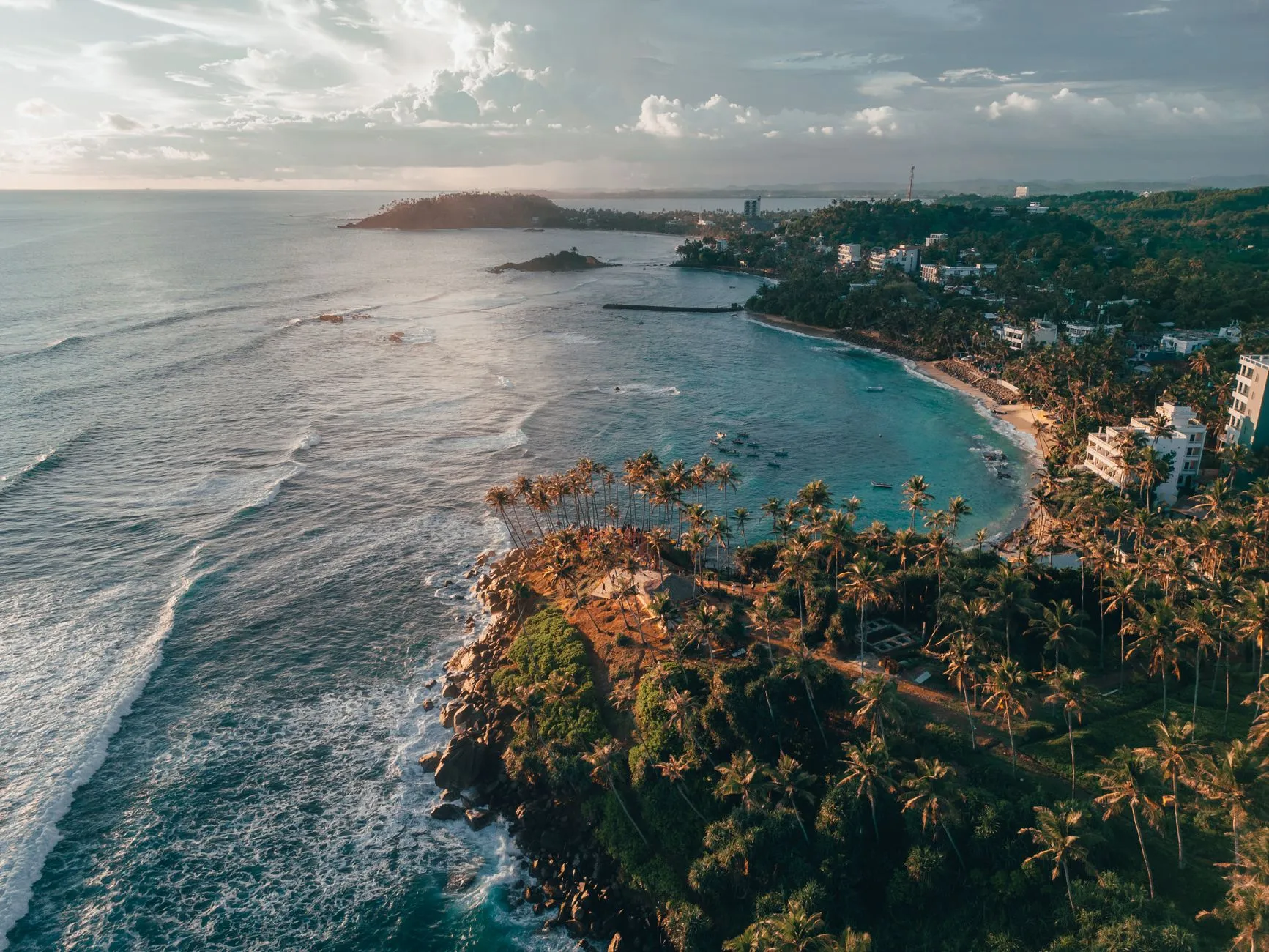
The south coast of Sri Lanka at sunset, from the air
When it works
November to April is the south-coast season. The northeast monsoon blows across the island and arrives at Weligama as a north to northeast offshore, the mornings are dry and glassy, the water sits between 27 and 29 degrees, and the bay serves up learner waves day after day: a rash vest for the sun is the only wetsuit you will need. Afternoons often bring a sea breeze, but the bay is sheltered enough that it still works when the reefs have gone lumpy. From May to October the southwest monsoon takes over, with rain, onshore wind and a bigger, messier sea, and the island's surfers move to Arugam Bay on the east coast. Weligama still gives learner waves most mornings then, often while the reefs next door are blown out, which is why it is rideable nearly every day of the year.
The lineup and the take-off
There is no paddle-out to speak of. You walk in from the sand, and at mid tide on a normal day you can wade most of the way to where the waves break. The lineup is a classroom: instructors standing waist-deep with a hand on the tail of a board, learners lined up for the push, and beyond them a loose crowd of soft-tops and longboards catching the reforming green faces. The busiest fifty meters are right in front of the school flags in the middle of the bay; walk five minutes in either direction and you will have a peak that is mostly yours.
The take-off is as forgiving as they come. The wave stands up slowly, so there is time to paddle, feel the lift, and get to your feet before the lip folds over. Mid tide is the easiest window for that first ride; high tide fattens the wave and pushes a small shore dump onto the sand, and low tide runs a little faster and closes out sooner. Keep your leash on, look both ways before you go, and give the schools their lane: a loose board in that crowd is the most dangerous thing in the bay.
Getting there and where to stay
Colombo airport is about two and a half to three hours away by the Southern Expressway, and taxis and surf-camp transfers make the run daily. The slower and better option is the coastal train, which rattles down the coast between the ocean and the paddy fields and stops right in Weligama, a short walk from the sand. Once you are there, tuk-tuks run the coast road all day with boards on their side racks. Most people stay in Weligama itself, where hostels, surf camps and guesthouses line the road behind the beach; Mirissa, ten minutes east, is the choice for beach-bar evenings, and Midigama, ten minutes west, is where the reef surfers sleep. Wherever you stay, crossing the coast road with a board under your arm deserves your full attention: the traffic does not slow down for surfers.
Hazards
Crowds of learners and loose boards at the main peaks: keep your leash on, keep your distance and never let go of your board with someone behind you
A small shore dump at high tide on bigger days, easy to underestimate when you are standing in it with a nine-foot soft-top
Rocks and urchins at both ends of the bay, under the eastern point and around the harbour
The sun is the real injury here: rash vest, sunscreen, water, and a break in the shade at midday
The odd rip near the harbour on bigger days, and traffic on the coast road every time you cross it with a board
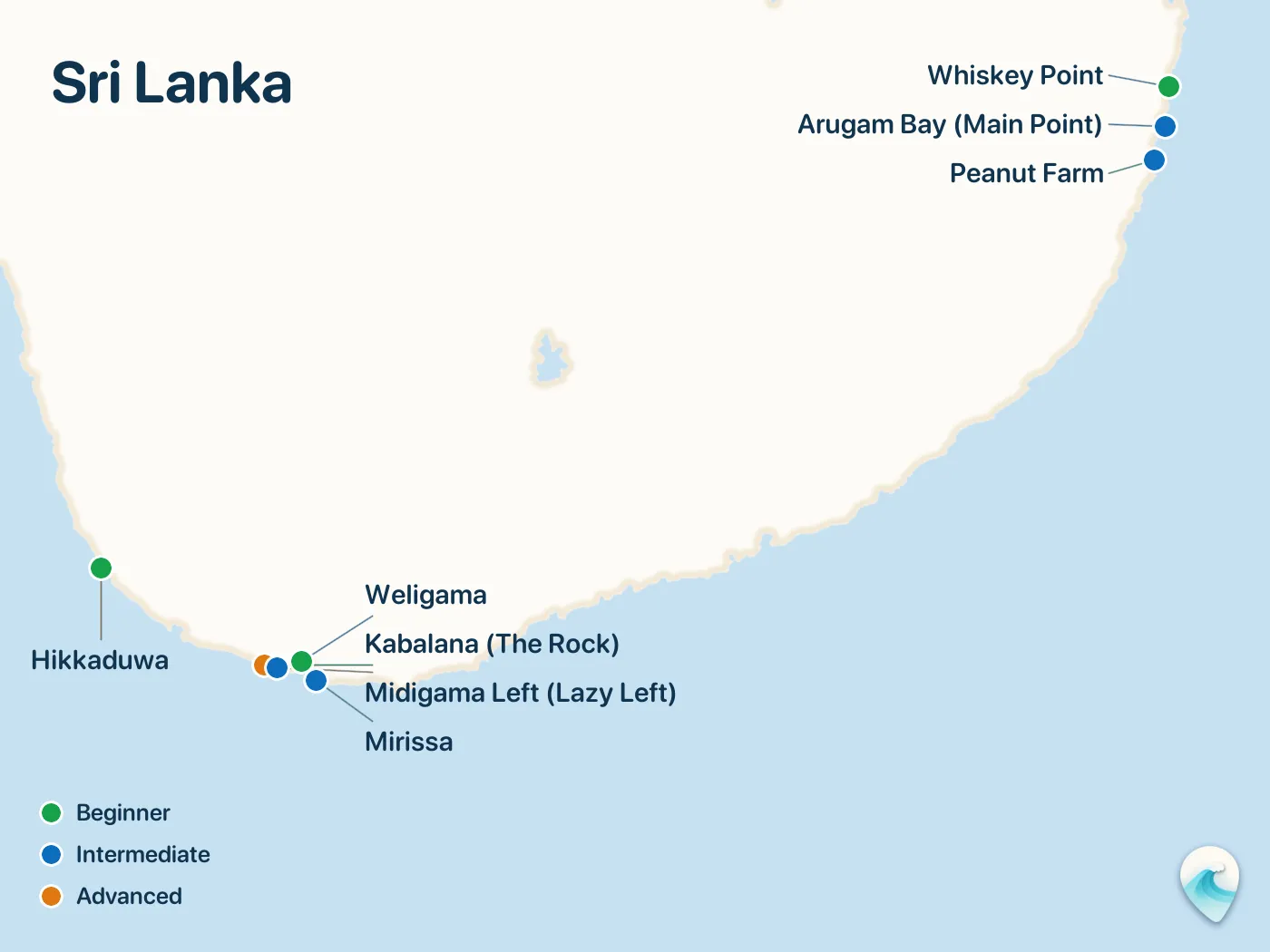
An honest guide to surfing Sri Lanka: the 8 spots that matter across two coasts, from Weligama's learning bay to Arugam Bay's long right point, month-by-month seasons, and what to expect in the water.
Is Weligama the best place in Sri Lanka to learn to surf?
For a first week on a board, most people would say yes. The wave is a slow sand-bottom roller that rarely gets above chest-high, the water is 27 to 29 degrees, you wade most of the way out, and schools and rentals sit every fifty meters, so you never wait for a board or a lesson. Whiskey Point on the east coast is the other learning wave, but it only works from May to September.
When is the best time to surf Weligama?
November to April, when the northeast monsoon blows offshore, the mornings are dry and glassy, and the south swell arrives regularly enough for small clean waves most days. January and February are the most reliable months. From May to October the southwest monsoon brings rain, onshore wind and a messier sea, yet the bay still gives learner waves most mornings while the reefs around it are blown out, so a first lesson works in any month.
Where do you go once Weligama feels too small?
West, mostly. Ten minutes up the coast, the reefs of Midigama are the natural next step: the Lazy Left and Lazy Right are slow, walling reef waves that give you time to think mid-turn, and Ram's Right is a touch quicker. Further west, Kabalana at Ahangama is the south coast's serious wave, an A-frame over reef for solid surfers only. East, Mirissa's playful rights off the rocks are a gentler step, and it is all one tuk-tuk ride.