How the wave breaks
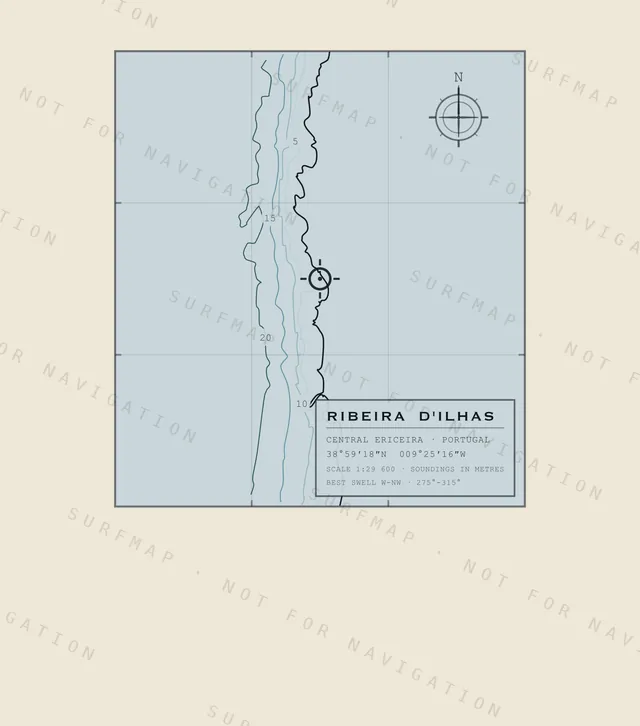
The bay collects west to northwest swell and bends it onto a shelf of layered rock that steps down from the cliffs like seating in a stadium. The main peak stands up beside the rock amphitheater, offers a takeoff that is steep without being violent, then peels right along the ledge in long, readable walls. From waist-high the wave starts to wall up properly; around head-high it shows its contest face, with sections for turns arriving at almost even intervals for a hundred meters or so.
It is a patient wave rather than a hollow one. The face invites carves and cutbacks more than barrels, which is exactly why judges and coaches love it, and why an intermediate can read it from the terrace before paddling out. When a serious swell runs, the takeoff shifts to the outside peak and the wave becomes a longer, more powerful animal; most surfers agree the bay handles size well, but the best shape lives in that clean chest-to-head band.