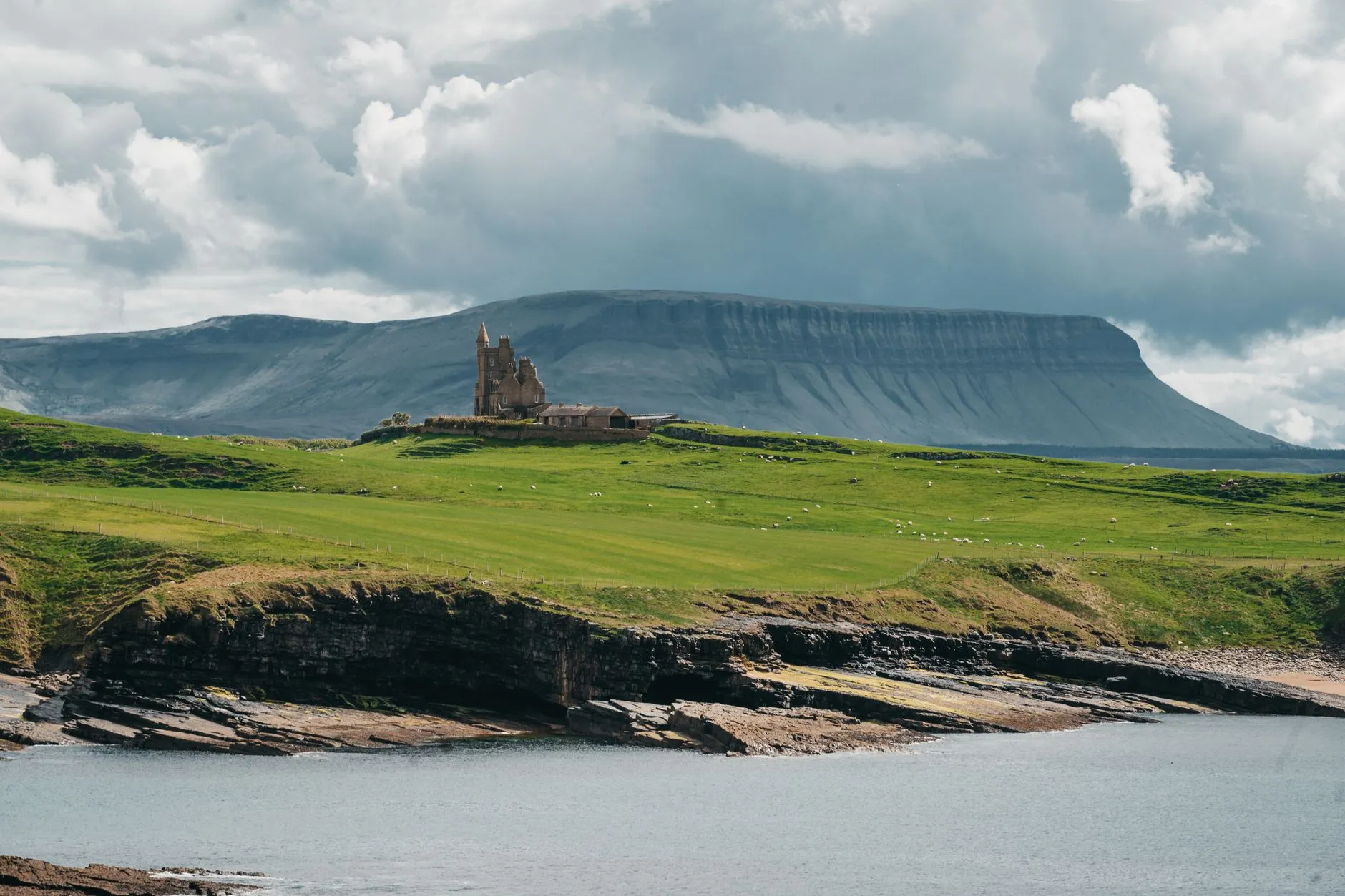
Waves and coastline at Mullaghmore

Guides · Ireland's West Coast

Mullaghmore

One of the heaviest waves in the world

Mullaghmore is a ledge off Mullaghmore Head in County Sligo, below the turrets of Classiebawn Castle, and when a winter storm sends the right swell it becomes one of the heaviest waves in the world. A huge left slab detonates over a shallow rock shelf, thick-lipped and stepped, and it is ridden by a small circle of big-wave surfers, mostly behind a ski, paddled only on the rare days that allow it by a handful of specialists.

Be honest with yourself about which audience you belong to. This is not a step-up spot for the last day of a good week: the people out there have apprenticed to this wave for years, with ski support and safety teams, and its manual is written in seasons, not paragraphs. For everyone else, Mullaghmore is Ireland's great spectator wave, and a giant day watched from the headland road is worth planning a winter trip around.

Advanced

Wave
Big-wave left slab over a shallow rock shelf
Best swell
Giant long-period W to NW groundswell, 20-foot swells and up on the XXL days
Best wind
S to SE offshore, the cold clear days behind a storm
Best tide
The crews call it swell by swell. That decision belongs to the people surfing it
Season
October to March, the biggest days in deep winter
Level
Big-wave specialists with ski support and a safety team. For everyone else, a wave to watch

How the wave breaks

Giant west to northwest swell travels through deep Atlantic water and hits a shallow rock shelf off the tip of Mullaghmore Head. The change is so abrupt that the wave does not so much break as fold: the whole ocean seems to lurch over the ledge, the face warps into steps and boils, and a lip the thickness of a van throws out over a left that is all slab and no forgiveness. On the biggest days the faces are measured in multiples of a person, and the barrel behind that lip is one of the widest, darkest holes in surfing.

Almost everything ridden here is ridden behind a ski, with drivers whose reading of the water matters as much as the surfing. Paddle sessions happen, but only on the rare days when size, period and wind line up to leave a window, and only for a handful of specialists who have spent years earning that call. Nothing about the wave meets you halfway: it is heavy at every size it breaks at, and the people who ride it plan for the wipeout as carefully as they plan for the wave.
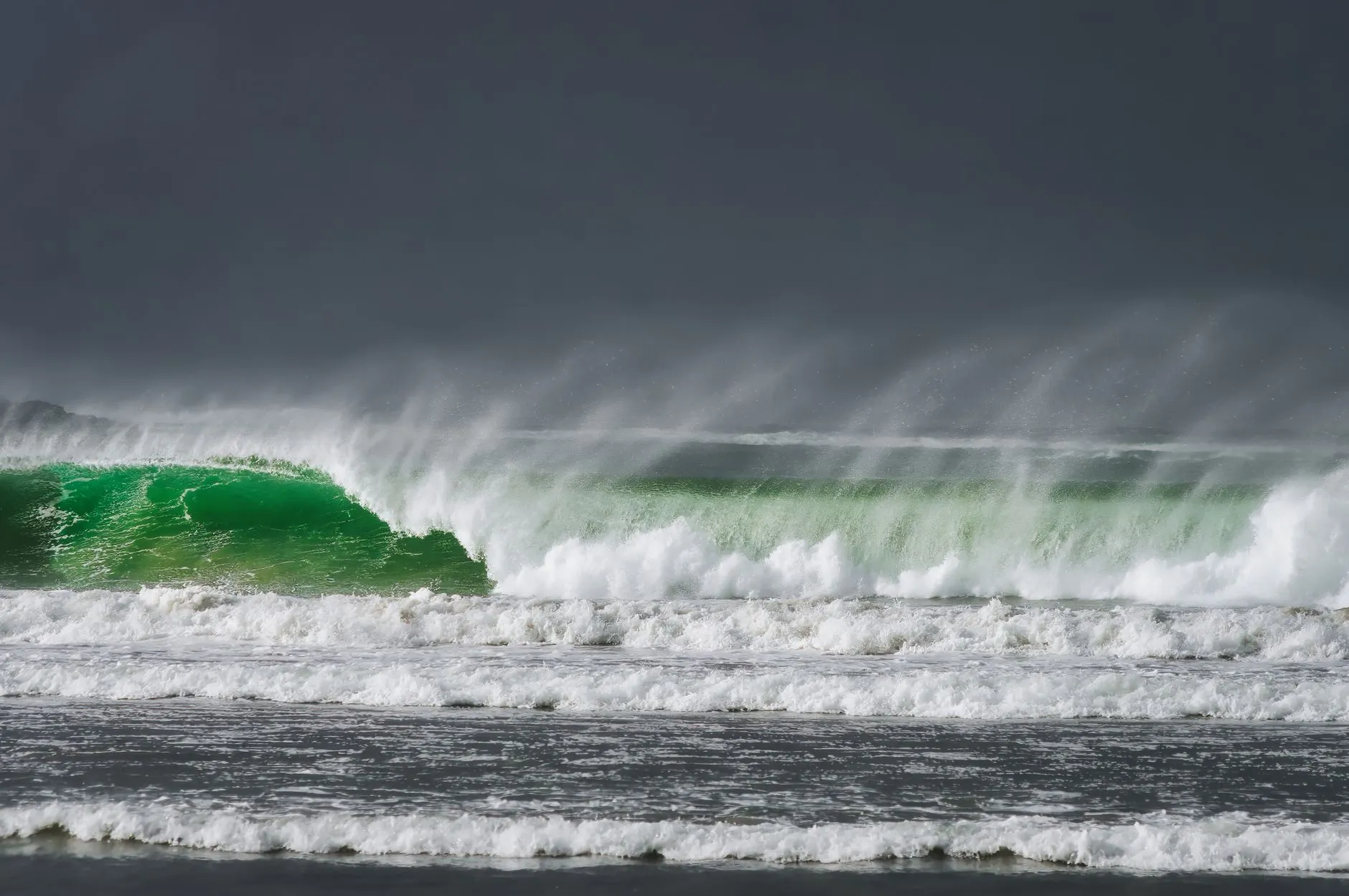
A wave folding over itself

When it works

Mullaghmore is a winter wave. The season runs from October to March, when North Atlantic storms track past Ireland and send giant long-period west to northwest swell straight onto the shelf, and the biggest days tend to come in the heart of it, from November to February. The classic setup is the cold clear gap behind a storm: the low has moved through, the wind swings south to southeast and offshore, the sky hardens into winter blue, and the swell left behind stands up on the ledge in twenty-foot lines and bigger. Those XXL windows are rare and short, which is why the crews watch the charts for weeks and drop everything when one opens.

The day it breaks

When a window opens, the operation that assembles below the castle looks more like an expedition than a surf session. The ski teams stage out of the harbor, every surfer has a driver, a flotation vest and a safety plan, and the channel fills with skis, spare sleds and long lenses. The crews have picked this tide and this hour swell by swell, from experience no forecast page can shortcut, and rotations, rescues and pickups run to an order everyone out there understands. It is one of the most professional lineups in surfing, because it has to be.

For everyone else, the day it breaks is a spectacle worth planning a winter day around. Park along the headland road with the rest of the county, Classiebawn Castle at your back, and you get a view big-wave surfing almost never offers: the whole wave, the whole ride, close enough to hear the lip land. Bring warm layers and a flask, stay well back from the edge, and watch mastery from a safe distance. Nobody who has stood on that road on an XXL day describes it as an ordinary afternoon.

Getting there

Mullaghmore is a small harbor village on its own headland off the N15, the coast road between Sligo town and Bundoran, about twenty minutes from Bundoran and a little over half an hour from Sligo. From the village, the loop road runs out and around Mullaghmore Head, and that road is the viewing: the wave breaks off the tip in clear sight of the verge. On a forecast day cars line the road early, so arrive with time, park so the skis and rescue vehicles can pass, dress for an Atlantic winter and give the edge more room than you think you need. Binoculars earn their place in the bag.

Hazards

  • Big-wave spot, ski support and a safety plan required
  • Experts only, real consequences on a wipeout
  • Cold Atlantic water in winter, with hold-downs that run long
  • Boulders and a shallow rock shelf under the impact zone
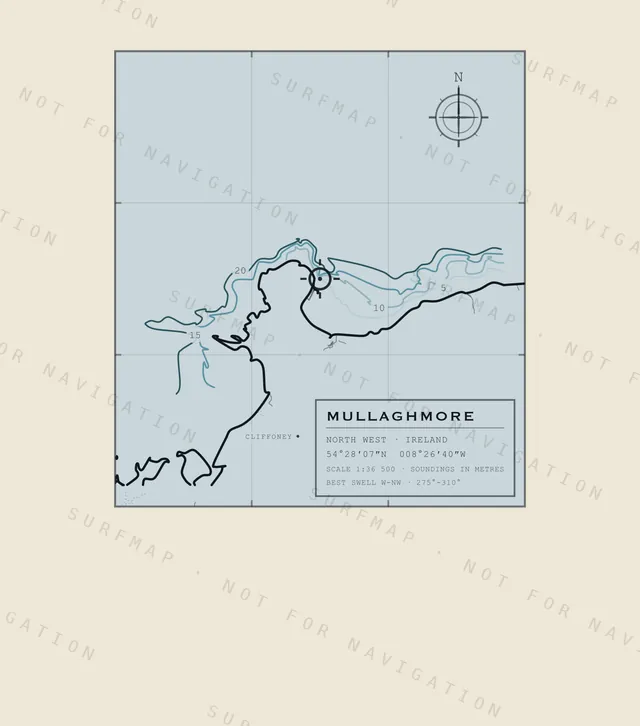
The chart of MullaghmoreThe real coastline and the depths off the spot, printed on a tee.See the tee · $39.00 →
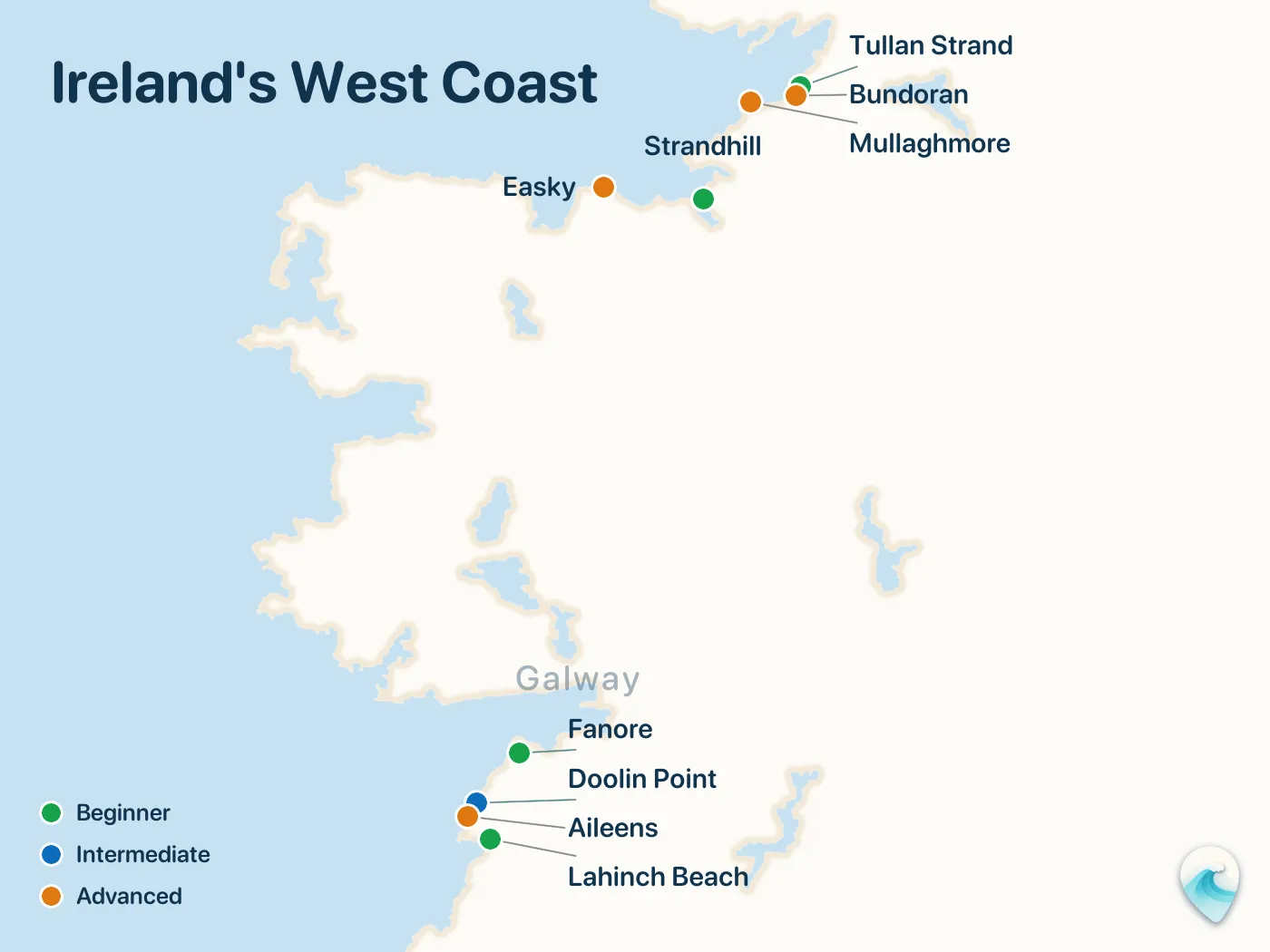
Map of the Ireland's West Coast surf spots described in this guide, with numbered markers

Part of the Ireland's West Coast surf guide

An honest guide to surfing Ireland's west coast: Lahinch and Bundoran, the Sligo reefs, Aileens and Mullaghmore, what the cold really asks of you, month by month.

Read the full guide →

Good to know

Has Mullaghmore been paddled?

Yes. Most sessions are tow sessions, but on the rare days when size, period and wind leave a window, a small group of paddle specialists has caught it under their own power. Those days are the exception, picked swell by swell by people who have spent years around the wave, and even then the skis stay in the channel for safety. From the road the distinction can look small. In the water it is the difference between riding the wave and negotiating with it.

Where do you watch Mullaghmore from?

From the loop road around Mullaghmore Head. The wave breaks off the tip of the headland in plain view, and on a big swell the verge fills with cars, cameras and half the county. Turn off the N15 between Sligo town and Bundoran, follow the signs for Mullaghmore, arrive early on a forecast day, and treat the edge with respect: the same sea that builds the wave throws spray and surges well above the tide line. Warm clothes are the difference between an hour and an afternoon.

Where should a normal surfer surf nearby?

The same coast that makes Mullaghmore makes some of Ireland's best everyday surf. Bundoran and Tullan Strand are about twenty minutes up the road, Strandhill and Easky sit down the coast in Sligo, and between them they cover everything from first whitewater to serious reef days. All four are covered in the West of Ireland guide. Watch Mullaghmore on the giant day, then go surf a wave built for humans.