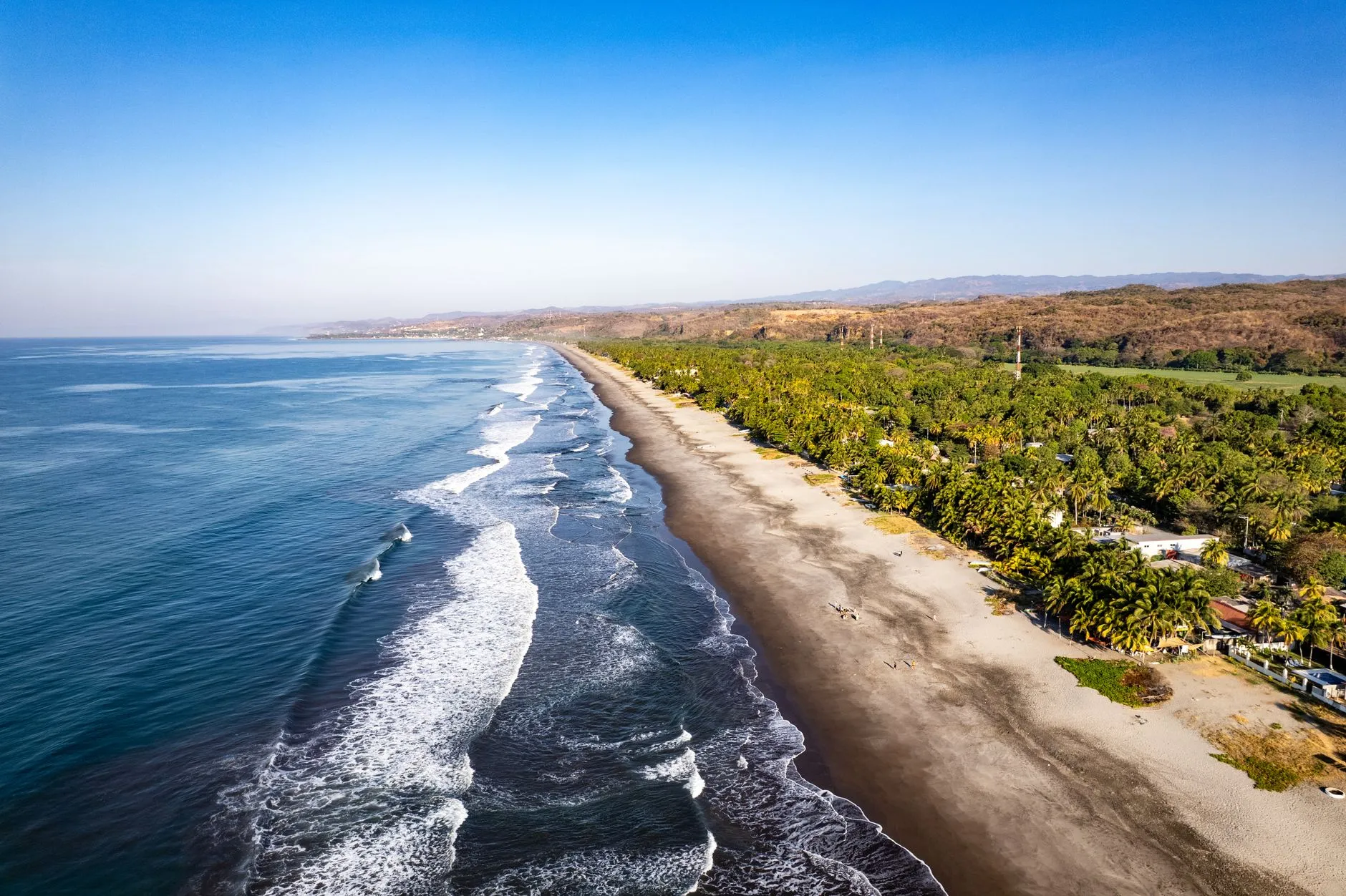
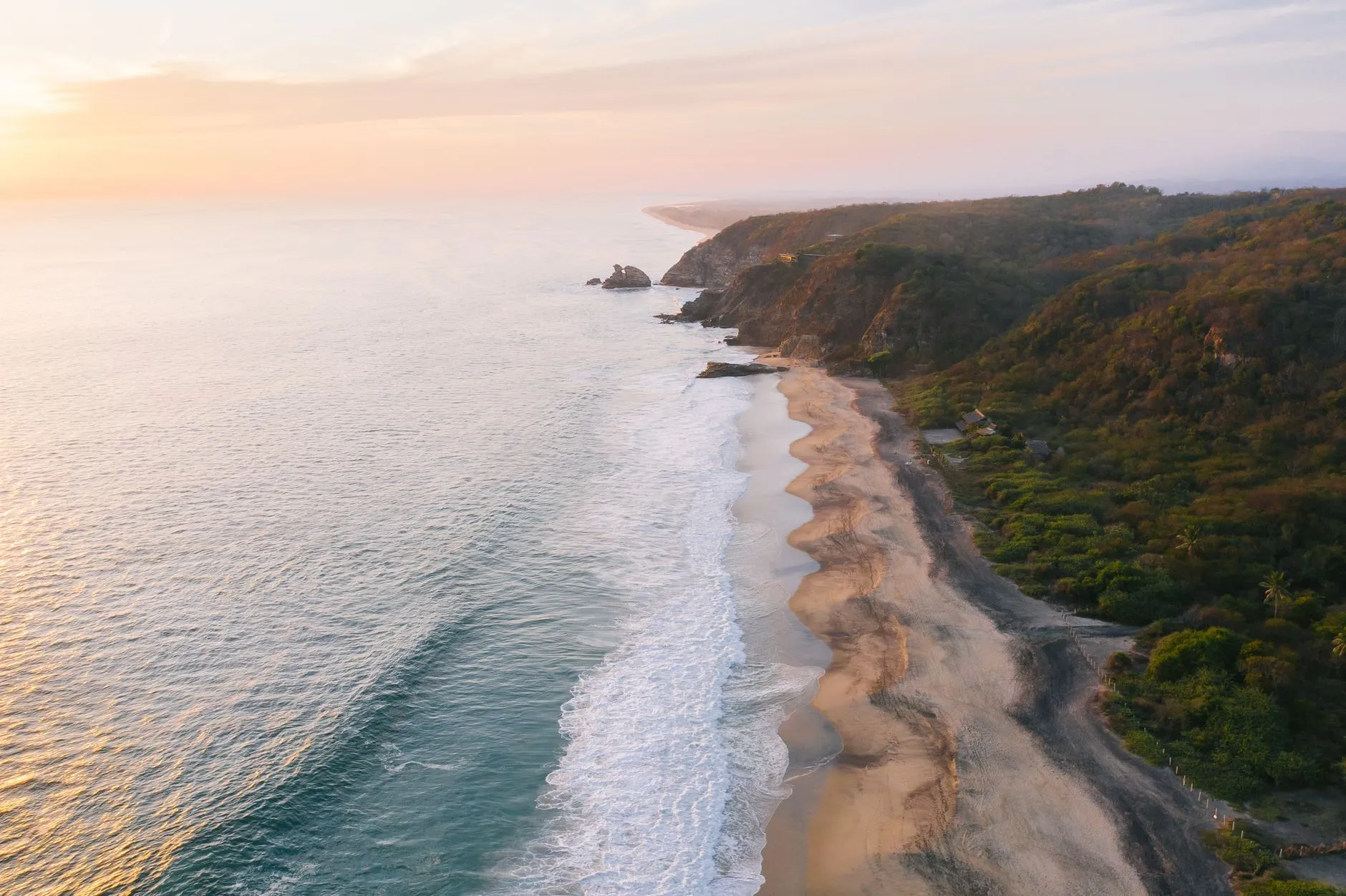
The swell that lands on Ireland's west coast has crossed the entire Atlantic to get there, and it shows. From the grey limestone shelves of Clare to the sea cliffs of Donegal, the Wild Atlantic Way strings together sandy bays, slabby reefs and two of the most respected big waves on the planet, all of it framed by sheep fields, ruined castles and towns where the surf shop shares a wall with the pub. Lahinch is the friendly capital, a seaside golf town where half the country learned to stand up. Bundoran, two hours north, is its saltier cousin: an old holiday town with a world-class reef breaking in front of the promenade.
Nobody surfs here for comfort. The water never passes 16 degrees, winter means a 5/4 with boots and gloves, and the same low-pressure systems that deliver the swell bring rain and wind that can undo a forecast overnight. Summer goes small and soft, which is exactly when the schools fill up. The trade is worth it: in September and October, clean organised swell meets water still holding its summer warmth, the lineups empty out, and a pint of Guinness after a session tastes like nowhere else on earth.
Best months
September and October; June to August for learning
Water
8 to 16°C: the wetsuit is part of the deal, all year
Levels
Whitewater at the Lahinch prom to some of the heaviest waves in Europe
Getting there
Fly to Shannon for Clare, Knock or Dublin for Sligo and Donegal; a car is essential
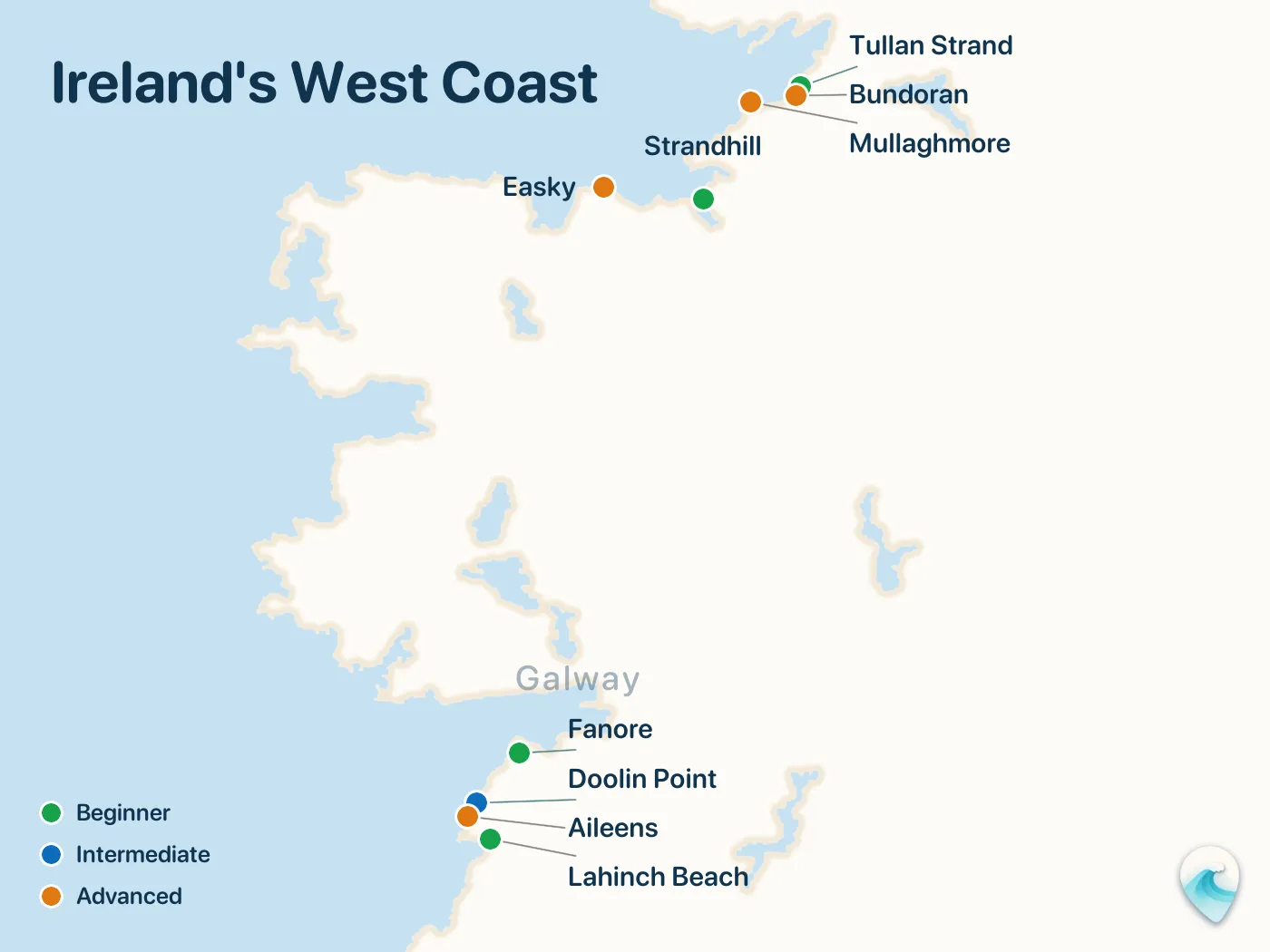
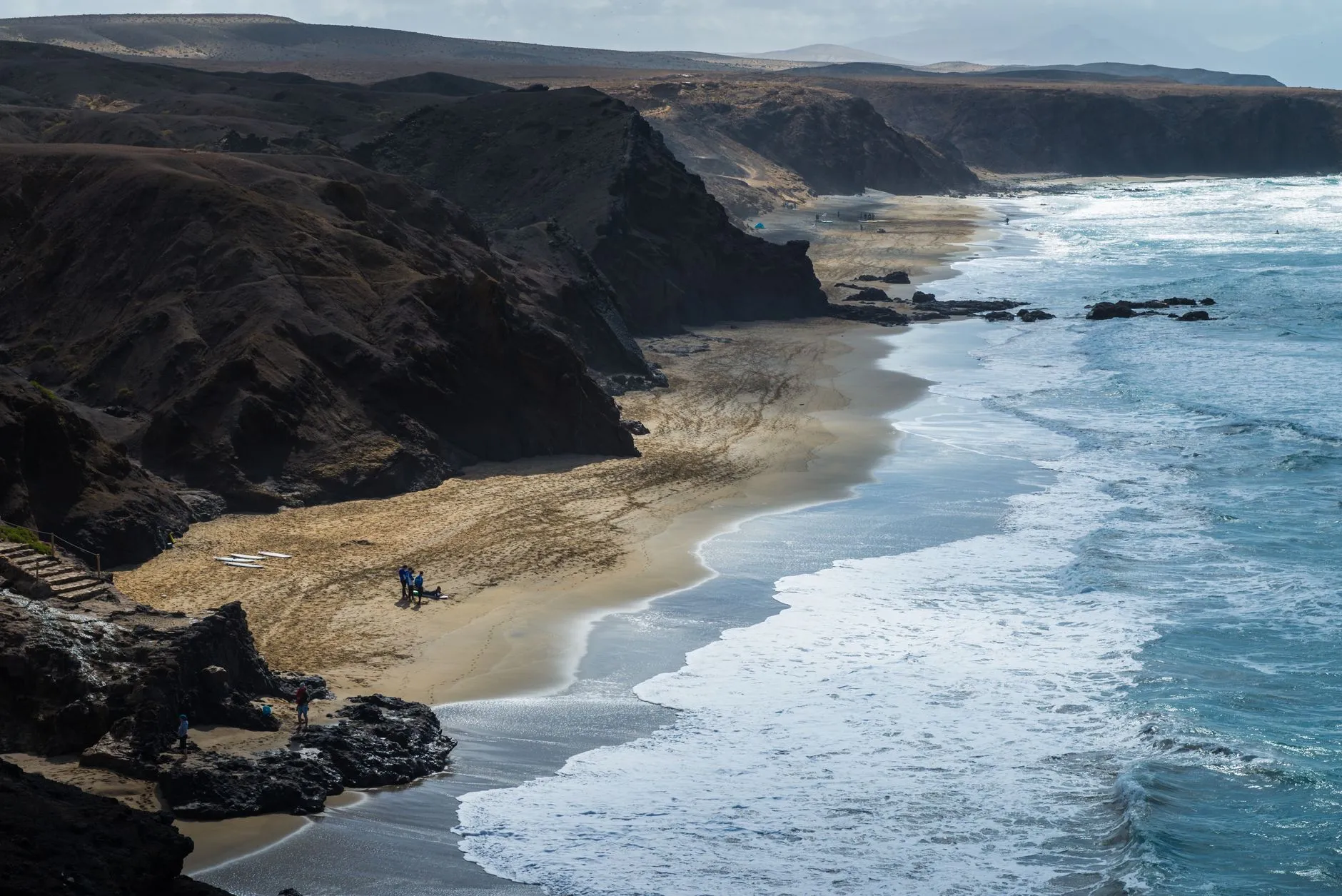
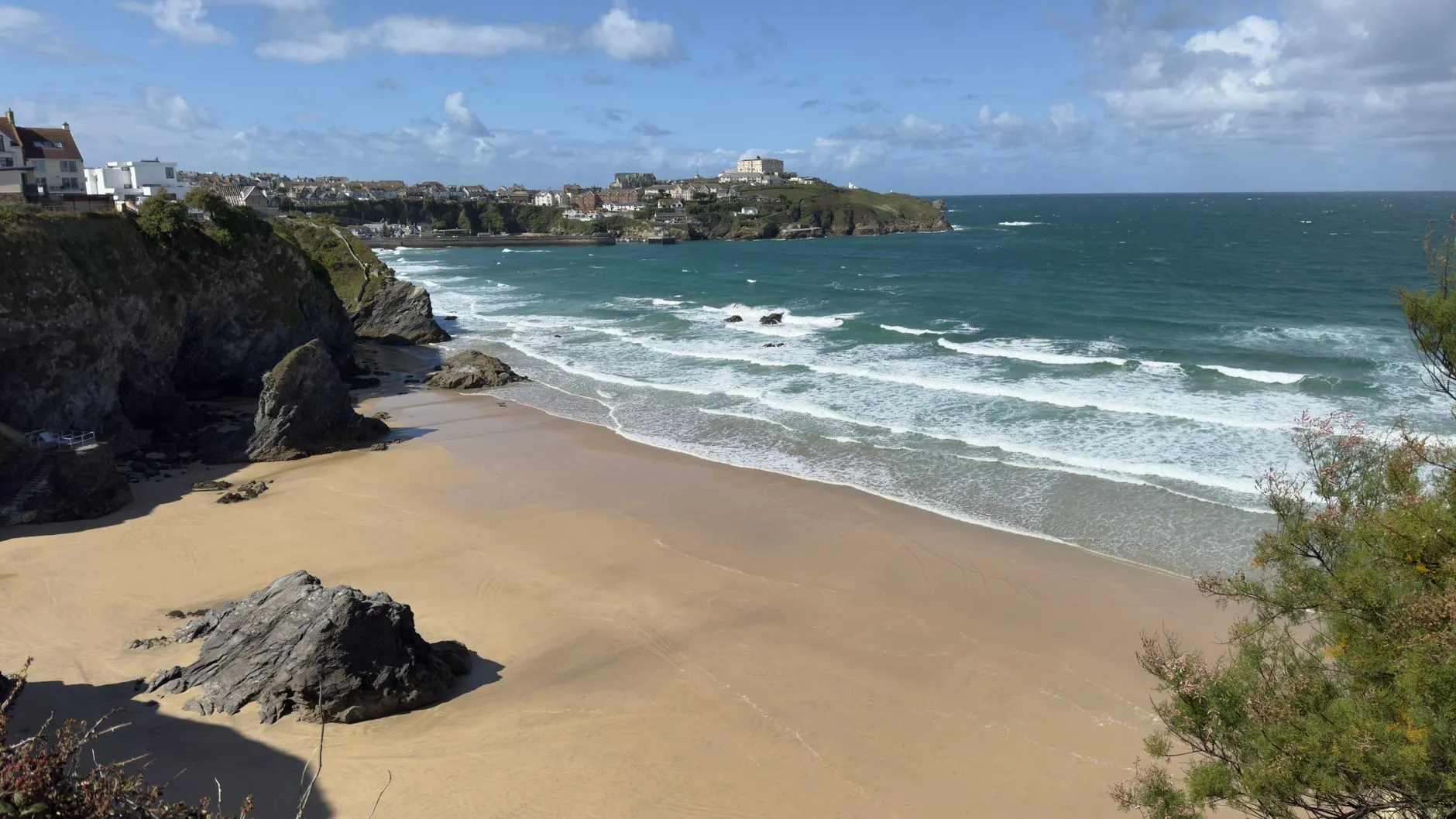
Three sandy bays with schools, soft banks and room to fall: the prom at Lahinch, the Burren at your back at Fanore, the cliffs of Tullan. The wetsuit does the suffering, you just surf.
Lahinch Beach
Lahinch, Co. Clare · Beach break
Beginner
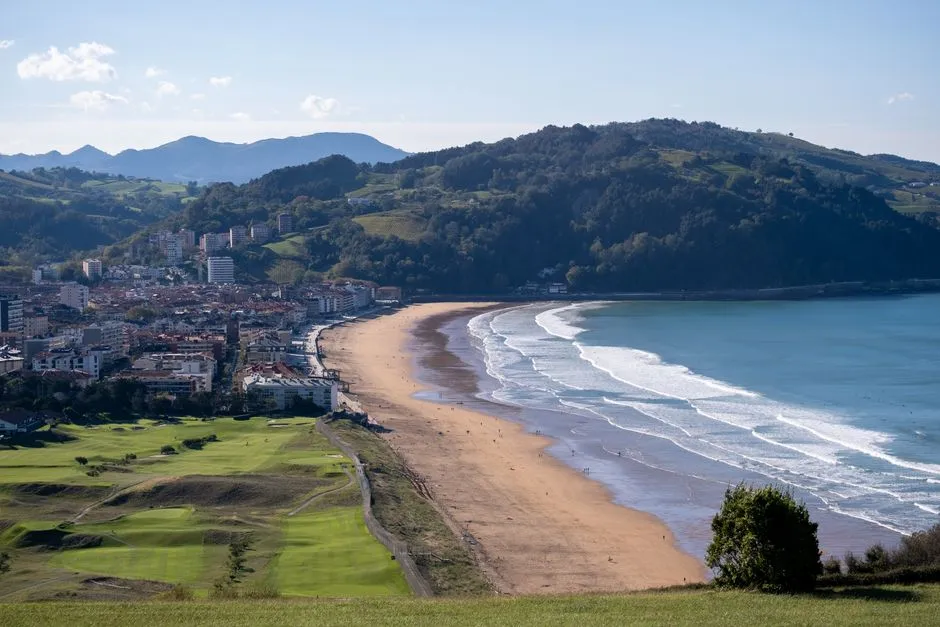
The whole town faces the beach, and the beach takes care of everyone: schools in the whitewater, longboarders down the far end, proper corners for the rest on a clean autumn day. It works through most of the tide and picks up any swell going. This is where Irish surfing learned to walk, and the prom is still the best place in Clare to read the ocean with a hot coffee in hand.
Fanore
The Burren, Co. Clare · Beach break
Beginner
A strip of golden sand at the foot of the Burren, where the bare limestone hills run straight into the ocean and the Aran Islands sit on the horizon. Fanore catches plenty of swell, keeps a friendly bank most of the year and stays quieter than Lahinch because the coast road winds and the car park is small. Watch the rips near the river mouth at low tide, and bring what you need: the village is one shop and a pub.
Tullan Strand
Bundoran, Co. Donegal · Beach break
Beginner
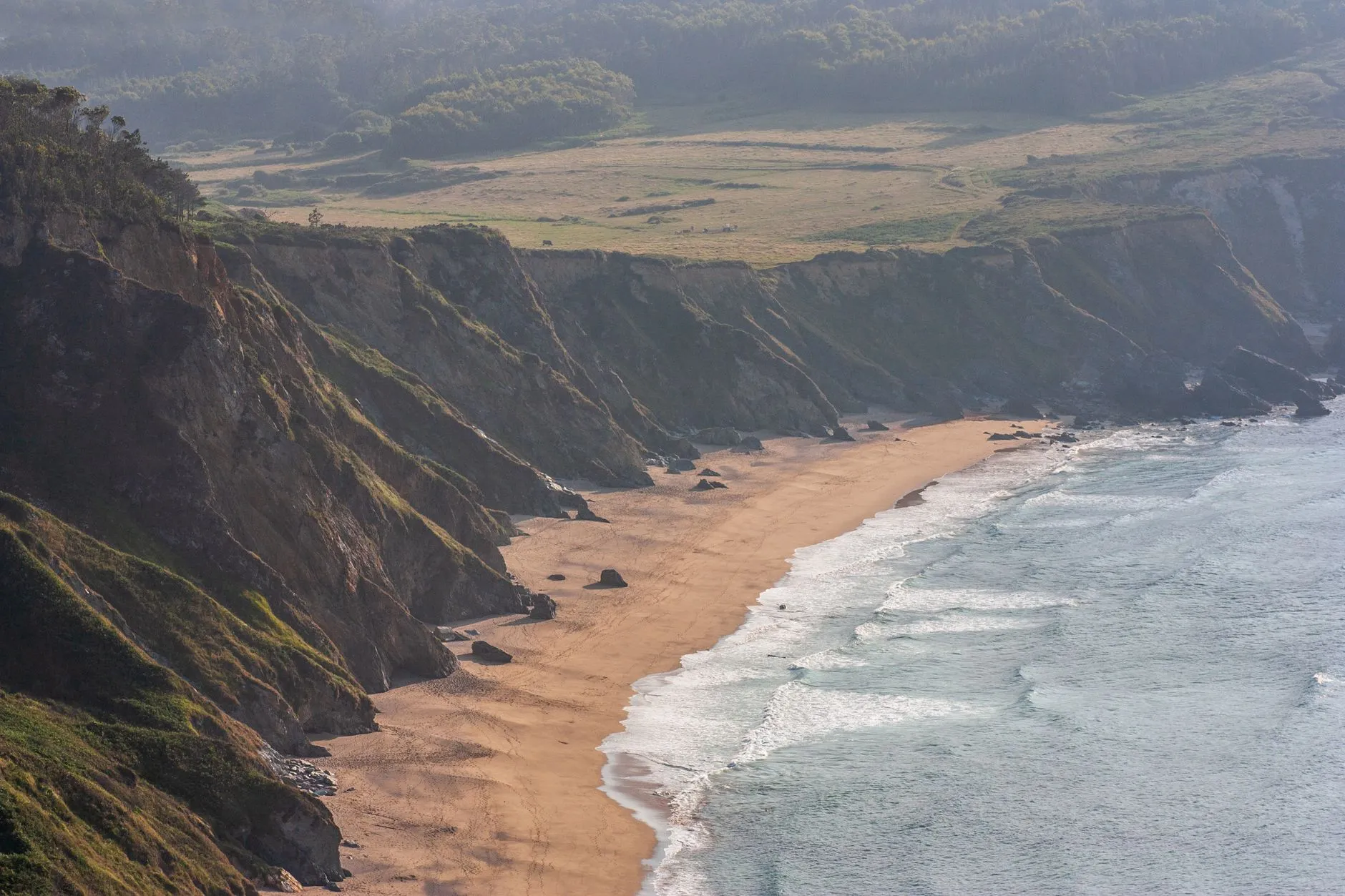
Bundoran's release valve: a long, open beach under grassy cliffs, a short walk from town past the sea arches of the Fairy Bridges. It swallows a crowd, gives the schools an easy inside and produces surprisingly punchy peaks whenever the reefs are too small or too busy. It is more exposed than it looks: when the rips switch on, they mean it, so stay in front of the access and keep a landmark.
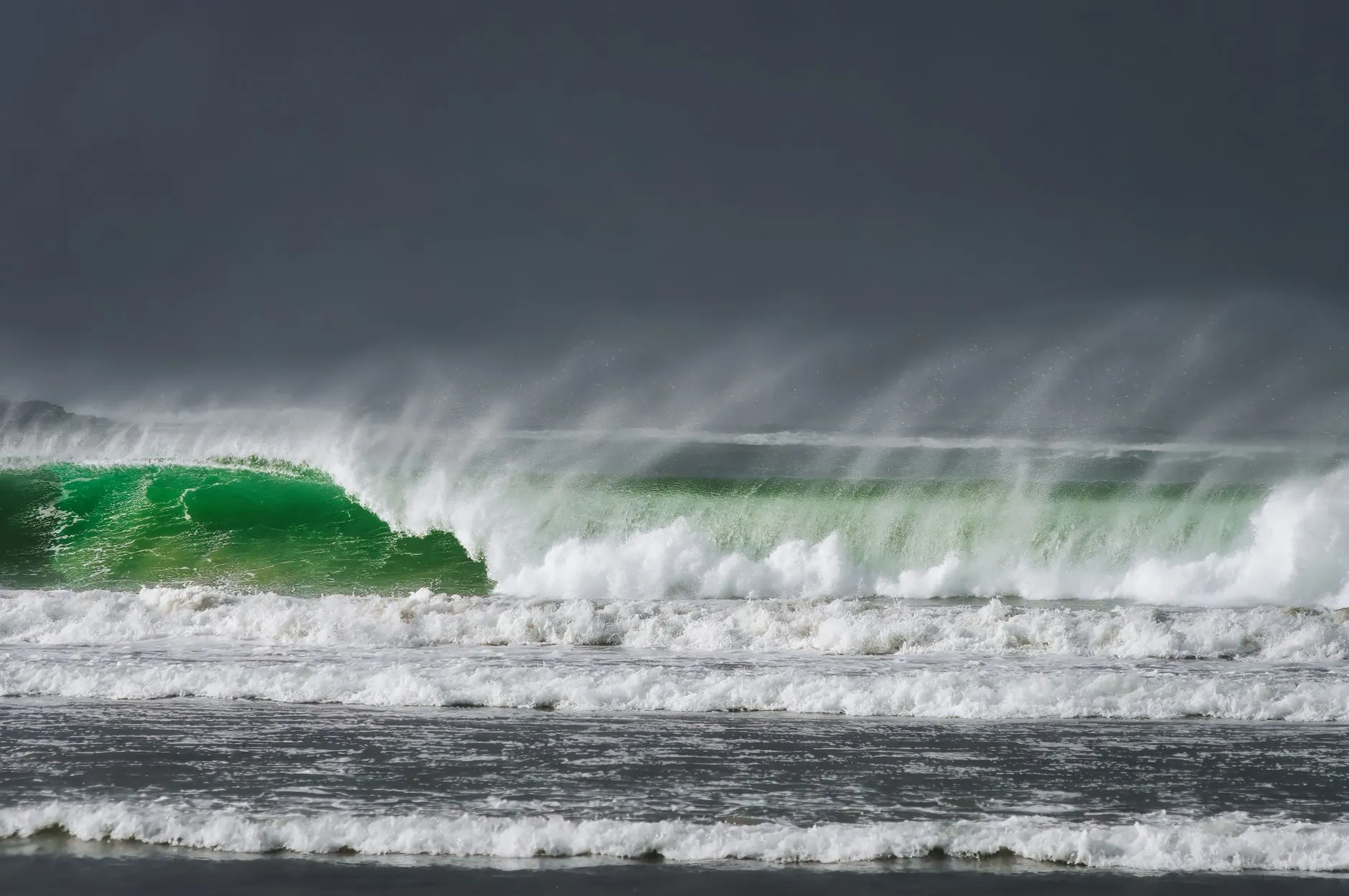
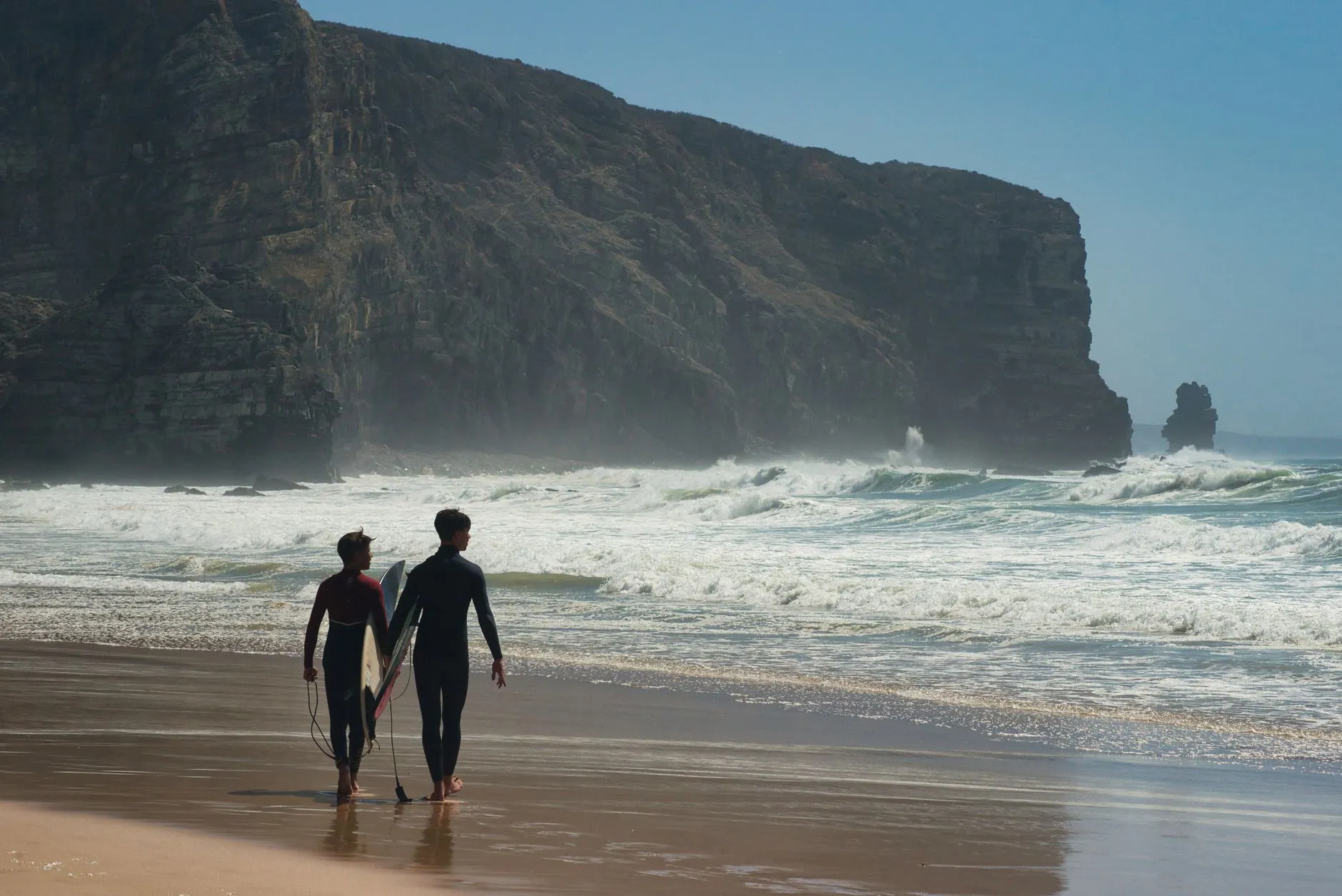
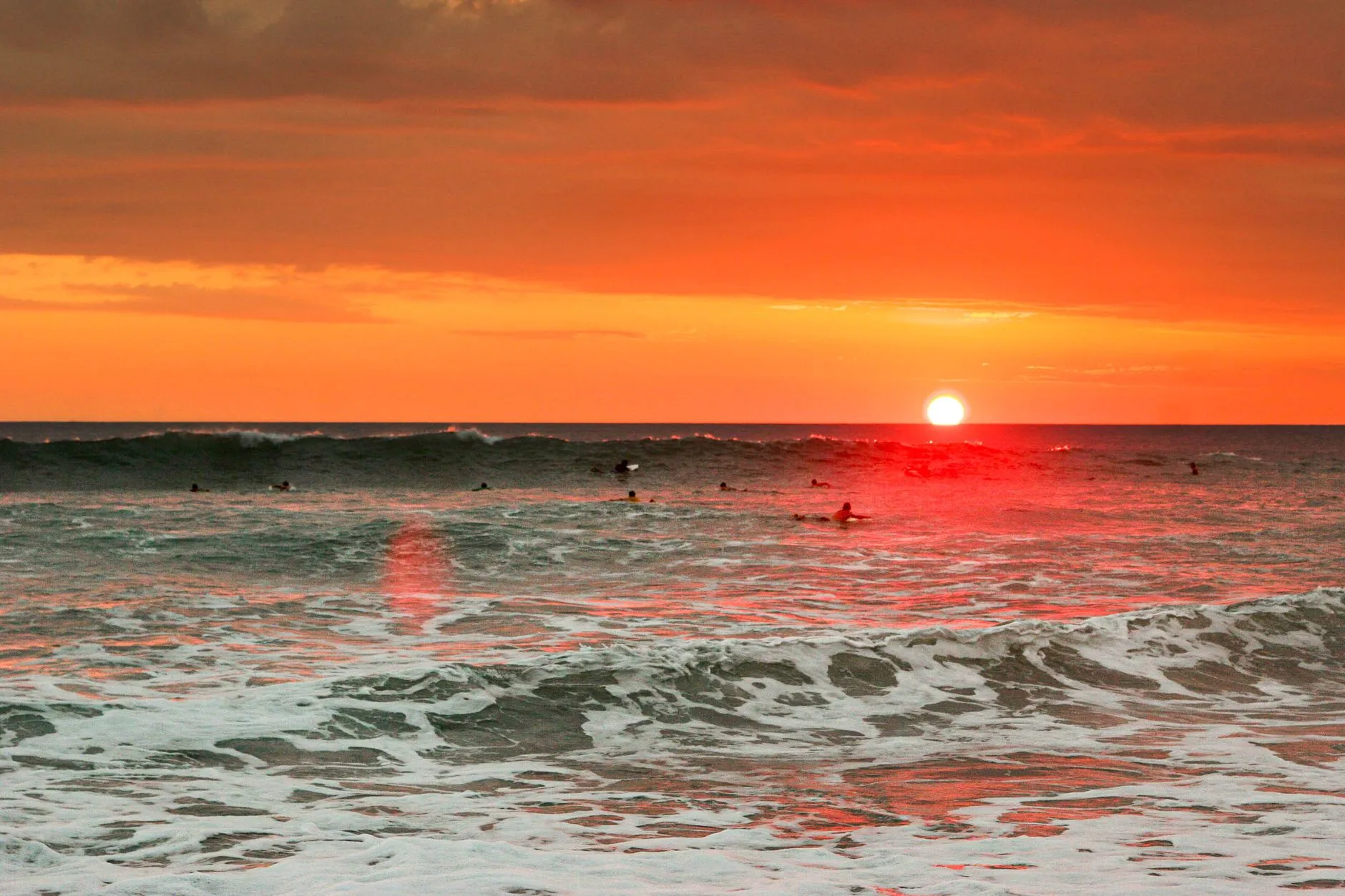
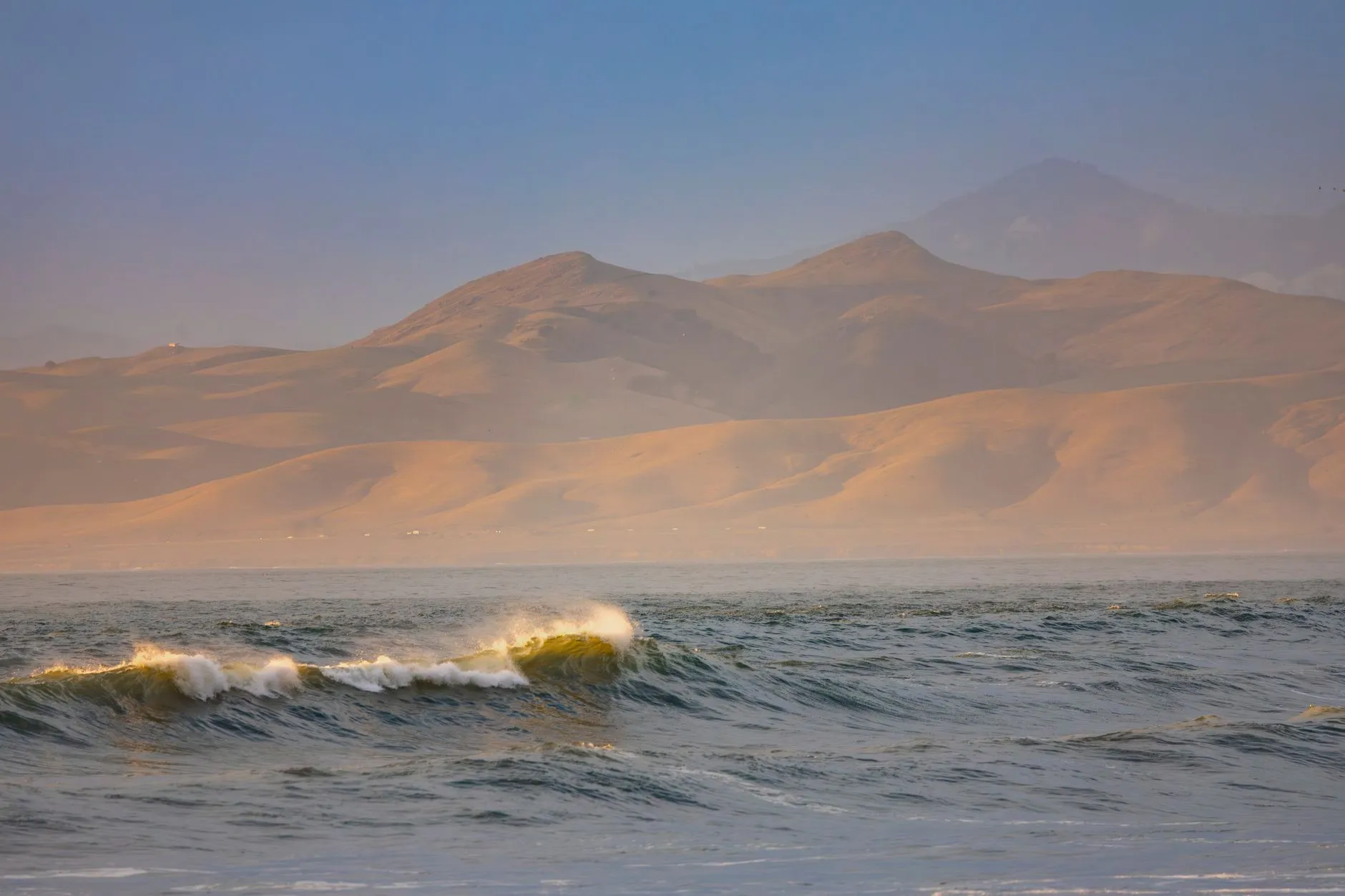
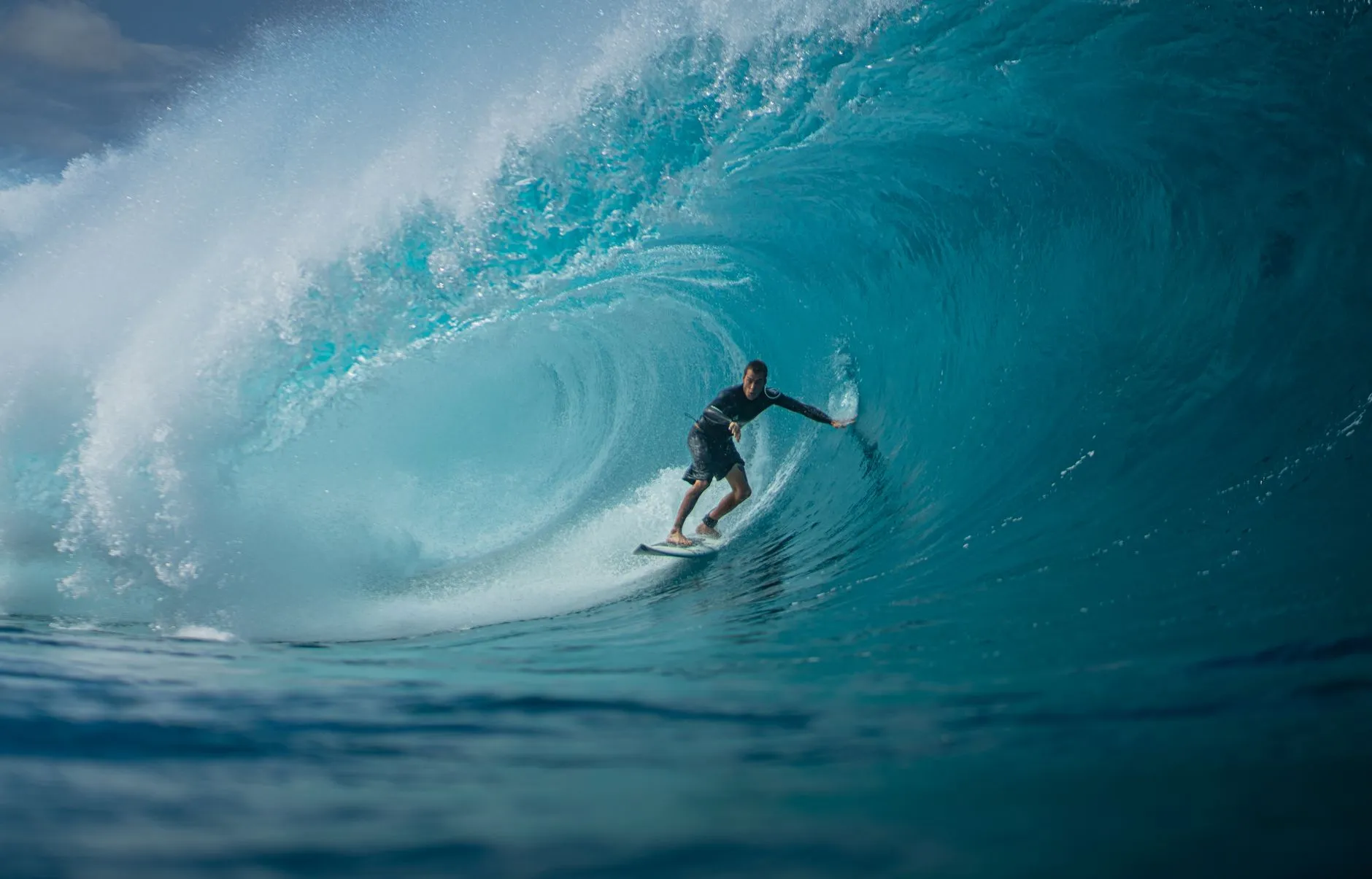
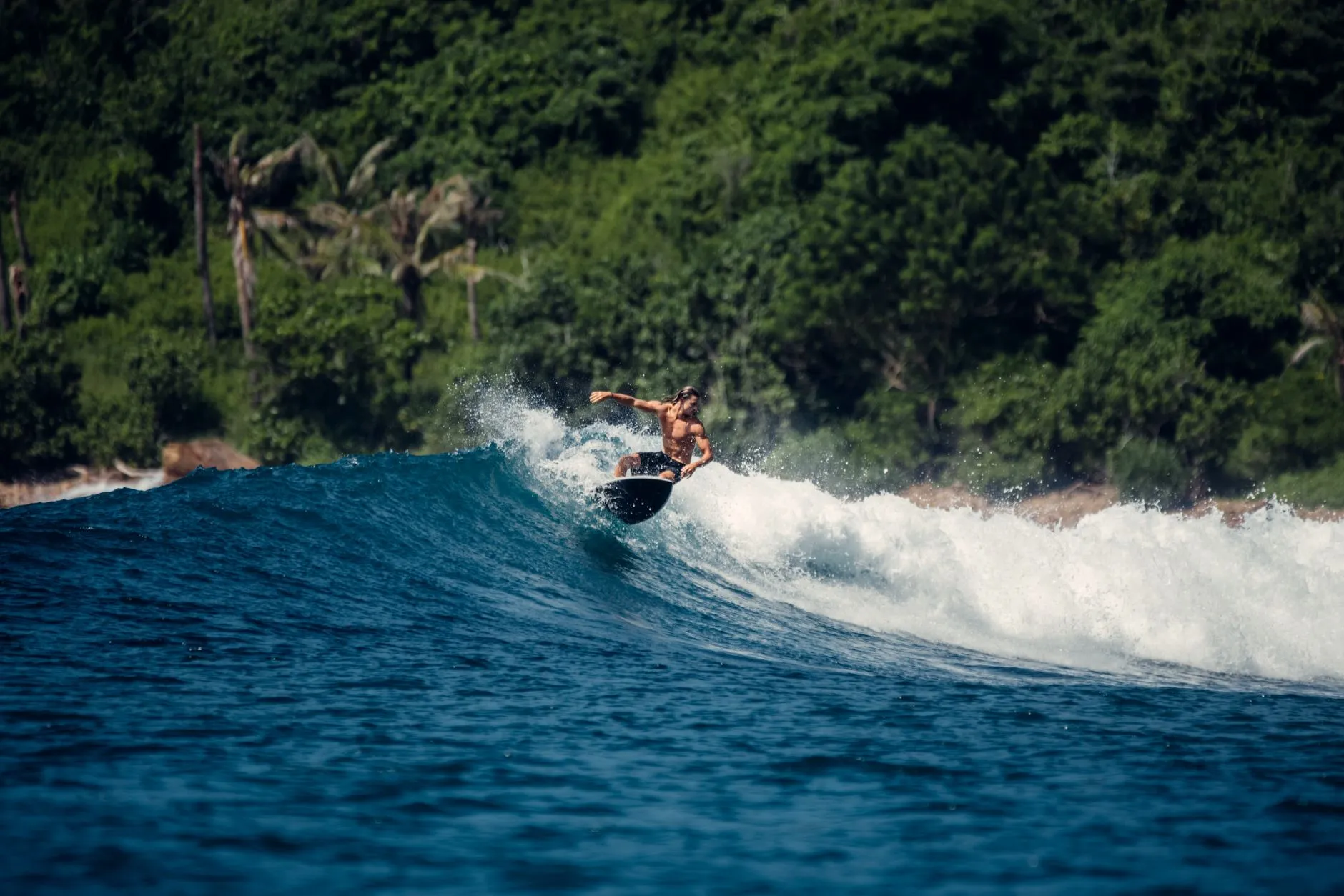
Offshore spray on a green Atlantic wall, west of Ireland
When you want more
A punchy surf village beach and a long left point with boulders at the door. Real waves, real currents, and two of the best evenings in Ireland waiting on shore: seaweed baths in Strandhill, fiddles in Doolin.
Strandhill
Co. Sligo · Beach break
Beginner
A surf village in the truest sense: swimming is banned here because of the rips, so the ocean gave the main street board shops, surf schools and seaweed baths instead. The beach break below Knocknarea is shifty and punchier than it gets credit for, with banks that reward whoever walks furthest down the strand. Learn with a school, respect the current, and take the hot seaweed bath afterwards: it is the local recovery ritual.
Doolin Point
Doolin, Co. Clare · Point break (left)
Intermediate
A long left peeling off the limestone ledge near Doolin pier, with the Aran ferries sliding past and Crab Island detonating across the channel to remind you where you are. Getting in and out over the boulders takes a calm head and a bit of watching; done right, it is one of the longest rides in Clare. The reward on land is Doolin itself, the traditional music capital of Ireland, where the session continues in the pub.
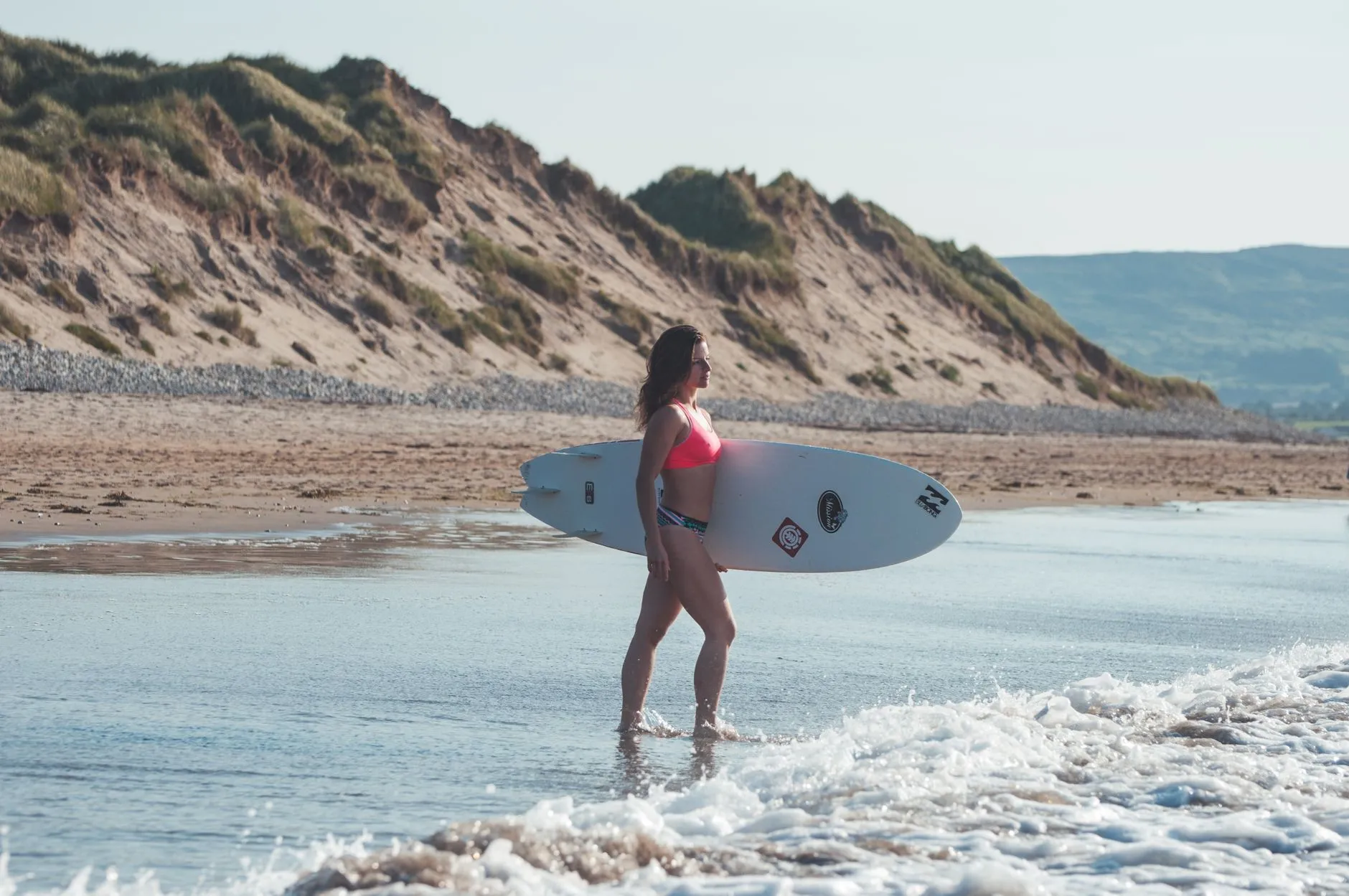
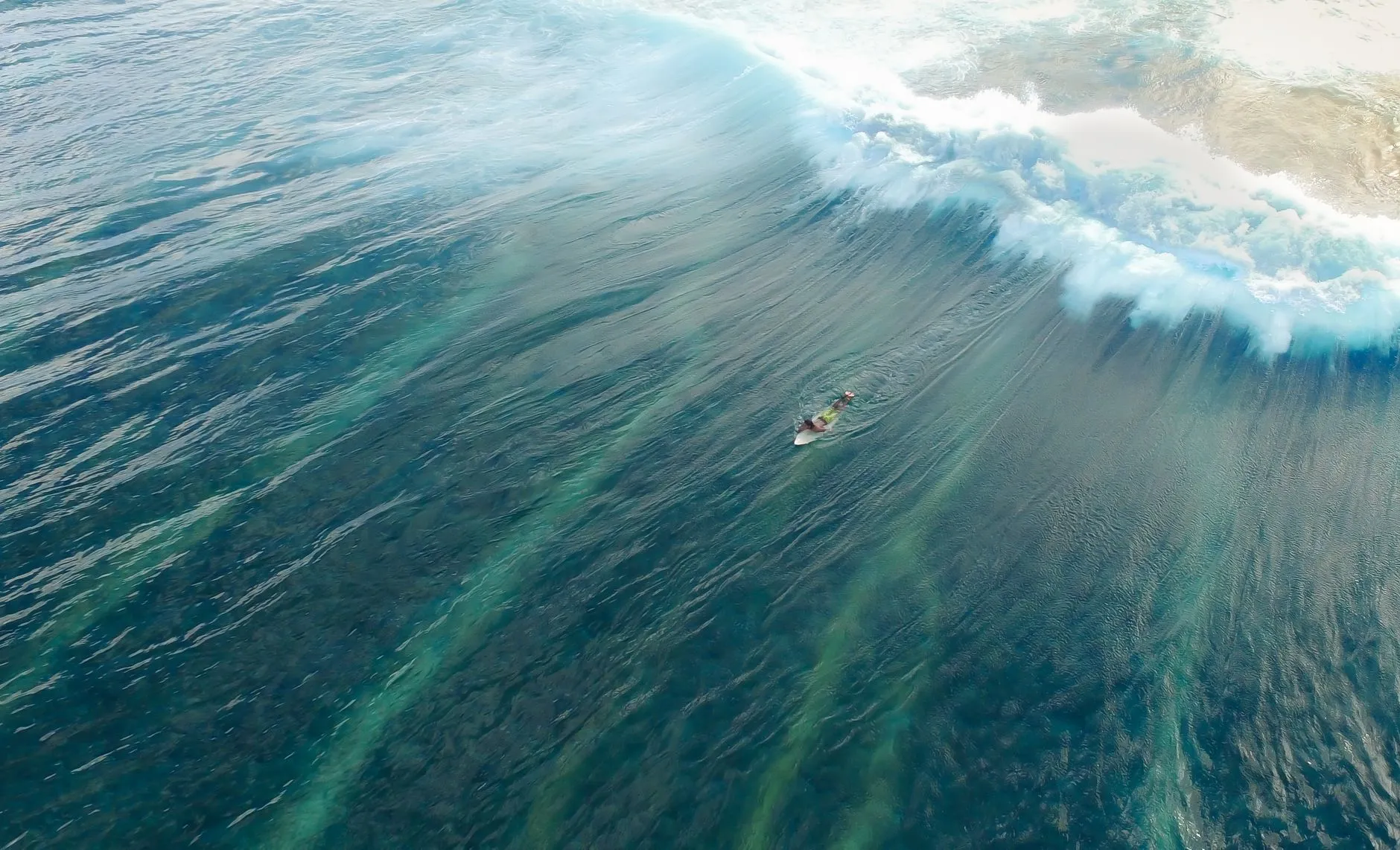
Heading out on a rare warm day, County Sligo
The serious reefs
Easky and The Peak are why cold-water surfers cross oceans for Ireland: limestone reefs that turn September groundswell into long, hollow walls. Shallow rock, established locals, and worth every bit of the respect both demand.
Easky
Co. Sligo · Reef left
Advanced
The reef Irish surfing made pilgrimages to before anyone had heard of Aileens: a dark, peat-stained left wrapping along limestone below a ruined castle, with a right across the river mouth when the angle cooperates. Cold, consistent and far from everything, it is still the classic Sligo experience: park by the field, suit up in the drizzle, then trade long walls with a handful of others. Bring boots even in summer, the rock is unforgiving.
Bundoran
Co. Donegal · Reef break (A-frame)
Advanced
Ireland's most famous wave breaks in front of the town: The Peak, an A-frame over a flat limestone flag, a long hollow left and a shorter right, as good as reef surfing gets in this country. It is shallow, it is watched from the prom, and it is surfed superbly by a local crew who have seen every visitor arrive convinced they will get one straight away. Watch a full set from land first, then paddle out with patience and manners.
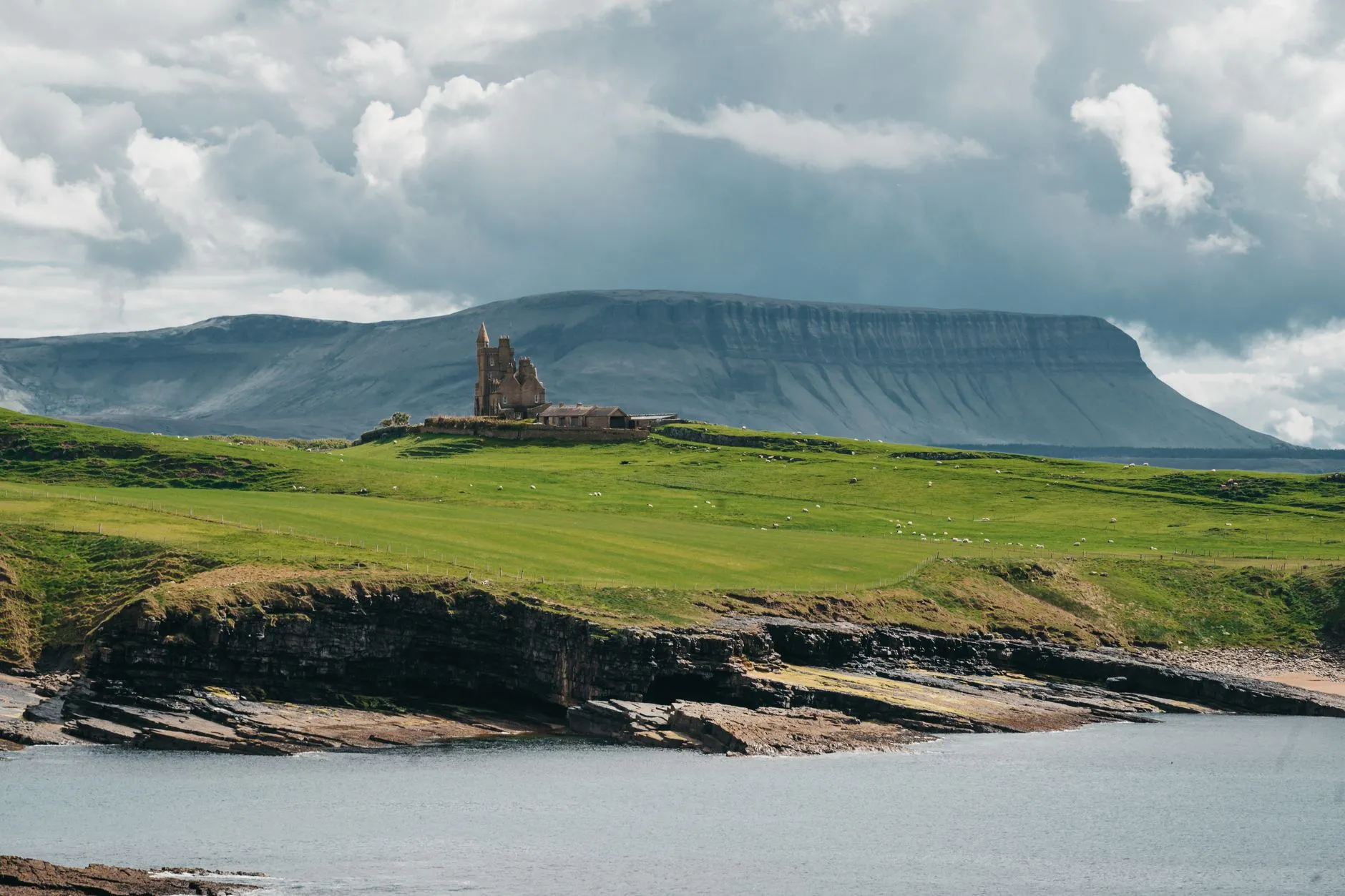
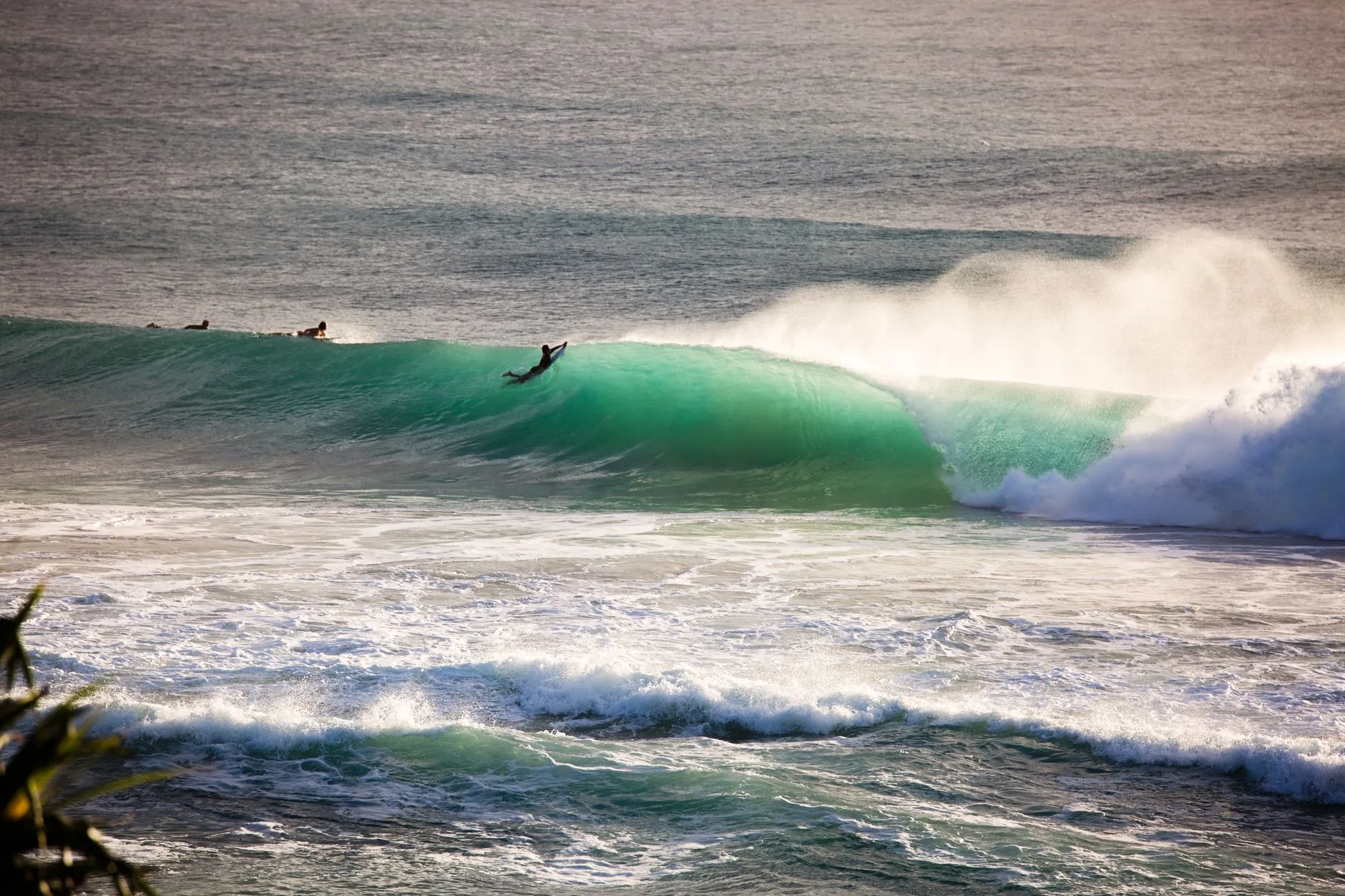
Classiebawn Castle and Benbulben from the Mullaghmore headland, County Sligo
The giants: most of us watch
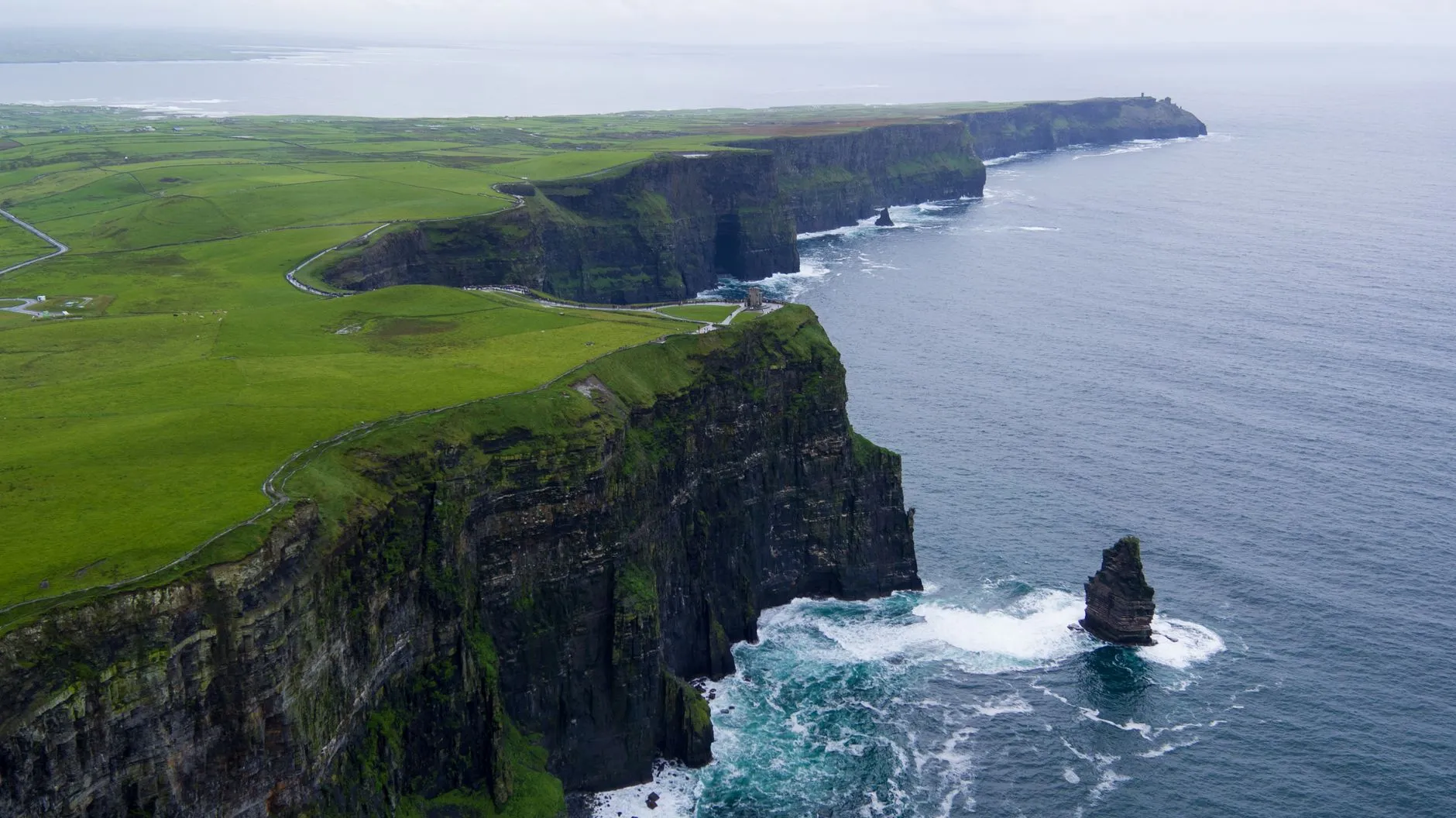
Aileens under the Cliffs of Moher and Mullaghmore off its headland are world big-wave royalty, surfed by trained teams with skis and safety plans. Go on a giant day anyway: standing on the cliff top while sets unload below is an Irish surf experience in itself.
Aileens
Cliffs of Moher, Co. Clare · Big-wave reef (right)
Advanced
Under the Cliffs of Moher, where 200 metres of rock shade the lineup by afternoon, a right barrel unloads onto a boulder slab that changed what the world thought Ireland was for. Aileens is expert territory in the fullest sense: a goat-track descent or a ski from Doolin, serious water, real consequence. For everyone else the cliff top is the grandstand, and on a big autumn day it is the best free show in surfing.
Mullaghmore
Co. Sligo · Big-wave reef (left)
Advanced
A ledge off Mullaghmore Head that turns winter storms into one of the heaviest waves in the world, ridden by a small circle of big-wave surfers, mostly behind a ski. This is not a spot you work up to over a good week; it is a wave people apprentice to for years, with safety teams and a plan. When an XXL swell lights it up, park along the headland road with everyone else, castle at your back, and watch mastery from a safe distance.
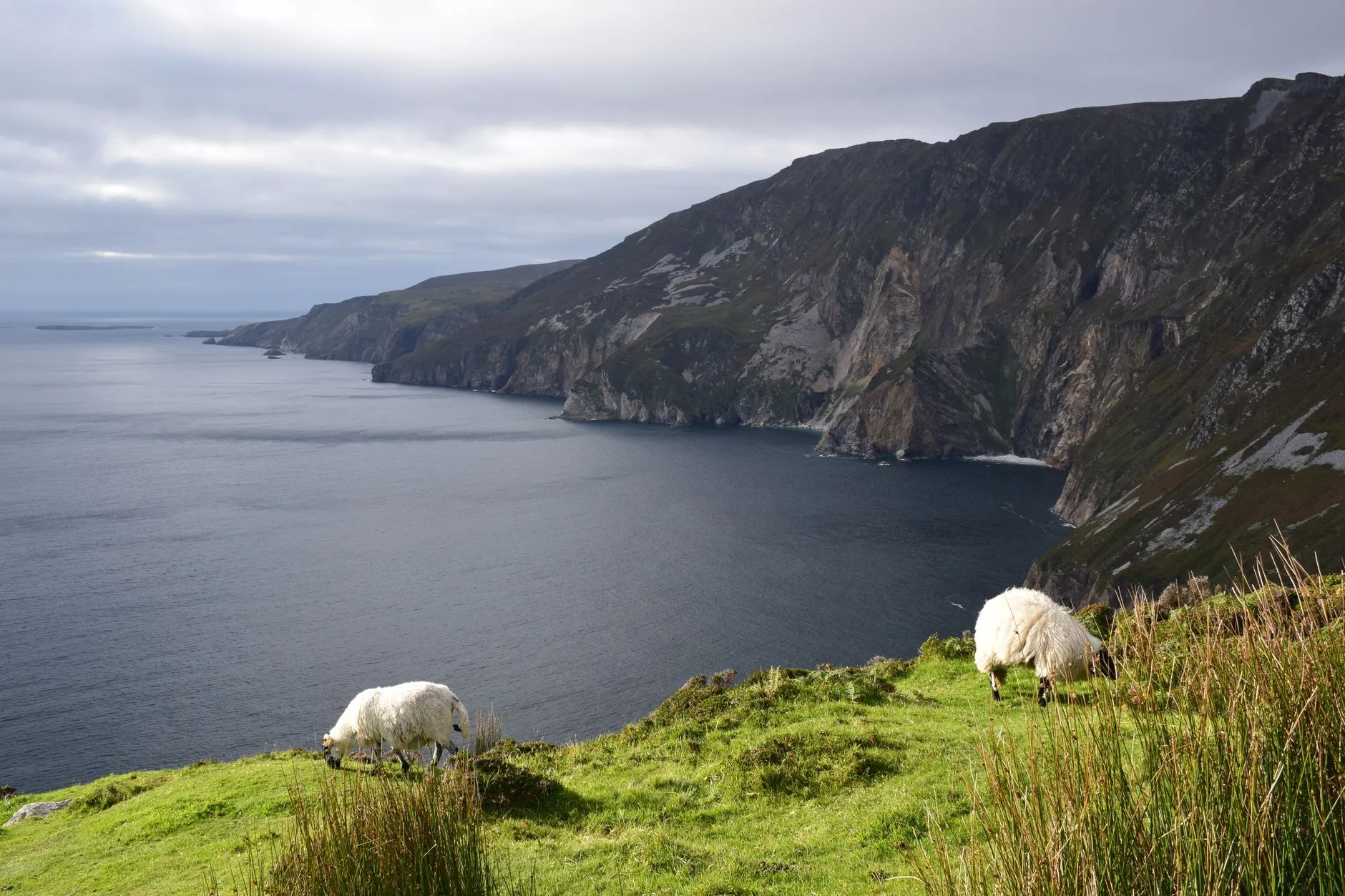
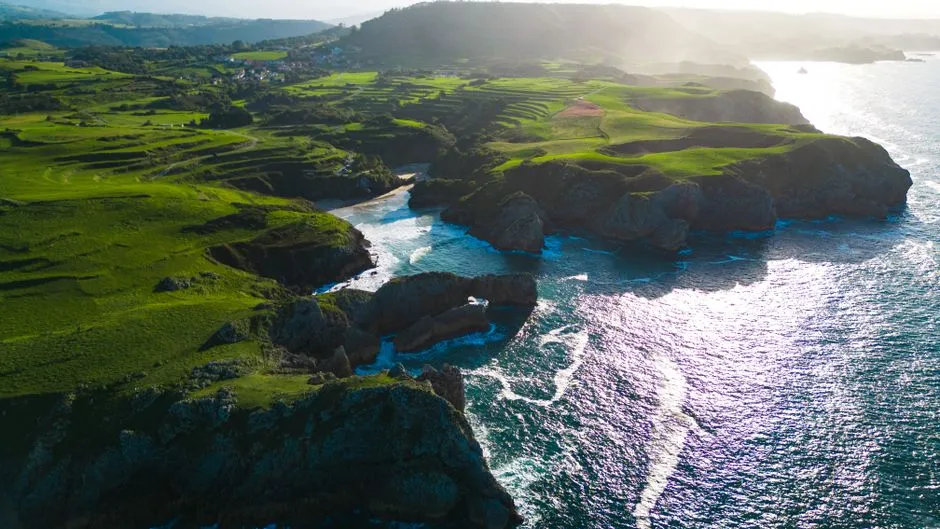
Sheep country above the Slieve League cliffs, Donegal
When to go
A year in Ireland's West Coast
Typical conditions, month by month. The ocean did not sign this table: for live waves, wind and tide, check the app.
January
6-10 ft
48°F · 5/4 + boots + gloves · Expert
Storm after storm. The reefs go huge, the windows between fronts are short, the days shorter.
February
6-9 ft
46°F · 5/4 + boots + gloves · Expert
The coldest water of the year. Mullaghmore often picks its XXL days now. For the committed.
March
5-8 ft
48°F · 5/4 + boots + gloves · Advanced
Still winter in the water, but the light stretches and the swell stays serious.
April
4-6 ft
50°F · 5/4 + boots + gloves · Intermediate
Cleaner spells between fronts. Less crowded than you would guess: everyone is waiting for May.
May
3-5 ft
54°F · 4/3 + boots · All levels
Long evenings arrive and the beach breaks come into their own. The gloves come off, literally.
June
2-4 ft
57°F · 4/3 · Beginner
Small and friendly, with usable light until nearly eleven at night. Learning season opens.
July
2-3 ft
59°F · 4/3 · Beginner
The softest month. Schools full, longboards happy, reef surfers restless.
August
3-4 ft
61°F · 3/2 · Beginner
The warmest the Atlantic gets here. Late in the month the first autumn pulses appear.
September
4-6 ft
59°F · 4/3 · All levels
The magic begins: organised swell, water still warm, lineups thinning. Book this month.
October
5-8 ft
57°F · 4/3 + boots · Advanced
The month the locals plan their year around. The reefs do their best work.
November
6-9 ft
54°F · 5/4 + boots + gloves · Advanced
Big-wave season opens. Storm-dodging becomes the skill that matters most.
December
6-10 ft
50°F · 5/4 + boots + gloves · Expert
Dark by four, gales weekly, world-class when it aligns. Guinness weather, earned.
Good to know
When is the best time to surf Ireland's west coast?
September and October. The first organised autumn swells arrive while the water is still near its warmest, the summer crowds leave and the reefs at Bundoran, Easky and Lahinch turn on. Winter is world class but stormy and cold, a game of short windows for experienced cold-water surfers. June to August is small and gentle: perfect for learning, frustrating for anyone chasing the famous waves.
Is Ireland's west coast good for beginners?
Genuinely good, in the right season. Lahinch, Strandhill and Tullan Strand all have long-running surf schools, sandy bottoms and gentle summer waves, and the schools provide warm wetsuits. The honest caveats: rips are a real presence on these open beaches, so learn with a school rather than alone, and the ocean here is never warm. June to September is the beginner window.
What wetsuit do I need to surf in Ireland?
From November to April: a 5/4 with hood, boots and gloves, no debate, with water between 8 and 10°C. May and October work in a 4/3 with boots. June to September a 4/3 does the job, and in a warm August a 3/2 is possible with the water around 15 or 16°C. If you bring one suit for a September or October trip, make it a good 4/3 and pack boots for the reefs.
Can I surf Aileens or Mullaghmore?
Almost certainly not, and that is fine. Both are genuine big-wave spots surfed by experienced teams with jet skis, safety plans and years of cold-water preparation; there is no learner version of either wave. What you can do is watch: the cliff top above Aileens and the headland road at Mullaghmore are two of the best big-wave grandstands in the world, and on an XXL day half the county turns out with flasks and binoculars.