Supertubos is the wave that put Peniche on the world map, and Europe's most convincing answer to Pipeline. The mechanics are rare for a beach break: a deep-water trench offshore lets Atlantic swell run at the coast with almost nothing to slow it down, until it trips on a shallow sandbar just south of town. The wave goes from open ocean to a square, spitting barrel in a couple of seconds, and it does all of this meters from dry sand, close enough that the crack of the lip reaches you on the beach a beat after you see it.
That violence is exactly why the world tour comes. The MEO Rip Curl Pro Portugal has run here since 2009, in October for most editions and in March from 2022 to 2025, world titles have been decided on these banks, and for the rest of the year the wave belongs to a hard core of locals and traveling barrel hunters who treat an autumn forecast like an appointment. The nickname, the European Pipeline, gets used carefully by people who have surfed both, and it survives the comparison.
Advanced
Wave
Heavy sand-bottom beach break, lefts and rights, the lefts most celebrated
Best swell
SW to W groundswell, head-high to double overhead
Best wind
N to NE, offshore on the peninsula's south side
Best tide
Low to mid, hollower and harder. High fattens it and adds backwash
Season
September to November the prize, contest in October, winter between storms
Level
Advanced, experts only once it gets solid
How the wave breaks
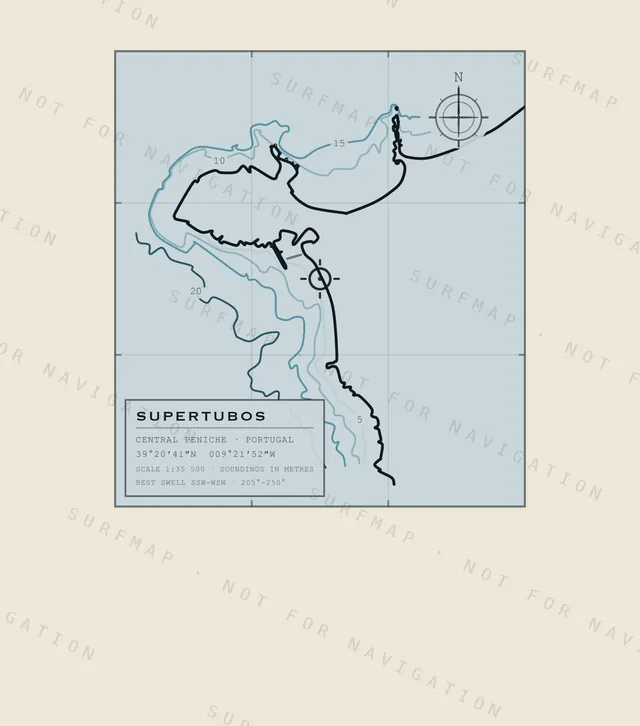
Most beach breaks are tamed by their own seabed: a long, gently shelving bottom that drains energy from a swell before it breaks. Supertubos skips that step. The trench in front of the bank keeps the water deep almost until the end, so sets arrive at full ocean pace and then trip on the shallow sandbar all at once. The wave has no time to fatten or crumble. It stands up, throws a thick lip out square, and spits. Both directions break, but the lefts are the celebrated ones, harder and hollower down the bar.
On the wave, that means one late drop straight into the tube, a short and violent ride, and a decision made in about two seconds. Closeout roulette is part of every session: for each makeable runner the bank serves several that shut down from end to end, and reading the difference from the water, in the moment, is most of the skill here. When it is on, the rides last seconds and stay with you for years.
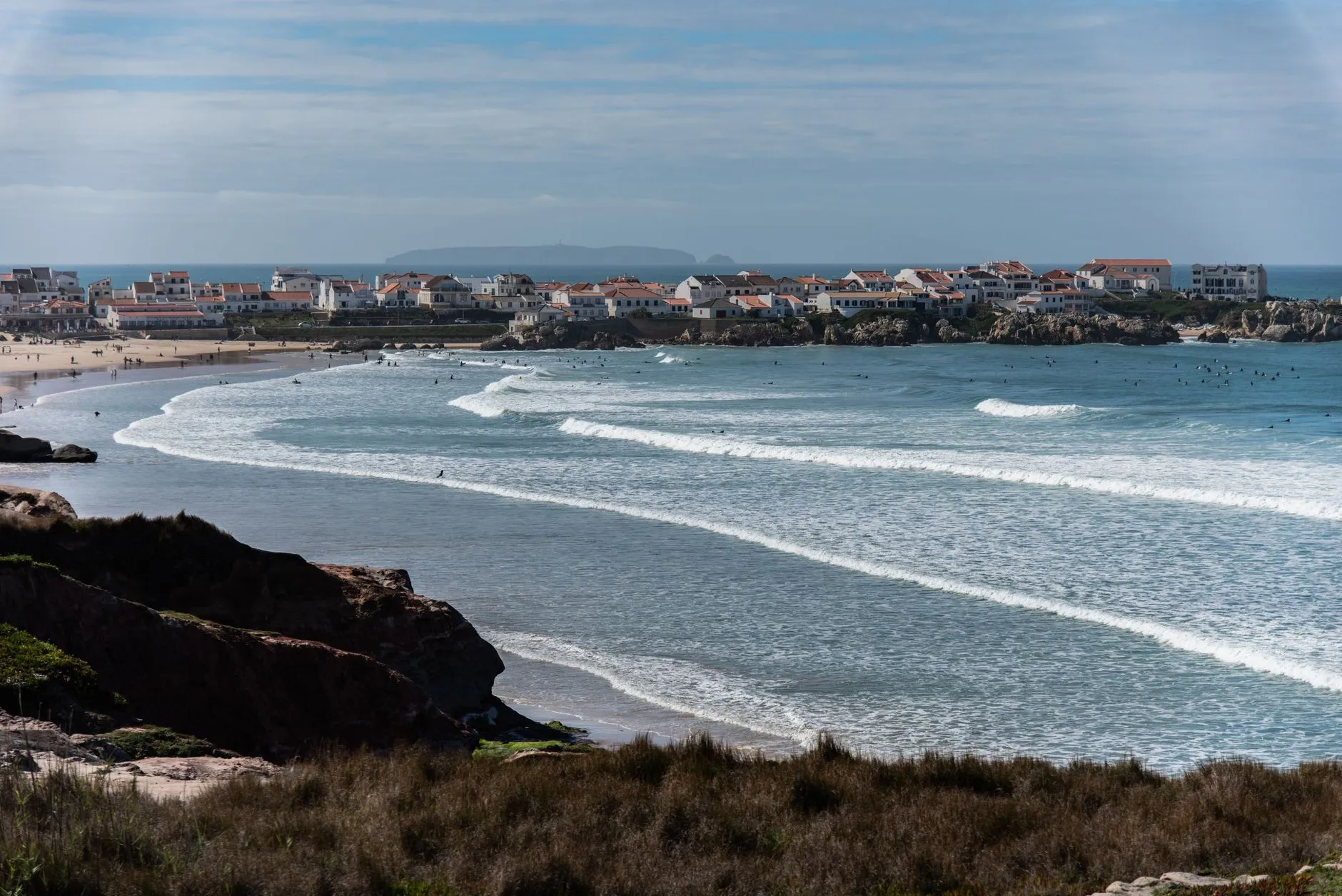
Autumn swell lines rolling toward the Supertubos bank south of Peniche
When it works
Autumn is the prize. From September to November the first real Atlantic groundswells march in while the sandbars still hold their summer shape, and the northerly winds that ruin the exposed beaches blow offshore here, on the sheltered south side of the peninsula. That combination, energy plus groomed banks plus clean faces, is why the best days of the year almost always land between September and November.
October brings the circus: the MEO Rip Curl Pro Portugal has been held here since 2009, back in its autumn slot after four March editions, and for a week or two the dunes turn into a stadium. Winter still produces heavy, perfect days between storms, but you wait for the windows. Summer is mostly small, and the wave rarely resembles itself, though the nortada keeps whatever does arrive clean.
The lineup and the take-off
The bank shifts, and the peaks shift with it. Spend ten minutes on the sand before you paddle and watch where the sets spit: that is today's takeoff zone, and it can sit fifty meters from where it was last week. Line up with a mark on the dunes, because position here is measured in a board length or two. The drop comes late and steep, and on the hollow ones you are in the barrel before any bottom turn, or you are not making the wave at all.
From September to November the water holds world-class locals and visiting pros tuning up for the contest, and the main peak runs on a priority chaos with a hierarchy inside it. The honest play is patience: sit a peak away from the pack, take the corners the main peak lets through, and make the ones you go on. Respect buys space here faster than aggression, and on a shifting bar the next peak is often a short walk up the beach.
Getting there
Supertubos breaks at the south end of Peniche, on Praia do Medão, right beside the Molhe Leste jetty. Park behind the dunes on the road toward Consolação and cross on the boardwalk: from the top of the dune you see the whole bank at a glance, which is exactly the look this wave deserves before you commit. Town is a few minutes away, Baleal ten minutes across the peninsula, and the drive from Lisbon takes about an hour up the A8, which makes this one of the easiest heavy waves in the world to reach.
Hazards
A board-breaking, body-breaking lip onto a shallow bottom of hard-packed sand: it hits nothing like an ordinary beach break
Violent shorebreak on the inside, time your way in and out or it will decide for you
Rips running along the bar on bigger days, strong enough to move the whole lineup
Serious crowds through contest season, from September to November the peak belongs to surfers you have watched on webcasts
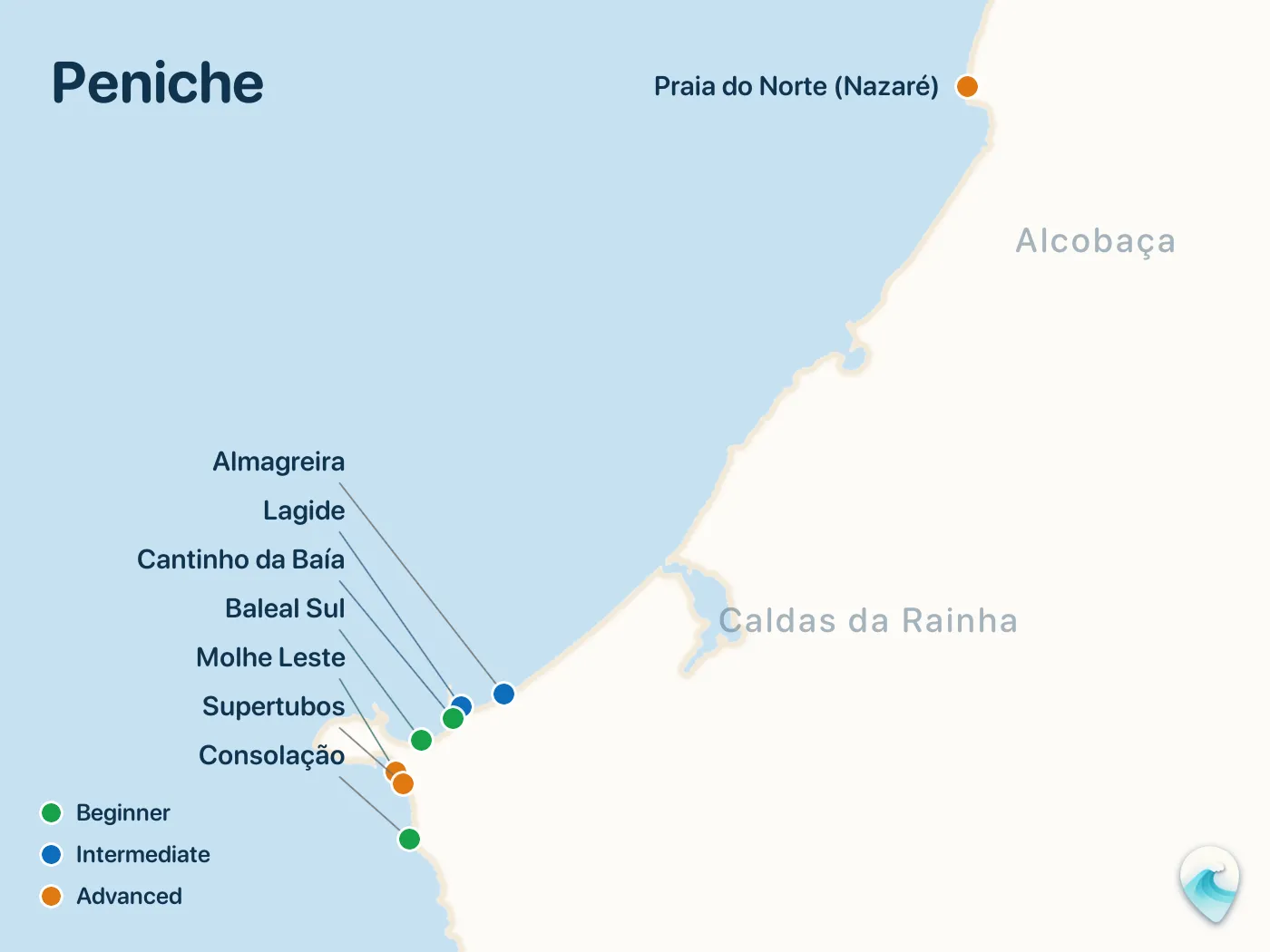
An honest guide to surfing Peniche: Supertubos, the Baleal learning bays, the 8 spots that matter and the day trip to Nazaré's giants, with the season month by month and what to expect in the water.
On a small, clean day, honestly, yes. At waist- to chest-high, Supertubos is a punchy beach break rather than a barrel machine, and the corners away from the main peak leave room to learn its speed. Two cautions stay true at any size: the wave still jacks faster than most beach breaks, and the shorebreak still bites on the way in and out. If you are here to progress rather than to survive, Baleal, ten minutes across the peninsula, is the learning side of Peniche. Surf there, then come and watch this side properly.
What tide is best at Supertubos?
Low to mid, for most surfers most of the time. Less water on the bar makes the wave squarer, hollower and harder, which is exactly what the barrel hunters want and exactly what raises the price of a mistake. Toward high tide the wave fattens and slows, and backwash off the steep beach can lump the faces. Where surfers disagree is at the edges: some prefer the first push of the incoming tide for a little more water under the lip, and on the heaviest swells a touch more depth can turn closeouts into rides. Almost nobody argues for full high.
When is the Supertubos contest?
October in most years. The MEO Rip Curl Pro Portugal has brought the world tour to this beach since 2009; it spent four editions in March, from 2022 to 2025, before returning to its autumn slot in 2026. A waiting period lets the event run on the best days of the window, so check the WSL calendar before you book. For those weeks the dunes become a natural grandstand and Peniche fills to the edges: the cafés, the campsites and every bed in Baleal. Watching a heat from the sand, close enough to feel the shorebreak land, explains this wave faster than any forecast chart, and it is worth timing a trip around even if you never plan to paddle out.