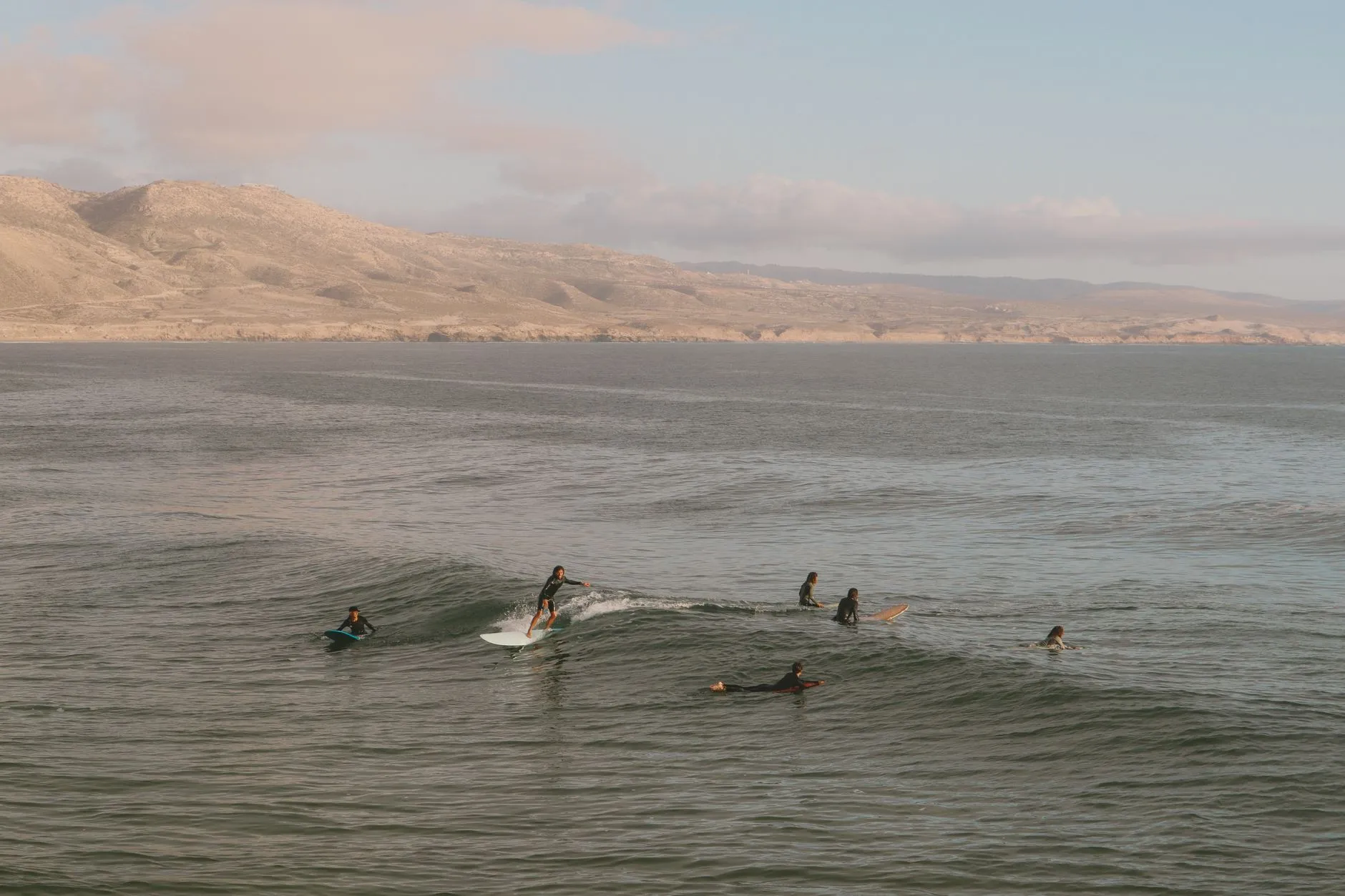
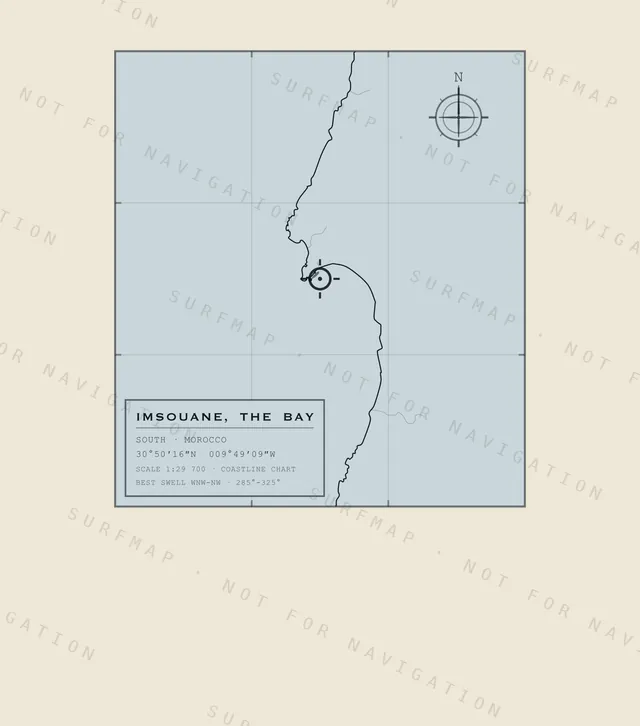
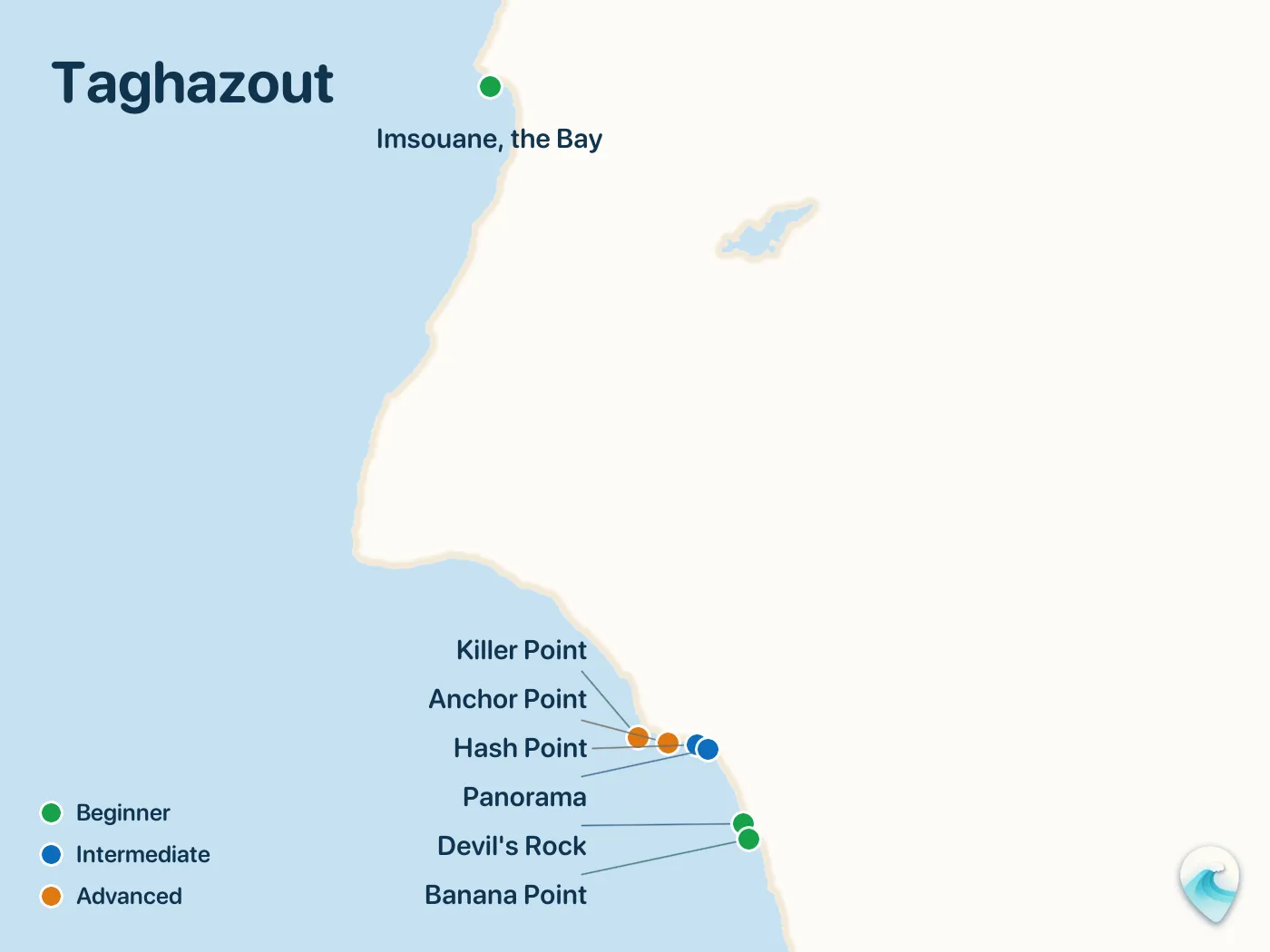
Imsouane is a fishing village on a headland about an hour north of Taghazout on the coast road, roughly halfway to Essaouira, with a small harbour tucked under the point. The headland gives it two waves. On the exposed north side, the Cathedral is a punchier beach and reef peak for intermediates. On the sheltered south side is the Bay, the wave this page is about: winter northwest swell bends around the harbour wall and peels right, down the whole bay, for several hundred meters. Locals talk about 600 or 800 on the best days and count it among the longest waves in Africa.
It is also one of the softest. The walls are slow and endlessly long over sand, so forgiving that second-week surfers make their first real turns here and longboarders stand on a single wave for minutes at a time. Your legs give up before the wave does. Come between October and March, when the swell wraps into the bay all season, go from low tide on the push, and go early, before Morocco's most crowded longboard lineup has finished its breakfast.
Beginner
Wave
Right-hand point wave over sand, several hundred meters long
Best swell
NW swell, waist to head-high, slow, endless rollers
Best wind
N to NE; the Bay faces south, so the north wind that blows out the open coast is offshore here, mornings are glassiest
Best tide
Low to mid on the push. Rides link up longest from low tide rising; high goes fat and slow
Season
October to March
Level
Beginners from their second week, longboarders of every level
How the wave breaks
The Bay is a right-hand point wave over sand. Swell that has crossed the Atlantic from the northwest meets the headland, bends around the harbour wall and starts to peel at the top of the point, beside the rocks. From there it runs down the whole bay, section after section, several hundred meters on an ordinary day and, most locals say, 600 to 800 on the best ones. It is not a fast wave. The walls are soft and slow, they rarely throw, and a section that looks like it will close simply reforms and keeps going.
Tide sets the length. From low tide on the push the sections link up longest and one wave can carry you from the takeoff to the beach in front of the village. At dead low the rocks near the takeoff show and the top of the point gets shallow. Around high the Bay goes fat and slow, still rideable on a longboard, but the connections fade. Size matters too: waist to head-high is the sweet spot, and on a big winter swell the Bay closes down and you go looking elsewhere.
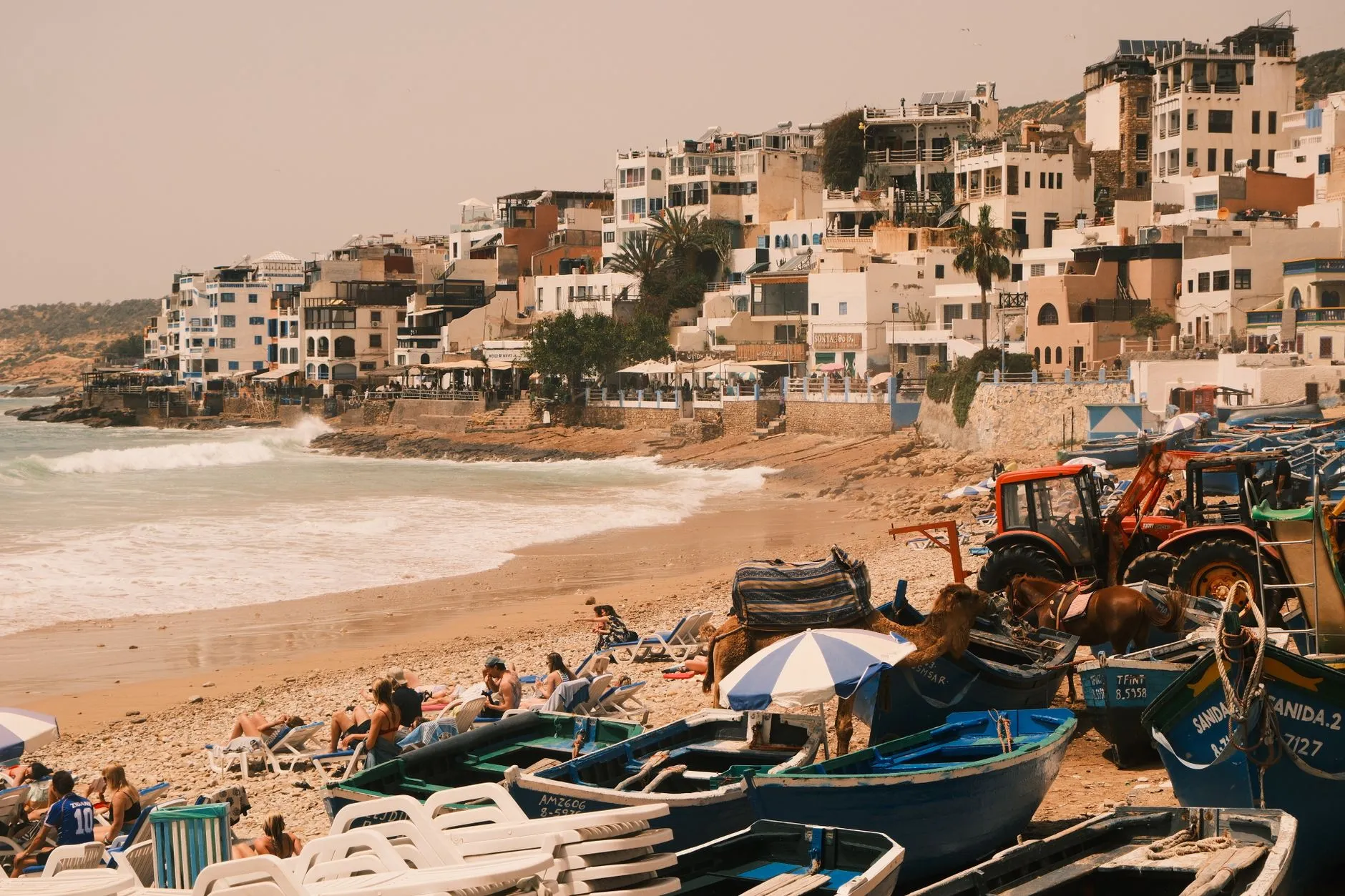
The beachfront at Taghazout, fishing boats pulled up on the sand, about an hour south of Imsouane
When it works
The season is October to March, when North Atlantic lows send northwest groundswell down the coast and the Imsouane headland wraps it into the bay all winter long. The Bay faces south, so the north to northeast wind that blows out the open coast blows offshore here, and the mornings are glassiest, before the sea breeze fills in. The water sits at 17 to 19°C, so a 3/2 is the standard and some people wear a 4/3 in January.
Summer is small, but this is one of the few waves on the coast that keeps working: most days the Bay still gives longboard waves, the water climbs to 21 or 22°C, and the lineup is a fraction of the winter crowd. If you are learning, a small summer day here is close to ideal.
The lineup and the take-off
Paddle out from the beach inside the bay, or from beside the harbour wall between sets when the tide is low. The takeoff is at the top of the point by the rocks, and that is where the winter crowd sits: Morocco's most crowded longboard lineup, a mix of surf camps, van travellers and locals. The etiquette is simple. Take turns at the top, and if you are learning, sit down the line where the wave has already softened and the reforms give you plenty.
After a long ride, walk back up the beach rather than paddling: it is quicker, and the wave will still be there. Keep an eye on the harbour mouth, where fishing boats come in and out past the edge of the lineup, and give them the room they need. Watch the rocks at the top of the point on a low tide, wear something on your feet if the urchins worry you, and remember that a heavy longboard in a crowded lineup is a hazard in itself: hold on to your board.
Getting there and where to stay
Imsouane is about an hour and a half to two hours from Agadir airport by the coast road through Tamri, about an hour north of Taghazout and about an hour south of Essaouira. Most people either come up from Taghazout for the day, which works well, or stay in the village's surf houses and guesthouses and surf the Bay at first light, before the day-trippers arrive.
One thing to know before you book. In early 2024 the authorities demolished a large part of the surf-camp and café buildings around the harbour. The wave is unchanged and the village has rebuilt some of its life since, but check what is actually open before you commit to a place to stay.
Hazards
Rocks around the takeoff at the top of the point, and urchins at low tide
The crowd: Morocco's busiest longboard lineup in winter, with heavy boards flying on every set
The walk back: after a long ride you are far from the peak, save some energy
Fishing boats in and out of the harbour, keep clear of the entrance
The sun: hours in the water, 17 to 22°C, and no shade in the lineup
An honest guide to surfing Taghazout, Morocco: a surf map and the 7 spots that matter from Devil's Rock to Anchor Point, when the points fire, and what to expect.
Yes, one of the best waves in Morocco for it. The Bay is slow, soft and breaks over sand, so a second-week surfer can catch green waves and try first turns without the punishment of the Taghazout points. Sit down the line rather than at the top, go on a small day from low tide on the push, and take a longboard or a big soft top. The crowd is the only real difficulty.
How long is the wave at Imsouane?
Several hundred meters on an ordinary day, and locals talk about 600 to 800 on the best ones, which is why the Bay is often counted among the longest waves in Africa. Rides are measured in minutes rather than seconds. The longest come from low tide on the push, on a clean waist to head-high northwest swell; around high tide the sections stop connecting.
The Bay or the Cathedral: which one should you surf?
The Bay if you are learning, longboarding or just want the longest ride possible: it is the sheltered, slow wave on the south side of the headland. The Cathedral is on the exposed north side, a punchier beach and reef peak that picks up more swell and suits intermediates on a shortboard. When the Bay is too small, the Cathedral is usually working; when the Bay is peeling, hardly anyone looks anywhere else.