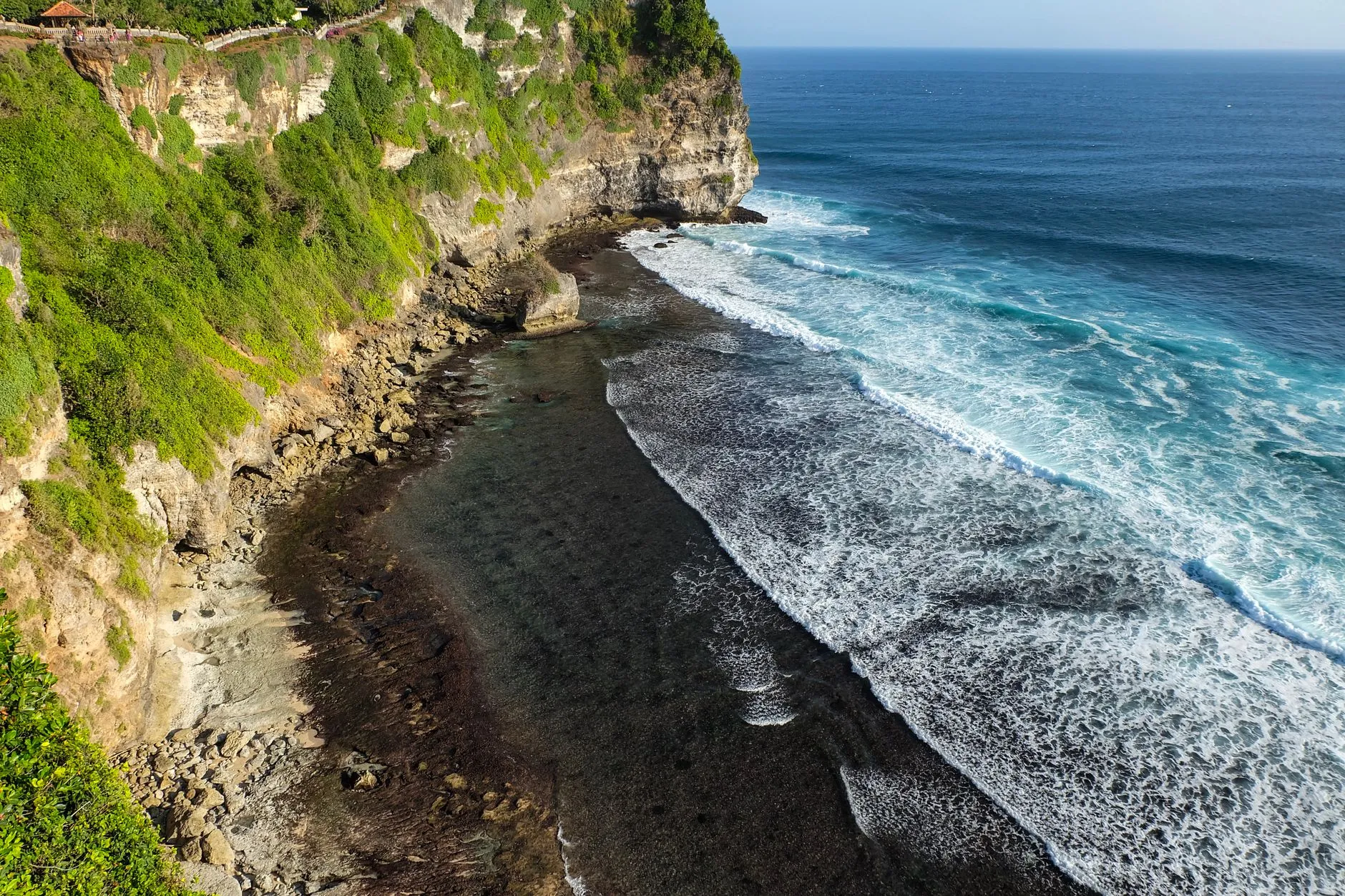
Uluwatu is a long left-hand reef break below the limestone cliffs at the southwest corner of the Bukit peninsula, the dry, rocky headland at the southern end of Bali. The Pura Luhur Uluwatu sea temple stands on the cliff edge to the south, and surfers have been riding the wave since the early 1970s, when the Australian surf film Morning of the Earth put it on screen. What they found then is what still draws people today: southwest swell from deep in the Indian Ocean, a coral reef that turns it into long, fast walls, and a dry-season trade wind that blows straight offshore.
A good day here is easy to read from the top of the cliff. Lines of swell stack up to the horizon, the trade wind holds up every face, and the reef breaks in several places at once. The warungs and cafés built into the cliff fill up with people waxing boards and watching the sets, and a steady line of surfers heads down the stairs to the cave. It is a crowded, demanding wave, and for a lot of surfers it is the reason to come to Bali at all.
How the wave breaks
Uluwatu is less a single wave than a long stretch of reef with several takeoff zones, and most surfers name them like this. The Peak breaks straight out from the cave and is the main takeoff, at its best from mid to high tide. Outside Corner breaks further out and only comes alive on a big swell, when it runs as a long, fast wall that can link into the sections inside it. Racetracks is the inside section, a fast run over shallow reef that gets more critical as the tide drops. Temples is a peak of its own that most guides place at the south end of the reef, below the cliffs toward the temple, best at mid to high tide on small to medium swells. On the biggest days, The Bombie breaks on an outer reef well out the back, a wave for big-wave surfers. The names, the exact positions and even the number of sections change with who you ask.
Whatever the section, the wave works the same way: a steep takeoff where the swell hits the edge of the coral, then a wall that peels left along the reef and speeds up wherever the reef gets shallower. With more water over the reef the walls are long and open; as the tide drops, the inside pitches harder, with barrels for the surfers who can make them. That is why the tide, more than anything, decides where the best waves are on a given day. On a small day Uluwatu is a long, fun left. Once it is overhead, a missed takeoff means a set on the head and a long paddle back out.
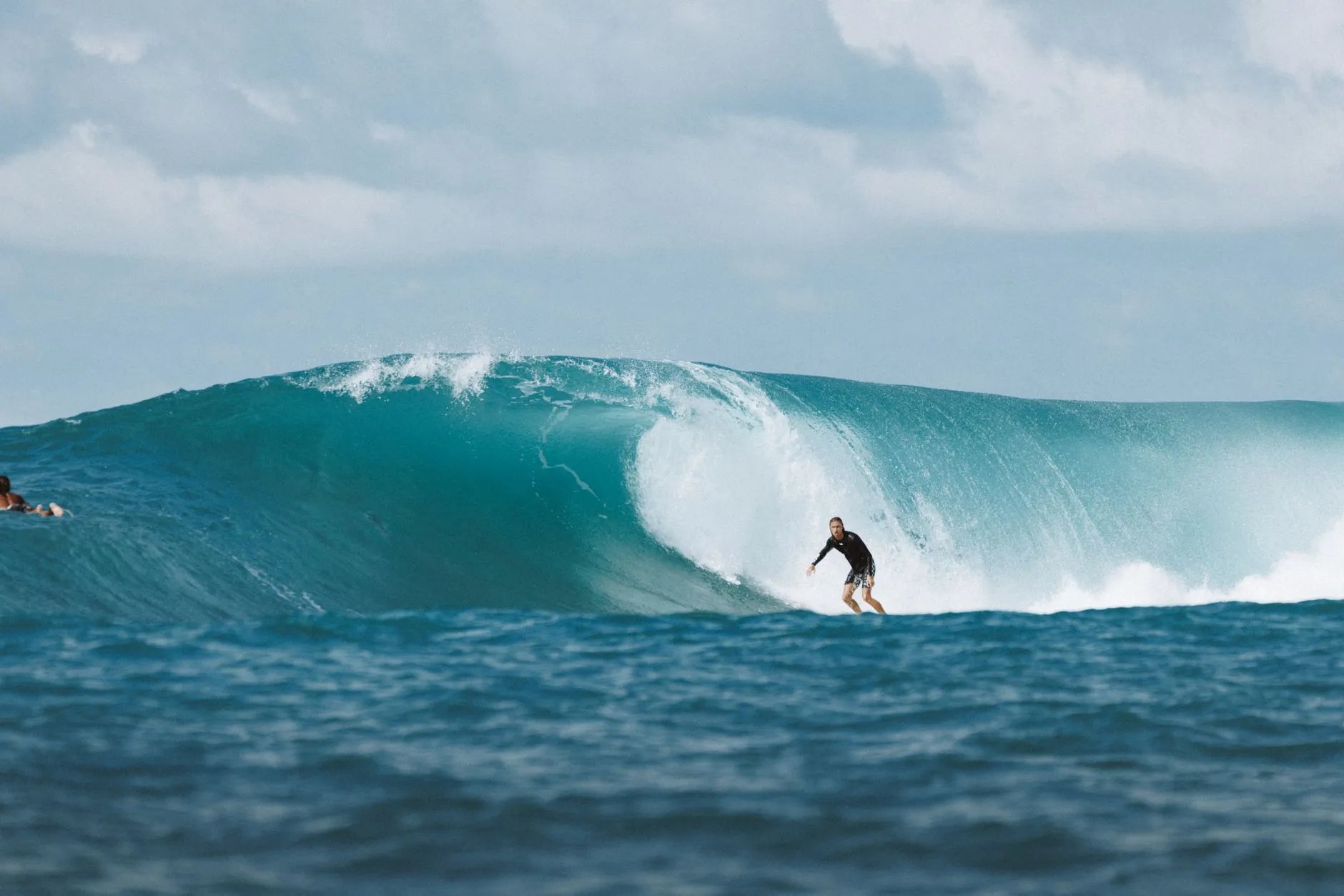
A surfer ahead of a thick, clean wave on one of the Bukit's reefs, in the dry season
When it works
Uluwatu runs on the southern hemisphere winter. From about April to October, deep lows in the southern Indian Ocean send long-period southwest groundswell north to Bali, and the southeast trade wind settles over the island and blows straight offshore on this side of the Bukit. May to September is the heart of the season, with the most consistent swell and the most reliable wind, and the middle of the year usually brings both the biggest swells and the biggest crowds. April opens the season, September still has solid swell with fewer people in the water, and October winds it down. The water stays around 27 to 28°C (81 to 82°F), so it is boardshorts and a rash vest.
From about November to March the wet season swings the wind around, and it usually blows onshore on this west side of the island. Those are the months when the east coast, Keramas and its neighbors, works instead.
The lineup and the take-off
Getting out is part of the wave. Stairs wind down from the warungs through the cliff to a cave that opens onto the reef, the way in and the way out. Toward low tide you walk out of it across a stretch of shallow, sharp reef before you can paddle; higher up the tide, water surges in and out of the cave and you paddle straight out from inside it. Either way, wait at the mouth, watch a set come through, and go as soon as it ends. Coming back in is the harder half. Ride a wave or a line of whitewater toward the cave and aim for it early: on a bigger swell the current usually runs north along the cliff, and if it carries you past the entrance you face a long paddle back against it, or a longer one to Padang Padang and a long walk back.
The Peak runs on a strict pecking order. The best local surfers and a crowd of experienced travelers sit deepest and take most of the sets, and on a good dry-season day the lineup is busy from first light. Fighting that ruins your session faster than the current does. Sit wide and a little down the reef, take the waves that swing past the main pack and the ones someone falls on, and make the ones you go for. When The Peak is packed, the other sections can be quieter: Racetracks on a lower tide if you are at ease on a fast, shallow wall, or Temples on a higher one, a long paddle from the cave that keeps it the least crowded part of the reef.
Getting there and where to stay
Uluwatu is in the far southwest of the Bukit, around an hour by road from the airport depending on traffic, and like everyone else on the island you will most likely ride there on a scooter with a board rack. You park at the top of the cliff and walk down through the warungs and cafés, where you can eat, wax up and watch the sets with a view straight down the lineup, before the last stairs take you down into the cave.
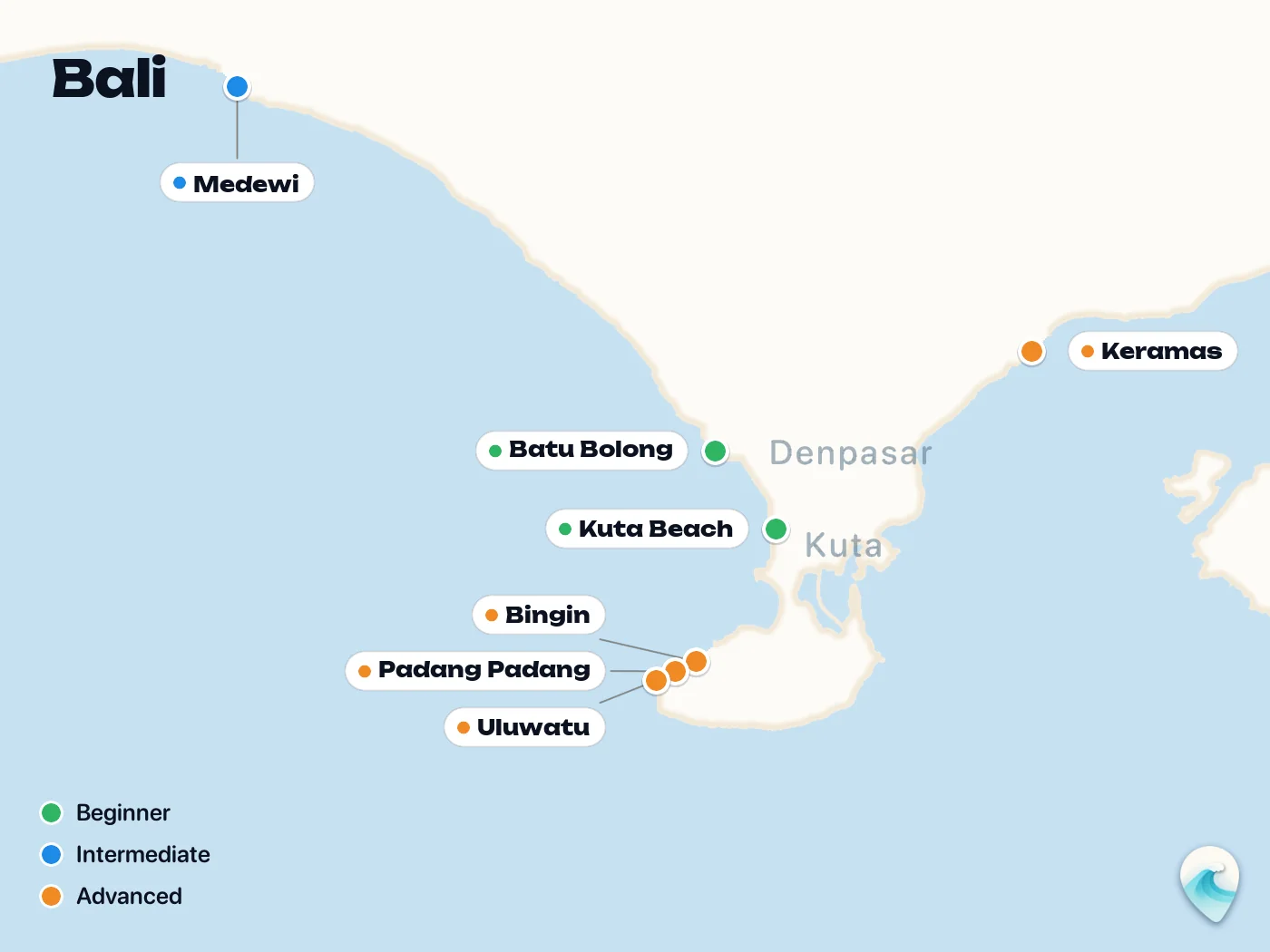
Most surfers stay on the Bukit itself, in the guesthouses and villas along the cliffs between Uluwatu, Padang Padang and Bingin, so the morning check is a short ride. Padang Padang and Bingin, a few minutes up the coast, are shallow reef lefts for experienced surfers too. For a softer session, head up the island to Kuta Beach or Batu Bolong in Canggu.
Hazards
1The cave entry and exit: go out between sets, and on the way in aim for the cave early, before the current takes you past it
2A strong current runs north along the reef on bigger swells, check your position against the cave after every wave
3Shallow, sharp coral with urchins on the inside toward low tide, booties are cheap insurance against reef cuts
4Heavy crowds all dry season, respect the pecking order, wait your turn and never drop in
Part of the Bali surf guide
An honest guide to surfing Bali: a surf map and the 7 spots that matter from Kuta to Uluwatu, which coast works in which season, and who each wave suits.
It is a wave for experienced surfers. Even on a small day you deal with the cave, the current and a crowded lineup, and the inside sections run over shallow reef. If you already surf reef breaks with confidence, pick a clean chest-high day, go at mid to high tide and sit wide of The Peak, away from the main pack. Once it is overhead, watch from the cliff and surf the friendlier waves of Kuta Beach or Batu Bolong instead.
What tide is best at Uluwatu?
It depends on the section, because each part of the reef has its own window. The Peak is at its best from mid to high tide and can go flat on a small swell at low. Racetracks wakes up as the tide drops and gets fast, hollow and shallow toward low, a section for surfers who are sure of themselves on reef. Outside Corner needs a big swell and, most surfers say, the lower half of the tide, while Temples prefers mid to high. The tide changes the cave too: toward low you walk out over the reef, toward high you paddle out through the surge.
Is Uluwatu worth it in the wet season?
Usually not for the wave itself. From about November to March the wind turns and usually blows onshore on Bali's west side, so Uluwatu is often messy even when there is swell. The wet season belongs to the east coast, where Keramas is offshore and at its best. If Uluwatu is the reason you are coming, book between May and September; April and October also work, usually with a little less swell.