Guides
Portugal
Europe's most complete surf country
No other country in Europe packs this much surf into one coastline. Portugal faces the open North Atlantic head on, its west coast catches nearly every swell the ocean produces, and the result is rideable waves more than 300 days a year: learner bays where half the continent stands up for the first time, world-class reefs and points, and the canyon at Nazaré that turns winter storms into the biggest waves ever ridden.
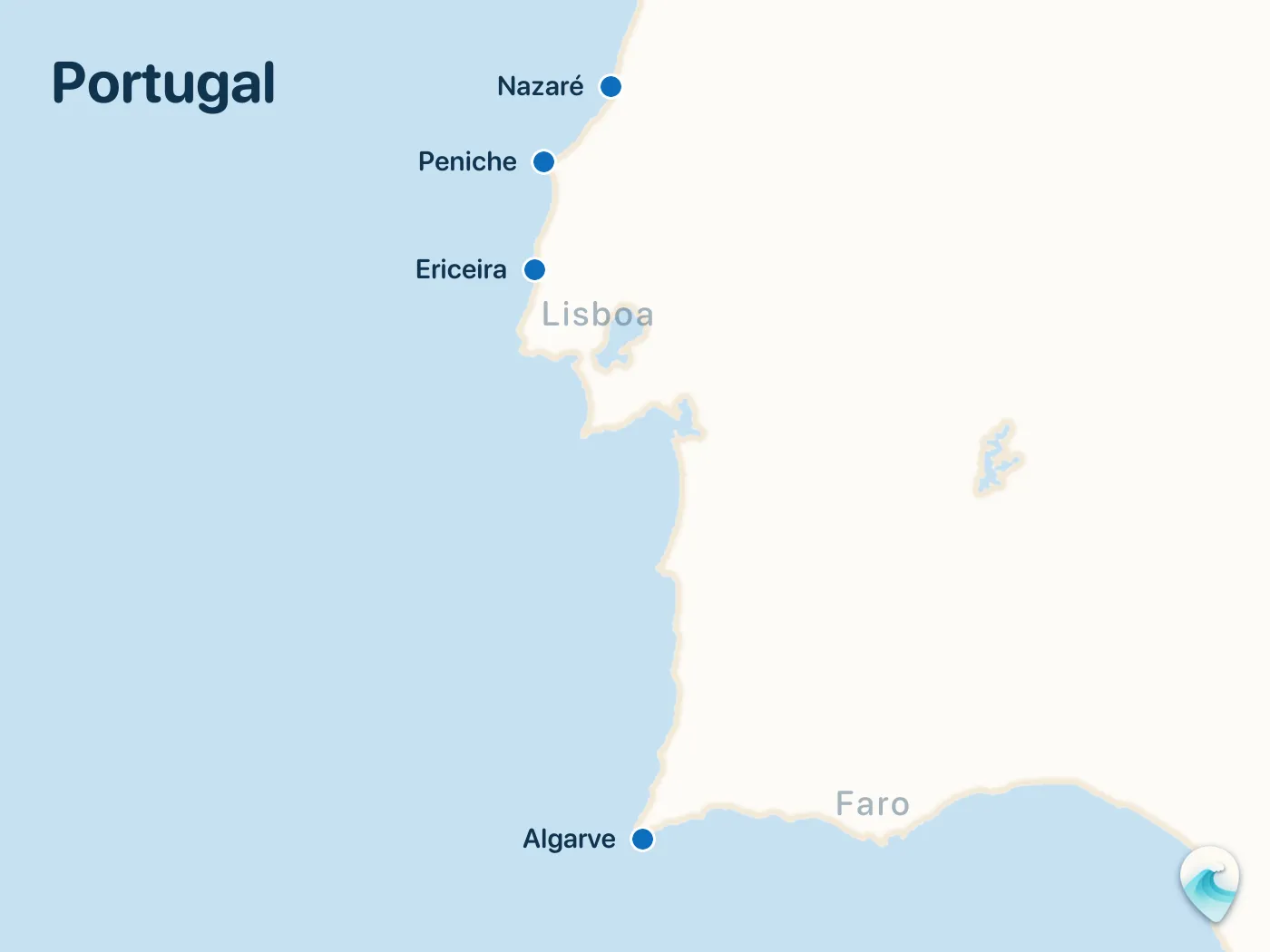
The geography is simple once you see it. The west coast does the heavy lifting: Ericeira's shelf of golden reef, Europe's only World Surfing Reserve, sits forty minutes from Lisbon; Peniche's peninsula bends the coastline through a right angle so one side is always offshore; and north of it, Nazaré's submarine canyon focuses the biggest storms into giants. When the west gets too big or too windy, the Algarve's south coast, tucked behind Cabo de São Vicente, is the escape hatch that turns the same chaos into organized lines. Everywhere, this is the Atlantic: the water stays between 15 and 19°C, and you will wear a wetsuit most of the year.
Choosing a base is easier than it looks. First waves and surf camp weeks: Peniche and the bays of Baleal. Reef quality and the standard of European surfing: Ericeira. Winter sun and softer options next to real waves: the Algarve. Madeira and the Azores are out there for the adventurous, though we have no guides for them yet. And whichever region you pick, the day is decided by the forecast, not the map: SurfMap covers more than 5,000 spots, so the one in front of you is in your pocket.
- Season
- Waves all year; the quality window runs September to April
- Water
- 15 to 19°C, wetsuit country all year
- Levels
- From learner bays to the giants of Nazaré
- Getting there
- Lisbon airport; one hour by car to Ericeira or Peniche
The map
The Portugal surf map
Map data © OpenStreetMap contributors © CARTO
The coasts
Choose your coast
Peniche & Nazaré
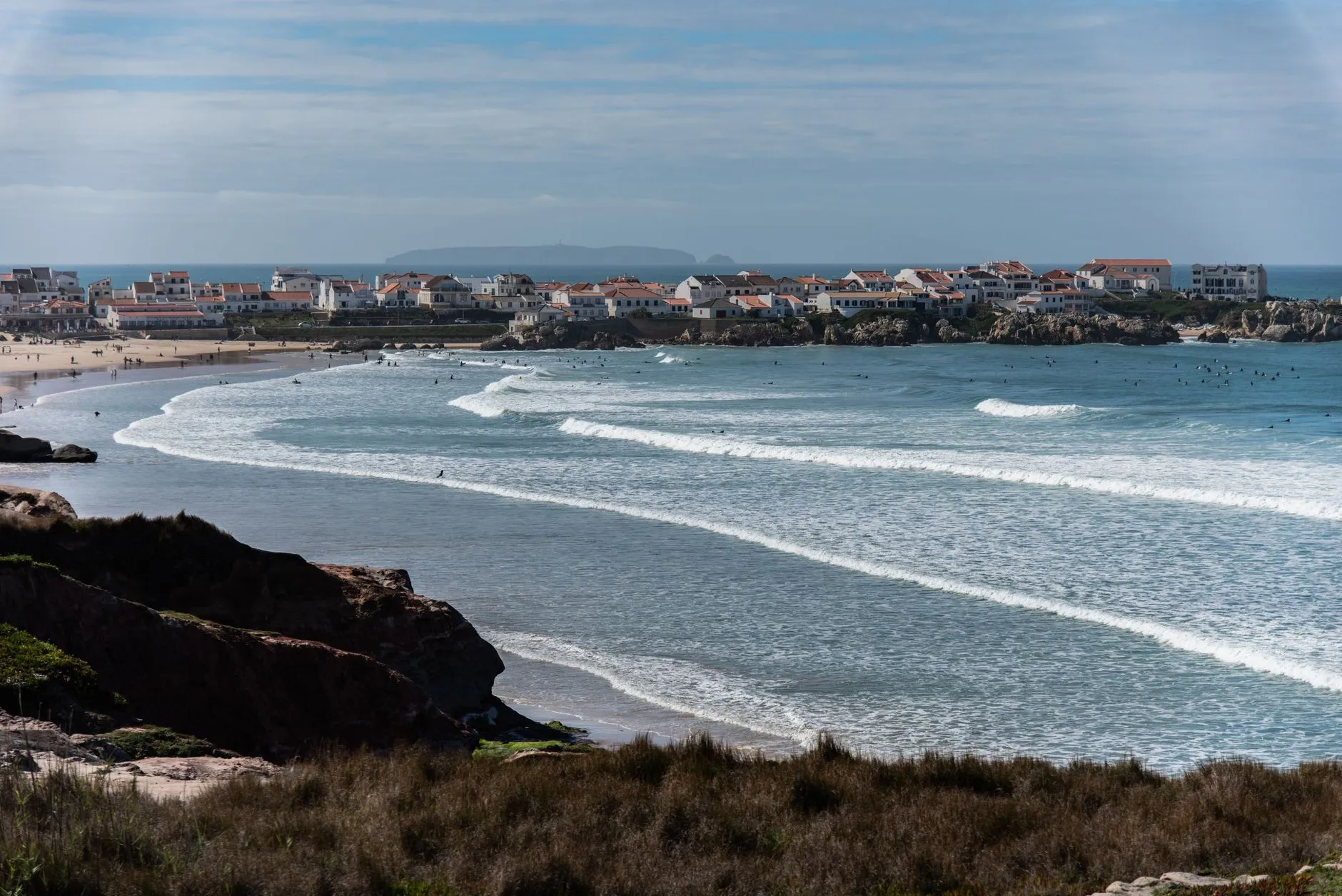
The peninsula bends the coast through a right angle, so one side is always offshore. Supertubos breaks harder than any beach break in Europe while the bays of Baleal teach half the continent to stand up. Forty minutes up the road, the canyon at Nazaré turns winter storms into the biggest waves ever ridden.
Read the full guide →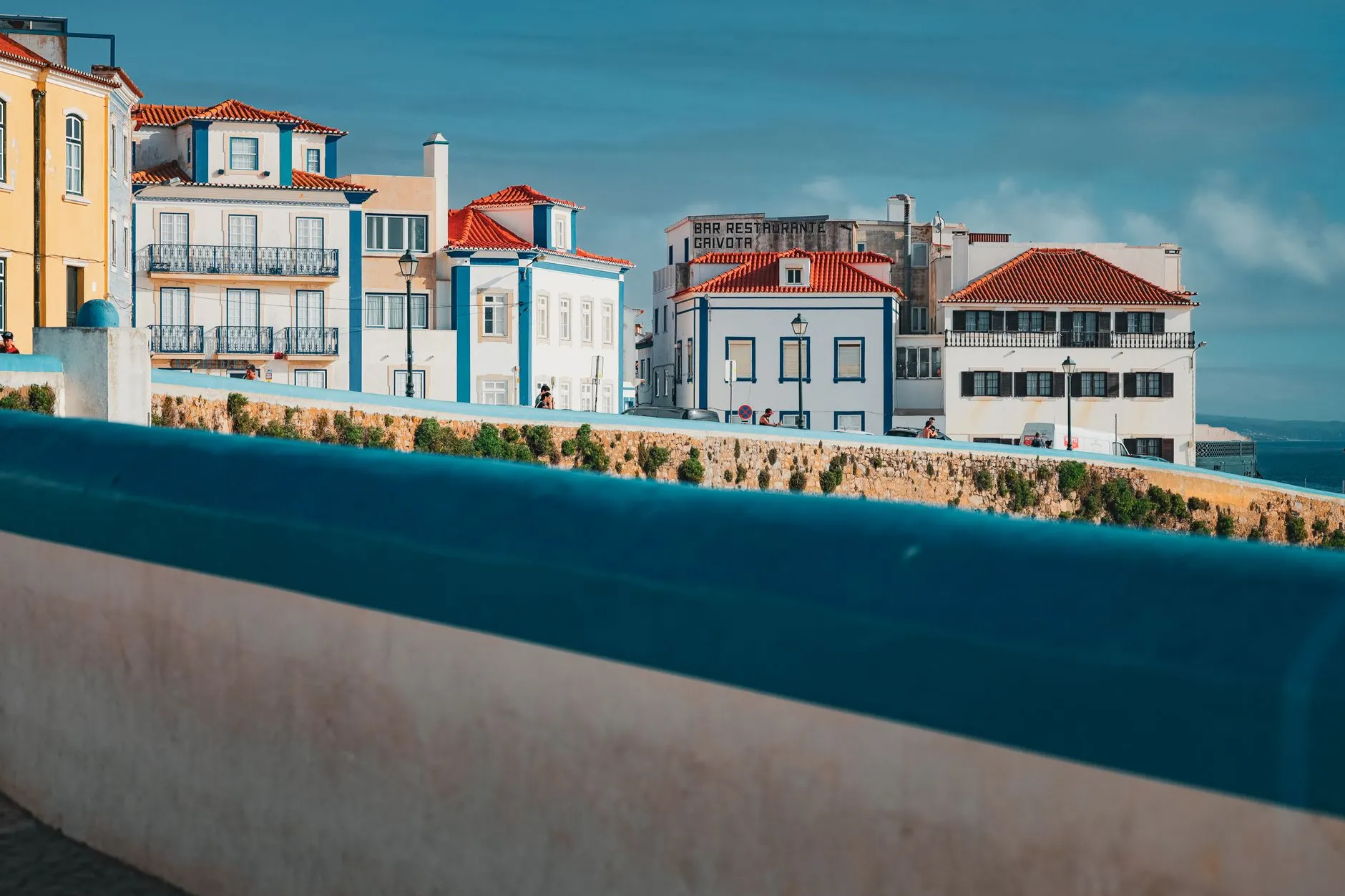
Ericeira
Europe's only World Surfing Reserve: reef after reef along four kilometers of coast, from the learner beach at Foz do Lizandro to the point at Coxos. This is the standard European wave quality gets measured against.
Read the full guide →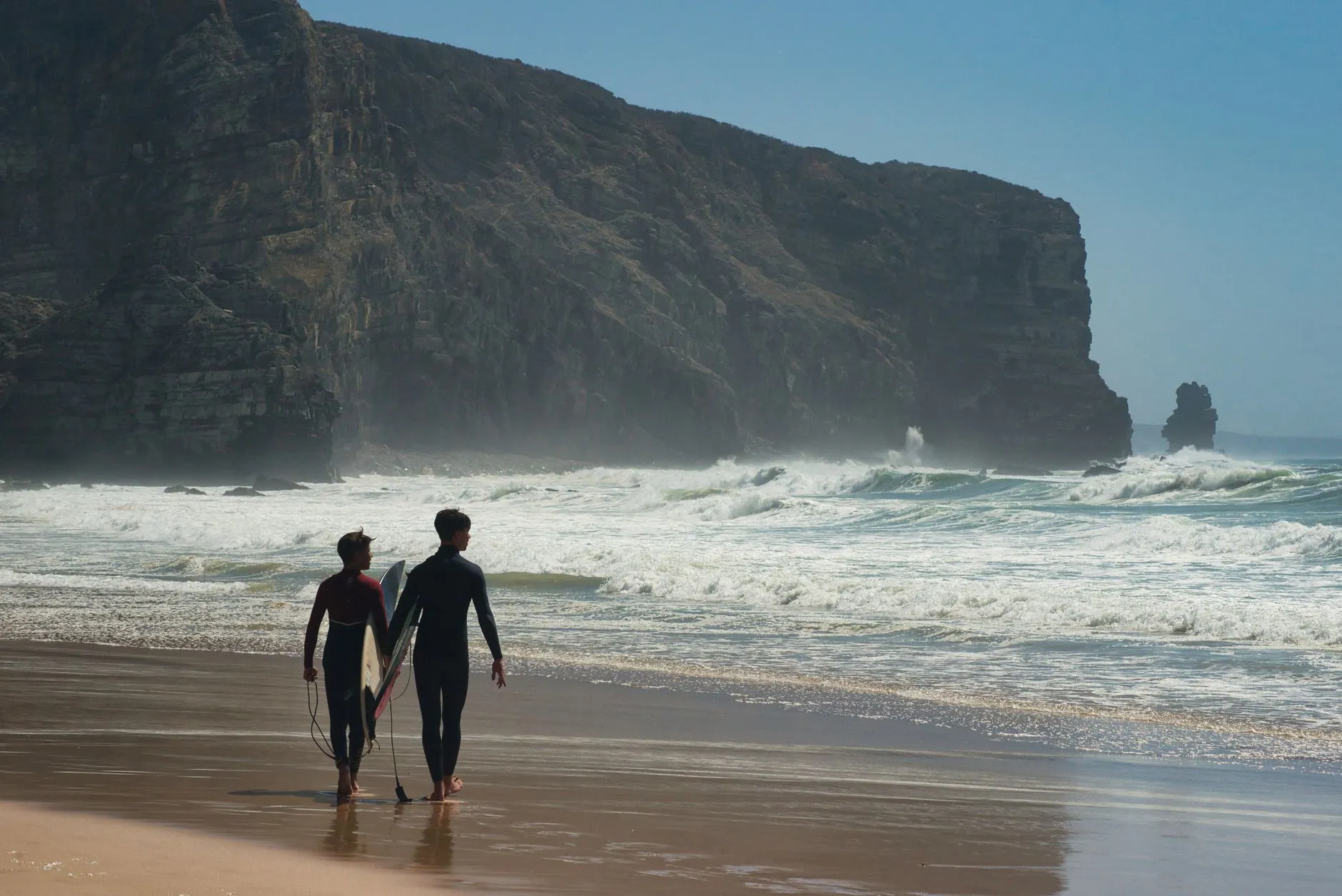
Algarve
The escape hatch at the country's southern edge. When the west coast blows out or maxes out, Sagres swaps coasts in a thirty-minute drive and turns the same swell into organized lines. Real waves surfed in winter sun, in a 4/3 under blue skies.
Read the full guide →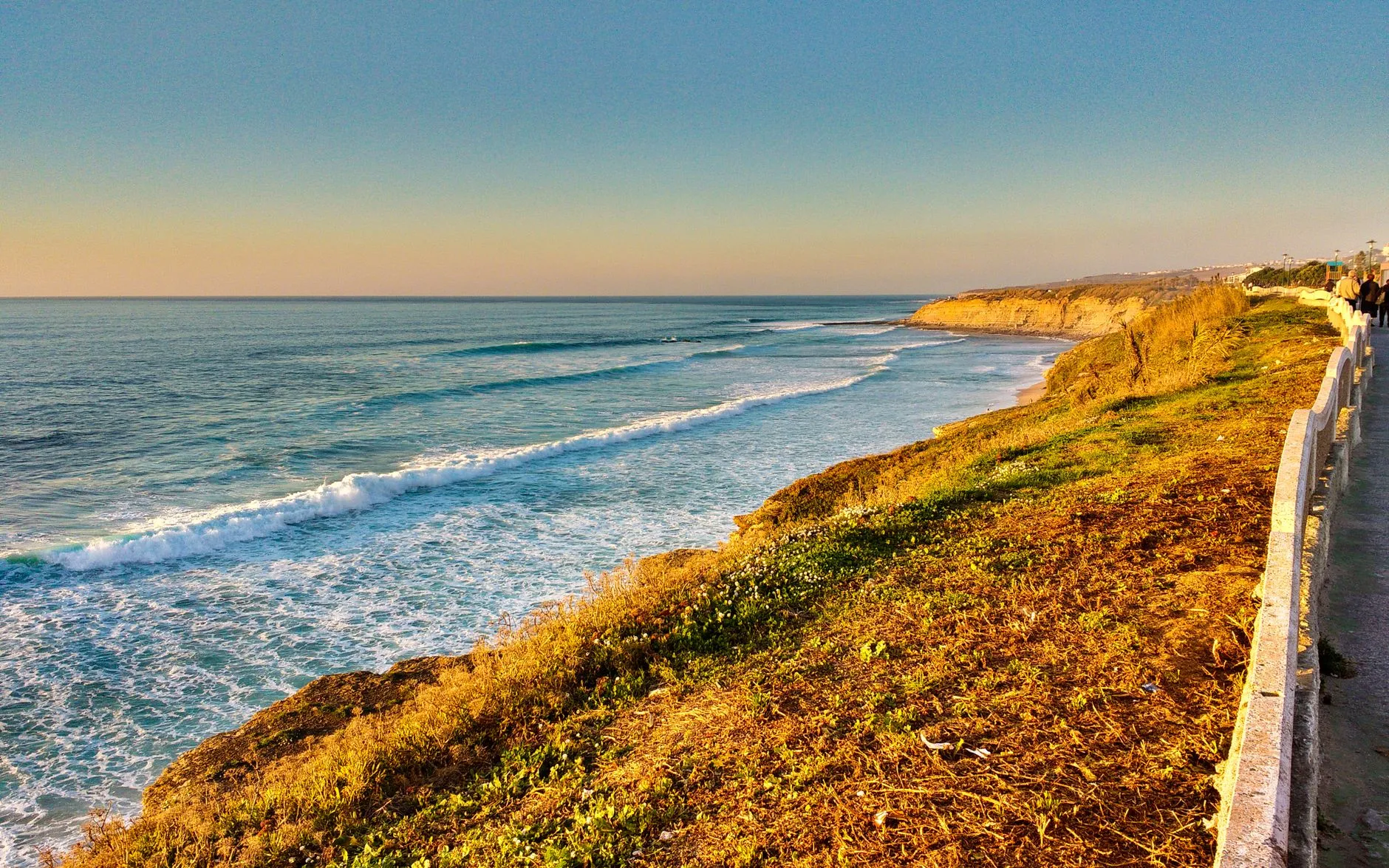
Good to know
Where should a beginner surf in Portugal?
Start in the bay at Baleal, near Peniche: Cantinho da Baía is possibly the busiest surf classroom in Europe, with soft peaks over sand and surf camps on the dune. Foz do Lizandro plays the same role in Ericeira, and in the Algarve the sheltered beaches of Arrifana and Amado keep learners surfing through winter. Summer, with its smaller waves, is the kindest season to start.
When is the surf season in Portugal?
There is no month without waves: the west coast catches swell year-round. September to April is the quality window, when North Atlantic storms send consistent swell and the points and reefs do their best work. Summer runs smaller and softer, which makes it the season for learning, not for chasing Supertubos.
Do I need a wetsuit in Portugal?
Yes, almost always. The Atlantic holds the water between 15 and 19°C along most of the coast, so a 3/2 covers the summer and a 4/3 covers the winter, with boots a good idea on the reefs. The Algarve runs a degree or two warmer, and a few locals surf Sagres barefoot in January, but pack rubber anyway.