Guides
Europe
One Atlantic façade, waves every month of the year
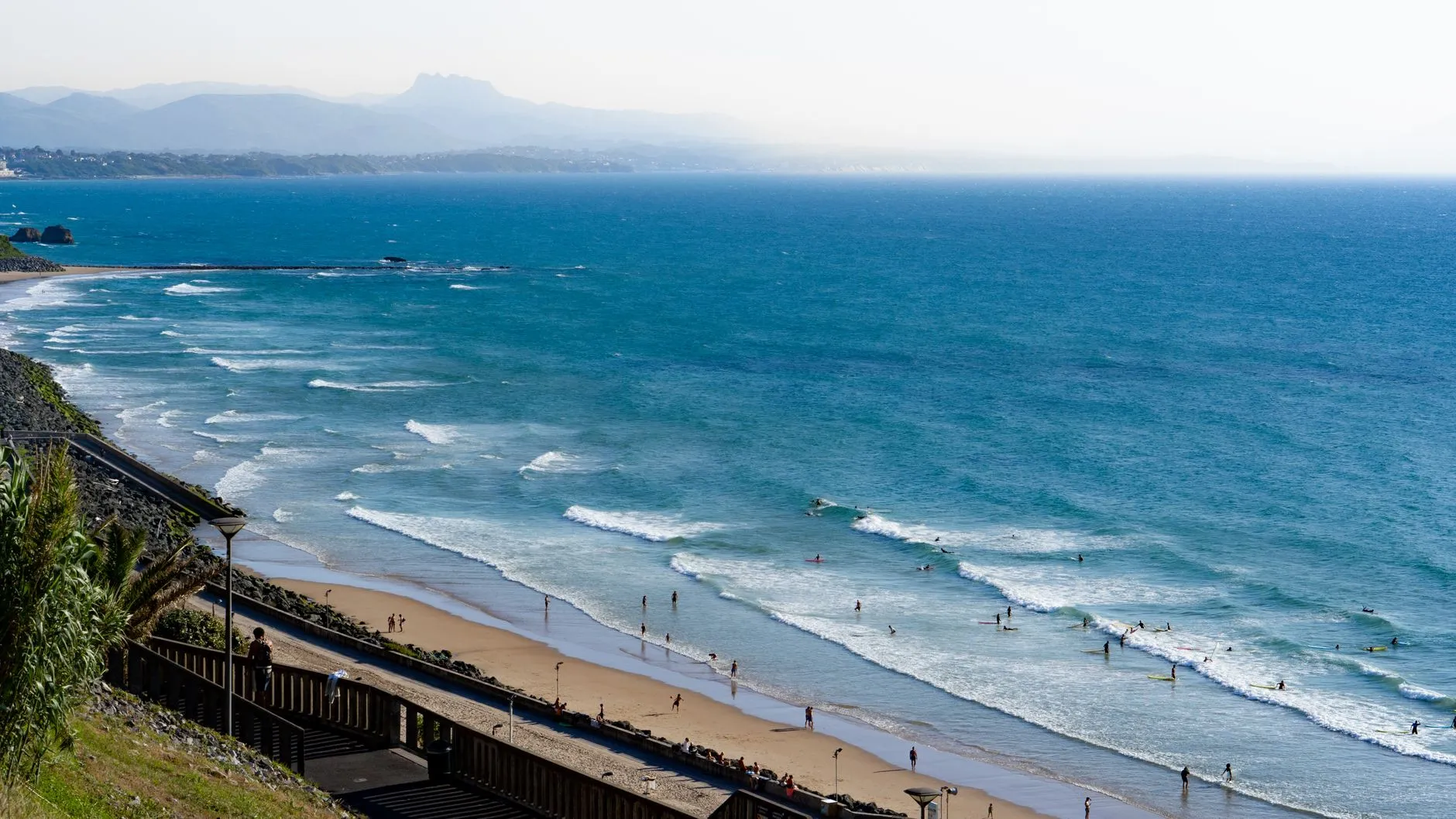
Europe's surf comes down to one long piece of geography: an Atlantic façade that runs from Donegal to Gibraltar and catches the same storms at every latitude. When a low spins across the North Atlantic, its swell lands on Irish reefs, Cornish beaches, French sandbars and Portuguese points within the same few days. Add the Canary Islands, volcanic and sitting in swell that never really stops, and the sum is simple: there is no month of the year when you cannot surf this continent.
Read the coastline from north to south. Ireland and the UK take the rawest of it: cold water, heavy weather, and lineups that empty out exactly when the waves are best. France follows with its hundred-kilometer beach-break belt in the Landes and the rocky Basque corners below it. Spain's green north stacks empty sand from Galicia to Euskadi, Portugal does a little of everything, from learner bays to Nazaré, and a thousand kilometers south the volcanic islands turn winter into high season.
Choosing is simpler than the map suggests. For warm-ish learning, take Portugal or south-west France in summer, when the waves stay small and the schools are running. For serious surf, aim anywhere on the façade from September to November: those three months are the continent's season, when the first real storms meet water still holding its summer heat. Winter means thick rubber in the north or a flight to the Canaries. Wherever you land, SurfMap tracks conditions on more than 5,000 spots across all of it, so the coast in front of you is in your pocket.
- Season
- September to November everywhere on the Atlantic; somewhere works all year
- Water
- 10 to 23°C north to south; wetsuit country almost everywhere
- Levels
- From learner bays to Nazaré and Mullaghmore
- Getting around
- Budget flights and the van routes; every region here is a direct flight from most of Europe
The map
The Europe surf map
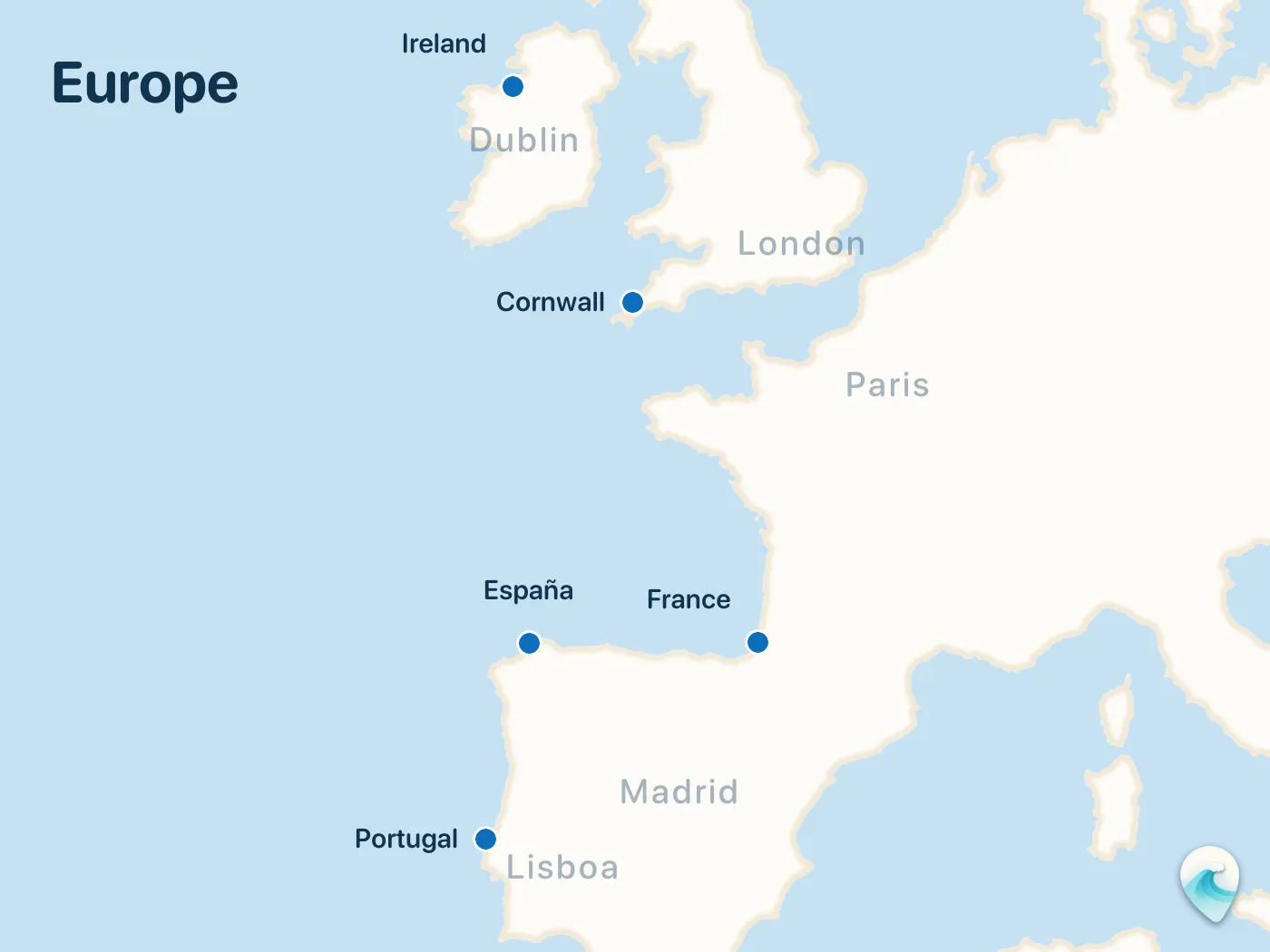
Map data © OpenStreetMap contributors © CARTO
The coasts
Choose your coast
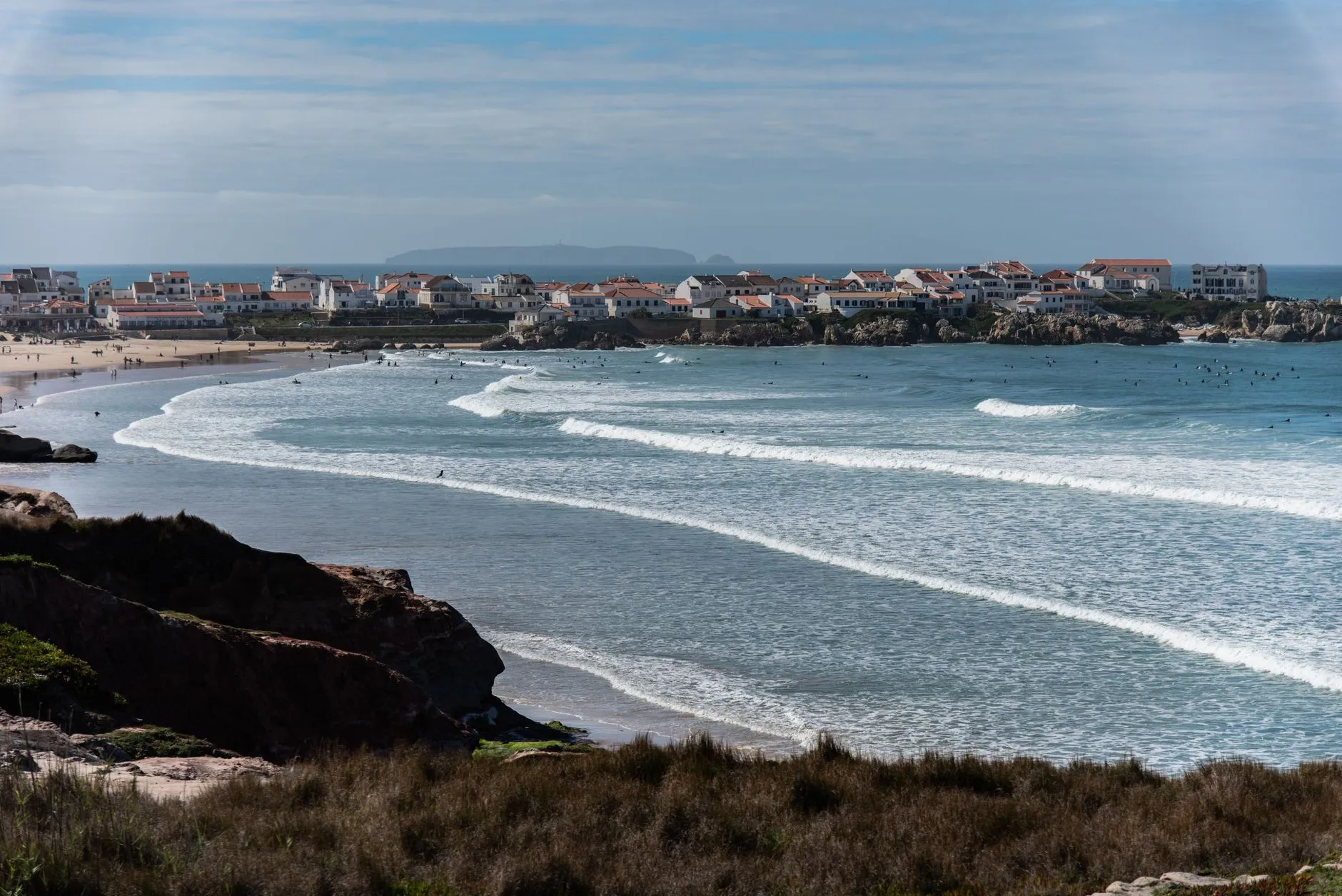
Portugal
No other country in Europe packs this much surf into one coastline: the learner bays of Peniche and Baleal, Ericeira's shelf of world-class reef, the Algarve's winter sun and the giants of Nazaré. Rideable waves more than 300 days a year make it the continent's most complete surf country.
Read the full guide →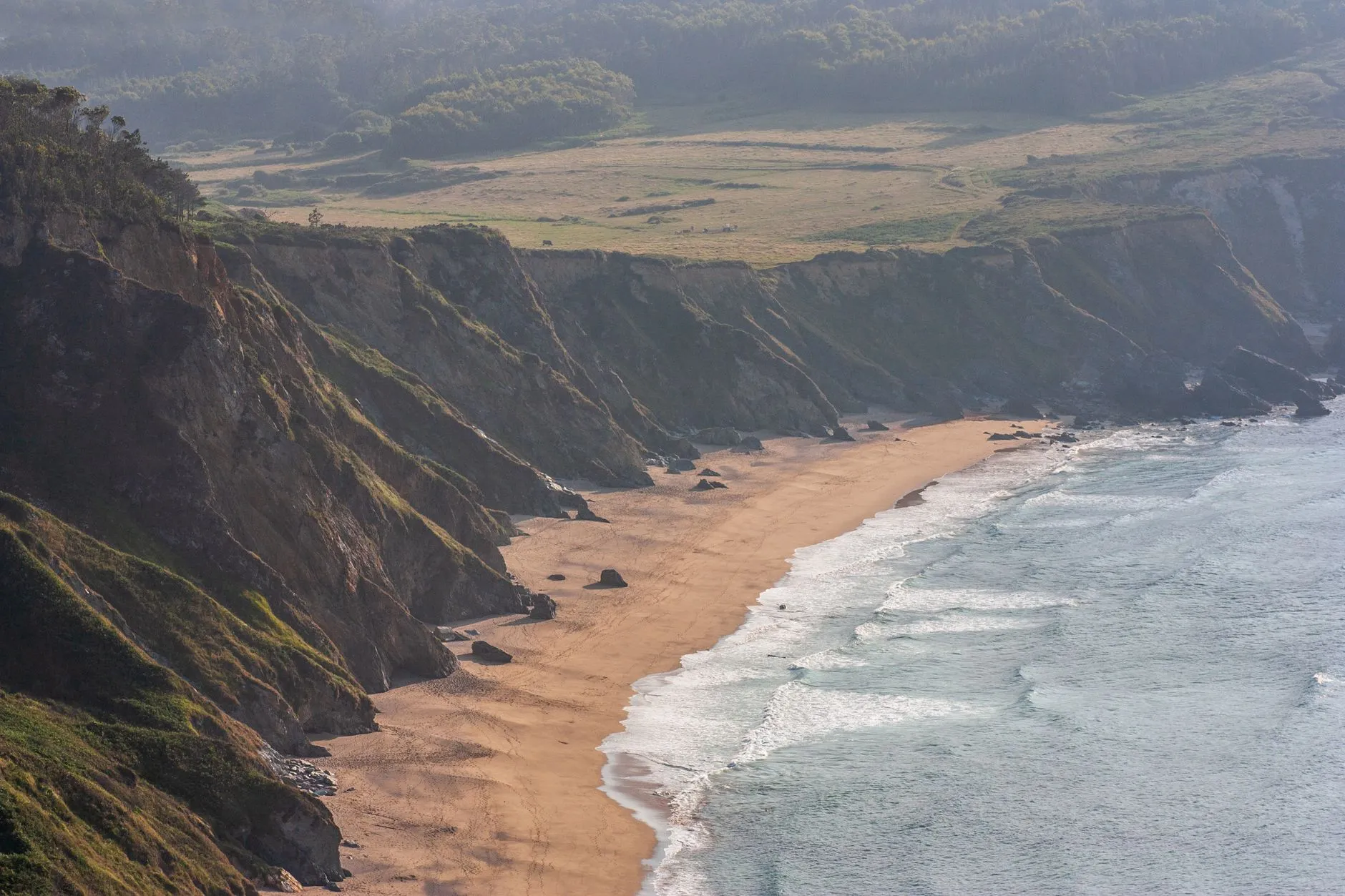
Spain
The whole green north, from Galicia's empty beach breaks to Mundaka's rivermouth left in the Basque Country, faces straight into the North Atlantic. And a thousand kilometers south, the Canaries' volcanic reefs sit in swell that barely stops, turning winter into a reef season you can surf in a 3/2.
Read the full guide →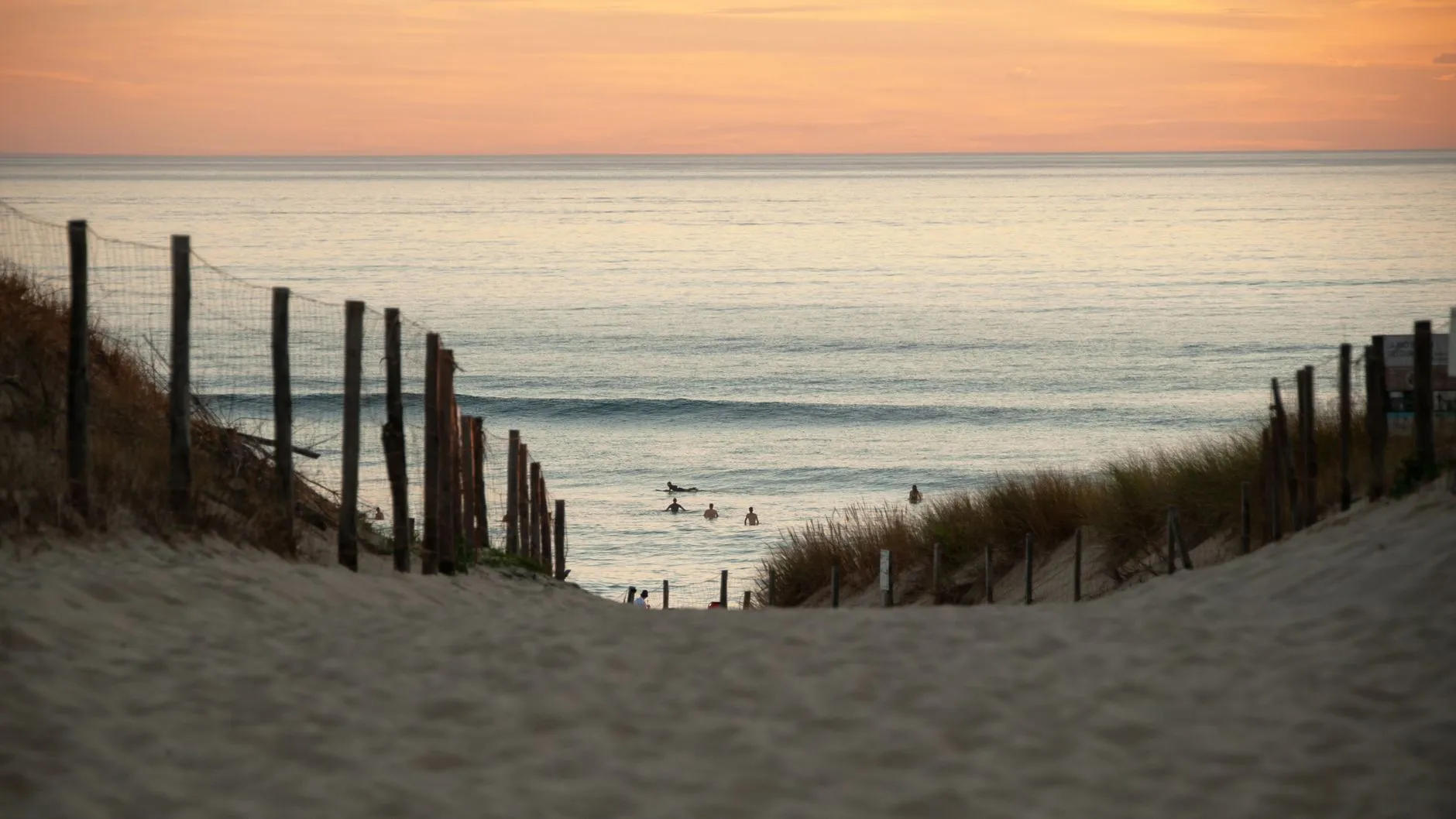
France
The Atlantic façade runs from Brittany's granite coves to the Basque points, with the Landes' hundred-kilometer beach-break belt in the middle. Hossegor's sandbanks are the standard other beach breaks get measured against, and they do their best work in autumn.
Read the full guide →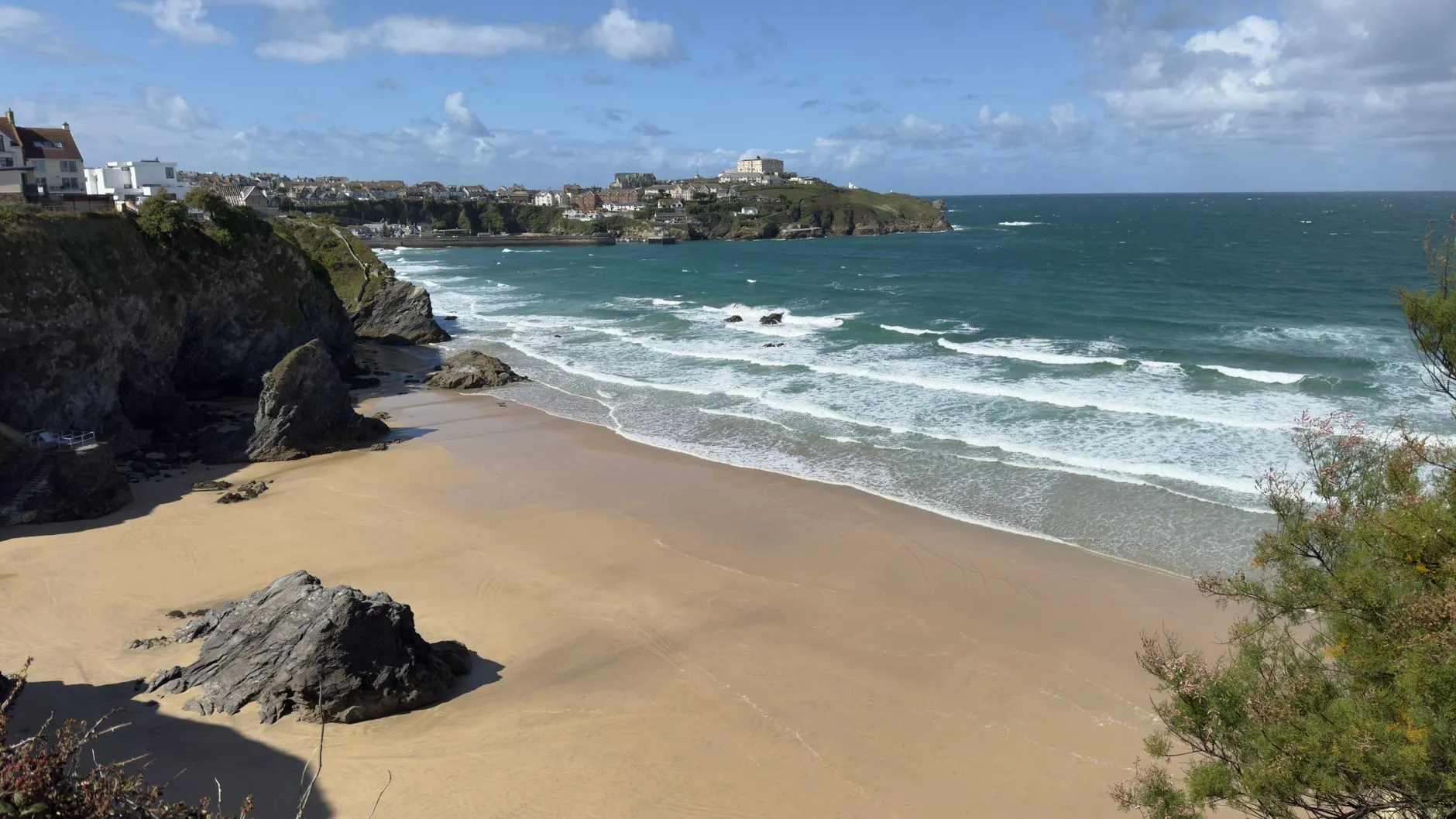
Cornwall
England narrows to a granite finger pointed straight at the Atlantic, and British surfing has lived on it since the first boards arrived at Newquay in the 1960s. Fistral and a string of beach breaks handle every level; come in September and October, when hurricane swells arrive and the summer crowds have gone home.
Read the full guide →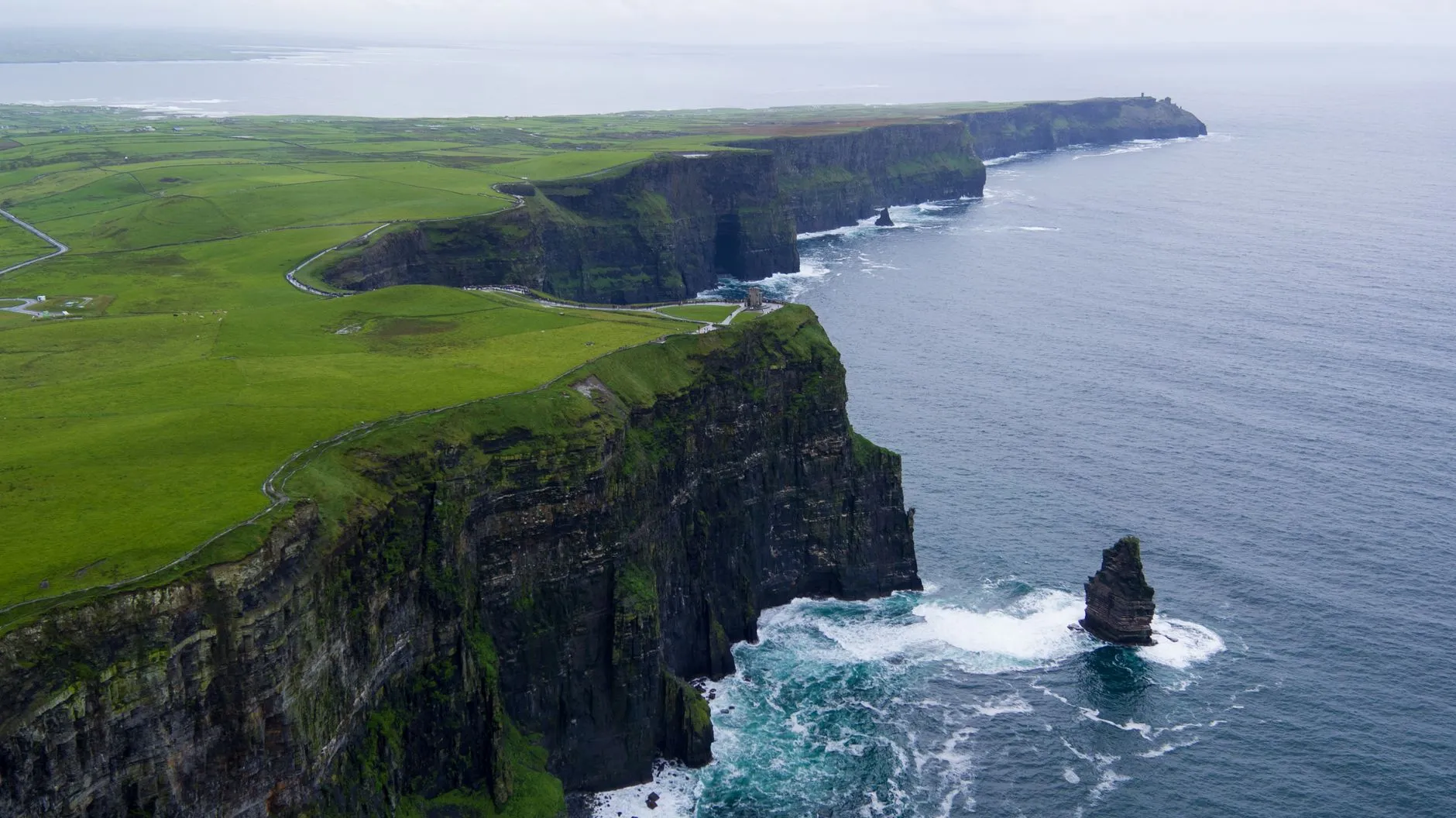
Ireland's West Coast
The swell that lands here has crossed the entire Atlantic, and it shows: sandy bays, slabby reefs and two of the most respected big waves on the planet strung between Clare and Donegal. The water never passes 16 degrees, and the reward runs September to November, when clean swell meets water still holding its summer warmth.
Read the full guide →Good to know
Where should a beginner surf in Europe?
Portugal is the easy answer: the bays at Baleal near Peniche and Foz do Lizandro in Ericeira teach half the continent to stand up, with soft waves and schools everywhere. South-west France in summer is just as good, on Anglet's beaches or the long rollers of the Côte des Basques. In the UK, Cornwall's beach breaks around Newquay have taught British surfing for sixty years. In all three, summer is the kind season: small waves, warm-ish water, schools running daily.
When is the European surf season?
Something in Europe is always working: the façade catches swell in every month, and the Canaries fill the winter. But September to November is the prize everywhere on the Atlantic, when the first serious storms meet water still holding its summer heat, the winds settle and the school-holiday crowds go home. If you can only pick one window, pick that one.
Where is the warmest surf in Europe?
The Canaries in winter, and it is not close: 18 to 23°C water off the African coast, surfable in a 3/2 or even boardshorts on the warmest days, in the middle of reef season. The honest truth about the mainland is that the Atlantic never gets tropical; the Algarve and Andalucía run a degree or two warmer than the rest, but you will still pack a wetsuit. If warm water is the priority, book the islands.