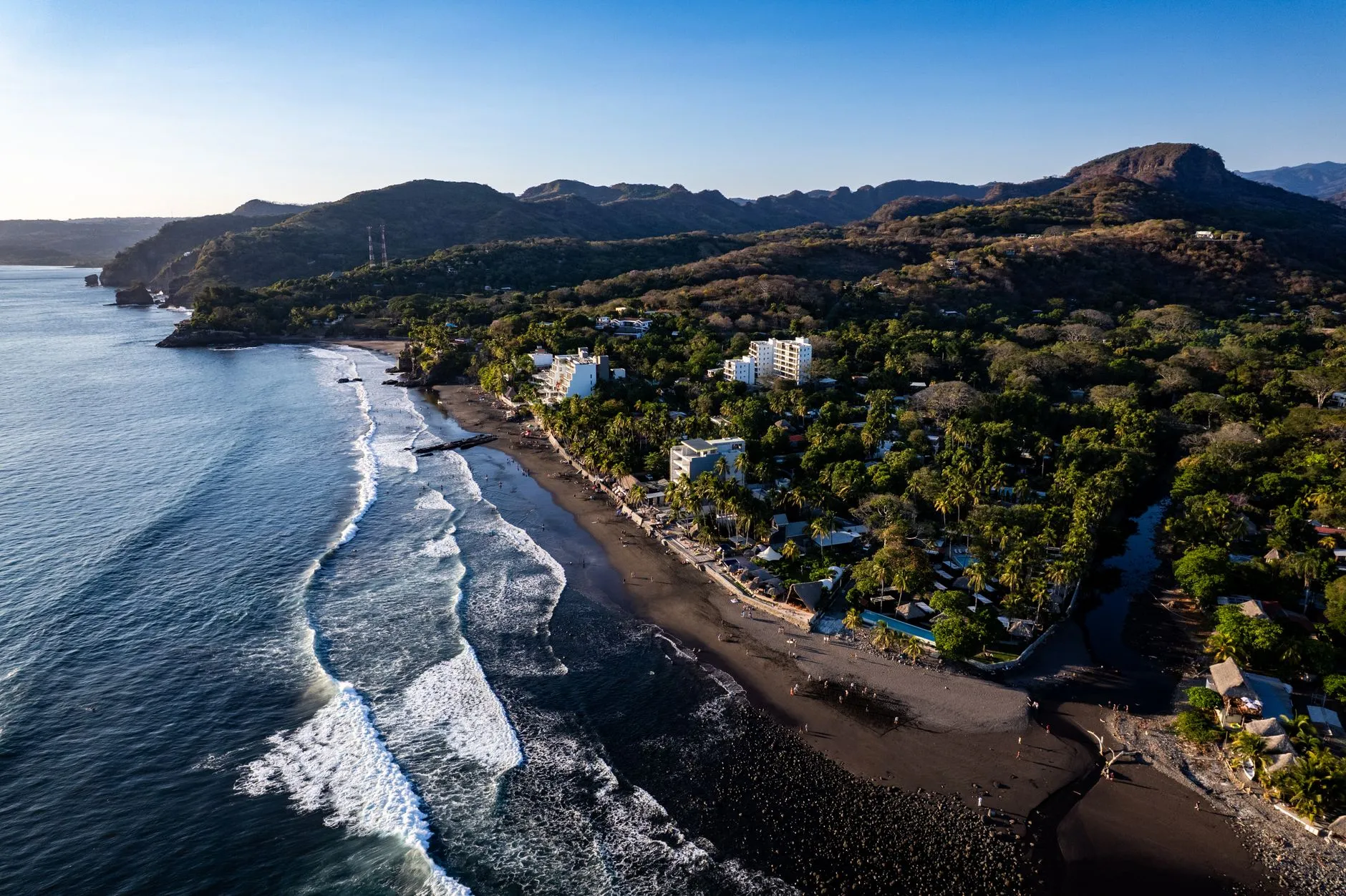
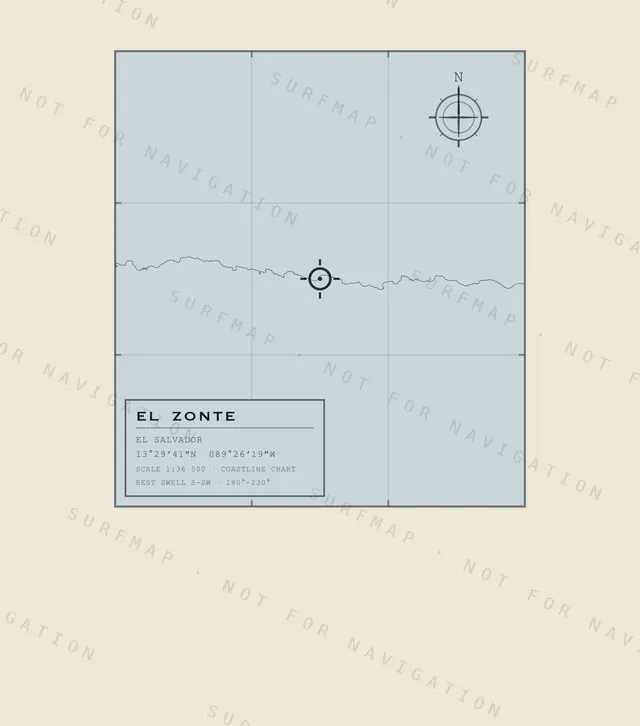
El Zonte is a small fishing village on the Costa del Bálsamo, El Salvador's surf coast west of La Libertad, ten kilometers west of El Tunco and under an hour from the airport. It became famous by accident. In 2019 a donated fund turned the village into Bitcoin Beach, the community experiment that preceded the national bitcoin law of 2021, and you can still pay for a coconut in satoshis. The wave took none of it personally: dogs sleep on the dark sand, hostels and small hotels sit on the point, a river runs out at one end of the bay, and the pace stays village slow.
The wave is the reason to come, and it is a gentle one. A cobblestone right peels through the middle of the bay at a pace that lets longboarders walk the board while shortboarders wait deeper on the point for the steeper sections, and the rivermouth adds a punchier peak whenever the rains rebuild its bank. Schools push beginners into the inside reform near the sand. Mornings are offshore, the water is 27 to 29°C every day of the year, and when a south swell lights up the coast you can watch it from a hammock on the point and decide, without hurry, which peak is yours today.
Beginner
Wave
Mellow right-hand point over cobblestones, plus a rivermouth peak
Best swell
S to SW Pacific swell, waist-high to overhead; the point at its best chest- to head-high
Best wind
N to NE offshore, cleanest on dry-season mornings before the late-morning sea breeze
Best tide
Mid to high covers the cobbles on the point; most locals say mid tide on the push. Low exposes rock and shortens the ride
Season
March to October for the south swells; November to February small, clean and offshore, the friendliest window for learners
Level
Beginners on the inside reform, longboarders and intermediates on the point, the rivermouth for the more experienced
How the wave breaks
The point breaks through the middle of the bay over a bank of cobblestones, and it breaks slowly. A set stands up outside, shoulders off into a wall that never quite steepens, and peels right toward the sand long enough for a longboarder to cross-step twice and still have face in front of them. Shortboarders sit deeper, up the point, where the wave first feels the bank and holds its steepest section for a few meters before it settles. It is a wave for turns rather than tubes: on most days the best thing you can do on it is draw a long line and keep it.
The rivermouth at the end of the bay is the other face of El Zonte. When the rains rebuild its bank, it throws a punchier peak with rights and lefts, shorter and hollower than the point, and the lineup there is a different crowd: the locals who want something with push, the visitors who have outgrown the cobbles. It is best in the green season, when the river has done its work, and it can vanish for months after the dry season flattens the sandbar. Between the two, the inside reform near the sand is where the surf schools run their mornings.
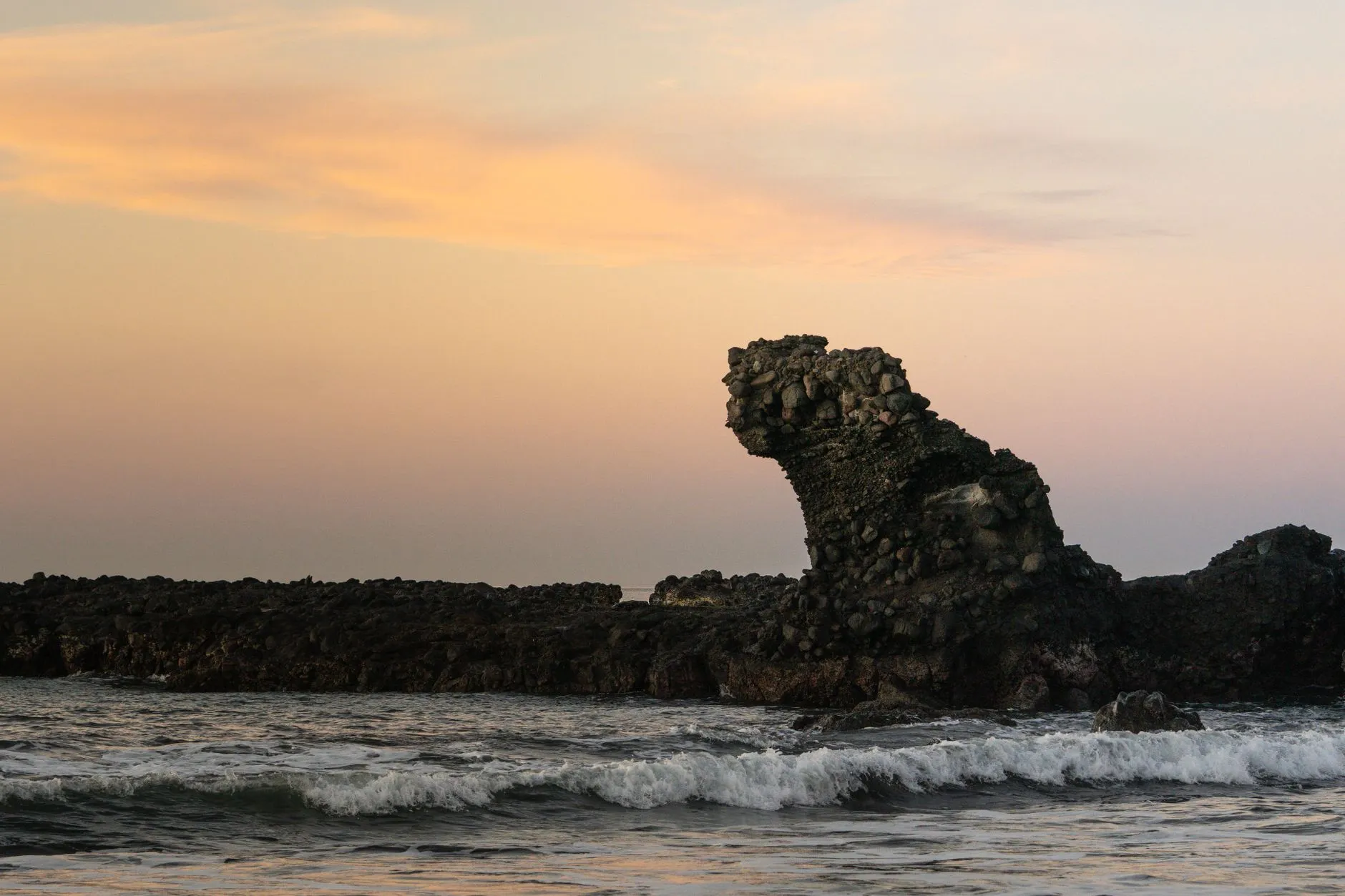
The rock at El Tunco at sunset, the neighbouring surf town about ten kilometers east of El Zonte
When it works
El Zonte runs on the Southern Hemisphere like the rest of the coast. From March to October, storms in the far South Pacific send S to SW swell up the coast and the point gets its biggest, most consistent waves; the rains arrive from May, mostly in the afternoons, and the rivermouth is at its best once they have rebuilt its bank. November to February is the dry season: small, clean and offshore for most of the morning, the easiest months to learn and the ones when the point is a longboard postcard.
Mornings are the window in either season. The land breeze blows N to NE off the hills, the sea breeze swings onshore by late morning, and afternoons can clean up again before sunset. The water sits between 27 and 29°C every day of the year: boardshorts, and a rash vest for the sun.
The lineup and the take-off
The lineup sorts itself by board and by ambition. Longboarders and the patient sit in the middle of the bay, where the wave is longest and softest; shortboarders and the locals wait deeper, up the point, for the sets that stand up steeper over the first stretch of cobbles. There is no real hierarchy to negotiate here, which is part of the point's charm, but the courtesy of any point applies: do not paddle around the person who has been waiting, and do not drop in on the longboarder who caught it deeper than you.
You paddle out from the sand near the schools and drift across, or walk up the point and go in over the cobbles at mid tide or higher, when there is water over them. Booties are not compulsory, but the walk in at low tide is easier with them. Beginners stay on the inside reform, where the schools run their lessons in waist-deep water; the lesson boards and the foam are part of the scenery, and the rest of the lineup gives them room. On a weekend in the dry season the bay fills with surfers from the capital, and the early session is the calm one.
Getting there and where to stay
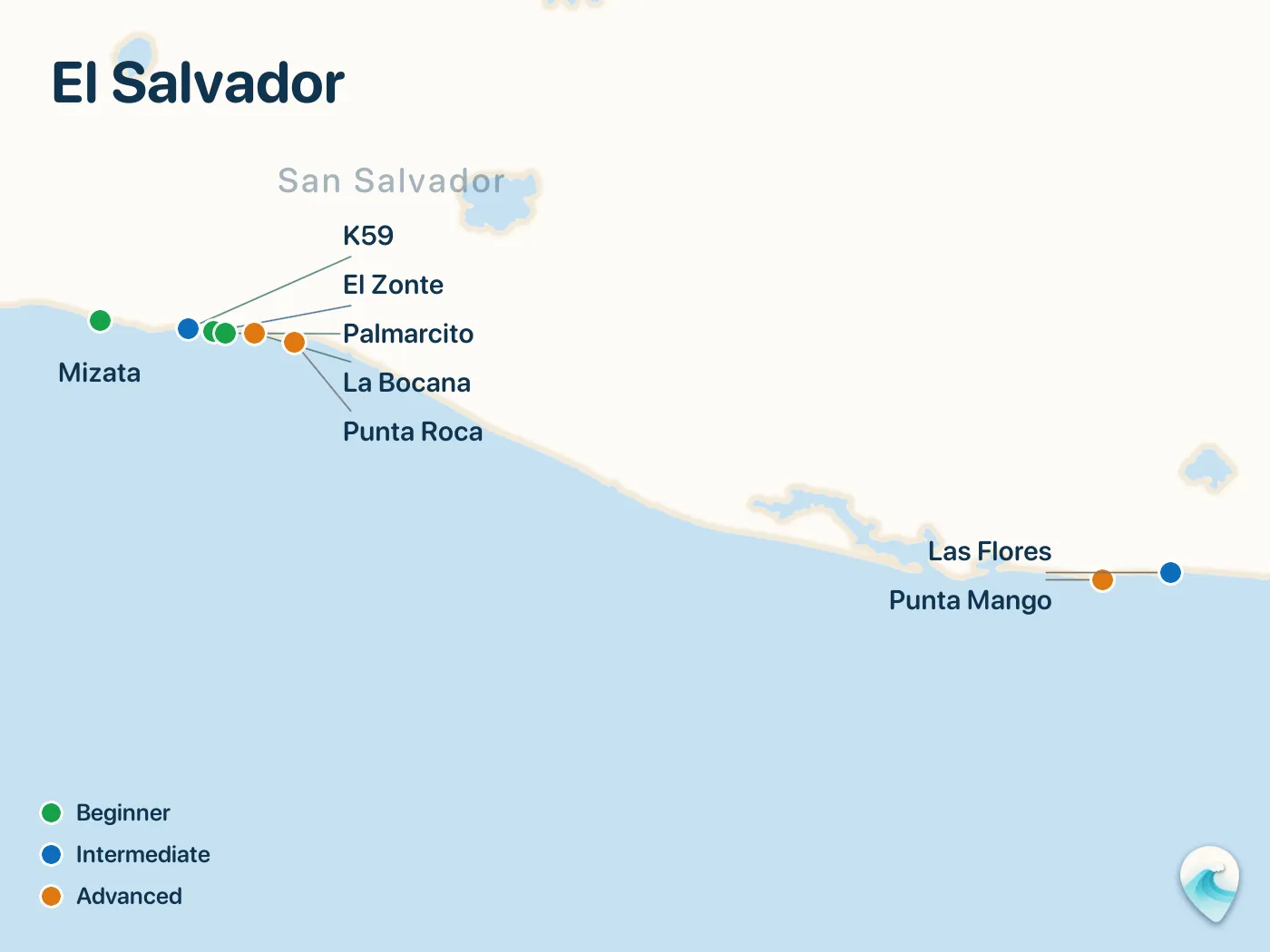
The coast road runs west from La Libertad through El Tunco to El Zonte, and the airport is about 45 minutes to an hour away, so you can land after breakfast and surf the point before sunset. In the village, the hostels and small hotels sit right on the point, close enough to check the wave from bed; El Tunco, ten kilometers east, has the bars and restaurants, and plenty of people sleep there and drive over for the morning session. Punta Roca at La Libertad is about twenty minutes east for the days you want a serious wave, and Palmarcito, the softest point on this coast, is five minutes up the road.
Hazards
Cobblestones and rock on the point at low tide: reef boots make the walk in easier
Rips near the rivermouth on bigger days and after heavy rain: know where the current is taking you before you commit
Learners and longboards share the inside: hold on to your board, look before you go and leave space
The sun is the real hazard here: rash vest, hat and sunscreen for the walk back up the point
After heavy rain the river runs brown into the bay: give the rivermouth a day or two before you surf it
An honest guide to surfing El Salvador: Punta Roca, El Zonte and the warm right points of the Balsamo Coast, boat trips to Las Flores, and the season month by month.
Yes, genuinely. The schools teach on the inside reform near the sand, in warm, waist-deep water with a soft push, and the point is slow enough that a first green wave is realistic within a week. November to February is the easiest window, when the whole coast is small, clean and offshore. In the south swell season the inside still works for beginners, but the rivermouth and the bigger days belong to more experienced surfers.
When is the best time to surf El Zonte?
It depends on what you want from it. March to October is the south swell season: the point gets its biggest, most consistent waves, chest- to head-high on the good days, and the rivermouth peak comes alive once the rains have rebuilt its bank, mostly from May. November to February is small, clean and offshore for most of the morning, the friendliest window for learners and longboarders. Either way, surf early: the offshore holds until late morning.
What is Bitcoin Beach, and can you actually pay in bitcoin?
Bitcoin Beach is the name El Zonte picked up in 2019, when an anonymous donation funded a community project that paid locals in bitcoin for beach clean-ups and other village work and encouraged shops to accept it. The experiment drew national attention and preceded El Salvador's bitcoin law of 2021. You can still pay in satoshis in some places, usually through a wallet app and a QR code, but many businesses prefer dollars, so carry both. The wave accepts neither.