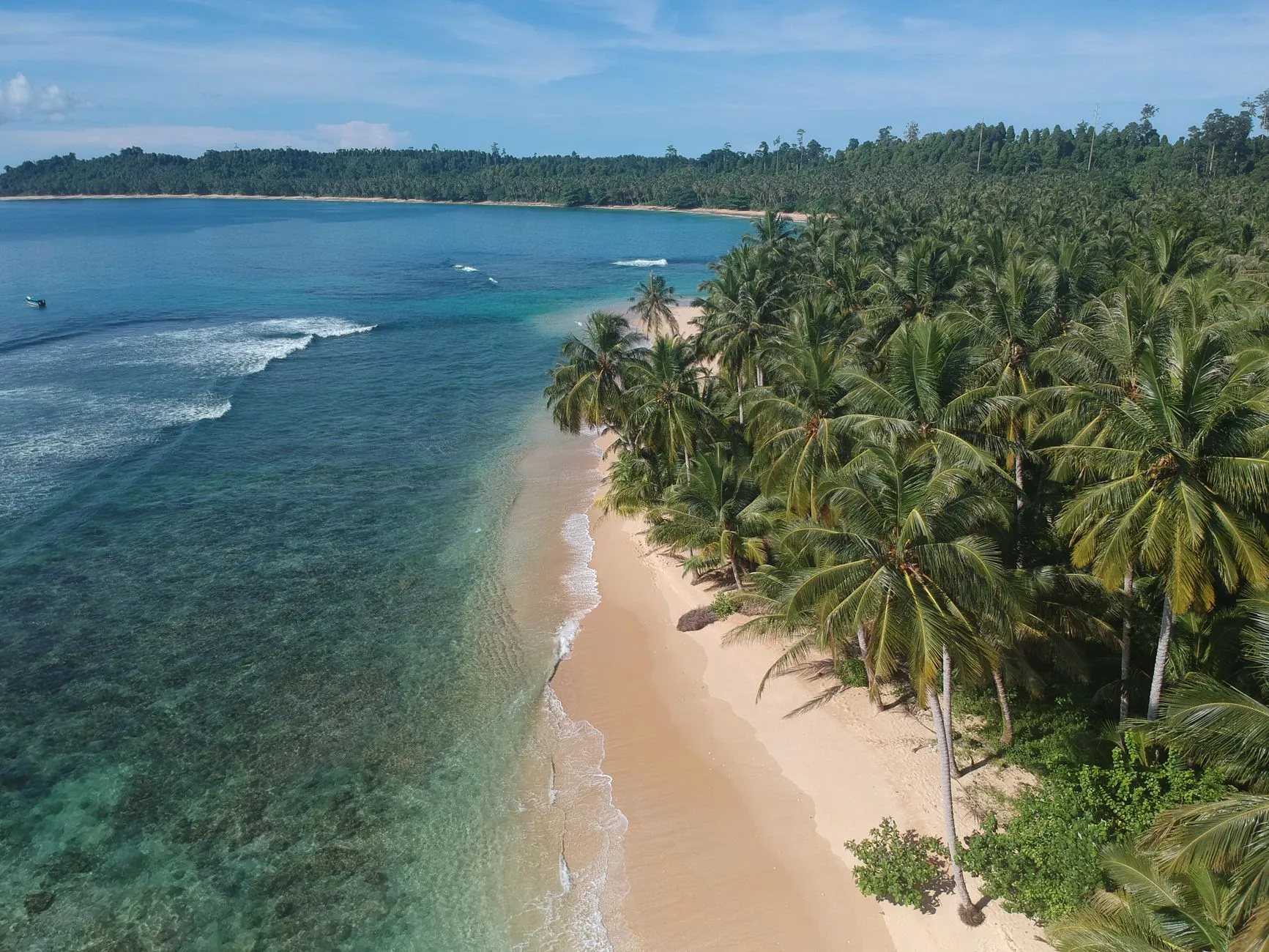
Waves and coastline at HT's (Lance's Right)

Guides · Mentawai Islands

HT's (Lance's Right)

The postcard of the Mentawais

HT's, or Lance's Right, is a right-hand reef in front of the coconut palms of Katiet, on the south end of Sipura island, and it is the postcard of the Mentawais. Lance Knight, an Australian surfer, came upon it in the early 1990s and left it his name; the charter crews that followed called it HT's, short for Hollow Trees, and both names are used interchangeably to this day. What the photos show is what you get: a flawless almond barrel bending over shallow coral, photogenic to the point of cliché and heavy enough to keep the pictures honest.

A good day here is the one every surf traveler has already seen in print. Long lines of south to southwest groundswell wrap onto the reef, stand up into that almond shape and spin down the coral toward the palms, while a gallery of boats and lenses watches from the channel. The wave gives its best barrels with real size and real commitment, and it keeps a sting in its tail: the inside section, known as the Surgeon's Table, breaks over razor reef and has ended many trips.

Advanced

Wave
Right-hand reef break over shallow coral
Best swell
S to SW Indian Ocean groundswell, works from shoulder-high, best well overhead, holds double overhead
Best wind
Glassy early mornings are the reliable window; the spot keeps its own wind pocket, W to NW blows offshore
Best tide
Mid tide is the standard call, high adds margin. The lower it drops, the more serious the end section
Season
March to October
Level
Advanced. A shallow barreling reef for surfers who already pull in

How the wave breaks

The takeoff rewards a deep, committed line. The wave stands up on the outer reef, gives you one moment to set your rail, then bends into the almond barrel the Mentawais are famous for: not a slab, not a closeout, a wave that curls evenly over shallow coral and shows you the exit almost from the first pump. From about head-high it starts to bend properly, well overhead is when it earns the postcard, and it holds its shape up to double overhead.

The price is the end of the ride. The inside section is called the Surgeon's Table, it breaks over razor reef, and the name has been earned one trip-ending cut at a time. The lower the tide, the shallower and more serious it becomes, until the last stretch of reef is less a section than a decision about where to kick out. Ride the barrel, exit with speed before the table, and every photo ever taken here suddenly makes sense.

Tall coconut palms leaning over the sand, the classic Mentawai backdrop

When it works

HT's runs on the dry-season swell train: storms in the southern Indian Ocean send long-period south to southwest groundswell at the islands from March to October, with April to October the heart of the season, and this reef has a reputation as the most consistent marquee wave in the islands. It still gets rideable days outside that window, just without the guarantee. Wind is the other half of the call, and the honest answer is to go early: dawns are glassy more often than not, afternoons vary with the trades, and the corner has a name for keeping its own micro-window, often clean when the wind is on elsewhere, with west to northwest blowing offshore here.

The lineup and the take-off

The lineup fills from two sides. Charter boats anchor in the channel and run their surfers to the peak, and the land camps at Katiet walk out through the palms, so in season dawn patrol rarely means solitude. Expect an audience too: this is the most photographed wave in the islands, and on a good swell the channel is a gallery of lenses and boat decks. Every wave you ride is documented whether you asked for it or not.

The wave dictates how it wants to be surfed. The takeoff rewards a deep, committed line taken behind the peak rather than out on the shoulder, and pulling in is the point of being here; racing to safety wastes the best wave of your trip. With whole charter fleets concentrating on a single takeoff zone, the rotation matters more than at most waves: wait your turn, pick the right one, and make it.

Getting there

Nobody passes by HT's on the way to somewhere else. You fly into Padang in West Sumatra, then cross to the islands by fast ferry or charter boat, and reaching Katiet takes the better part of a day when the connections line up. Most surfers come on a boat charter and live at anchor in the channel; Katiet also has land-based surf camps a short walk from the wave. Take the remoteness seriously: out here you are hours from proper medical help, and that fact deserves a seat in every decision you make over the Surgeon's Table.

Hazards

  • The Surgeon's Table: the inside section breaks over razor reef and has ended many trips
  • Shallow live coral at every stage of tide, shallower still as it drops; fall flat and keep your feet up
  • Real remoteness: hours from a hospital, and reef cuts infect fast in the tropics, clean every scrape the same day
  • Peak-season crowds: charter fleets concentrate on one takeoff zone, keep the rotation honest and it stays surfable
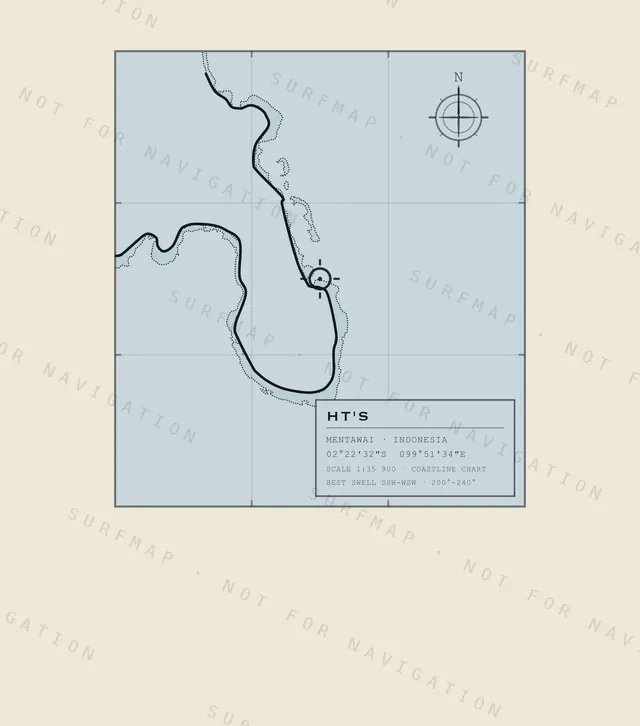
The chart of HT'sThe real coastline of the spot, printed on a tee.See the tee · $39.00 →
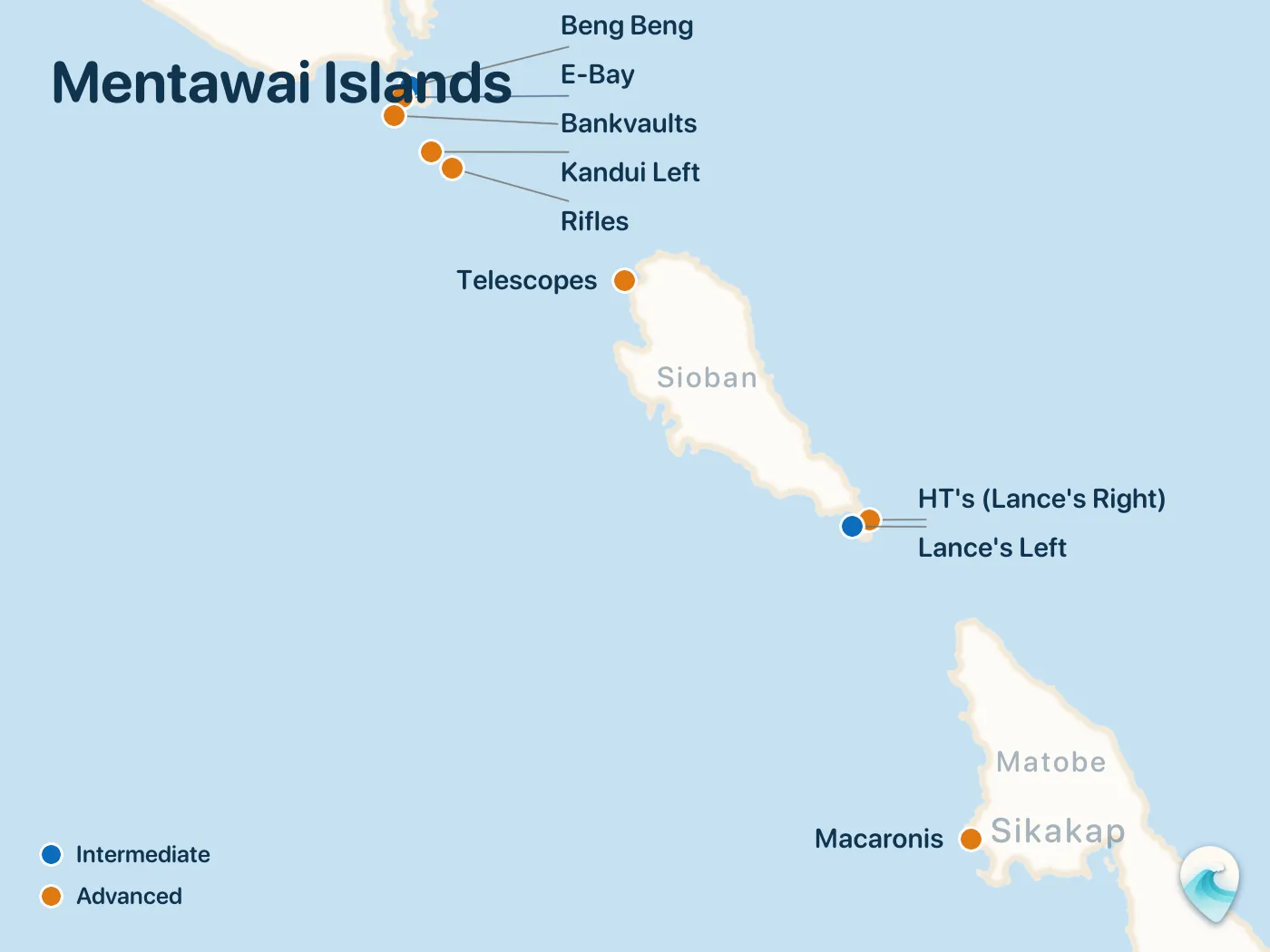
Map of the Mentawai Islands surf spots described in this guide, with numbered markers

Part of the Mentawai Islands surf guide

An honest guide to surfing the Mentawai Islands: the 9 spots that matter from the Playgrounds to the Pagais, HT's, Macaronis, Kandui and Rifles, boat trips vs land camps, and the season month by month.

Read the full guide →

Good to know

HT's or Lance's Right, which name is right?

Both, and they mean the same wave. Lance Knight, an Australian surfer, came upon it in the early 1990s, and half the surf world has named it after him ever since. The charter crews that followed called it HT's, short for Hollow Trees, and that stuck just as hard. Captains, camps and magazines mix the two without ceremony; use either in the channel and everyone knows exactly which almond barrel you mean.

What tide is safest at HT's?

Mid tide is the standard call, and high water adds a margin the reef never offers at low. The wave breaks over shallow coral at every stage; the real variable is the end. The lower the tide drops, the shallower and more serious the Surgeon's Table becomes, and dead low bares the inside slab. Some experienced surfers still ride it low for the hollower, squarer barrels, most wait for the push. If in doubt, surf the middle of the tide and be out of the water before it drains.

Boat charter or land camp for HT's?

Both work, and the honest answer depends on the trip you want. A charter boat lives at anchor in the channel, moves on when HT's is not doing it, and turns the whole archipelago into your menu, at charter prices. A land camp at Katiet puts you a short walk through the palms from the takeoff, first in the water before the boats send their dinghies, usually for less money, but when the swell favors another corner of the islands you watch the forecast instead of surfing it. Surfers who came for this one wave tend to sleep at Katiet; surfers who came for the Mentawais take the boat.