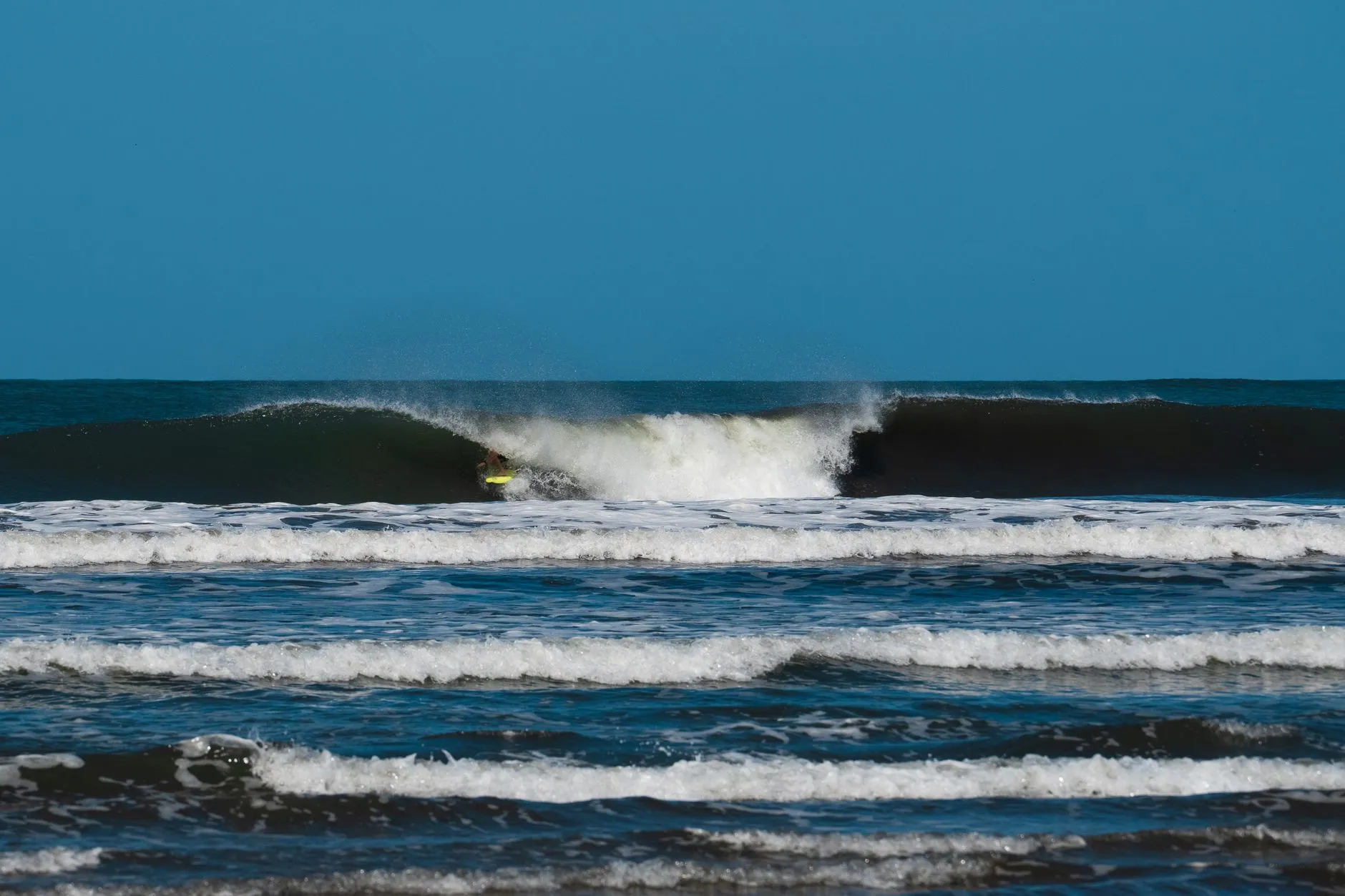
Popoyo is a lava-reef A-frame on Nicaragua's Emerald Coast, in the countryside of Tola, and the wave that made this stretch of Pacific famous. The reef splits every set two ways: a short, punchy right that hits the slab and throws, and a longer left wall with room to draw real lines. It starts working around waist high, holds its shape well overhead, and because this exposed coast catches swell nearly year-round, it rarely takes a day off.
The other half of the story is the wind. Lake Nicaragua, the inland sea behind this coast, funnels the easterly trades across its surface and delivers them to the Pacific as a land breeze that blows offshore morning after morning, often all day, more than 300 days a year. That is the region's calling card, and Popoyo is where it meets the most consistent reef on the coast: south swell lines standing up on lava rock, groomed clean at hours when most tropical coasts have long since blown out.
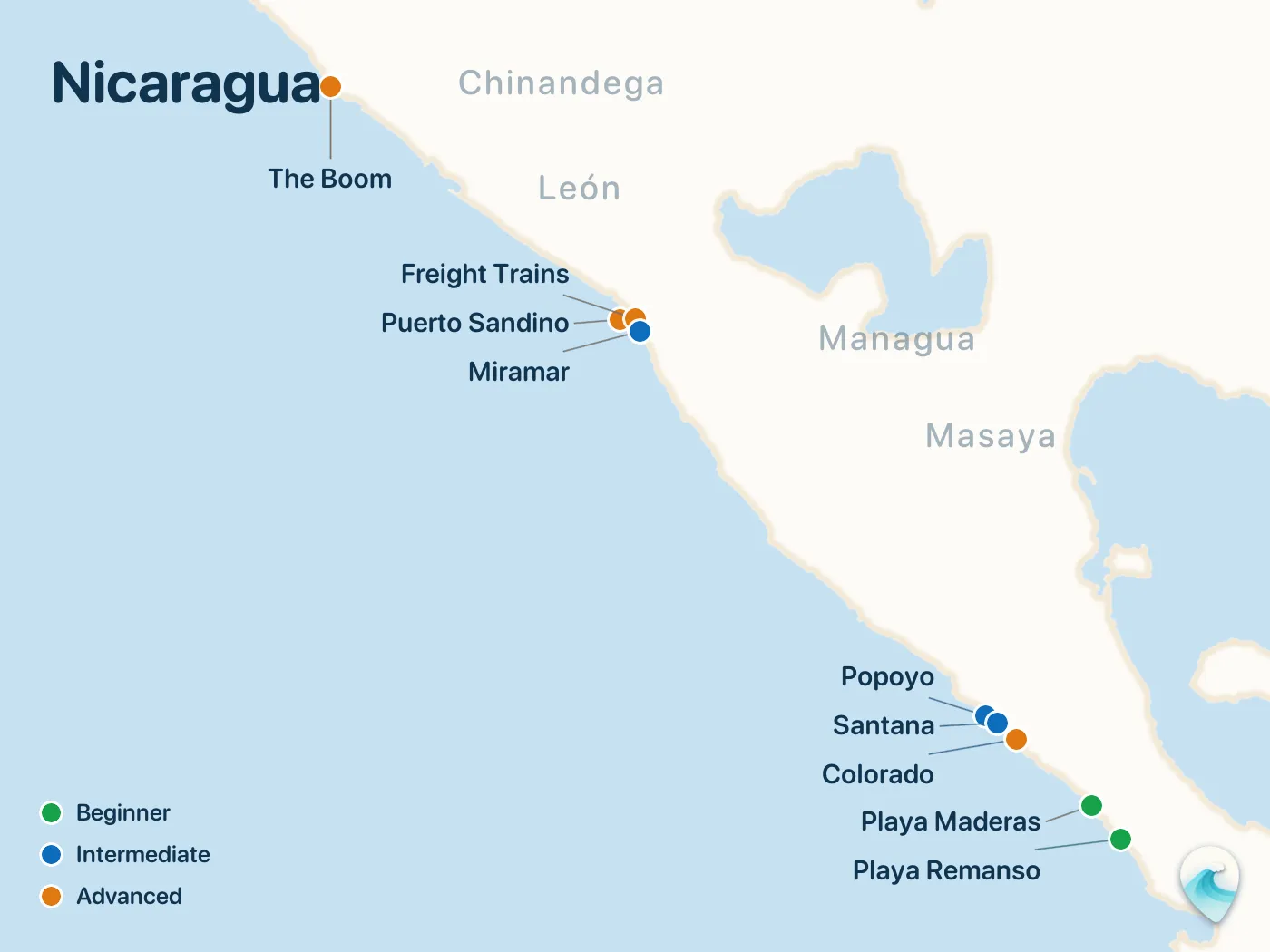
Intermediate
Wave
Lava-reef A-frame: short punchy right, longer left wall
Best swell
S to SW groundswell, works from waist high to well overhead
Best wind
E land breeze off Lake Nicaragua, offshore nearly all day, most of the year
Best tide
Mid tide. Lower is shallower and hollower, high can slow it down
Season
March to October for the biggest souths, swell nearly year-round
Level
Solid intermediates and up on the main peak, the Outer Reef is experts only
How the wave breaks
The main peak breaks over a lava slab a short paddle off the beach, and it is a true A-frame with two personalities. The right is the shorter, punchier ride: it stands up fast on the shallowest rock, offers a steep drop, a quick wall and, on the right days, a short cover-up before it shuts down. The left is the wave you can work with, a longer wall that bends down the reef with room for turns, and most of the lineup drifts that way when the swell has some south in it. From waist high the peak is already fun; well overhead it turns into a serious, shifting reef wave that sorts the crowd quickly. Most days the window everyone aims for is mid tide: lower tides drain water off the slab and make both waves shallower and hollower, and a full high tide can slow the peak down.
A few hundred meters outside sits the Outer Reef, and it deserves its own paragraph because it is its own wave, not an extension of the main peak. Most of the year it is just a shadow of whitewater on the horizon; on the largest south swells it wakes up as a genuine big-wave peak, a thick, shifting A-frame that the local chargers have made their own. It is the heaviest wave on this coast when it breaks, and unless you have real experience in waves of consequence, the right place to enjoy it is the beach.
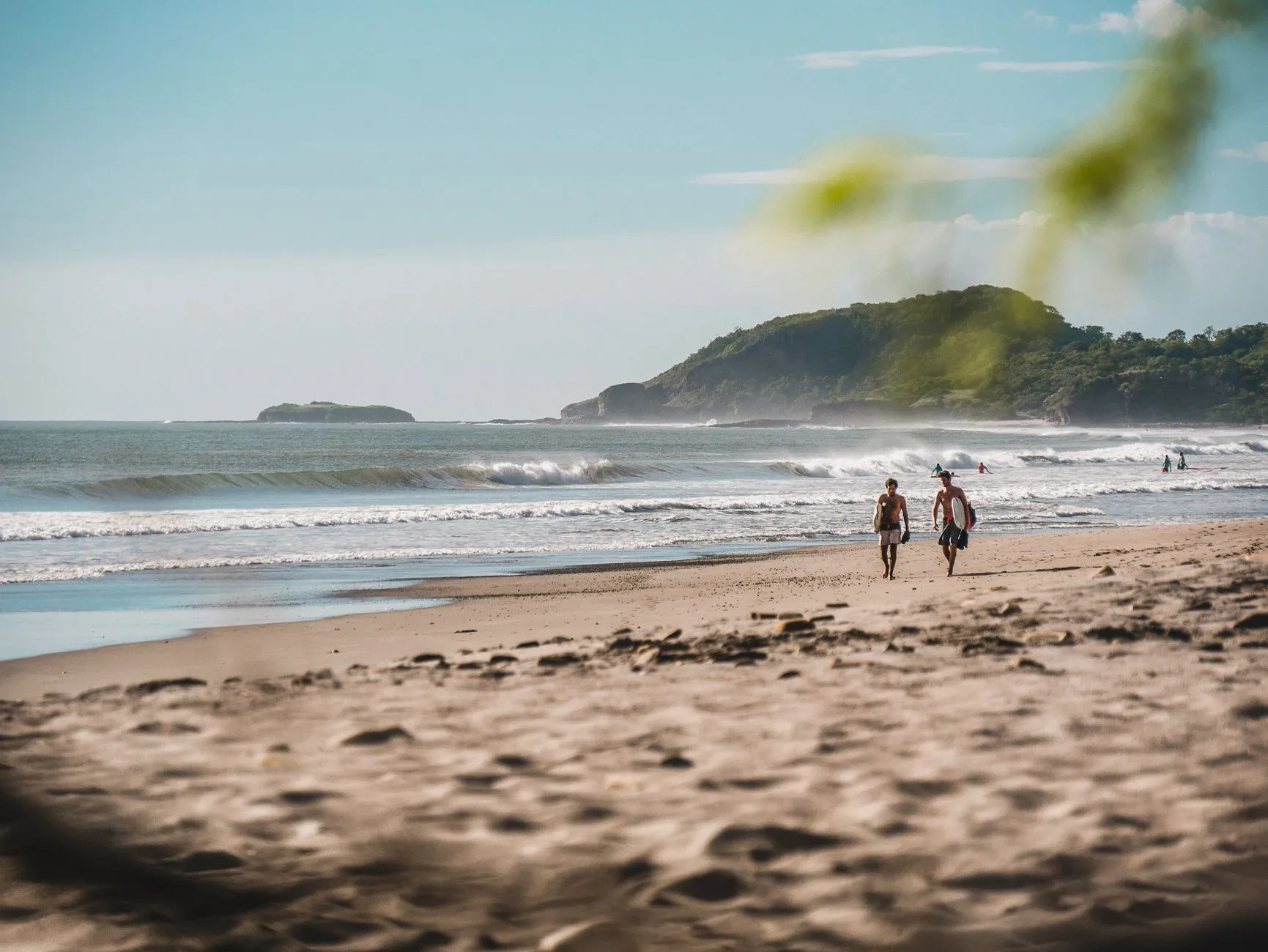
Boards under arm, two surfers on the walk to the morning check
When it works
Popoyo runs on Southern Hemisphere energy. From March to October, storms tracking under the South Pacific send long-period S to SW groundswell up to Nicaragua, with the biggest and most consistent pulses usually landing between June and August. The reef faces the swell window squarely and needs little, which is why the coast has surf in the quieter months too: even from November to February there is usually a small pulse finding the slab. What sets the season here apart from the rest of the Pacific is the wind. The trades cross Lake Nicaragua, flatten out over the water, and arrive at this coast as an easterly land breeze that holds offshore through most of the day for most of the year. In the dry season it can even blow too hard for comfort; in the swell season it simply grooms wave after wave from dawn until dark.
The lineup and the walk in
There is no paddle-out drama here, just a walk. You cross the flats at the Salinas river mouth with your board on your head, wading warm knee-deep water until the reef drops away, then paddle the last stretch to the peak. Watch the flow around the river mouth as you go: when the swell is up or the tide is moving, the current can pull harder than it looks. Booties divide opinion, but the lava is sharp, the urchins are real, and at lower tides many surfers are glad to have them.
Dawn is the quiet window and the best surf of the day rolled into one: offshore since first light, the peak often close to empty, pelicans working the sets. It does not last. Popoyo is the center of gravity for every camp and lodge on this coast, and by around nine the trucks have arrived and the lineup is an international crowd trading waves in both directions. The wave handles a crowd better than most, since the right and the left take off from the same peak but run away from each other. Pick your side, wait your turn, and there are still plenty of waves to go around.
Getting there
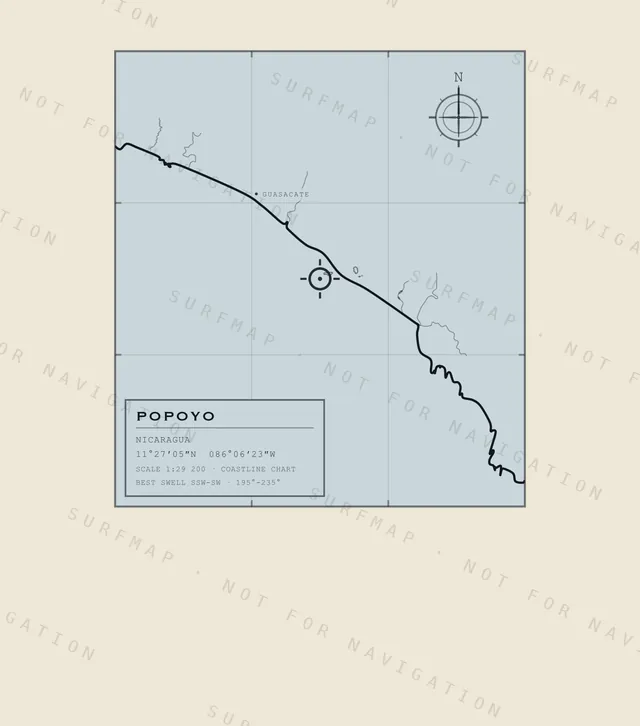
Popoyo sits in the municipality of Tola, on the stretch of coast behind Playa Guasacate, and the last part of the trip is dirt road whichever way you come. From Managua's airport it is roughly two and a half hours by car, most of it smooth highway through Rivas before the final rattle down to the beach. There is no town at the wave, just a scatter of lodges, surf camps and small kitchens along the Guasacate road, and that is where most people stay; from the closest ones, the beach walk to the paddle-out takes a few minutes. Rent a 4x4 if you plan to explore the coast, since the reefs north and south hide behind more dirt tracks.
Hazards
Shallow lava reef and urchins, especially at lower tides, booties are cheap insurance
Currents around the river mouth pull hard when the swell is up, watch the water before you wade in
The crowd: from mid-morning the whole coast's camps surf here, dawn is the quiet window
The Outer Reef is a big-wave peak for experts only on the days it breaks
An honest guide to surfing Nicaragua: Popoyo, Playa Colorado, The Boom and the lefts of Puerto Sandino, where 300 days of offshore wind groom every swell.
Because of Lake Nicaragua. The trade winds cross the country from the east, and where the lake sits behind the coast they travel over a huge sheet of open water, arriving at the Pacific smooth, steady and dry. The result is a land breeze that stays offshore not just at dawn, as on most tropical coasts, but often deep into the afternoon, well over 300 days a year. The one catch comes at the extremes: in the dry season the same wind can blow hard enough for days that it shreds the small waves it usually grooms.
Can beginners surf Popoyo?
The main peak is not a learning wave. It breaks over shallow lava rock, it has push from waist high up, and the takeoff rewards surfers who already read reef peaks with confidence: solid intermediate is an honest floor. The good news is that this coast is kind to beginners around it, with mellower beach break peaks a short drive away and schools working the softer sandbars. A sensible plan is to learn on the beaches, then paddle out at the main peak on a small, clean morning at mid tide, when the wave shows its friendliest face.
When is the best time to surf Popoyo?
March to October is the swell season, when southern storms stack groundswell after groundswell into all that offshore wind; June to August usually brings the biggest and most consistent surf, along with the fullest lineups. If you would rather trade size for space, the shoulder months make a strong case, and even the dry season from November to February has its days: the reef still catches most small pulses, the crowd thins, and the wind stays offshore, sometimes too much of it. Popoyo rarely goes truly flat. It mostly just changes size.