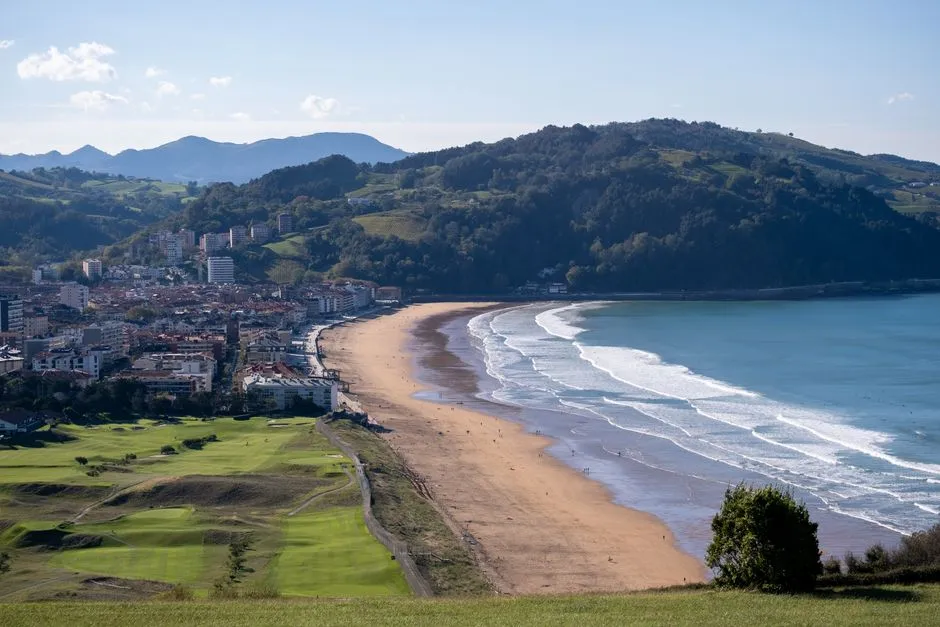
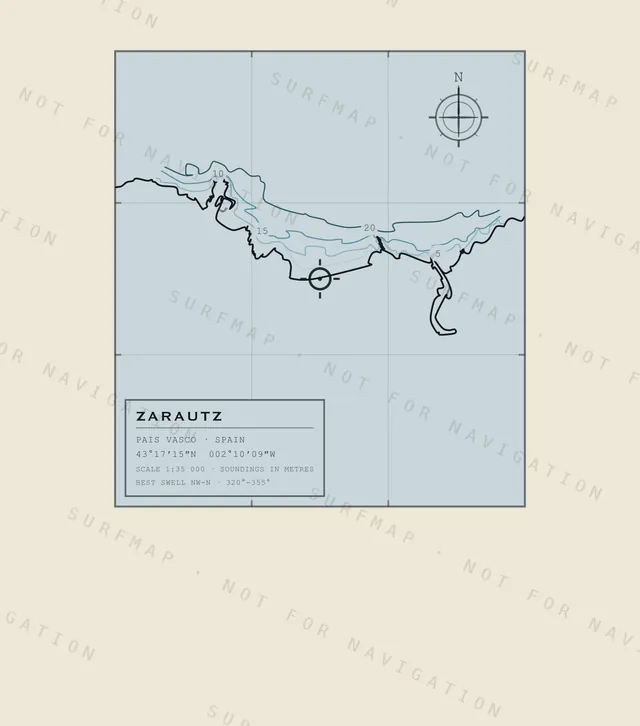
Zarautz is the surf capital of the Basque Country and the beach the whole region learns on. Two and a half kilometers of open sand, the longest beach in Gipuzkoa, run from the town and its Malecón promenade at the western end to the Iñurritza rivermouth, its protected dunes and the golf course at the eastern end. Surfing arrived here in the 1960s, contests have run on this sand for decades, and surf schools, board shops and the shapers of the Basque board industry are as much a part of the town as the pintxo bars behind the promenade.
The wave is a classic open beach break, and its gift is space. Peaks shift along the whole length over the sandbars, lefts and rights, soft and forgiving at waist to chest-high, walls with real push once it reaches head-high. On a good autumn morning a south wind grooms the whole bay, the town end is busy with lessons, and a ten-minute walk toward the dunes buys you a peak of your own. That is the whole point of Zarautz: whatever the rest of the coast is doing, somebody is riding something here.
Beginner
Wave
Open beach break over sand, lefts and rights along two and a half kilometers
Best swell
NW swell, waist to head-high. Bigger than that and it starts closing out
Best wind
S to SE offshore, mornings before the NW sea breeze
Best tide
All tides work. Mid tide is the usual sweet spot, low runs faster, high fattens the town end
Season
All year. September to November for the best banks with warm water
Level
Beginners first of all, everyone else on the outside peaks and in autumn
How the wave breaks
Zarautz is an open beach break in the plainest sense: two and a half kilometers of sand facing the Bay of Biscay, with no headland to bend the swell or shelter it. Peaks stand up wherever the banks have settled, lefts and rights of similar length, and they move with every storm and every big tide. At waist to chest-high the wave is soft and slow enough to forgive almost anything, a long push toward the sand that lets a beginner stand, fall and try again a minute later. At head-high it becomes a different animal: proper walls with some speed, a section to race, sometimes a lip to hit on the inside.
Above that the beach starts to close out. Without anything to shape it, a solid NW swell arrives as long lines that fold over all at once, and the bigger it gets the fewer peaks survive. Tide works the same way along the whole length: mid tide is the usual sweet spot, low tide runs faster and hollower over the shallower banks, and high tide pushes the wave up against the promenade wall at the town end, where it fattens and backs off. On the smallest summer days that same town end often holds the only real shape on the beach.
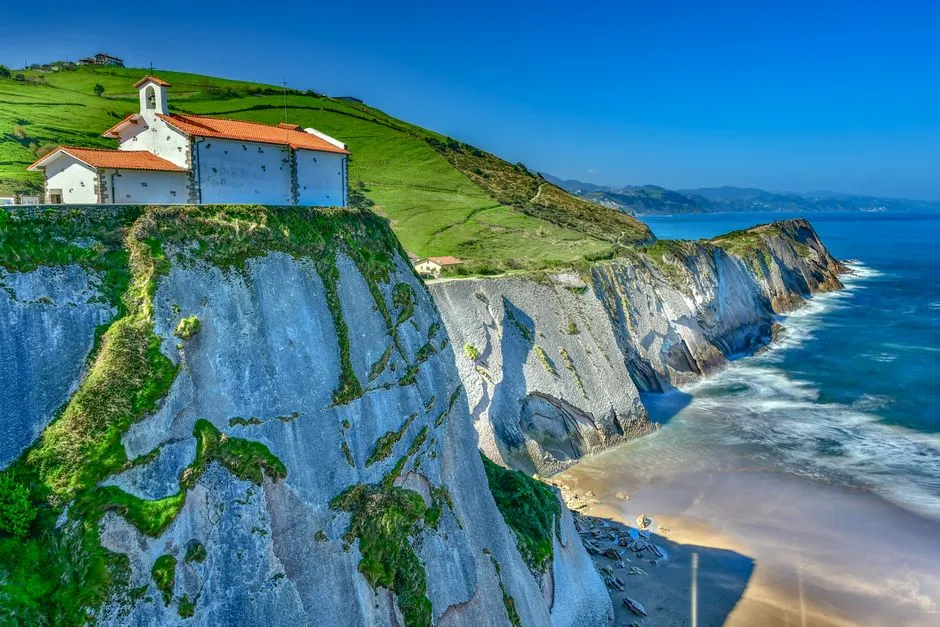
The San Telmo chapel on the flysch cliffs at Zumaia, a few kilometers west of Zarautz
When it works
Zarautz surfs all year at some size, which is rarer on this coast than it sounds. Autumn is the season: from September the first NW groundswells arrive while the water is still warm, around 20°C in September and 18°C in October, the banks are at their best after the summer, and the south wind blows offshore on most mornings. Winter, from December to March, is big and cold, 12 to 13°C, and the beach spends many days closing out under storm swell; those are days for the sheltered beaches, and you come back when it drops. Spring is uneven, clean windows between fronts and long flat spells. Summer, from June to August, is small and warm, and the beach belongs to the town: lifeguard flags and swim zones divide the sand, the surf schools fill the marked areas, and the early morning, before the flags go up and the NW sea breeze comes in, is the only quiet window.
The lineup and the take-off
The beach sorts itself into zones without anyone drawing lines. The town end, in front of the Malecón, is where the surf schools set up and where most people paddle out, so the whitewater there is a moving crowd of soft-tops and first stand-ups. Walk east and the crowd thins: the half toward the Iñurritza rivermouth and the dunes is more open, with a little more current pulling along the banks, and it is where the emptier peaks usually are. On the smallest days the town end holds the better shape, so that is where you go when there is barely a wave to share.
The take-off is a beach-break take-off: pick a peak, sit a little outside the whitewater line, and watch two or three sets to see whether the left or the right is holding. In the school zone the etiquette is loose, so the rule is to give everyone more room than you think you need, keep hold of your board and look over your shoulder before every wave. Away from the schools a normal pecking order applies, and it is mild here by Basque standards: Zarautz has hosted contests and visitors for so long that a traveller surfing politely is nothing new.
Getting there and where to stay
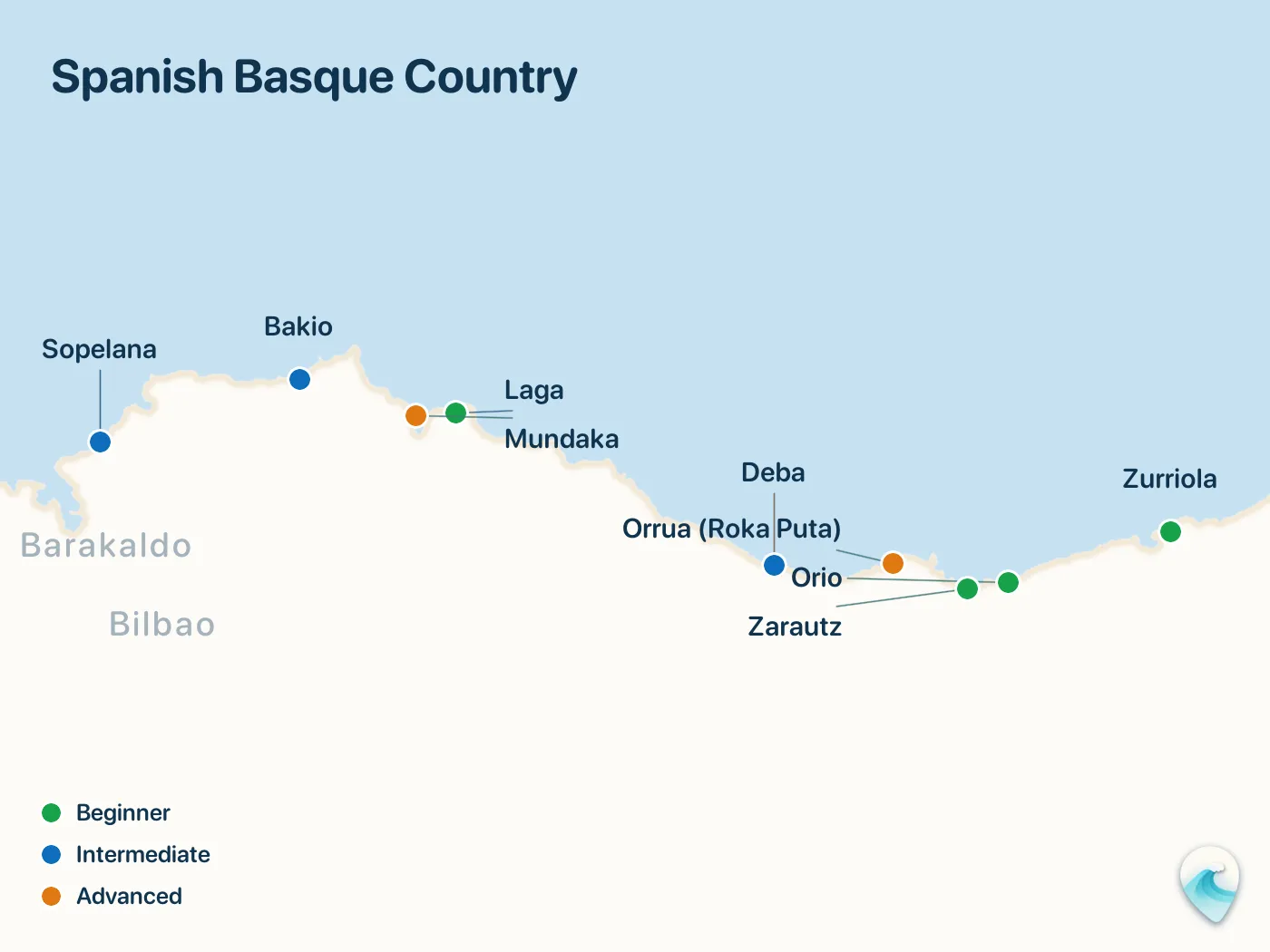
Zarautz is about 20 minutes west of San Sebastián on the N-634 or the A-8 motorway, and the Euskotren coastal line stops in town, a short walk from the beach, so you can leave the car behind. Bilbao airport is about an hour away by road. Parking along the beachfront fills early in summer, so aim for the streets behind the promenade or the eastern end near the golf course. To stay, the town has everything a surf trip needs, and there is a campsite on the hill above the eastern end of the beach with a view over the whole bay; San Sebastián is close enough to sleep there and surf here. For a change of wave, Zurriola, the city beach of San Sebastián, is a few stops east on the same train, Orio and its rivermouth are just east, the flysch cliffs and Zumaia are a few kilometers west, and Mundaka is about an hour further along the coast in Bizkaia.
Hazards
Summer swim zones and lifeguard flags divide the beach: surf only in the marked areas and check the flags before you paddle out
Rips near the rivermouth and along the banks on bigger days: if the water moves faster than you paddle, walk back along the sand and pick another peak
Crowds of learners at the town end, loose boards and wide take-offs: give everyone twice the space you think you need
Winter size and cold: 12 to 13°C water and a beach that closes out under storm swell, so bring a 4/3 with a hood and an honest look at the forecast
An honest guide to surfing the Spanish Basque Country: Mundaka's legendary left, Zurriola's city peaks and the beaches between Bilbao and San Sebastián, month by month.
Yes, it is the classic place to learn on this coast. The bottom is sand, the beach is long enough that the schools never run out of room, and at waist to chest-high the wave is soft and rolls a long way toward the sand. The schools work the town end and know which bank is friendliest that morning. June and September are small, warm and less crowded; the big winter days close out and are no place to learn.
When is the best time to surf Zarautz?
September to November. The first NW groundswells arrive while the water is still around 18 to 20°C, the sandbanks have settled after the summer, and the south wind blows offshore on most mornings. The beach works all year, but winter is big, cold and often closing out, and summer is small, warm and shared with the whole town. Spring can be good between fronts. Whatever the month, surf early: the sea breeze turns onshore by late morning.
Zarautz or Zurriola: which beach should you pick?
Both are open beach breaks on the same NW swell, about 20 minutes apart. Zarautz is longer, with more room to spread out, softer peaks for learning and a surf town behind the sand. Zurriola is San Sebastián's city beach: punchier peaks in front of the Kursaal, more crowded for its size, and the whole of Gros a street away. Many people sleep in San Sebastián, surf Zurriola at dawn and take the train to Zarautz when it fills up.