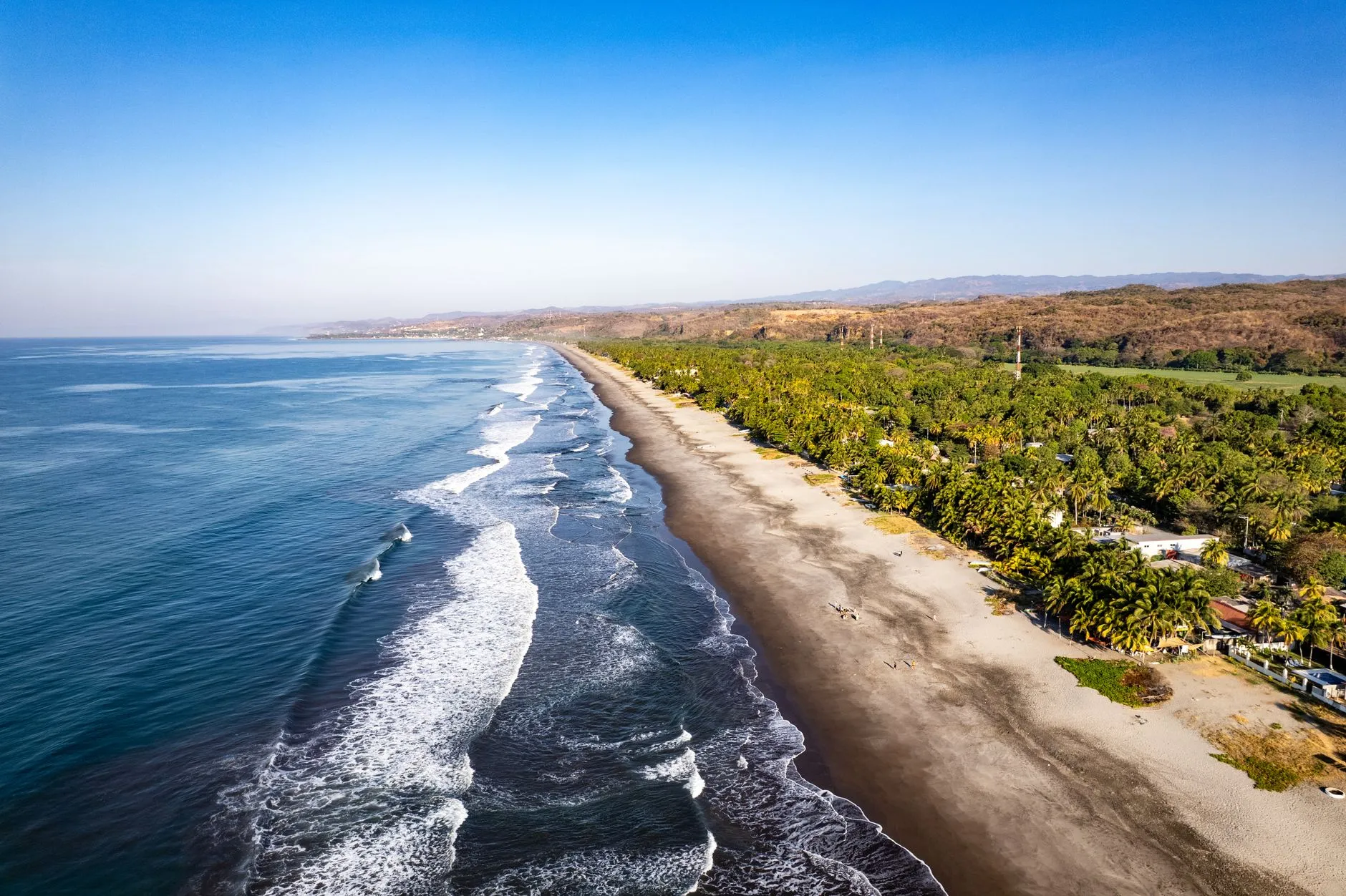
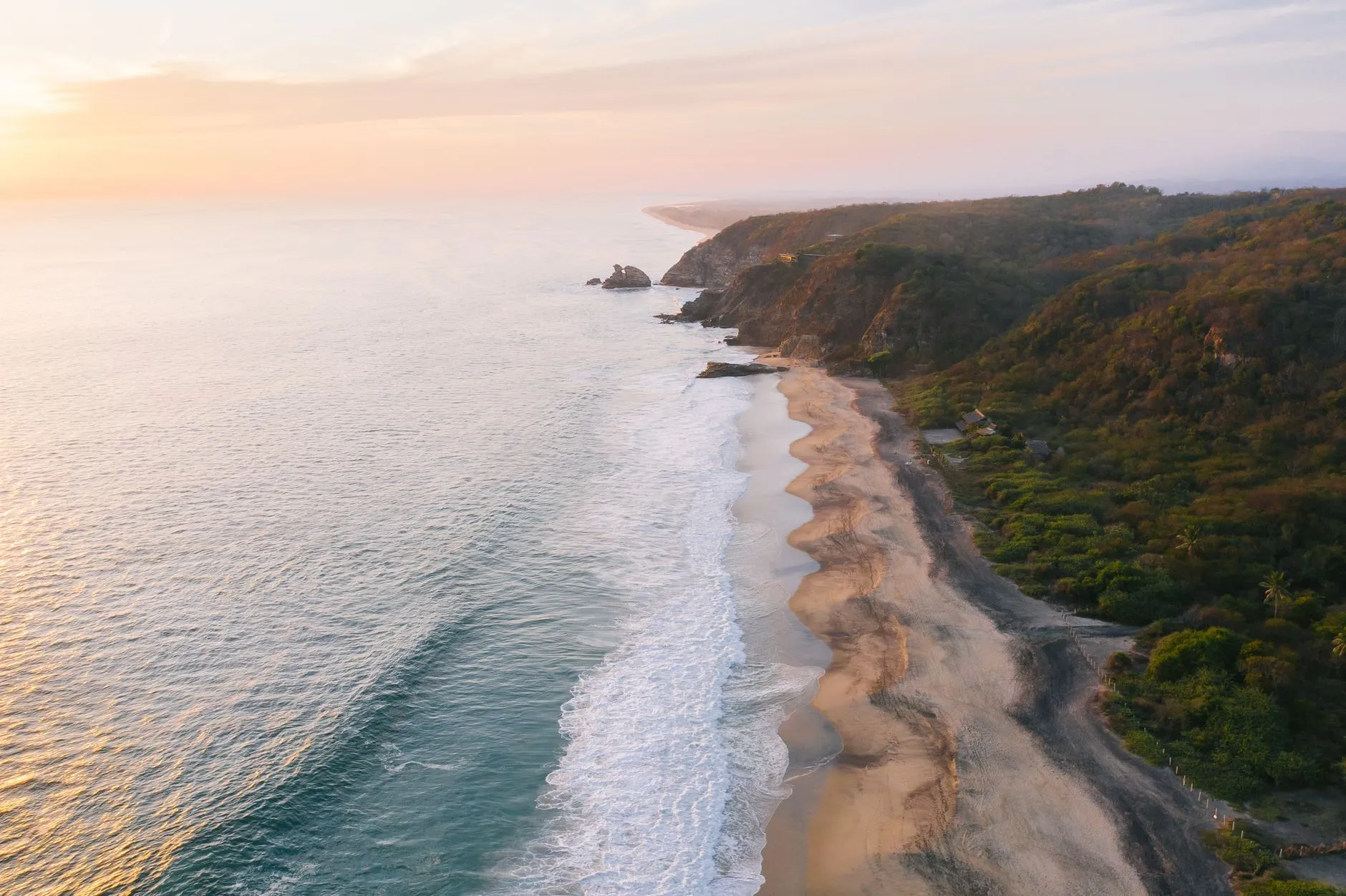
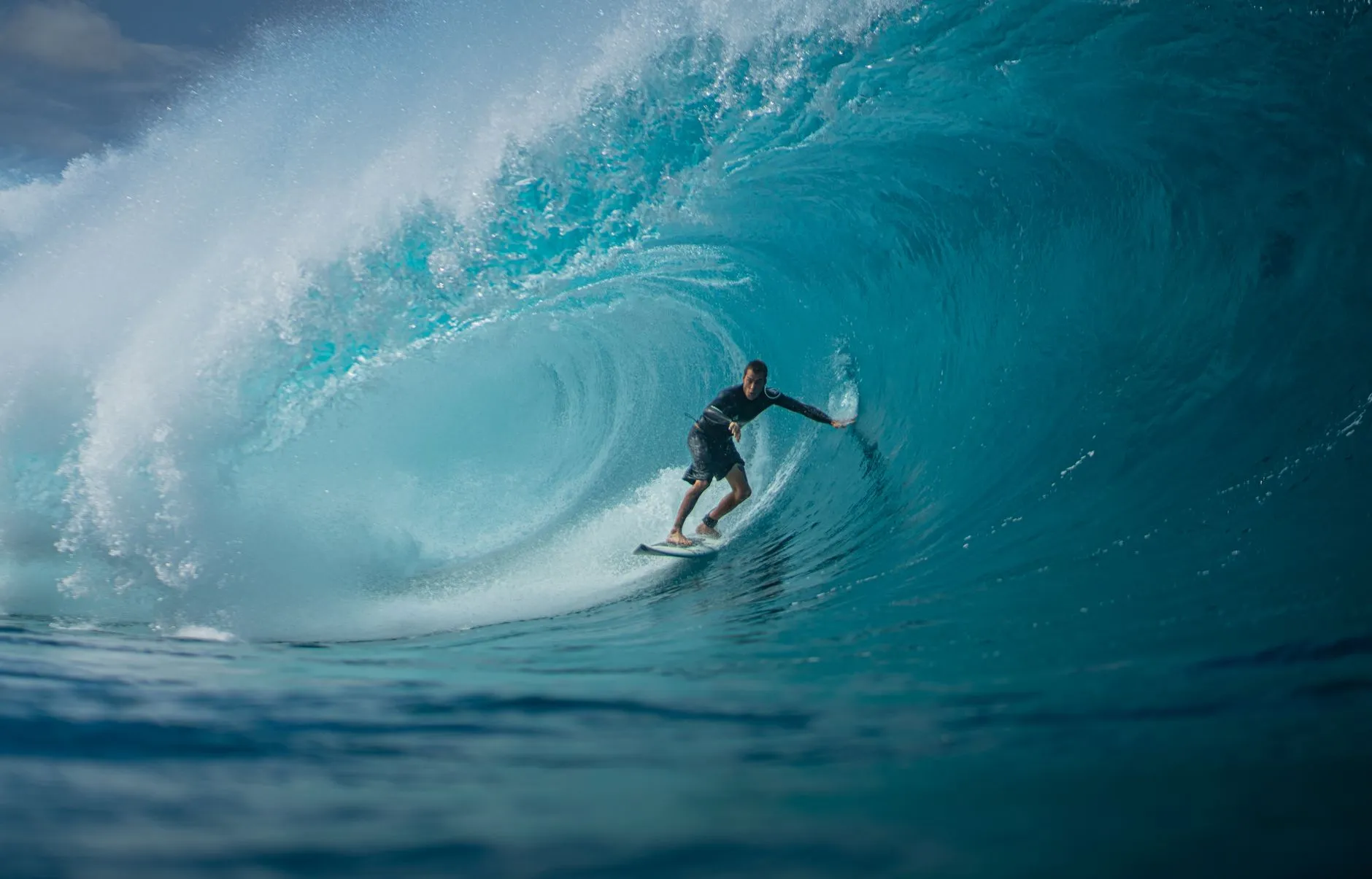
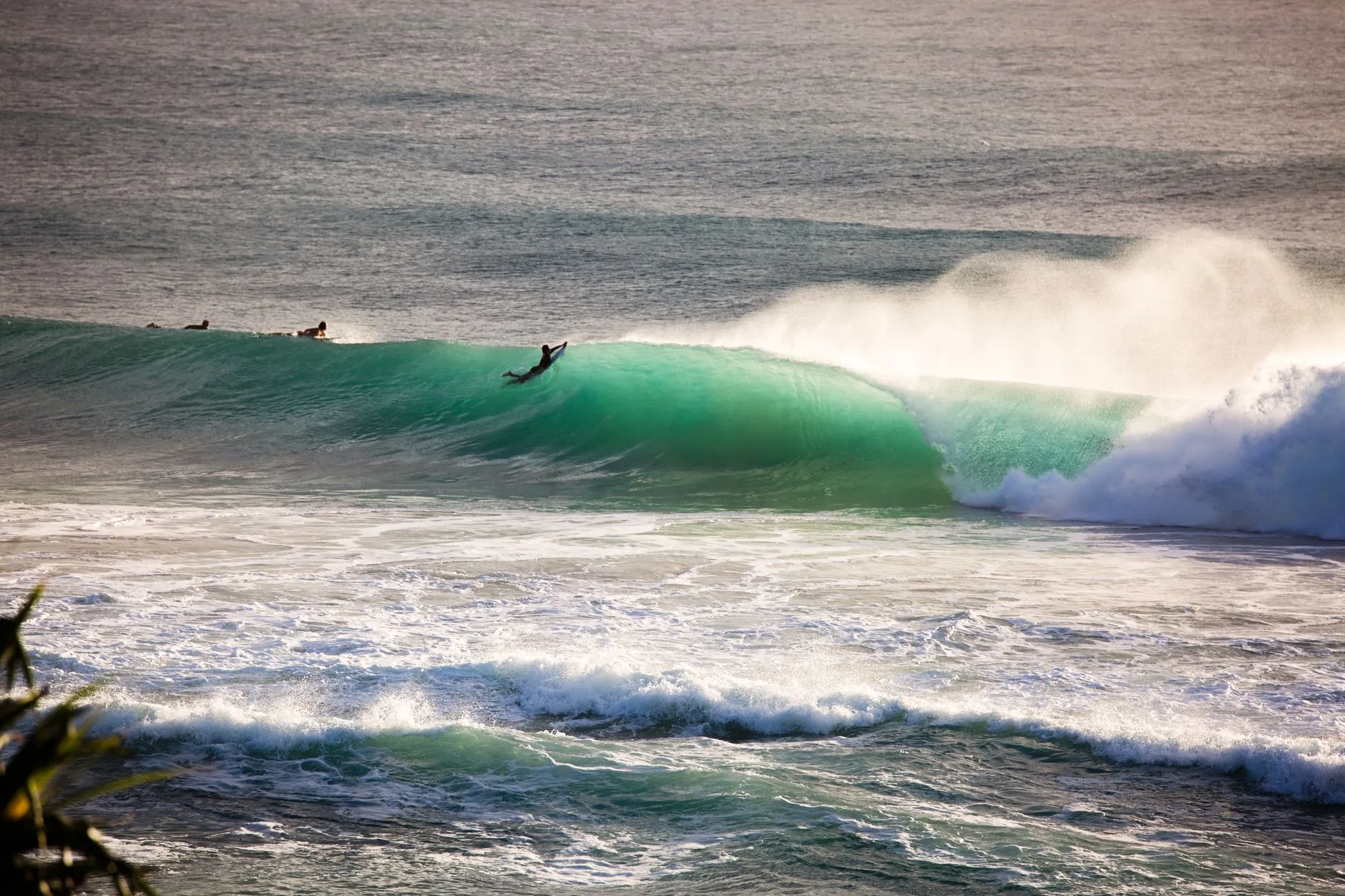
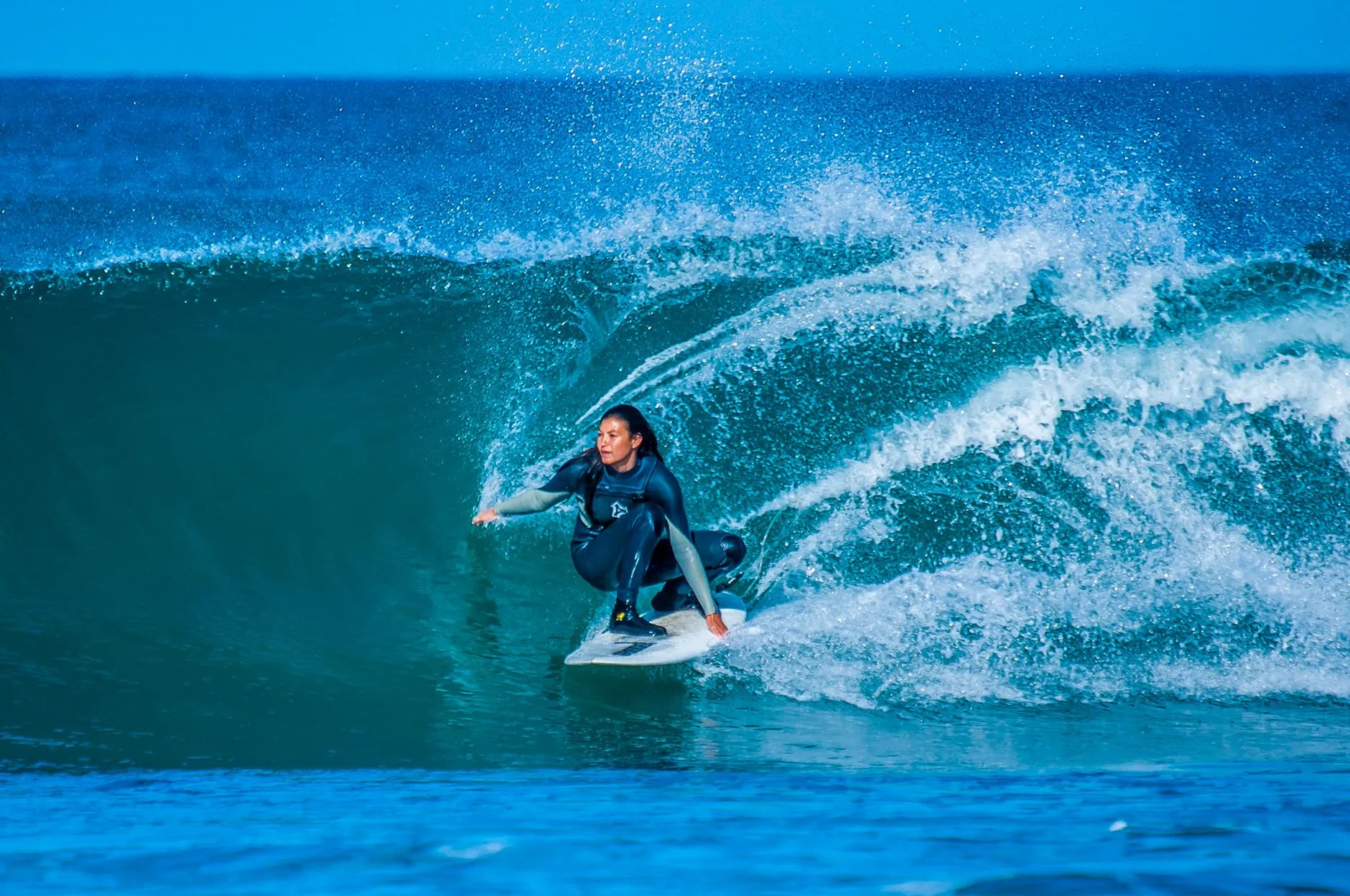
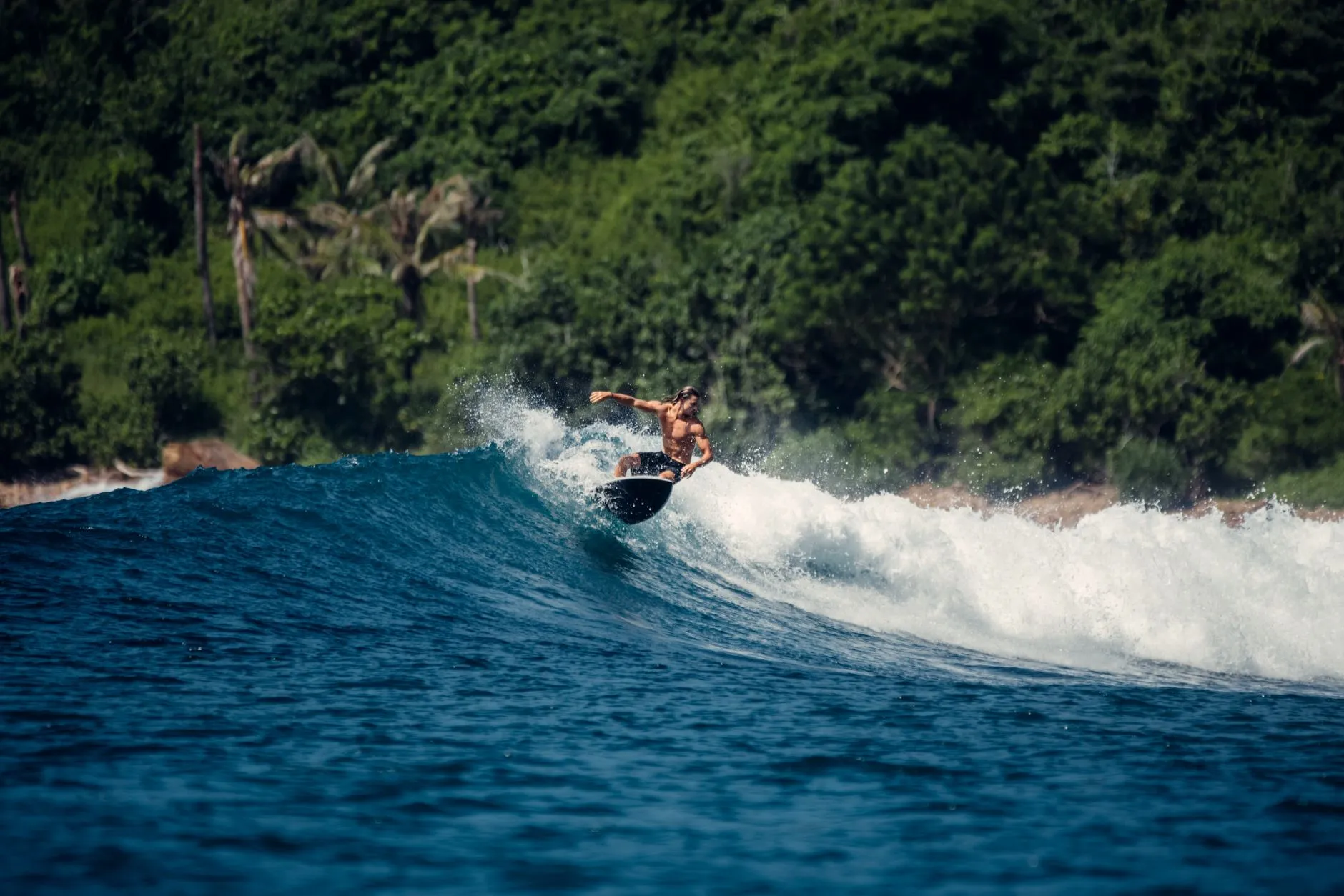
From the seaplane window the Maldives barely qualifies as land: twenty-six atolls scattered across eight hundred kilometers of Indian Ocean, a hundredth of the country above water and the rest in every shade of blue you can name. For surfers, almost everything that matters sits in the two atolls around the capital: North and South Malé, where southern groundswell bends through the reef passes and peels along coral shelves with a regularity that feels engineered. The story starts with a shipwreck: Tony Hinde, an Australian, washed up here in 1973, found perfection on his doorstep and kept quiet about it for a decade. What he was protecting still holds. The waves are rarely huge and rarely poor, the water sits at 28 to 29°C every day of the year, and a pair of boardshorts is the entire kit list.
Be clear-eyed about the logistics before you fall for the photos. There is no surf town here and no beach parking: you sleep on a charter boat that anchors in the channels, in a resort that in practice owns the wave on its house reef, or in a guesthouse on a local island like Thulusdhoo or Himmafushi. The season runs on two monsoons. The wet southwest monsoon, May to October, is the surf season: the same southern storms that light up Indonesia send groundswell here, and the west wind blows offshore on the east-facing reefs. December to February belongs to the dry northeast monsoon, postcard weather and small waves. June to August is the biggest, April, May, September and October are often the cleanest, and in high season the charter fleet stacks the famous channels: a dozen boats anchored off Chickens and Cokes is not a rumor, it is a Tuesday.
Best months
March to October for southern groundswell; June to August the biggest, the shoulder months often the cleanest
Water
28 to 29°C every day of the year: boardshorts, a rash vest for the sun, reef booties if you are sensible
Levels
From Ninjas' gentle walls to Cokes draining over shallow coral
Getting there
Fly to Malé: the North Malé waves are 20 to 90 minutes by boat from the airport, Riptides an hour further south
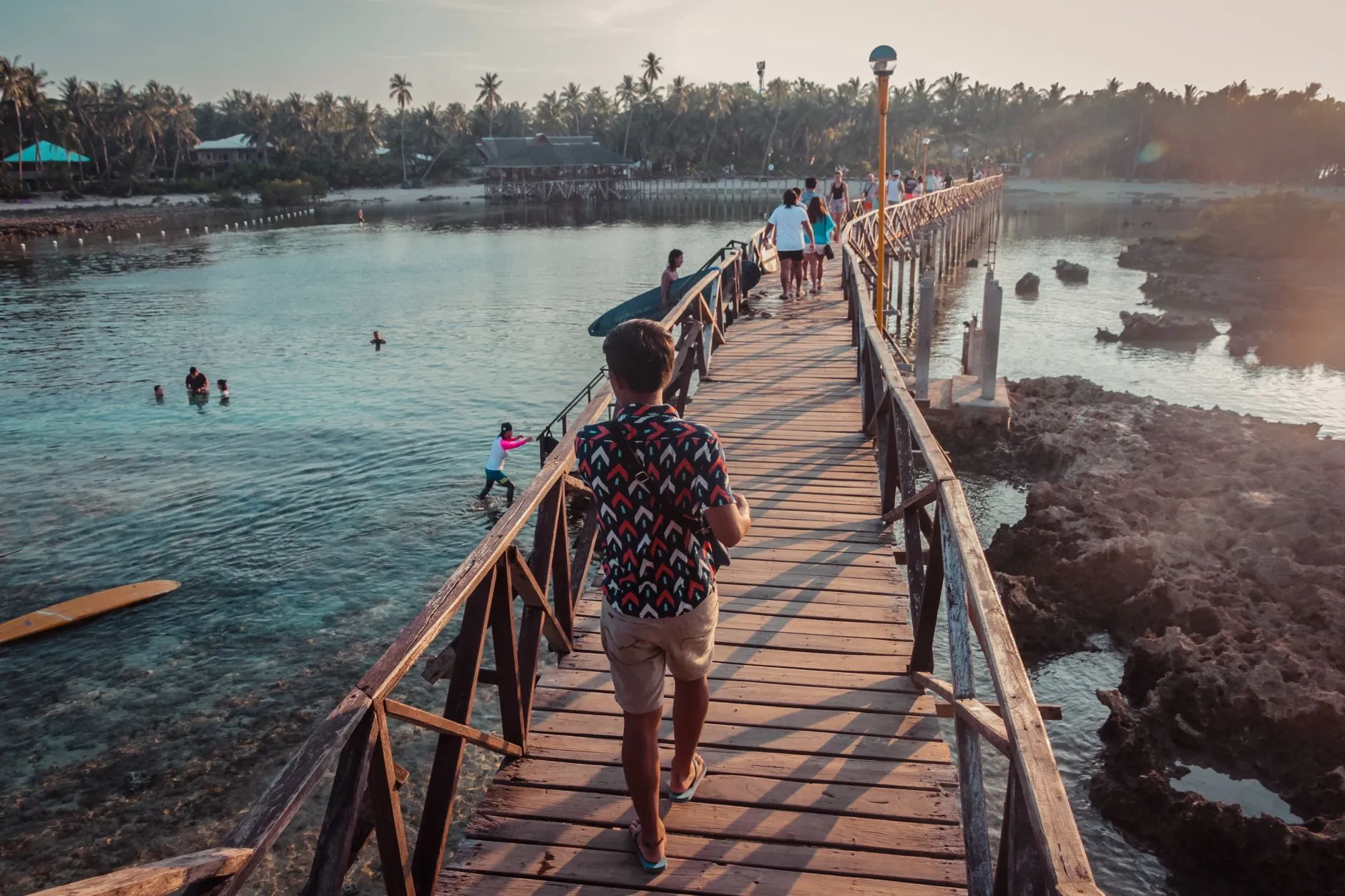
One local island, one channel, two famous waves facing each other across it. Thulusdhoo is the budget door into the Maldives: guesthouses on the sand, a Coca-Cola factory, surfboards outnumbering bicycles, Chickens peeling on one side and Cokes detonating on the other. In season the anchorage fills with charter masts by mid-morning; dawn belongs to whoever slept closest.
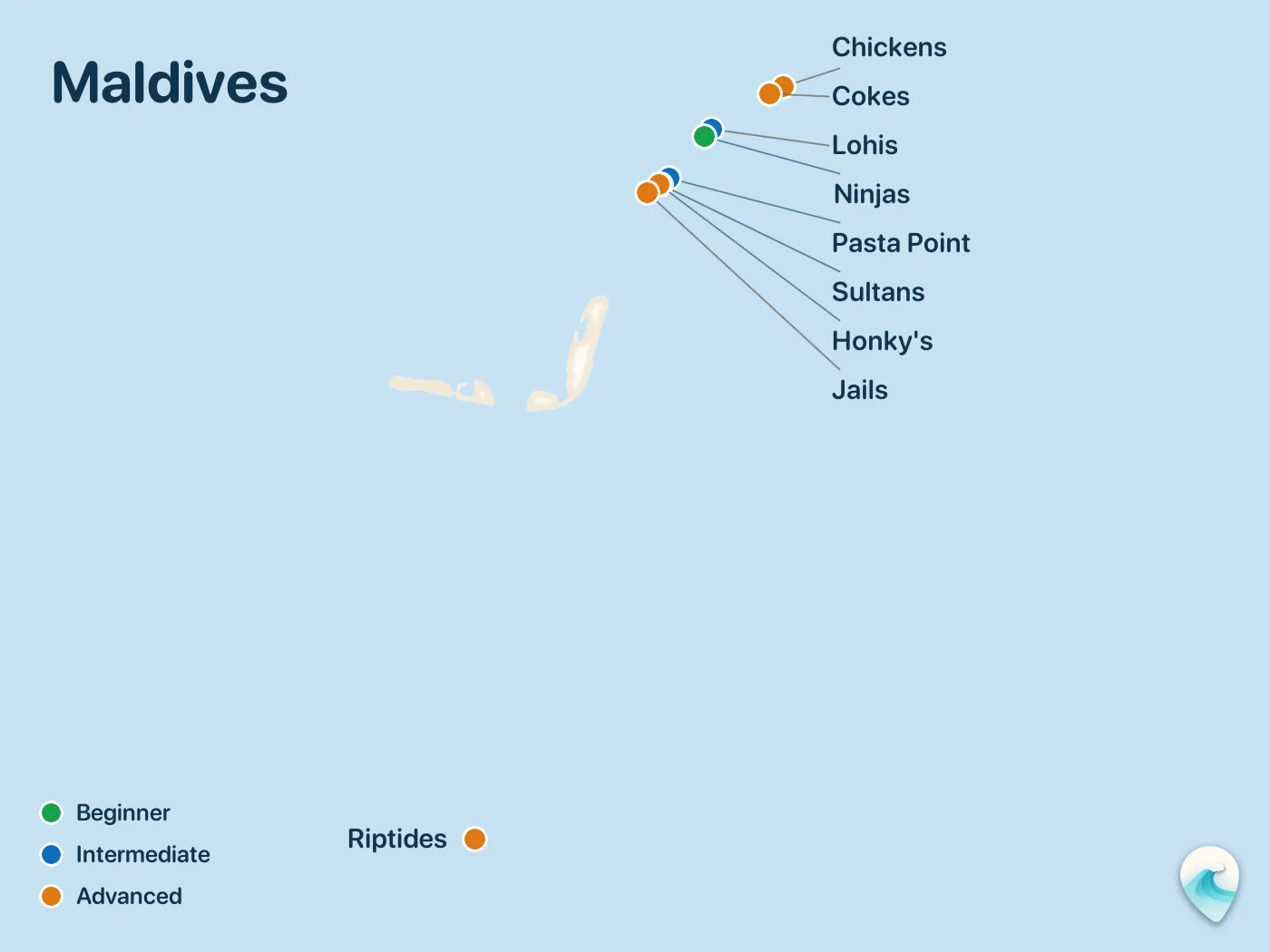
Chickens
North Malé Atoll · Long walling left
Advanced
Named after the poultry farm that once stood on the islet behind it, and that is the last funny thing about the place. On a proper southern swell this is the longest left in the atoll: three sections joining into one relentless wall that runs toward the channel, three hundred meters and more on the best days, with a hollower inside that punishes anyone who stays too long. Mid tide fills the reef nicely and the west wind grooms it all season. It faces Thulusdhoo across the channel, so the guesthouse surfers paddle over while the charter dhonis anchor in the deep water: when it is on, you will not be alone. Small, it is a friendly long wall for intermediates; overhead, it becomes a legs-and-lungs proposition that sorts the boat out by lunchtime.
Cokes
North Malé Atoll · Hollow reef right
Advanced
The heaviest wave in North Malé, breaking a two-minute paddle off Thulusdhoo and named for the Coca-Cola factory that bottles on the island. It wastes no time: a steep takeoff, a racing wall and an end bowl that sucks below sea level over shallow coral as the tide drops. This is the board-snapper and the skin-taker of the atoll, and the Thulusdhoo locals, some of the best surfers in the country, run the peak with a clear pecking order. Save it for mid tide, bring a step-up when a June line arrives, and be honest with yourself before it shows its true face. Sleeping on the island with this out front is either a blessing or a daily interrogation of your level.
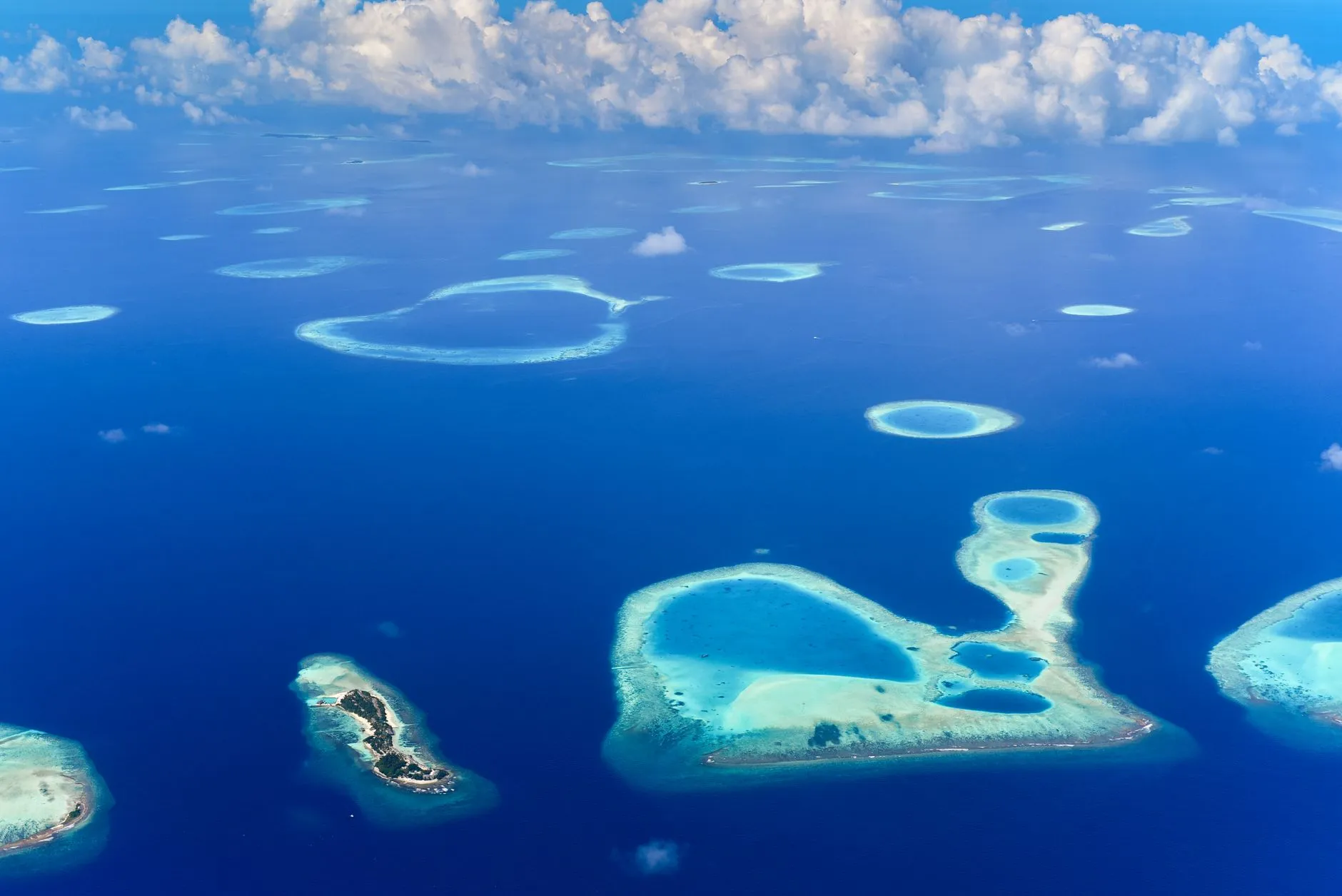
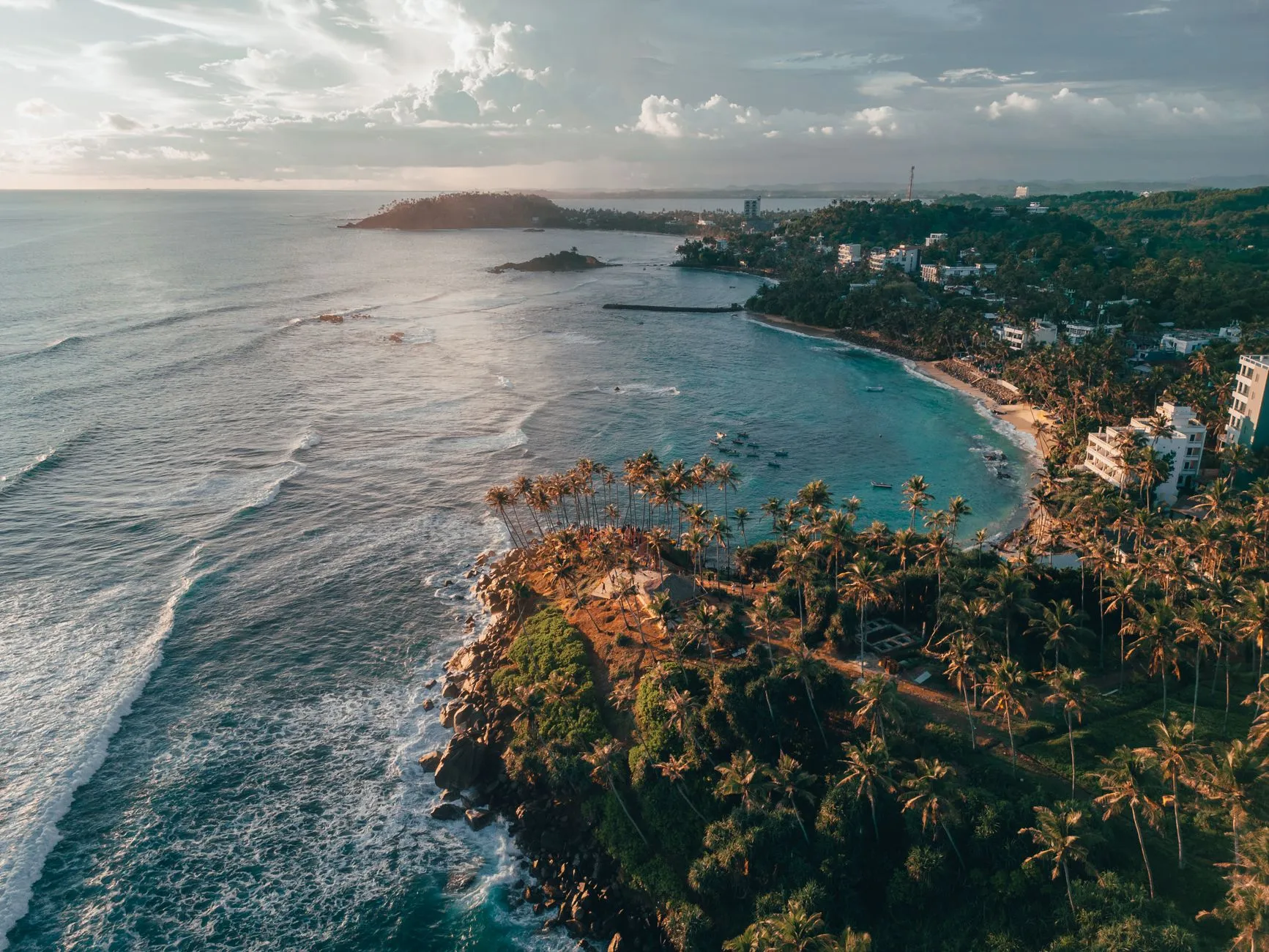
Reef rings from the seaplane: a country that is one percent land
The resort reefs
Three waves that come bundled with a room key. Lohis is reserved for Hudhuranfushi's surf guests, Pasta Point belongs to Dhonveli's, and Ninjas rolls gently within sight of the Kanifinolhu lagoon. It is the least adventurous way to surf the Maldives and the most surf you will actually get: the wave is fifty meters from breakfast, the lineup is capped, and nobody is racing you to the anchorage.
Lohis
North Malé Atoll · Long resort left
Intermediate
The wave that turned Hudhuranfushi into a surf resort rather than a resort with surf: a long left down the island's reef with two personalities, an outside wall and an inside section, that join into a single two-hundred-meter run when the swell carries enough south. It catches plenty, stays a touch friendlier than the Thulusdhoo waves on the same day, and walls up beautifully under the season's west wind. The access is the honest part: the lineup fronts the resort and is reserved for its surf guests, with numbers capped, so you sleep there or you surf elsewhere. Before the gate annoys you, consider what it buys: a crowd that fits one peak, and everyone in it knows whose turn it is. For intermediates chasing their best week of surfing, this is the safest bet in the country.
Ninjas
North Malé Atoll · Soft rolling right
Beginner
The kindest wave in the atoll, a soft right off the Kanifinolhu reef that owes its name to the Japanese charter groups who quietly adopted it in the early years. It rolls rather than pitches: an unhurried takeoff, a forgiving wall, and enough water over the coral that a blown section costs you pride instead of skin. Boat guides steer beginners and rusty intermediates here first, and when the rest of the atoll is maxed out and roaring, Ninjas keeps a rideable shape and briefly becomes the most popular wave in the Maldives. Longboarders treat it as their home break away from home. It will not make your highlight reel; it will quietly fix your bottom turn.
Pasta Point
North Malé Atoll · Mechanical left
Intermediate
The most reliable wave in the country, and the most debated thing about it is the guest list. Pasta Point breaks in front of Cinnamon Dhonveli, the resort Italians ran back when it was called Tari Village, hence the name, and exclusivity is written into the arrangement: the wave belongs to the resort's surf guests, capped at a few dozen, and charter boats are not allowed to drop in on it. What the velvet rope buys is a machine: a left that wraps along the reef through sections the regulars have named one by one, works from waist high to well overhead, and breaks more days a year than anything else in the atolls. Tony Hinde made this reef his home wave and his argument for keeping lineups small. You either book it months out or watch it spin from the channel, and both experiences are instructive.
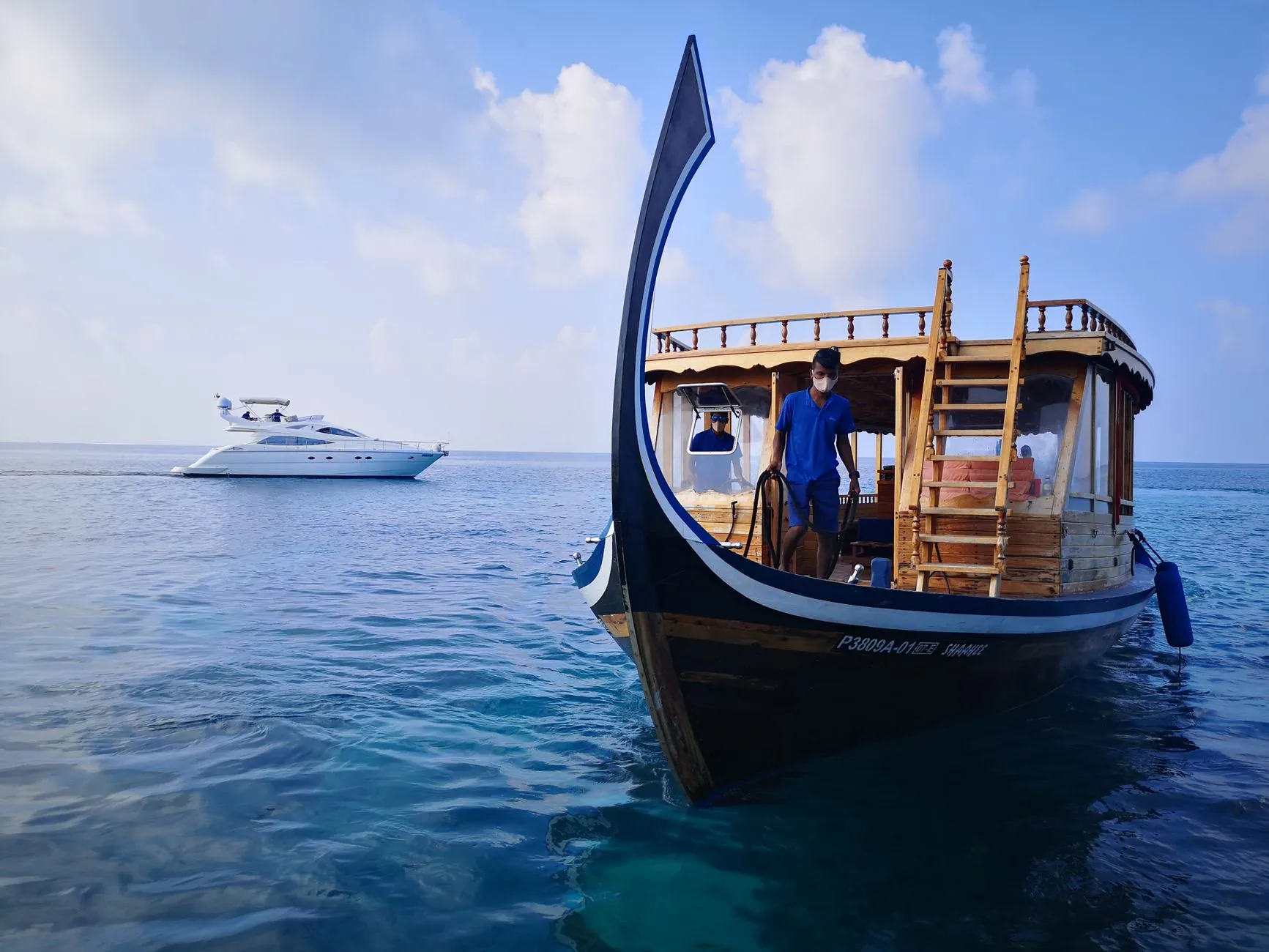
A dhoni at anchor: in the Malé atolls, the boat is the surf shuttle
The open lineups, and the run south
Nobody's reef and everybody's: Sultans and Honky's share an uninhabited island, Jails runs its long walls off Himmafushi, and all three belong to whoever tied up that morning. When the northern anchorages start looking like marinas, point the bow across the Vaadhoo channel: Riptides and the South Malé reefs get the same swell with half the audience, and the ride home is into the sunset.
Sultans
North Malé Atoll · All-round reef right
Beginner
The workhorse of North Malé and the fairest lineup in this guide: Sultans catches more swell than anything around it and turns almost any forecast into a session. Small, it is a generous sloping wall the whole boat can share; from overhead it grows teeth, a long outside line bending into a fast inside bowl over shallower coral. It breaks off Thanburudhoo, an uninhabited island, so nobody owns it and everybody comes by boat: the lineup is whoever anchored that morning, which in July can mean four dhonis' worth of company. When a guide says they will go check Sultans, it means the wave is always doing something. Its quiet gift is the afternoon: the bend in the reef often keeps a clean corner after the wind has ruined everything else.
Honky's
North Malé Atoll · Left that grows as it goes
Advanced
Sultans' left-handed twin on the far side of Thanburudhoo, and the connoisseurs' pick of the pair. It does something few waves anywhere do: it grows as it goes, wrapping and drawing off the reef so that a shoulder-high takeoff can be half again bigger by the inside ledge, where the best barrel section in the atoll unloads. Higher tides keep it civil; at low the final section thins out until you can read the coral through the face. It needs a proper swell to wake up, which keeps ordinary days quieter than its neighbor around the corner. When the June and July lines arrive under a west wind, the boat guides start negotiating their own surf time.
Jails
North Malé Atoll · Fast down-the-line right
Advanced
The long right off Himmafushi, named for the correctional facility whose island the reef belongs to; for years the wave sat inside a no-go zone, and when the restriction finally lifted it went straight onto every charter itinerary. It is a speed track: on a long-period south, three sections connect into one of the longest rights in the atolls, a fast, drawn-out wall that asks for straight lines and a high gear rather than hooks and stalls. It prefers a bit of size and the middle of the tide, and the channel at the end is deep enough to catch your breath in. Himmafushi itself is a working local island with guesthouses, board repairs and a small salty crew who surf it very well. If Cokes is the atoll's test of nerve, Jails is its test of legs.
Riptides
South Malé Atoll · Channel right with current
Advanced
An hour's run south across the Vaadhoo channel, and the boat traffic thins with every mile. Riptides breaks on the outside corner of the Guraidhoo channel and the name is the briefing: the tidal current that pours through the pass can turn the paddle back into a treadmill, so every guide keeps the dinghy close and you watch the water move before you jump. The wave repays the respect, a long, bending right that stands up on the bigger souths and reels along the reef with more push than most of North Malé. It marks the quiet corner of South Malé: Kandooma's right and the lefts at Gurus break within sight, and most charters still sleep in the north, so an on-day here can feel like a private booking with a strong opinion about your paddling.
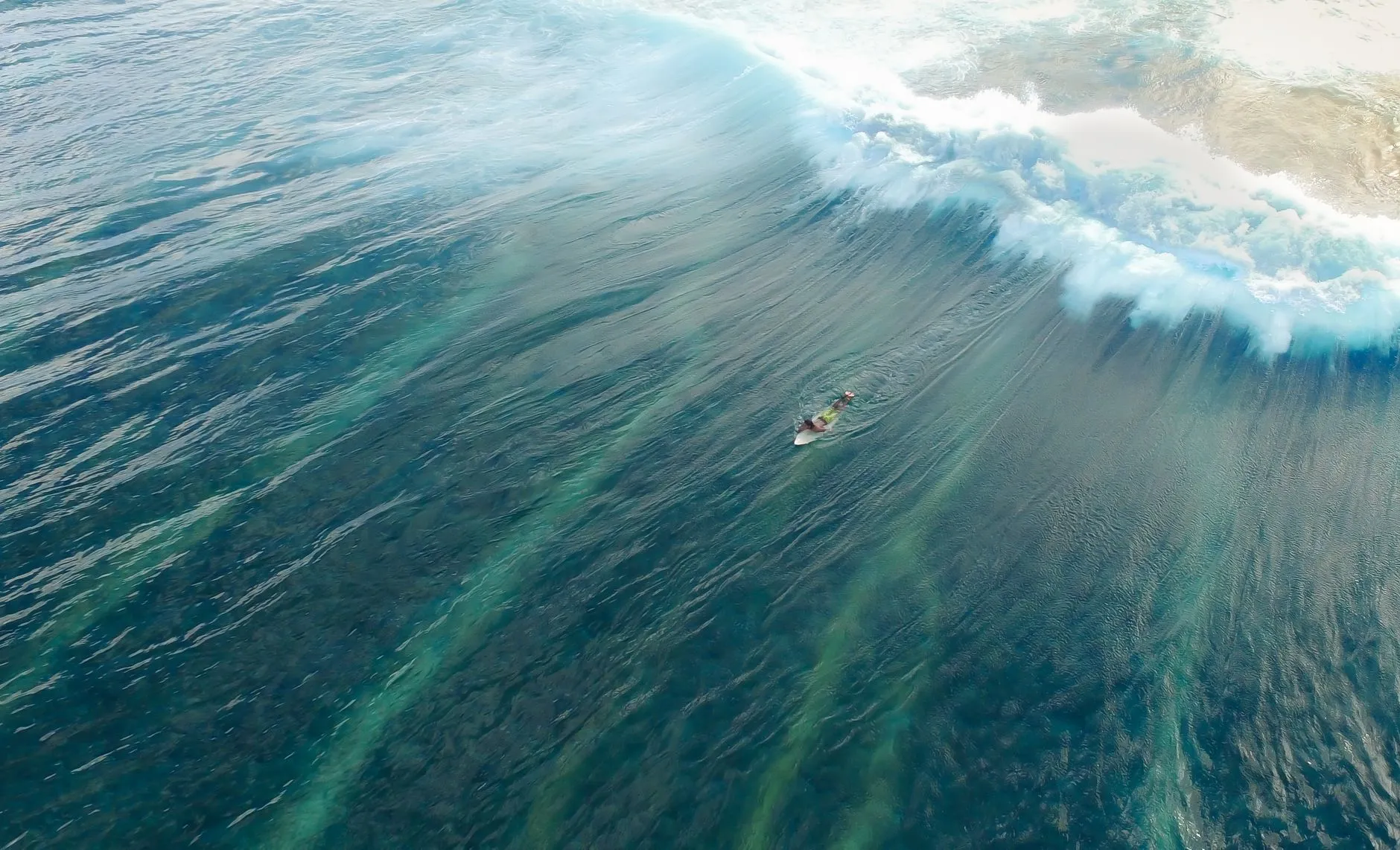
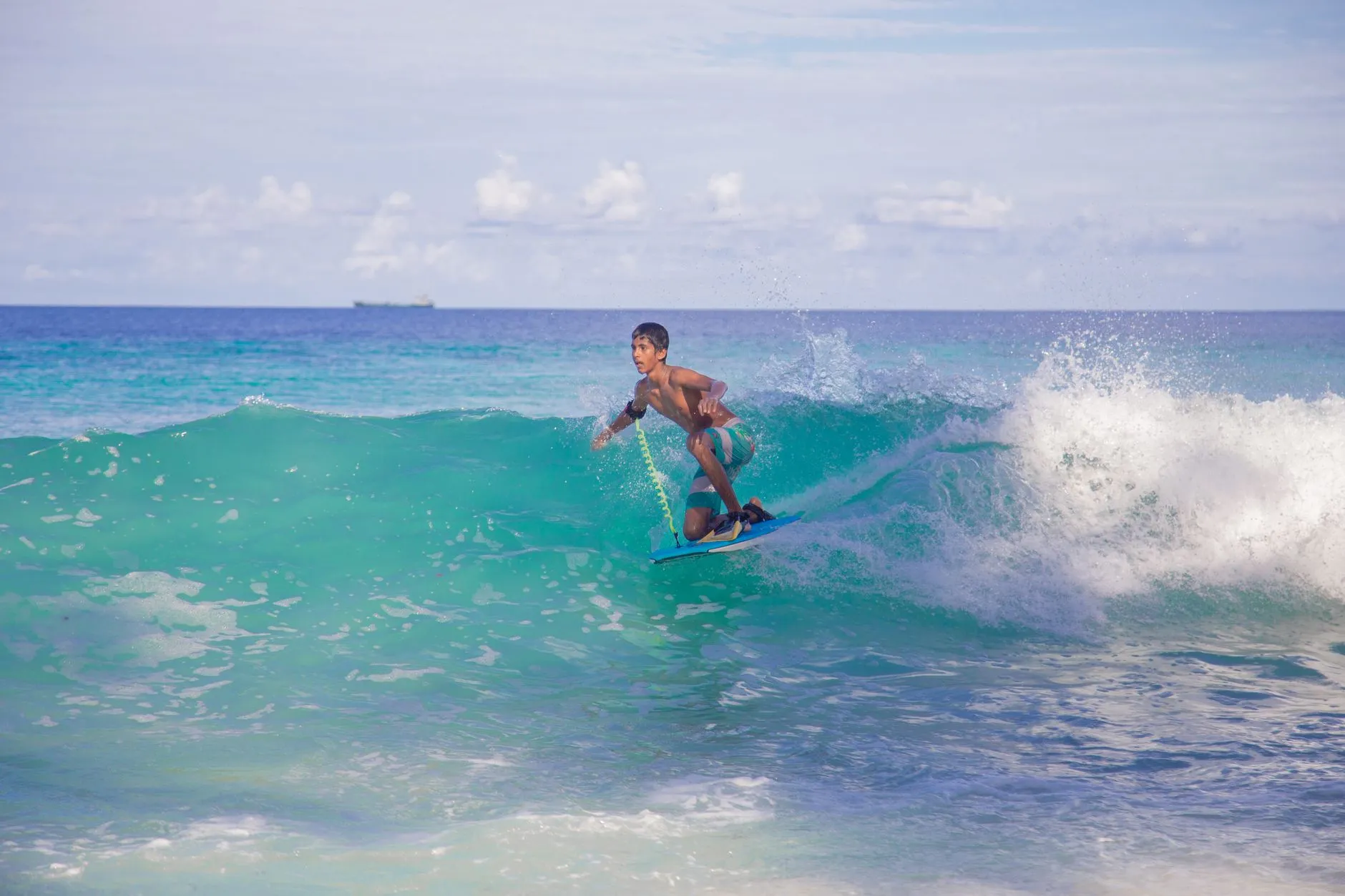
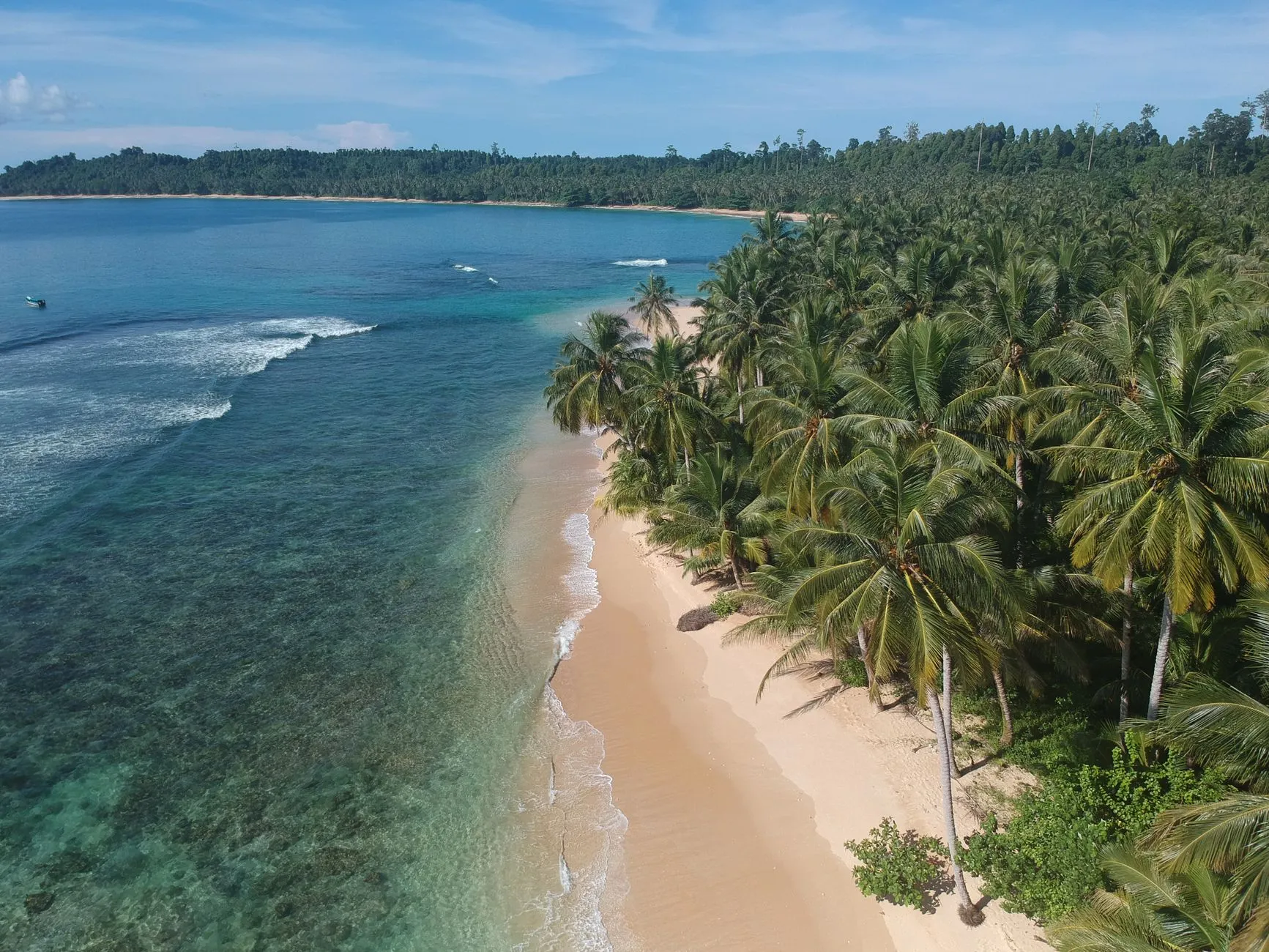
Warm-water walls: it is 29°C in there, every month of the year
When to go
A year in Maldives
Typical conditions, month by month. The ocean did not sign this table: for live waves, wind and tide, check the app.
January
2-4 ft
82°F · boardshorts · Beginner
Deep in the northeast monsoon: postcard weather, the odd leftover pulse, and morning breezes that ruffle the east-facing reefs. Resorts run full; lineups run empty.
February
2-4 ft
82°F · boardshorts · Beginner
Usually the smallest month of the year. When a long-period south sneaks through, Sultans finds it; otherwise this is a snorkeling holiday with a board along.
March
3-5 ft
84°F · boardshorts · All levels
The switch begins. The first real southern groundswells arrive, the northeast wind loses conviction, and the reefs wake up before the charter fleet does.
April
4-6 ft
84°F · boardshorts · Intermediate
The connoisseurs' month: solid swell and the glassy lull between monsoons, with the season's first proper barrels at Cokes. Charter season opens and the good boats left the dock booked out.
May
4-6 ft
84°F · boardshorts · Intermediate
The southwest monsoon settles in and brings the swell machine with it. Squalls between sunny spells, west wind grooming the eastern reefs, and overhead sets arriving on schedule.
June
4-8 ft
82°F · boardshorts · Advanced
Peak season begins in earnest. The storms lighting up Indonesia stack lines into these passes too, Chickens links its full length, and the Thulusdhoo anchorage grows masts.
July
4-8 ft
82°F · boardshorts · Advanced
The biggest, most consistent stretch of the year. Double overhead at Sultans and Honky's is routine, and so are ten boats in the channel: book beds and boats months ahead.
August
4-8 ft
82°F · boardshorts · Advanced
Peak swell keeps rolling with more wind roulette: brilliant one day, squally the next. The reefs handle whatever arrives; plan your crossings around the weather windows.
September
4-6 ft
82°F · boardshorts · Intermediate
The quiet star of the calendar. Swell still arrives with June's reliability, the wind starts to soften, and half the charter fleet has already sailed home.
October
3-5 ft
82°F · boardshorts · All levels
The season's long goodbye: a size smaller, cleaner, kinder light and civilized lineups. Late souths still light up Jails and Riptides while the boats thin out.
November
2-4 ft
82°F · boardshorts · All levels
Transition month. The northeast monsoon knocks at the door, leftover south swell keeps the reefs ticking, and glassy chest-high days with nobody out are a genuine possibility.
December
2-4 ft
82°F · boardshorts · Beginner
High season for the resorts, low season for the reefs: small, sunny and gentle. Learn at Ninjas, ride a longboard, and lend the divers your boat.
Good to know
When is the best time to surf the Maldives?
March to October is the southern swell season. June to August brings the biggest, most consistent surf, head high to double overhead on the good pulses, together with the windier weather of the southwest monsoon and the fullest boats. April, May, September and October are the quiet aces: still plenty of swell, lighter winds, glassy mornings and fewer people. November to February is the northeast monsoon, small and sunny, better for a first reef experience than for chasing walls. The water is 28 to 29°C every single day.
Do I need a boat charter, or can I stay on land?
Three honest options. A charter boat gives the most range: you sleep over the waves, chase the cleanest pass each morning and cross to South Malé when the north gets busy, at a price. Surf resorts sell certainty: Hudhuranfushi has Lohis at the end of its garden and Dhonveli has Pasta Point, both reserved for their own guests. The budget door is a guesthouse on a local island, Thulusdhoo or Himmafushi, with Chickens, Cokes or Jails a short paddle or dinghy ride away; you trade the range of a boat for one very good neighborhood. What does not exist here is the drive-and-check surf trip: there are no roads to the waves.
Is the Maldives good for beginners?
Honestly: it is not the classic learning destination, and it is priced accordingly. Every wave here breaks over living coral, there are no beach breaks to fall on, and the good spots need a boat. That said, the picture is better than the reputation: Ninjas is genuinely gentle, resort schools teach in warm lagoons, and the small-season months from November to February take the sting out of the reefs. Where the Maldives shines is one level up: a solid intermediate arrives, catches more good waves in a week than in a season at home, and leaves a different surfer. If you are still learning to trim, learn somewhere cheaper first and save this water for the trip after.
Do I need a wetsuit or reef boots in the Maldives?
No wetsuit, ever: the Indian Ocean holds 28 to 29°C every month, and even the longest session ends warm. What earns its bag space is sun and reef protection: a long-sleeve rash vest, a serious zinc habit and reef-safe sunscreen, because the equator does not negotiate. Booties split the boat: the takeoff zones are mostly deep enough, but a low-tide walk at Honky's or a mistimed exit at Cokes will settle the argument in their favor. Pack tropical-strength wax, a small first-aid kit for coral scrapes, and one board more than you think you need; the nearest ding repair is a boat ride away.