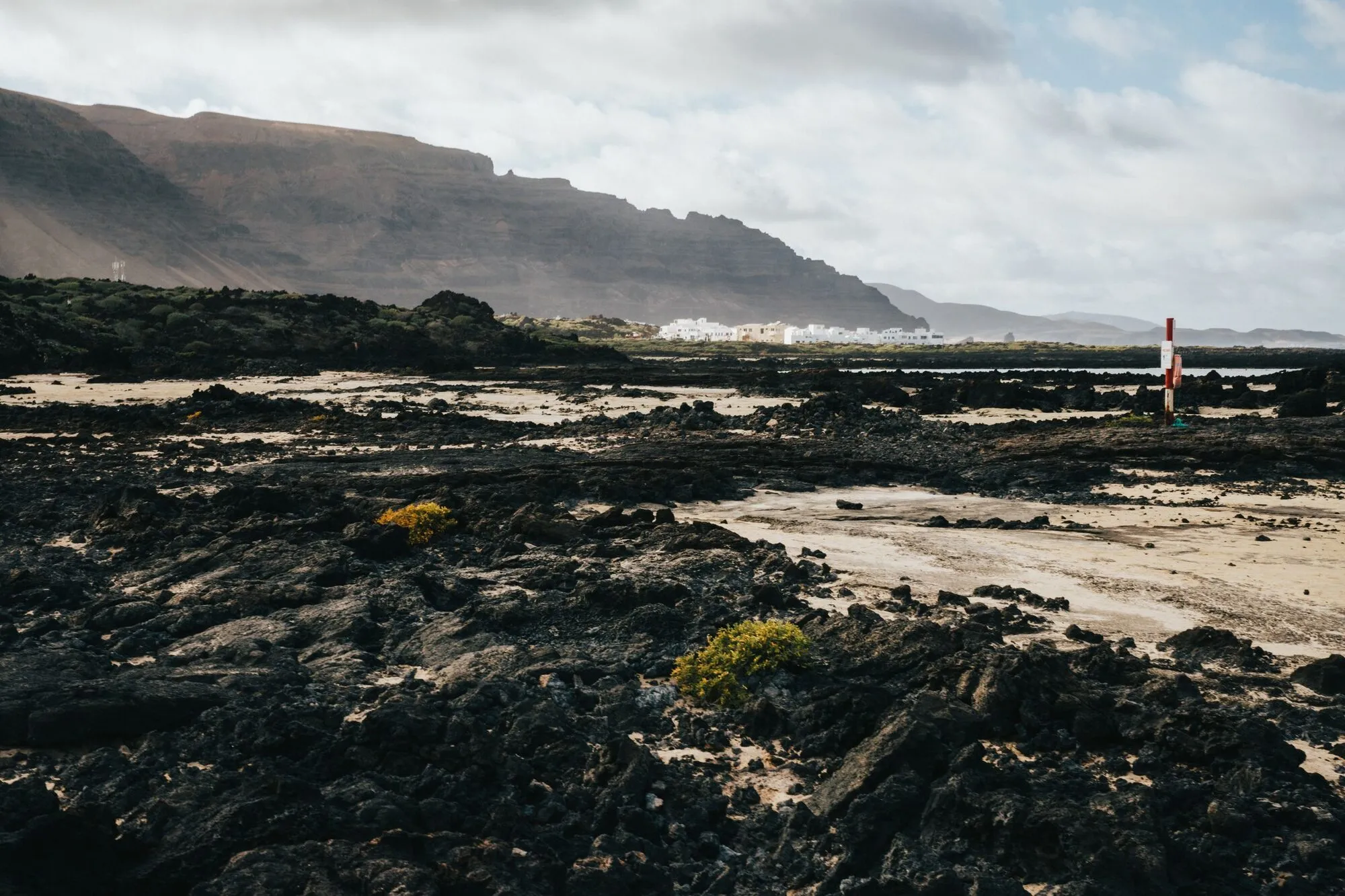
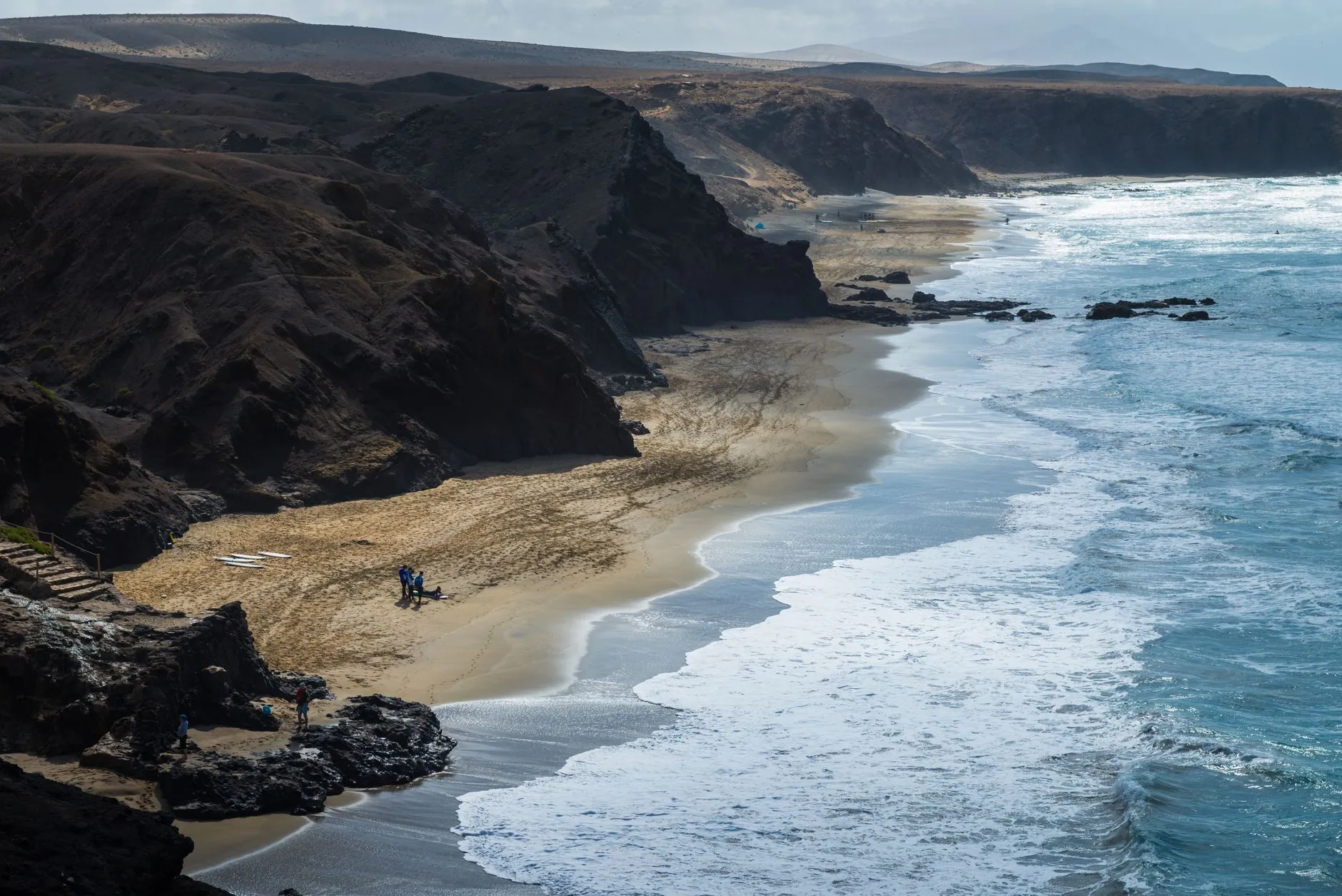
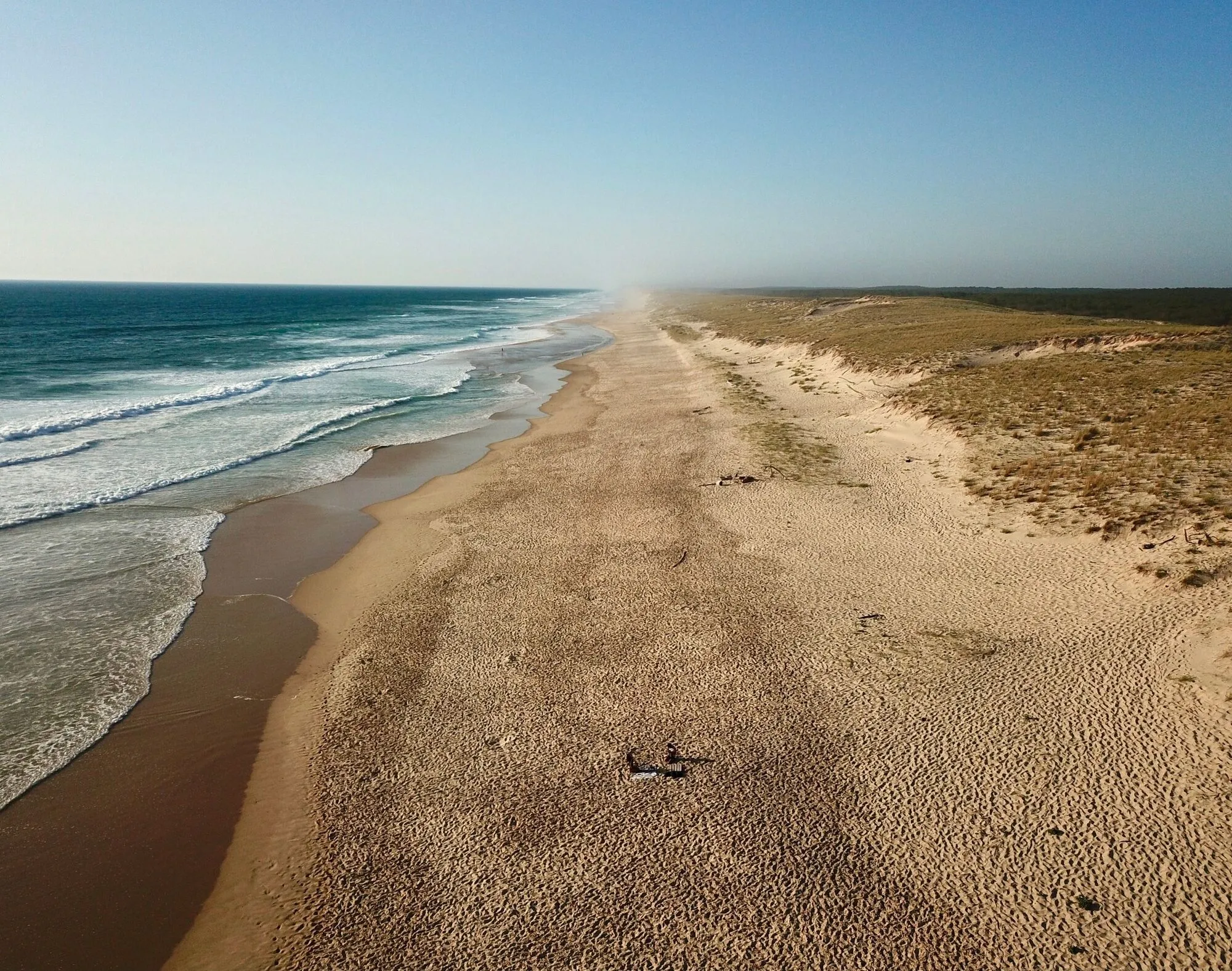
Lanzarote is the easternmost of the big Canaries and the strangest to look at: a biosphere reserve of black lava fields, white cube villages with green doors, and the buildings of César Manrique, who made sure nothing stood taller than a palm. It sits about 100 km off the Moroccan coast in the trade-wind belt, which explains both the sunshine and the sails at Costa Teguise. For surfers it comes down to one stretch of the north-west coast between La Santa and Famara, where North Atlantic winter swell arrives with nothing in the way and breaks over lava that has not softened in a few thousand years.
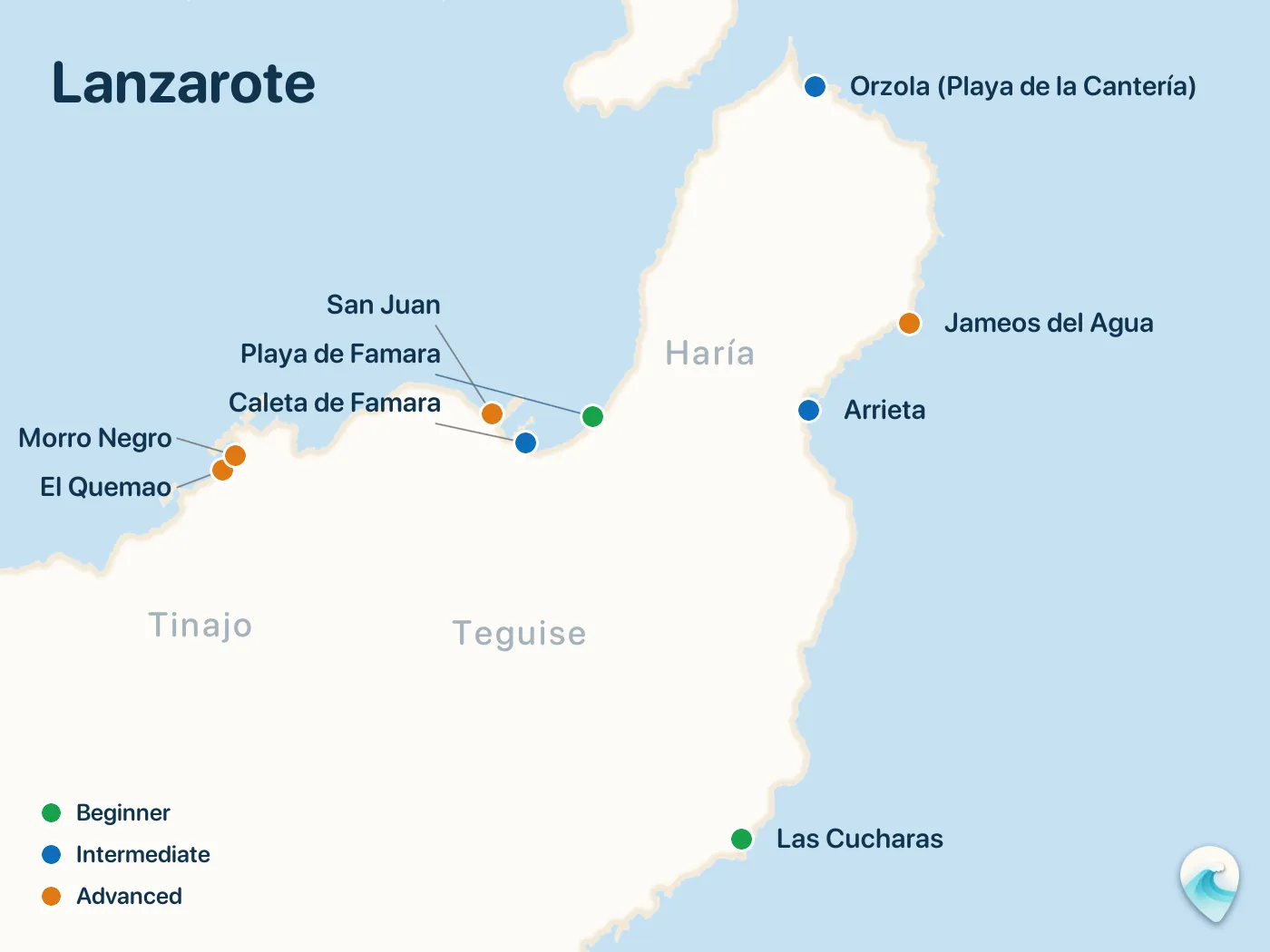
The island has two faces. From October to March the lows send N and NW groundswell into El Quemao, the short, thick left in front of La Santa that locals call the Canarian Pipeline, and into the long walls of Morro Negro and San Juan, while the 5 km of sand at Famara under the Risco cliffs takes whatever is left. In summer the trade wind blows for weeks, the north-west goes small and choppy, and the east coast wakes up: Arrieta, Jameos del Agua and Las Cucharas on the windswell, in water warm enough for boardshorts.
Best months
October to March for the reefs; June to September to learn at Famara and for the east coast
Water
18°C in late winter to 23°C in early autumn: a 3/2 for the cold half, a spring suit or boardshorts for the rest
Levels
Surf-school sand at Famara and Costa Teguise to the expert slab of El Quemao
Getting there
Fly to Lanzarote (ACE), about 25 minutes to Famara or Costa Teguise and 30 to La Santa; a rental car is essential
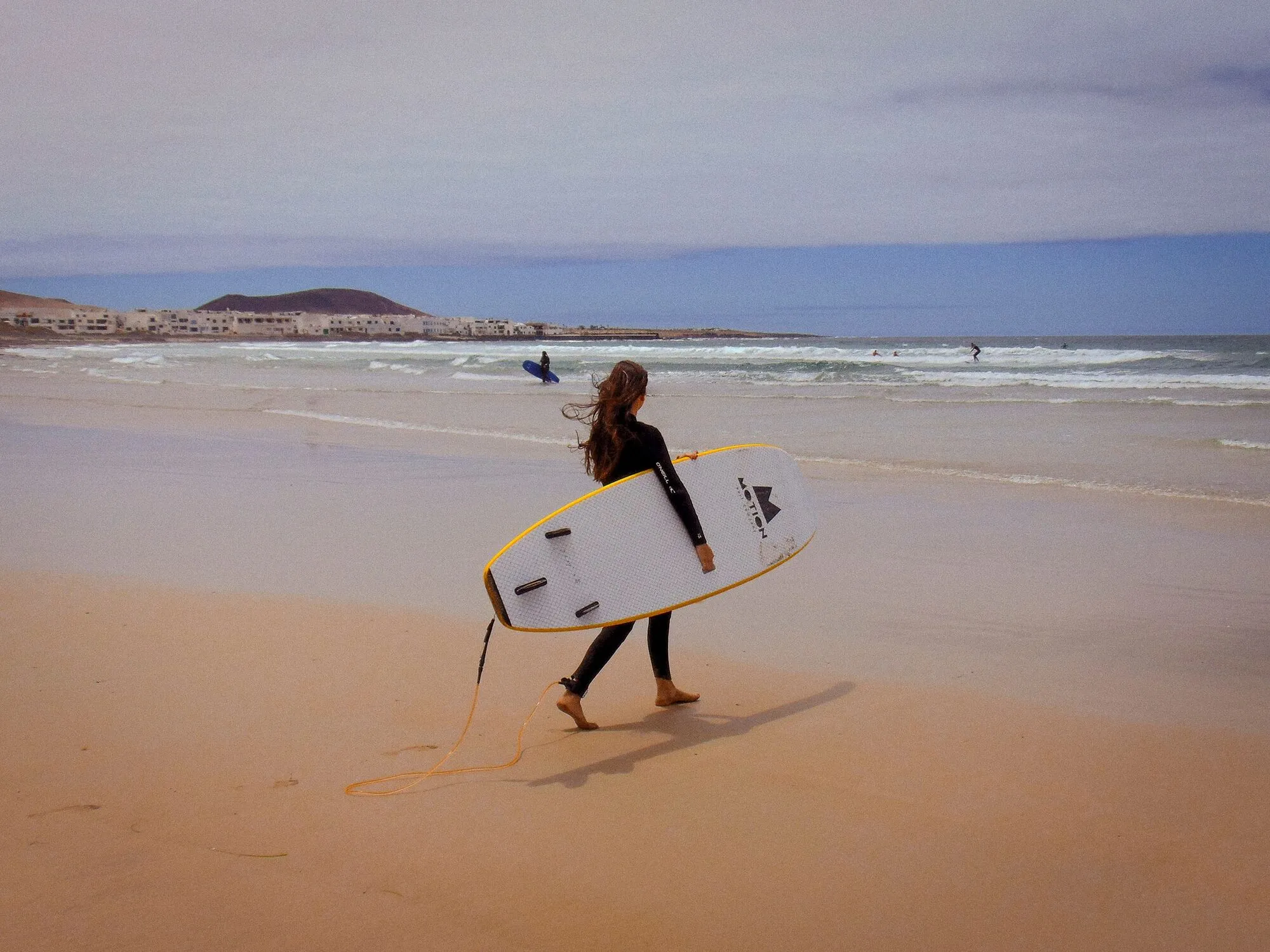
Playa de Famara is the classroom: five kilometers of sand, schools at the Caleta end and a gentle peak somewhere along it on most mornings. Las Cucharas at Costa Teguise is the summer alternative, small and busy with sails but a short walk from your hotel. Learn on the sand; the lava can wait.
Playa de Famara
Famara · Long beach break
Beginner
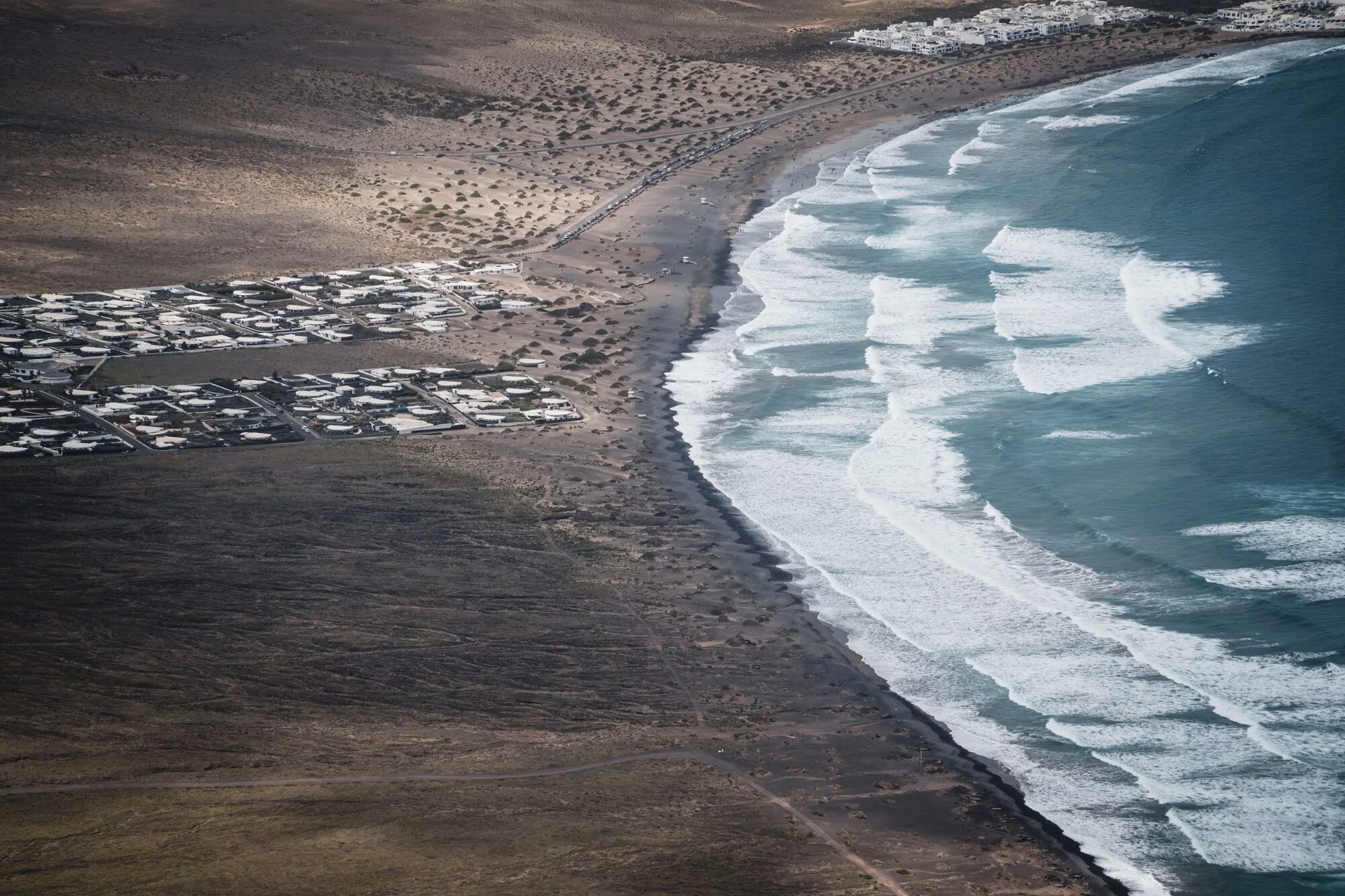
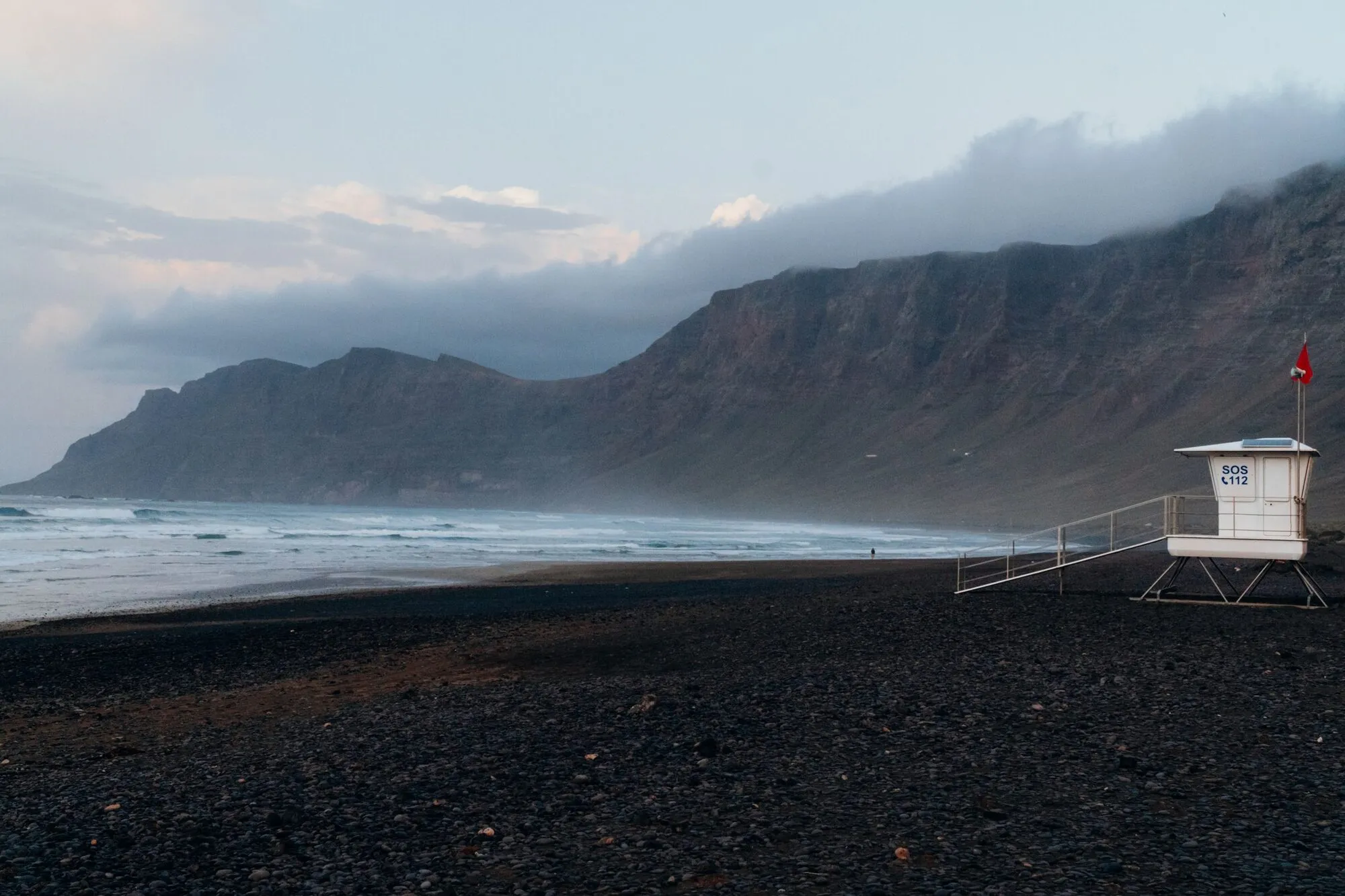
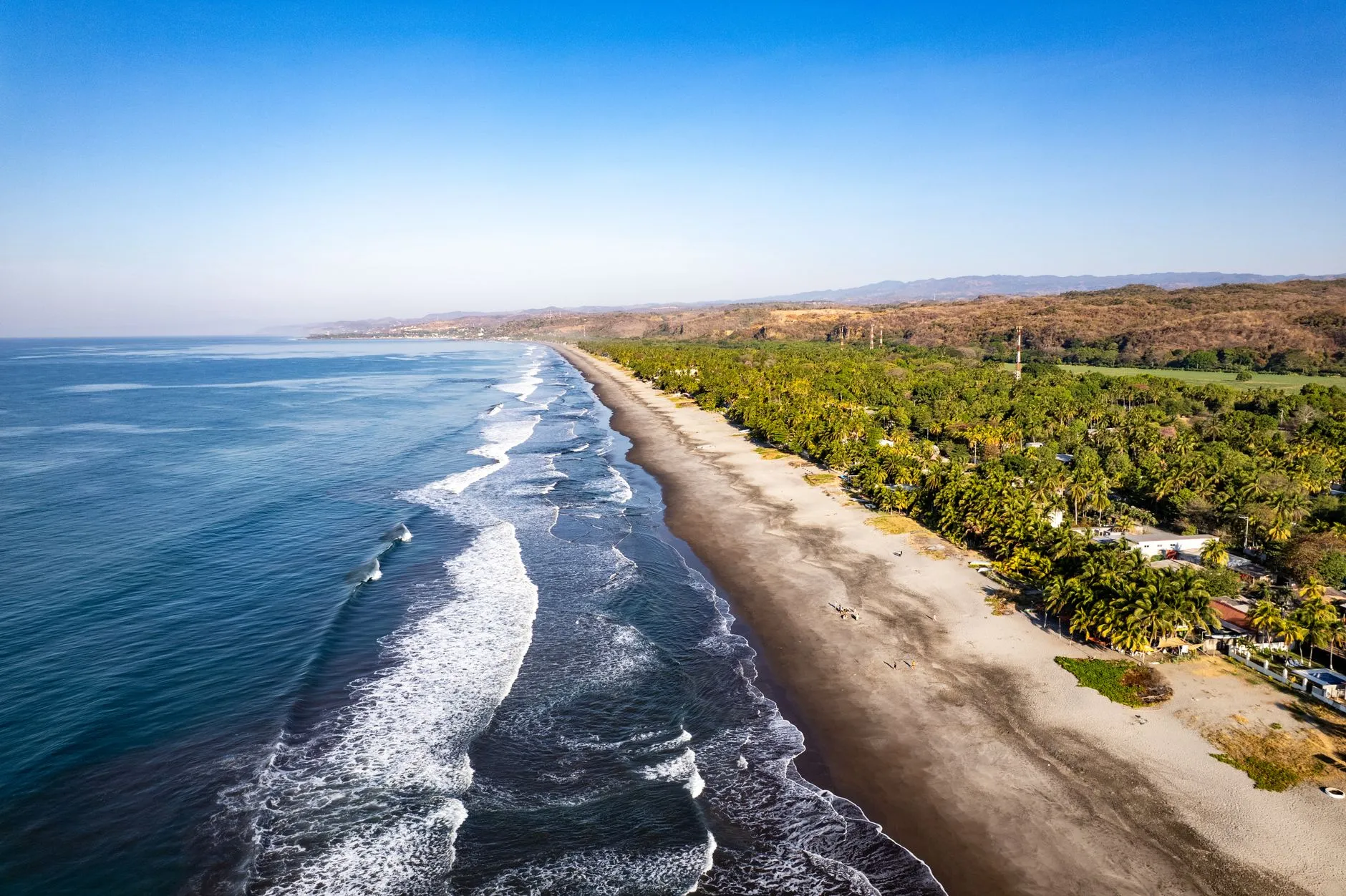
About five kilometers of sand under the sheer wall of the Risco de Famara, one of the most beautiful beaches in the Canaries and the island's surf-school classroom. Peaks stand up along the whole length, gentle at lower tide on a small day, and there is always a stretch with nobody on it. On a big winter swell the beach closes out and the currents pull hard toward the cliffs, so learners keep to the days the schools are out. The trade wind gets up by early afternoon; surf the morning, then hide behind a rock and watch the kites.
Las Cucharas
Costa Teguise · Small resort beach break
Beginner
The resort beach of Costa Teguise and the windsurf and kitesurf capital of the island, which tells you what the wind does here. Small waves peel over sand and a reef at the north end on the trade windswell and on the occasional E swell, and the schools work the corner the sails leave free. It is the beginner option on the east coast and the one within walking distance of a hotel, a sunbed and a coffee. Do not expect much on a still day, and give the boards with masts a wide berth.
Caleta de Famara from the lava shore, the Risco behind
When you want more
Caleta de Famara's village peaks, Orzola's exposed beach at the top of the island and Arrieta's reef and sand on the east coast: three waves that reward a solid bottom turn without asking for a commitment over lava. Between them there is something to ride in winter and in summer.
Caleta de Famara
Famara · Sand and reef peaks
Intermediate
The fishing village at the west end of the bay is where most surf trips to Lanzarote sleep, eat and paddle out. A handful of sand and reef peaks break in front of the houses and the little harbour, easy enough on a small day for schools and midweek improvers, quick and sectioning when the swell picks up. The currents along the rocks get strong on size, and the peak in front of the village is the busiest lineup on the island. Sunset here, with the Risco turning orange and fresh fish on the tables, is why people come back.
Orzola (Playa de la Cantería)
Orzola · Exposed beach break
Intermediate
The beach at the very top of the island, beside the village where the ferries leave for La Graciosa. Playa de la Cantería is open to everything from the north, so the peaks are punchy and the water moves; on a medium day it is a fun, empty beach break for a confident intermediate, on a big one it is a washing machine. There is nothing here but a car park, a few fishermen and the wind, and that is the appeal. Check it when the Famara side is too big or too crowded, and eat in Orzola afterwards.
Arrieta
Arrieta · Reef and sand peaks
Intermediate
A quiet east-coast village with a small harbour, a beach and the friendliest lineup on this side of the island. Reef and sand peaks break either side of the harbour and come alive on the summer trade windswell, when the north-west coast is blown out and everyone with a board is looking east. It is a fun, playful wave rather than a serious one, urchins on the reef excepted, and the fish restaurants on the front make the afternoon easy.
Walking back up the sand at Caleta de Famara
The big days
El Quemao, Morro Negro and San Juan are why experts fly here in winter: hollow, heavy waves over sharp lava on the north-west coast, with tight local lineups. Jameos del Agua is the summer version on the east coast. Watch first, wait your turn, and remember the urchins do not care how good you are.
El Quemao
La Santa · Hollow lava-reef left
Advanced
The wave the island is known for: a short, thick left that lurches out of deep water onto a sharp lava shelf right in front of the village of La Santa, throws a barrel and ends on rock. It holds well overhead on a winter NW swell and is called the Canarian Pipeline for a reason. The lineup is small and tight and has surfed it for decades; a visitor who paddles straight to the peak will not enjoy the morning. Watch a few sets from the wall first, count the boards, and be honest about whether this is your wave.
Morro Negro
La Santa · Long reef point right
Advanced
The long right on the point just north of the village, and the wave most visiting experts actually ride at La Santa. It walls up and sections along the lava for a hundred meters or more, holds serious size, and asks for a long paddle out past urchin-covered rock and a longer one back if you lose your board. Mid tide upward keeps water over the reef; at low water the inside bares its teeth. The crowd is thinner than at El Quemao but no more forgiving of a drop-in.
San Juan
Famara · Long reef left
Advanced
At the western end of Famara bay, a short walk from the Caleta, a left that on a solid NW swell runs a long way over reef and rock, with walls that let you draw big lines. It needs size to work and gets hollower and faster as the tide drops, with rocks waiting on the inside. On the right winter day it is the best wave in the bay, and most locals say it is where you go when El Quemao is too heavy or too crowded.
Jameos del Agua
Haría · Hollow lava-reef right
Advanced
A heavy, hollow right over lava reef on the east coast, a short way from the Manrique cave complex the spot is named after. It sleeps through most of the winter and wakes on the summer trade windswell and on E to NE swells, when it throws thick barrels onto a reef that is shallow, sharp and unforgiving at low tide. The lineup is small and local and expects you to know the rules before you arrive. Advanced only; if you cannot find the channel from the shore, that is your answer.
Playa de Famara under the Risco, red flag up
When to go
A year in Lanzarote
Typical conditions, month by month. The ocean did not sign this table: for live waves, wind and tide, check the app.
January
5-9 ft
66°F · 3/2 · Advanced
Midwinter: NW groundswells one after another, the year's lightest winds and El Quemao at its best. The beach closes out on the big days.
February
5-9 ft
64°F · 3/2 · Advanced
The coldest water of the year and still the heart of the season. Morro Negro and San Juan hold the size; Famara waits for the lulls.
March
4-8 ft
64°F · 3/2 · Advanced
The swells thin out and the wind picks up a little. Good odds of clean overhead days on the reefs and friendly ones in the bay.
April
3-6 ft
66°F · 3/2 or spring · All levels
Shoulder month: medium swells, mornings often clean and the whole island in play. A 3/2 at dawn, a spring suit by lunch.
May
2-5 ft
68°F · spring suit · All levels
Smaller and warmer, the winter crowd gone. Famara does its best beginner work and the reefs still catch the odd late swell.
June
2-4 ft
70°F · spring suit · Beginner
The trade wind arrives. Small, choppy mornings at Famara, the east coast starting to wake up, and lessons everywhere.
July
2-4 ft
72°F · boardshorts · Beginner
Windy and warm. Learn at Famara early, then look east: Arrieta and Jameos get their summer windswell.
August
2-4 ft
73°F · boardshorts · Beginner
The warmest water and the strongest wind. Boardshorts, dawn patrols, and Costa Teguise full of sails by eleven.
September
3-5 ft
73°F · spring suit · All levels
The hinge: the trades ease, the first N swells knock and the water is still warm. Often the best all-round month.
October
4-7 ft
72°F · 3/2 or spring · All levels
The season opens. Solid NW swells reach La Santa and Famara, the winds settle and the reefs start to break properly.
November
5-8 ft
70°F · 3/2 · Advanced
Big and consistent. El Quemao and Morro Negro on the swells, the bay on the days between, and a 3/2 is plenty.
December
5-9 ft
68°F · 3/2 · Advanced
Deep winter: heavy reef days for the experts, empty beaches for everyone else, and 20°C water to make it feel unfair.
Good to know
Lanzarote or Fuerteventura for a surf trip?
Both share the same winter swell and the same lava. Fuerteventura has more reefs strung along its North Track and bigger learn-to-surf beaches; Lanzarote has a shorter list of heavier waves, El Quemao above all, and Famara, one long beach that is beginner-friendly and beautiful. Choose Fuerteventura for variety and long sandy summers, Lanzarote for a tighter trip with La Santa on the doorstep and Manrique's island to explore on the flat days.
When is the best time to surf Lanzarote?
October to March for the reefs at La Santa and Famara: regular N and NW groundswell, the lightest winds of the year and 18 to 20°C water, so a 3/2 is plenty. June to September is small and windy on the north-west coast but warm and good for learning at Famara, and the east coast gets its summer windswell. April, May and September are the balanced months, with medium swells and the best odds of clean days.
Is Famara good for beginners?
Yes, and it is the reason most of the island's surf schools are based at Caleta de Famara. The beach is five kilometers long, all sand, with peaks along its whole length and room for everyone; lower tide on a small day is the easiest. It is not a gentle beach on a big winter swell, when the closeouts and the currents toward the cliffs are serious, so beginners follow the schools' days and sit out the rest.
Is localism a problem in Lanzarote?
Only if you paddle out at the wrong wave. El Quemao, Morro Negro and the east-coast reefs have small lineups that have surfed them for decades and will not welcome a visitor who takes a set wave on arrival. Watch first, say hello, wait your turn, and you will get waves. On the beaches, Famara above all, there is room for everyone and nobody minds where you are from.