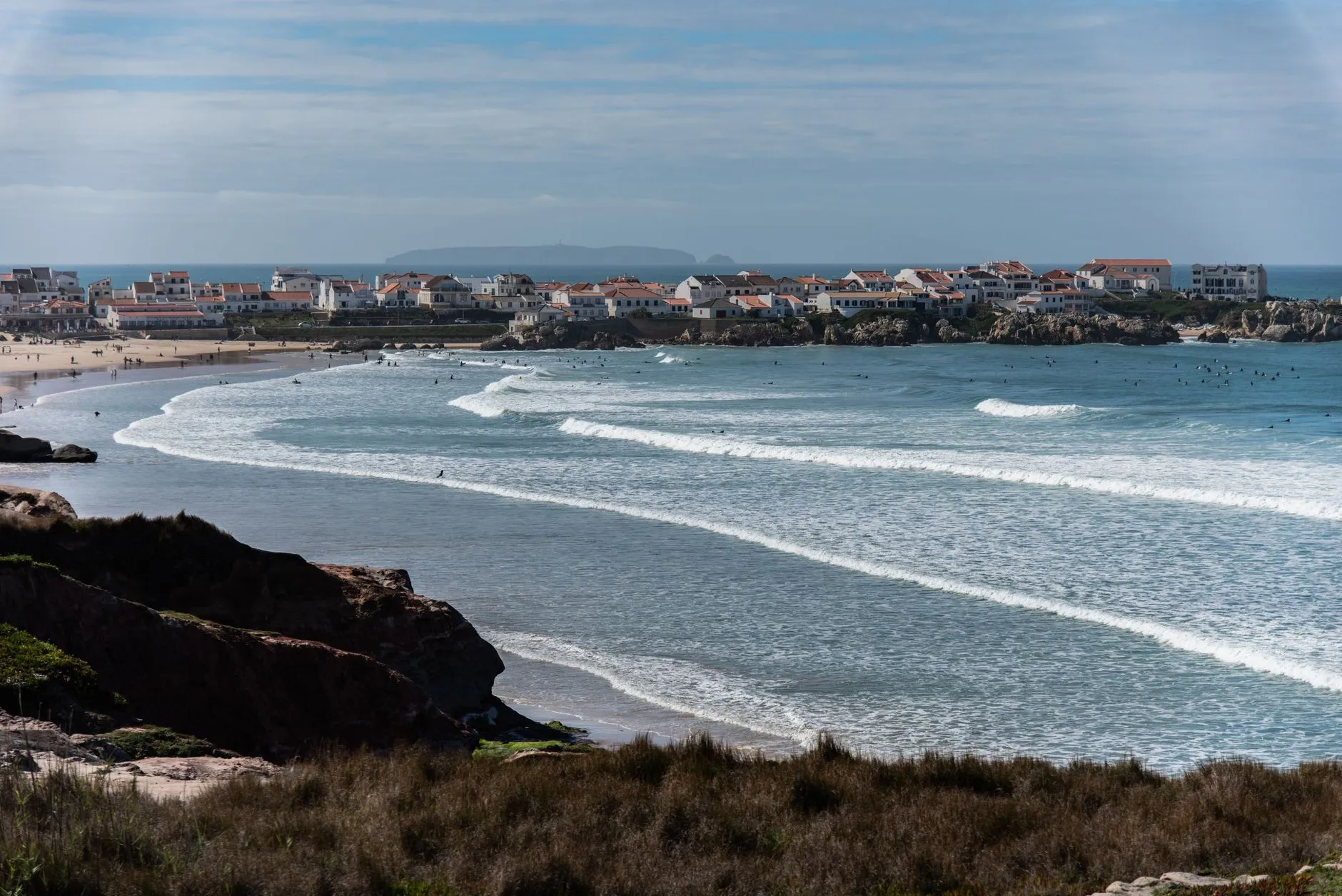
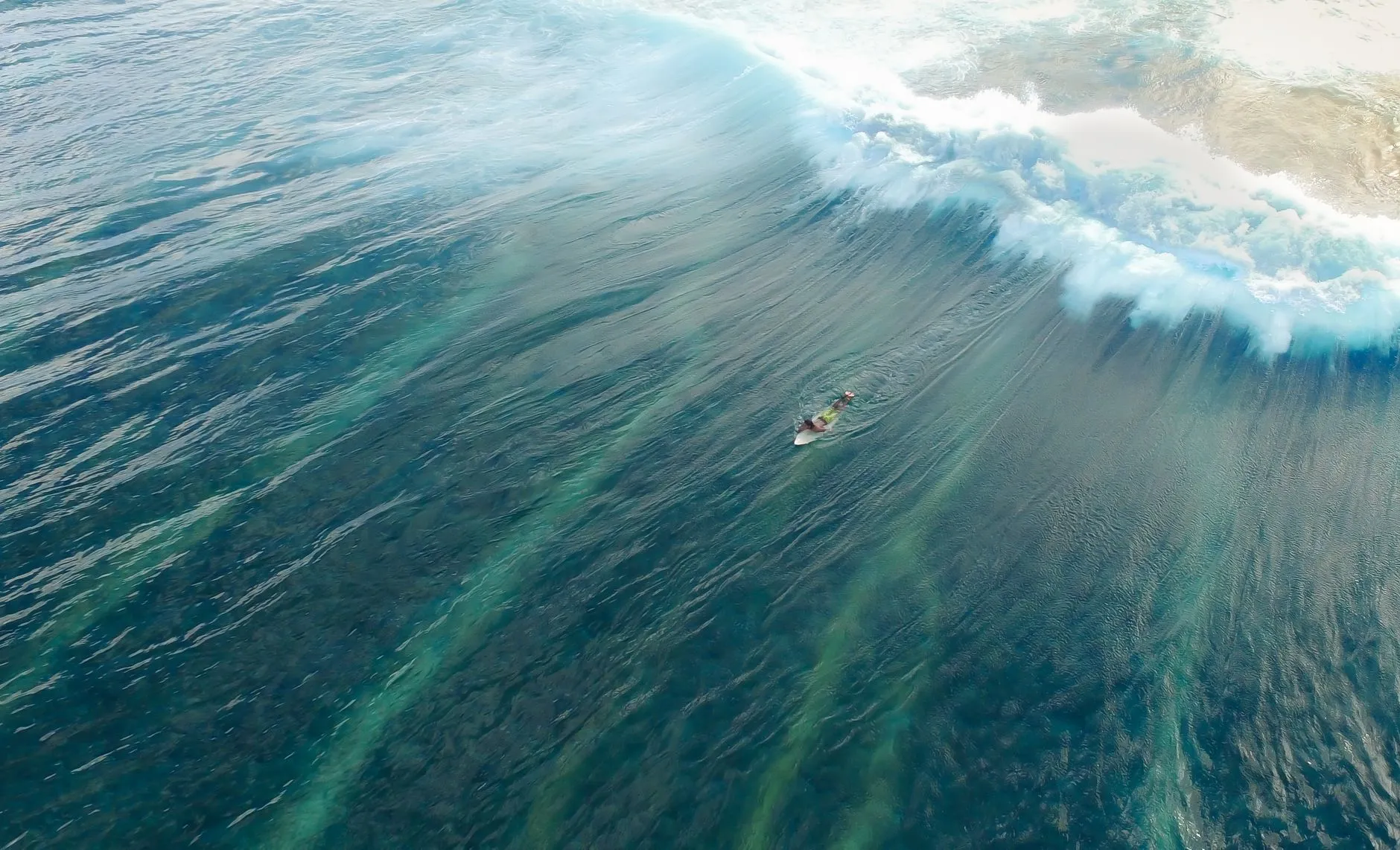
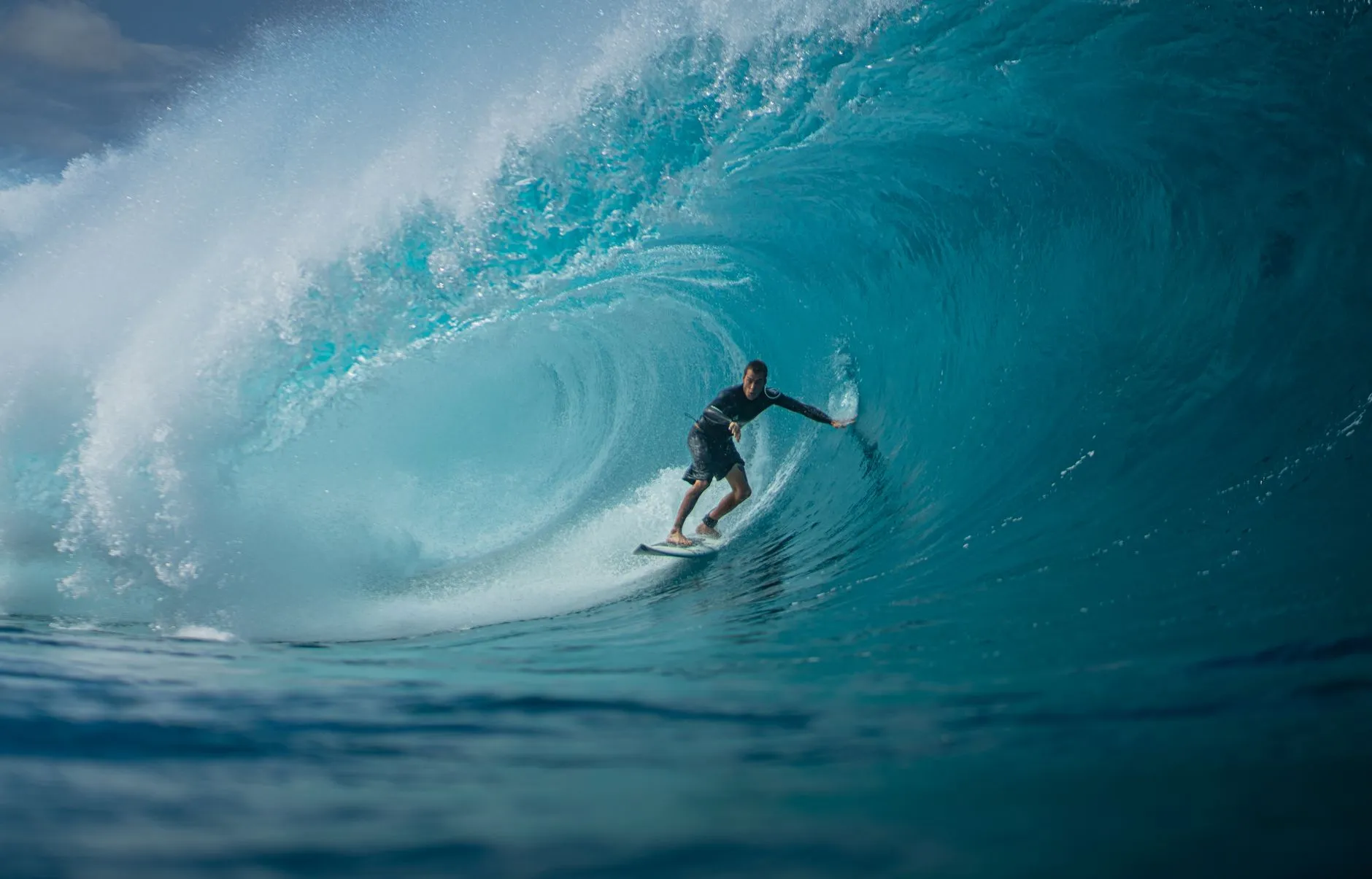
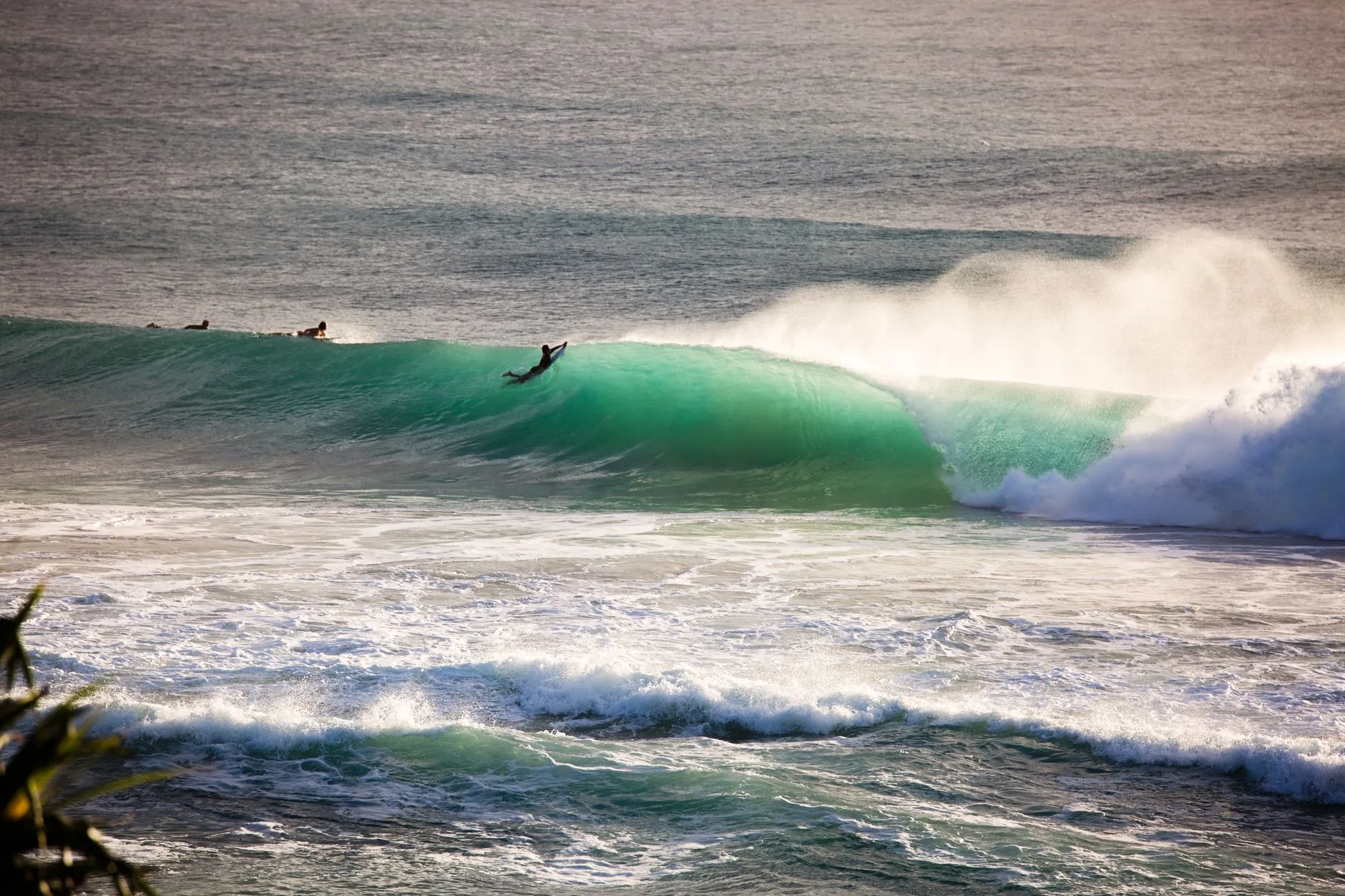
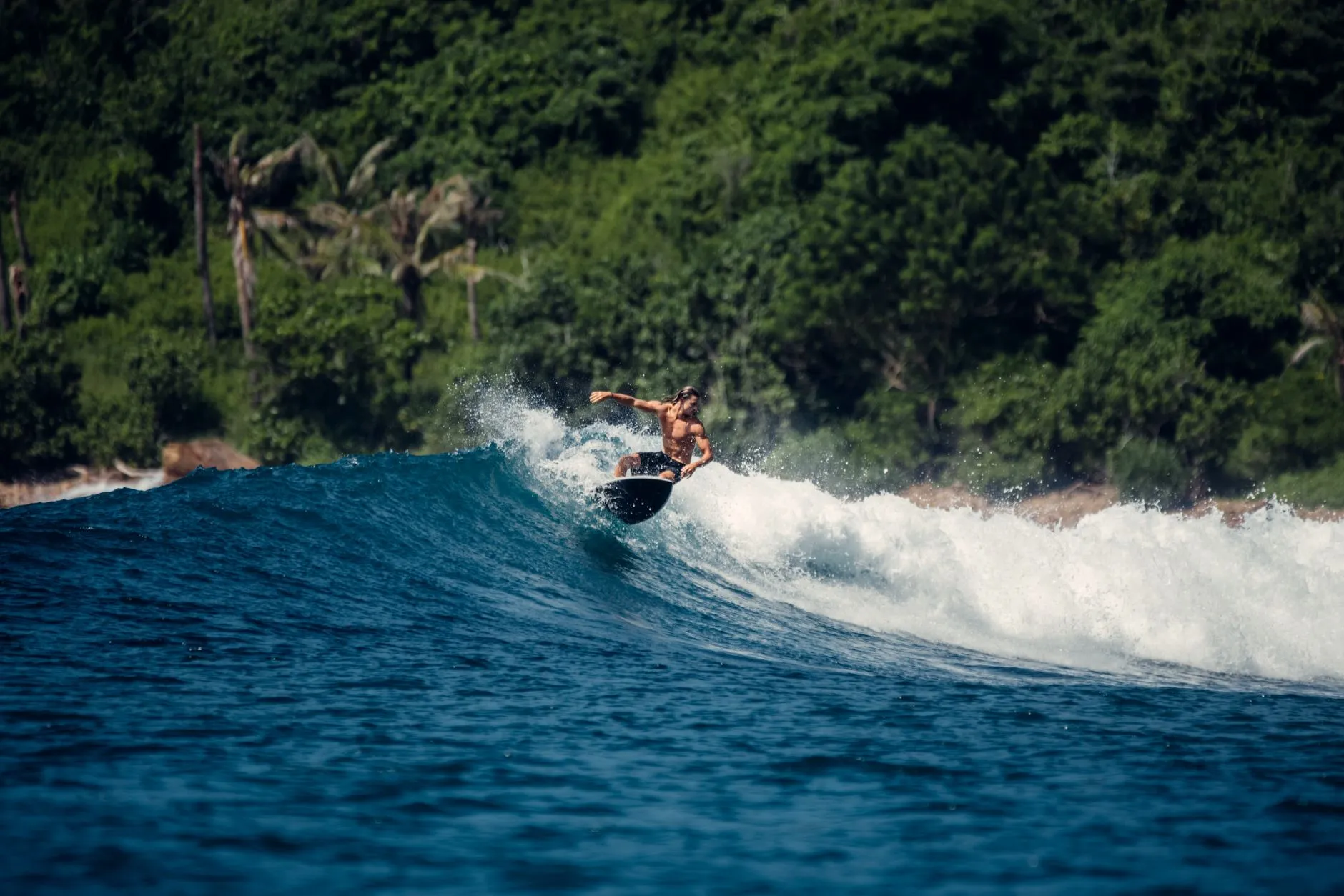
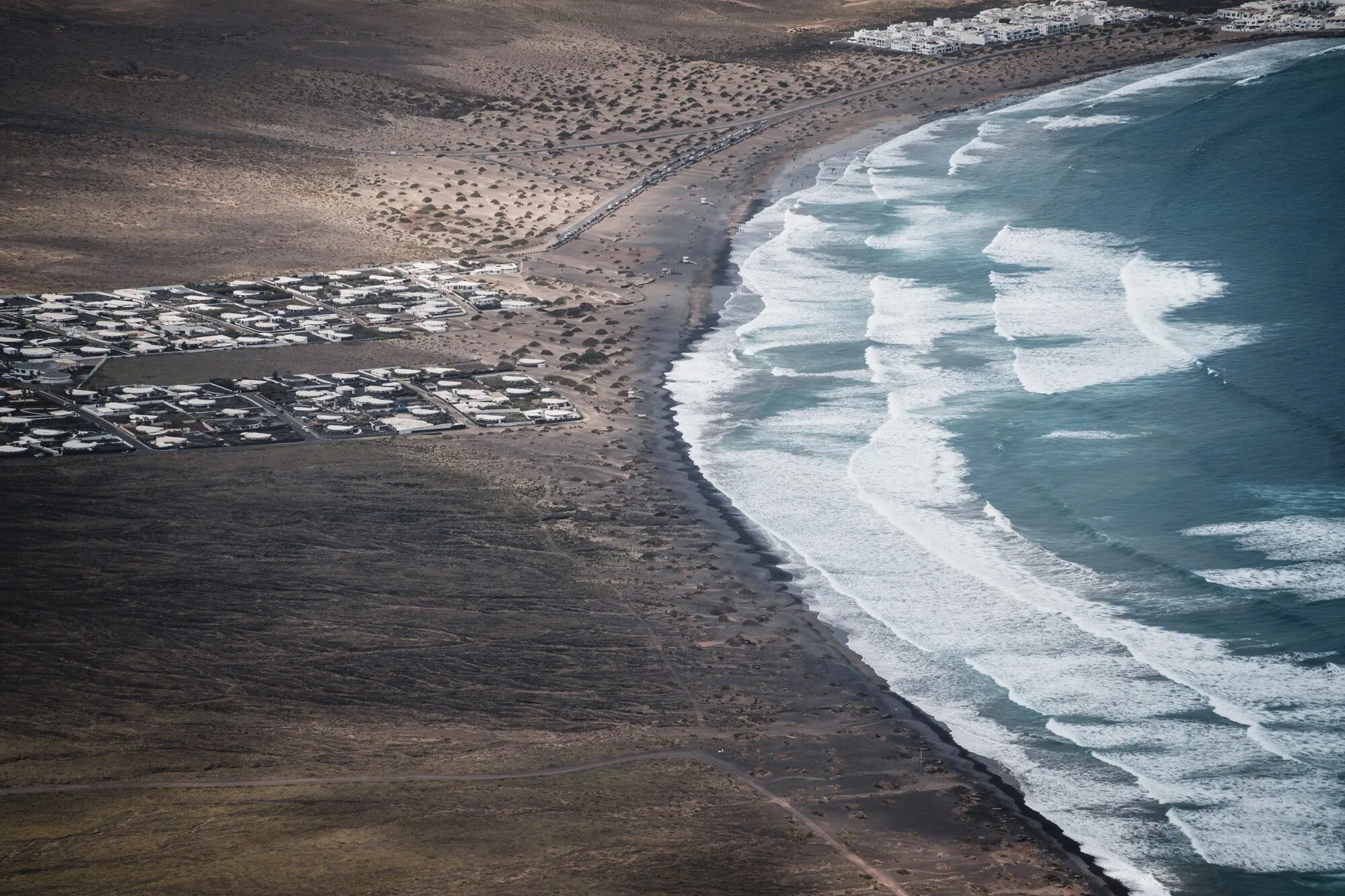
From the dune above Supertubes you can watch a wave stand up at Boneyards and run away from you for three hundred meters, wall after wall, until it finally gives out somewhere past the Point. Surfers argue about everything, but almost nobody argues about this: Jeffreys Bay is the most perfect right point on the planet. The town behind it, an hour west of Gqeberha on South Africa's Eastern Cape, was a fishing village until the sixties, when the boards started arriving in numbers; now boardwalks thread through the fynbos toward the reef, surf brands were born in its garages, and the dune blooms red with aloes exactly when the wave turns world class. Dolphins school through the lineup most weeks, and in winter the whales pass beyond the backline.
Plan around one hard fact: this is a winter wave. From May to September, cold fronts track beneath the continent and send long southwest groundswell straight up the point, while the west wind that follows each front blows offshore all day and combs it into corduroy; July is the crescendo, when the world tour pitches its scaffolding at Supertubes. It is not a gentle perfection. The water drops to 14°C, the takeoff at Supers is shallow and unforgiving, the current down the point is a conveyor belt, and the sharks are no myth, as Mick Fanning can confirm. But walk south to Kitchen Windows, or slide down to The Point, and the same ocean hands ordinary surfers the best rights of their lives at half the consequence.
Best months
May to September for Southern Ocean groundswell; the world tour visits Supertubes in July
Water
14 to 19°C: a 3/2 in summer, a 4/3 in midwinter, and nobody laughs at booties
Levels
From the learner peaks at Kitchen Windows to Supertubes at full speed
Getting there
Fly to Gqeberha (Port Elizabeth): the point is an hour west, Cape St Francis another forty minutes
Before the famous point begins, the town keeps two very different reefs: Kitchen Windows, where every J-Bay surfer stood up for the first time, and Magna Tubes, where boards go to die. Start at the first, earn the second, and use the boardwalk between them to study how the whole coast fits together.
Kitchen Windows
Jeffreys Bay · Forgiving reef peaks
Beginner
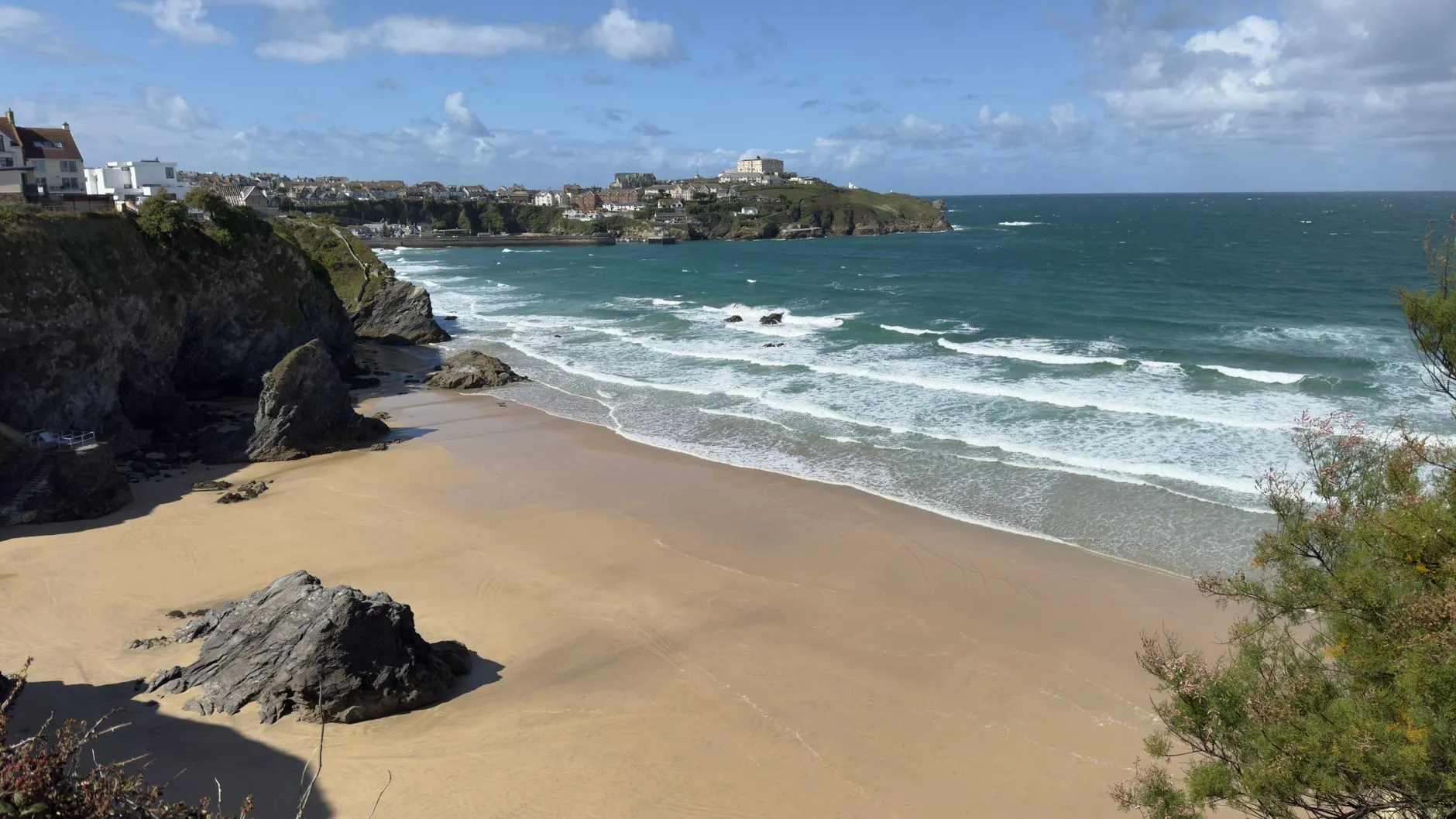
The window-shaped rock that named it is still there at low tide, and so is the town's entire surfing childhood. This is where Jeffreys Bay learns: a wide, friendly stretch a kilometer south of Supertubes where soft peaks roll left and right over reef and sand, schools on the inside, longboarders gliding the outside. It catches more of a small swell than the point, so on tiny summer days this corner works while Supers is a lake. Watch your feet on the urchins at low tide, and do not let the word beginner fool you on a solid winter day, when it turns into a proper wave. The cafes above the rocks will hold your coffee while you check it.
Magna Tubes
Jeffreys Bay · Thick slab barrels
Advanced
Halfway between Kitchen Windows and Boneyards the reef stops being polite. Magna Tubes is J-Bay's slab: a thick, short right that unloads over shallow rock and has snapped more boards per hour surfed than anywhere else in town. Bodyboarders and the barrel-hungry treat it as a destination; everyone else watches from the path. It needs the right marriage of tide and swell to be makeable at all, and when it gets it, the reward is the roundest tube on this stretch of coast. Nothing about it is a warm-up, whatever its place on the map suggests.
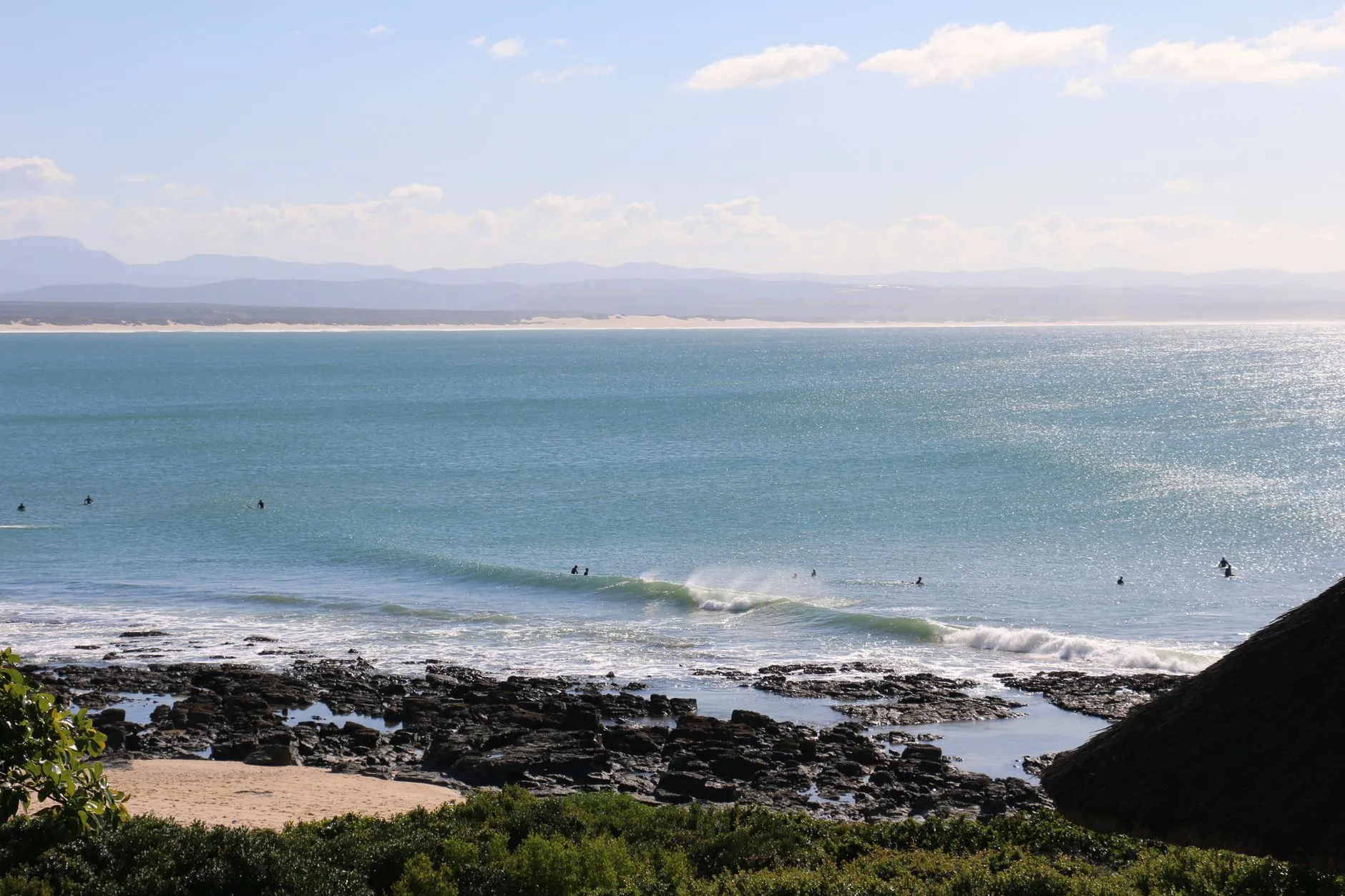
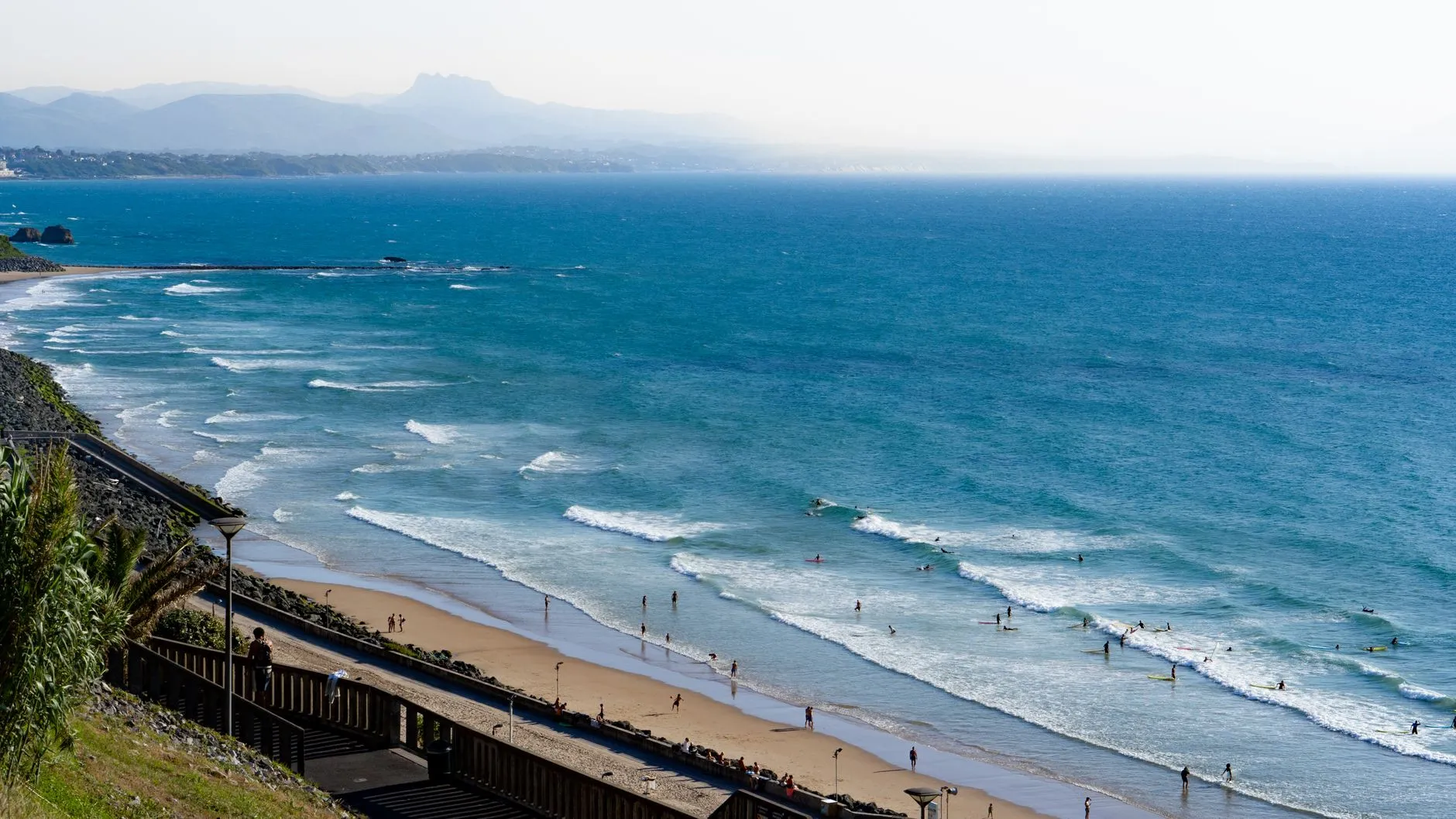
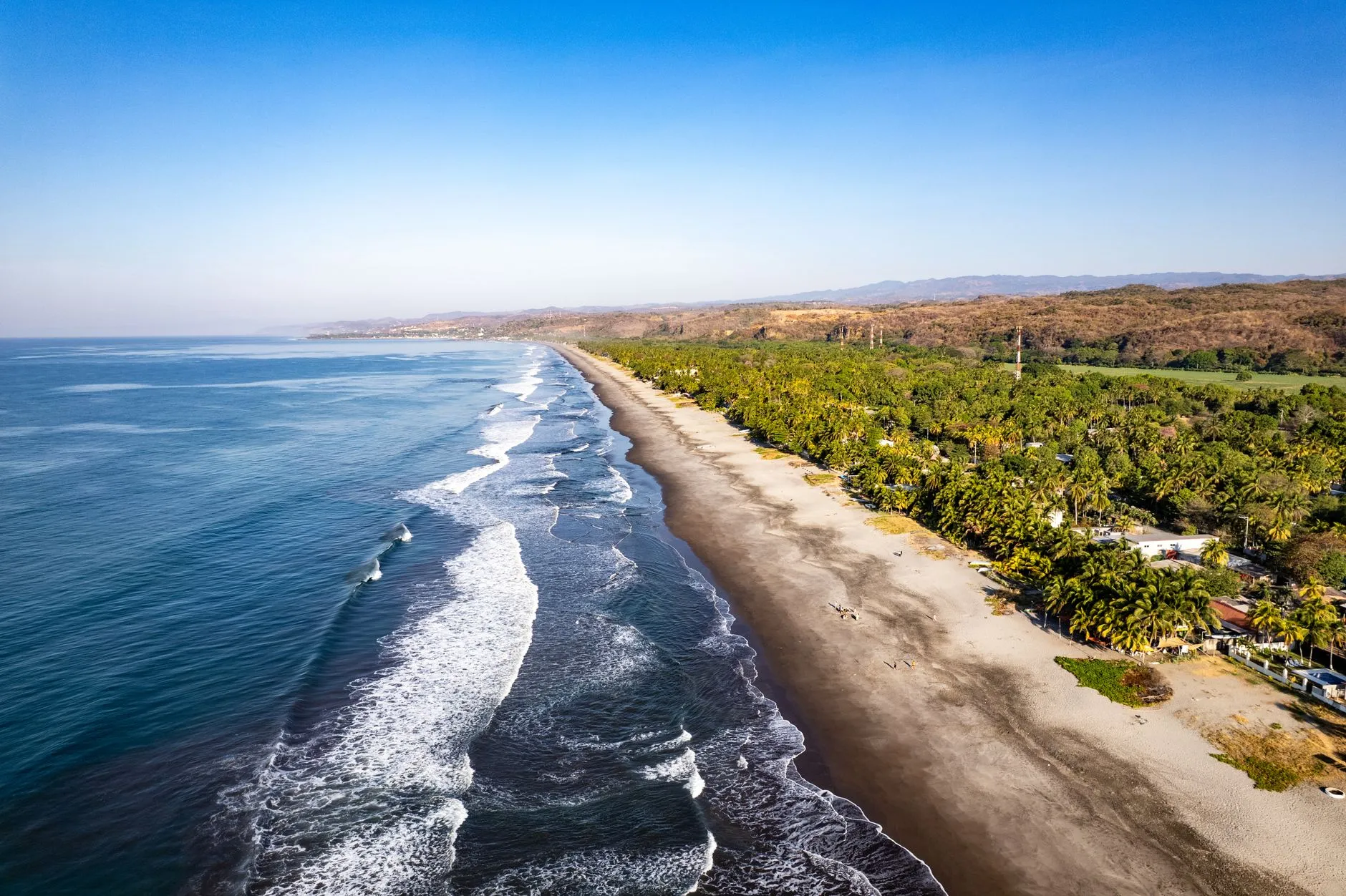
Looking down the point at Jeffreys Bay on a small, clean day, the Kouga mountains behind
The point, section by section
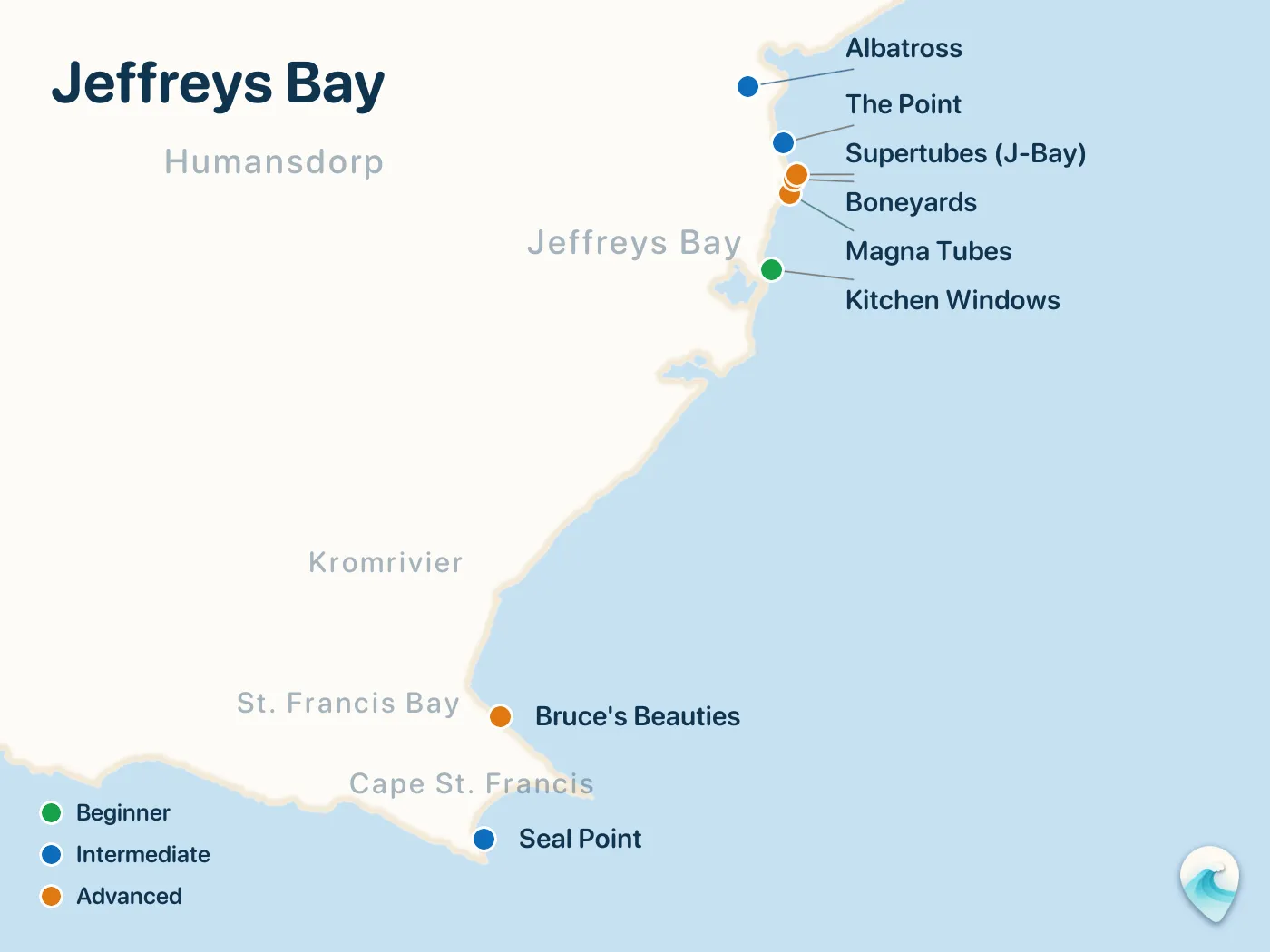
One reef, one current, one long miracle: Boneyards hands waves to Supertubes, Supertubes runs through Impossibles toward The Point, and Albatross collects whatever is left at the bottom. Pick your section the way you pick your battles; the wave decides how far you get.
Boneyards
Jeffreys Bay · Fast, shallow top section
Advanced
The name is a warning about the reef, not a boast. Boneyards is the section above Supertubes: a shifty, fast right that jacks on the outside ledge and gives you two or three turns of pure speed before it either shuts down or, on the right swell, hands you the keys to Supers below. That handoff is one of the most valuable connections in surfing, and the locals who know its timing treat this peak as their office. The keyhole here is also the standard paddle-out for Supertubes, so mind the sets on your way through, and mind the pecking order when you sit. It is shallower than it looks, and it looks shallow.
Supertubes (J-Bay)
Jeffreys Bay · The perfect right
Advanced
The main event, and the reason the word perfect got devalued in surf writing. From the takeoff the wall stretches so far down the point that your first instinct is disbelief; your second had better be speed, because Supertubes is fast, shallow and unforgiving, a wave you drive through on rail rather than survive. Fall on the first bottom turn and the reef and its urchins keep the receipt; hesitate and the Impossibles section below slams the door. The keyhole paddle-out at Boneyards and the conveyor current down the point are part of the entry fee, along with a lineup holding some of the best surfers alive. This is where the world tour competes in July, and where a white shark famously met Mick Fanning mid-final in 2015; spotters, skis and drones now watch the contest, and the locals surf it every other day of the year regardless. When the aloes burn red on the dune and the west wind holds, there is nothing else like it anywhere.
The Point
Jeffreys Bay · Long, kinder walls
Intermediate
Where ordinary surfers finally get their share of the miracle. Past Impossibles and the short Tubes section, the wave bends into the bay, slows half a step and turns into long, generous walls that still run a hundred meters and more. The takeoff is friendlier, the reef sits a little deeper, and a committed intermediate can trade waves here all winter and go home a different surfer. It gets crowded, because everyone in town has done that math, but the wave sections often enough that patience gets paid. Getting in over the barnacled rocks is its own small art: watch a local do it once before you donate skin.
Albatross
Jeffreys Bay · Mellow end section
Intermediate
The last section, down where the point finally lets the bay have its way. Albatross needs a proper swell to wrap this far, and when it does it peels mellow and long over reef and sand with a fraction of the crowd from up the hill. On the biggest, cleanest days of the year the old dream comes true here: waves connecting from far above spit surfers out with jelly legs and a story they will retell badly for decades. The rest of the time it is where locals bring their kids, their longboards and their slow mornings. If Supers looks like a freeway, walk north.
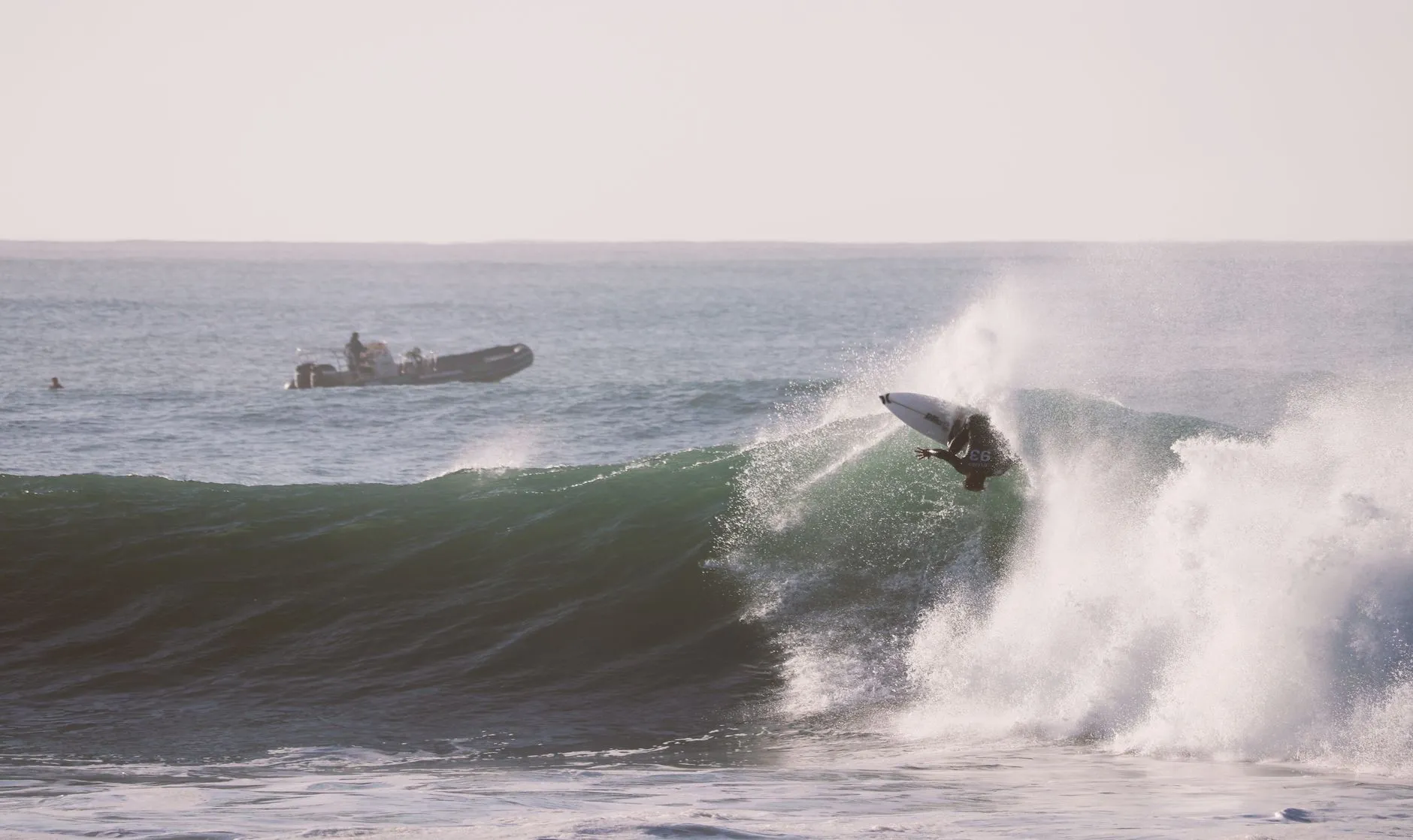
Contest day at Supertubes, the water patrol idling behind the peak
The St Francis corner
Forty minutes south, the cape from The Endless Summer: Seal Point works almost every day under its lighthouse, and Bruce's Beauties sleeps until a big east swell shakes it awake. One is a plan, the other a lottery ticket; check both charts before you drive.
Bruce's Beauties
Cape St Francis · Fickle perfect right
Advanced
The wave from The Endless Summer, the corner where Bruce Brown pointed his camera in the sixties and told the world he had found the perfect wave. He was not lying, but he skipped the schedule: Bruce's needs a big east or southeast swell to bend into St Francis Bay, and the houses built on the dunes since have starved it of the sand that once made it flawless. It still breaks, a handful of days a year, and when it does the right reels off in ruler-edged sections that justify every frame of the myth. Locals drop everything for it; visitors usually get to see the place, not the wave. Surf Seal Point down the road, watch the charts, and treat a Bruce's day as the lottery win it is.
Seal Point
Cape St Francis · Consistent right point
Intermediate
The working wave of Cape St Francis, breaking under the tall stone lighthouse that has stood at the tip of the cape since 1878. Seal Point catches more swell than almost anything else in the region, so when J-Bay naps between fronts this right point is usually still walling up over its round boulders. It is a proper community wave: a strong local crew, kids on the inside reform, and a ledgier, heavier takeoff further up the point when the swell gets serious. The rocks are smooth and the entry easier than it looks, though the kelp and the water temperature will remind you which coast you are on. Forty minutes from Jeffreys Bay, and on plenty of days the smarter call.
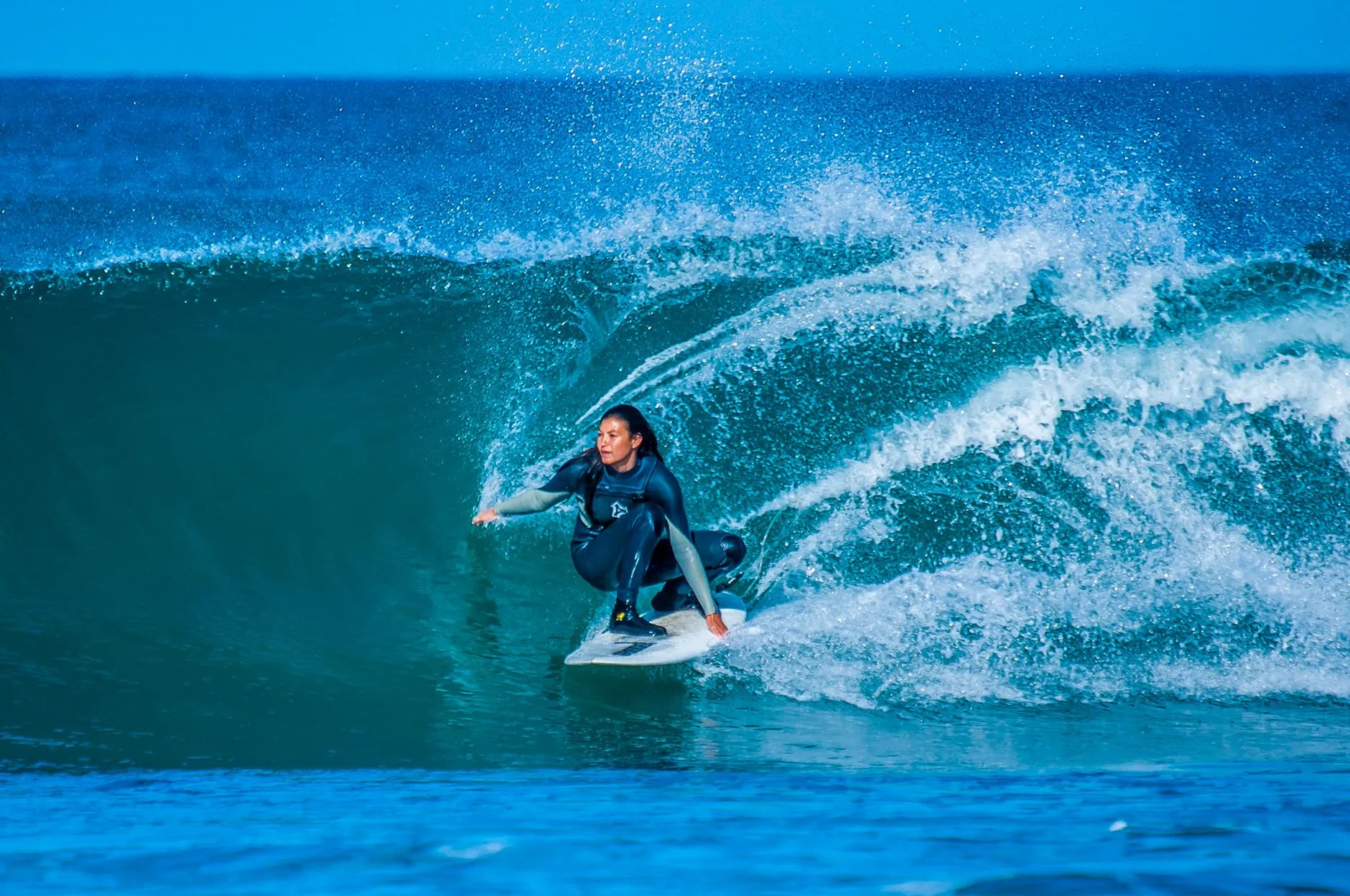
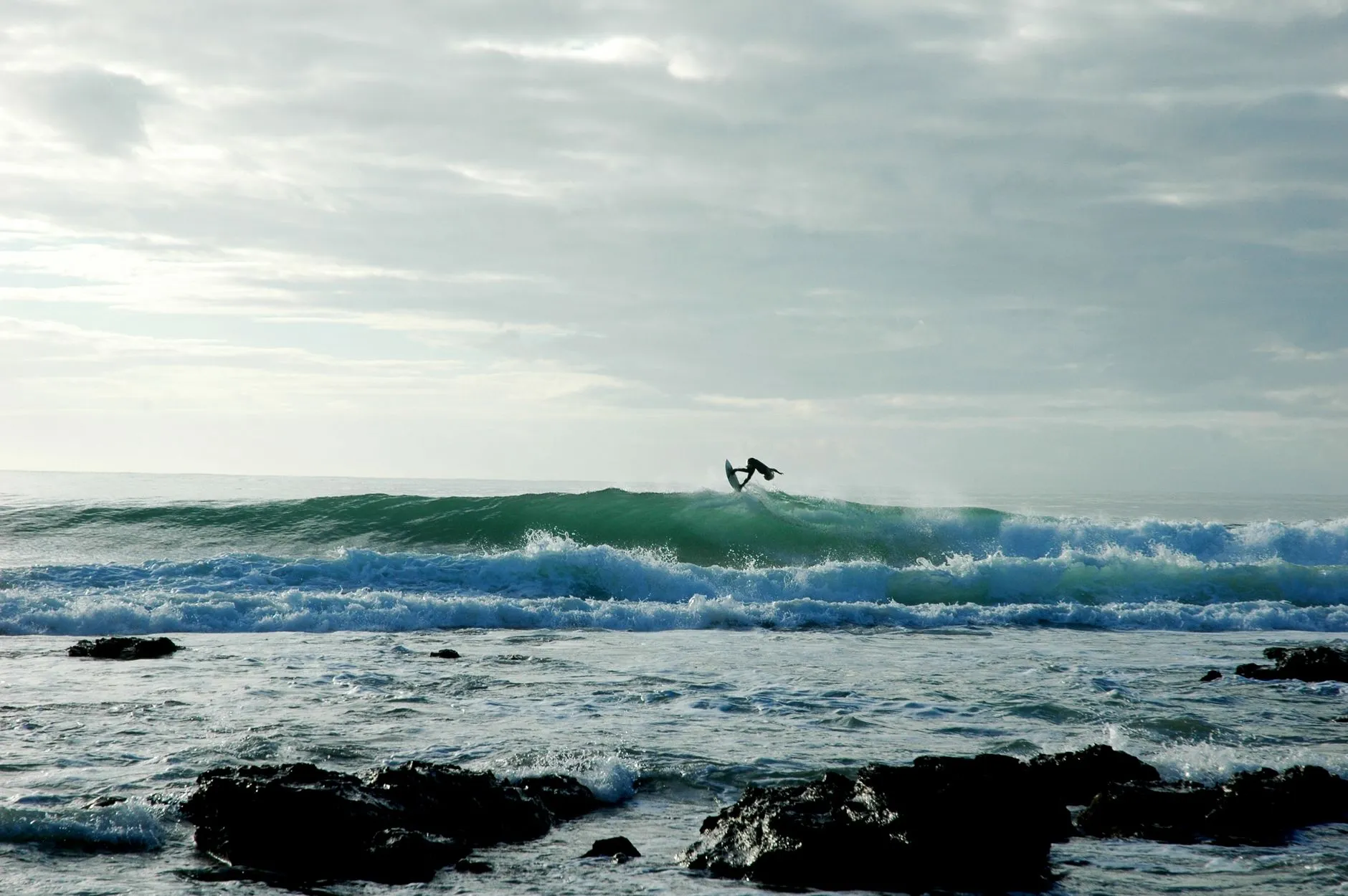
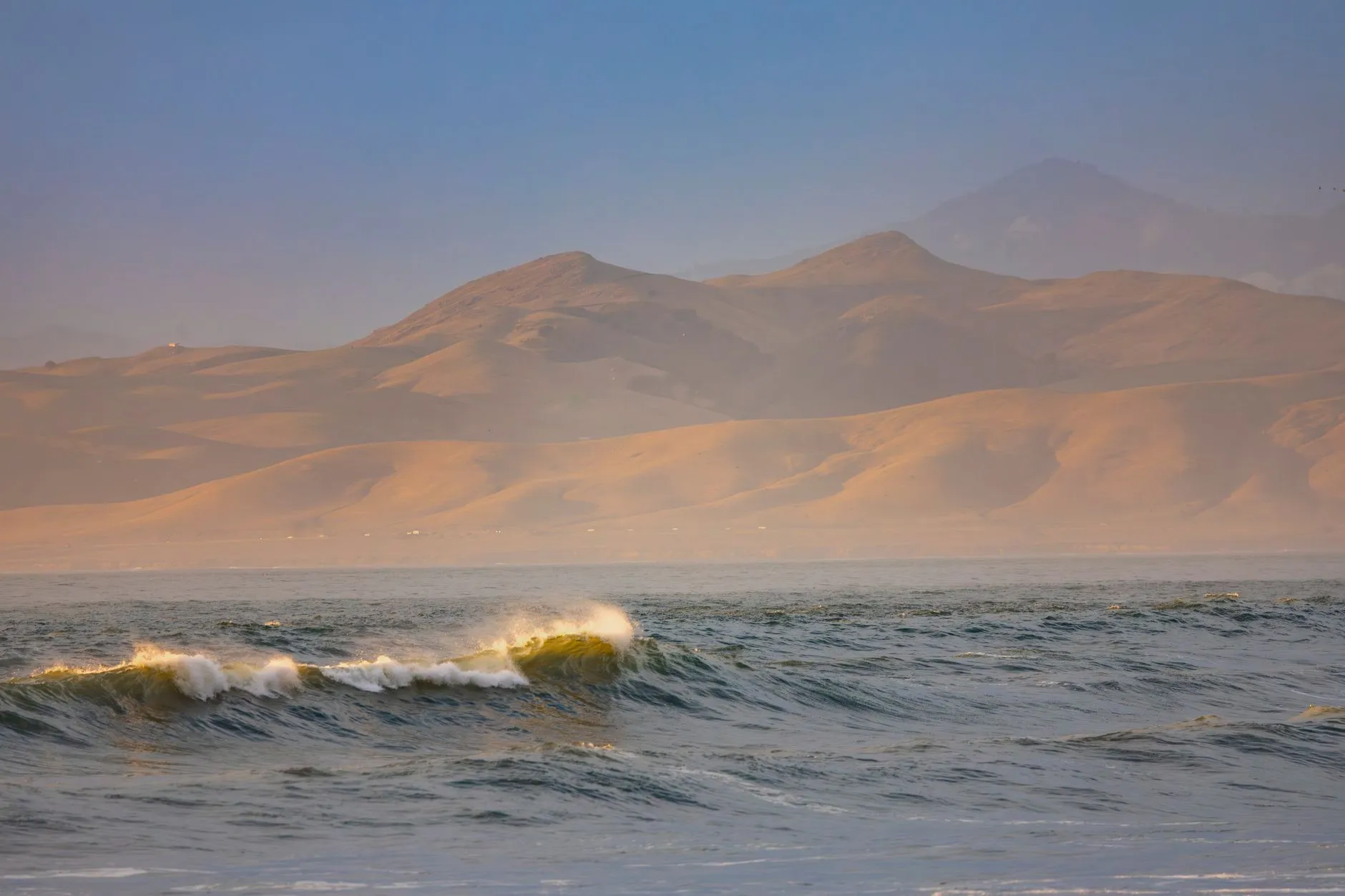
A wall stands up over the reef at Jeffreys Bay
When to go
A year in Jeffreys Bay
Typical conditions, month by month. The ocean did not sign this table: for live waves, wind and tide, check the app.
January
2-4 ft
66°F · 3/2 · All levels
High summer: the easterly gets up by lunch and turns the point to chop, so everything happens before nine. Kitchen Windows keeps small clean mornings, and a hard east blow can upwell cold water and drop the sea four degrees overnight.
February
2-4 ft
66°F · 3/2 · All levels
The smallest month on the point, and the town does not pretend otherwise. Longboarders own Kitchen Windows, and a late-summer east swell is the rare alarm clock that can wake Bruce's Beauties around the corner.
March
3-5 ft
64°F · 3/2 · All levels
Autumn creeps in: the first cold fronts brush the Cape and the wind starts swinging west. Between leftover easterlies, Supertubes shows flashes of its winter self.
April
3-6 ft
63°F · 3/2 · Intermediate
Proper southwest groundswell returns and the mornings go glassy. The Easter crowd passes quickly, and by the end of the month the point is doing full runs again.
May
4-8 ft
61°F · 4/3 · Advanced
The winter machine switches on: front after front lines up in the Southern Ocean and Supertubes starts doing the thing on the posters. First 4/3 days, last quiet lineups.
June
4-8 ft
59°F · 4/3 + boots · Advanced
Back-to-back groundswell trains, all-day westerly offshores, and legs that give out before the wave does. The first southern right whales show beyond the backline.
July
4-8 ft
57°F · 4/3 + boots · Advanced
Midwinter and the crescendo: the world tour holds its window at Supertubes and spotters watch the water from the dune. Berg winds can groom the point for days on end; the sea bottoms out now, so bring your thickest rubber.
August
4-8 ft
57°F · 4/3 + boots · Advanced
The contest circus leaves; the swell does not. Some of the biggest storms of the year arrive now, and the clean days between fronts are the ones locals brag about all summer.
September
3-6 ft
59°F · 4/3 · Intermediate
Spring keeps the groundswell coming but the wind turns moody, so read the forecast, not the calendar. Whale season peaks beyond the backline, and the crowds thin to locals and the faithful.
October
3-5 ft
61°F · 4/3 · Intermediate
The season winds down politely: still real southwest pulses, but more east in the afternoon wind. The aloes finish blooming on the dune and the town catches its breath before the holidays.
November
2-4 ft
63°F · 3/2 · Beginner
Small, clean and warming: mornings at Kitchen Windows are a longboard lesson, and The Point walls up on any decent pulse. The easterly still ends most afternoons early.
December
2-4 ft
64°F · 3/2 · All levels
South African school holidays fill the town to the last bed while the waves stay small. Dawn patrol before the easterly, then join the braai like everyone else.
Good to know
When is the best time to surf Jeffreys Bay?
May to September, the southern winter. Cold fronts tracking beneath the continent send long southwest groundswell up the point, and the west wind that follows each front blows offshore and grooms it clean; July is the heart of it, when the world tour holds its contest window at Supertubes and the wave runs its full three hundred meters. Summer, December to February, is the opposite deal: smaller, warmer and ruffled by afternoon easterlies, with short clean mornings and a friendlier bay. If you want Supertubes at its best, book winter and pack rubber.
Is Jeffreys Bay only for expert surfers?
No, but its famous wave mostly is. Supertubes and Boneyards are fast, shallow and stacked with world-class surfers, and midwinter size raises the floor everywhere. The honest path for a normal surfer runs through Kitchen Windows, the town's learning reef, then down to The Point and Albatross, where the same swell turns into longer, kinder walls. Seal Point at Cape St Francis is another generous option, and it catches swell when J-Bay naps. Come with some experience, stay honest about your limits, and there is a version of this coast for you.
What about sharks at Jeffreys Bay?
They are part of the deal on this coast, and pretending otherwise helps nobody. The world watched a white shark knock Mick Fanning off his board mid-final at the 2015 J-Bay Open; he paddled away unharmed, and the contest now runs with spotters, water patrol and drones. Outside the event there is no permanent shark program, so do what locals do: surf with company, avoid murky water after rain and the deep channels at dawn and dusk, and get out calmly when the lineup empties for a reason. Encounters remain genuinely rare, and thousands of sessions happen here every winter without incident. Respect, not fear, is the local setting.
How cold is the water, and what wetsuit do I need?
Between 14 and 19°C depending on the season, which surprises people who expected Africa to be warm. A 3/2 covers December to April; from May you want a 4/3, and in midwinter locals add booties as much for the rocks as for the cold. The west wind that grooms the point comes straight off the cold interior and it bites, so pack a beanie and something warm for the beach. Summer has its own trick: a hard east blow can upwell cold water and drop the sea four degrees overnight. Check the water temperature the day you paddle out, not the seasonal average.