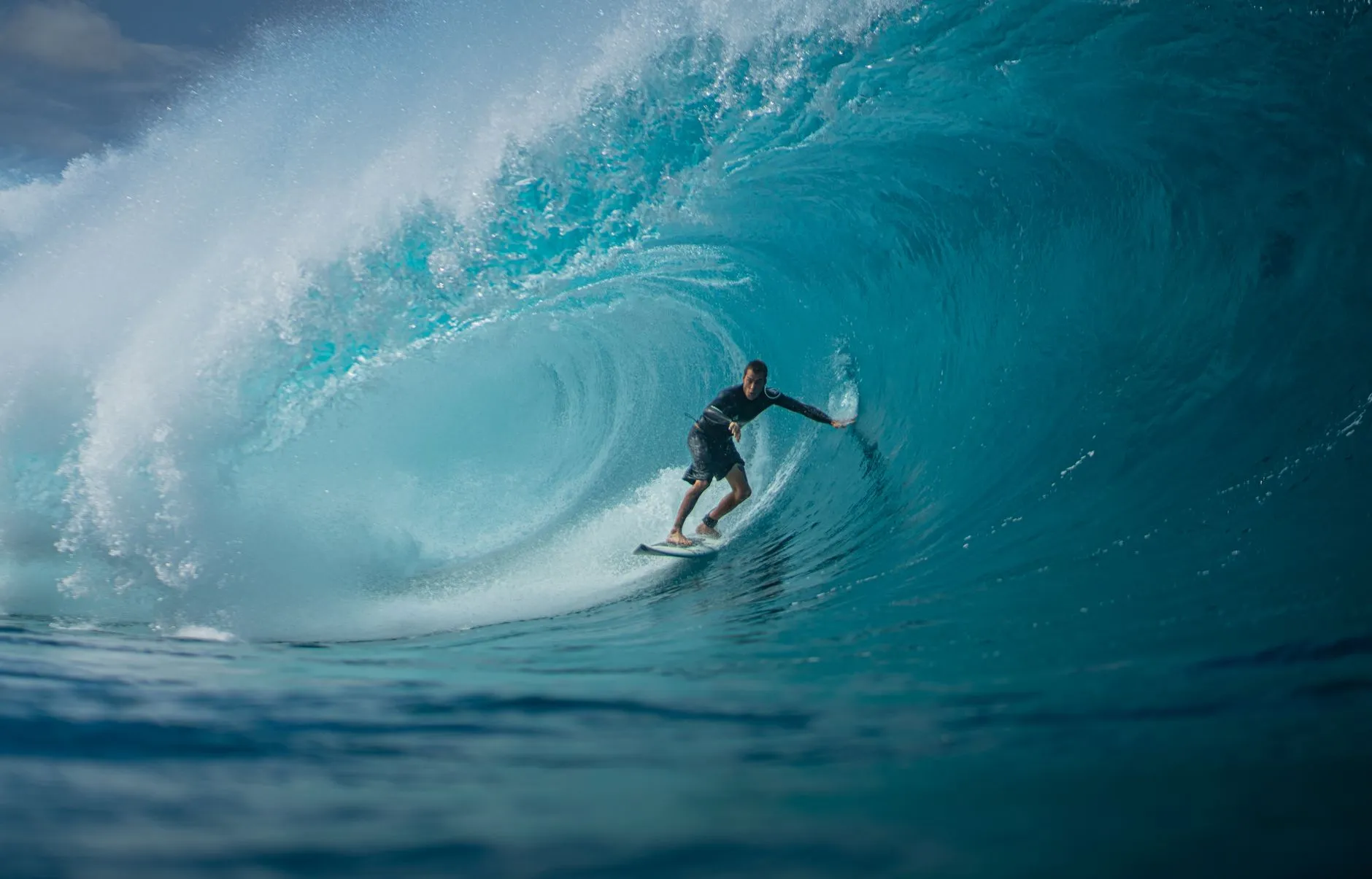
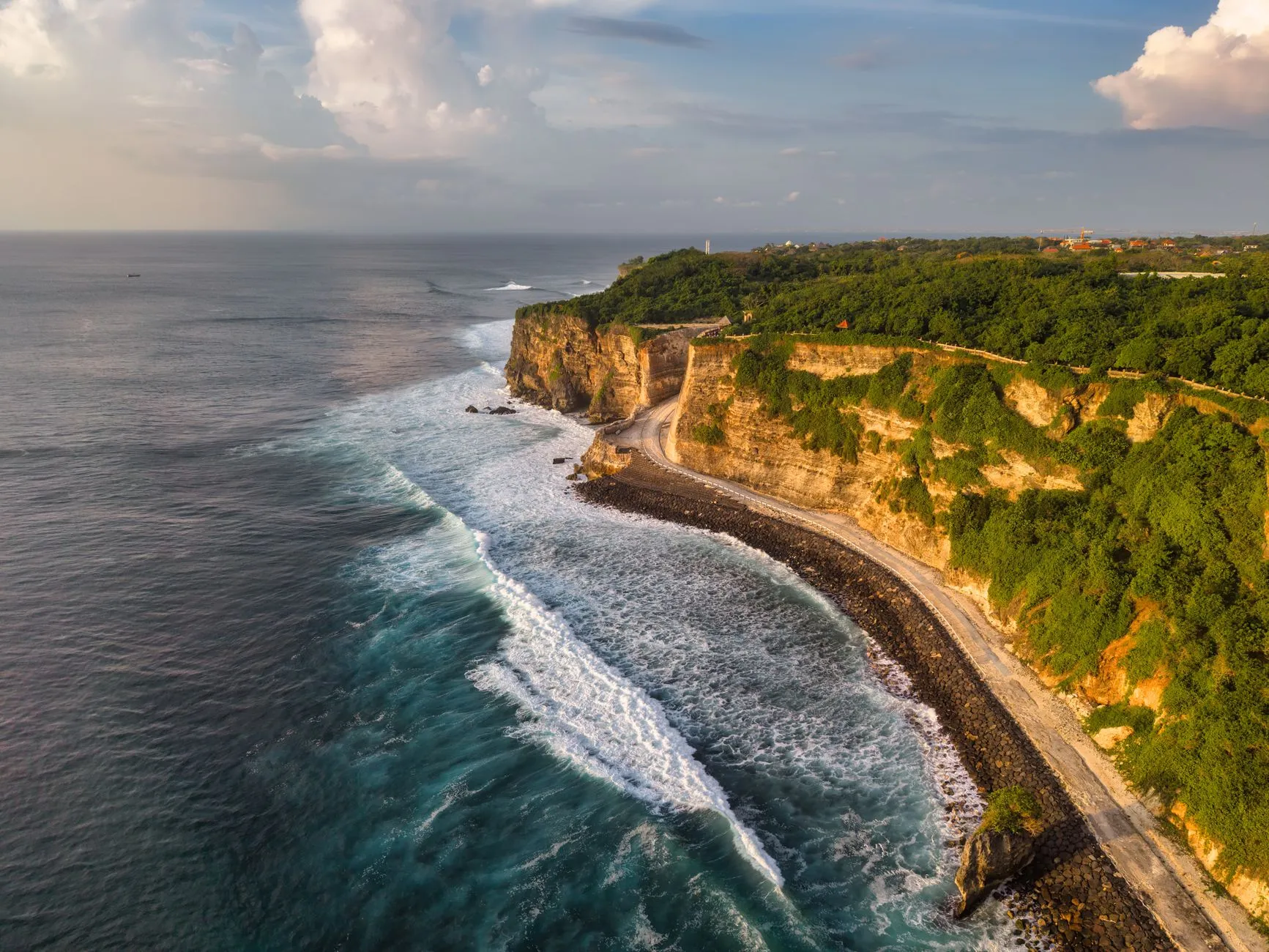
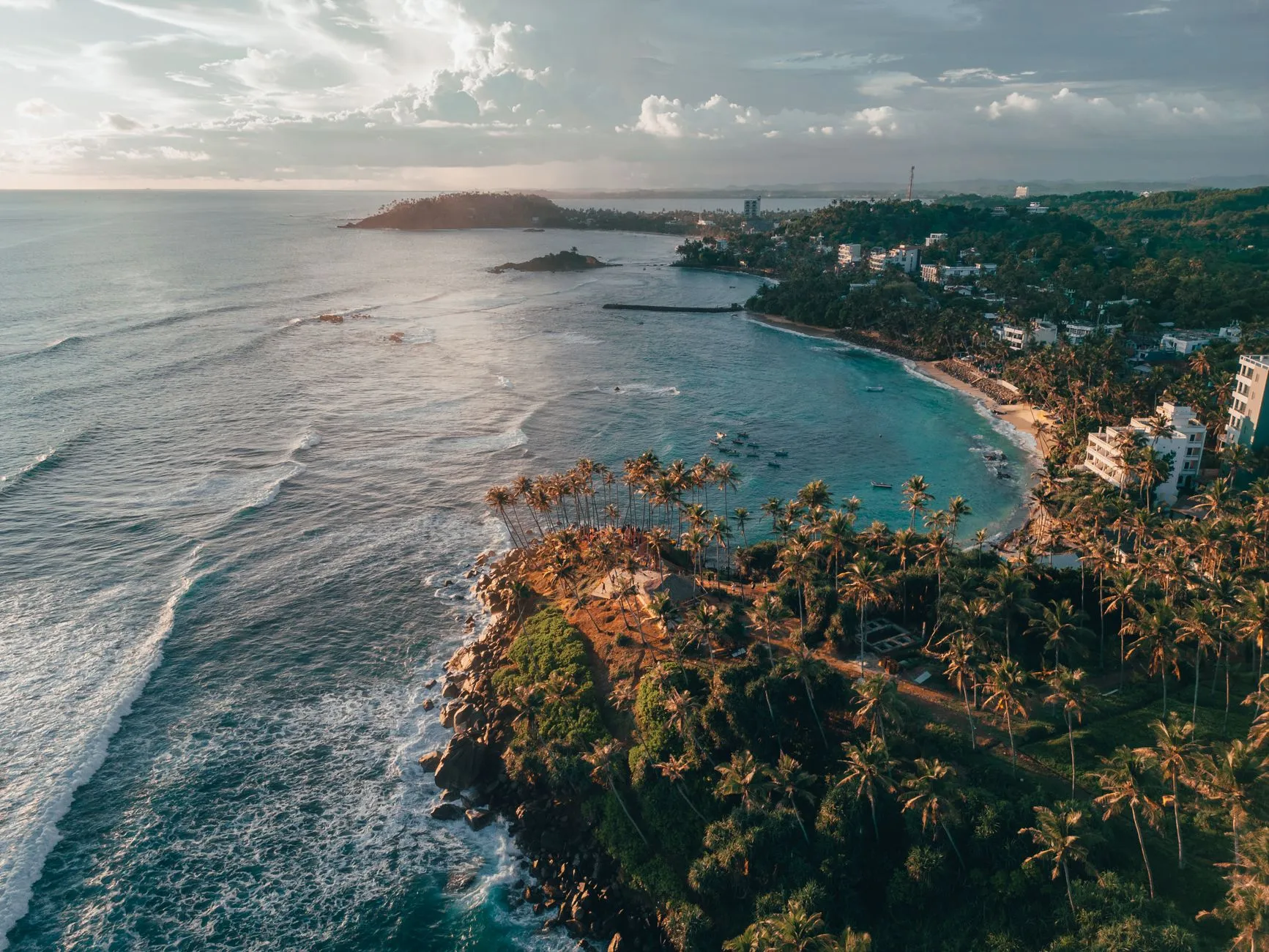
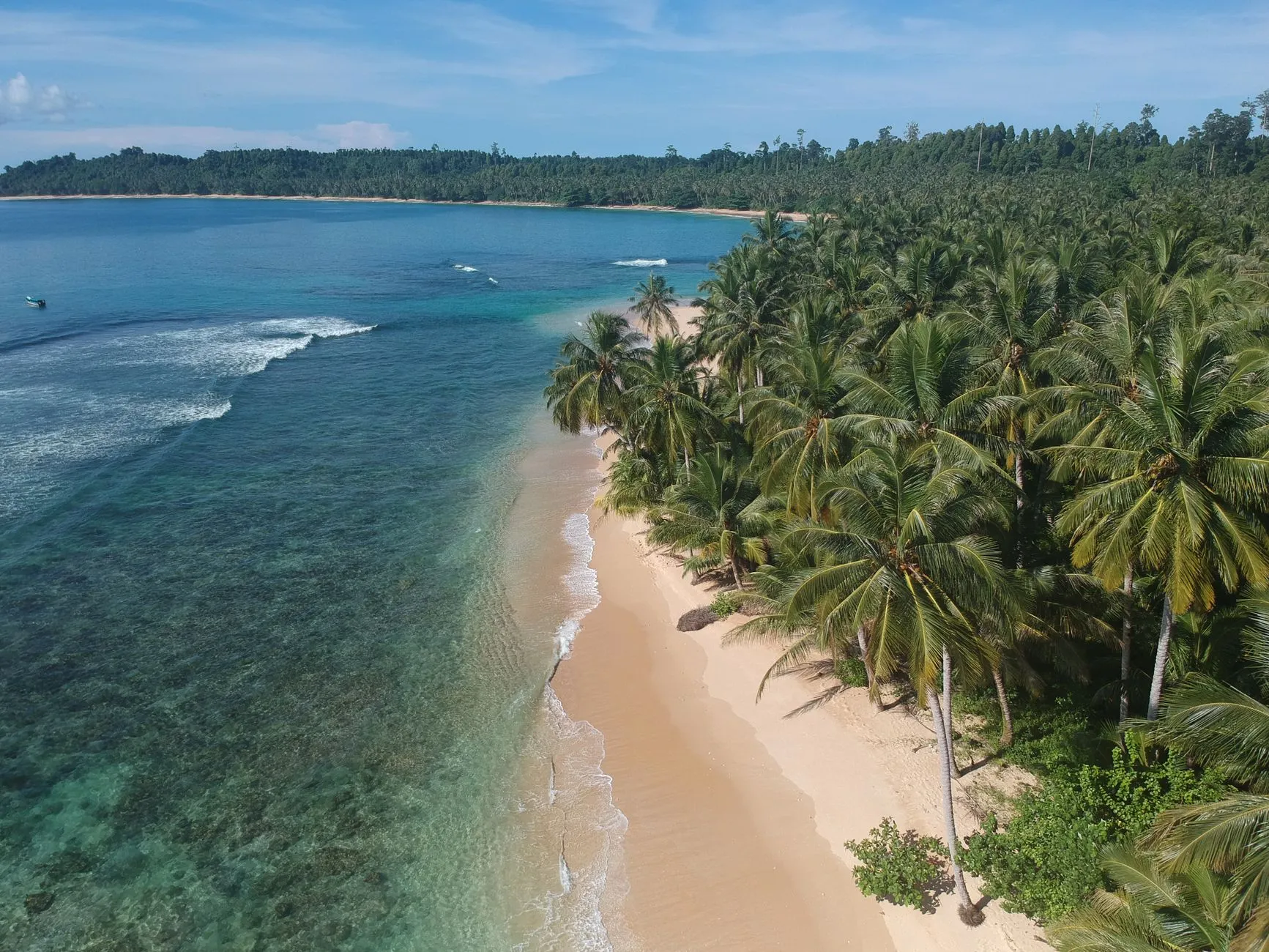
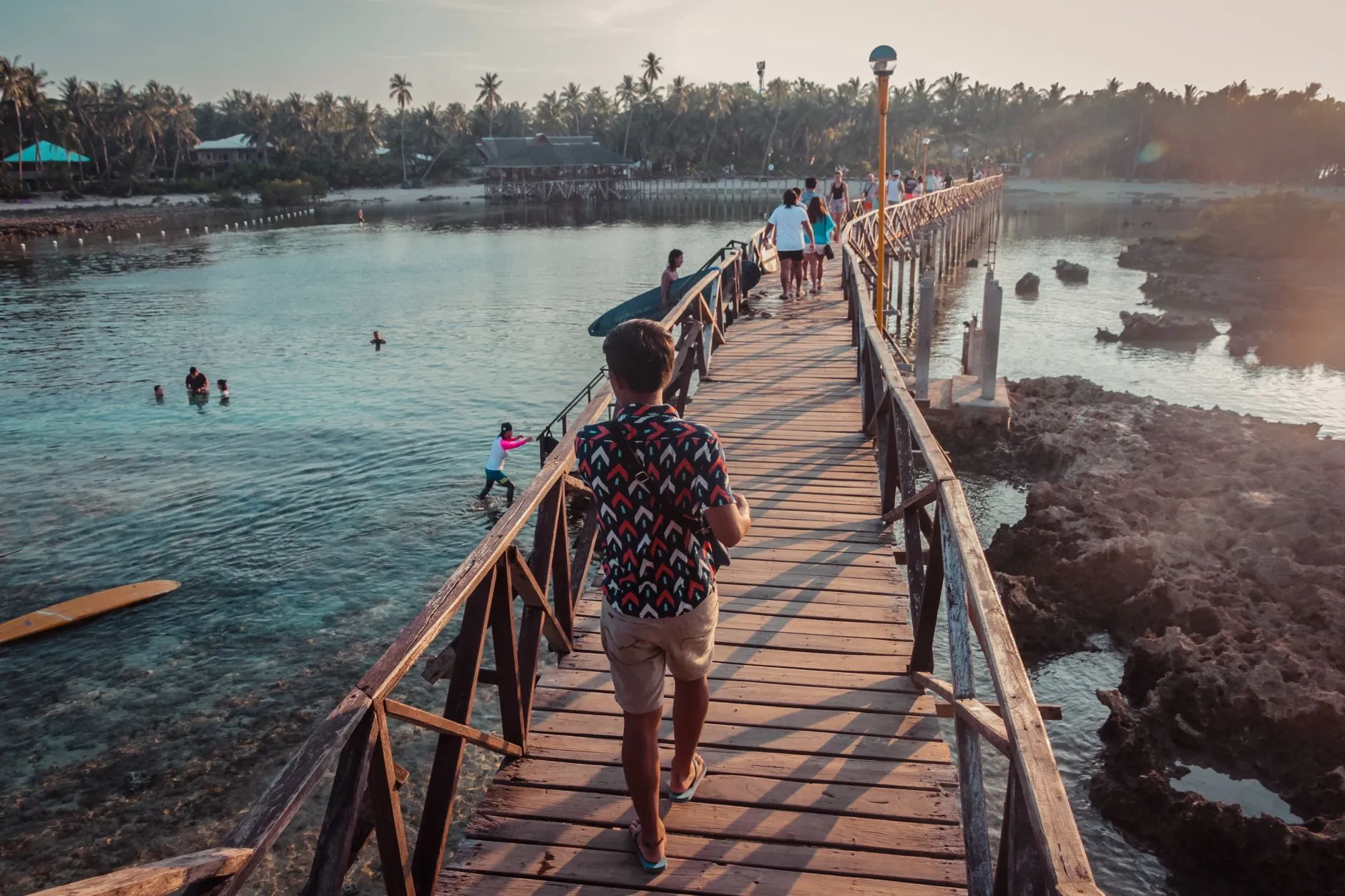
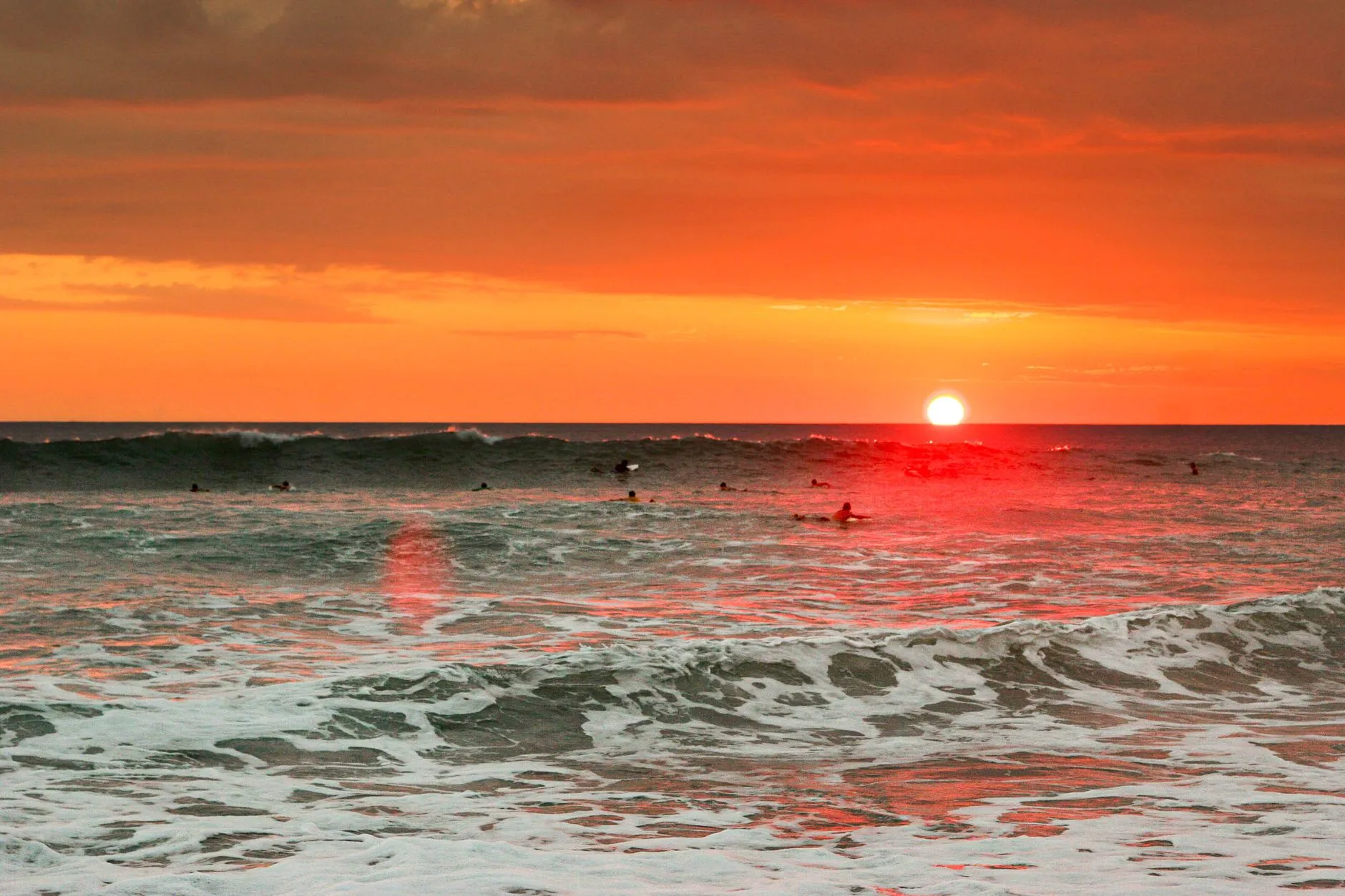
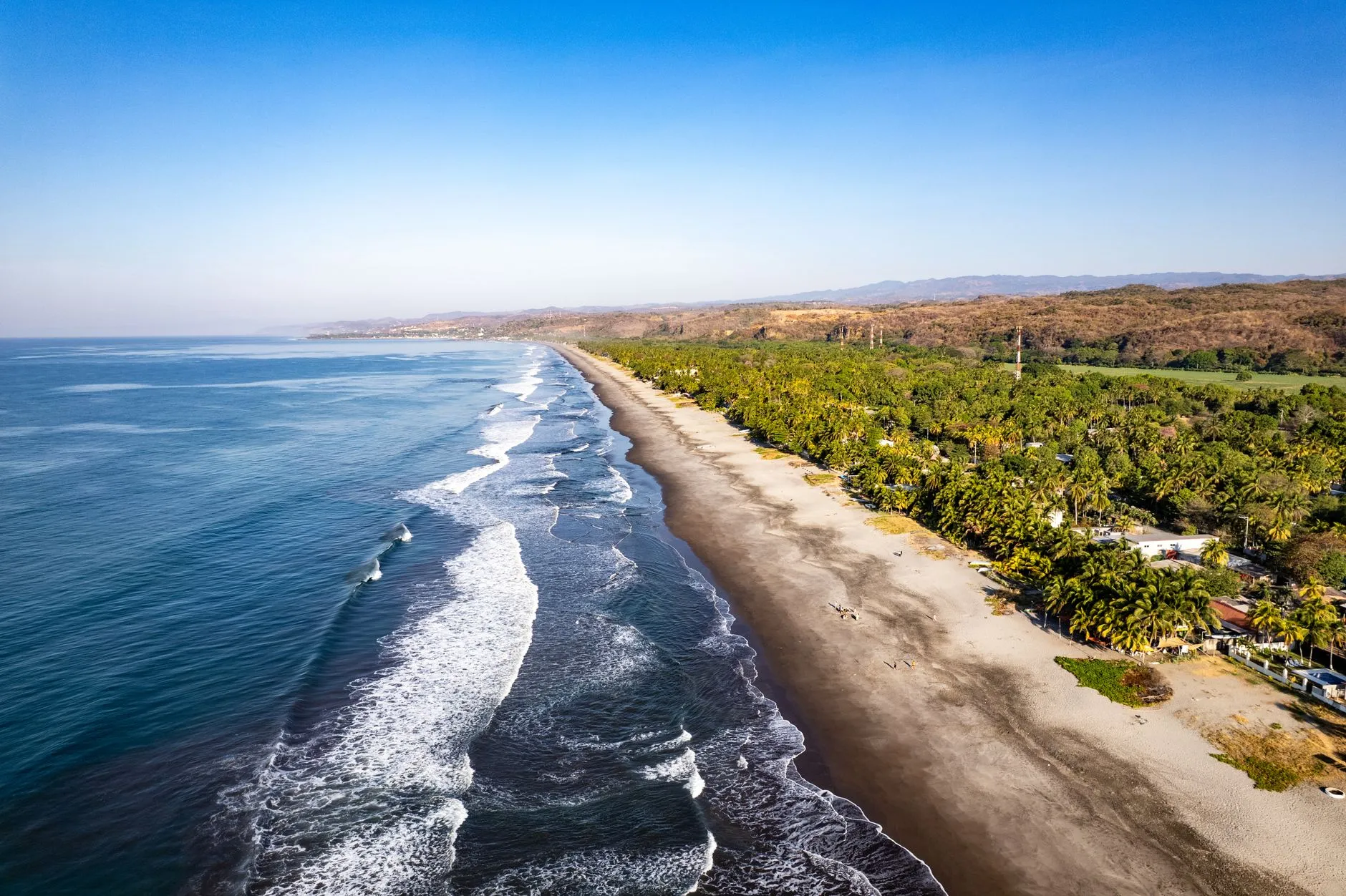
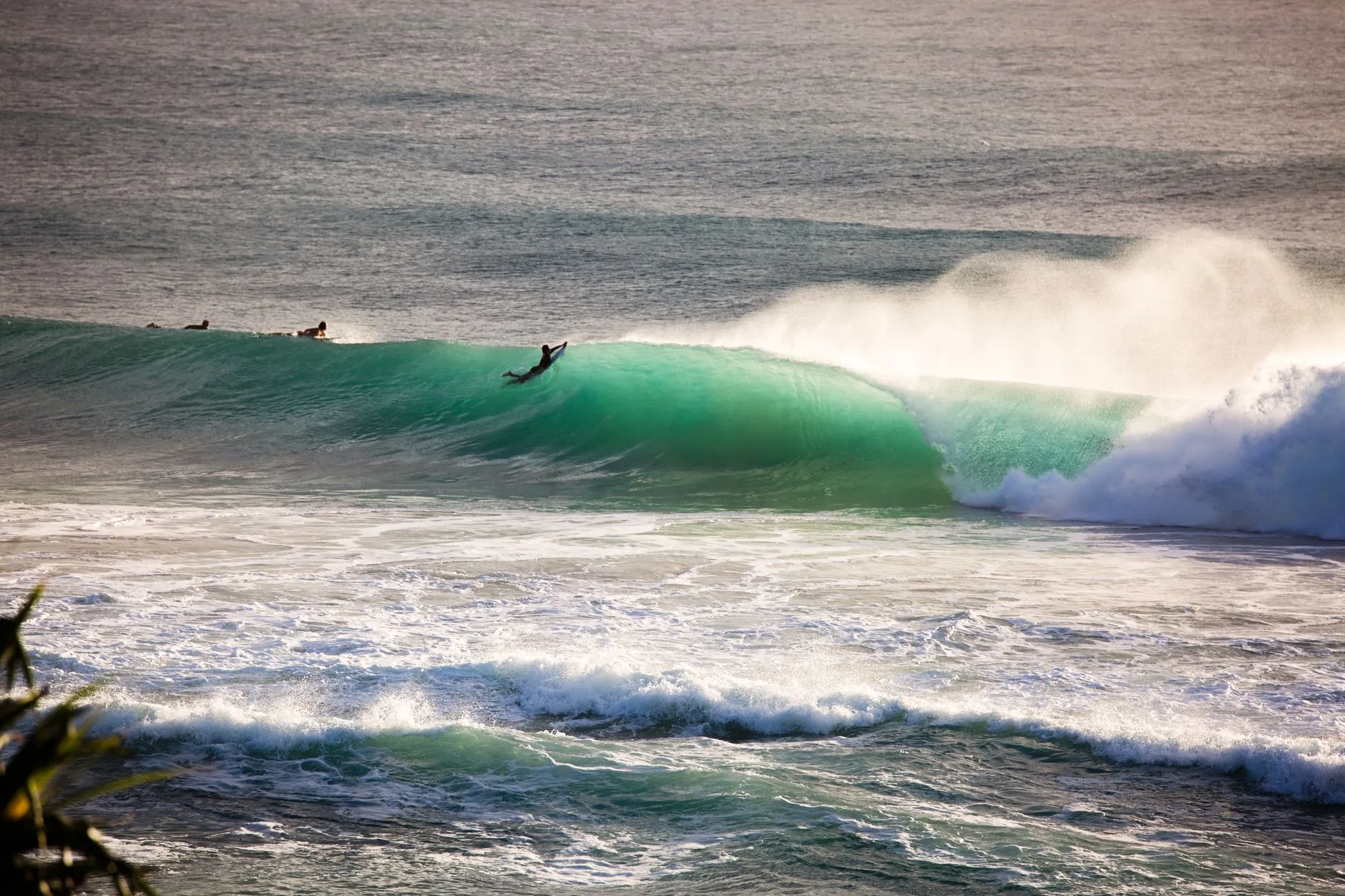
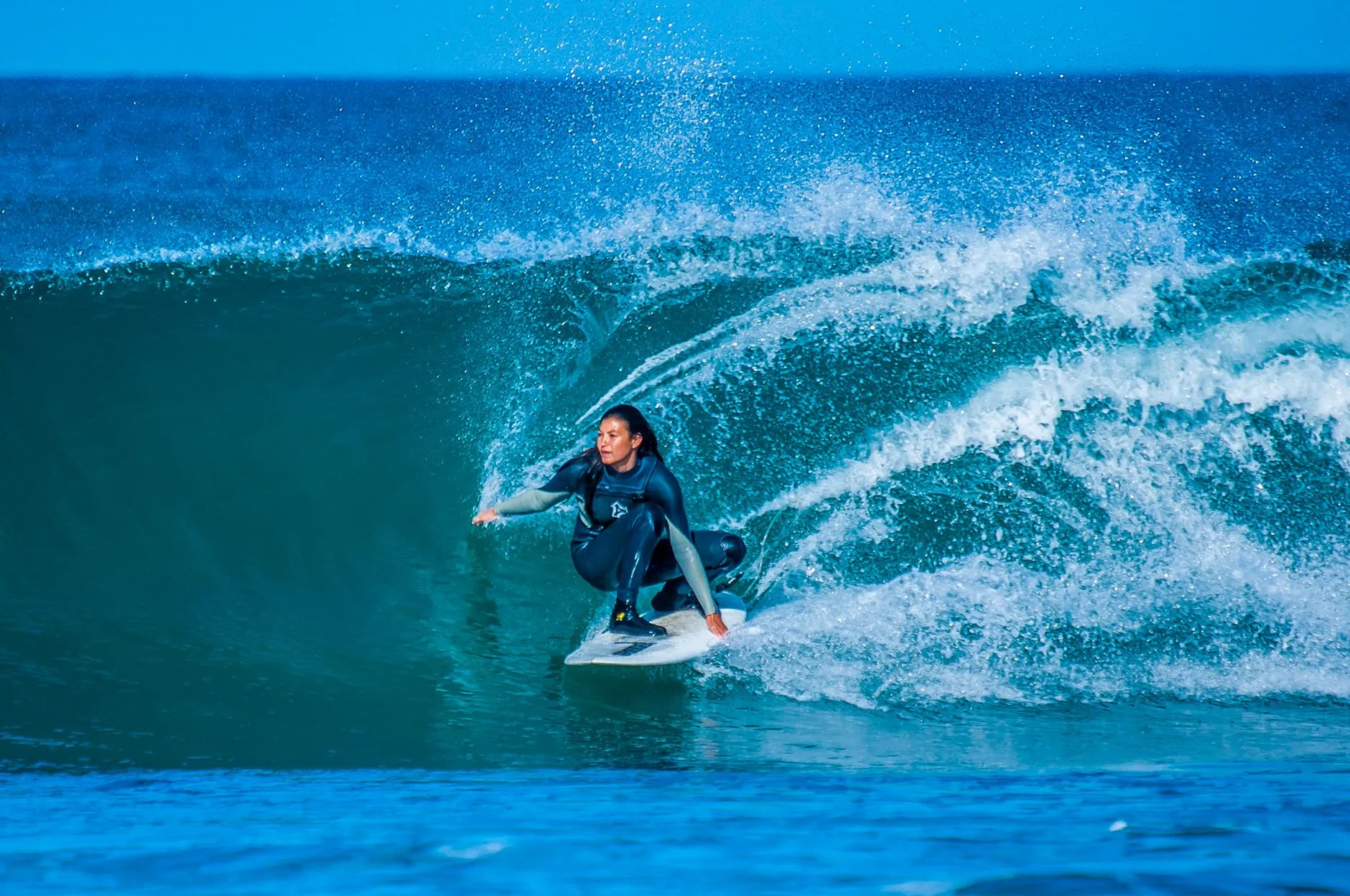
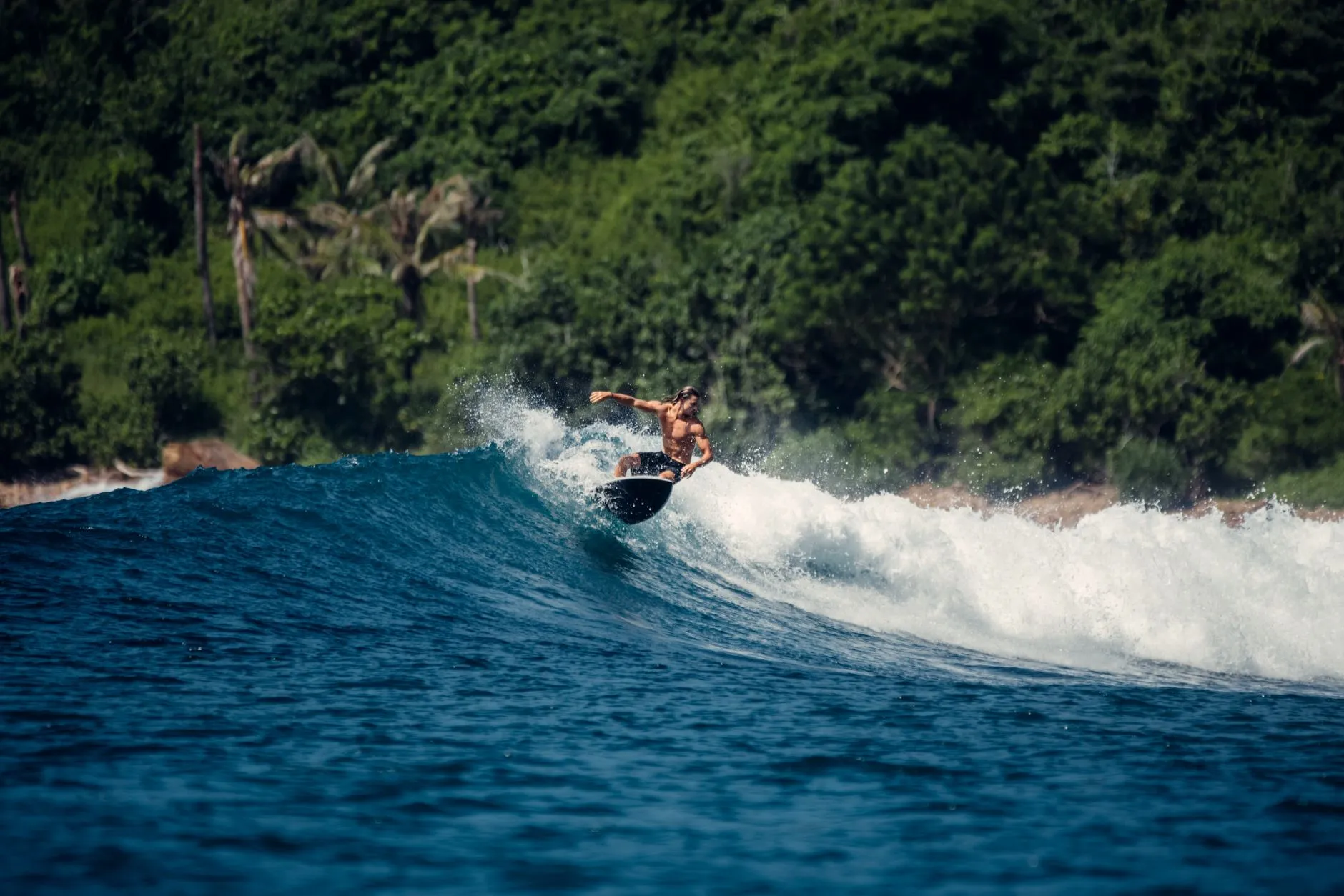
Seven miles of two lane road between Haleiwa and Velzyland carry more weight than any other coastline in surfing. In winter the Kamehameha Highway is the sport's main street: Pipeline detonating on a lava slab a stone's throw from the sand, Waimea Bay reopening the books of big wave history every time the buoys jump, Sunset Beach shifting its huge peak around a playing field the size of a stadium. The best surfers alive rent the beach houses, the world title is decided at Pipe in December, and the whole show is visible from a beach towel. They call it the Seven Mile Miracle, and for once the nickname is bookkeeping, not marketing.
Be honest with yourself about what this place is. From October to March the North Shore is a spectator sport for almost everyone who visits: the lineups are the most competitive on earth, the hierarchy in the water is real and enforced, and the wave that looks makeable from the beach will bounce you off the reef in front of an audience that has seen it before. But there is a second North Shore. Puaena Point and Chun's Reef roll soft and friendly in the gaps between swells, and from June to September the entire coast lies down flat, the water sits at 26 or 27°C, and beginners paddle out where giants stood five months earlier. Come in winter to watch, come in summer to surf, and give respect in both directions.
Best months
October to March for the XL northwest swells; June to September small, warm and finally surfable by mortals
Water
24 to 27°C all year: boardshorts, a spring suit at most for winter dawn patrols
Levels
From Puaena Point's gentle rollers to Pipeline, the most dangerous wave in the sport
Getting there
Fly to Honolulu: the North Shore is an hour up the H-2, one road in, one legendary traffic jam
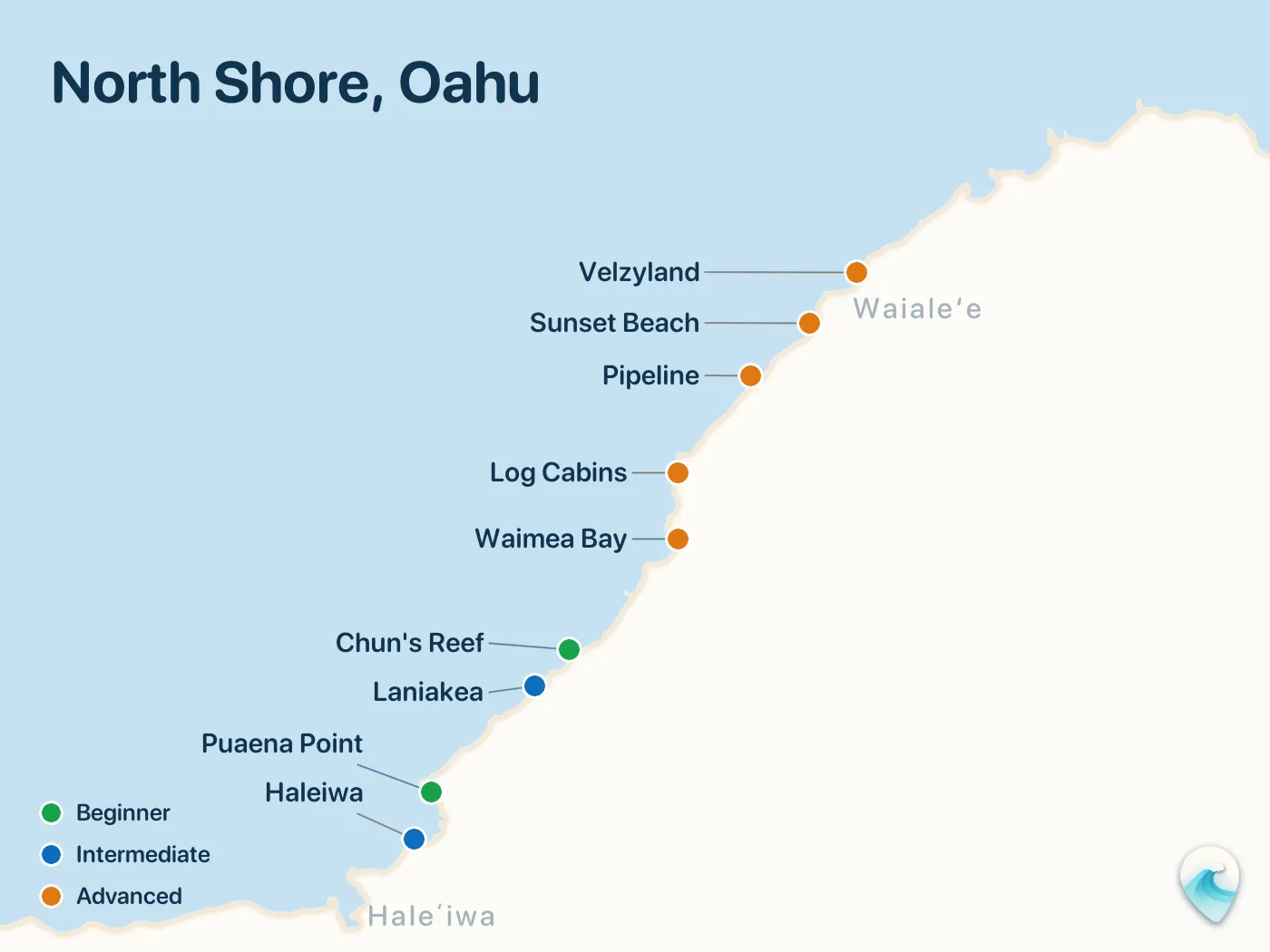
The southern end of the strip is the forgiving end: Puaena for first waves, Chun's for the family longboard session, Laniakea for the long wall, Haleiwa for the step up and the plate lunch after. In summer this whole corner is genuinely gentle; in winter it is where you surf while the giants play up the road.
Haleiwa
Haleiwa · Performance right off the harbor
Intermediate
The gateway town and the gateway wave. Haleiwa is where the North Shore does its shopping: food trucks, surf shops, shave ice at Matsumoto's, and the harbor where the tour's opening event runs each winter at Ali'i Beach. At chest to head high the wave is a rippable, forgiving right that flatters your surfing. Add size and it becomes a different animal: the inside section they call the Toilet Bowl sucks below sea level, and the rip that drains the channel is famous enough to have regulars. Locals say if you can handle the paddle at Haleiwa at eight feet, you are fit enough for anything on the seven miles. Start here, in both senses.
Puaena Point
Haleiwa · Soft rolling right over reef
Beginner
The answer to the question every visitor eventually asks: where can a normal person actually surf here? Just past Haleiwa harbor, under the ironwood trees, Puaena rolls in slow and fat over a deep reef and gives you time to think, which no other wave on this coast will do. The surf schools base themselves here for good reason, and even in winter it takes a real swell before Puaena gets serious. Longboarders glide the outside, learners flounder happily on the inside, and the atmosphere stays kind as long as you share. Watch the shallow rock at low tide and do not let the easy vibe fool you into skipping the sunscreen.
Laniakea
Kawailoa · Long walling right point
Intermediate
The longest ride on the seven miles when a west swell lines up: a right that walls off the outside reef and keeps offering sections for two hundred meters, closer to a point wave than anything else here. That length is why the crowd includes everyone from world tour names to longboard stylists, all sharing one takeoff zone with predictable results. The green sea turtles that haul out on the sand made Laniakea a tour bus stop, and the resulting traffic jam on the Kamehameha Highway is a running island joke. Park on the mauka side, cross carefully, and know the current pulls hard toward Haleiwa when the size is up. Medium days here are some of the most fun ordinary surfers can have on this coast.
Chun's Reef
Kawailoa · Friendly wide right reef
Beginner
The kindest wave on the seven miles, and the locals will tell you so themselves, usually from the nose of a log. A wide reef spreads the takeoff across several peaks, the wave rolls rather than pitches, and there is room for the whole cast: kids on foamies, dads on mid-lengths, aunties who have surfed here for forty years. Named for the Chun family who ran the store up the road, it keeps its manners through a surprising amount of swell, which makes it the mortal's window even in December, on the days between bombs. When Chun's itself feels crowded, Jocko's breaks a hundred meters west with a bit more push. Bring patience for the lineup and a wave for everyone who smiles at you.
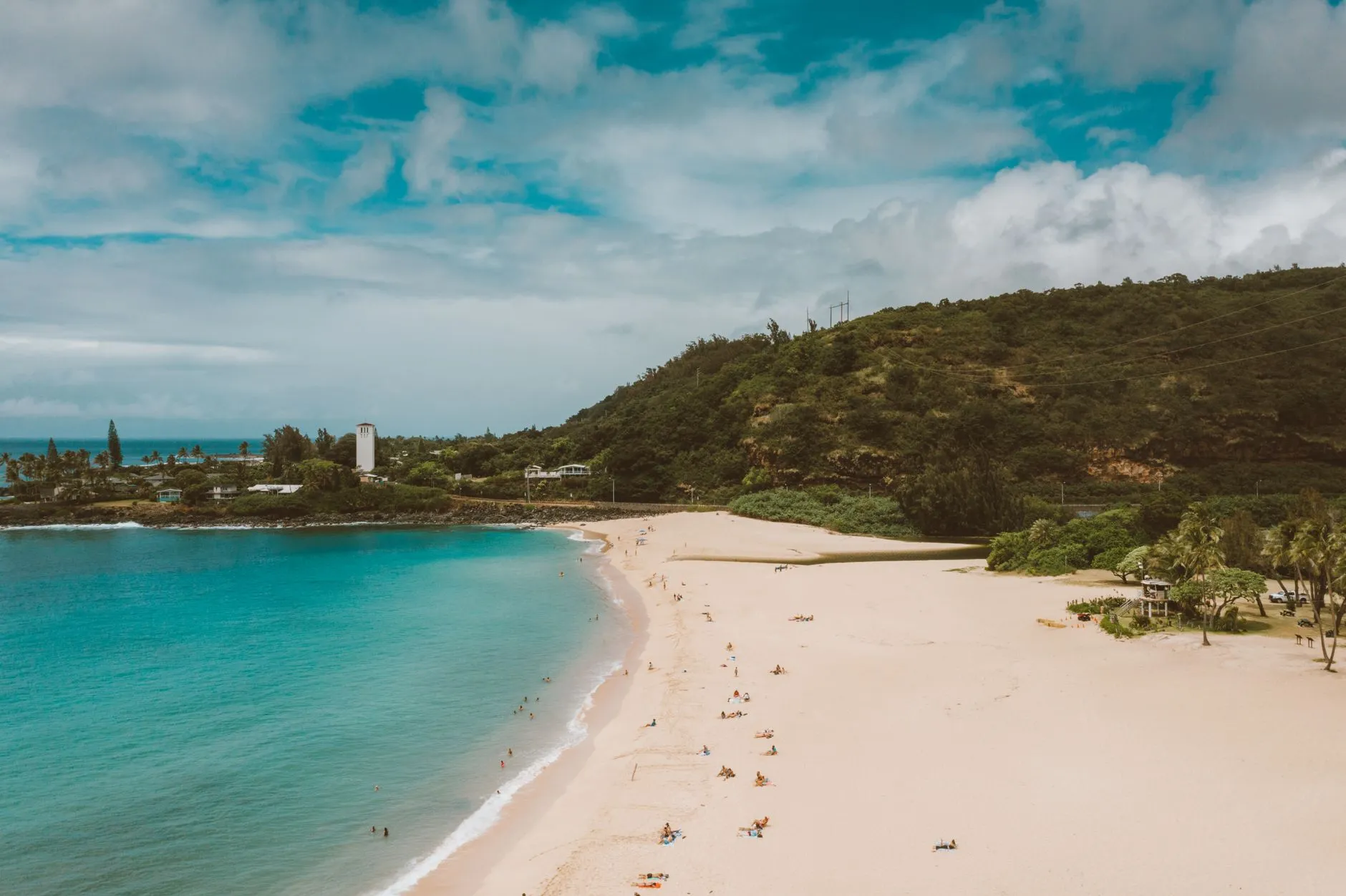
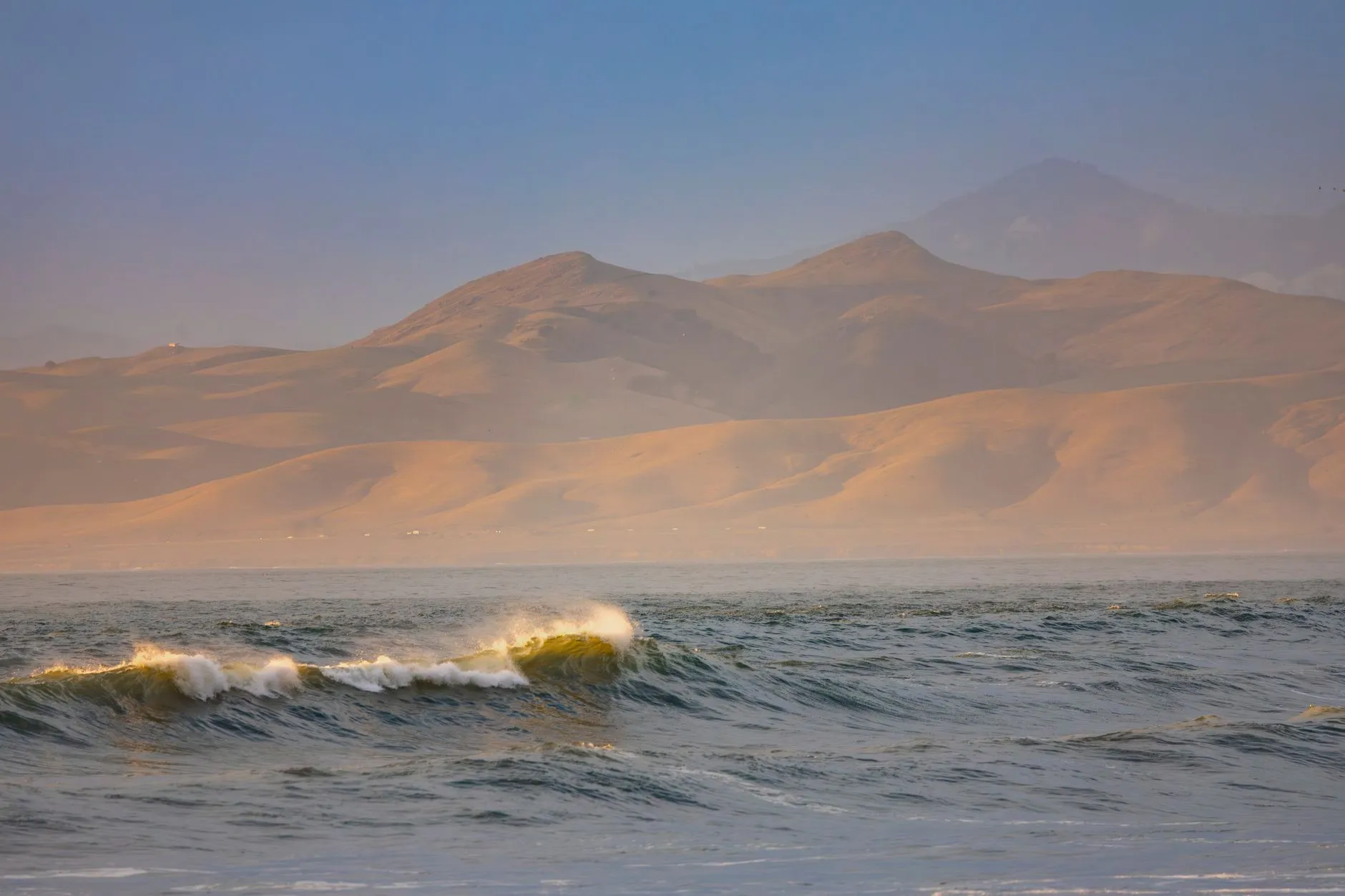
Waimea Bay at rest: the arena between swells
The proving grounds
From Waimea to Velzyland the coast stops being a holiday and becomes a career: the peak that invented big wave surfing, the slab that decides world titles, the shifting exam at Sunset, the guarded zipper at V-Land. In winter, treat these four miles as the best free show in sport, and be honest about which side of the sand you belong on.
Waimea Bay
Waimea · The original big wave arena
Advanced
Big wave surfing was invented in this bay in 1957, and the bay has been auditing everyone who claims the title since. Waimea only truly breaks when the swell passes twenty feet on the Hawaiian scale, faces of forty, and then the boulder at the point hosts the most famous takeoff in the sport. The Eddie, the invitational named for lifeguard Eddie Aikau, runs only on those days and stops the entire island: schools empty, the highway locks, ten thousand people stand on the sand at dawn. The rest of winter the bay hides a shorebreak that snaps boards and collarbones at head high, so respect it even when it looks like a postcard. In summer it becomes exactly that postcard: flat, turquoise, kids leaping off the jump rock. Both versions are true, five months apart.
Log Cabins
Ke Iki · Shallow, violent A-frame
Advanced
The stretch between Waimea and Pipeline that tourists drive past and photographers never do. Log Cabins, named for the old timber house that stood across the road, is a west swell A-frame that breaks meters from dry reef with a right that goes from zero to very serious immediately. Next door, Off The Wall throws one of the most photographed barrels on earth toward an audience of telephoto lenses standing on the shoulder of the highway. Neither wave has a channel worth the name, both are dominated by a small circle of locals and resident pros, and the shorebreak at Ke Iki just up the beach is famous purely for hurting people. This is the part of the tour where you keep your board on the roof and learn with your eyes.
Pipeline
Ehukai · The most famous wave on earth
Advanced
Fifty meters off the sand at Ehukai Beach Park, a left detonates over a cratered lava slab in water that would barely reach your chest, and everything the sport considers glory or tragedy has happened on it. Backdoor is the right off the same peak, shallower still, and on the biggest days Second and Third Reef stand up outside like older brothers. Be clear about your place here: the takeoff zone is run by the best tube riders alive under an unwritten pecking order decades deep, and Pipeline has taken more lives than any wave in surfing. What visitors actually get is the best seat in the sport, because the whole theater plays out a wave's length from your towel, and in December the Pipe Masters decides world titles right in front of you. Watching from the sand at Ehukai is not a consolation prize. It is the event.
Sunset Beach
Sunset Beach · Huge shifting ocean peak
Advanced
The connoisseur's wave, and the most honest test on the strip. Sunset is not one peak but a moving argument spread over a lineup the size of several football fields: the West Peak ledges and throws, the north swells shift and tease, and lining up means triangulating rooftops and palm trees while the ocean redraws the map between sets. It demands a bigger board, real paddling fitness and years of reading water, which is why old North Shore hands rate a good Sunset surfer above almost anything. This is where professional surfing held its first great contests in the sixties and the World Cup still runs every winter. On the way back toward Pipeline you pass Rocky Point, the zone's high performance playground, friendlier in size and the most crowded hundred meters on the coast. Between the two, Kammieland offers scraps with less drama.
Velzyland
Sunset Beach · Short, shallow zippering right
Advanced
The last wave of the Seven Mile Miracle and the one with the clearest rules. Velzyland, named half in jest after board builder Dale Velzy by filmmaker Bruce Brown's crew, is a short, perfect, almost mechanical right that zippers over a shallow ledge at the end of a residential lane. Its quality per meter is absurd, which is exactly why the tightest local crew on the coast holds it close: this is a neighborhood wave in a literal sense, and the neighborhood has been here for generations. If you are good enough to consider it, the protocol is old fashioned and non negotiable: park respectfully, say hello, sit wide, and let the first hour of waves prove you can make the sections. Plenty of excellent surfers watch V-Land from the beach and count that as the correct decision.
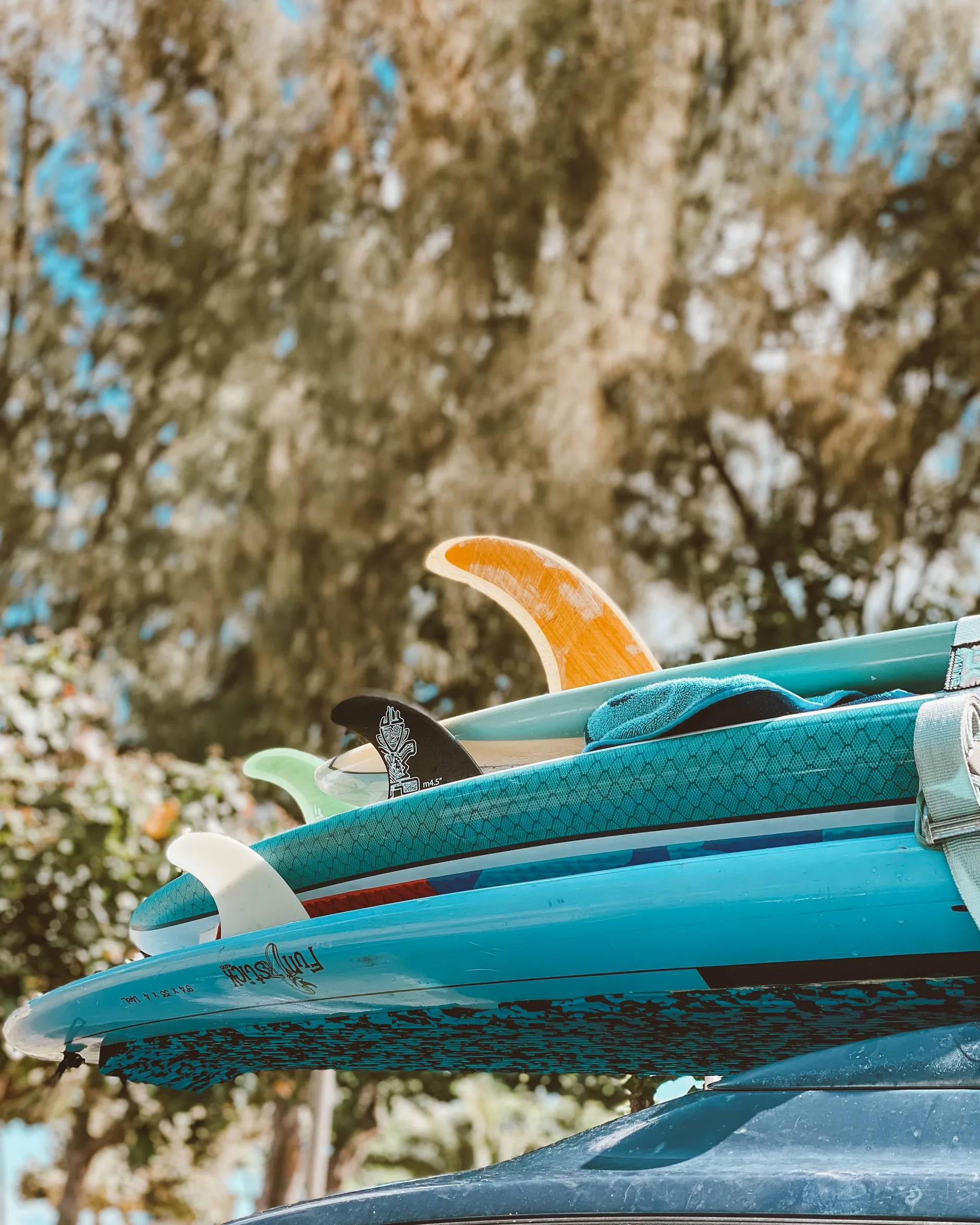
Boards stacked on a roof in Haleiwa town
When to go
A year in North Shore, Oahu
Typical conditions, month by month. The ocean did not sign this table: for live waves, wind and tide, check the app.
January
8-20 ft
77°F · boardshorts · Expert
Deep winter, back to back northwest swells. The Eddie's holding period is open, and when the bay wakes the whole island calls in sick. Chun's and Puaena stay the mortal windows on the days between.
February
8-18 ft
75°F · boardshorts · Expert
Still relentless, with storms tracking closer and rawer swell. Humpbacks breach beyond the lineups. The contest circus has moved on, which locals count as the month's best feature.
March
6-15 ft
75°F · boardshorts · Advanced
The swells space out and the sand starts coming back to the beaches. Late season Sunset and Haleiwa serve some of the winter's cleanest days to a fraction of December's crowd.
April
3-8 ft
77°F · boardshorts · Intermediate
The season winds down: smaller pulses, steadier trade winds, rental houses emptying out. Laniakea and Chun's turn back into long, friendly walls and the longboarders reclaim them.
May
2-5 ft
77°F · boardshorts · All levels
The switch flips. The first south wraps bend around Kaena Point into Haleiwa, the shorebreaks soften, and the coast starts its long summer exhale. The mortal season begins here.
June
1-3 ft
79°F · boardshorts · Beginner
Small to flat, and that is the point. Waimea is a swimming hole, Sharks Cove is a snorkel park, and Puaena and Chun's give beginners the least intimidating famous coastline on earth.
July
1-3 ft
81°F · boardshorts · Beginner
The flattest stretch of the year. An occasional south swell sneaks a rideable wave into Haleiwa, longboards rule whatever moves, and the water is as warm as it gets without a heater.
August
1-4 ft
81°F · boardshorts · Beginner
Peak beach season: warmest water of the year, kids on the jump rock at Waimea, learners at Puaena every morning. Surf early; the trades ruffle everything by noon.
September
2-6 ft
81°F · boardshorts · All levels
The hinge month. The first northwest forerunners arrive near the end, locals start waxing bigger boards, and you can feel the coast straighten its back. Last call for easy lineups.
October
4-12 ft
81°F · boardshorts · Advanced
The season switches on: the first real northwest swells light up Haleiwa and Sunset, the pro houses fill, and photographers reclaim the shoulder of the Kam Highway. Beginners retreat to Puaena.
November
6-15 ft
79°F · boardshorts · Expert
Winter proper, and traditionally Sunset's month: the World Cup runs on its shifting peak and the hierarchy takes up residence for the season. Spectating is world class daily.
December
8-20 ft
77°F · boardshorts · Expert
Pipe Masters month. World titles are decided fifty meters from the sand, the highway locks solid when Pipeline breaks, and every wave on the strip has its best surfers on it. Watch, learn, and surf Puaena at dawn.
Good to know
When is the best time to surf the North Shore of Oahu?
It depends entirely on which North Shore you want. October to March is the famous one: XL northwest groundswell, the contest window, Pipeline and Waimea doing what made them household names, and lineups reserved in practice for experts. June to September is the other one: small to flat, warm, gentle, with the occasional south wrap sneaking into Haleiwa, and it is the only season most visitors should actually plan to surf here. April, May and September are the hinges, good for solid intermediates who want size without the full winter machinery. Water stays between 24 and 27°C whichever version you choose.
Can beginners surf the North Shore?
In summer, honestly yes. From June to September the coast that terrifies professionals goes quiet, and Puaena Point and Chun's Reef become genuinely gentle waves with surf schools working them every morning. In winter the answer narrows to almost never: even the friendly spots need watching between swells, and the famous ones are out of the question at any size. Do not let a flat looking day fool you in the big months, because the next set can be double the last one and the currents work at all sizes. If your trip is in winter, book a lesson at Puaena on a small day, enjoy the greatest show in surfing from the sand, and save the bucket list session for a summer visit.
What is the Hawaiian scale, and why does everyone halve the wave size?
Hawaii measures waves from the back, roughly half the face height the rest of the world would quote. So when a lifeguard at Sunset tells you it is six feet, the walls you will meet are well overhead, and a twenty foot day at Waimea means faces around forty. Nobody is being modest; it is a local convention with decades of history, and understating size is part of the culture. Our month by month numbers in this guide use face heights, the measure your forecast app and your own eyes agree on. Just translate whenever someone in a lifeguard tower or a lineup quotes you a number, and assume the Hawaiian version until proven otherwise.
How real is the hierarchy in the water on the North Shore?
Completely real, and older than professional surfing. Waves here fed families before they sold wetsuits, and priority at the marquee peaks is earned over years, not sessions: the best wave of a set at Pipeline or V-Land belongs to people the lineup knows by first name. As a visitor the code is simple and it works. Wait your turn, take the smaller ones nobody wants, never paddle around someone, apologize once and mean it if you make a mistake, and give respect on land as well as in the water. Follow that and the North Shore is warmer than its reputation; skip it and the coast has decades of practice making the lesson stick. The hierarchy is not a hazard to route around. It is the reason these lineups still function at all.